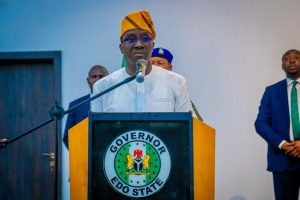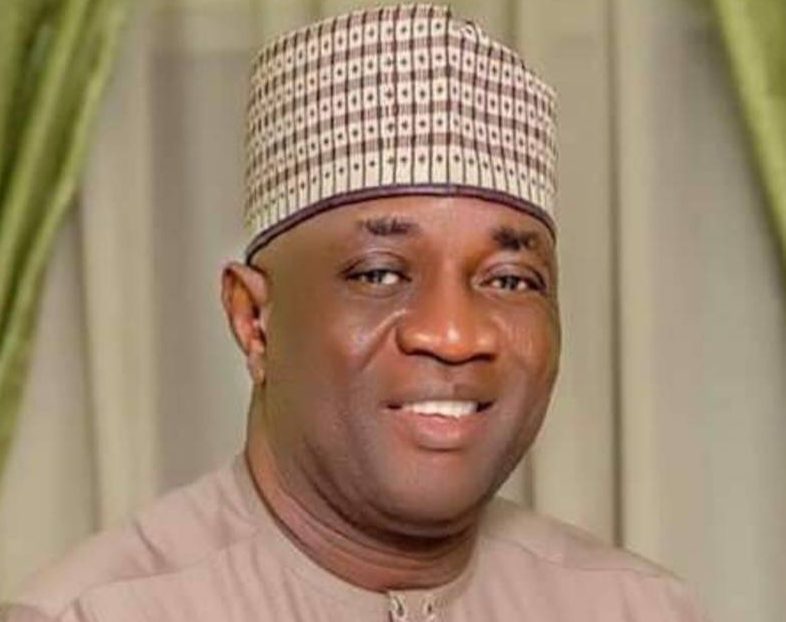
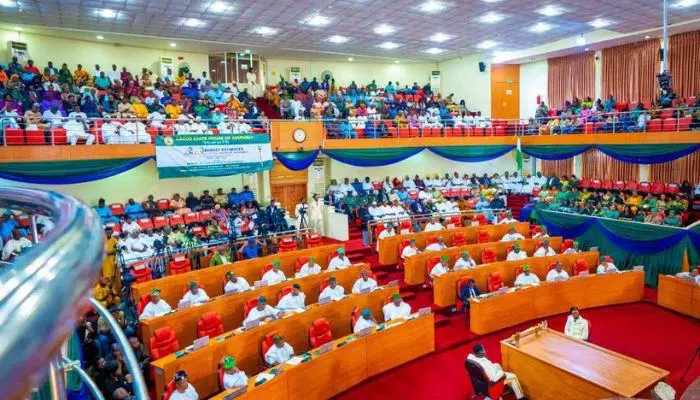
The All Progressives Congress has extended its congratulations to Edo State Governor, Senator Monday Okpebholo, following the Supreme Court’s validation of his victory in the September 21, 2024, governorship election.
In a statement released on Thursday by its National Publicity Secretary, Felix Morka, the party also praised the judiciary for its professionalism, dedication to the rule of law, and steadfast commitment to upholding constitutional order and electoral democracy.
After months of legal battle, a five-member panel led by Justice Mohammed Garba upheld Okpebholo’s election and dismissed the appeal filed by the Peoples Democratic Party candidate, Asue Ighodalo, who sought to overturn the outcome of the September 21, 2024, governorship election.
Reacting, the APC stated, “The All Progressives Congress welcomes the judgement of the Supreme Court affirming Senator Monday Okpebholo as the duly elected Governor of Edo state in the 2024 governorship election.
“Our great Party congratulates Governor Okpebholo on this historic victory. We thank our teeming members, supporters and the good people of Edo state for their steadfast support during this legal challenge.
“We commend the judiciary for its dedication, professionalism and commitment to the rule of law, constitutional order and defence of electoral democracy as demonstrated in the adjudication of this matter.
“With this final judicial affirmation, Governor Okpebholo is now poised to expand and consolidate on the monumental development strides he has started since his inauguration as Governor.”
The APC called on all stakeholders, especially opposition candidates, to work together with Governor Okpebholo in advancing good governance and promoting development for the collective progress of Edo State and its people.
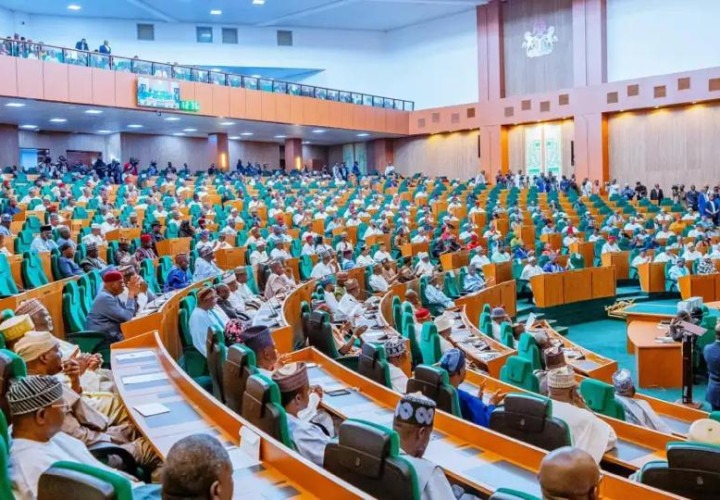
The House of Representatives Sub-Committee on the Protection of Critical National Assets on Thursday dismissed the corruption allegation against the Nigerian Electricity Liability Management Company by a civil society group, the Association for Public Policy Analysis.
The association had, through its President, Princewill Okorie, accused NELMCO of misappropriation of funds and shady operations among sundry allegations.
APPA had also questioned the continued existence of NELMCO 12 years after its privatisation.
At the resumed public hearing on the matter on Thursday, the Chairman of the Committee, Dabo Ismail, said the panel took the allegations seriously and immediately launched a comprehensive investigation to unmask what truly transpired.
According to the Bauchi lawmaker, NELMCO’s existence is backed by the provisions of the Nigerian Electricity Act, 2023, thus dismissing the position of the petitioner that the agency ought to have folded up in 2017 after the privatisation of the Power Holding Company of Nigeria.
“We asked NELMCO to provide us with documents backing their existence, and they did. Under the Nigerian Electricity Act 2023, NELMCO assumed responsibility for all the PHCN’s and successor companies’ assets and liabilities.
“So, this enabling law and the committee verified this law to be true and correct,” the committee chairman said.
Responding to the allegation that NELMCO spent N94m on a five-day retreat in Lagos, the Managing Director of NELMCO, Mojoyinoluwa Dekalu-Thomas, expressed the readiness of the agency to provide evidence of the expenditure incurred in the course of the training.
She said, “The Director General of the Debt Management Office, the Director General of the Bureau for Public Procurement, my executive directors, two non-executive directors, facilitators-25 people in all spent five days at the Intercontinental Hotel, Lagos, and we have pictures and documentary evidence to support this.
“We paid for flights, logistics, food, and accommodation, and that is where the N94 m went. It was not a one-day event but a five-day retreat, and the Minister of Power was there for the entire retreat. This is documented too,” a claim supported by the committee.
According to Ismail, the N94m “Is justifiable considering the dignitaries that attended the five-day retreat.”
An unidentified member of the committee added that at the Eko Signature Hotel Lagos, “A moderate room is N650,000 per night. Five nights for 25 people will cost N81m, no feeding, no ticketing. This figure (N94m) might be big in our eyes, but I think it is justifiable.”
In his contribution, a member of the Committee, Mr Billy Osawaru, said since the N94m was appropriated, there was no need for members to deliberate further on the issue.
“Was the money appropriated? Mr Chairman, if the money was appropriated, what that means is that at some poin, they brought this to us and we approved it. I don’t think that at this point, we should start going back. So if they have brought all this proof, we should move on,” he said.
The Chairman of the Committee again said all documents relating to the five-day retreat, including payments made for logistics, were submitted by the agency during its investigation.
He also dismissed the petitioner’s claim of a purchase of office in the North by the agency, saying, “We didn’t see evidence of purchase of office in the North.”
The Committee urged the petitioner to feel free to come forward with other subsequent findings, promising that it would do justice to every petition submitted before it in the interest of Nigerians.
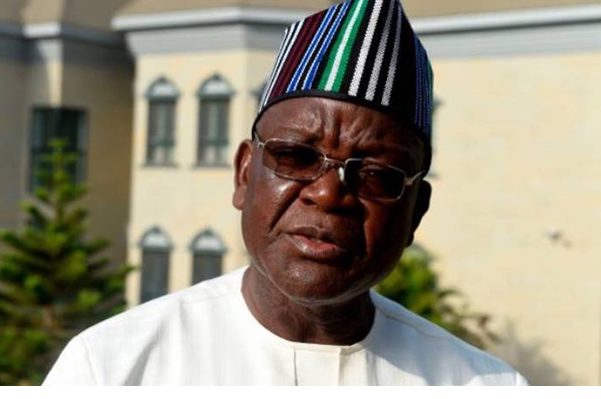
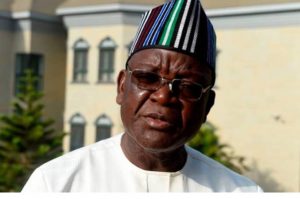
Immediate past governor of Benue State, Samuel Ortom, has reaffirmed his support for the retention of Nigeria’s presidency in the South in 2027.
He insisted that the region must be allowed to complete its eight-year term before power returns to the North.
He made this known at a media interaction in Makurdi, the state capital, on Thursday.
He said, “Till today, I, Ortom, believe in southern presidency, even if my party (PDP) is producing a candidate for presidency in 2027, the candidate must be from the South. South should be allowed to complete eight years.
“So, for me, I am not supporting a northern candidate.”
Ortom, a chieftain of the Peoples Democratic Party and member of its Board of Trustees, also commended President Bola Tinubu for some of the economic reforms initiated under his administration.
“Tinubu administration is doing well; he is ensuring that the rule of law prevails, and this is good for our country.
“The oil industry had been a place where a few cliques siphoned our common wealth, but with the removal of subsidies, there is a lot of money in all the states.
“The president even stated this during his visit to Benue at the height of the killing of our people in Yelwata, where he said that no state would say it doesn’t have money to pay salaries.”
Ortom also lauded the ongoing tax reforms, describing them as steps in the right direction for economic growth.
However, Ortom criticised the administration of former President Muhammadu Buhari, saying Buhari’s administration took the country from “top to bottom.”
Ortom said he is not part of the newly formed coalition.
He added, “I remain a member and leader of Peoples Democratic Party; I am even a board member of my party and I don’t believe in coalition but where there’s need for strategic partnership, you will see me there.”
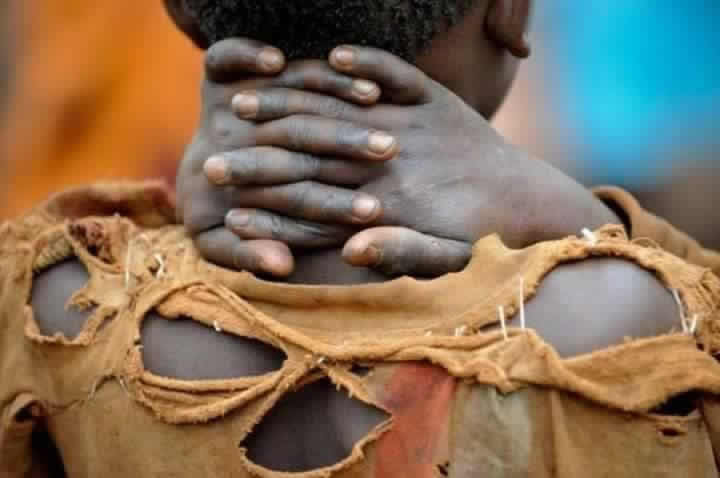
The Senior Special Assistant to the President on Public Health, Uju Anwukah, on Wednesday said Nigeria currently ranks second on the global malnutrition index, making her the first in Africa.
The presidential aide’s remark was echoed by the Chairman of the House of Representatives Committee on Food and Nutrition, Mr Chike Okafor, who said malnutrition in Nigeria is costing the country about $1.5bn annually.
Anwukah spoke on strengthening nutrition coordination in Nigeria through the N-774 initiative at the ongoing national summit on nutrition and food security organised by the House Committee on Food and Nutrition.
According to her, Nigeria signed up for the N-774 initiative as a way of addressing malnutrition from the grassroots level, stressing that the initiative has been endorsed by the National Council on Food Security as well as the Nigerian Governors Forum.
According to Okafor, the cost of inaction on these parameters on Nigeria’s economy is aggregated to about 12.2% of the country’s Gross National Income, about $56bn, based on data from Nutrition International and the World Bank.
“Food insecurity has been aggravated by post-harvest loss, estimated at $2bn by the Food and Agriculture Organisation yearly.
“This colossal loss alone is more than the nutrition budget of the Ministries of Agriculture, Health, Education and Women Affairs put together.
“This continued loss is not only unacceptable, but unsustainable given the austere times in which we currently live.
“On the above premise, my committee is working with those in the 36 states of the federation to do things differently.
“First of all, we are undertaking strategic capacity-building sessions to have a better understanding of the root and dynamics of current nutrition and food security challenges in Nigeria. A wise man once said that once you are not informed, you are deformed.
“We are hoping that the capacity-building sessions are institutionalised in partnership with the National Institute of Democratic and Legislative Studies, with support from our ever-helpful development partners.
“This will put us in a better position to provide strategic oversight to all nutrition and food-related interventions and implementing partners, including but not limited to the United Nations family, the World Bank, International and National non-governmental organisations and of course, the government at Federal, State and Local Government levels.
“By so doing, we will not only have more money for nutrition, but also more nutrition for the available money,” he said.
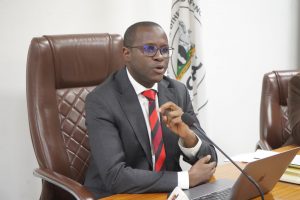
The Independent Corrupt Practices and Other Related Offences Commission on Wednesday charged the National Assembly to demonstrate more seriousness in its oversight role on revenue-generating agencies of government.
The anti-graft agency also condemned the practice of some Ministries, Departments and Agencies for their alleged mismanagement of public funds.
Speaking at the 2025 National Conference on Public Accounts and Fiscal Governance organised by the Senate and House of Representatives Public Accounts Committees in Abuja, ICPC Chairman, Musa Aliyu, called for tougher legislative measures to ensure that revenue generated and collected are timely remitted to government coffers by the provisions of the law.
“You see, the funny thing is that these revenue-generating agencies believe the money is their own.
“But unfortunately, it’s not theirs. So please, intensify oversight so they’ll be held accountable and bring to the table whatever they collect,” he said.
Represented by the Director of Finance, Akporo Michael, Aliyu pledged support for the country’s fiscal policy reforms, particularly the recent tax legislation signed into law by President Bola Tinubu.
“For the first time in our history, the government has taken the bull by the horns by reforming our tax system.
“These reforms aim to increase our tax-to-GDP ratio to between 18% and 20% in the coming years,” he said, adding that this would help the country meet its growing development needs.
He said Nigeria’s low tax-to-GDP ratio of 7.8 per cent is among the lowest in sub-Saharan Africa, noting that countries like Kenya, South Africa, and Egypt are recording double-digit ratios and reaping the benefits in infrastructural development and service delivery.
“Our budget implementation suffers every year because we do not mobilise enough revenue.
“Contractors in my office have been waiting for payment since last year. It is time to close the gaps,” he said.
He also lamented what he called the lack of openness in the operations of the Nigerian National Petroleum Corporation Limited.
He stated, “Saudi Arabia’s national oil company in the year 2024 posted a net profit of $106.25bn. Around the same year, you can do a good mix. How much does our NNPCL post pay? $2.4bn in 2024.
“These are players in the same league. Granted, Aramco’s capacity is higher than that of NNPCL. Their production on a daily basis is 9.1m barrels per day, while Nigeria in 2024 was doing 1.3m. We agree. So let’s assume that Aramco is producing 10 times that of Nigeria.
“They made a profit of $106bn. If their capacity is just 10 times higher, what should be our net profit? At least 10% of theirs. But we got only 2.4%.”
The ICPC chair also called for the overhaul of Nigeria’s public sector salary structure, which he described as unjust and demoralising.
He urged the National Assembly to engage the Salaries and Wages Commission to harmonise pay scales in a way that reflects fairness, justice, and economic reality.
While applauding recent wins in Nigeria’s global corruption ranking, he noted that the fight must continue.
He reminded the audience of Nigeria’s past designation as one of the world’s most corrupt countries by Transparency International and cautioned against complacency.
“We’ve improved, but we’re still not where we should be. Out of 140 countries ranked by Transparency International in 2024, Nigeria is still behind at 100. That means only 40 countries are below us,” he said.
To address leakages and enhance transparency, Aliyu called for the digitisation of key government processes, including payroll, procurement, and revenue collection.
He cited the successes of the Integrated Payroll and Personnel Information System, which helped the ICPC recover ₦21bn in salary fraud in a single investigation.
“If we digitise our systems and eliminate human discretion, we will cut out most of the corruption,” he said.
Aliyu cited international examples like Bulgaria, where procurement processes are fully transparent and publicly accessible.
The ICPC boss also called on the National Assembly to enact a comprehensive whistleblower protection law, describing it as a vital tool to encourage citizens to come forward with reports on corruption.
“Let it not just be policy. Let it be a law, with protection and incentives for those who speak out,” he said.
According to him, the country’s survival depends on the outcome of the anti-corruption fight.
“We don’t have many options – just two. It’s either we kill corruption or corruption kills us. And the choice, as they say in science, is in our hands,” he added.
On his part, the Governor of the Central Bank of Nigeria, Olayemi Cardoso, called for greater synergy between monetary and fiscal authorities to enhance Nigeria’s macroeconomic stability and ensure sustained national development.
“Contrary to the general belief, the Central Bank and fiscal authorities are not working at cross purposes.
“They may appear to have different tools, but both are focused on achieving the same goals: economic growth, stability, and improved welfare for Nigerians,” he said.
Cardoso noted that one of the apex bank’s major concerns is to balance government spending with the maintenance of macroeconomic stability, especially in areas like inflation, exchange rate management, and the strength of the naira.
He highlighted that since the inauguration of the current management at the CBN, the bank has adopted a proactive approach to both global and domestic economic developments.
He cited the minimal impact of recent geopolitical tensions as proof of this shift in strategy.
“We don’t sit and wait for events to occur. That’s why even recent global disruptions have had minimal impact on Nigeria’s economy,” he said.
The Senate has called on the Federal Government to rethink its approach to the power sector by ending the indirect enrichment of private electricity distribution companies with public funds.
The Chairman, Senate Committee on the Environment, Senator Yunus Akintunde (APC – Oyo Central) said this at the plenary on Thursday.
Speaking on the floor of the Senate, the lawmaker decried the current practice where government funds are being used to purchase electricity transformers for communities, only for the assets to be taken over by DISCos.
“When you buy a transformer with government funds and hand it over to a community, the DisCos demand payment for installation.
“But the moment it is energised, it becomes their asset. That’s how public money ends up enriching private monopolies”, Akintunde lamented.
The lawmaker described the trend as unsustainable and unjust, adding that the government must develop a structured subsidy regime that truly benefits ordinary Nigerians.
“Electricity subsidies are not a Nigerian anomaly—they’re a global necessity.
“Even in advanced economies like the UK, energy is subsidised. We shouldn’t abandon the idea simply because of past abuses. Subsidies, when properly managed, drive growth and shield the poor,” he noted.
The senator also drew attention to what he called a fundamental structural imbalance in Nigeria’s power sector.
According to him, while generation and distribution have been privatised, the government still retains control of the ageing transmission infrastructure, an act he described as underutilised and inadequate.
“If you check most transmission lines and substations, they’re outdated and incapable of handling modern power needs. That’s one of the biggest bottlenecks to reliable supply across the country.
“This is not just about transformers—it’s about fixing a broken system. We must stop using public funds to empower private interests.
“Instead, we must empower Nigerians with affordable and reliable electricity,” he warned.
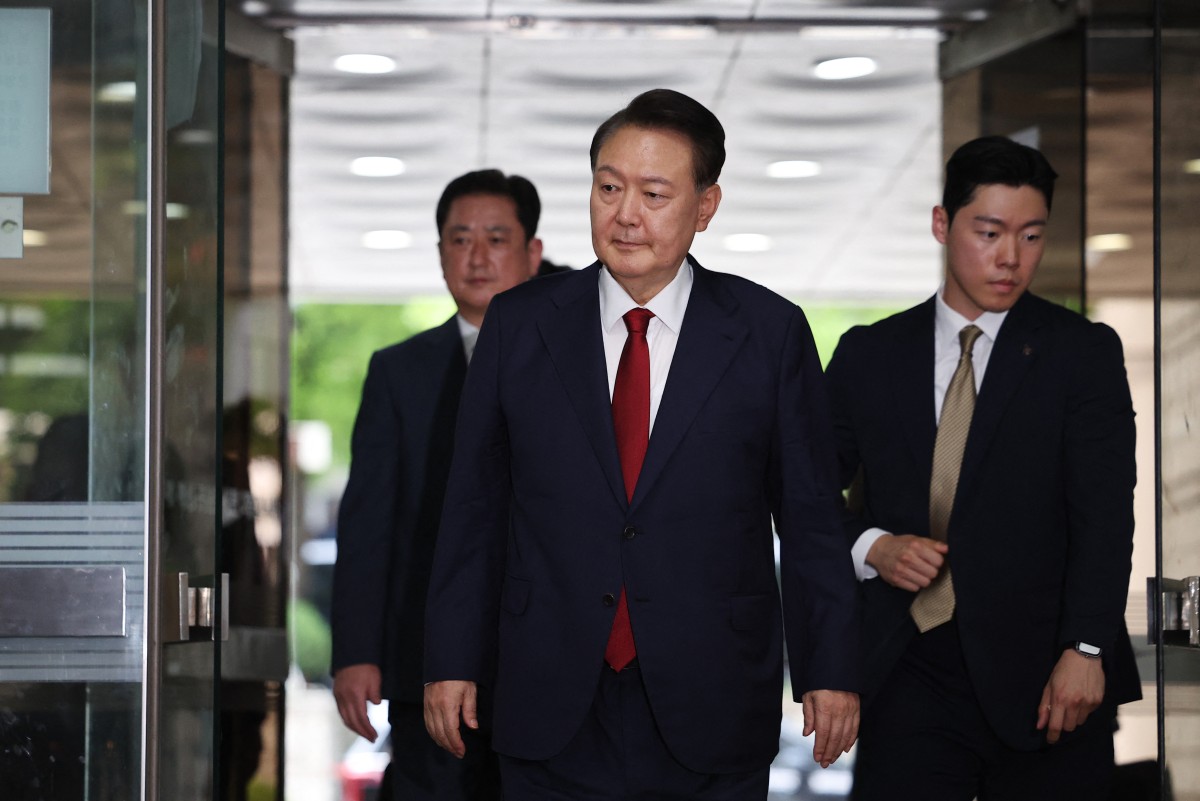
South Korea’s disgraced ex-president Yoon Suk Yeol was detained for a second time Thursday over his declaration of martial law and held in a solitary cell as investigators widened their insurrection probe.
Yoon plunged South Korea into a political crisis when he sought to subvert civilian rule on December 3 last year, sending armed soldiers to parliament in a bid to prevent lawmakers from voting down his declaration of martial law.
He became South Korea’s first sitting president to be taken into custody when he was detained in a dawn raid in January, after he spent weeks resisting arrest, using his presidential security detail to head off investigators.
But he was released on procedural grounds in March, even as his trial on insurrection charges continued.
After Yoon’s impeachment was confirmed by the court in April, he again refused multiple summons from investigators, prompting them to seek his detention once more to ensure cooperation.
The latest arrest warrant was issued over concerns that Yoon would “destroy evidence” in the case, Nam Se-jin, a senior judge at Seoul’s Central District Court, said.
Yoon is being held in a solitary cell, which has only a fan and no air-conditioning, as a heat wave grips South Korea. According to the official schedule, he was offered a regulation breakfast including steamed potatoes and milk.
Investigators said Thursday that Yoon’s status as former president will be “duly considered” but otherwise he will be “treated like any other suspect”.
“Investigations during the detention period will focus on the warrant’s stated charges,” prosecutor Park Ji-young told reporters.
Yoon’s criminal trial also continued with a hearing Thursday, although he did not attend for the first time.
– Solitary –
The former president, 64, attended a hearing over the new warrant on Wednesday that lasted about seven hours, during which he rejected all charges, before being taken to a holding centre near Seoul where he awaited the court’s decision on whether to detain him again.
During his warrant hearing, the former president said he is now “fighting alone”, local media reported.
“The special counsel is now going after even my defence lawyers,” said Yoon during his hearing.
“One by one my lawyers are stepping away, and I may soon have to fight this alone.”
Once the warrant was issued early Thursday, Yoon was placed in a solitary cell at the facility, where he can be held for up to 20 days as prosecutors prepare to formally indict him including on additional charges.
“Once Yoon is indicted, he could remain detained for up to six months following indictment,” Yun Bok-nam, president of Lawyers for a Democratic Society, told AFP.
“Theoretically, immediate release is possible, but in this case, the special counsel has argued that the risk of evidence destruction remains high, and that the charges are already substantially supported.”
– Long time in detention? –
During the hearing, Yoon’s legal team criticised the detention request as unreasonable, stressing that Yoon has been ousted and “no longer holds any authority”.
Earlier this month, the special counsel questioned Yoon about his resistance during a failed arrest attempt in January, as well as accusations that he authorised drone flights to Pyongyang to help justify declaring martial law.
The former president also faces charges of falsifying official documents related to the martial law bid.
Yoon has defended his martial law decision as necessary to “root out” pro–North Korean and “anti-state” forces.
But the Constitutional Court, when ousting Yoon from office on April 4 in a unanimous decision, said his acts were a “betrayal of people’s trust” and “denial of the principles of democracy”.
South Korea’s current president, Lee Jae Myung, who won the June snap election, approved legislation launching sweeping special investigations into Yoon’s push for martial law and various criminal accusations tied to his administration and wife.
The Senate had said it is set to begin probe of the Chief Executive Officer of the Nigerian Midstream and Downstream Petroleum Regulatory Authority , Farouk Ahmed, as the protest of public interest lawyers to the National Assembly enters day two.
The lawyers stormed the National Assembly, Tuesday, calling on the Senate President, Godswill Akpabio, to immediately suspend and prosecute Farouk Ahmed.
The lawyers cited grave allegations of corruption, abuse of office, and conflict of interest against Ahmed.
In the petition signed by Samuel Ihensekhien Jnr and three others, they also demanded that the National Assembly commence an immediate investigation, recommend Ahmed’s immediate sack and suspension, and arrest.
The Chairman, Senate Committee on Oil and Gas, Senator Kawu Ismaila, who received the petition on behalf of the Senate promised to liaise with other members of the committee and investigate the agency.
“One of our constitutional rights is to do oversight. We will look into the allegation, those who are concerned should come and defend themselves.
“We will invite you to come and defend the petition. We will call you to come and defend the allegation because we must do it in accordance with the law.
“When we have a copy of the petition we will sit down together with your leaders and look at the allegation act in accordance with the law”, he said.
The petitioners also called for the freezing of Ahmed’s local and offshore assets and sweeping reforms in the appointment and oversight of regulatory agency heads in the oil and gas sector.
The lawyers described Ahmed’s actions as a clear abuse of office, a betrayal of the Nigerian people’s trust, and a severe breach of the fiduciary duty required of all public servants.
They said, “We urge the Senate to commence an immediate and public hearing investigative hearing into these allegations, summoning Mr. Farouk Ahmed and relevant stakeholders..
“Recommend his immediate sack and suspension from office to prevent interference with ongoing investigations.Refer this matter to the EFCC, ICPC, and the Code of Conduct Bureau for coordinated criminal investigation and prosecution.
“In the event he has absconded from Nigeria immediately Call for collaboration with international security agencies like the Interpol to ensure his extradition back to Nigeria and the freezing of his local and offshore assets. Institute sweeping reforms in the appointment, conduct, and oversight of regulatory agency heads in the oil and gas sector.
“This is a defining moment for the National Assembly to rise in defense of public interest, uphold its constitutional oversight duty, and send a strong message that corruption, abuse of power, and impunity have no place in the Federal Republic of Nigeria.”
The petition is backed by civil society organisations, including the Situation Room for Oil Sector Reforms, the Concerned Young Professionals Network, and the Coalition for Public Accountability, who have held protests calling for Ahmed’s suspension and prosecution.
The Federal Government has expressed concern over the recent decision by the United States to impose tighter visa restrictions on Nigerian citizens.
The government described the move as disproportionate, calling for a “reconsideration in the spirit of mutual respect and cooperation.”
The US government had announced a revision to its visa reciprocity schedule for Nigeria, limiting the validity of certain non-immigrant visas, including the B1/B2 (business and tourism), F (student), and J (exchange visitor) categories, to just three months and restricting them to single entry.
In a statement issued on Wednesday by the spokesperson for the Ministry of Foreign Affairs, Kimiebi Ebienfa, the FG said it viewed the new policy with “concern and keen interest,” particularly in light of the historically cordial relations between the two nations.
“The attention of the Federal Government of Nigeria has been drawn to the recent decision by the United States Government to revise its visa reciprocity schedule for Nigerian citizens, limiting the validity of non-immigrant visas, including B1/B2, F and J categories to three months with single entry.
“The Federal Government views this development with concern and keen interest, particularly given the longstanding cordial relations and strong people-to-people ties between our two countries.
“The decision appears misaligned with the principles of reciprocity, equity, and mutual respect that should guide bilateral engagements between friendly nations,” said Ebienfa.
According to the statement, the policy change would have a broad impact on Nigerians, affecting students seeking education in the US, professionals involved in legitimate business, and families visiting loved ones.
The government emphasised that the restriction could hamper cultural and educational exchanges that have long been a foundation of US-Nigeria relations.
“While acknowledging the sovereign right of every country to determine its immigration policies, Nigeria respectfully urges the United States to reconsider this decision in the spirit of partnership, cooperation, and shared global responsibilities.
“Diplomatic engagements are ongoing, and the Ministry of Foreign Affairs remains committed to pursuing a resolution that reflects fairness and upholds the values of mutual interest,” Ebienfa noted.
The ministry also confirmed that diplomatic engagements are underway, adding that Nigeria remains committed to seeking a resolution that reflects fairness and upholds the values of mutual interest.
The Independent National Electoral Commission has announced that it will open its portal for online Continuous Voter Registration in Akwa Ibom State on August 18, 2025, ahead of the 2027 general elections.
The Resident Electoral Commissioner in the state, Obo Effanga, made this known on Wednesday during his maiden media briefing at the INEC state headquarters in Uyo.
Effanga said, “In the next couple of weeks, INEC will start again the process of the Continuous Voter Registration. Starting on the 18th of August, we will have the opportunity for people to do the online pre registration of processes.
“Now this is not going to be different from what we did prior to 2023. You know that INEC has created a portal where members of the public who want to register to vote can process, go online, start the process and then only come to us physically for the capture of the photographs and fingerprints for the registration process to be completed.”
He added that voters who wish to transfer their registration from one location to another, correct errors in their data, or request changes to their voter cards can also use the online platform.
“For those who didn’t collect their cards prior to now, and if there’s any correction they want done to the card, they can do that. But from the 18th, people who have access to the Internet can do the transfer.
“People also want to migrate from one polling unit to another, you can do that through the Internet or you come to us physically from the 25th,” he added.
He explained that physical registration would take place at INEC local government offices across the state from August 25, and urged those who complete the online process to visit the offices for biometric capture to finalise their registration.
He called on those who started the online registration process to come to the state office or local government office headquarters for fingerprints and photographs capturing to complete the registration process.
He explained that the exercise would give room for those who want to effect some corrections or changes on their cards, do card transfers or did not collect their PVCs to have their concerns addressed.
Effanga, however, cautioned against multiple registrations, noting that in case of card loss, the person should go for reprinting of the card in the office, as any attempt to register again would invalidate the whole process.