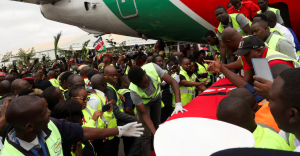
The coffin of a much-beloved opposition leader, Raila Odinga, arrived by helicopter to a stadium in his heartland of western Kenya on Saturday, where tens of thousands were packed in to see him.
AFP journalists said there were already signs of chaos as a huge group of mourners breached a security gate to the stadium and clambered over walls.
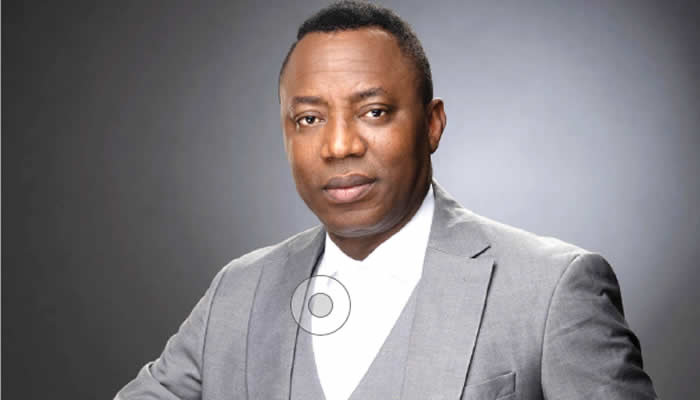
The Federal High Court in Abuja has refused the Nigeria Police Force’s bid to stop the “Free Nnamdi KanuNow” protest, allowing it to proceed as scheduled on Monday, October 20, 2025.
The Inspector General of Police, Kayode Egbetokun, had dispatched police lawyers to the court to move an ex parte motion against activist and protest organiser, Omoyele Sowore, in a bid to legally preempt the planned demonstration slated for the Aso Rock Villa.
However, Justice Umar of the Federal High Court, Abuja, declined to grant the motion, which would have immediately restrained the protest from taking place without hearing the opposing side.
The Judge instead instructed the police to formally serve notice of their application on Sowore and adjourned the case until Tuesday for a proper, contested hearing.
Reacting to the judicial decision, the protest convener, Omoyele Sowore, affirmed the court’s decision as a victory for civil liberties and doubled down on the scheduled protest.
In a statement issued on his X handle on Friday following the ruling, Sowore said, “IG of PoliceNG Kayode Egbetokun dispatched police lawyers to sue me, in an effort to halt the FreeNnamdiKanuNow protest scheduled for Aso Rock Villa on Monday.
“However, the judge, Justice Umar of Federal High Court in Abuja, refused to grant the ex parte motion, instead instructing him to serve me notice and adjourning the case until Tuesday for a proper hearing.”
The demonstration, organised under the hashtag #FreeNnamdiKanuNow, is intended to draw attention to the prolonged detention and legal fate of Kanu.
The police action was seen as an attempt to leverage the courts to prevent a potentially sensitive gathering near the seat of Nigerian power.
The adjournment to Tuesday ensures that the planned Monday protest is not currently constrained by a court order, setting the stage for a potential high-profile confrontation between protesters and security agencies around the Presidential Villa.
The outcome of the adjourned hearing on Tuesday will determine the next legal steps regarding the protest’s legality.
PUNCH Online had earlier reported that Sowore announced October 20 as the date for a protest march to demand the release of the leader of the proscribed Indigenous People of Biafra, Nnamdi Kanu.
Sowore made this known on his X handle.
According to him, the protest would be a “historic” march to the Aso Rock Villa in Abuja, while assuring that it would be conducted peacefully and legally to demand the release of the IPOB leader…”
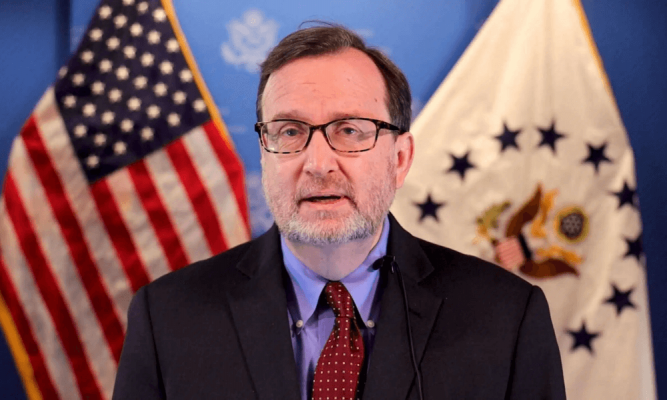
The United States Embassy in Abuja has issued a security alert to Americans in anticipation of a planned protest scheduled for Monday in the Federal Capital Territory.
The protest, organised under the banner #FreeNnamdiKanuNow, is expected to draw crowds to Eagle Square and the Central Business District.
The planned protest was announced by activist and former presidential candidate of the African Action Congress, Omoyele Sowore, on his X (formerly Twitter) account on October 9.
Sowore stated that the protest would take place on October 20 and be directed toward the Aso Rock Presidential Villa, describing it as a “historic” and peaceful demonstration aimed at securing the release of the leader of the proscribed Indigenous People of Biafra, Nnamdi Kanu.
The activist wrote, “We now have a date for the historic #FreeNnamdiKanuNow protest march to the Aso Rock Villa in Abuja. It is October 20 at 7 am.”
Kanu, who is currently facing terrorism charges at the Federal High Court in Abuja, has been in custody since June 2021 following his controversial extradition from Kenya.
In a statement published on its website on Friday, the Embassy cautioned that the protest could lead to disruptions and potential violence.
It advised US citizens to steer clear of the protest areas and limit their movement across the city.
“The US Embassy in Abuja informs US citizens that the Free Nnamdi Kanu Now protest has called for peaceful demonstrations on Monday, October 20th, 2025, in Abuja.
“There may be roadblocks, traffic congestion, and confrontations between police and protestors that could turn violent around Eagle Square and the Central Business District.
“The Embassy advises all U.S. citizens to avoid this area and to severely limit all movement throughout the city on Monday, October 20th,” the statement read in part.
With safety in mind, the Embassy recommended that children stay home from school and that domestic staff who commute from outside Abuja not report to work on that day.
“The Embassy recommends children in Abuja stay home from school and domestic staff who travel from outside of Abuja to stay home as well,” it added.
Americans in Nigeria are being urged to take heightened security precautions.
“Avoid areas where protests are taking place. Avoid crowds. Exercise caution if unexpectedly in the vicinity of large gatherings or protests,” the advisory continued.
The Embassy also reminded US citizens to monitor local news, keep a low profile, and be alert in public places such as shopping centres, movie theatres, and places of worship.
“Review your personal security plans and keep your cell phone charged in case of emergency,” the message advised.
The founder and Board of Trustees Chairman of the New Nigeria Peoples Party, Dr Boniface Aniebonam, has said that politicians defecting to the All Progressives Congress are doing so out of their own free will and not under any coercion from President Bola Tinubu.
Aniebonam stated this on Friday in Lagos while reacting to recent defections by governors and lawmakers from opposition parties to the APC.
He said the decision to join or leave any political party in Nigeria remained voluntary, stressing that no evidence had shown that anyone was being forced to join the ruling party.
“We are yet to see politicians who defected to the APC or any other political party in Nigeria at gunpoint, except for their personal convictions and choices,” he said.
According to him, allegations that Tinubu is attempting to turn Nigeria into a one-party state are unfounded.
He added, “We have 18 registered political parties in Nigeria, which underscores the essence of a multi-party system in our constitution. Even if all the PDP governors and a few others of the registered political parties join the APC, it doesn’t make Nigeria a one-party state.
“The President had once said that he would not stop anyone who wishes to join the APC because it is their right. President Tinubu and the APC have the right to seek more members for their reelection.
“To claim that Nigeria is tilting to a one-party state is unfounded because INEC has not deregistered any of the existing political parties in Nigeria.
“What the elected office holders do not understand is that Nigerians are getting wiser and conscious of their political environment in dealing with politicians.”
The NNPP leader also faulted some state governors for poor governance, saying many of them were seeking refuge in the ruling party to avoid scrutiny.
“Many of these governors are practically not doing much for their states, and they think that running into the APC will provide them a second opportunity. And cover from investigation.
“The truth is that APC needs to be very careful with the movement of politicians crossing over in droves; it is easier to fight from within than from outside.
“Whenever systems collapse, tactics take over, politicians can be anything overnight,” he added.
Aniebonam encouraged Nigerians to channel their grievances appropriately and advised politicians to stop blaming the President for their own failures.
“Tinubu is seeking a rerun, and it is his right to welcome anyone who will help him win the election.
“It appears that some politicians are already afraid even before the election, hence the cries of a one-party state.
“What is the population of the governors and party members compared with those who will vote? They are merely a minority of eligible voters in Nigeria,” he said.
The NNPP leader, however, urged the Economics and Financial Crimes Commission to ensure that state governments are kept in view and any governor who has embezzled state funds should be investigated and made to face trial in court at the appropriate time.
“We encourage President Tinubu to continue to prioritise the needs of Nigerians with the available resources and ensure popular policies for the good of greater numbers.
“The fact remains that some operators of institutions of administration and management are failing Nigerians.
“It is our hope that INEC, the judiciary and law enforcement agencies will live up to expectations and join in taking Nigeria to the desired heights.
“The NNPP is also open to all Nigerians who consider him or herself worthy and popular for the vote of Nigerians to come forward. President Tinubu is not stopping anybody from testing his or her popularity,” Aniebonam stated
The Federal Government has clarified that no inmate has been released under the recent Presidential Prerogative of Mercy exercise, noting that the process is still undergoing final administrative review.
PUNCH Online reported that President Bola Tinubu recently granted a pardon to Sir Herbert Macaulay, as well as 174 others, following approval by the Council of State.
Among the beneficiaries are notable figures such as Ken Saro-Wiwa, the environmental activist, and Major General Mamman Vatsa, who was executed in 1986 for alleged coup plotting.
The pardon list also includes Maryam Sanda, who was sentenced to death in 2020 for killing her husband, and other inmates whose sentences were commuted or reduced, and ex-convicts deemed eligible by the Presidential Advisory Committee on the Prerogative of Mercy.
However, in a statement on Thursday, the Attorney-General of the Federation and Minister of Justice, Lateef Fagbemi (SAN), said the exercise remains at the stage of verifying and reviewing the list of beneficiaries before the issuance of formal instruments of release.
Fagbemi explained that although the Council of State had approved recommendations for clemency, the final stage requires a detailed review to ensure all names comply with legal and procedural standards.
“The Office of the Attorney-General of the Federation and Minister of Justice wishes to clarify that no inmate approved for clemency under the recent exercise of the President’s power of prerogative of mercy has been released from custody.
“The process remains at the final administrative stage, which includes a standard review to ensure that all names and recommendations fully comply with established legal and procedural requirements before any instrument of release is issued,” the statement read.
He noted that the issuance of the instrument of implementation marks the last phase of the process, after which the Controller-General of the Nigerian Correctional Service will be authorised to act.
According to the AGF, the review phase is part of standard protocol and demonstrates the government’s commitment to transparency, due diligence, and the rule of law.
Fagbemi commended the public for its interest and scrutiny of the exercise, describing such engagement as evidence of Nigerians’ commitment to justice and good governance.
“There is no delay in the process; it is simply following the law to the letter to ensure that only those duly qualified benefit from the President’s mercy,” he said.
The minister assured that the public would be duly informed once all legal and procedural checks are completed.
“As soon as all legal and procedural checks are concluded, the public will be duly informed. The rule of law does not rush; it ensures fairness,” he added.
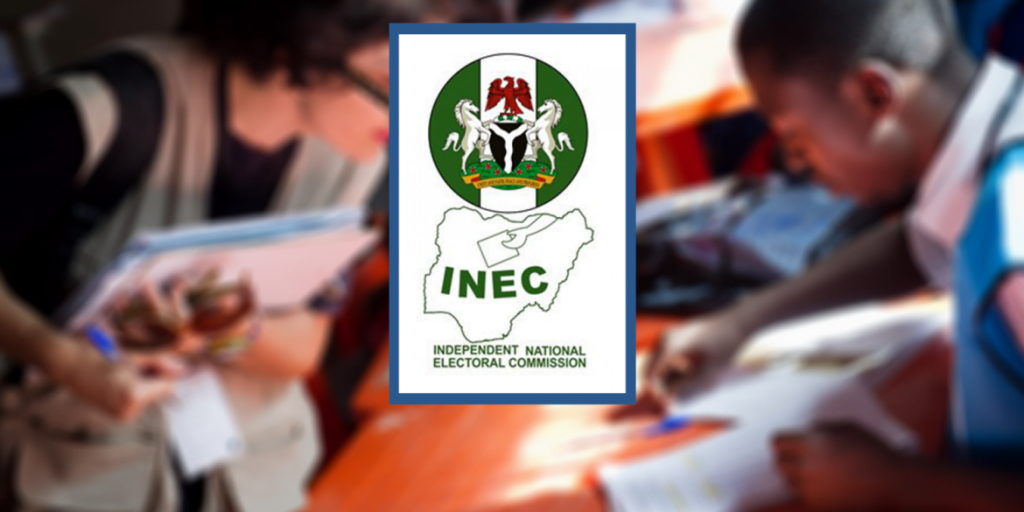
The Independent National Electoral Commission has clarified the rationale behind the ₦1.5bn fee charged for fulfilling a Freedom of Information request for certified copies of the National Register of Voters and polling unit details across the country.
The request, submitted by Messrs V.C. Ottaokpukpu & Associates on October 8, 2025, sought access to the National Register of Voters for all 36 states and the Federal Capital Territory, as well as records of polling units nationwide.
INEC responded on October 13, 2025, approving the request and outlining the cost involved. The quoted fee of ₦1,505,901,750 has since generated widespread public interest.
In a statement issued on Thursday, INEC’s Director of Voter Education and Publicity, Victoria Eta-Messi, explained that the fee was determined in line with the provisions of the Freedom of Information Act 2011.
“Where access to information is to be given under this Act, the public institution may charge an amount representing the actual cost of document duplication and transcription,” the commission stated, citing Section 8(1) of the Act.
INEC further clarified that the cost was calculated based on its guidelines for processing and issuing Certified True Copies of documents, derived from Section 15 of the Electoral Act 2022. According to the commission, “the applicable charge is ₦250 per page.”
“For clarity, the National Register of Voters for all 36 states and the FCT contains 93,469,008 registered voters, with 16 voters per page, requiring 6,018,661 pages.
“Additionally, printing the existing polling units in the electoral wards across the country, covering 176,848 polling units, will require 4,946 pages.
“The total number of pages to be printed for both requests is therefore 6,023,607, at a unit cost of ₦250 per page, resulting in the total sum of ₦1,505,901,750,” INEC stated.
The commission added that “this amount reflects only the actual costs for document duplication and transcription and does not include any other charges.”
INEC reaffirmed its commitment to “transparency, accountability, and responsible management of public resources.”
The clarification followed public criticism after the disclosure of the fee. The approval for the release of the data was first made public in a letter signed by INEC Secretary, Rose Oriaran-Anthony, and widely shared on X (formerly Twitter) on Wednesday night.
In the letter dated October 13, INEC confirmed that the request had been approved, stating, “You are hereby requested to pay the sum of One Billion, Five Hundred and Five Million, Nine Hundred and One Thousand, Seven Hundred and Fifty Naira only (₦1,505,901,750), being the cost of production of the above.”
The letter further directed the requesters to make payment through the INEC Remita Retrieval Reference system and submit proof of payment to proceed with the request.
The fee has sparked debate online, with many questioning its fairness, especially in an era of digital document management. Some users expressed disbelief at the cost, while others speculated that the charge was designed to discourage such requests.
However, some observers defended INEC’s position, noting that the request was for Certified True Copies, which legally requires the printing and certification of physical documents, as stipulated by the FOI Act.
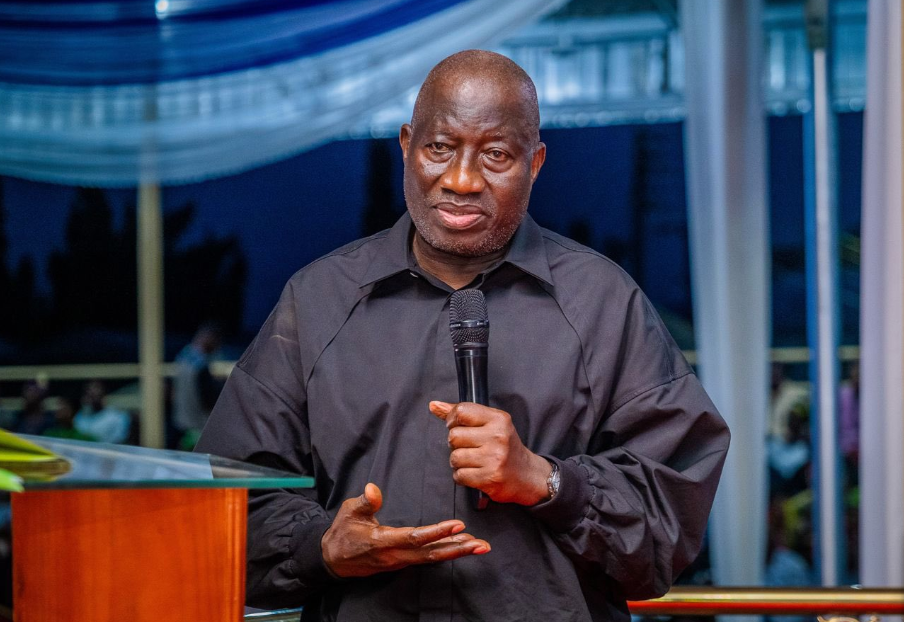
Former President Goodluck Jonathan has mourned the passing of former Kenyan Prime Minister, Raila Odinga, describing him as a true African patriot and a symbol of democratic struggle on the continent.
Jonathan, in a statement titled “Adieu H.E. Raila Odinga” shared on his official X account on Thursday, paid glowing tribute to the late Kenyan statesman, whom he hailed for his courage, resilience and unwavering commitment to democracy in Africa.
PUNCH Online, in an agency report titled “Kenyan opposition leader Raila Odinga dies in India”, reported that Odinga, 80, died in India after collapsing during a morning walk, leading to widespread mourning across Kenya and the continent.
Reflecting on Odinga’s legacy, Jonathan described him as a leader who placed service above self and who embodied the hope of a united, progressive Africa.
“I am saddened by the news of the passing of H.E. Raila Odinga, former Prime Minister of Kenya and a distinguished African statesman whose life symbolised resilience, courage, and democratic struggle in Africa.
“Kenya has lost a patriot, and our continent has lost a great leader, one who understood that leadership is not about self, but about service; who believed and looked forward to Africa’s greatness and ascendancy”, the statement partly read.
The former Nigerian president further celebrated Odinga as a fellow advocate of democracy and a devoted pan-Africanist whose impact would continue to resonate across generations.
He prayed for history to remember Odinga kindly and for Africa to draw continued inspiration from his legacy.
“I honour him not just as a brother in the cause of democracy, but as a committed pan-Africanist whose light will continue to shine.
“May history remember him kindly, and may Africa continue to be blessed by his hope, wisdom and sacrifice”, Jonathan’s statement concluded.
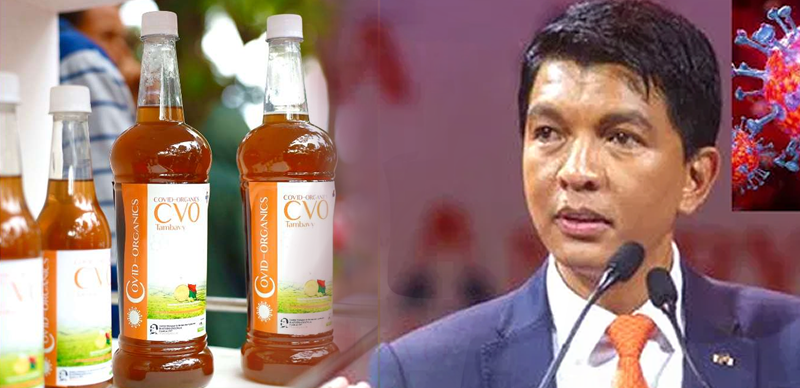
Placards and slogans against France that surfaced in demonstrations against impeached President Andry Rajoelina this week exposed deep resentment against the former colonial power.
“France out,” “Rajoelina and Macron out,” said banners after French media reported that the president had fled on a French military plane as an army unit threw its weight behind protesters calling for his resignation.
“They are still colonising us even though we are supposed to be independent,” said Koloina Andrianina Rakotomavonirina, a 26-year-old engineer.
“It’s unfair that they intervene in such a matter,” she told AFP at a demonstration in central Antananarivo.
With the whereabouts of the 51-year-old president unknown, the national assembly impeached him on Tuesday for desertion of duty, paving the way for a military unit called CAPSAT to seize power.
Negative perception about France was not surprising considering its history, Paris-based political scientist Christiane Rafidinarivo told AFP.
Its colonisation of the Indian Ocean island until independence in 1960 was marked by several atrocities, including the bloody repression by French forces of a 1947 uprising which claimed tens of thousands of lives.
“France represents colonialism,” Rafidinarivo said. “This perception runs through public opinion and is triggered depending on current events.”
While President Emmanuel Macron refused to confirm French involvement in Rajoelina’s evacuation, a presidential pardon for two French nationals jailed in Madagascar on coup charges—announced as the reports of his departure broke—raised suspicions of a deal.
Citizenship revelation
Rajoelina’s apparently chummy ties with Paris have long been criticised at home, but media reports in 2023 that he had obtained French nationality nine years before deepened the mistrust.
The revelation came just before the 2023 presidential race and led to calls for him to be disqualified, as the opposition claimed he should have lost his Madagascan nationality as a result, according to local law.
Rajoelina went on to win reelection, but the polls were boycotted by most opposition parties and marked by a low turnout.
That sparked new criticism against France “because the opposition accused him of being a French agent,” said Adrien Ratsimbaharison, author of a book on the 2009 coup that brought Rajoelina to power but denied him international recognition.
French president at the time, Nicolas Sarkozy, was the first foreign head of state to recognise Rajoelina as president during a state visit to France in 2011.
“People did not forgive in France for that, because that gave Rajoelina some kind of legitimacy,” Ratsimbaharison said.
There were also suspicions that Sarkozy sent financial aid to Rajoelina to engineer the 2009 protests and secure the support of military personnel to overthrow then-president Marc Ravalomanana, he said.
Rumours, resentment
In Madagascar’s social media mix of disinformation and rumour, a widely shared but out-of-context image that claimed to show the deployment of French gendarmes to support the embattled Rajoelina outraged those who believed it.
The photo showed a Malagasy gendarme wearing French colours, but this was only because he had undergone training in France, the gendarmerie told AFP.
Resentment towards the former colonial power is also fuelled by the awarding of major contracts to French companies and open French sex tourism on the impoverished island.
Some French businesses, such as call centres, meanwhile, use French-speaking Malagasy workers at a fraction of the wages they would earn in Europe.
At one demonstration, 27-year-old Mampionona Razafinjoelina said he quit his call-centre job because: “I was tired of being insulted by the French.”
Amid the long-running animosity, Macron said on a visit to the island in April he wanted to create the conditions for “forgiveness” for France’s colonisation, which has also left a bitter taste in its other former colonies such as Mali, Burkina Faso, Niger and Gabon.
This included returning the remains of a Malagasy king killed by the French army in an 1897 massacre that were taken to France as trophies, which happened in September, as well as the establishment of a Franco-Malagasy commission to look into atrocities of the time.
The Nigerian Association of Medical and Dental Academics has debunked rumours that its members are on strike.
The association clarified its position in a statement jointly signed by its President, Dr Nosa Lancy-Orhue; Secretary-General, Dr Abdulrahman Shehu; and National Liaison Officer/Organising Secretary, Dr Muhammad Askira, on Wednesday in Abuja.
NAMDA is the trade union for medical lecturers in universities, tertiary health, and research institutions.
It is responsible for undergraduate and postgraduate medical education, including the training of medical doctors and dentists in Nigeria.
The association reaffirmed that it remains an independent union with the capacity to negotiate its interests and uphold mutual respect.
“NAMDA is not on strike, and we will not be blackmailed, coaxed, or lured away from the interest of our members,” the statement read.
It said the clarification became necessary following persistent enquiries from members, the press and the public regarding its stance on the ongoing withdrawal of services by another academic union in the university system.
NAMDA said its members had been neglected for long but would continue to support legitimate demands that do not adversely affect their interests.
The association acknowledged ongoing engagements with the Federal Government through the Ministries of Labour and Education, which it described as “very encouraging”
It said the Minister of Education, through a meeting facilitated by the Minister of Labour and Employment, had promised to address key issues affecting medical lecturers.
“These demands include the implementation of the Consolidated Medical Workers Salary Structure (CONMESS) and the withdrawal of the compulsory PhD requirement for medical lecturers with postgraduate fellowship for academic promotion and eligibility to vie for the position of Vice-Chancellor,” the statement said.
NAMDA also called for the approval by the Federal Executive Council of the scheme of service contained in memorandum CM(90)92 of its 11th meeting in 1990, based on the recommendations of the committee chaired by the late Chief Justice Atanda Fatai Williams.
It said the issue of Earned Academic Allowances was also discussed.
The association noted that the minister apologised for the error in a letter from the Office of the Accountant-General of the Federation, which appeared to limit the benefit to members of the Academic Staff Union of Universities.
NAMDA alleged that some university managements, supported by a sister union, attempted to exclude its members from the EAA payment.
It cited the Abubakar Tafawa Balewa University, Bauchi, where the Governing Council had responded that medical lecturers were not entitled to the allowance.
The association said it had requested the Department of State Services to investigate how two conflicting letters on the same matter emanated from the AGF’s office.
NAMDA said it would continue to engage the Federal Government through the committee set up to negotiate with university unions to emphasise its long-standing demands.
“The conditions of service for medical and dental lecturers cannot be satisfactorily negotiated by anyone but medical academics under NAMDA,” it said.
The association urged the Federal Government to fast-track the circularisation of CONMESS and direct the National Universities Commission to reaffirm the withdrawal of the circular making a PhD compulsory for medical academics with postgraduate fellowships.
NAMDA said it reserved the right to adopt legitimate means, including legal actions, in pursuing its demands, adding that any withdrawal of service by the union would be guided by its constitution.
It warned that such an action, if ever taken, would have serious implications for the education and health sectors.
The House of Representatives on Tuesday urged the Federal Government and the Academic Staff Union of Universities to urgently return to the negotiating table to resolve the ongoing dispute that led to the declaration of a two-week warning strike by the union.
The House’s resolution followed the adoption of a motion of urgent public importance moved by the member representing Badagry Federal Constituency of Lagos State, Oluwaseun Whinghan, during plenary.
ASUU had on Monday began a two-week warning strike over the Federal Government’s alleged failure to address long-standing issues, including the implementation of the 2009 ASUU-FGN Agreement, revitalisation funding, earned academic allowances, salary structure, and university autonomy.
Before the commencement of the strike, the Minister of Education, Dr. Yusuf Sununu, had assured that the President Bola Tinubu administration was in the final stage of talks with ASUU to resolve all outstanding matters.
Moving the motion, Whinghan expressed deep concern over the renewed strike, warning that such industrial actions have historically escalated into prolonged shutdowns that disrupt academic calendars, derail research, and deepen the frustration of students, parents, and lecturers alike.
“The House notes that although ASUU has described the strike as a warning, previous experiences show that these actions often degenerate into extended work stoppages,” he said.
“We are aware that the Nigerian university system remains central to national development, innovation, and human-capital growth, and that any disruption weakens the country’s competitiveness, scientific advancement, and youth productivity.”
He added that education is constitutionally recognised under Section 18 of the 1999 Constitution (as amended) as a key driver of social and technological progress, stressing that both the Federal Government and university unions share a collective duty to protect its continuity and quality.
Whinghan lamented that repeated strikes in the tertiary education sector have resulted in student dropouts, brain drain, and the loss of public confidence in the nation’s university system, thereby undermining national stability and Nigeria’s long-term development goals.
He called for “renewed dialogue anchored on mutual respect, transparency, and good faith, with the legislature serving as a neutral facilitator in the interest of students and the nation.”
Following the unanimous adoption of the motion, the House mandated its Committees on University Education and Labour, Employment, and Productivity to immediately intervene between the Federal Government and ASUU to facilitate a mutually acceptable and lasting resolution.
The House also resolved to constitute an Ad-hoc Committee to be chaired by the Speaker, Tajudeen Abbas, to mediate in the crisis and ensure that striking lecturers return to the classrooms without further delay.
It urged both parties to exercise restraint, embrace dialogue, and prioritise the interests of students and national development above all other considerations.
Additionally, the House called on the Federal Government to establish a permanent joint consultative platform with recognised university unions for continuous engagement to prevent future industrial actions.
The Committee on Legislative Compliance was further directed to monitor and report the progress of the mediation efforts to the House within one week.