The Federal Government has clarified that no inmate has been released under the recent Presidential Prerogative of Mercy exercise, noting that the process is still undergoing final administrative review.
PUNCH Online reported that President Bola Tinubu recently granted a pardon to Sir Herbert Macaulay, as well as 174 others, following approval by the Council of State.
Among the beneficiaries are notable figures such as Ken Saro-Wiwa, the environmental activist, and Major General Mamman Vatsa, who was executed in 1986 for alleged coup plotting.
The pardon list also includes Maryam Sanda, who was sentenced to death in 2020 for killing her husband, and other inmates whose sentences were commuted or reduced, and ex-convicts deemed eligible by the Presidential Advisory Committee on the Prerogative of Mercy.
However, in a statement on Thursday, the Attorney-General of the Federation and Minister of Justice, Lateef Fagbemi (SAN), said the exercise remains at the stage of verifying and reviewing the list of beneficiaries before the issuance of formal instruments of release.
Fagbemi explained that although the Council of State had approved recommendations for clemency, the final stage requires a detailed review to ensure all names comply with legal and procedural standards.
“The Office of the Attorney-General of the Federation and Minister of Justice wishes to clarify that no inmate approved for clemency under the recent exercise of the President’s power of prerogative of mercy has been released from custody.
“The process remains at the final administrative stage, which includes a standard review to ensure that all names and recommendations fully comply with established legal and procedural requirements before any instrument of release is issued,” the statement read.
He noted that the issuance of the instrument of implementation marks the last phase of the process, after which the Controller-General of the Nigerian Correctional Service will be authorised to act.
According to the AGF, the review phase is part of standard protocol and demonstrates the government’s commitment to transparency, due diligence, and the rule of law.
Fagbemi commended the public for its interest and scrutiny of the exercise, describing such engagement as evidence of Nigerians’ commitment to justice and good governance.
“There is no delay in the process; it is simply following the law to the letter to ensure that only those duly qualified benefit from the President’s mercy,” he said.
The minister assured that the public would be duly informed once all legal and procedural checks are completed.
“As soon as all legal and procedural checks are concluded, the public will be duly informed. The rule of law does not rush; it ensures fairness,” he added.
Lawmakers and population experts on Tuesday called for the urgent conduct of a credible population and housing census, warning that the continued delay undermines national development and the future of millions of young Nigerians.
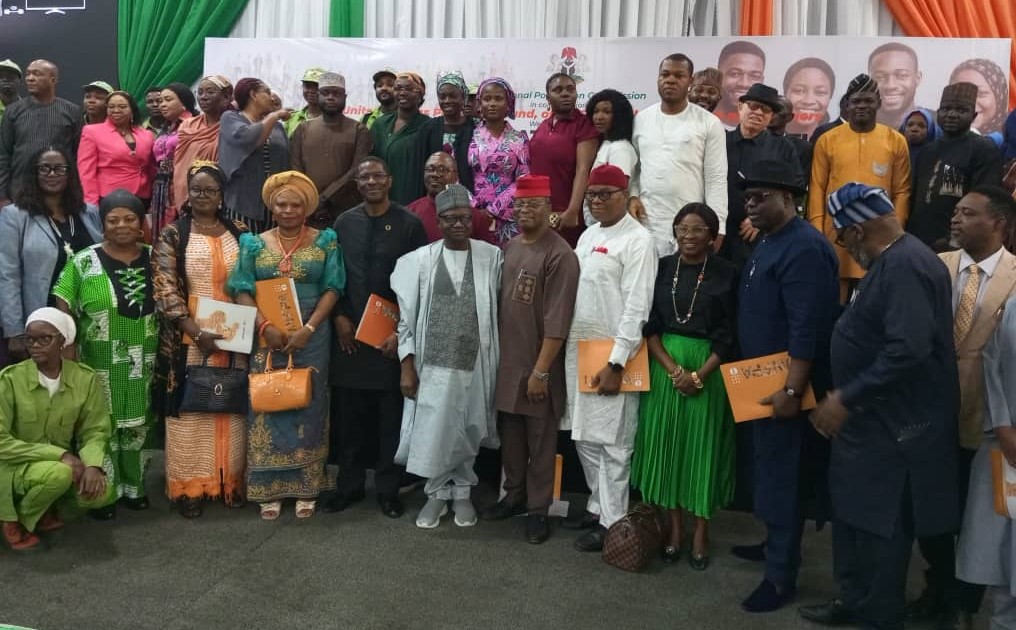
Speaking at the 2025 World Population Day event held in Abuja, the Chairman of the Senate Committee on National Population and Identity, Senator Victor Umeh, emphasised the significance of this year’s theme: ‘Empowering young people to create the families they want in a fair and hopeful world.’
Umeh described it as a timely call to invest in youth by ensuring access to rights and informed decision-making.
The senator expressed concern over the lack of a credible national census since 2006, which has led to uncertainty about Nigeria’s actual population.
“Every day we hear that Nigeria has about 230 million people. But how can we address their needs if we don’t know who they are or how many they are?
“Just yesterday, someone claimed our population exceeds 300 million. I couldn’t dispute it—our last census was 19 years ago,” he noted.
The senator stressed that with more than half of Nigeria’s population under 30, the country’s future depends on its youth.
“To truly empower them, we need accurate, disaggregated data. This is why I strongly advocate for the timely conduct of a credible population and housing census in Nigeria, which is essential for inclusive development, equitable resource distribution, and youth-responsive policy,” he said.
Umeh cautioned that policies built on assumptions lead to misallocation of resources and a growing crisis in sectors like education, employment, and housing.
He pointed to the youth unemployment crisis as a direct result of poor planning.
The senator pledged that the Senate would provide the necessary legislative support and funding to the National Population Commission to ensure the next census is credible and timely.
“The senate is committed to providing the necessary legislative framework to ensure that Nigeria’s population data is accurate, timely, and inclusive, and that youth empowerment remains central to our national development agenda,” the senator added.
Umeh also stressed the need for data on housing, linking population figures to housing deficits and planning.
Similarly, the Chairman of the House Committee on National Population and Identity, Okunjimi Odimayo, stressed that accurate data is not a luxury but a necessity.
“We must be guided by one fundamental requirement: accurate data.
“This is actually what differentiates us from any advanced country in the world. Accurate data — this is what differentiates the private sector from the public sector,” Odimayo noted.
Odimayo urged President Bola Tinubu to make an immediate decision on the census, describing the data gap as “the problem of Nigeria now.”
“Without reliable data, we risk building policy on assumptions. Everything you see, any policy you see, is based on assumptions — and assumptions are not realistic. I can say it,” he added.
Also at the event, NPC Chairman Nasir Kwarra said the country’s youthful demographic offers a unique opportunity that must be strategically harnessed.
“More than 60 percent of Nigeria’s population is under the age of 30. That’s over 130 million young people whose dreams, potentials, and aspirations must be placed at the very centre of our national development priorities,” he said.
Kwarra underscored the need for investment in education, health, jobs, and governance, supported by up-to-date data.
“It also means investing in data management including ensuring compliance with the conduct of a population and housing census every ten years,” he said.
He concluded by encouraging all sectors of society to involve young people not just as beneficiaries but as active partners in national growth.
“Young Nigerians are full of ideas, creativity, and resilience. They want to contribute, they want to lead, and yes — they want to form families on their own terms, in an environment of dignity, fairness, and opportunity,” Kwarra said.
The United Nations Population Fund Deputy Representative Koessan Kuawu echoed the call for inclusion and data-driven policy, urging leaders to listen to the voices of youth.
“Starting on this World Population Day, let’s listen to what young people want and need, and create conditions that enable them to exercise their rights, make their own choices and enjoy a hopeful future,” he said.
Nigeria has been overdue for a national population and housing census since 2016.
The last enumeration exercise, held in 2006, recorded a population of over 140 million. That data remains the foundation for national planning despite significant demographic shifts.
Efforts to conduct a new census have repeatedly stalled due to security concerns, funding challenges, and political considerations.
A recent attempt under the administration of former President Muhammadu Buhari scheduled a digital census for May 2023, but the exercise was postponed just days before commencement to allow the incoming Tinubu administration to assume responsibility.
The lack of current demographic data has hampered policy planning, the delivery of social services, and the equitable distribution of resources. Global standards recommend a national census every 10 years.
The House of Representatives on Wednesday called on relevant agencies of the Federal Government to carry out a reintegration plan for Internally Displaced Persons across the country.
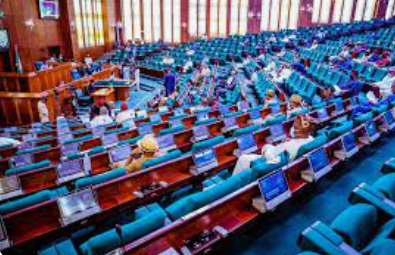
The decision of the House was sequel to the adoption of a motion on notice during Wednesday’s plenary, sponsored by the member representing Eleme/Oyigbo/Tai Federal Constituency, Rivers State, Mr Felix Nwaeke.
Speaking on the substance of the motion, the Rivers lawmaker noted that as of April 2024, the internally displaced persons in Nigeria were estimated at 3.3m persons living in over 300 camps across Benue, Kaduna, Kano, Katsina, Kogi, Nasarawa, Niger, Plateau, Sokoto, and Zamfara States.
He said, “The visitations by humanitarian organisations and government agencies to these camps are immersed with calls for improved welfare, feeding, and security of the displaced persons in these over 300 camps.
“There has to be a plan on how to prepare these persons who had been forced out of their homes and subjected to living conditions lower than they are used to psychologically, emotionally, and physically to reintegrate them back to a normal standard of living.
“If the displaced persons, most of whom are women and children, are returned home after relative peace is restored in their communities without a structured reintegration plan that would be providing cash assistance, food and clothing, and psychological and emotional counseling and support; it would amount to insensitivity to their plight and, at most, abandonment.”
Following the adoption of the motion, the House urged the Federal Ministry of Humanitarian Affairs and Poverty Reduction and the National Emergency Management Agency to conduct an assessment of the situation in the IDP camps across the country and draw up a reintegration plan for IDPs.
It also mandated its Committee on Emergency and Disaster Management to ensure compliance.
Media personality and fashion lover, Toke Makinwa, has once again caught attention online with her mix of humour, honesty, and glam.
On Tuesday, she posted on Instagram saying she’s officially done with heartbreak, unless it’s about money.
“My age no longer allows me to suffer for love.
“If you see me sad, it’s because of money o,” she wrote.
Many of her fans reacted with laughter and praise while others appreciated her honesty, calling her a mood.
Toke didn’t stop at just sharing her thoughts, she also showed off a sleek high ponytail that got fans talking.
“Love me a good pony though,” she added, tagging her hairstylist @malliaworld for the “flawless frontal” and @akano_diamonds for the sparkling jewellery.
This came months after she publicly expressed her openness to remarrying, even as a second or third wife.
During an interview on her podcast, tokemoments, she spoke about her evolving views on marriage and her willingness to get married again, even as a second, third, or fifth wife.
“In all honesty, at this point in my life, if I have the opportunity to be the second, third, fourth, or fifth wife, I will take it,” Toke said during the podcast.
The Nigerian National Petroleum Company Limited has initiated fresh negotiations with the Dangote Petroleum Refinery over the renewal of the naira-for-crude agreement, as talks are underway in anticipation of the expiration of the initial deal, which ends on March 31, 2025.
The NNPCL disclosed this in a statement issued on Monday in response to claims that the government-owned oil company had suspended the naira-for-crude deal until 2030, as it has forward-sold all its crude oil.
This came as fresh findings by The PUNCH indicated that crude oil worth about N486.31bn was received by the $20bn Lekki-based refinery under the deal between October and December 2024.
Recall that on October 1, 2024, the government commenced the sales of crude oil in naira to local refineries to improve supply, save the country millions of dollars in petroleum product imports, and ultimately reduce the pump prices of refined products.
The NNPCL Chief Corporate Communications Officer, Olufemi Soneye, in the statement on Monday, explained that the initial deal was for six months, confirming The PUNCH exclusive report last year, adding that discussions for the renewal of the agreement are currently ongoing, with the aim of establishing a new contract.
He also stated that under the deal initiated in October 2024, the 650,000-capacity refinery has received 48 million barrels to refine for petroleum products, while a total of 84 million barrels has been supplied to the refinery since it commenced operations in 2023.
The spokesperson also clarified that the deal was subject to availability.
The statement read, “NNPC Limited has noted recent reports circulating on social media regarding the alleged unilateral termination of the crude oil sales agreement in naira between NNPC and Dangote Refinery.
“To clarify, the contract for the sale of crude oil in naira was structured as a six-month agreement, subject to availability, and expires at the end of March 2025. Discussions are currently ongoing towards emplacing a new contract.
“Under this arrangement, NNPC has made over 48 million barrels of crude oil available to Dangote Refinery since October 2024. In aggregate, NNPC has made over 84 million barrels of crude oil available to the refinery since its commencement of operations in 2023.”
The national oil firm further reaffirmed its commitment to supplying crude oil for local refining based on mutually agreed terms and conditions. “
Naira-for-crude policy intact
Similarly, the Chairman of the Technical Sub-Committee on the naira-for-crude deal, Zacch Adedeji, reaffirmed the government’s stance, emphasising that the termination of the contract was never a consideration.
He said there is substantial evidence supporting the policy as the correct approach and affirmed that it will continue to contribute positively to the nation’s economy.
“The policy framework enabling the sale of crude oil in naira for domestic refining remains in force. The initiative was designed to ensure supply stability and optimize the utilisation of local refining capacity. There has been no decision at the policy level to discontinue this approach, nor is it being considered. After implementing the policy for some months, evidence abounds that it is the right way to go, and it will continue to help the economy.
“The framework for domestic crude transactions is designed to promote a competitive and efficient pricing environment,” the Federal Inland Revenue Chairman said in an e-signed statement.
He also revealed that local refineries have not been excluded from domestic crude supply and the Nigerian Upstream Petroleum Regulatory Commission is actively ensuring compliance with the Domestic Crude Oil Obligations provisions of the Petroleum Industry Act.
“The engagement process for crude oil supply to domestic refineries therefore remains in place by structured agreements, balancing factors such as availability, demand, and market conditions. There is no exclusion of local refineries from access to domestic crude oil. The Nigerian Upstream Petroleum Regulatory Commission is actively ensuring compliance with the Domestic Crude Oil Obligations provisions of the Petroleum Industry Act.
“We remain committed to ensuring the efficient execution of this initiative in line with its core objectives – enhancing local refining, reducing foreign exchange exposure, and stabilising the domestic fuel supply,” he concluded.
Commenting on the ongoing contract renewal discussions, the Publicity Secretary of the Crude Oil Refinery-Owners Association of Nigeria, Eche Idoko, stated that the renewal was part of the original plan, emphasising that there have been no changes to the initial discussions.
However, he urged the government to honour its commitment to meeting the 27,000 barrels per day demand from modular refineries, stressing the importance of fulfilling this promise for the continued success of the industry.
Speaking in an interview, the publicity secretary said, “What the Federal Government said to us during our meetings last year was that they were going to start the pilot phase with Dangote, and when it ends, the second phase, which will start after March, will cover other refineries with a capacity of 27,000 barrels. The reason they started with Dangote was because they needed a refinery that could produce petrol, and only Dangote could do that.”
“But we also know that diesel is consumed by trucks that carry foodstuffs, which ultimately drives up the price of products, so modular refineries are important, and we really hope that they would fulfil that promise, as discussed, to include other refineries.”
He also highlighted the gains of the agreement, stressing that “We have seen a reduction in the price of products on one hand, and the naira has performed well against the dollar. Given this success, we are supposed to just enter the second phase and not say the government is renegotiating with Dangote. It is supposed to be with all the refineries.”
Meanwhile, an analysis of crude oil liftings obtained from the NNPCL monthly presentations at the monthly Federal Account Allocation Committee meetings between October 2024 and the last FAAC meeting held in February 2025 showed that the Dangote refinery received crude supply worth N486.31bn.
The national oil firm noted that the transactions were valued at $373.76m, and payments were made at an Afrexim Bank-advised exchange rate payable in naira, amounting to N486.31bn.
However, as of last month, the documents indicated that a total of $126.99m at an equivalent of N199.96bn was listed as obligations due for remittance and yet to be paid.
It further stated that all products were supplied to the refinery under a credit facility, with a payment due date set for 45 days from the date of barrel liftings.
It was observed that the crude oil figures were disclosed post facto, with the December data shared during the company’s last meeting in February 2025. The figures reported in January and February are expected to be presented to the FAAC committee during its meeting in March and April 2025.
The report revealed that on October 14, 2024, the $20 billion Lekki-based refinery received its highest allocation of crude oil, totalling 598,125 barrels. In contrast, on October 30, 2024, the refinery’s lowest allocation was 5,000 barrels. Additionally, the government only fulfilled its daily oil requirement on four occasions during this period.
A detailed breakdown of each transaction revealed that the first shipment, which was loaded onto the Sienna vessel carrying 100,000 barrels of crude oil, was received on October 14. This shipment was sold at a unit price of $78.56 per barrel, corresponding to invoice number PSC10.24.001. The total value of the transaction amounted to $7,856,870, which, when converted at N1,628, equals approximately N12.797bn.
The second transaction with invoice number PSC 10.24.002 was initiated on the same day with 598,125 barrels supplied. It was sold at a unit price of $78.56 per barrel with a dollar value of $46,993,903 and the equivalent of N76.54bn using an exchange rate of N1,635 per dollar.
The next allocation with invoice number PSC.10.24.009 was initiated on October 23, with 597,917 barrels delivered via vessel Sonangol Kalandula to the refinery. It was estimated at a unit price of $78.67 per barrel and a total value of $47,043,332 and naira equivalent of N77.64bn. An exchange rate of N1,650 was used for this transaction.
Similarly, a supply of 350,000 barrels was delivered on the same date at the same unit price and exchange rate. This transaction with invoice number PSC 10.24.008 was valued at $27,537,545 and a naira equivalent of N45.45bn.
The next day, October 24, another supply of 250,000 barrels was submitted at a unit price of $75.37 per barrel at a total cost of $18,844,675 and N30.814bn naira equivalent. An exchange rate of N1,635 was utilised for this transaction with invoice number PSC.10.24.018.
Also, the next allocation with invoice number PSC.10.24.017 was initiated on October 24, with 202,716 barrels delivered via vessel Constantios to the refinery. It was estimated at a unit price of $75.37 per barrel and a total value of $15,280,468 and naira equivalent of N24.98bn. An exchange rate of N1,635 was used for this transaction.
On October 30, the lowest supply of 5,000 barrels was submitted at a unit price of $78.18 per barrel at a total cost of $390,943 and N600.03m naira equivalent. An exchange rate of N1,534 was utilised for this transaction with invoice number PSC.10.24.013.
A summation showed that 2,103,758 barrels were supplied in the month of October. However, there was a significant decline in the supply during November, with only two transactions approved throughout the entire month.
Both transactions occurred on November 4, 2024, with a combined supply of 798,374 barrels of crude oil. The unit price for the oil was $75.82 per barrel, bringing the total value of the transactions to $60,534,073. This amount was equivalent to N100.87 billion, using an exchange rate of N1,666 to the dollar. The invoice number for these transactions was PSC/EXP/OML/146/09-24/RO-19.
In December. On the second day of the month, four vessels conveying 799,737 barrels of crude oil berthed at the refinery terminal. It was sold at a unit price of $74.87 per barrel, a total dollar value of $59,879,328, and a naira equivalent of N93.59bn. An exchange rate of N1,562 was used for these transactions and was paid in naira.
On December 11, 233,401 barrels of crude oil were supplied at a unit price of $76.21 per barrel at a total cost of $17,787,886 and N23.03bn naira equivalent. An exchange rate of N1,294 was utilised for this transaction with invoice number PSC.12.24.001. A remark on this transaction stated that Dangote paid based on the received volume of 193,320 barrels as against the invoice volume of 233,401.
Also, a pending crude oil supply of 956,061 barrels at a unit price of $74.9 and a total value of $71.61 was postponed to January.
The documents, however, didn’t reveal the supply of petroleum products received from the refinery under the deal.
Aliu Gafar delivers stellar performance as Esusu in Femi Adebayo’s Seven Doors
Aliu Gafar Delivers a Stellar Performance as Esusu in Seven Doors
By Rtn. Victor Ojelabi
The much-anticipated movie series Seven Doors by Femi Adebayo has finally premiered, currently showing on Netflix, captivating audiences with its intricate storytelling and compelling characters.
The movie begins with a haunting scene of seven women under a mysterious spell leaping to their deaths from a waterfall, setting the tone for a gripping tale that unravels in Ilara Kingdom.
The series explores various societal issues, including corruption, greed, gluttony, family values, malicious conspiracies, and the delicate balance of law and order.
Central to its plot is the calamitous fate of Oba Adedunjoye, the Onilara of Ilara, whose failure to perform traditional rites—symbolised by knocking on seven doors—unleashes devastating consequences on his kingdom.
At the heart of this chaos is Esusu, a malevolent and exiled villain whose return wreaks havoc.
Esusu, a ni ohun t’Eledumare o ni.
Eledumare o ni ika, ika ni Esusu
The character of Esusu, pivotal to the story’s depth, is masterfully brought to life by Aliu Gafar.
Gafar’s first appearance, late in Episode 2, immediately shifts the narrative, introducing a chilling force that spares no one, not even the royal family. His commanding portrayal encapsulates the essence of Esusu, a man whose wickedness defies comprehension.
The backstory reveals Esusu’s sinister pact with Ọba Adejuwọn, an ancestor of Adedunjoye.
Desperation led Adejuwon to seek Esusu’s help to evade death—a move that came at an unthinkable cost, forgetting that bi alọ ba lọ, abọ nbọ (a pendulum that swings to is still coming to swing fro).
Esusu’s return demanded not only royal treatment but the freedom to live as he pleased, challenging the very fabric of the kingdom.
Gafar embodies this complex character with remarkable precision, delivering a performance that is both chilling and unforgettable.
With almost two decades in Nollywood, Aliu Gafar has solidified his reputation as a versatile and dedicated actor.
His extensive filmography includes acclaimed productions such as Jagun Jagun, Anikulapo, Iyalode, Eefin, and Omo Ajele.
His role in Seven Doors further cements his legacy as a master of his craft, showcasing his ability to seamlessly portray multifaceted characters.
The Yoruba actor has also garnered accolades for his work, including the Best Actor award at the Dallas International Yoruba Movies Awards for his role in Peregun.
His commitment to the industry and his talent for captivating performances continue to make him a force to be reckoned with in Nollywood.
In Seven Doors, Gafar’s nuanced performance as Esusu elevates the series, demonstrating his ability to command attention and bring depth to a complex narrative.
His contribution to the Nigerian film industry remains invaluable, and his portrayal of Esusu is a testament to his enduring excellence.
For some weeks now, one of the industries that has received so much attention lately is the Nigerian music industry due to the content flying around the industry.
A lot of music fans have been enjoying this atmosphere as some claim it is very healthy for music especially for the lovers of hip-hop.
Not to keep you in suspense, all I am talking about it the most recent diss tracks flying around in the hip hop sector of the Nigerian music industry. The hip hop industry has really come alive than it has ever been in the past few years.
It all started with one of Chocolate city’s latest signee, Blaqbones, who claims to be the best rapper in Africa shading fellow rapper, Davolee, who was under Olamide’s imprint and Wale Turner, a rapper too, in a song which he was featured on titled ‘Define Rap’ by VJ Adams.
In his verse, he mentioned that ‘Where was Davolee and Wale Turner when sh*t got real’.
Just when we thought it was going to end with that, little did we know that something bigger was cooking between Vector and M.I, who have been counterparts over the years.
Vector pulled the trigger by releasing a diss track for M.I titled ‘Tetracycline’ , this received so many comments from hip-hop lovers especially for the fact that Vector is one who has been able to maintain his stature as one of the best rapper Nigeria has got.
While we were still waiting for M.I to respond, Vector pulled the second shot at M.I, whoop!, it was just another huge shot again as Mr Incredible fans were off balance as they listened to the second track.
Still in the midst of Vector and MI’s diss, Davolee who got a shade from Blaqbones responded and didn’t just fire the shot at Blaqbones alone but also Dremo, Falz, Poe, Ycee, Vector.His reply was such an epic one as people ever expected that he would kill so many birds with just one stone.
He mentioned how Blaqbones is just disrespectful, how Falz isn’t worthy of being a lyricist, how Ycee career went down, how Poe can’t drop hits, how vector delved into commercial music while challenging Dremo to battle him if he can.
However, Dremo actually did!, He replied with a diss track titled ‘Scape Goat’, the album art alone spoke so many messages and the lyrical prowess was just waow. He said in one his lines that he would turn Davolee to a mini-davolee, and how Davolee wears fake chains.
In less than 24hours, Davolee responded and said Dremo has used his glory to gather IG Followers who will still come for his funeral and asked if he bought the 30BG-Ice with his money, he also praised Davido for uplifting Dremo.
The whole thing got interesting when M.I responded to Vector’s diss tracks in a song titled ‘Viper’. He was so strategic to have released it on World Teachers’ day, creating an impression that he wants to school vector.
He made it known in the song that he didn’t do a diss track but a compassion, he repeatedly called Vector’s first name ‘Lanre’ in the song like he was referring to his son.
M.I also stated in his song that the fact that his son is taller than him doesn’t mean he won’t prostrate, recall that Vector had earlier shaded M.I for his height in the second diss track.
All these made Nigerians and music lovers give so much attention to Hip-Hop again in the country. It would be worthy of being noted that Rappers have delved into commercial music in order to make ends meet because they believe Nigerians don’t appreciate rap, however, with this, one would be left with no choice than to Say the real Hip-Hop is still alive.
Hip-hop has always been about rap battle, diss tracks, just for the fun of it, to create entertainment for the fans and have the fans anticipate their favourite rappers’ next diss track.
It already looked like the real Hip-Hop has been killed due to the stakeholders leaving the scene to another genre of music but with the latest development; Hip-Hop has resurrected again in the Nigerian music industry.