
FRC, SEC push ethical governance at SCGN’s 20th anniversary


The Financial Reporting Council of Nigeria, the Securities and Exchange Commission, and other stakeholders have called for ethical governance at board levels as the nation faces multiple disruptions.


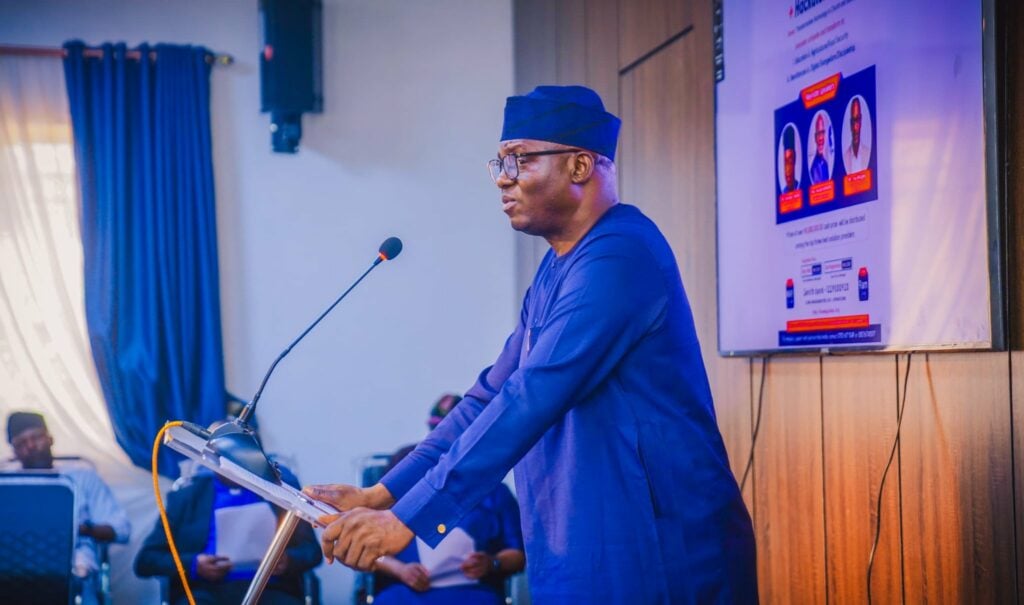
The call was made at the 20th anniversary corporate governance conference of the Society for Corporate Governance Nigeria on Thursday, themed ‘Strengthening Ethical Governance in a Disrupted World: Reflection on Governance’s Journey for a Sustainable Future.’


The SCGN conference marked two decades of promoting integrity, transparency, and responsible leadership. It provided a platform for regulators, board leaders, and governance professionals to explore practical strategies for building resilient, ethical, and future-ready institutions.


The Executive Secretary and Chief Executive Officer of the FRC, represented by the Coordinating Director, Directorates of Corporate Governance and Inspections & Monitoring, Titus Osawe, highlighted several emerging challenges threatening ethical governance in Nigeria.


He identified issues such as knowledge gaps, greenwashing, data manipulation, digital disruption, artificial intelligence, and digital assets. He stressed that organisations must demonstrate their commitment to ethics and integrity through strong ethical leadership and sound governance.


“Strengthening ethical governance is a collective responsibility. I call on all stakeholders, organisations, institutions, and individuals to prioritise ethics and integrity.


We must drive ethical governance intentionally by working together to build a more sustainable future for our country,” he said.


“We at the FRC are committed to promoting ethical governance. We will continue to set standards, provide guidance, monitor and enforce compliance, and where breaches occur, impose applicable sanctions. Together, we can create a culture of transparency, accountability, and integrity that benefits us all. We remain steadfast and resolute in strengthening ethical governance.”


In his remarks, the Director-General of the SEC, Dr. Emomotimi Agama, represented by the Head of the Lagos Zonal Office, John Briggs, underscored the urgency of addressing governance and sustainability challenges.


“The world is grappling with the interconnected challenges of climate change, social inequality, technological disruption, and evolving investor expectations,” he said.


“In this era of profound transformation, the principles of sound governance and transparent sustainability reporting have transcended mere compliance. They are now fundamental pillars of long-term value creation, competitive resilience, and sustainable national development. For emerging economies like Nigeria, this imperative carries particular weight. We face the dual challenge of stimulating economic growth and attracting investment while ensuring that such growth is inclusive, equitable, and responsible. Corporate governance provides the essential framework for meeting these challenges.”


Commending the SCGN for its role in promoting governance standards, Agama said, “Through its unwavering commitment to advocacy, capacity building, and research, the Society has consistently advanced awareness and best practices. Its focus on reviewing and highlighting governance and sustainability trends has provided an invaluable benchmark for boards, regulators, investors, and the public alike.

“This work has enriched national discourse, encouraged high standards, and prepared Nigerian businesses to engage confidently on the international stage. Therefore, this 20th anniversary is more than a milestone; it is a testament to the indispensable role institutions play in shaping a nation’s corporate character.”


He also called for the incorporation of good governance and sustainability principles into the “very DNA of institutions,” adding that transparency, accountability, and inclusiveness must not be treated as optional add-ons but as “fundamental, non-negotiable components” of doing business in Nigeria.

The keynote speaker, Dr Omobola Johnson, Board Chair of Guinness Nigeria Plc, emphasised that diversity on boards is key to achieving ethical governance.


“In a world without a rule book, no single demographic has a monopoly on the knowledge and expertise required for effective governance,” she said. “Diverse boards with different lived experiences bring richness and depth to discussions and decision-making. They also foster integrity and ethics by ensuring that boards are not monolithic but truly representative, essential for making ethically sound decisions that consider a broad range of stakeholders.”


She added, “Integrity and ethical governance go hand in hand. They are not merely top-down mandates but shared values that boards must champion. This requires a long-term view of enterprise success defined by broader metrics such as resilience, trust, and strategic clarity, all vital for navigating uncertainty in a constantly changing world.”


In his opening speech, the President of SCGN, Muhammed Ahmad, acknowledged the disruptive nature of today’s operating environment and the resulting need for stronger ethical grounding.


“In an environment that is highly challenging and disruptive, where AI is constantly reshaping our world, we must ask: what is the role of ethics? How can we ensure that ethical behaviour remains part of our DNA?” he asked.


“Ethics is not just about compliance or ticking boxes. It’s about living, acting, and relating with others based on the highest ethical standards. Governance, therefore, is about guiding our organisations to make the right choices, not taking shortcuts. The easy path is not always the right one. We must remain transparent, fair, and accountable to all stakeholders.”


One of SCGN’s founding directors, Professor Pat Utomi, brought a philosophical perspective to the discussions. Referencing economic historian Carlo Cipolla’s Five Laws of Human Stupidity, Utomi observed that “sometimes emotion overtakes reason,” and called for the development of conscience “so that we can always speak truth to power and help those who might otherwise be carried away.”


The conference also featured a panel discussion with prominent speakers, including the Chairman, Presidential Committee on Fiscal Policy and Tax Reforms, Mr. Taiwo Oyedele; CEO, LeadRight Consultant (South Africa), Ms. Kim Anderson; Director, NCGC, Mrs Yeside Kazeem; and Chairperson, Coronation Life Assurance Limited, Mrs Suzanne Iroche. The session was moderated by the Group Managing Director, Zedcrest Group, Mr. Adedayo Amzat.


Three new publications were launched at the event: Corporate Governance and Sustainability Reporting in Nigeria, Governance in Motion: 20 Years of Corporate Governance Influence and Impact, and the 28th edition of the Journal of Corporate Governance.

CBN promotes adoption of alternative payment systems in C’River


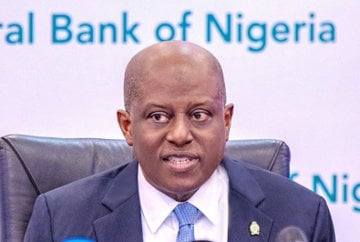
The Central Bank of Nigeria has reaffirmed its commitment to expanding financial inclusion and driving economic growth by promoting the adoption of alternative payment systems.


The apex bank expressed this commitment at a sensitisation exercise known as the ‘CBN Fair,’ held at the Dome Event Centre in Calabar on Thursday.


The event’s theme was “Promoting Alternative Payment Channels as Tools for Financial Inclusion, Growth and Accelerated Economic Development.”


The fair brought together manufacturers, traders, microfinance banks, commercial banks, merchant banks, students, artisans, members of the National Youth Service Corps, and other stakeholders.

Speaking at the event, an Assistant Director in the Corporate Communications Department, Uche Tobias, highlighted policies undertaken by the Olayemi Cardoso-led management since assuming office.


He noted that the Central Bank is championing technologies that empower individuals, boost productivity, and connect communities to the nation’s economic opportunities.


He said, “Under the leadership of Olayemi Cardoso, the management of the Bank remains firmly committed to fostering productivity, enhancing financial inclusion, and maintaining monetary and price stability. These efforts are already yielding positive results, as evidenced by the steady reduction in inflation and current stability in the foreign exchange market.


“Since assuming office, the Governor has spearheaded several key policies to strengthen the financial system. These include: exchange rate unification; the launch of the non-resident Bank Verification Number (BVN) to connect Nigerians abroad with home banking facilities; the BMatch System for forex trading; and the unveiling of the Nigeria Payments System Vision 2028 (PSV 2028) to accelerate digital transformation, broaden financial inclusion, and minimise downtime for faster and safer transactions,” he said.


He also noted the introduction of a 75 per cent Cash Reserve Ratio on non-Treasury Single Account public sector deposits, stressing that this policy aims to enhance liquidity management and mitigate potential inflationary pressures.


He explained that the sensitisation exercise was primarily to educate the public on how the bank’s policies enhance their lives and livelihoods and contribute to the growth and development of the Nigerian economy. He urged them to rely only on information disseminated through the verifiable official channels of the Central Bank of Nigeria.


“This engagement is primarily to sensitise members of the public on how the Bank’s policies enhance their lives and livelihoods and contribute to the growth and development of the Nigerian economy. We urge you to rely only on information disseminated through the verifiable official channels of the Central Bank of Nigeria,” he explained.

In his welcome address, the Calabar Branch Controller, Jibunoh Tolefe-Nwanneamaka, represented by the Head of Research, Jude Nwafor, stated that the fair was designed to promote financial inclusion by showcasing alternative payment channels and highlighting key reforms geared towards building a resilient and inclusive financial system.


According to him, the fair facilitates constructive dialogue between the Bank and the public, adding that it is a space where questions, concerns, and feedback are not only welcomed but valued, with the aim of building trust, enhancing consumer protection, and ensuring that every Nigerian feels empowered to participate in the financial ecosystem.


Cross River State Governor, Bassey Otu, represented by his Special Assistant on Agriculture, John Shiyam, commended the CBN for the initiative.

He noted that the Otu-led administration has prioritised agriculture as a strategy for rapid economic development to promote food security and the well-being of farmers in the state.


He concluded that the CBN Fair is beneficial for creating awareness of alternative payment systems.


“Cross River State is a very vast state with different topographical features, and most areas are remote. As I speak with you, not every local government in the state has a commercial bank.


“So it has been a very big challenge for farmers and even business people in such areas to access banking services. This initiative and this exercise are going to be very beneficial to people in such areas, to be aware of the alternative payment systems that they can leverage for their financial transactions,” he added.


The CBN, in a publication on its website, stated that it has long prioritised financial inclusion, ensuring that more Nigerians have access to banking and financial services. The CBN’s NFIS, first launched in 2012, created a framework for widening access, especially for underserved populations.


The apex bank explained that a challenge to financial inclusion in Nigeria persistently arises from low financial literacy, weak infrastructure, digital divide, and limited reach of formal banking services in rural and remote areas.


PUNCH Online reports that more recently, the CBN unveiled Payments System Vision 2028 (PSV 2028) to succeed PSV 2025, signalling its commitment to expanding, modernising, and securing Nigeria’s digital payments infrastructure.

Reps order probe into $18bn spent on ailing refineries


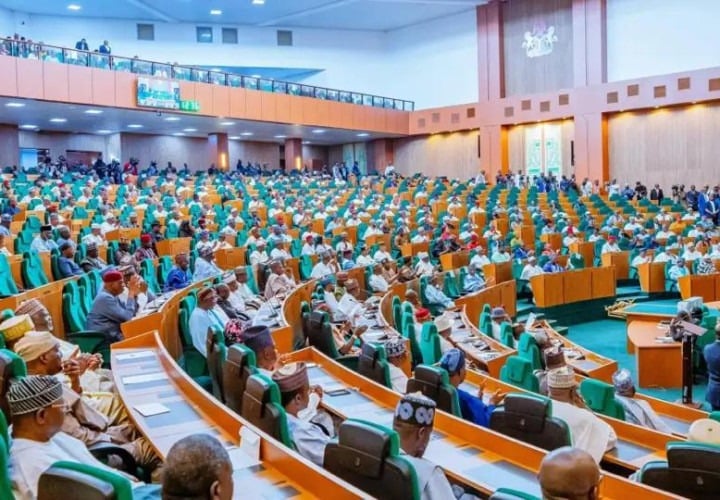
The House of Representatives on Thursday mandated its relevant committees to investigate the non-functionality of state-owned petroleum refineries in Port Harcourt, Warri, and Kaduna, despite the reported expenditure of about $18bn on their rehabilitation over the past two decades.


The resolution followed the consideration and adoption of a motion on notice moved by Lagos lawmaker, Oluwaseun Whinghan, during a plenary session presided over by the Deputy Speaker, Benjamin Kalu.


The Federal Government owns four petroleum refineries — two in Port Harcourt and one each in Warri and Kaduna.


Managed by the Nigerian National Petroleum Company Limited, the refineries have suffered perennial decline due to poor administration and vandalism — a situation that has left the country dependent on imported refined products.

Recently, billionaire businessman Aliko Dangote argued that the chances of the refineries returning to optimal operation were slim, even as the Group Chief Executive Officer of NNPCL, Bayo Ojulari, stated that selling off the national assets would not be ruled out.


Moving the motion, Whinghan, who represents the Badagry Federal Constituency of Lagos State, said the House was worried about the persistent non-functionality of Nigeria’s state-owned refineries in Port Harcourt, Warri, and Kaduna.


This, he noted, is despite over two decades of rehabilitation efforts and an estimated $18bn spent on turnaround maintenance, with no tangible results to show.


He said, “The House is worried over the recent public statements by Nigeria’s foremost industrialist, Aliko Dangote, and former President Olusegun Obasanjo, expressing doubts about the viability of these refineries and describing the multi-billion-dollar investments as futile, sparking widespread public concern and outrage over potential mismanagement.

“We recall that in 2007, during the administration of President Olusegun Obasanjo, Alhaji Dangote and other private investors acquired the refineries, but the succeeding administration of President Umaru Yar’Adua reversed the transaction, opting instead for rehabilitation using public funds — a decision that has yielded no significant operational improvement.


“The House is concerned that on Thursday, July 10, 2025, the Group Chief Executive Officer of NNPC Limited, Bayo Ojulari, in an interview published by The PUNCH, sought to distance the current administration from the monumental mismanagement of Nigeria’s state-owned refineries in Port Harcourt, Warri, and Kaduna.


“He confirmed their continued non-functionality despite significant investments estimated at $18bn and proposed the potential sale of these assets, thereby raising critical questions about fiscal responsibility, strategic asset management, and the long-term implications for Nigeria’s energy security and economic stability.”


According to the Lagos lawmaker, Nigerians are worried that despite consistent annual budgetary allocations over the years, “there is no verifiable evidence of substantial rehabilitation outcomes, representing a gross misuse of public funds and a betrayal of public trust.”


He added, “We are aware that Nigeria’s economic stability and energy security are inextricably linked to a functional and accountable downstream petroleum sector, particularly following the removal of the petrol subsidy by the current administration, which underscores the urgent need for operational refineries to mitigate economic hardship.


“We are convinced that a comprehensive, transparent, and time-bound investigation is essential to ascertain the current operational and structural status of the Port Harcourt, Warri, and Kaduna refineries; examine the utilisation of all allocated funds and the effectiveness of rehabilitation efforts; identify any infractions, mismanagement, or corrupt practices in the management of these assets; and propose actionable reforms to safeguard future public investments and ensure the sustainability of Nigeria’s oil and gas infrastructure.”

Following the adoption of the motion, the House urged its Committees on Petroleum Resources (Upstream, Downstream, and Midstream), Gas Resources, and Public Assets “to investigate funds appropriated and disbursed for the rehabilitation of the Port Harcourt, Warri, and Kaduna refineries between 2010 and 2024.”


The committees are to “ascertain the status of the refineries, examine how public funds were utilised, identify agencies responsible for infractions or mismanagement, and report within four weeks for further legislative action.”

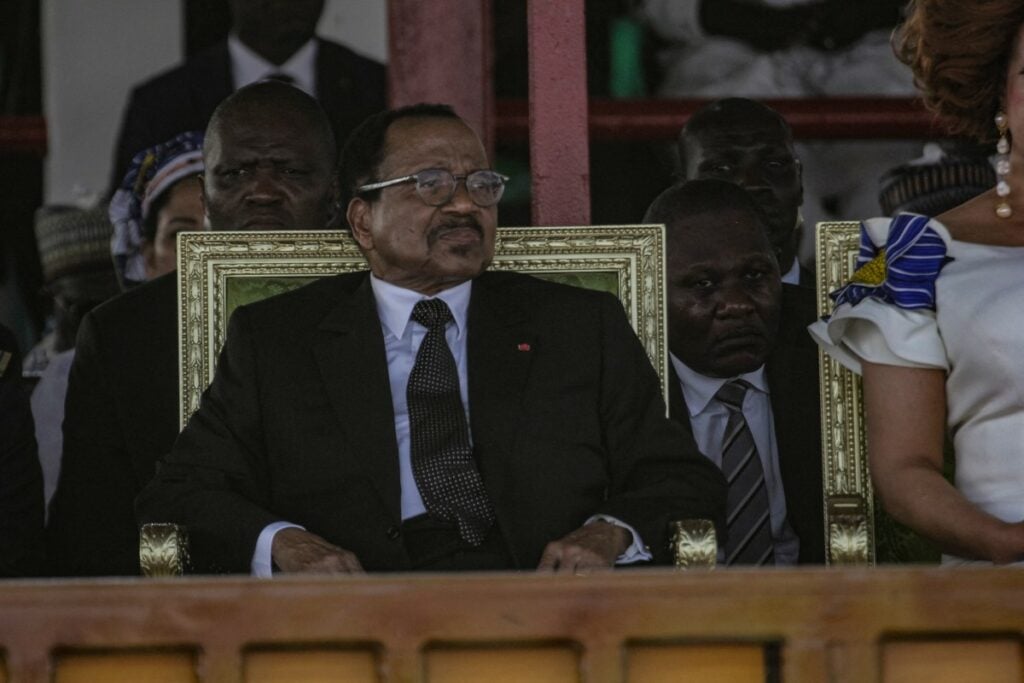
Cameroon election: World’s oldest leader, Biya, poised to win eighth term


Cameroon’s Paul Biya, already the world’s oldest head of state, is the favourite to win Sunday’s presidential election, handing him an eighth term in power in the central African country.


A fractured opposition of 11 candidates is standing against the 92-year-old in the vote, whose credibility and fairness rights groups have called into question.


Most of the 7.8 million Cameroonians called to the ballot box can remember no leader other than Biya, who has held onto power with an iron fist since 1982.


Questions over the state of his health have only grown louder since he entered his 10th decade. Should Biya win, he would be nearly 100 by the end of his eighth term.


Though the opposition hopes to entice voters with promises of a new face and an end to the cost-of-living frustrations of the long Biya epoch, its most credible candidate, Maurice Kamto, had his candidacy barred by the courts.


Theophile, an artist in the economic capital Douala, branded the vote a “scam”.


The 24-year-old had hoped to vote for Kamto, who came second to Biya in the 2018 election.


“As long as the system remains in place, there is nothing that can be done. There has to be a change,” he told AFP.


Others value the veteran’s decades of experience in a country where half the population is under the age of 20.


“I say Paul Biya still has something to offer,” said Giovanni, a 20-year-old student in Douala.


“Even though some of his promises haven’t been kept, I’m counting on him. He’s a wise man with a wealth of experience and a long track record.”


– ‘Determination intact’ –


The longtime president was noticeably absent from the campaign trail.


He had taken a trip this month to Switzerland, his favoured destination for overseas jaunts, fuelling fresh speculation over the state of his health.

But he made a rare outing on Tuesday, holding a rally at a stadium in the town of Maroua in the Far North region, a key electoral battleground with 1.2 million registered voters.


It was his first public appearance since May.


“My determination to serve you remains intact,” he told the crowd in a 25-minute speech, which touched on youth, women and infrastructure.


Though his entourage expected nearly 25,000 people at the event, AFP reporters present estimated only a few hundred showed up.

Biya became Cameroon’s second president since independence in the 1960s in the 1984 election, when he ran unopposed and won 100 per cent of the vote.


He had already taken over two years earlier when his predecessor Ahmadou Ahidjo resigned suddenly.


He was re-elected in similar style in 1988 but after the introduction of multi-party politics only narrowly overcame challenger John Fru Ndi in 1992 by a four-per cent margin.


Biya turned to a mix of repression, regional alliances and overtures to his former rivals to curtail threats to his rule, Arrey Ntui, the International Crisis Group’s senior analyst for Cameroon, said.


His strategy bore fruit: he was re-elected with 93 per cent of the vote in 1997, 71 per cent in 2004, 78 per cent in 2011 and 71 per cent in 2018.


– ‘Protect the vote’ –


Human rights groups have spent years condemning Biya’s stranglehold on Cameroon’s institutions and election process.


“The electoral charade is unlikely to signal any potential change in the immediate future but rather the consolidation of the status quo,” said David Kiwuwa, who heads the School of International Studies at Nottingham University’s campus in China.


With four-in-10 Cameroonians living under the poverty line in 2024, according to the World Bank, economic fears have long loomed large in voters’ minds.


The high cost of living, as well as the lack of drinking water, quality schooling and healthcare, have long frustrated Cameroonians.

“I keep hoping for a better Cameroon where young people can find work,” Boris, a computer engineer in the coastal city of Buea, told AFP.


“I imagine a day when Cameroon looks like Paris, with accessible and affordable education, where we can drive safely on our roads.”


Yet those recurring complaints, widely shared on social media, have not led people to take to the streets in protest.


Several citizens’ associations have set up networks of observers at polling stations to “protect the vote” by counting ballots independently.


The government has slammed these as attempts to “manipulate public opinion” and “produce skewed results”.


The vote will be held in the shadow of a deadly conflict between separatist forces in Cameroon’s English-speaking regions and the government.


During the last vote in 2018, turnout was particularly low in anglophone Cameroon, where the fighting is fiercest.


AFP

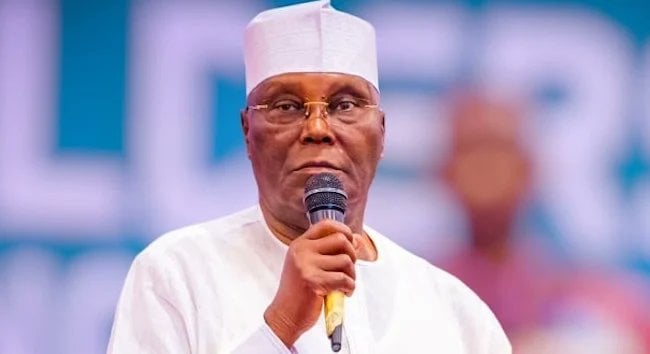
Atiku backs Sowore’s campaign for Nnamdi Kanu’s release


A former Vice President, Atiku Abubakar, has called for the immediate release of the detained leader of the Indigenous People of Biafra, Nnamdi Kanu, describing his continued detention as a “stain on Nigeria’s belief in the rule of law.”


Atiku made this known in a post shared on his X handle on Thursday, expressing full support for the campaign launched by human rights activist and the 2023 African Action Congress presidential candidate, Omoyele Sowore, demanding Kanu’s release.


He wrote, “The continued detention of Mazi Nnamdi Kanu remains an open sore on our nation’s conscience and a stain on our belief in the rule of law. Defying court orders that granted him bail is an abuse of power and an assault on justice.


“I, therefore, lend my voice in full support of the campaign led by @YeleSowore for his immediate release or due prosecution. We fail as patriots if we allow Kanu’s case to fester as yet another wound this nation refuses to heal.”

Sowore, on Wednesday, had urged South-East governors, lawmakers, traditional rulers, and religious leaders to join the planned demonstration for Kanu’s release.


He disclosed that he had contacted several prominent Igbo leaders, including Anambra State Governor, Prof. Chukwuma Soludo; Abia State Governor, Dr. Alex Otti; Senator Enyinnaya Abaribe; and Labour Party’s 2023 presidential candidate, Peter Obi, to join the movement.


The activist also revealed that he reached out to Atiku through his team, noting that the former vice president’s support would give significant weight to the campaign.

“I have tried reaching out personally to Dr. @alexottiofr, Prof. Charles Chukwuma Soludo @CCSoludo, and Mr @PeterObi (through his team) today. Alex Otti and Soludo neither took my calls nor responded to my messages. They promised to tell Mr. @PeterObi about our plans, although he is currently travelling.


“I also reached out to Alhaji @Atiku through his team, while Senator @SenatorAbaribe said he would return my call. I spoke with Obinna Agwuocha of the House of Representatives. He was receptive and encouraging.


“The Abia State House of Assembly members informed me that they plan to travel to London next week and then return directly to Abuja for further action. They mentioned they intend to visit the Attorney General of the Federation first to lodge a complaint; they didn’t anticipate a “placard” protest. I told them, That’s fine; what matters most is that we agree on a unified date for action.


“This is not the time for hesitation. If we genuinely believe that @MaziNnamdiKanu deserves freedom, then every leader of conscience must act, now, not later,” he wrote.


Kanu had remained in the custody of the Department of State Services since his re-arrest in 2021 following his controversial extradition from Kenya.


Despite multiple court rulings ordering his release, including an October 2022 Court of Appeal judgment that discharged and acquitted him of all charges on the grounds that his extradition violated international laws, the Federal Government has yet to comply.


The IPOB leader faces charges bordering on terrorism, treasonable felony, and incitement before the Federal High Court in Abuja, all of which he has consistently denied.

ICYMI: Innovation minister Nnaji resigns amid allegations


The Minister of Innovation, Science, and Technology, Geoffrey Nnaji, has resigned from President Bola Tinubu’s cabinet amid controversies surrounding his academic records and allegations of certificate forgery.


Nnaji, who was appointed in August 2023, announced his resignation in a letter to the President on Tuesday, expressing appreciation for the opportunity to serve.


Confirming the development in a statement on Tuesday, the Special Adviser to the President on Information and Strategy, Bayo Onanuga, said, “President Bola Ahmed Tinubu has accepted the resignation of Geoffrey Uche Nnaji, the Minister of Innovation, Science, and Technology, following some allegations against him. President Tinubu appointed Nnaji in August 2023.


“He resigned today in a letter thanking the President for allowing him to serve Nigeria. Nnaji said he has been a target of blackmail by political opponents. President Tinubu thanked him for his service and wished him well in future endeavours.”

Nnaji’s resignation comes amid a lingering controversy over alleged certificate forgery and questions surrounding his academic qualifications from the University of Nigeria, Nsukka.

Nnaji and the Enugu State Government had traded words over allegations that he presented forged certificates.


The dispute intensified after the Federal High Court in Enugu rejected Nnaji’s bid to stop the University of Nigeria from releasing his academic records.


The court had ruled that the institution was within its rights to release the minister’s academic details in response to a freedom of information request, a decision that fuelled further public scrutiny.


Nnaji, however, maintained that he was being blackmailed by political opponents determined to tarnish his reputation.

2027: Tinubu supporters warn Jonathan as kinsmen condemn lawsuit


A pro-President Bola Tinubu group in Ondo State, the Progressive Network for Tinubu, on Tuesday declared that President Tinubu has no serious opposition ahead of the 2027 presidential election.


The group also warned former President Goodluck Jonathan against returning to the race, saying doing so would “end in embarrassment.”


This follows social media reports suggesting that Jonathan is warming up to contest the 2027 poll under a yet-to-be-revealed political party.


Amid this rumour, a legal practitioner, Johnmary Jideobi, on Monday, filed a suit at the Federal High Court in Abuja, seeking a perpetual injunction to restrain Jonathan from contesting the 2027 presidential election.

Speaking on Tuesday during the inauguration of local government structures across the 18 local government areas of Ondo State, the PNT Director-General, Mr. Olumide Obadele, said beyond legal hurdles, Jonathan should uphold his reputation as a statesman by staying away from the 2027 race.


According to him, opposition parties, including the Peoples Democratic Party and the African Democratic Congress, are “on life support,” and any candidate contesting on their platform, including Jonathan, cannot defeat President Tinubu.


Obadele dismissed claims that the All Progressives Congress was jittery over Jonathan’s rumoured ambition, saying constitutional and legal constraints make his participation nearly impossible.


He said, “I can tell you that Jonathan will not run at the end of the day. The Constitution is clear about it, and there’s no need to twist it. If he insists, he will only end up embarrassed and rubbished.”


Obadele described the 2027 presidential election as “a done deal” for the APC, insisting that none of the existing opposition parties has the structure or clout to unseat President Tinubu.


“Political parties such as the PDP, Labour Party and ADC are in the ICU and lack the organisation and national appeal needed to challenge the ruling APC. I do not think any opposition party in Nigeria today can say it wants to run against Asiwaju. For me, 2027 is a done deal,” he said.


On the group’s mobilisation efforts for the President, the PNT convener said the group was working to expand grassroots participation, particularly in Ondo State, where only about 28 per cent of registered voters participated in the last general elections.


He lamented the growing voter apathy among elites who prefer to engage politics on social media rather than at the polls, saying civic engagement and political education were now the focus of PNT’s activities.


“Our goal is to awaken the remaining 70 per cent of voters who stayed home during the last polls. We’re engaging communities, civil groups and youth organisations to enlighten them about Asiwaju’s leadership and achievements. We want Yoruba land to stand solidly behind him,” he said.

Meanwhile, civil society organisations in Delta State have condemned the lawsuit against Jonathan, describing it as politically motivated and an abuse of judicial process.

The Director-General of the Young Nigerian Rights Organisation, Mr. Victor Ojei, called for the immediate dismissal of the suit, which he described as “a politically motivated distraction and a gross abuse of judicial process.”


In a statement made available to The PUNCH on Tuesday in Asaba, Ojei expressed concern over what he called “a growing pattern of weaponising the courts for political persecution.”


He said, “The suit, which seeks to bar Dr. Jonathan from contesting the 2027 presidential election, is not only legally baseless but also morally wrong and contrary to the spirit of democracy.


“Dr. Jonathan’s assumption of office in 2010 followed the tragic passing of President Umaru Musa Yar’Adua — a constitutional transition rather than an election. His initial tenure was incomplete and constitutionally distinct from a full presidential term.


“The framers of our Constitution did not intend for such a lawful succession to be counted as an ‘elected term.’ Any argument to the contrary is a distortion of both fact and law.”


Ojei further argued that the case suffers from a fundamental defect of locus standi, as the plaintiff lacks the legal standing to bring such an action.


“The individual who filed the suit neither represents any institution of state nor has suffered any direct injury that warrants judicial intervention. It is a speculative petition driven by political interests rather than constitutional principles,” he added.


The organisation stressed that democracy thrives on inclusion and the right of every citizen to participate, not on preemptive exclusion based on personal or partisan motives.


“To attempt to silence a citizen’s political right before he has even declared interest in the race is not only unconstitutional but a dangerous precedent for our democracy,” the statement added.


The group urged the judiciary to safeguard its integrity by resisting political manipulation, stressing that the courts are “the last hope of the common man, not a playground for political adventurers.”


It, therefore, called on the Federal High Court to dismiss the case without hesitation.

Tinubu seeks N’Assembly’s nod for $2.3bn fresh loan


President Bola Tinubu has again written to the National Assembly, seeking approval for a fresh external borrowing of $2.3bn.


This is in addition to a plan to issue a $500m sovereign Sukuk, which will mark Nigeria’s debut in the international Islamic finance market.


The request, contained in a letter read on the floor of the House of Representatives by Speaker Tajudeen Abbas on Tuesday, complies with Sections 21(1) and 27(1) of the Debt Management Office Establishment Act, 2003.


The borrowing plan seeks legislative approval for external financing to implement the 2025 Appropriation Act, refinance maturing Eurobonds, and expand Nigeria’s debt instruments to include Islamic finance products.

Tinubu noted that “the 2025 fiscal framework anticipates $9.27bn in new borrowings to address the budget deficit, of which $1.84bn is earmarked for external sources at an assumed exchange rate of N1,500 to the dollar.”


He explained that the external borrowing would be sourced through various instruments, including Eurobonds, syndicated loans, bridge financing, or direct loans from multilateral institutions — in order to optimise cost and manage risk effectively.


A key element of the plan is the refinancing of Nigeria’s $1.118bn Eurobond, issued in 2018 at a coupon rate of 7.625% and due in November 2025.


“This is a standard practice in debt capital markets,” the President wrote. “Refinancing through Eurobonds or syndicated loans will guarantee debt sustainability and boost investor confidence.”


Tinubu maintained that refinancing maturing obligations was part of routine debt management and vital for maintaining Nigeria’s fiscal credibility.


The President’s letter also revealed a plan to issue a $500m sovereign Sukuk internationally, a move aimed at deepening Nigeria’s presence in the Islamic finance market.


The initiative follows the success of domestic Sukuk issuances, which have raised N1.39tn since 2017 to fund critical infrastructure projects such as major road construction.

According to Tinubu, the international Sukuk would help narrow Nigeria’s infrastructure funding gap while diversifying its investor base.


The government is also exploring a credit enhancement guarantee from the Islamic Corporation for the Insurance of Investment and Export Credit, a member of the Islamic Development Bank Group, to strengthen the offering.


“If the ICIEC credit guarantee is utilised, 25% of the proceeds will be used to repay relatively expensive debt obligations, while the balance will finance pre-identified infrastructure projects,” the President said.

He assured lawmakers that the Federal Ministry of Finance and the Debt Management Office would engage reputable transaction advisers to secure the best pricing and terms amid volatile global market conditions.


Tinubu further expressed confidence in Nigeria’s reputation as a consistent and credible issuer in international capital markets, noting that the proposed transactions would reinforce investor trust and ensure prudent fiscal management.


The new borrowing request comes as Nigeria grapples with the twin challenges of financing a large budget deficit and managing a complex debt portfolio.


As Africa’s largest economy, the Federal Government continues to balance its drive for infrastructure-led growth with the need to maintain debt sustainability.


The 2025 budget includes plans to raise $9.27bn in new loans, with $1.84bn coming from external sources.


Analysts say the government’s growing reliance on a mix of domestic and foreign funding reflects a pragmatic response to rising inflation, currency volatility, and high global interest rates.


Nigeria’s success with domestic Sukuk issuance has demonstrated the potential of Islamic finance to fund tangible development projects. Expanding this strategy to global markets could enhance the country’s credit profile and reduce dependence on traditional borrowing methods.


The proposed involvement of the ICIEC guarantee is also expected to lower borrowing costs by improving Nigeria’s credit rating, making the new Sukuk more attractive to global investors. Allocating a quarter of the proceeds to retire expensive debts, observers note, reflects a cautious and strategic approach to managing the nation’s debt structure.

CBN reaffirms commitment to monetary stability


The Central Bank of Nigeria has assured Nigerians that its ongoing policies and reforms are targeted at restoring price and monetary stability amid rising inflation and economic hardship.


Speaking at the CBN Fair in Uyo, Akwa Ibom State, on Tuesday, the CBN governor, Olayemi Cardoso, said some of the apex bank’s monetary measures were already yielding results, citing the easing of inflationary pressures and relative stability in the foreign exchange market.


Cardoso, represented by the acting Director of Corporate Communications, Hakama Ali, noted that the exchange rate unification policy had reduced volatility and cleared more than $7 billion in verified forex backlogs.


He added that the B-Match forex trading system had strengthened market integrity and improved price discovery.


The governor highlighted other initiatives, including bank recapitalisation to strengthen the sector’s resilience, the introduction of non-resident BVN to link Nigerians abroad with local banking services, and the Nigeria Payments System Vision 2028 to accelerate digital transformation and deepen financial inclusion.

He also mentioned the 75 per cent CRR on non-TSA public sector deposits, aimed at improving liquidity management and curbing inflationary pressures.


“Some of our monetary policies have started yielding positive results. This can be seen in the steady ease of inflation and current stability in the foreign exchange market,” Cardoso said.


He further urged Nigerians to respect the national currency, cautioning against spraying, mutilating, or counterfeiting the Naira.


Earlier, CBN Uyo Branch Controller, Njideka Nwabukwu, said the fair was designed to sensitise the public on the bank’s policies while creating a feedback platform to improve service delivery.


She pledged the branch’s commitment to supporting Akwa Ibom’s economic aspirations through financial literacy campaigns and stakeholder engagement.


On Monday, the PUNCH reports that naira maintained its upward momentum last week, closing at ₦1,465/$ at the official market.


The rally was driven by weaker U.S. economic data that softened the dollar, alongside stronger foreign exchange inflows that eased demand pressure.

At the parallel market, the currency also appreciated by 3.8 per cent week-on-week to ₦1,460/$.


This narrowed the gap between the official and parallel market rates to ₦5.68/$1, compared with ₦34.34/$1 the previous week.

The Nigerian Railway Corporation generated N1.95 billion from transporting 929,553 passengers through the rail system in the first quarter of 2025, the National Bureau of Statistics has reported.


The figure is disclosed in the Rail Transportation Data Q1 2025, published by NBS on October 5 and announced via its X handle on Tuesday.


The report indicates a significant boost in NRS’s passenger and revenue figures for the first quarter of 2025.


“In Q1 2025, a total of 929,553 passengers travelled through the rail system, relative to 675,293 reported in the corresponding quarter of 2024, indicating a growth rate of 37.65%.


“The volume of goods/cargoes transported stood at 181,520 tons compared to 160,650 tons recorded in Q1 2024,” the report read.


In terms of revenue generation, NBS said, “N1.95 billion was received from passengers during the reference period, showing an increase of 37.36% from the N1.42 billion recorded in the same quarter of the previous year.”


It added that N657.03 million was received from goods and cargoes conveyed, up by 8.19% from N607.32 million in Q1 2024.


“In addition, Other receipts amounted to N115.68 million, indicating an increase of 355.39% in Q1 2025 from the N25.40 million received in Q1 2024.”

PUNCH Online reports the growth may be attributed to ongoing infrastructure investments, including the operational Lagos-Ibadan rail line, which has been a key driver of the sector’s expansion since its launch in 2021.


Recall that the rail sector’s contribution to Nigeria’s GDP rose by 18.65% in Q1 2025, underscoring its growing economic significance.

Things to know about new acting INEC chair, May Agbamuche-Mbu


A National Commissioner at the Independent National Electoral Commission, May Agbamuche-Mbu, has taken over as the acting Chairman of the Commission.


This followed the formal handover of duties by Professor Mahmood Yakubu, who is proceeding on a terminal leave.


The announcement was made on Tuesday at the INEC headquarters in Abuja during a stakeholders’ meeting with Resident Electoral Commissioners.


Agbamuche-Mbu, a seasoned legal expert with over three decades of professional experience, and her appointment mark a significant moment for Nigeria’s electoral body as it continues efforts to strengthen democracy and ensure credible elections across the country.

Here are key things to know about the new Acting Chairman:


1. Early life and background


Born in Kano but originally from Delta State, Agbamuche-Mbu’s upbringing in northern Nigeria shaped her broad national outlook and commitment to unity. Her multicultural background reflects a blend of northern and southern influences that continue to guide her public service ethos.


2. Education


She attended St. Louis Secondary School, Kano, before proceeding to the University of Ife (now Obafemi Awolowo University), where she earned her Bachelor of Laws (LLB) degree in 1984. She was called to the Nigerian Bar in 1985 and later qualified as a Solicitor of the Supreme Court of England and Wales after completing studies at the College of Law, London.


Agbamuche-Mbu also holds a Master’s degree in Commercial and Corporate Law from Queen Mary and Westfield College, University of London, as well as postgraduate qualifications in International Dispute Resolution and International Business Law.

3. Professional experience


With over 30 years of experience, Agbamuche-Mbu has advised clients across the public and private sectors. Before joining INEC, she was the Managing Partner at Norfolk Partners, a Lagos-based law firm.


Between 2010 and 2011, she served as the sole solicitor on the Presidential Projects Assessment Committee, which evaluated major federal projects nationwide. In 2016, she was part of the Ministerial Committee that drafted the Roadmap for the Solid Minerals Sector.


4. Role in INEC

Agbamuche-Mbu was confirmed as a National Commissioner of INEC in 2016 and has since contributed to legal and policy reforms within the commission. Her elevation to Acting Chairman follows years of service dedicated to strengthening Nigeria’s electoral process.


5. Contributions to legal development


She is a certified arbitrator and former Secretary of the Chartered Institute of Arbitrators (Nigeria). As editor of THISDAY LAWYER, she wrote over 120 editions of her widely read “Legal Eagle” column from 2014 to 2016, influencing public discourse on law, governance, and policy.


6. Personal life


Agbamuche-Mbu keeps her private life out of the public eye. While little is known about her family, her professional accomplishments have made her one of the most respected figures in Nigeria’s legal and governance circles.


Her appointment as acting INEC Chairman places her at the helm of Nigeria’s electoral body at a pivotal time, as the commission prepares for upcoming elections and continues implementing electoral reforms.

Exit mobile version