Sekibo, Obi, others harp on security, leadership for economic prosperity

Sekibo, Obi, others harp on security, leadership for economic prosperity
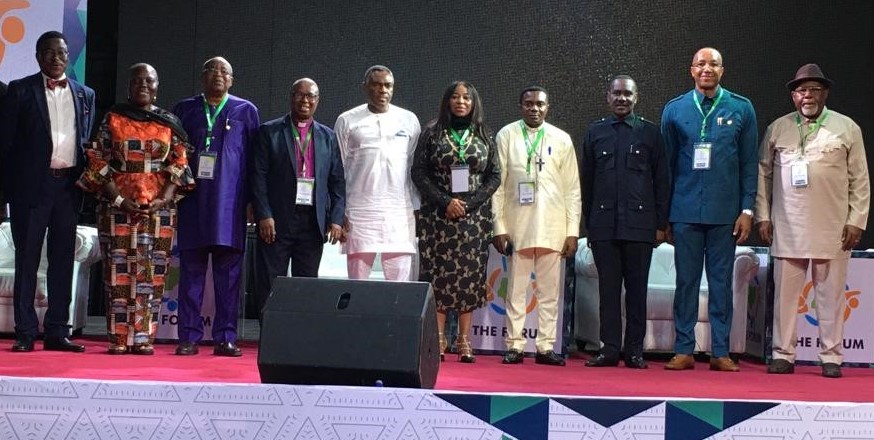
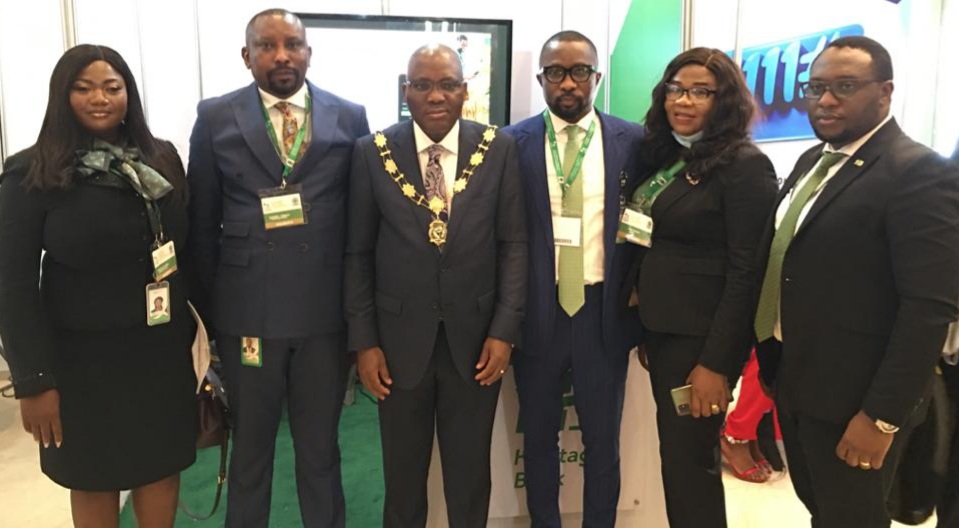
L-R: Prof. Oyelowo Oyewo; Coordinator of the Nigerian Association of Constitutional Law (NACL); Dr. Oruene Finebone – Secretary, Mediacal Women Association of Nigeria, Rivers State Branch; Barrister Sotonye Inyeinengi-Etomi, President of the Men’s League of Christ Church Port Harcourt; Very Rev. (Dr), Ivan Ekong, Asst. Resident Minister, Christ Church Port Harcourt; Figbene Briggs, Regional Head, South South 1 & 2 Zone; Dr. (Amb.) Victoria Ekhomu, Group MD/CEO of Trans-World Security Systems Ltd.; Very Rev. Jonathan Udofia; Pastor Ituah Ighodalo, Trinity House, International Christian Worship Center; Elder (Engr.) Stanford Tassie and Alabo (Arc) Duboye Donald Graham-Douglas, during the 2nd Edition 2022 Forum, one-day International Colloquium organized by The Men’s League of Christ Church Port Harcourt, tagged, “What do Nigerians Want?”, held in Port Harcourt.

The MD/CEO of Heritage Bank Plc, Ifie Sekibo and other notable Nigerians have affirmed that the apt way to boost economic prosperity and peace in the country is to start addressing leadership challenges and insecurity.

Sekibo and other notable Nigerians like the Presidential aspirant of Labour Party, Peter Obi, Pastor Ituah Ighodalo, Prof. Oyelowo Oyewo, Dr. Victoria Ekhomu and Barrister Sotonye Inyeinengi-Etomi, during the 2nd Edition 2022 Forum, one-day International

Colloquium organized by The Men’s League of Christ Church Port Harcourt, tagged, “What do Nigerians Want?”, extensively brainstormed on the kind of leadership the country needs and how to rescue the country from its current debacle.

Speaking on the topic, “The Economy Nigeria Needs to Break Forth,” Sekibo stressed that of important to achieving the transformation the country needs, there was urgent need to address insecurity, which according to him, is the foundation of prosperity, as no nation can achieve much where the is no peace.

Sekibo, represented by the Divisional Head, Strategy & Business Solutions, Segun Akanji emphasized that for security purposes, there must be an established functional and value adding identity system in place.

“On a higher note, I think one of the things that we need to achieve as a country is the issue of functional and value adding identity management, which is still far away from us, although, some people know that we have BVN, NIMC and a few other identity capture systems but they have not been as functional and value adding, like the social security number that most people in advanced economies carry,” he stated.

Sekibo further explained that to achieve a prosperous economy, Nigeria needs to find ways and means by policies to build dual circulation economy which thrives on three pillars.

According to him, we need to focus on building dual circulation economy where we can expand domestic production and demand by making sure that the masses are employed.

“We need to make our people are productive and stop putting subsidy in unproductive zones. When you give subsidy to people with inadequate or no income, they really cannot add value to the economy, and money has a way of flowing away due to import of consumables from other countries and because of this, a larger portion of every consumption or cash given as subsidy gets out of the country,” said Sekibo.

The bank’s helmsman further explained that to expand the domestic production, government must give the private sector support to drive employment creation, technology, which is riding on innovation and manufacturing must be in place and, the population which is an added advantage must be well educated.

He highlighted the need to examine how the country could add value to primary production for global export, emphasizing on reduction of over dependence on foreign markets but rather increase local production for export, whilst also increasing demand on local products.

Sekibo further affirmed that if states could function as proper federating units and take the lead of the competitive comparative advantages therein, wealth creation would be achieved that would bring about the desired changes.

The former governor of Anambra state and presidential aspirant, Peter Obi lamented the huge indebtedness of the country, which he blamed on unproductivity due to the inimical situation of high unemployment rate resulting to over 80million Nigerians being jobless.

He blamed the cumulative failure of government over the years on insecurity, failure to migrate from sharing formula to production formula and lack of will to transform the power sector and the need to focus and support the micro, small and medium enterprises (MSMEs).

In his paper titled, “The President Nigeria Needs”, Pastor Ighodalo harped on the need for leadership change.

He argued that what the country needs now are leaders who have vision and are ready to sacrifice for the common man, stating, “things must be done differently”.

Ighodalo believed leadership remains the bane of Nigeria’s transformation, stressing that once we get good leadership other things will fall in place.

Prof. Oyewo while speaking on the topic “Restructuring and True Federalism” was of the view that some responsibilities need to be decentralized like the police, power provision and railway.

Once there is decentralization, he believes that the state will have less dependence on the centre, “rebalancing of the constitution in terms of power and security. So, there is reason for state police.”

Oyewo maintained that regions are closer to the people, thus it will boost security, the economy and sense of belonging by the populace.

He also identified data and planning as key factors in ensuring that programmes are tailored towards the people.

Heritage Bank CEO, Sekibo wins Banker of Year SMEs & Agric 2021 award

Heritage Bank CEO, Sekibo, wins Banker of Year SMEs & Agric 2021 award

Heritage Bank Plc, Nigeria most innovative service provider has been adjudged Banker of the Year 2021 under SMEs and Agric category, which was awarded to the MD/CEO of the Bank, Ifie Sekibo.

The bank won the prestigious award at the New Telegraph 2021 Awards in recognition of its leadership position in delivering sterling development and growth of the Agricultural sector and the Small and Medium Enterprises.

Presenting the award to Sekibo, earlier in a letter to congratulate him for his nomination as the Banker of the Year (SMEs & Agric) of the year 2021, the Managing Director/Editor-in-Chief, Ayodele Aminu explained, “after a thorough scrutiny of Heritage Bank’s laudable support for Small and Medium Scale Enterprises (SMEs), as well the country’s agricultural sector, in the last one year by our Panel of Judges and Editors, we at the New Telegraph 2021 are pleased to award Heritage Bank, Banker of the Year (SMEs & Agric).”

Receiving the award on behalf of the bank’s CEO, the Executive Director, Jude Monye stated that the Bank was honoured and motivated to do more for the sustainability and growth of the Agric and SME sectors following the award received from New Telegraph newspaper.

“We are highly honoured to receive the award as the Banker of the Year (SMEs & Agric) from the Board and Management of New Telegraph Newspaper. This validates the hard work and success story of the bank to create, preserve and transfer wealth across generations, as amongst other sectors of the economy, we have continued to ensure our efforts to support the Agric and SMEs sector in Nigeria counts.

“This is a result that will continue to motivate us to deepen our supports to Agric, SMEs sector and the economy at large for sustainable growth,” he assured.

Sekibo vowed that in line with its core mandate to create and transfer generational wealth, the bank would continue to make farming profitable to stakeholders and attractive to the youth, as Heritage Bank had taken the front seat in financing critical agricultural projects in several states in the country, especially in Oyo, Kaduna and Zamfara and recently in Plateau Jos.

He noted that most of the ventures in the agriculture sector fall within the Micro, Small and Medium Scale Enterprises (MSME) sectors of the economy, which Heritage Bank in close collaboration with CBN has been championing.

According to him, in complimenting the efforts of the Central Bank, Heritage Bank has made a huge success of the established agricultural schemes by making funds available to both small holder farmers and SMEs (Prime Anchors) in their efforts to increase agricultural output especially rice and wheat productions.

He explained that Heritage Bank has deepened support of small holders’ farmers and anchors in Ogun, Niger and recently Plateau state in rice and wheat seed and grain production under Prime ABP, which would help tackle gaps inherent.

“Heritage Bank in partnership with CBN is set to reverse the adverse trends by eliminating dependence on imported wheat which currently stands at over $2 Billion and the unavailability of high yield wheat seed that stands at 63,000 MT through a strategic approach which would facilitate import substitution and promote self-sufficiency in the wheat value chain in Nigeria, by funding the local production of wheat and encouraging backward integration by wheat millers,” he stated.

Meanwhile, Heritage Bank has recorded notable success stories in the Agric and SMEs’ spaces which in 2017 the bank won the maiden award from CBN for Sustainable Transaction of the Year in Agriculture.

In 2018, Heritage Bank emerged as a winner in the Agriculture Category during the year’s CBN Sustainable Transaction of the year award. The Nigeria Agriculture Awards (NAA), announced Heritage Bank as the Agric. Bank of the Year. According to NAA, Heritage Bank was selected in recognition of its footprints in the Agribusiness space.

In 2019/2020, Heritage Bank secured mandate as Transaction Advisers and Settlement Bank on Agribusiness and Solid Minerals to Lagos Commodities & Futures Exchange. 

Sekibo Urges Govt., Stakeholders to Prioritise SMEs, Youth Entrepreneurship 

Sekibo urges govt., stakeholders to prioritise SMEs, youth entrepreneurship 

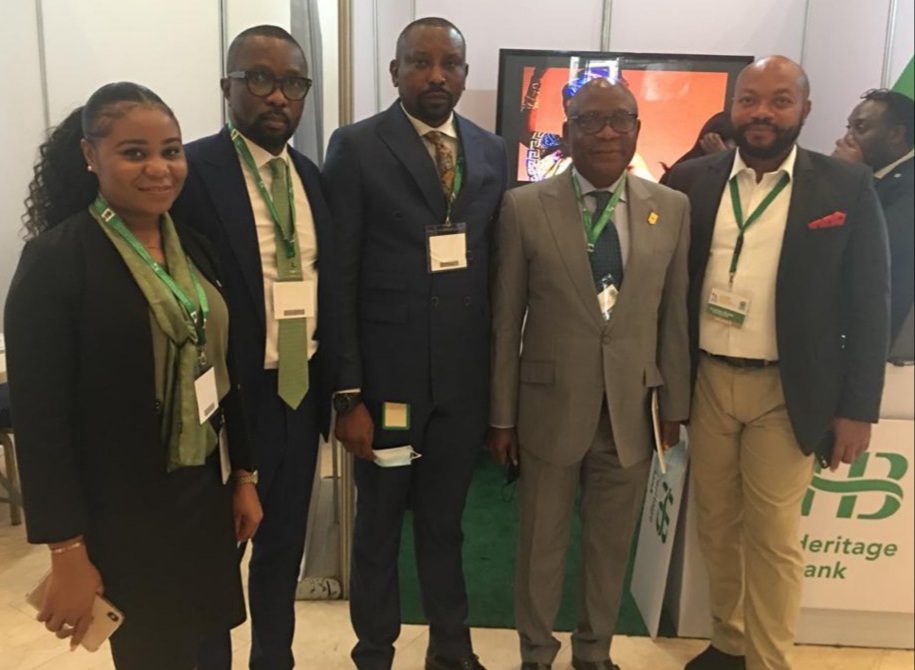
L-R: Preye Ojeme, Heritage Bank’s Experience Centre Manager, Maitama, Abuja; Daniel Oniko Regional Head Abuja 1; Dr. Bayo Olugbemi, President/Chairman of Council, Chartered Institute of Bankers of Nigeria; Isaiah Ediae, Experience Centre Manager, Algiers Wuse; Dab Okosun, staff of Federal Mortgage Bank of Nigeria and Efehi Cole, Experience Centre Manager, Garki, during the 14th Annual Banking and Finance Conference of Chartered Institute of Bankers of Nigeria (CIBN) with a theme: “Economic Recovery, Inclusion & Transformation: The Role of Banking and Finance,” held in Abuja.

Bridging the gap to attain sustainable solutions to economic recovery will be the most impactful route to drive lasting and meaningful growth; for this to be achieved, creation of opportunities, conscious inclusion of Small and Medium Enterprises and youth entrepreneurship are crucial – Sekibo.

MD/CEO of Heritage Bank Plc, Ifie Sekibo gave this submission on the sidelines of the 14th Annual Banking and Finance Conference of the Chartered Institute of Bankers of Nigeria (CIBN) with a theme: “Economic Recovery, Inclusion & Transformation: The Role of Banking and Finance.”

According to him, one of the key areas where government, financial institutions and other stakeholders can move this nation from poverty to prosperity is through conscious creation of viable environment for small businesses and young entrepreneurs to thrive because they are the backbone of local economies around the world – they happen to be the biggest employers, job creators and contributors of the national gross domestic products.

“We cannot talk about moving from poverty to prosperity without taking SMEs very seriously in this country.

“We must support the SMEs sector reform through providing infrastructure, providing loans to farmers and ensuring interest rate loans is single digit,” Ifie Sekibo affirmed.

Sekibo who was represented at the conference by the Regional Head Abuja-1, Daniel Oniko, stated that giving SMEs and young entrepreneurs leverage to contribute immensely to the development of their host community through engaging the youths and unemployed individuals will bring about and facilitate economic recovery. He emphasized that the role of SMEs in creating and sustaining national development in relation to job creation has been considered a key tool in modern-day poverty alleviation, economic emancipation, and total well-being.

The MD, however disclosed, “One of Heritage Bank’s major cardinal point as a bank is supporting micro, small and medium scale businesses and our

L-R: Edison Okoro, Heritage Bank’s Experience Centre Manager, Herbert Macaulay, Abuja; Dr. Uche Olowo; Immediate past President/Chairman of Council, CIBN; Daniel Oniko Regional Head Abuja 1; Isaiah Ediae, Experience Centre Manager, Algiers Wuse and Blessing Eyo, Heritage Bank’s Experience Centre Associate, during the 14th Annual Banking and Finance Conference of Chartered Institute of Bankers of Nigeria (CIBN) with a theme: “Economic Recovery, Inclusion & Transformation: The Role of Banking and Finance,” held in Abuja.

strong desire to see young men and women succeed in any area of their business. This will help the society and economy to grow, thereby moving the nation from poverty to prosperity, he added. He noted that Heritage Bank was taking the lead through various initiatives such as its youth entrepreneurship development programmes which were aimed at increasing the contributions of the MSME segment to the economy.

Sekibo further explained that the entrepreneur schemes of the bank in the support for business had always focused on dependable job-creating sectors such as the agricultural value chain: fish farming, poultry, snail farming, etc., cottage industry, mining and solid minerals, creative industry: tourism, arts and crafts, and Information and Communication Technology (ICT).Speaking earlier, the Vice President Yemi Osinbajo, said emerging challenges require that the banking and finance sector takes on more transformative projects such as housing and renewable energy.

The VP acknowledged that the banking and finance sector has over the years played significant roles in the nation’s economic development. According to the Vice President, “it is time for the sector to take on some of the transformative big-ticket items that would fundamentally transform our economy. Such matters include consumer finance but housing finance.

“In his goodwill message, the Governor of the Central Bank of Nigeria (CBN), Godwin Emefiele stated that the banking sector remained well positioned to support the recovery efforts of the monetary and fiscal authorities. “Clearly, Nigeria’s banks have become not only strong and resilient but have also carved a good niche in the world to consolidate on the growth and resilience of the banks in the last decades”, he added.

Market Formation Framework, Driver To Optimally Develop Solid Mineral Sector- Sekibo 

Market formation framework, driver to optimally develop solid mineral sector- Sekibo 


Sekibo


MD/CEO of Heritage Bank Plc, Ifie Sekibo has said that market formation framework is the key to optimally exploit Nigeria’s precious metal and solid minerals endowments.


He disclosed this during a webinar organised by the Securities and Exchange Commission (SEC) in collaboration with the Federal Ministry of Mines and Steel Development with the theme, “Financing the Solid Minerals Sector through the Capital Market and the Critical Role of Commodity Exchanges.”


Sekibo explained that a fully established market formation process that would lead to having a Corporation as an integrated solid mineral institution like NNPC which allows the collateralisation of assets those banks can rely on for alternative funding options.


According to him, this will guarantee other creative ways of raising funds for financing commercial activities relating to solid minerals and viable projects along its value chain.


Sekibo who was represented by the Divisional Head, Strategy and Business Solutions, of the Bank, Olusegun Akanji, said for the sector to be viable, it requires lots of converged government interventions because for any development focused sector to kick-off around the world, it needs government intervention to lay the foundation for the private sector and funders to step-in and pool their resources.


“Once, we can collateralise these assets, whether they are under the ground or being determined, you use different instruments to bring liquidity into them. Then investors will follow up once we have established there is enough they can explore.” the MD stated.


He further suggested that finance sector regulators need to expand its Prudential Guidelines to accommodate the instruments such that precious metal backed or solid minerals backed assets could qualify as part of the computation of liquidity ratios.


“Once banks start injecting their resources, customers would certainly follow that trend. You can start arranging for sophisticated solutions like bonds, bullion backed assets and pension notes. Again, banks will have to be poised to hold the funding that comes from this sector; that way, they can open new transactional frontiers either locally or internationally.


“At the base of this, are the issues of pricing and integrity of the market. Once banks play in that sector and we have a government institution like the NNPC type to hold all these documentations, it would be very easy to establish price discovery on an ongoing basis. This will in turn attract international funders, hedge funds and retail investors. Today, we have retail bonds in the same way; we can have gold backed or any of the solid mineral assets where retail investors can put in the funds,” Sekibo explained.


Meanwhile, it would be recalled that Heritage Bank Plc has said its involvement in the private sector collaboration with Dukia Gold & Precious Metals Refining Co. Limited is set to unlock the over N344 trillion market worth of gold investible instruments in the solid minerals sector.


However, he reiterated that consistent packaged framework, which could only be held by an established government institution, as part of the layers of framework, would help to tackle major challenges in trying to support Dukia Gold’s clients.


“With consistent packaged framework, it will be easier for Dukia Gold and help in less spending. If Dukia Gold should speak of their challenges, they will speak about tonnes of tonnes of documents they have to produce. But with a unified source of documentation, it makes the process easier and improves cost management. These are some of the challenges we have experienced in trying to support a few clients we worked with,” Sekibo stated.

Exit mobile version