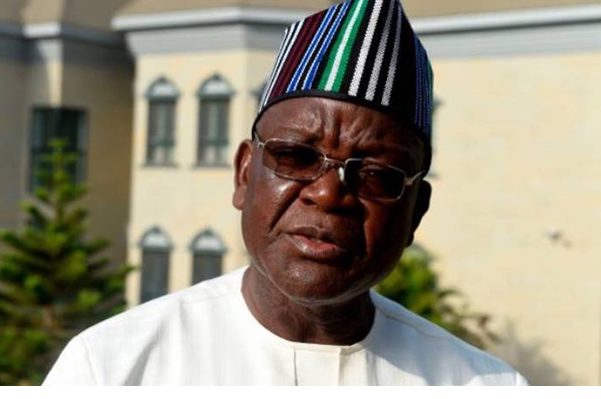
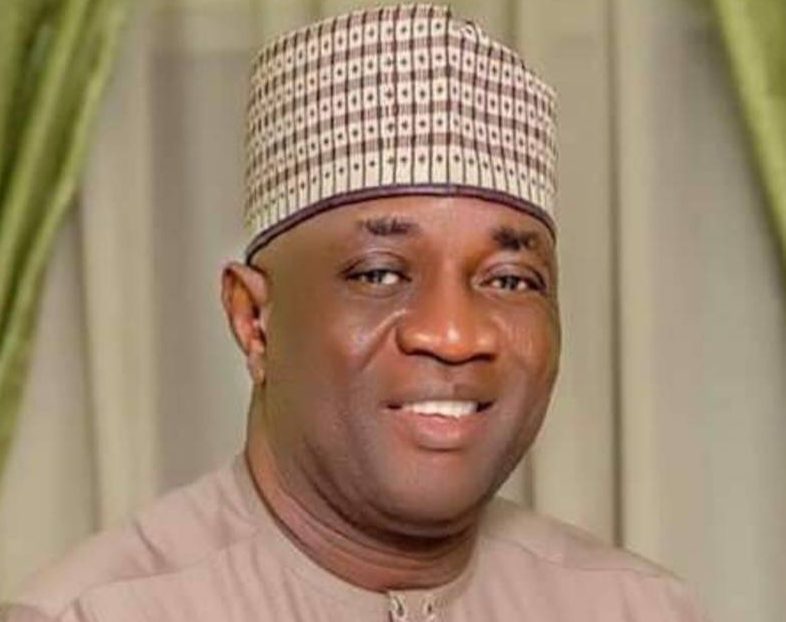
Immediate past governor of Benue State, Samuel Ortom, has reaffirmed his support for the retention of Nigeria’s presidency in the South in 2027.
He insisted that the region must be allowed to complete its eight-year term before power returns to the North.
He made this known at a media interaction in Makurdi, the state capital, on Thursday.
He said, “Till today, I, Ortom, believe in southern presidency, even if my party (PDP) is producing a candidate for presidency in 2027, the candidate must be from the South. South should be allowed to complete eight years.
“So, for me, I am not supporting a northern candidate.”
Ortom, a chieftain of the Peoples Democratic Party and member of its Board of Trustees, also commended President Bola Tinubu for some of the economic reforms initiated under his administration.
“Tinubu administration is doing well; he is ensuring that the rule of law prevails, and this is good for our country.
“The oil industry had been a place where a few cliques siphoned our common wealth, but with the removal of subsidies, there is a lot of money in all the states.
“The president even stated this during his visit to Benue at the height of the killing of our people in Yelwata, where he said that no state would say it doesn’t have money to pay salaries.”
Ortom also lauded the ongoing tax reforms, describing them as steps in the right direction for economic growth.
However, Ortom criticised the administration of former President Muhammadu Buhari, saying Buhari’s administration took the country from “top to bottom.”
Ortom said he is not part of the newly formed coalition.
He added, “I remain a member and leader of Peoples Democratic Party; I am even a board member of my party and I don’t believe in coalition but where there’s need for strategic partnership, you will see me there.”
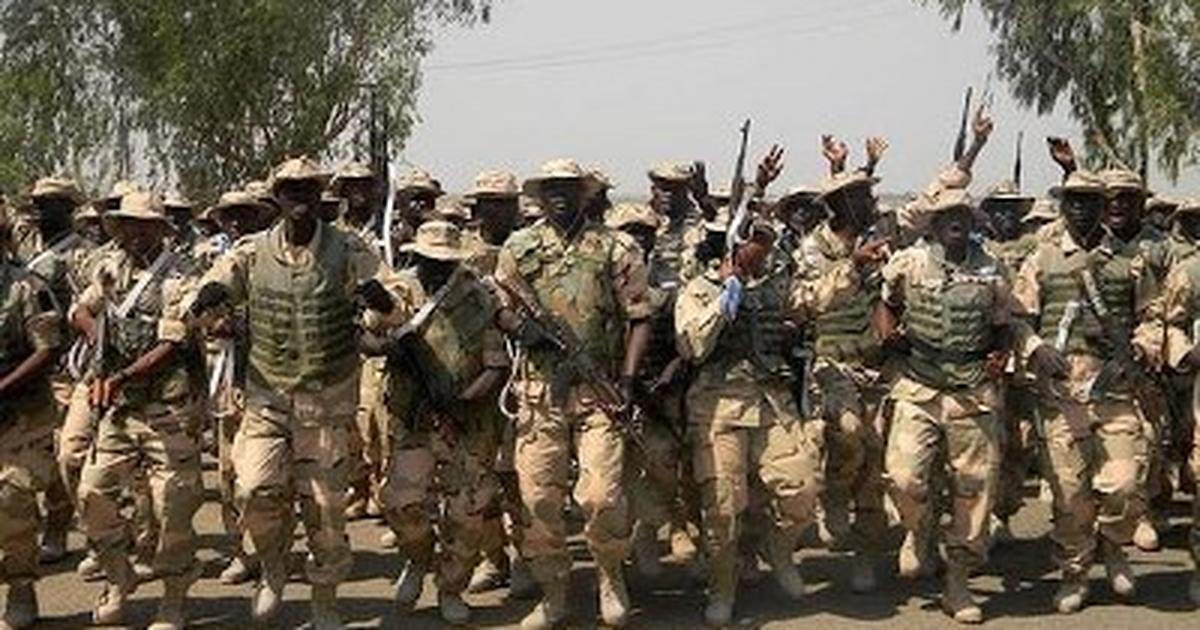
The Nigerian Army’s 223 Light Battalion, Zuru, successfully repelled a large-scale attack by over 400 armed bandits on Ribah town in the Danko Wasagu Local Government Area of Kebbi State.
The operation, which took place on Wednesday, saw the troops respond swiftly to the invasion, engaging the attackers in a fierce gun duel that lasted several hours. Eyewitnesses described the scene as a battlefield, with the superior firepower and tactics of the army ultimately forcing the bandits to retreat in disarray.
Military sources confirmed that many of the bandits were neutralised during the exchange, while others fled with injuries, abandoning a cache of weapons and ammunition. The town has since been secured, and normalcy restored.
The Director of Security at the Kebbi State Cabinet Office, AbdulRahman Zagga, on Thursday, praised the courage and professionalism of the soldiers involved.
“The troops displayed uncommon bravery. Their swift response and combat efficiency turned what could have been a major disaster into a remarkable victory,” he said.
Zagga also applauded the Nigerian Air Force for its timely intervention and aerial support, which he said inflicted heavy casualties on fleeing bandits and disrupted their escape routes.
“The situation is now fully under control. The people of Ribah can breathe a sigh of relief thanks to the coordinated efforts of our security forces,” he added.
Intelligence reports suggest the attackers were part of the same criminal syndicate responsible for recent attacks in Niger State. Their attempt to extend their terror campaign into Kebbi was decisively thwarted.
In a related development, troops from the Dukku Barracks repelled another bandit assault on Mera in the Augie Local Government Area. The attackers, identified as Lakurawa bandits, attempted to rustle cattle but met stiff resistance from the Nigerian Army, which forced them to flee empty-handed.
Reacting to the successful operations, Governor Nasir Idris commended the gallantry of the security personnel and reaffirmed his administration’s unwavering commitment to strengthening security across the state.
“These victories are proof that with sustained support and collaboration, our security agencies can defeat banditry and restore peace to our communities,” the governor stated.
Just two days earlier, a joint security operation in the same Danko Wasagu axis led to the rescue of six abducted persons and the recovery of stolen livestock, further highlighting the momentum gained in the fight against insecurity in the region.
Residents of Ribah and Mera have expressed relief and gratitude, calling on authorities to maintain the current tempo to prevent future attacks.
The Senior Special Assistant to the President on Public Health, Uju Anwukah, on Wednesday said Nigeria currently ranks second on the global malnutrition index, making her the first in Africa.
The presidential aide’s remark was echoed by the Chairman of the House of Representatives Committee on Food and Nutrition, Mr Chike Okafor, who said malnutrition in Nigeria is costing the country about $1.5bn annually.
Anwukah spoke on strengthening nutrition coordination in Nigeria through the N-774 initiative at the ongoing national summit on nutrition and food security organised by the House Committee on Food and Nutrition.
According to her, Nigeria signed up for the N-774 initiative as a way of addressing malnutrition from the grassroots level, stressing that the initiative has been endorsed by the National Council on Food Security as well as the Nigerian Governors Forum.
According to Okafor, the cost of inaction on these parameters on Nigeria’s economy is aggregated to about 12.2% of the country’s Gross National Income, about $56bn, based on data from Nutrition International and the World Bank.
“Food insecurity has been aggravated by post-harvest loss, estimated at $2bn by the Food and Agriculture Organisation yearly.
“This colossal loss alone is more than the nutrition budget of the Ministries of Agriculture, Health, Education and Women Affairs put together.
“This continued loss is not only unacceptable, but unsustainable given the austere times in which we currently live.
“On the above premise, my committee is working with those in the 36 states of the federation to do things differently.
“First of all, we are undertaking strategic capacity-building sessions to have a better understanding of the root and dynamics of current nutrition and food security challenges in Nigeria. A wise man once said that once you are not informed, you are deformed.
“We are hoping that the capacity-building sessions are institutionalised in partnership with the National Institute of Democratic and Legislative Studies, with support from our ever-helpful development partners.
“This will put us in a better position to provide strategic oversight to all nutrition and food-related interventions and implementing partners, including but not limited to the United Nations family, the World Bank, International and National non-governmental organisations and of course, the government at Federal, State and Local Government levels.
“By so doing, we will not only have more money for nutrition, but also more nutrition for the available money,” he said.
The Independent Corrupt Practices and Other Related Offences Commission on Wednesday charged the National Assembly to demonstrate more seriousness in its oversight role on revenue-generating agencies of government.
The anti-graft agency also condemned the practice of some Ministries, Departments and Agencies for their alleged mismanagement of public funds.
Speaking at the 2025 National Conference on Public Accounts and Fiscal Governance organised by the Senate and House of Representatives Public Accounts Committees in Abuja, ICPC Chairman, Musa Aliyu, called for tougher legislative measures to ensure that revenue generated and collected are timely remitted to government coffers by the provisions of the law.
“You see, the funny thing is that these revenue-generating agencies believe the money is their own.
“But unfortunately, it’s not theirs. So please, intensify oversight so they’ll be held accountable and bring to the table whatever they collect,” he said.
Represented by the Director of Finance, Akporo Michael, Aliyu pledged support for the country’s fiscal policy reforms, particularly the recent tax legislation signed into law by President Bola Tinubu.
“For the first time in our history, the government has taken the bull by the horns by reforming our tax system.
“These reforms aim to increase our tax-to-GDP ratio to between 18% and 20% in the coming years,” he said, adding that this would help the country meet its growing development needs.
He said Nigeria’s low tax-to-GDP ratio of 7.8 per cent is among the lowest in sub-Saharan Africa, noting that countries like Kenya, South Africa, and Egypt are recording double-digit ratios and reaping the benefits in infrastructural development and service delivery.
“Our budget implementation suffers every year because we do not mobilise enough revenue.
“Contractors in my office have been waiting for payment since last year. It is time to close the gaps,” he said.
He also lamented what he called the lack of openness in the operations of the Nigerian National Petroleum Corporation Limited.
He stated, “Saudi Arabia’s national oil company in the year 2024 posted a net profit of $106.25bn. Around the same year, you can do a good mix. How much does our NNPCL post pay? $2.4bn in 2024.
“These are players in the same league. Granted, Aramco’s capacity is higher than that of NNPCL. Their production on a daily basis is 9.1m barrels per day, while Nigeria in 2024 was doing 1.3m. We agree. So let’s assume that Aramco is producing 10 times that of Nigeria.
“They made a profit of $106bn. If their capacity is just 10 times higher, what should be our net profit? At least 10% of theirs. But we got only 2.4%.”
The ICPC chair also called for the overhaul of Nigeria’s public sector salary structure, which he described as unjust and demoralising.
He urged the National Assembly to engage the Salaries and Wages Commission to harmonise pay scales in a way that reflects fairness, justice, and economic reality.
While applauding recent wins in Nigeria’s global corruption ranking, he noted that the fight must continue.
He reminded the audience of Nigeria’s past designation as one of the world’s most corrupt countries by Transparency International and cautioned against complacency.
“We’ve improved, but we’re still not where we should be. Out of 140 countries ranked by Transparency International in 2024, Nigeria is still behind at 100. That means only 40 countries are below us,” he said.
To address leakages and enhance transparency, Aliyu called for the digitisation of key government processes, including payroll, procurement, and revenue collection.
He cited the successes of the Integrated Payroll and Personnel Information System, which helped the ICPC recover ₦21bn in salary fraud in a single investigation.
“If we digitise our systems and eliminate human discretion, we will cut out most of the corruption,” he said.
Aliyu cited international examples like Bulgaria, where procurement processes are fully transparent and publicly accessible.
The ICPC boss also called on the National Assembly to enact a comprehensive whistleblower protection law, describing it as a vital tool to encourage citizens to come forward with reports on corruption.
“Let it not just be policy. Let it be a law, with protection and incentives for those who speak out,” he said.
According to him, the country’s survival depends on the outcome of the anti-corruption fight.
“We don’t have many options – just two. It’s either we kill corruption or corruption kills us. And the choice, as they say in science, is in our hands,” he added.
On his part, the Governor of the Central Bank of Nigeria, Olayemi Cardoso, called for greater synergy between monetary and fiscal authorities to enhance Nigeria’s macroeconomic stability and ensure sustained national development.
“Contrary to the general belief, the Central Bank and fiscal authorities are not working at cross purposes.
“They may appear to have different tools, but both are focused on achieving the same goals: economic growth, stability, and improved welfare for Nigerians,” he said.
Cardoso noted that one of the apex bank’s major concerns is to balance government spending with the maintenance of macroeconomic stability, especially in areas like inflation, exchange rate management, and the strength of the naira.
He highlighted that since the inauguration of the current management at the CBN, the bank has adopted a proactive approach to both global and domestic economic developments.
He cited the minimal impact of recent geopolitical tensions as proof of this shift in strategy.
“We don’t sit and wait for events to occur. That’s why even recent global disruptions have had minimal impact on Nigeria’s economy,” he said.
The National Agency for the Control of AIDS has announced plans to convene the seventh National Council on AIDS, which will focus on Nigeria’s HIV response in the context of evolving global aid dynamics.
The agency made this known in a statement signed by the Chairman, Planning Committee, Dr. Daniel Ndukwe, on Thursday.
The event, to be held in Lagos with support from the Lagos State Agency for the Control of AIDS, is themed, “Advancing national HIV sustainability agenda in the changing global policy on aid.”
The meeting is designed to bring together representatives from government ministries, civil society, development partners, and affected communities, with discussions focusing on ensuring the long-term sustainability of HIV prevention, care, and treatment programs nationwide.
The National Council on AIDS, established under the NACA Act of 2006, functions as Nigeria’s apex coordination body for multi-sectoral HIV response. The upcoming seventh session aims to review past progress and chart a strategic direction for future HIV interventions.
Speaking ahead of the event, the Director-General of NACA and Chairman of the Council, Dr. Temitope Ilori, highlighted the importance of sustaining HIV response efforts in the face of shifting donor priorities.
“As donor landscapes evolve, Nigeria must take bold steps to ensure that HIV prevention, treatment, and support remain accessible and resilient. The Council offers us a unified platform to chart that future,” she said.
The meeting will feature three core thematic tracks on advancing the national HIV sustainability agenda in a changing global aid landscape; multi-sectoral approaches to sustainability of HIV and related developmental diseases; and strengthening sub-national structures for sustainability and health systems effectiveness.
In addition to technical sessions, the agenda includes a review of the twelve resolutions adopted at the sixth NCA meeting and an invitation for stakeholders to submit policy and implementation memoranda for consideration.
The seventh NCA is expected to serve as a national platform for aligning efforts across sectors, including TB, malaria, reproductive health, and broader health system strengthening.
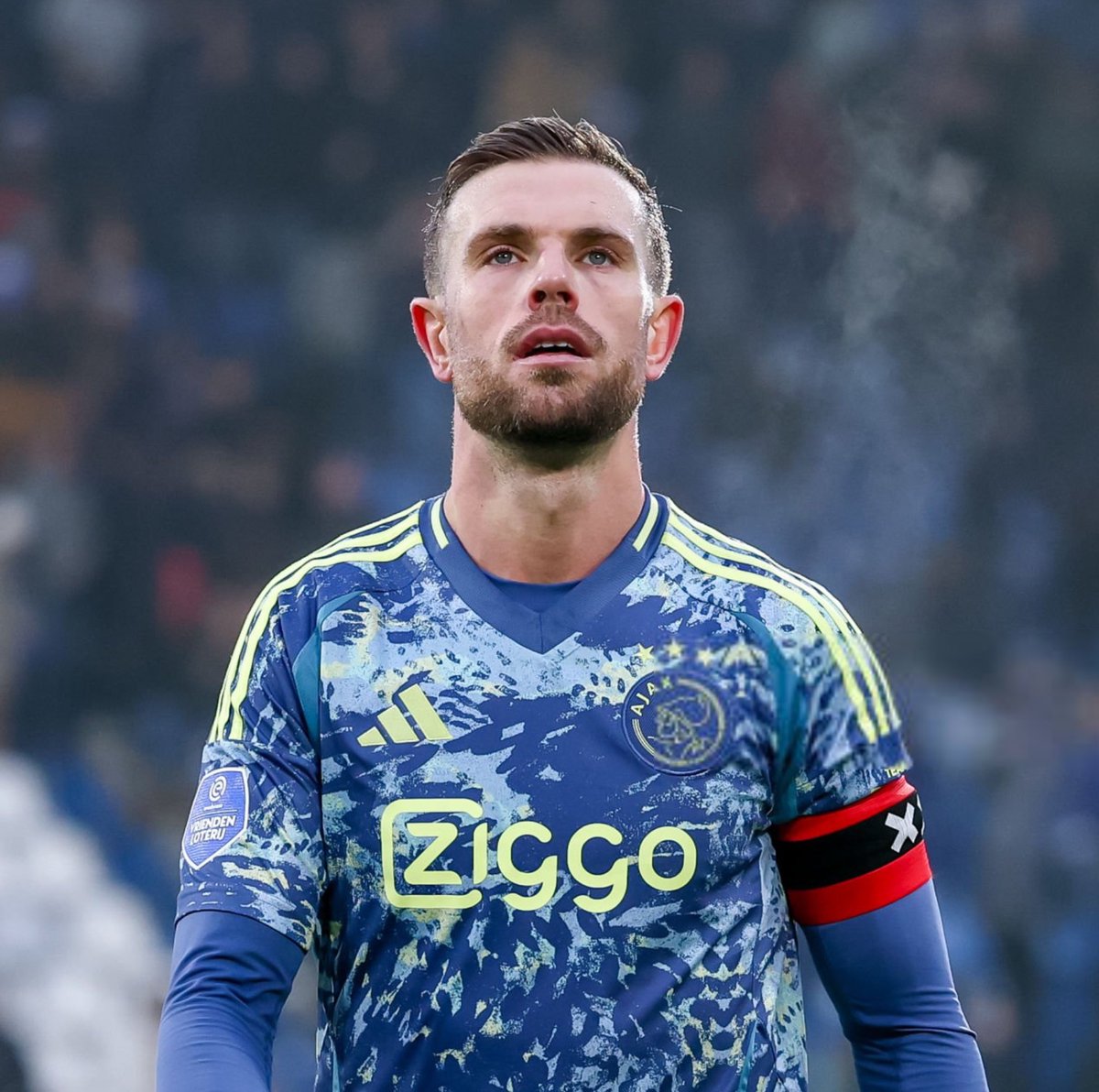
Former Liverpool and England midfielder, Jordan Henderson, is leaving Dutch giants, Ajax, one year before his contract was due to expire, the club announced on Thursday.
The 35-year-old joined Amsterdam-based Ajax in a blaze of glory in January 2024, only six months after his move from Liverpool to Saudi Arabia sparked controversy over gay rights.
An outspoken advocate for the gay community, his transfer to Saudi club Al-Ettifaq had prompted accusations he was putting money above principles.
But he quickly put that controversy behind him, as Ajax appointed him club captain and he made 57 appearances in the shirt made famous by the likes of Johan Cruyff and Dennis Bergkamp.
With Henderson as the driving force, Ajax bounced back from one of their worst-ever seasons to challenge for the Eredivisie title last year.
However, they contrived to throw away the opportunity to be crowned Dutch champions, giving up a nine-point lead with only five matches to play — handing the title to bitter rivals PSV Eindhoven.
Ajax Technical Director Alex Kroes described Henderson as “a true captain for us, both on and off the pitch.”
“Through his mentality and leadership qualities, he made a significant contribution to our qualification for the UEFA Champions League,” said Kroes.
Henderson’s form for Ajax earned him a surprise recall to Thomas Tuchel’s first England squad in March and he voiced his thanks for the opportunities in Amsterdam.
“To play for this club was an honour in itself. To have the privilege of captaining it was even more so,” he said in a statement.
He said he would not be making further comments, given the “tragic events of last week, and the devastating loss of my former teammate Diogo Jota and his brother Andre Silva.”
Liverpool and Portugal star Jota was killed along with his sibling last week when his car sped off a motorway in Spain.
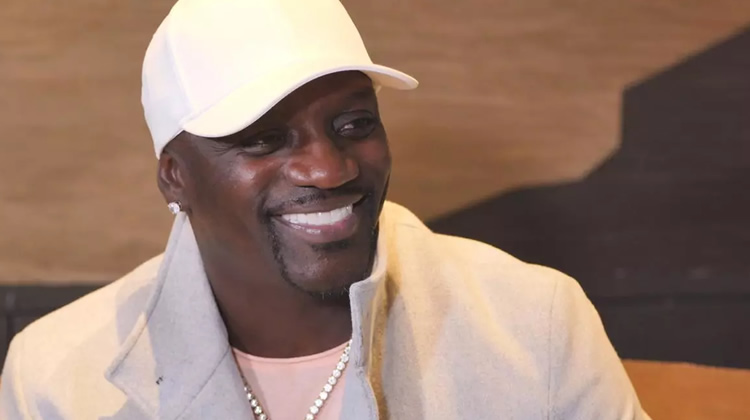
Senegal has cancelled Akon’s $6 billion plan to build a futuristic “Akon City” on the country’s Atlantic coast, after years of inaction and missed payments by the Senegalese-American singer, Bloomberg reports.
The project, first announced in 2020, was pitched as a tech-driven smart city inspired by Marvel’s Wakanda and promised to transform the quiet village of Mbodiène into a modern hub powered by solar energy and Akon’s own cryptocurrency.
But five years later, the Senegalese government has reclaimed most of the 136 acres of land initially allocated to the singer, after construction failed to begin and financial commitments were not met.
“That project no longer exists,” Serigne Mamadou Mboup, head of Sapco-Senegal, the state agency responsible for developing coastal and tourism zones, told L’Agence de presse sénégalaise.
Bloomberg reports on Wednesday that SAPCO said it would now pursue a scaled-down, state-backed tourism project in the same area, with a budget of 665 billion CFA francs (about $1.2 billion), largely sourced from private investors.
Akon will retain just 8 hectares of the original land allocation, which will be absorbed into the broader development.
Despite the setback, officials say the revised plan could generate up to 15,000 jobs in its first phase, offering long-awaited economic hope for Mbodiène residents.
Since its launch, Akon City has made little headway beyond a youth centre, a basketball court and an information kiosk.
The initial phase, which included a hospital, was originally scheduled for completion by 2023.
The Senate has called on the Federal Government to rethink its approach to the power sector by ending the indirect enrichment of private electricity distribution companies with public funds.
The Chairman, Senate Committee on the Environment, Senator Yunus Akintunde (APC – Oyo Central) said this at the plenary on Thursday.
Speaking on the floor of the Senate, the lawmaker decried the current practice where government funds are being used to purchase electricity transformers for communities, only for the assets to be taken over by DISCos.
“When you buy a transformer with government funds and hand it over to a community, the DisCos demand payment for installation.
“But the moment it is energised, it becomes their asset. That’s how public money ends up enriching private monopolies”, Akintunde lamented.
The lawmaker described the trend as unsustainable and unjust, adding that the government must develop a structured subsidy regime that truly benefits ordinary Nigerians.
“Electricity subsidies are not a Nigerian anomaly—they’re a global necessity.
“Even in advanced economies like the UK, energy is subsidised. We shouldn’t abandon the idea simply because of past abuses. Subsidies, when properly managed, drive growth and shield the poor,” he noted.
The senator also drew attention to what he called a fundamental structural imbalance in Nigeria’s power sector.
According to him, while generation and distribution have been privatised, the government still retains control of the ageing transmission infrastructure, an act he described as underutilised and inadequate.
“If you check most transmission lines and substations, they’re outdated and incapable of handling modern power needs. That’s one of the biggest bottlenecks to reliable supply across the country.
“This is not just about transformers—it’s about fixing a broken system. We must stop using public funds to empower private interests.
“Instead, we must empower Nigerians with affordable and reliable electricity,” he warned.
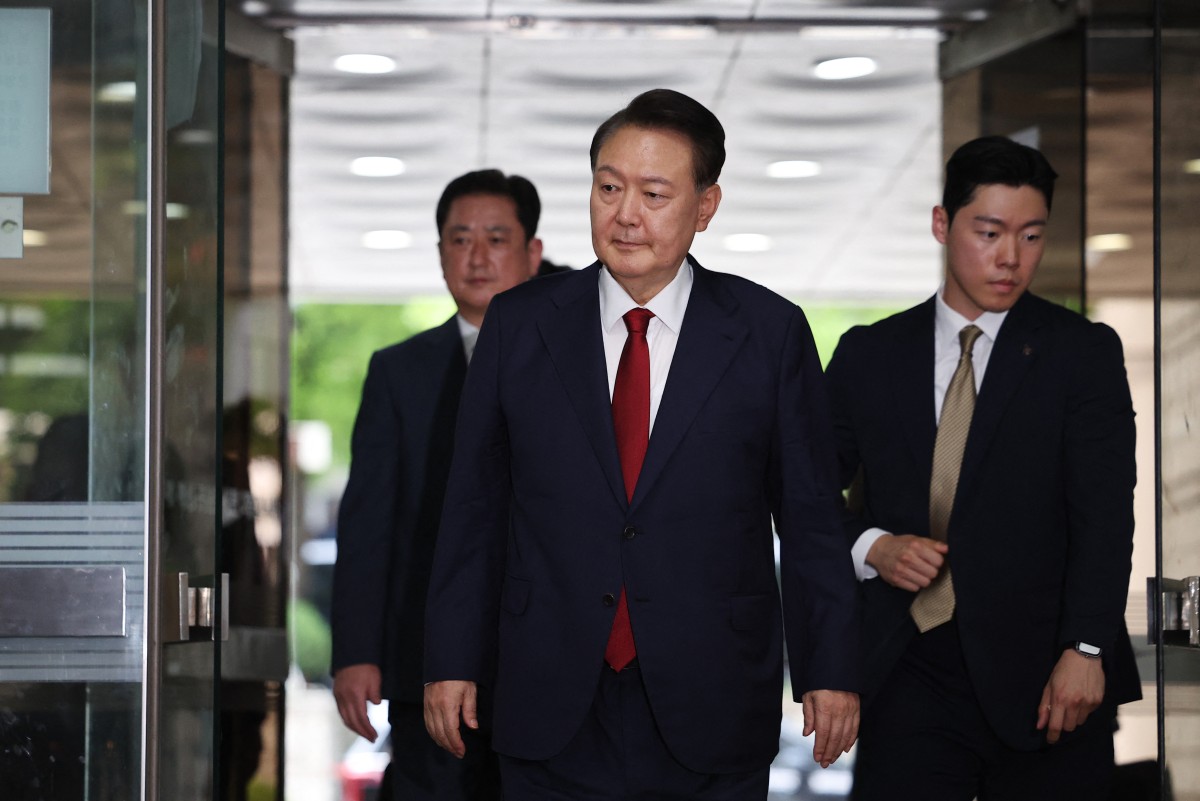
South Korea’s disgraced ex-president Yoon Suk Yeol was detained for a second time Thursday over his declaration of martial law and held in a solitary cell as investigators widened their insurrection probe.
Yoon plunged South Korea into a political crisis when he sought to subvert civilian rule on December 3 last year, sending armed soldiers to parliament in a bid to prevent lawmakers from voting down his declaration of martial law.
He became South Korea’s first sitting president to be taken into custody when he was detained in a dawn raid in January, after he spent weeks resisting arrest, using his presidential security detail to head off investigators.
But he was released on procedural grounds in March, even as his trial on insurrection charges continued.
After Yoon’s impeachment was confirmed by the court in April, he again refused multiple summons from investigators, prompting them to seek his detention once more to ensure cooperation.
The latest arrest warrant was issued over concerns that Yoon would “destroy evidence” in the case, Nam Se-jin, a senior judge at Seoul’s Central District Court, said.
Yoon is being held in a solitary cell, which has only a fan and no air-conditioning, as a heat wave grips South Korea. According to the official schedule, he was offered a regulation breakfast including steamed potatoes and milk.
Investigators said Thursday that Yoon’s status as former president will be “duly considered” but otherwise he will be “treated like any other suspect”.
“Investigations during the detention period will focus on the warrant’s stated charges,” prosecutor Park Ji-young told reporters.
Yoon’s criminal trial also continued with a hearing Thursday, although he did not attend for the first time.
– Solitary –
The former president, 64, attended a hearing over the new warrant on Wednesday that lasted about seven hours, during which he rejected all charges, before being taken to a holding centre near Seoul where he awaited the court’s decision on whether to detain him again.
During his warrant hearing, the former president said he is now “fighting alone”, local media reported.
“The special counsel is now going after even my defence lawyers,” said Yoon during his hearing.
“One by one my lawyers are stepping away, and I may soon have to fight this alone.”
Once the warrant was issued early Thursday, Yoon was placed in a solitary cell at the facility, where he can be held for up to 20 days as prosecutors prepare to formally indict him including on additional charges.
“Once Yoon is indicted, he could remain detained for up to six months following indictment,” Yun Bok-nam, president of Lawyers for a Democratic Society, told AFP.
“Theoretically, immediate release is possible, but in this case, the special counsel has argued that the risk of evidence destruction remains high, and that the charges are already substantially supported.”
– Long time in detention? –
During the hearing, Yoon’s legal team criticised the detention request as unreasonable, stressing that Yoon has been ousted and “no longer holds any authority”.
Earlier this month, the special counsel questioned Yoon about his resistance during a failed arrest attempt in January, as well as accusations that he authorised drone flights to Pyongyang to help justify declaring martial law.
The former president also faces charges of falsifying official documents related to the martial law bid.
Yoon has defended his martial law decision as necessary to “root out” pro–North Korean and “anti-state” forces.
But the Constitutional Court, when ousting Yoon from office on April 4 in a unanimous decision, said his acts were a “betrayal of people’s trust” and “denial of the principles of democracy”.
South Korea’s current president, Lee Jae Myung, who won the June snap election, approved legislation launching sweeping special investigations into Yoon’s push for martial law and various criminal accusations tied to his administration and wife.
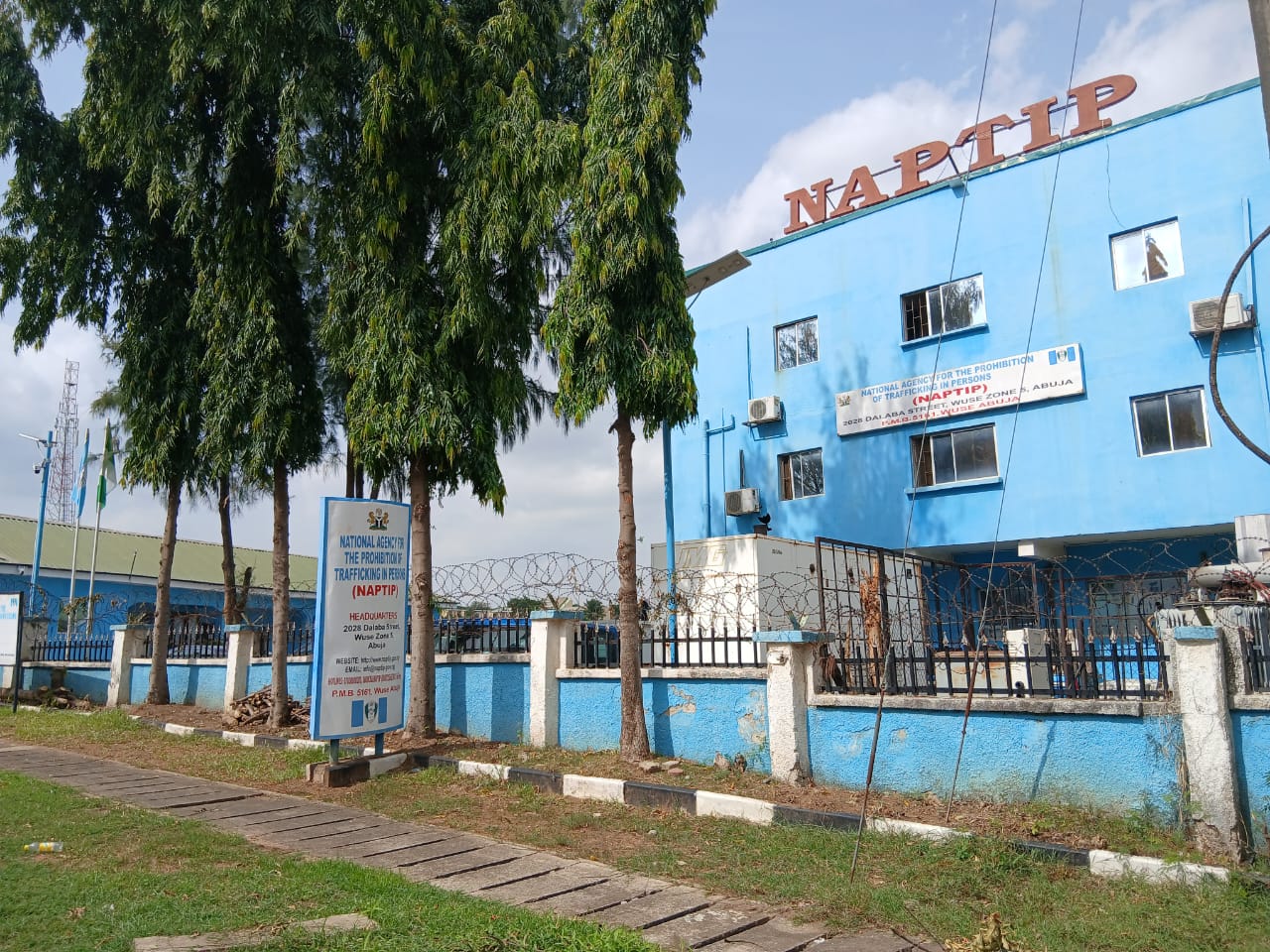
The National Agency for the Prohibition of Trafficking in Persons, Katsina State Command, have arrested three suspected members of an interstate Human Trafficking syndicate.
NAPTIP’s Chief Press Officer, Vincent Adekoye, disclosed this in a statement he signed on Wednesday.
The statement was titled ‘NAPTIP Raids Popular Hotel In Katsina, Arrests Three Suspected Members Of Inter–state Human Trafficking Syndicates And Rescues Three Victims.’
Adekoye stated, “They were arrested inside one of the prominent hotels located in Katsina township, with three suspected victims of human trafficking rescued during the operation.”
Adekoye said the syndicate specialises in the recruitment, harbouring and trafficking of young girls from other parts of the Country to the Northern region for sexual exploitation.
The Manager of the hotel and two other workers were also arrested.
“Two of the victims are from Benue State and one from Rivers State. Their age ranges from 21 to 26 years old,” the statement added.
According to a preliminary investigation, the suspects were believed to be the major suppliers of victims to brothels and other notorious Centres, including some neighbouring Countries.
Earlier, the Director General of NAPTIP, Binta Bello, had directed Operatives of the Agency across the country a few weeks ago to step up surveillance and intelligence-gathering activities within their jurisdictions to address the reported cases of inter-state recruitment and trafficking.
Bello also directed the Operatives to beam searchlights on the activities of some hotels, drinking joints, and motor parks in all the state capitals, to curtail the activities of some criminal elements who operate as members of human trafficking gangs in the Country.
Reports say the rescued victims were found inside a small room located within the Hotel complex, while the traffickers were inside another well-furnished room within the same compound, relishing the proceeds of the exploitation.
Speaking after the operation, the victims claimed that they were deceived, recruited, and trafficked to Katsina with a promise of a legitimate job, only to be forced into prostitution against their will.
One rescued victim said, “I was brought here by a woman. She promised to give us a job and that we would be paid very well.
“I asked her the details of the job, but she said I would know the nature of the job when I get here.
“When we got here, she introduced us to prostitution, which was not part of what they told us before.”
Another said, “We actually sleep with a lot of men, at least 20 men a day, and all the money we get goes to the chairlady of the place, by name Amarachi.
“We have no choice but to sleep with 20 men a day. Even when we are on our monthly period, we are being forced to sleep with the same number of men.
“Even when we are sick of tired, they will force us to sleep with me. They said it is not their business to know how we feel, but to engage in prostitution.”
The unnamed rescued victim said the girls were drugged and given energy drinks to boost sexual performance.
“They give us a fearless energy drink each to take every evening so that we can have energy to work, be awake to sleep with the men, and get money for them. They take all the money we make and leave us to feed ourselves,” she added x
While thanking NAPTIP for the rescue, the victims disclosed that the traffickers, in addition to crippling them financially so they cannot escape, also paid some men for surveillance on them.
Speaking on the development, NAPTIP’s DG, Bello, expressed worry over the activities of some hoteliers and centres nationwide who harbour victims of human trafficking.
She said the hotel in question will be sanctioned in line with the provisions of the trafficking law.
“I wish to commend the Operatives of NAPTIP in Katsina for the raid and rescue of the victims.
Their stories are painful and sad. They were deceived, recruited, trafficked, and forced into prostitution.
“While they are facing horror every day from prostitution, their traffickers were somewhere within the same hotel, feeding fat on the proceeds of the exploitation,” said Bello.
“It is also important to reiterate our earlier warning about operators of hotels aiding and abetting the exploitation of victims of human trafficking in their facilities.
“We have commenced a legal process to determine the next execution order for the hotel. The law shall definitely take its course,” Bello stated.