Lagos defends Trade Fair demolition, denies ethnic targeting


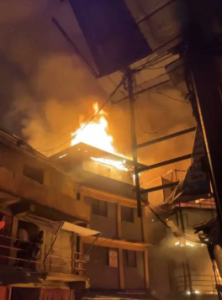
The Lagos State Government has defended the ongoing demolition of illegal structures at the Trade Fair Complex in Ojo, insisting that the exercise is a technical enforcement of planning laws and not targeted at any ethnic group.


Commissioner for Physical Planning and Urban Development, Olumide Oluyinka, made the clarification on Thursday during an interview on Channels Television’s The Morning Brief, following criticisms that the exercise was discriminatory.


“That is not true. We have been to Owode Onirin, Idumota, and Ikeja. It has no ethnic correlation. The fact is that we just have to do our work. There is nothing ethnic here; it is purely technical,” he said.


He explained that several buildings inside the complex were constructed without statutory approvals, some in violation of basic safety standards.

“There has been a series of enforcement carried out on Lagos Island,” he added. “I personally led a team that even touched the palace of a white cap chief. This is Nigeria for all of us.


“The facts are clear; when you are in a place, you must live by the law of that place. It is as simple as that,” Oluyinka added.


The commissioner stressed that defaulters were given ample time to regularise their structures before the demolitions began, adding that government officials had faced harassment while serving notices.


He said, “I led a team there in March 2024. Between then and now is over a year and a half.


“We met with the Executive Director, and there was almost a confrontation, which is evidence that we were there.

“Our officers went there to serve notices and were locked up for five to six hours. We had to bring in the police to release them.


“Even this year, officers went there and were detained. So what more notice are they requesting? It’s not new to them that we were coming. We gave defaulters time. They must keep by the law.”


He added that the Trade Fair Management worsened the situation by leasing land to third parties who built without recourse to planning regulations.


The commissioner lamented the state of infrastructure at the complex, citing poor refuse management, blocked drainage, and dilapidated walkways, and argued that the government had a duty to sanitise the area.


“It’s a shame we allowed our Trade Fair to get to that extent. Refuse, passage, drainages, walkways, sewage, everything is in shambles.

“They should even be happy we are there to sanitise because that is our responsibility. We cannot allow it to continue,” he said.


On September 25, Lagos State authorities, led by the Ministry of Physical Planning, commenced the demolition of unsafe and illegal buildings at the complex.


The operation was carried out in collaboration with the Lagos State Building Control Agency, Urban Renewal Agency, and the Physical Planning Permit Authority, with security backup provided.

No agreement signed with Dangote Refinery, strike may resume – PENGASSAN


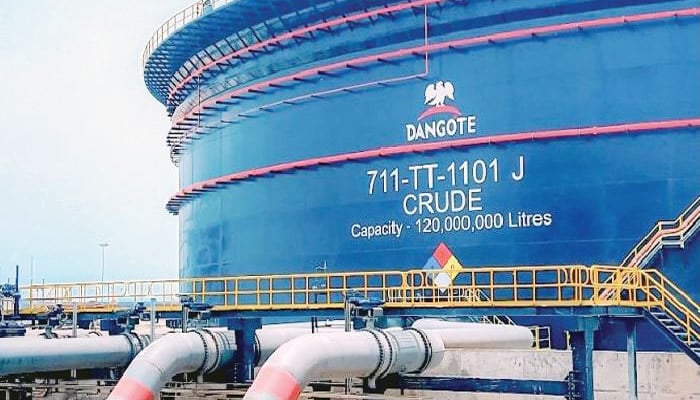
The Petroleum and Natural Gas Senior Staff Association of Nigeria has clarified that it did not sign the communiqué that ended its nationwide strike against the Dangote refinery.


The union suspended its strike, which began on Sunday, on Wednesday after the intervention of the Federal Government, but insisted that its concerns were not fully addressed.


PENGASSAN had accused the refinery of illegally sacking more than 800 Nigerian workers and allegedly replacing them with over 2,000 Indians.


Addressing journalists at a press conference in Abuja on Wednesday, PENGASSAN President Festus Osifo warned that the strike could resume without notice if the refinery failed to honour the resolutions.

Osifo admitted there were “grey areas” in the communiqué but stressed that the union suspended the action in good faith.


Speaking on Channels Television’s The Morning Brief on Thursday, Osifo explained that the document presented at the meeting was not an agreement.


“If you see that communiqué, we did not sign it. Normally, it is supposed to be signed by three parties. We did not sign because we felt that some things in it were not okay with us,” he said.


He further noted that the communiqué was merely a statement from the Minister of Labour and Employment, Muhammadu Dingyadi, who acted as the chief conciliator.

“When we subjected it to our NEC, we had to decide on priorities. Some media houses claimed we were only interested in check-off dues. That is false. What we prioritised was how our members would return to work and provide for their families.”


Osifo said PENGASSAN’s position remains that the refinery management should immediately reinstate the sacked workers.


He disclosed that Dangote initially refused to reabsorb the disengaged workers until the government intervened and pushed for a compromise, dismissing the refinery’s claims of sabotage by the affected employees.


“The release that Dangote made on workers sabotaging the economy was totally incorrect. If we had allowed that sabotage tag to stand, those 800 people would not be able to secure jobs in the future. That stigma would remain forever. Clearing that was a very big win. We are not perturbed in any way.”


Osifo added that the union’s struggle was not about self-interest but about protecting Nigerian workers whose employments were abruptly terminated for exercising their right to association.


He warned that PENGASSAN would not hesitate to resume industrial action if the issues were not addressed.

“If Dangote does not do the needful, our tools are always available. We will never get tired of struggling for what is right. We have been around for 50 years before the Dangote Refinery came on stream,” he declared.

Dangote to redeploy disengaged workers, says FG


The Federal Government has said the Dangote Group will redeploy staff earlier disengaged from its refinery operations, following the resolution of its dispute with the Petroleum and Natural Gas Senior Staff Association of Nigeria.


The FG also announced that the redeployed staff will not suffer any loss of pay due to the redeployment.


The Minister of Labour and Employment, Dr Mohammed Maigari Dingyadi, confirmed this in a statement issued on Wednesday in Abuja.


He said, “After examining the procedure used in the disengagement of workers, the meeting agreed that the management of Dangote Group shall immediately begin the process of redeploying the disengaged staff to other companies within the Dangote Group, with no loss of pay.

“No worker will be victimised arising from their role in the impasse between Dangote and PENGASSAN.”


He further explained that both sides had reached a compromise, noting that “PENGASSAN agreed to start the process of calling off the strike. Both parties agreed to this understanding in good faith.”


The minister also stressed that “unionisation is a right of workers in accordance with the laws of Nigeria, and this right should be respected.”

The conciliation meetings followed a breakdown in earlier talks between the refinery management and PENGASSAN, which had ended in a deadlock on Monday.


The dispute began after PENGASSAN raised concerns over what it described as mass transfers and dismissals of union members by Dangote’s refinery management.


The union also accused the company of replacing some Nigerian staff with foreign workers, arguing that these actions violated labour laws and undermined local employment rights.


The refinery’s management, however, denied these allegations, stating that the workforce reorganization was due to operational requirements and not related to union activities.


The standoff escalated when the union took industrial action by halting gas and crude oil supplies to the refinery, raising alarm over potential disruptions to the nation’s energy supply and economic stability.


The Federal Government intervened, citing the risk of “adverse effects on the economy and energy security,” and convened high-level talks to resolve the impasse.

FG announces end of PENGASSAN, Dangote rift


The Federal Government has brokered peace in the face-off between the Dangote Petroleum Refinery and the Petroleum and Natural Gas Senior Staff Association of Nigeria, after two days of conciliation meetings.


A statement issued in the early hours of Wednesday by the Minister of Labour and Employment, Dr Mohammed Maigari Dingyadi, disclosed that the matter was resolved following lengthy discussions.


According to the statement, the resolutions reached included: “The Honourable Minister of Labour informed the meeting that unionisation is a right of workers in accordance with the laws of Nigeria, and this right should be respected.


“After examining the procedure used in the disengagement of workers, the meeting agreed that the management of Dangote Group shall immediately begin the process of redeploying the disengaged staff to other companies within the Dangote Group, with no loss of pay.

“No worker will be victimised arising from their role in the impasse between Dangote and PENGASSAN.


“PENGASSAN agreed to start the process of calling off the strike. Both parties agreed to this understanding in good faith.”


The government delegation at the meeting included the National Security Adviser, Mallam Nuhu Ribadu; Minister of Labour and Employment, Dr. Dingyadi; Minister of Finance and Coordinating Minister of the Economy, Wale Edun; Minister of Budget and Economic Planning, Senator Atiku Bagudu; Minister of State for Labour and Employment, Barr. Nkeiruka Onyejeocha; Director-General of the DSS, Adeola Ajayi; and the Director-General of the NIA, Ambassador Mohammed Mohammed.

Monday’s earlier meeting between PENGASSAN and the Dangote Refinery management over the industrial dispute had ended in a deadlock.


The session, which began around 4 pm, stretched into the early hours of Tuesday without resolution.


Following the stalemate, Dingyadi announced that the talks would reconvene by 2 pm on Tuesday.


The follow-up meeting, which eventually commenced around 3:50 p.m. at the Office of the National Security Adviser, lasted into the early hours of Wednesday, when the breakthrough was finally achieved.


The rift had stemmed from allegations by PENGASSAN that the Dangote Refinery engaged in mass transfers and sackings of union members, while also replacing some Nigerians with foreign nationals, claims the company consistently denied.


The Federal Government intervened over concerns about the impact of the dispute on the nation’s economy and energy security.

ECOWAS parliament adopts $26m 2026 budget


The ECOWAS Parliament has adopted a budget of 19,636,030 Units of Account (26 million dollars) for the 2026 fiscal year, and announced plans to commemorate its 25th anniversary in November.


The Speaker of the Parliament, Hadjia Memounatou Ibrahima, disclosed this in a statement on Tuesday.


Ibrahima said the development followed the recent conclusion of its 2025 Second Extraordinary Session in Port Harcourt, Nigeria.


She said the budget was adopted by the Parliament during plenary, stressing that, beyond being a mere accounting act, it was the engine of parliament’s commitment to West Africans.

”It will enable us to carry out our priority missions, including implementing the conclusions of the seminar on AI, while ensuring virtuous and transparent management of public funds entrusted to us.


”This budget represents a five per cent increase compared to the 2025 fiscal year budget, reflecting an upward adjustment of UA 939,233 from last year’s UA 18,996,897.


”Out of the budget of UA 19,636,030 for 2026, the sum of UA19, 368,394 representing 98.64 per cent is expected to be financed through the proceeds from the Community Levy, while UA257,636, equivalent to 1.36 per cent, will accrue from other sources,” Ibrahima said.

The News Agency of Nigeria reports that the ECOWAS Community Levy is a mandatory 0.5 per cent tax imposed on goods imported into ECOWAS member states from non-ECOWAS countries.


Member states are under a statutory obligation to pay the community levy, which is the main source of funding for ECOWAS institutions and their activities.


She, however, expressed dismay that some members of the community were still defaulting on the payment of the levy, and warned that, going forward, such would be met with sanctions.


Ibrahima also said that the commemoration of its 25th anniversary in November would highlight the ECOWAS Parliament’s achievements in deepening regional democracy, cooperation and growth, amid formidable challenges.


The Speaker describes the forthcoming anniversary as “a chance to showcase resilience and chart a more innovative, youth-focused future for the community”.


NAN

Income earned by ‘runs girls’ taxable – Taiwo Oyedele


The Federal Government has said that all income earned in Nigeria, including money made by ‘runs girls,’ is taxable under the law.


Chairman of the Presidential Committee on Fiscal Policy and Tax Reforms, Taiwo Oyedele, stated this in a now-viral video from a tax education session by the Redeemed Christian Church of God, City of David, Lagos.


Oyedele explained that upkeep money sent to dependants or relatives is not taxable, describing such transfers as “non-exchange transactions.”


He said, “You earn a certain amount of money and you have to send upkeep to your cousin, your brother, even a stranger, it doesn’t really matter.

“If the amount you’re sending to someone is money you are giving to them as a gift, that’s not taxable. It is you that should have paid tax before giving them a gift.”


However, he stressed that once payment is made for a service or product, the law requires taxation—regardless of whether the activity itself is legitimate.


He added, “If somebody is doing runs girls, right, they go and look for men to sleep with, you know that’s a service, they will pay tax on it.


“One thing about the tax law is it does not separate between whether what you are doing is legitimate or not. It just asks you whether you have an income.


“Did you get it from rendering a service or providing a good? You pay tax.”


Oyedele, however, urged Nigerians to look at the broader context of the new reforms, which he described as the most far-reaching in the nation’s history.


He said, “The starting point for me is always to give context. And the first thing, the first message, is a proverbial blind man and an elephant.


“Depending on the side of the elephant that they touched, they concluded what it was, maybe a fan, a wall, or a tree. But none of them got the right answer because they didn’t feel the big picture.”

According to him, the same mistake could be made if citizens focus only on one aspect of the sweeping tax changes.


He added, “One thing I can tell you is that the tax reforms enacted into law a few months ago, that will take effect from January next year, is the most transformative, most significant in our nation’s history.

“With over 200 significant changes and more than 400 pages combined, it is very easy and could be tempting to narrow it down to one issue. That would be making the same mistake as the blind man and the elephant.”


The reforms, he said, would impact individuals, business owners, employees, employers, and civil servants, with the aim of simplifying the tax system and improving compliance.


PENGASSAN, Dangote reconciliation meeting continues today


The reconciliation meeting championed by the Federal Ministry of Labour, Employment and Productivity, which is aimed at resolving the rift between the Petroleum and Natural Gas Senior Staff Association and the Management of Dangote Petroleum refinery, will continue Today by 2 pm, according to a notice by the Head of Media and Public Relations of the ministry, Patience Onuobia.


“Conciliation meeting between PENGASSAN and Dangote Refinery continues today, 30 September 2025; Time: 2 pm; Venue: Minister’s Conference Room.”


Recall that the Monday meeting between the delegation of the PENGASSAN and the management of the Dangote Petroleum Refinery over the lingering industrial dispute ended in a deadlock.

The reconciliation meeting called by the Federal Government started at about 4 p.m. on Monday.


The meeting, attended by the Minister of Labour and Employment, Mohammed Dingyadi, and the Minister of State for Labour and Employment, Nkiruka Onyejeocha, lasted for about nine hours into the early hours of Tuesday.

Following the stalemate, Dingyadi said the meeting would reconvene to resolve the deadlock at 2 p.m. on Tuesday.

The Federal Government, worried about the potential impact of the dispute on the nation’s economy and energy security, had summoned both sides to the negotiating table following reports of widespread discontent.


The rift stems from allegations by PENGASSAN that Dangote Refinery had embarked on the mass transfer and sack of union members.

Also, he allegedly replaced some Nigerians with foreign nationals, a claim the company has consistently denied.

The session, originally scheduled for 2 p.m., began around 3:50 p.m. due to the late arrival of key stakeholders, before moving into a closed-door discussion that lasted several hours.


In his opening remarks, Dingyadi underscored the gravity of the situation.


“What’s happening today is very dear to our economy and to the security of the country. We have been informed that PENGASSAN is on strike,” he said.


The Minister appealed to both parties to demonstrate good faith in dialogue, stressing that industrial peace in the oil and gas sector was critical at a time Nigeria is banking on the Dangote Refinery to boost local refining capacity and reduce dependence on imported petroleum products.

The deadlock means tension remains high, with PENGASSAN insisting its members will not return to work until alleged anti-labour practices are reversed, while Dangote Refinery maintains that its restructuring exercise is in line with global best practices.

As the stalemate lingers, concerns are mounting about the potential disruption of operations at the refinery and the ripple effect on petroleum product supply across the country.


The next round of talks later today is expected to determine whether a compromise can be reached to avert a full-blown industrial crisis in Nigeria’s oil and gas industry.

From beauty queen to broadcaster, ARISE TV mourns slain Abuja anchor


Tributes have continued to pour in for ARISE Television anchor, Somtochukwu Maduagwu, whose death during a robbery attack in Abuja on Monday has sparked grief across the country.


In a fresh statement on X on Tuesday, the management of ARISE described the 29-year-old journalist and lawyer as “delectable, intelligent and bold,” noting that her contributions to the station and the nation would not be forgotten.


Maduagwu, fondly called “Sommie” by colleagues, was said to have first appeared on the ARISE screen as a guest after winning the Miss Tourism Nigeria pageant.


She later represented Nigeria at the Miss Tourism World pageant in Quanzhou, China, in 2023, before formally joining ARISE in September 2024.

“In September 2024, she joined the ARISE NEWS team, where she has made her voice count as a News Anchor, News Producer, and a Reporter.


“Through a blend of her legal dexterity and reportorial vigour, Sommie advocated for out-of-school children and campaigned energetically against sexual and gender-based violence,” the statement read.


Her coverage also included the submission of a memorandum for the Reserved Seats for Women Bill at the National Assembly on September 21.

“There, Sommie, alongside millions of other Nigerian women, advocated for a stronger representation for Nigerian women at the National Assembly,” the station said.


“Sommie’s voice is now silent, but her spirit, passion, and legacy will endure as part of our collective memory.”


Confirming the incident, the FCT Police Public Relations Officer, Josephine Adeh, noted that an investigation had begun into the incident.


Viewers and netizens have since flooded social media with tributes, praising Sommie’s courage and professionalism.


Her death has also renewed calls for urgent action against insecurity across the country.


PENGASSAN, Dangote reconciliation meeting ends in deadlock


The meeting between the delegation of the Petroleum and Natural Gas Senior Staff Association and the management of the Dangote Petroleum Refinery over the lingering industrial dispute ended in a deadlock.


The reconciliation meeting, called by the Federal Government, started at approximately 4 p.m. on Monday.


The meeting, attended by the Minister of Labour and Employment, Mohammed Dingyadi, and the Minister of State for Labour and Employment, Nkiruka Onyejeocha, lasted for about nine hours into the early hours of Tuesday.


Following the stalemate, Dingyadi said the meeting would reconvene to resolve the deadlock at 2 p.m. on Tuesday.

The Federal Government, worried about the potential impact of the dispute on the nation’s economy and energy security, had summoned both sides to the negotiating table following reports of widespread discontent.

The rift stems from allegations by PENGASSAN that Dangote Refinery had embarked on the mass transfer and sack of union members.


Also, he allegedly replaced some Nigerians with foreign nationals, a claim the company has consistently denied.


The session, originally scheduled for 2 p.m., began around 3:50 p.m. due to the late arrival of key stakeholders, before moving into a closed-door discussion that lasted several hours.

In his opening remarks, Dingyadi underscored the gravity of the situation.


“What’s happening today is very dear to our economy and to the security of the country. We have been informed that PENGASSAN is on strike,” he said.


The minister appealed to both parties to demonstrate good faith in dialogue, stressing that industrial peace in the oil and gas sector was critical at a time Nigeria is banking on the Dangote Refinery to boost local refining capacity and reduce dependence on imported petroleum products.


The deadlock means tension remains high, with PENGASSAN insisting its members will not return to work until alleged anti-labour practices are reversed, while Dangote Refinery maintains that its restructuring exercise is in line with global best practices.


As the stalemate lingers, concerns are mounting about the potential disruption of operations at the refinery and the ripple effect on petroleum product supply across the country.

The next round of talks later today is expected to determine whether a compromise can be reached to avert a full-blown industrial crisis in Nigeria’s oil and gas industry.

Biotechnology agency assures Nigerians of GMOs’ safety


The National Biotechnology Research and Development Agency has assured Nigerians of the health safety of genetically modified organisms


The Director-General of NBRDA, Abdullahi Mustapha, disclosed this in a statement on Monday.


Mustapha gave the assurance against the backdrop of ongoing debates and conversations around GMOs, which he described as based on general misinformation.


According to Mustapha, the agency remains committed to bridging the gap of ignorance through evidence-based engagement, sensitisation, and research-driven advocacy.

Mustapha added that the agency’s core mandate is to promote and conduct innovative research in agriculture, health, industry, the environment, and other strategic sectors, based on a commitment to humanity.


“Our top priority is the well-being of Nigerians. We will never compromise public health or safety in the pursuit of innovation,” he said.


Mustapha said GMOs were globally recognised as safe for human health and the environment.

According to him, the approval of GMOs in Nigeria is subject to strict biosafety regulations by the National Biosafety Management Agency.


“It is important for Nigerians to know that GMOs are safe. Around the world, they have been researched for decades, regulated by rigorous international standards, and tested extensively.


“Here in Nigeria, no GMO product enters circulation without the full approval of the NBMA, which subjects every product to thorough risk assessments,” he said.


Mr Mustapha said that the NBRDA has intensified efforts to sensitise and engage stakeholders, including farmers, policymakers, scientists, youth, and civil society, about biotechnology.


He said that through training programmes, community outreach, open forums, and field demonstrations, the agency was rebuilding public confidence and countering misinformation with facts.


(NAN)

Exit mobile version