Osinbajo to NEC: Don’t ask Me for Anything on the New Economic Council ask Buhari

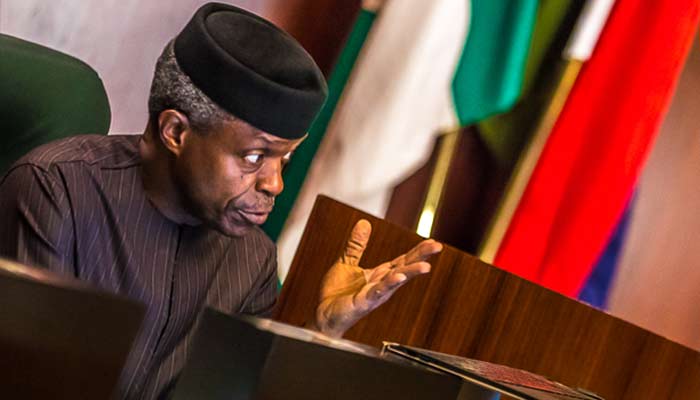
Vice-President Yemi Osinbajo says the national economic council will have to send a request through the president to get a briefing from the newly appointed economic advisory council (EAC).

Osinbajo made this statement on Thursday in response to a request for clarification by members of the national economic council regarding their relationship with the newly appointed council.

A statement by Laolu Akande, Osinbajo’s senior special assistant on media & publicity, quoted the vice president as saying both councils are for the benefit of the president.

“If NEC wants to be briefed regularly by the Economic Advisory Council, EAC, we will request the President to do that,” he said.

Clem Agba, the minister of state for budget and national planning, gave the balance of the federation accounts as at September 17 as:

  • Excess crude account: $274,583,856
  • Stabilization account: N23,796,349,487.76
  • Development natural resource account fund: N105,135,613,817

Agba also said state governments are expected to start servicing their budget support loans from September 2019 and the repayment will be done over 240 months.

“Council resolved that Governors should meet with the Ministry of Finance and Central Bank of Nigeria to sort out the details of repayment modalities and the Vice President will ensure same and ensure the meeting between the Governors, CBN and Finance Ministry in order to facilitate the speedy resolution of the matter,” the statement read.

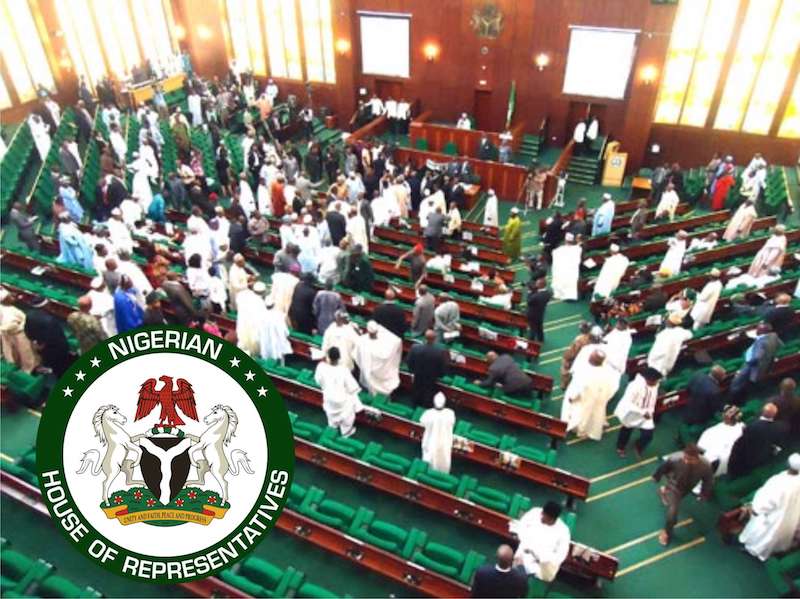
The national economic council is made up of the 36 state governors and the governor of Central Bank of Nigeria (CBN).

The NEC is empowered by section 18 of the 1999 constitution to advise the president on the necessary measures for coordinating the economic planning efforts and economic programmes of the various governments of the federation.

The president, on Monday, disbanded the economic management team headed by the vice president and appointed an economic advisory council in its stead.

Africa’s Global Bank, UBA is Now Available on Apple Business Chat

United Bank for Africa (UBA) Plc, on Thursday, announced that the services of its Chatbot, Leo is now available for customers on Apple Business Chat, where its users can communicate directly with businesses using the Messages app on iPhone and iPad.

“As a brand focused on providing excellent customer experience, we are always looking for new ways to serve our customers easily and on time; we are therefore thrilled to support Apple Business Chat, which gives us a powerful and engaging connection with our customers,” said Mr. Kennedy Uzoka, Group Managing Director of UBA, who spoke at the launch of the service in the bank’s Head office on Thursday. “Most of our customers prefer iOS, and we always want to exceed their expectations when they experience UBA. Apple Business Chat makes communicating with us as easy as messaging a friend, so we expect it will quickly become our customers’ preferred customer service channel.”

He explained that UBA customers can now use the services of LEO, through the Apple Business Chat to open an account, buy airtime, check account balance, make account transfers and pay bills. With Business Chat, customers can always reach a live person and are always in control of whether they share any contact information with a business.

Uzoka said, “Today, we are covering a segment that has been missing for some time. It is our desire to ensure that we put Leo everywhere, and today it is now on the IOS platform as the users approached us that they needed to enjoy the service which Facebook and WhatsApp users had been enjoying from LEO. Consistently, we have been the first in the use of intelligence banking, this is the first time this is happening in Africa. LEO is live in English on the IOS platform, and by the end of October, it will be live in other languages. As you know, LEO is already on WhatsApp and Facebook  in English, French, Portuguese and Swahili languages.”

To start Apple Business Chat, customers can click the ‘Chat with Messages’ button on UBA’s website or in mobile banking app, available in the App Store. A conversation with UBA’s agents will open instantly in the Messages app, and users can take their time responding when it’s convenient.

The Group Head, Online, Banking, Austin Abolusoro, who spoke at the event said the bank is always looking for ways to improve upon its services to its teeming customers.

“We are leading financial industry AI in Africa. Our customers have been increasingly asking for mobile services that make their lives easier, and Leo has become a growing choice for his convenience and personal solutions, Over a million customers are already on the LEO platform. Before now, customers can only come to the bank, but today we are on social media as well as on the IOS platform, and the launch of LEO has helped customer to get their complaints resolved without physically visiting the bank. Leo makes use of available data to resolve complaints and where more information is needed, Leo will transfer the customer to human agents.”

“As we continue to advance our work on AI-driven developments, it is important that we listen to our users today and further enhance Leo to align to client feedback in order to better meet and anticipate needs and even continue to give them increased value,” Abolusoro added.

He added that Apple Business Chat is available in beta for users and businesses around the world, and is built into iOS 11.3 and higher. For more information, visit: apple.com/ios/business-chat.

United Bank for Africa, Africa’s global bank, was founded 70 years ago in Nigeria and today, operates in 20 African countries and in the United Kingdom, the USA and with presence in France. UBA serves over 17 million customers across the globe with more than 1000 branches and touch points. In 2018, the bank received the award of Africa’s Best Digital Bank by the Banker’s magazine.

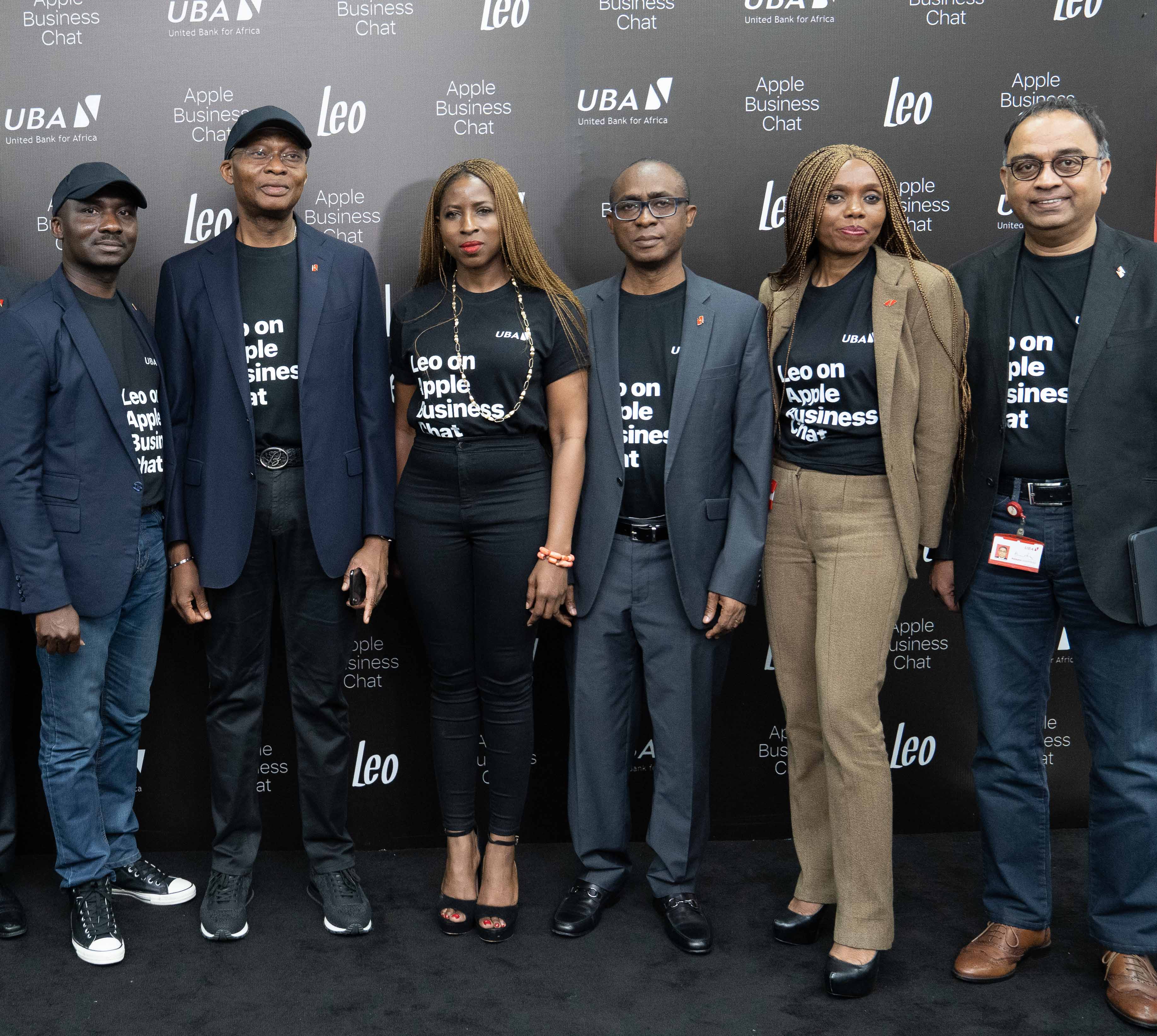
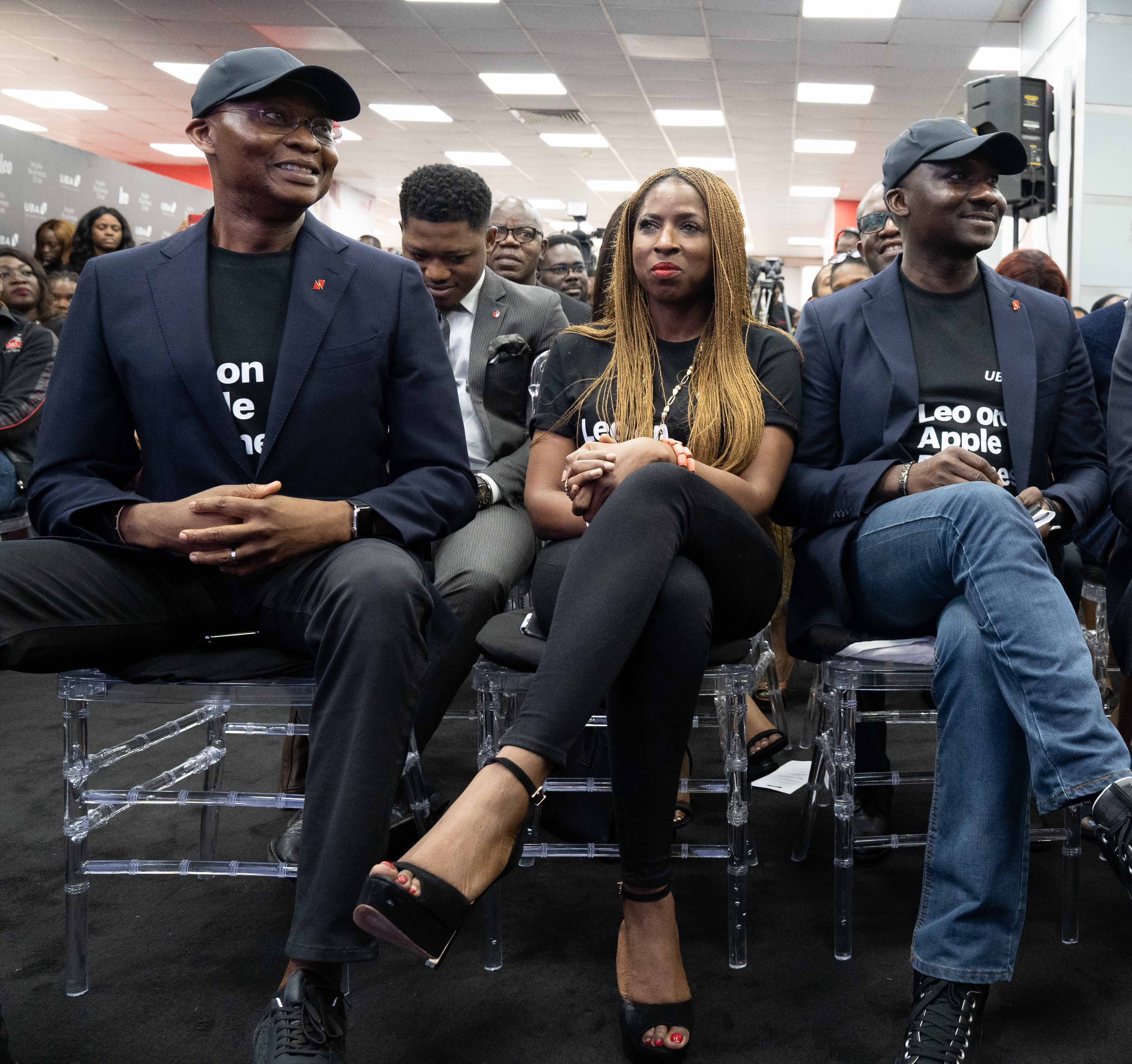
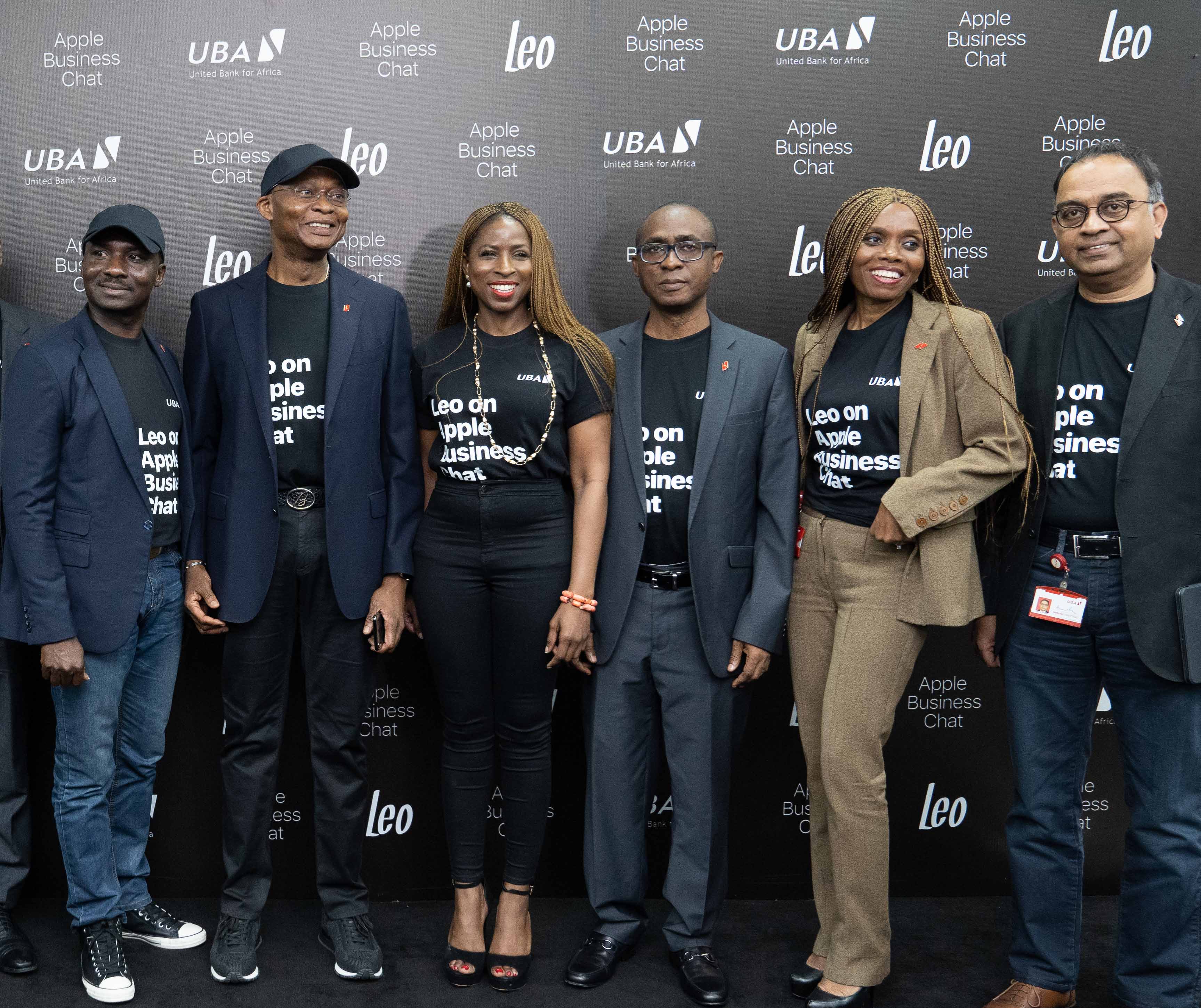
l-r: Group Managing Director/CEO, United Bank for Africa(UBA) Plc, Mr. Kennedy Uzoka; Group Head, Marketing, UBA Plc, Mrs Dupe Olusola; Group Head, Online Banking, UBA, Mr Austine Abolusoro, during the launch of LEO, the Bank’s chatbot on banking, on Apple Business Chat –IPad and IPhone, held at UBA House, Marina, Lagos on Thursday
l-r: Group Head, Online Banking, United Bank for Africa(UBA) Plc, Mr Austine Abolusoro; Group Managing Director/CEO, Mr. Kennedy Uzoka; Group Head, Marketing, UBA Plc, Mrs Dupe Olusola; Executive Director, UBA Plc, Mr. Nweke Chukwuma; Group Head, Human Capital Management; Mrs Patricia Aderibigbe; and Group Executive, Customer Fulfilment Centre(CFC), Mr Anant Rao, during the launch of LEO, the Bank’s chatbot on banking, on Apple Business Chat –IPad and IPhone, held at UBA House, Marina, Lagos on Thursday

The Next Titan Season-6: Heritage Bank continues to Boosts Entrepreneurship among Youths

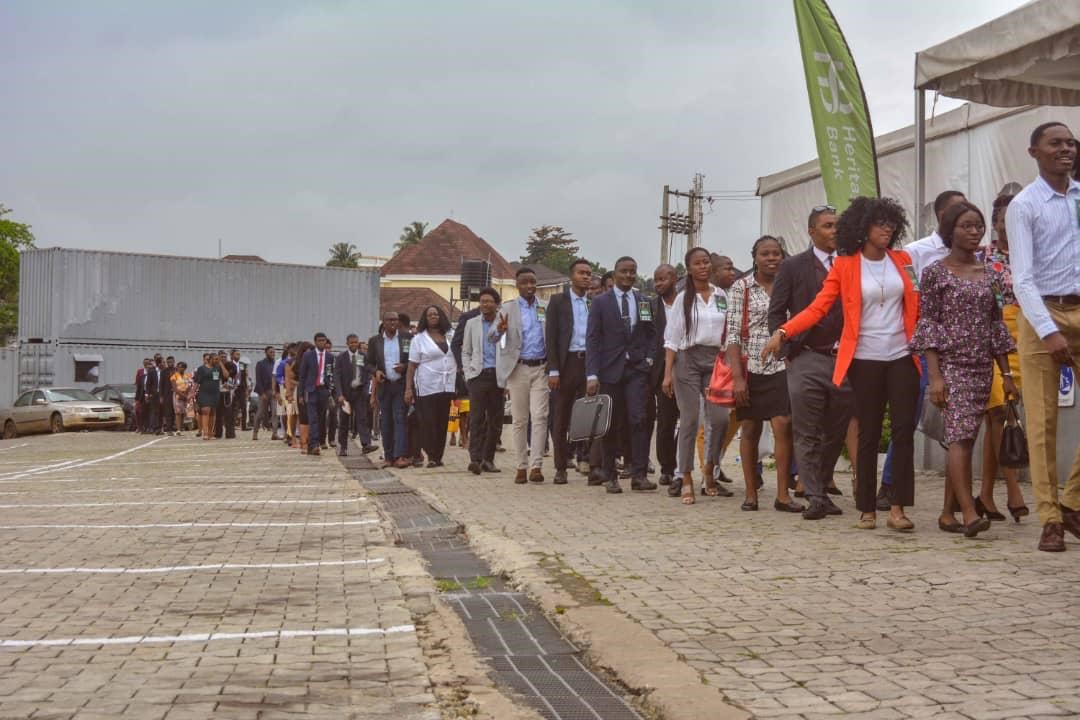
Heritage Bank Plc, Nigeria’s most innovative banking service provider has again thrown its usual support behind the organizer of The Next Titan, so as to have a better and improved season six of the programme.

This year’s edition of the reality TV show is again headlined by Heritage Bank and is targeted at giving young entrepreneurs an opportunity to display their ingenuity and talents.

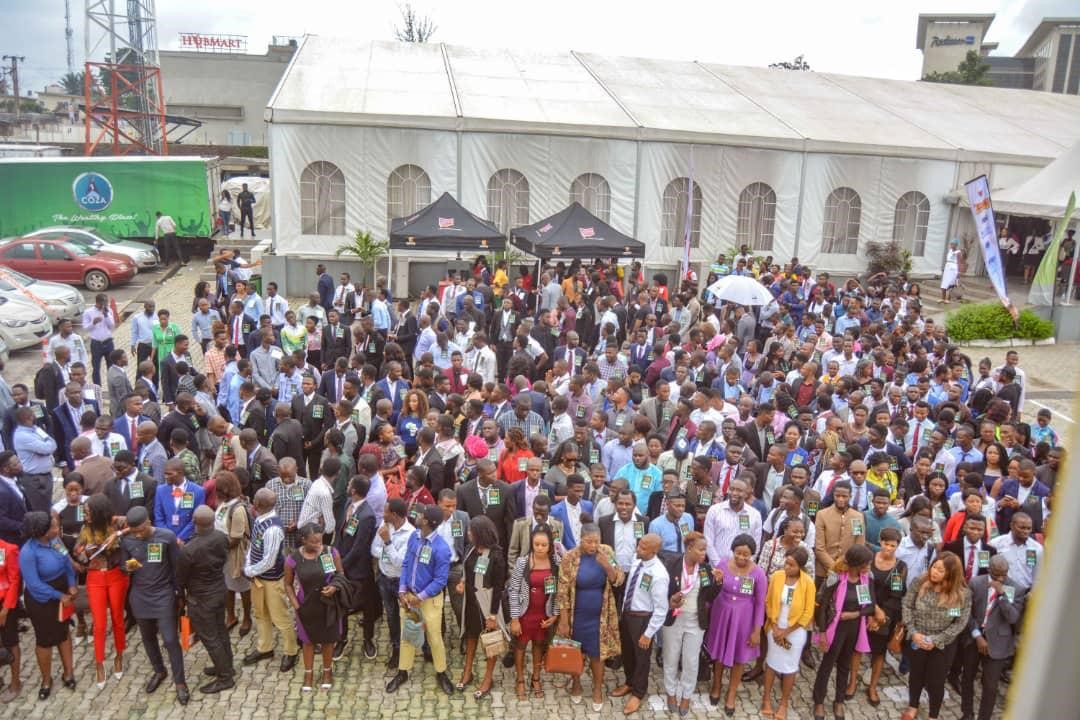
The programme, which also, focuses on ensuring that the entrepreneurial goals of the Nigerian youths are achieved, had its auditions in four of the six geopolitical zones of the country.

Speaking during the audition at the Sheba Event Centre in Lagos, the MD/CEO of the bank, Ifie Sekibo stated that the Heritage Bank has continued to make seamless efforts to demonstrate its commitment towards developing and positioning youths to become world-class citizens equipped and ready to be absorbed into an increasingly competitive workforce.

“One of the reasons why we chose, as an organization, to support the entrepreneurial growth and welfare of the youths is to see young men and women play vital roles in the socio-economic development of the country and help curb the high level of unemployment,” Sekibo said.

The MD, who was represented by the Head, Brand Management & Sustainability, Corporate Communications, Heritage Bank, Ozena Utulu, said Heritage Bank is positioned to lead the recovery of the economy through enhancing youth entrepreneurship development and engendering self-employment via its various initiatives and products.

According to Sekibo, the drive to support youths seeks to create, preserve and transfer wealth across generations. He explained that the entrepreneur schemes of the bank has always focused on dependable job-creating sectors, such as the agricultural value chain (fish farming, poultry, snail farming), cottage industry, mining, and solid minerals, creative industry (tourism, arts and crafts), and ICT.
Sekibo stated that the bank supported this initiative because of its belief in Nigerian youth, who make up about 80 percent of the country’s population. He further explained that Heritage Bank was impressed with the nature in which talents were sought out, the rigorous selection process and the integrity with which the overall scheme was delivered.

Sekibo expressed satisfaction in the long term sustainability of the initiative, stating, we will not support something that will not stand the test of time.

The Executive Producer, The Next Titan, and Managing Director, Bravopoints International Limited, Mide Kunle-Akinlaja explained, “the idea behind the next titans is to create a Nigeria of our dreams, the roll calls of entrepreneurs with businessmen and women who will boost the nation’s economy and become employers of labour. It is not just an ordinary show but a show that transforms lives.”

According to him, The Next Titan over the past five years has been the only major entrepreneurial reality show in Nigeria, which provides an opportunity for young aspiring entrepreneurs with good business ideas that can transform the economy to compete among themselves on television in order to win a grand cash prize and a brand new car to start their dreams.

He noted that it was a platform designed to ignite the entrepreneurial spirit of the generality of young Nigerians who may not have the opportunity to participate directly through its regional auditions, but who can watch the TV show, and who can, as a result, take a decision to ply the route of entrepreneurship as a viable career option.

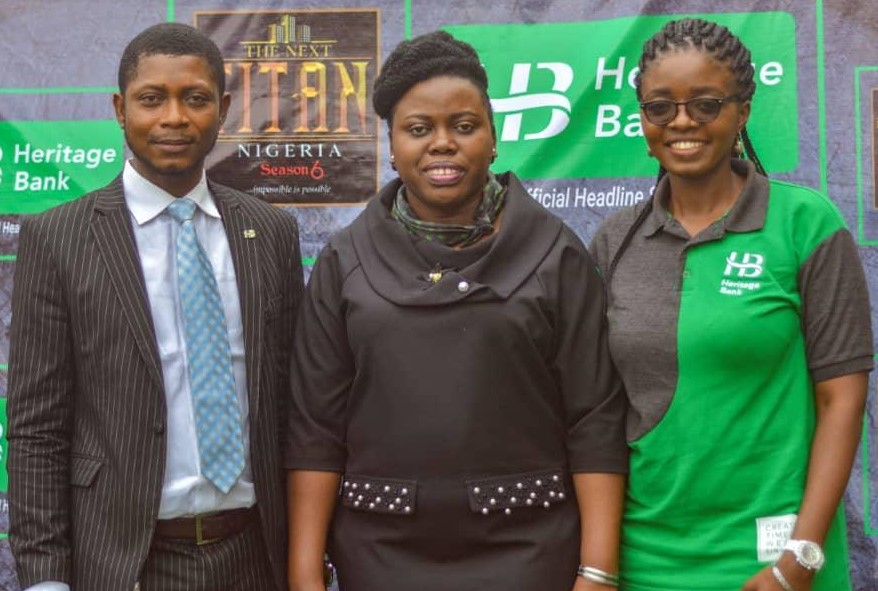
L-R: Members of Heritage Bank’s Corporate Communications- John Adah, Processing Officer; Ozena Utulu, Head, Brand Management & Sustainability and Daberechi Ike-Obioha, Team Member, Designs & Creatives, during The Next Titan Season-six audition at the Sheba Event Centre in Lagos.

Revenue Generation: CBN imposes additional charges on transactions on individual bank accounts

Effective Wednesday, September 18, cash deposits and withdrawals from individual bank accounts are to attract addition charges, the Central Bank of Nigeria said on Tuesday.

In a circular to all deposit money bank (DMBs), the Director, Payments System Management Department at the CBN, Sam Okojere, said henceforth 3 percent processing fees would be paid for withdrawals and 2 percent for deposits of amounts above N500,000 for individual accounts.

Similarly, corporate accounts will attract 5 percent processing fees for withdrawals and 3 percent processing fee for lodgments of amounts above N3 million.

The CBN said the charges would be in addition to already existing charges on withdrawals, and will be aimed at encouraging it’s cashless policy.

The statement, however, said the charge on deposits shall apply in Lagos, Ogun, Kano, Abia, Anambra, and Rivers States as well as the Federal Capital Territory.

To further promote a cashless economy and enhance the collection of applicable government revenues, the CBN also announced a review of the process for merchant settlement by bank customers.

With the review, which takes effect from Tuesday September 17, the CBN said it gave approval for banks to unbundle merchant settlement amounts and charge applicable taxes and duties on individual transactions as stipulated by regulations.

The financial sector regulator announced a downward review of the Merchant Service Charge (MSC) from 0.75 percent capped at N1,200 to 0.50 percent capped at N1,000.

The nationwide implementation of cashless policy will take effect from March 31, 2020, it said.

In June, the CBN announced the takeoff of the third and final phase of the cashless policy in 30 states.

The apex bank said the decision followed the successful completion of Phases 1 and 2 in six pilot states and Abuja.

Phase 1 of the scheme took off in Lagos on January 1, 2012, while additional states, namely Abia, Anambra, Kano, Ogun and Rivers States, as well as Abuja, were involved in Phase 2, which commenced on October 1, 2013.

All Set as Lagos awaits Zenith Bank’s Aspire Music Festival

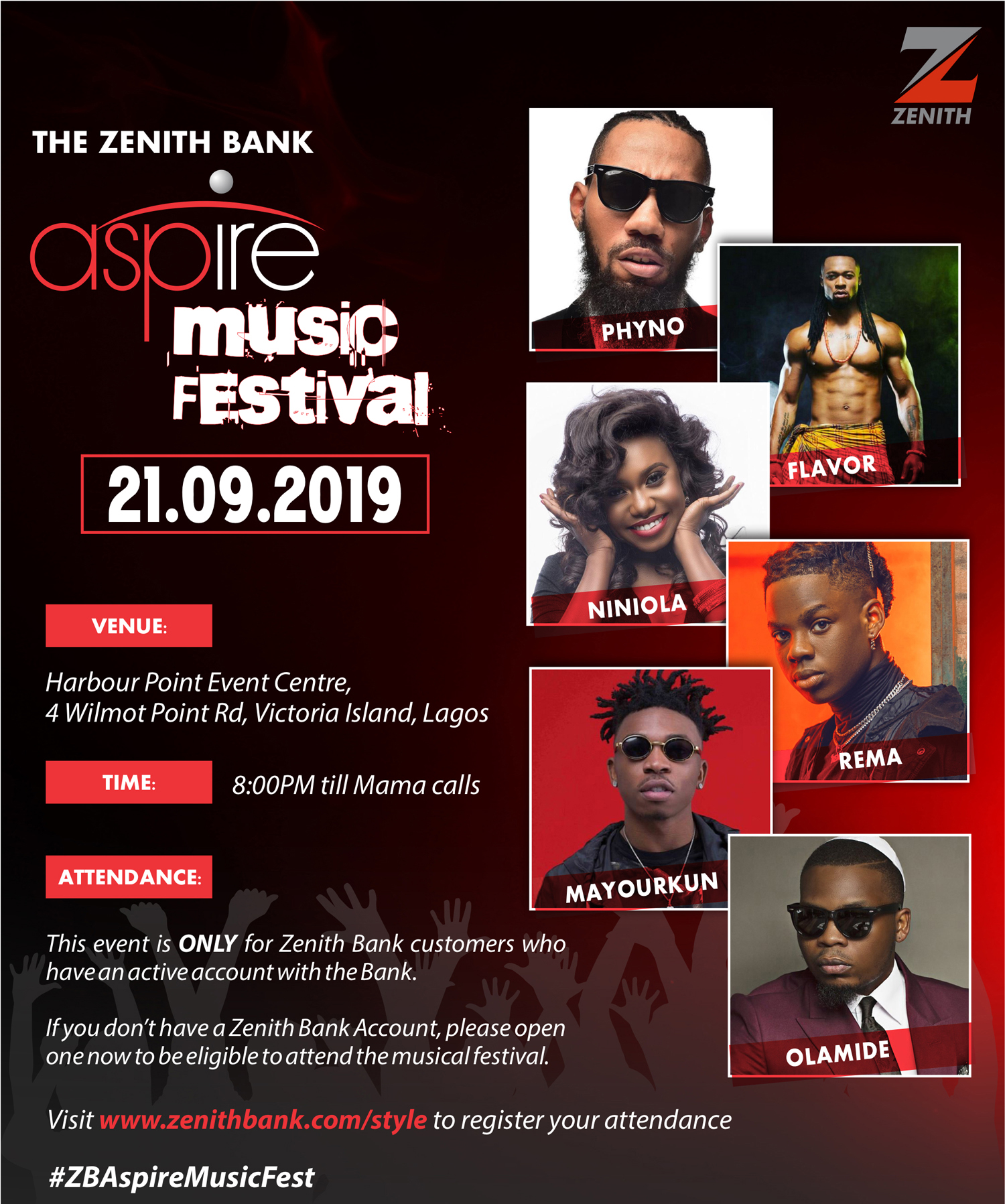
All is now set for the “Zenith Bank Aspire Music Festival” holding on Saturday, September 21, 2019 at the Harbour Point Event Centre, Victoria Island, Lagos by 5pm.

Dubbed as the most anticipated entertainment event of the year, the breathtaking festival promises to be a night to remember, as it will feature captivating and thrilling musical performances by some of Nigeria’s biggest artistes including Olamide, Flavour, Phyno, Niniola, Mayorkun and Rema.

Also on hand to anchor the event and trill the audience with rib-cracking jokes is Kenny Black, while celebrity hypeman, Do2dtun, will be revving up the crowd throughout the night.

The Festival, which is a must attend event for music lovers, tourists and fun seekers, is one of a series of events lined up by Zenith Bank to usher in “Style by Zenith 2.0”, the bank’s annual lifestyle fair which will take place towards the end of the year.

Attendance at the music festival is exclusively reserved for Zenith Bank customers. However, non-Zenith customers can still participate by simply opening a Zenith Bank account and registering to attend at www.zenithbank.com/style.

Zenith Bank Plc is recognized as one of the most innovative financial institutions in Nigeria and was voted the most customer-focused bank in Nigeria for the Retail and SME segments in the 2018 KPMG Annual Banking Industry Customer Satisfaction Survey (BICSS).

Nigeria’s domestic revenue among world’s lowest —Bill Gates

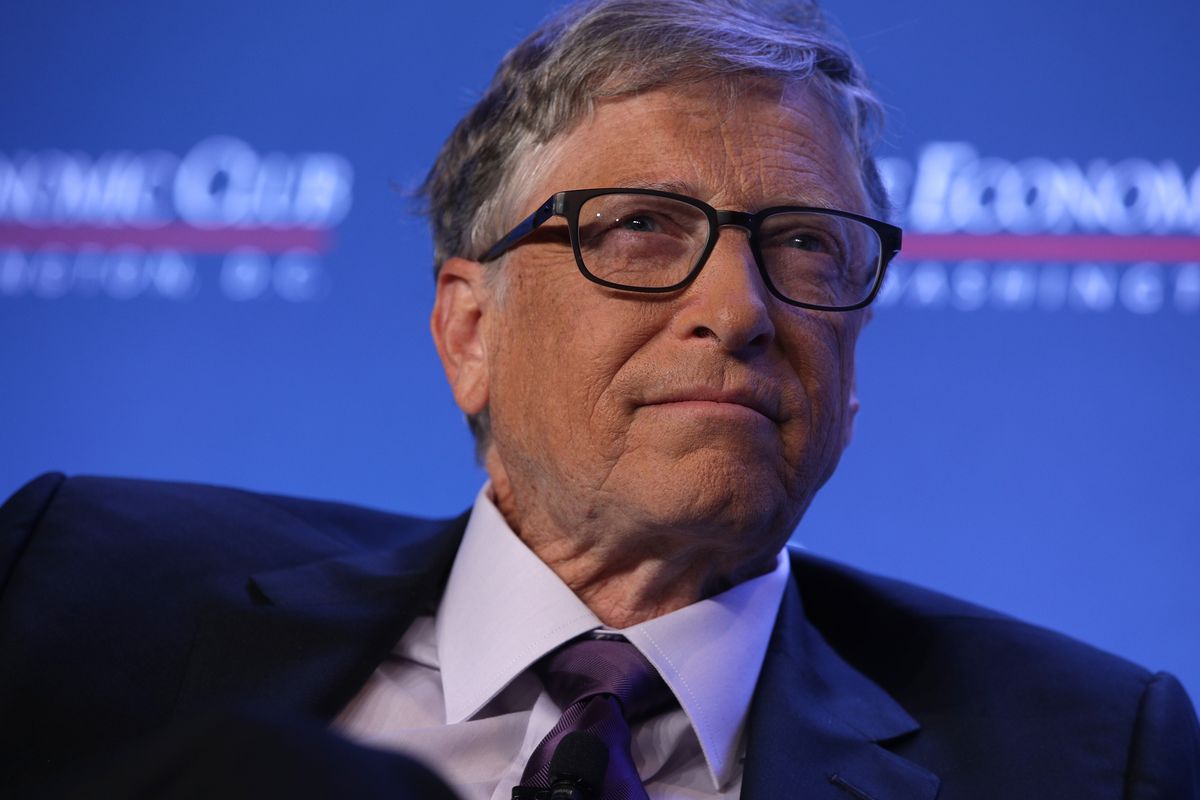
American billionaire and philanthropist, Bill Gates, has said that Nigeria has one of the lowest domestic revenues at just six per cent of GDP compared to 15 per cent in some other countries.

This, he said, is perhaps one of the reasons why the largest black nation has a problem with providing basic health infrastructure.

Gates said this via a teleconference with select journalists ahead of the release of the Bill and Melinda Gates Foundation’s Goalkeepers report 2019.

Responding to a question on how Nigeria could address some of its challenges, he said, “One challenge that Nigeria has is that the amount of money that the government raises domestically is quite small compared to other countries.

“A lot of countries at that level will be raising closer to 15 per cent of GDP and Nigeria is one of the lowest in the world down at about six per cent.  And so, it is a huge challenge that when you want to fund infrastructure, health, education, all those things, that over time the tax collection, the domestic resources are going to have to go up quite a bit.”

The Microsoft co-founder said the government also needed to do more to gain the confidence of the people because the citizens could be discouraged from paying taxes if they see that taxes are not being properly utilised.

He added, “That’s a long-term effort and I think partly by making sure the current resources are spent well like on primary health care, you gain the credibility that the citizens will say, okay, we want more of these things.  If we don’t raise the quality, you can get into a trap where they don’t feel like paying the taxes actually has that much impact, and so they’re not supportive of that.”

Gates lamented that many countries that were not as wealthy as Nigeria had better health care systems.

“If I had one wish for Nigeria, it would be that the quality and funding of the primary health care system would achieve the level of some other countries that are lower income but have done a better job with the primary health care system.  So, it definitely is doable,” he said.

The philanthropist said now that the country had virtually defeated polio, his foundation would look at strengthening health care centres.

He said his foundation had been collaborating with Aliko Dangote in helping Nigeria to address some of its challenges.

Gates said he holds video conferences with at least six northern governors regularly, adding that there were some things northern Nigeria could learn from the South.

Nigeria and other African nations had in 2001 signed the Abuja Declaration which seeks to allocate at least 15 per cent of their annual budget to improve the health sector and urged donor countries to scale up support.

Over 18 years later, Nigeria has failed to do so.

The country still has one of the world’s worst health indicators

The Federal Government had last week announced plans to increase Value Added tax from 5 per cent to 7.5 per cent, a move that has sparked outrage especially among the organised labour.

FG’s Livestock Plan, Fulani Herdsmen from Chad, Niger to benefit

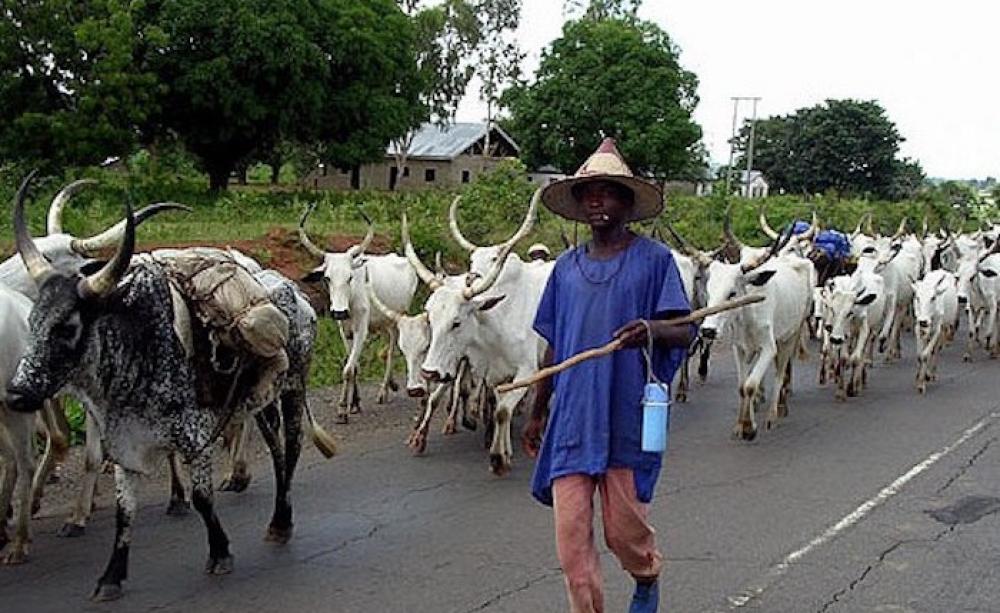
Fulani herdsmen from Chad, Niger and other neighbouring countries will benefit from the National Livestock Transformation Plan, the Bauchi State Governor, Bala Mohammed, has said.

Mohammed, who was a guest on Channels Television’s Sunrise Daily on Monday, said since Fulani herdsmen are nomadic, it would be inappropriate to deprive them from benefitting from the livestock plan just because they are not from Nigeria.

The initiative will be 80 per cent funded by the Federal Government while the states would provide 20 per cent counterpart funding and the grazing land.

The governor, whose state is among those that will be part of the initiative, said Fulani exist in many countries across Africa and share a brotherhood which transcends boundaries.

When asked how the government would ensure that only Nigerians benefit from the livestock plan, Mohammed said, “I think there is a lot of mistrust and misconception as regards the Fulani man. The Fulani man is a global or African person. He moves from The Gambia to Senegal and his nationality is Fulani.

“As a person I may have my relations in Cameroon but they are also Fulani. I am a Fulani man from my maternal side, we will just have to take this as our own heritage, something that is African. So we cannot just close our borders and say the Fulani man is just a Nigerian.

“In most cases, the crisis is precipitated by those outside Nigeria. When there is a reprisal, it is not the Fulani man within Nigeria that causes it. It is that culture of getting revenge which is embedded in the traditional Fulani man that attracts reprisal.”

When asked if it was right to allow foreigners to benefit from Nigerian taxpayers’ money, the governor said it was proper.

He said Fulani don’t actually have one single nationality since they are nomadic in nature.

Mohammed said “We are already accommodating them. Do you delineate and really know who is not a Nigerian Fulani man?

“They are all Nigerians because their identity, their citizenship is Nigerian even though they have relatives from all over the world. So, presumably they are Nigerians because they move all over and have relations all over. That is why our population in Nigeria is fluid.”

When asked if there would be any form of documentation for the Fulani herdsmen coming into Nigeria from other countries, the governor said, “Yes. This will give Nigeria the opportunity of having proper documentation and knowing the demography because the Fulani man settles anywhere he can feed his cattle.”

The livestock plan which is being championed by Vice-President Yemi Osinbajo seeks to put herdsmen and their livestock in designated colonies which will give them the opportunity of exploiting the livestock value chain.

While many northern states have embraced it, their southern counterparts have rejected it.

Update: BudgIT Co-Founder Seun Onigbinde Resigns Govt Appointment

Following public criticisms that have greeted his appointment to the budget ministry, Seun Onigbinde has now turned down the appointment.

Mr Onigbinde, co-founder of BudgIT, a civic group committed to government financial transparency, announced his resignation on Monday.

Mr Onigbinde had last week announced his decision to accept a technical adviser position at the budget ministry.

Many Nigerians, particularly on social media, however criticised the appointment.

Some supporters of the Muhammadu Buhari administration, like the Buhari Media Organisation, also criticised the appointment based on Mr Onigbinde’s past criticism of the Buhari government.

See the post by Mr Onigbinde announcing his resignation below.

AN UPDATE ON MY RECENT APPOINTMENT

Friends,

Kindly recall that I sent out a note recently on my interest to seek new experiences and that I would be working as a Technical Adviser to the Minister of State for Budget and National Planning for a short period.

It is clear that recent media reports about my appointment have created a complex narrative, which I believe would engender an atmosphere of mistrust, as I planned to proceed.

Upon further reflections on the furore that has been generated by my new role as the Technical Adviser to the Minister of State for Budget and National Planning, I humbly resign the appointment.

I am very grateful to the Honourable Minister, Prince Clem Ikanade Agba, for believing in my expertise and I also thank everyone who sent his or her congratulations to me in the short period. I have also been humbled by the faith and belief that numerous persons have expressed in me.

My sincere interest is to see a Nigeria that grows and optimises resources for the benefits of all Nigerians.

My loyalty to the good cause of our nation, Nigeria compelled me to accept the call to provide technical skills and this experience has more than strengthened it.

I also want to wish the Nigerian Government, led by President Muhammadu Buhari, well. I will always be of help to the federal government in my capacity as the Director of BudgIT, a critical fiscal transparency group, as I have been to several agencies. I would also work to ensure that BudgIT continues to build civic awareness on the right of every Nigerian to know how public resources are managed.

Thank you all.

God bless the Federal Republic of Nigeria

Good News for Nigeria, Saudi Fire could Force Oil Price to $100

Two drone strikes on Saudi Arabian oil facilities by Yemen rebels have reduced the country’s production by half and threatened to push up crude prices.

Some experts have warned that with the projected production shortage of 155 million barrels per month as a result of the strikes, oil prices could go as high as $100 — last seen six years ago.

Brent crude, the global benchmark and equivalent of Nigeria’s Bonny Light, closed at $52 on Friday.

A much higher oil price would be good news for Nigeria which is currently struggling to meet its revenue targets, but industry watchers have also told TheCable that the fuel subsidy regime could nuetralise potential benefits.

Nigeria reportedly spent $5 billion to subsidise imported petroleum products in 2018 as all its refineries are either down or performing poorly.

The benefits of higher oil prices hardly count as the government has to spend much of the extra revenue to keep the offical pump prices.

The 2019 budget was benchmarked at $60 but prices have fallen below the projection, and the government has been trying to make up for falling revenues by increasing taxes and borrowing both from foreign and local sources.

Saturday’s drone strikes, claimed by Yemen’s Houthi rebels, cut 5 per cent of the daily global oil supply.

Houthi rebels said 10 drones targeted state-owned Saudi Aramco oil facilities in Abqaiq and Khurais.

OPEC figures for August 2019 put the total Saudi production at 9.8 million barrels per day.

CNN Business quoted a source as saying Aramco, the national oil company, “hopes to have that capacity restored within days” — but the rebels have threatened to continue with the strikes in protest at Saudi support for the Yemeni government.

The Saudi interior ministry confirmed the drone attacks caused fires at the two facilities. In a statement posted on Twitter, the ministry said the fires were under control and that authorities were investigating.

“Abqaiq is perhaps the most critical facility in the world for oil supply. Oil prices will jump on this attack,” Jason Bordoff, founding director of the Center on Global Energy Policy at Columbia University, said in a statement.

Fidelity Bank Donates Laboratory To Correctional Home

Fidelity Bank Plc, top Nigerian lender has handed over a well-equipped, state-of-the-art Kitchen/Catering Laboratory for the use of students at the Girls Correctional Home, Idi-Araba, Lagos. The project, according to the bank, is a clear demonstration of its unwavering support towards enhancing the lives and wellbeing of less privileged members of the society.

Speaking at the commissioning ceremony in Lagos recently, the bank’s Managing Director/Chief Executive Officer, Nnamdi Okonkwo said that the decision to embark on the project is borne out of a deep-seated realisation that vocational education remains vital to the development of any society.

Okonkwo who was represented the bank’s Head of Legal Division, Kingsley Ohiri thanked the Ministry of Youth & Social Development for giving them the opportunity to partner with the State and hoped to do more in the future. He also mentioned the bank had, in the past, carried out some CSR projects in the State such as the Correctional Centre for Boys, Birrel Avenue, Yaba where vocational training tools were provided for the use of wards at the centre.

While commissioning the project, the Commissioner for Youth and Social Development, Olusegun Dawodu said that the kitchen would provide the children the means to learn a new vocation which they would use to benefit themselves and the society at large.

Dawodu also reiterated the resolve of the State Government to prioritise the needs of the teeming youth saying, “The Lagos State Government would continue to support and empower the children and youth in the State with relevant skills in order to play active roles in the Nigerian economy, thereby creating wealth and reducing the rate of unemployment and criminal activities among the youths and children”.

He specifically thanked Fidelity Bank for supporting the Government and especially the youths in the State by initiating and extending their Corporate Social Responsibility (CSR) to ensure that the society is impacted positively.

On her own part, the Permanent Secretary in the Ministry, Yewande Falugba, emphasised the need for well-meaning Nigerians and organisations to emulate Fidelity Bank by partnering with the State Government in ensuring the social well-being of the youths and children.

L-R: Head HRBP & Recruitment/CSR & Sustainability, Chris Nnakwe; Reps of the Governor of Gombe State, Perm Sec Ministry of Health, HRH Hassan Ibrahim; Branch Leader Gombe, Umar Bappi; Reps of the Speaker, Haruna Wambai; District Head of Lubo, Usman Mohammad during the official commissioning of the renovated Primary Healthcare Centre, Lubo in Gombe State.
L-R: Reps of the Governor of Gombe State, Perm Sec Ministry of Health, HRH Hassan Ibrahim reads the text on the plaque during the official commissioning of the renovated Primary Healthcare Centre, Lubo in Gombe State as Head HRBP & Recruitment/CSR & Sustainability, Chris Nnakwe looks on.
Exit mobile version