In line with its commitments of promoting sports and developmental initiatives at all levels, First Bank of Nigeria Limited is partnering the organizers of the first of its kind E1 Lagos GP an all-electric powerboat racing championship, set to hold between the 3rd and 5th of October 2025. Disclosing this at the E1 Lagos GP Stakeholder Immersion session in Lagos recently, Olayinka Ijabiyi, the Acting Group Head, Marketing and Corporate Communication of FirstBank, reaffirmed the Bank’s commitment to supporting initiatives that engender human development across the country while cementing legacies.
“Our involvement in the E1 Lagos GP is about driving legacy and enabling the passions and aspirations that unite Nigerians. We are a bank that has been in business for over 131 years and we recognize that sports drives us as a country, which is why through our First@Sportsinitiative, we continue to invest in platforms that inspire and elevate our people. We have been supporting legacy sport tournaments like the Georgian Polo Cup which we have hosted for 105 years, and the Lagos Amateur Open Golf Championship for 64 years now,” Ijabiyi said.
With the event slated for the start of the fourth quarter, FirstBank is aligning its partnership with the annual DecemberIssaVybe initiative, a campaign that celebrates the vibrant spirit of Nigerians during the festive season by curating unforgettable experiences that blend culture, entertainment and lifestyle. “FirstBank is deeply woven into the fabric of society and the lives of our customers. As presenting partner, we are creating meaningful touchpoints with customers and prospects, offering them a world-class experience of relaxation and celebration that captures the true essence of Lagos during the festive season,” he added.
Lagos State Commissioner for Information and Strategy, Gbenga Omotoso, who was also at the event, described the initiative as an event that will grow not just the sports but also showcase Lagos’s vibrant culture, dynamic people, and global relevance, while commending FirstBank for their support.
The teams owned by notable stars like Tom Brady, LeBron James, Didier Drogba, Will Smith, Marc Anthony, Steve Aoki, Rafael Nadal will compete in the Lagos leg before the 2025 season of the competition terminates in Miami in the United States.
The historic Glover Memorial Hall on Lagos Island was steeped in history and reflection on Sunday, September 21, 2025, as scholars, cultural custodians, political leaders, and members of the Lagos royal family converged for the King Kosoko Memorial Lecture 2025. This year’s theme, “The Lagos Kingship: Its Territory, Culture, Traditions, and Its Districts Before 1852,” offered a panoramic exploration of Lagos’ precolonial society and the enduring legacies of its monarchs.
Delivering the welcome address, Prince Abiola Olojo-Kosoko, Chief Curator of the King Kosoko Memorial Museum, described the lecture as more than a scholarly gathering, but rather a moment to honor the resilience and vision of King Kosoko.
“Our story as Lagosians did not begin with colonial maps or modern skyscrapers it began with the wisdom, courage, and vision of our forebears, among whom King Kosoko stands tall,” he said.
Prince Olojo-Kosoko emphasized that King Kosoko embodied the spirit of a cosmopolitan Lagos whose influence extended beyond the island to Epe, Ikorodu, Badagry, and even into the debates of Britain’s parliament. He thanked the planning committee, sponsors, Lagos State Government, and the Royal Family of Lagos, urging participants to recommit themselves to preserving Lagos’ cultural heritage in an age of globalization.
The keynote lecture was delivered by Idris Aregbe, Special Adviser to the Lagos State Governor on Tourism, Arts & Culture. He described the Lagos Kingship as both sacred and political, structured around the Oba, a council of chiefs, and customary institutions that ensured governance, justice, and ritual authority.
Aregbe highlighted the district system that organized Lagos’ social and economic life before 1852:
District A: Maritime hub with shrines tied to tides and markets.
District B: Agricultural hinterland trading crops with port towns.
District C: Artisan and craft quarter where guilds set norms.
District D: Fortified district with plazas for assemblies and conflict resolution.
District E: Spiritual center housing shrines and ritual specialists.
These districts, he explained, were united by alliances, intermarriages, shared markets, and customary law, creating a governance model that combined independence with unity under the Oba.
He also celebrated Lagos’ cultural richness oriki (praise poetry), drumming ensembles, masquerades, sacred shrines, and festivals like Adamu-Orisa (Eyo), Egungun, and Gelede as the fabric of precolonial identity.
Adding historical depth, Prof. Habeeb Abiodun Sanni of Lagos State University traced the monarchy’s origins to Ashipa, a representative of the Oba of Benin, who laid the foundations of the Lagos throne.
His research underscored Lagos’ hybrid monarchy: a blend of Awori traditions and Benin imperial structures, producing a kingship that was both spiritual and political. Prof. Sanni recounted how rulers such as Akinsemoyin transformed Lagos into a major slave-trading hub, while Erelu Kuti played a decisive role in preserving dynastic continuity and embedding women into the political fabric of Lagos.
He noted that Lagos’ territory expanded beyond the island to Ikorodu, Ijede, Epe, and Badagry through diplomacy, exile settlements, and commercial networks making Lagos a regional power by the early 19th century.
In her captivating contribution, Aduke Gomez offered a wide-angle view of Lagos as a pepper farm turned warrior camp (Oko to Eko), which grew into a trading powerhouse.
She highlighted the strategic location of Lagos, with its lagoon and waterways linking the West African “Slave Coast” from Ghana to Bayelsa. Large war canoes, some carrying 100 people and mounted with guns, symbolized Lagos’ strength in trade and conflict.
Gomez revisited the succession disputes that defined Lagos politics whether primogeniture from father to son, lateral succession among brothers, or outright seizure by rivals. She noted how the rivalry between Kosoko and Akitoye led to the 1851 British bombardment and paved the way for annexation.
Importantly, she spotlighted the role of women in shaping kingship and trade:
Erelu Kuti, who safeguarded dynastic succession.
Madam Tinubu, whose entrepreneurial and political influence supported kings.
Opo Olu and other royal women, who defended Kosoko’s interests.
Gomez argued that the kings’ economic vision such as Akinsemoyin’s invitation to European traders and Kosoko’s engagement with Afro-Brazilian returnees laid the foundations for Lagos’ cosmopolitan identity as a global hub of trade, creativity, and migration.
The lectures collectively stressed that studying the Lagos kingship before 1852 is not merely an academic exercise but a strategic investment in heritage-led development.
Aregbe called for:
Curated heritage routes across former districts.
Community-led festivals that revive traditional ceremonies.
Expanded museums and digital archives to capture oral histories.
Training local artisans and guides to sustain cultural industries.
Prince Olojo-Kosoko and other speakers emphasized the need to balance cultural preservation with ethical tourism, ensuring that sacred spaces and community rights are respected while Lagos shares its authentic stories with the world.
The 2025 King Kosoko Memorial Lecture succeeded in weaving together history, culture, and policy, offering Lagosians a chance to reconnect with their roots while imagining a future shaped by heritage, creativity, and resilience.
From the Awori migrations and Benin influence, to the trade networks, succession disputes, and festivals that defined precolonial Lagos, the event underscored that Lagos was already a cosmopolitan kingdom before 1852.
As Aduke Gomez concluded, it was the “entrepreneurial interventions of the Lagos kings that transformed Lagos from a pepper farm to a megacity first the capital, now the economic and creative heartbeat of Nigeria.”
The resounding call was clear to honor the past, preserve the present, and shape a future where Lagos’ cultural heritage continues to inspire generations.
Brighton & Hove Albion Football club has stated that it stopped over £100,000 black market ticket sales in one match day.
According to BBC Sports on Tuesday, the club said it is taking a firm stand against ticket touting, using cutting-edge technology and a newly appointed investigations officer to stop inflated resale activity and protect loyal fans.
Brighton urged its fans to avoid buying tickets from third-party sellers and buy directly from the club or risk losing their money altogether.
“We have identified hundreds of unauthorised resale tickets today. Based on black market prices, that’s around £100,000 worth of transactions we have stopped from falling into the hands of touts,” the club’s first-ever Tickets Investigation Officer, Joseph Sells said.
During the club’s recent Premier League match against Tottenham Hotspur, Brighton blocked 285 tickets that were being resold illegally, with an estimated street value of £100,000.
“One striking example involved a family who unknowingly paid £6,000 for six tickets to see Manchester City only to be turned away at the gate.
“Stories like this underscore the growing risk fans face when buying from unofficial platforms.
“To identify touts, Brighton uses bespoke software that flags suspicious transactions, monitors resale sites, and applies a risk score to each purchase.
“The system is designed to detect red flags such as purchases made with prepaid cards issued in other countries or bulk buying attempts under fake names,” Sells said.
Sells added that fans caught with unauthorised tickets at the stadium are given a letter explaining the situation and advising them to contact their bank to report the purchase as fraud.
“Where possible, the club offers legitimate replacement seats from last-minute availability or hospitality allocations,” he stressed.
The wider Premier League is also moving to combat touting, with new rules requiring encrypted digital barcodes to make unauthorised resale harder.
The National Youth Service Corps has announced that the 2025 Batch ‘B’ Stream II Orientation Course will commence nationwide on Wednesday, September 24, 2025, across all orientation camps.
According to a a statement issued via its official Facebook page on Monday, the scheme said registration will run until midnight on Friday, September 26, while the swearing-in ceremony is scheduled for the same day.
It added that the three-week exercise will end with a closing ceremony on Tuesday, October 14, 2025.
However, the NYSC clarified that the orientation course in Kwara State will open later, beginning on Tuesday, September 30, and closing on Monday, October 20, 2025.
The statement said the Director-General of the NYSC, Brigadier-General Olakunle Nafiu, urged all Prospective Corps Members to report to the camps indicated in their call-up letters, stressing the need for compliance with all registration requirements. Foreign-trained graduates are expected to present their international passports and original copies of uploaded documents.
He warned PCMs against presenting fake documents, cautioning that offenders would be handed over to law enforcement agencies for prosecution. Graduates of monotechnics and polytechnics are specifically required to produce their National Diploma certificates as part of the registration process.
In the event of a lost call-up letter, the NYSC directed corps members who collected theirs from their institutions to obtain a police report and sworn affidavit before returning to their schools for further action. Those who printed theirs online can reprint copies.
Highlighting safety concerns, the scheme strongly advised PCMs against night journeys.
“Once it is 6:00pm, prospective corps members are enjoined to break their journeys and spend the night at military or police barracks, NYSC secretariats or corps lodges nearest to their disembarkation point,” the statement read.
The NYSC also advised corps members to only patronize government-approved motor parks and transportation companies to avoid falling prey to criminals.
The NYSC boss was quoted as saying, “Any prospective corps member who refuses to report for service or participates illegally in the scheme will be prosecuted, as stipulated by the NYSC Act.”
He added, “Married, pregnant, and nursing mothers posted outside their husbands’ states of residence may complete the orientation course in their states of domicile, provided they present evidence of marriage, their husbands’ identification, and proof of residence.
“For registration, all corps members must present their original call-up letters, statements of result or certificates, school identity cards, and certificates of medical fitness issued by government or military hospitals stamped by the Nigerian Medical Association. Medical and allied health graduates are also required to show proof of registration with their respective professional bodies.”
The NYSC boss concluded by saying, “We wish all prospective corps members safe travels to their various camps and a successful service year.”
A speech by U.S. President Donald Trump will mark the opening of the 80th session of the annual General Debate of the UN General Assembly in New York on Tuesday.
Other speakers on the agenda for the first day are Brazilian President Luiz Inácio Lula da Silva, Turkish President Recep Erdoğan, and French President Emmanuel Macron.
The speeches are scheduled to start at 9 am (1300 GMT).
UN Secretary General António Guterres and General Assembly President Annalena Baerbock are also to speak.
A session of the UN Security Council on the Ukraine war, which Ukrainian President Volodymyr Zelensky is expected to attend, is also scheduled.
Around 150 heads of state and government are set to speak over the week ahead, with the Middle East conflict and the war in Ukraine.
The UN’s precarious finances would not be left out, along with the changing geopolitical role of the United States under Trump.
Nigeria’s Vice-President, Sen. Kashim Shettima, who is leading the country’s high-powered delegation to the annual global event, has since arrived in New York.
The News Agency of Nigeria reports that Shettima is representing President Bola Tinubu at the UN epochal event.
The Labour Party presidential candidate in the 2023 general elections, Peter Obi, has expressed concern over the rising cases of attacks and killings of security personnel across the country.
Obi, in a post via his official X (formerly Twitter) handle on Tuesday, described the spate of violence against soldiers, policemen, members of the Nigeria Security and Civil Defence Corps, and vigilante groups as tragic and unacceptable.
The former Anambra State Governor stressed that the sacrifices of security operatives to the nation must not go unappreciated.
“The country has been thrown into mourning yet again with the reported tragic killings of our security personnel. Our men and women in uniform have paid the ultimate price in the line of duty, dedicating their lives to the safety and stability of our dear nation,” Obi said.
He urged leaders at all levels to take urgent steps to better equip and motivate security operatives, insisting that security must form the foundation of governance.
According to him, Nigeria cannot continue to bury its security personnel while abandoning their families. He stressed the need for adequate compensation and support for the dependents of fallen officers.
“Our government must rise to the responsibility of ensuring that the wives, children, and parents of these fallen heroes are fairly compensated and supported. That is the least a grateful nation can provide. It is not charity, it is justice,” Obi added.
The former governor offered prayers for the repose of the souls of the slain operatives and assured their families of solidarity and support.
“To every fallen hero, may your soul rest in perfect peace. Your sacrifice and patriotism will never be forgotten. And to the families left behind, you are not alone. May God continue to provide you with strength and comfort,” he concluded.
The Irigwe community of Kamaru Ward in Chawai Chiefdom, Kauru Local Government Area of Kaduna State, has expressed deep appreciation to Governor Uba Sani for promptly settling the medical bills of victims of the recent Angwan Rimi attack.
In an open letter signed and released on Tuesday by community stakeholder Mr. Barnabas Musa and parents’ representative Comrade Raphael Joshua, the residents said the governor’s intervention saved the lives of injured children whose treatment had been halted at Barau Dikko Teaching Hospital over unpaid bills.
The letter, dated September 22, 2025, commended Governor Sani for his “swift and compassionate response,” noting that the confirmation of full payment was received on Sunday through the Chairman of Kauru Local Government Area, Hon. Bashir Tanko Dawaki.
“We write to extend our heartfelt appreciation to Your Excellency for your prompt and compassionate intervention.
“Your swift response has brought renewed hope and comfort to our distressed community,” the letter read.
The community also praised the Commissioner for Health, Hajiya Umma Ahmad, for her professionalism, and Dawaki for carrying out the directive “with dedication and empathy.”
The governor’s action followed an earlier public appeal from the community after the hospital allegedly suspended treatment for injured victims of the attack.
The payment has allowed the continuation of critical care and restored the residents’ confidence in what they described as the governor’s “people-oriented leadership.”
Recall that gunmen suspected to be bandits had invaded Angwan Rimi village in Kauru Local Government Area on September 15, killing two people and leaving several children critically injured.
The victims were rushed to the Barau Dikko Teaching Hospital in Kaduna metropolis, but treatment was reportedly suspended after the families failed to settle mounting medical bills, prompting an urgent plea to the governor for assistance.
The letter concluded with prayers for Sani’s success in building a safer and more inclusive Kaduna state.
Adron Homes Sponsors Olojo Festival 2025, Celebrates Heritage and Tourism Development
Adron Homes and Properties Limited, one of Nigeria’s leading real estate companies, has reaffirmed its commitment to cultural preservation and community development by officially supporting the 2025 Olojo Festival themed “Tourism for Inclusive Growth with Cultural Rebirth.”
In a press conference held recently at the Palace of His Imperial Majesty, Oba Eniitan Adeyeye Ogunwusi, CFR, Ojaja II, the Ooni of Ife, highlighted the festival’s enduring significance as a symbol of Yoruba heritage and a catalyst for economic and social development.
Representing the Chairman/CEO, Aare Adetola Emmanuelking, the Managing Director of Adron Group, Mrs. Adenike Ajobo, described the Olojo Festival as “more than a cultural gathering, a living heritage that connects the Yoruba civilization to the global stage, strengthening local economies, uniting people, and inspiring generational pride.”
She noted that Adron Group’s sponsorship aligns with its mission to build communities that honour tradition while creating sustainable opportunities.
“Tourism and housing share a common purpose which connects people, places, and possibilities. At Adron, we believe that true development must respect heritage while driving progress for future generations. Supporting Olojo Festival reflects our commitment to inclusive growth and cultural rebirth,” she stated.
The Olojo Festival, recognised as one of Africa’s foremost cultural events, continues to attract international attention while reinforcing Ile-Ife’s status as the cradle of Yoruba civilization. With the support of organisations like Adron Group, the festival is expected to further project Nigeria’s culture globally, boost tourism, and inspire unity across communities.
Adron Group extended prayers for the continued reign of His Imperial Majesty, Kabiyesi Ojaja II, and expressed optimism that the 2025 Olojo Festival would be peaceful, impactful, and a beacon of pride for Yorubaland, Osun State, and Nigeria at large.
Nigerians filed over 7,646 asylum applications in Sweden between 2000 and 2024, according to official figures from the Swedish Migration Agency, Migrationsverket.
Data obtained by Saturday PUNCH from the agency’s portal, covering the period, showed a consistent stream of Nigerian asylum seekers in the Nordic country.
A total of 6,783 asylum applications from Nigerian nationals were recorded between 2000 and 2021.
In 2022, there were 288 applications, followed by 200 in 2023, and 375 in 2024. Of the 375 applications received in 2024, 239 were first-time claims, while 136 were follow-up “extension” requests from persons whose temporary status was about to expire.
Women filed nearly two-thirds (159) of all first-time Nigerian claims, and half of every Nigerian applicant was between 25 and 44 years old, as no one over 64 applied in 2024.
Children accompanied 60 adult applicants, while one child travelled alone and registered as an unaccompanied minor.
Similarly, in 2023, there were 160 adults, 39 children in families, and one unaccompanied child among first-time asylum seekers from Nigeria.
Over the longer period from 2000 to 2021, a total of 132 unaccompanied minors from Nigeria applied for asylum.
The number of new applications for international protection peaked in 2003 at 452 and again in 2013 at 601, but the volume has never reached the scale of applications seen from countries experiencing internal conflicts.
Across Africa, Nigeria is among the top five countries of origin for asylum seekers in Sweden.
However, Somalia, Eritrea, Sudan, and Ethiopia far surpass it in numbers due to ongoing conflict and instability.
Somalia alone accounted for more than 54,128 applications since 2000, followed by Eritrea with over 39,000, then Sudan, Libya, Morocco, and the Democratic Republic of the Congo.
Other countries include Uganda, Egypt, Cameroon, The Gambia and Burundi, Kenya, Algeria, Tunisia, Rwanda, Tanzania, Ghana, Guinea, Sierra Leone, Mali, Zambia, Djibouti, Côte d’Ivoire, Angola, Zimbabwe, Burkina Faso, and single-digit applications from Benin, Niger, Equatorial Guinea, the Central African Republic and Mauritania. Nigeria, however, remains West Africa’s largest contributor of asylum seekers.
According to the reports, the migration from these countries is often directly tied to large-scale conflict and instability, a factor that distinguishes them from the lower, more consistent flow of applicants from Nigeria.
Swedish authorities say the distinction is significant as it enables a fast-track process for nationalities with historically high rejection rates, defined as a rejection percentage of 85 per cent or higher.
In 2024, Nigerian asylum seekers had an 88 per cent rejection rate while Colombians had 99 per cent.
Globally, the highest asylum grants in Sweden went to nationals of Syria, Afghanistan, Eritrea, Somalia, Iraq, Iran, Ethiopia, Palestine, Ukraine, and stateless persons.
On the other hand, the highest denials were recorded among applicants from Nigeria, India, Bangladesh, Albania, Georgia, Mongolia, Russia, Morocco, Algeria, and Tunisia.
The Swedish government says it prioritises claims linked to war, persecution, or statelessness over applications driven by economic factors.
Sweden’s asylum regime is rooted in the Aliens Act (Utlänningslagen), which incorporates both EU asylum directives and the 1951 UN Refugee Convention.
A successful applicant must demonstrate either refugee status (fear of persecution), eligibility for subsidiary protection (risk of serious harm in war or conflict), or humanitarian grounds such as severe illness or family reunification.
In recent years, however, Sweden has shifted toward more restrictive policies.
Since 2022, it has issued more temporary residence permits, limited family reunification programmes and tightened deportation enforcement.
Following the record influx of asylum claims in 2015, the Swedish parliament introduced a temporary emergency law that curtailed family reunification rights and made almost all new permits temporary. The main features were ratified in July 2021.
Under its 2023 Tidö Agreement, the current centre-right coalition, bolstered by the far-right Sweden Democrats, imposed “the EU’s minimum level” of protection, which uses tougher naturalisation and welfare rules as explicit deterrents.
To be granted asylum in Sweden today, an applicant must clear at least one of the classic Geneva or EU thresholds—fear of persecution, risk of torture or death, or indiscriminate violence—or demonstrate “exceptionally distressing” humanitarian circumstances.
Meanwhile, Abuja-based development economist Dr Aliyu Ilias, reasoned that the exit of more Nigerians and their permanent settlement abroad meant a loss of skilled labour for the country.
He said that with Nigerians battling economic headwinds and deteriorating security at home, the asylum route, however uncertain, still appeared to offer a better prospect.
“So, it is a total brain drain in the long run, and for the economy, it is reducing our GDP. The appalling part is that most of our Nigerian brothers and sisters who go out do not return,” he added.
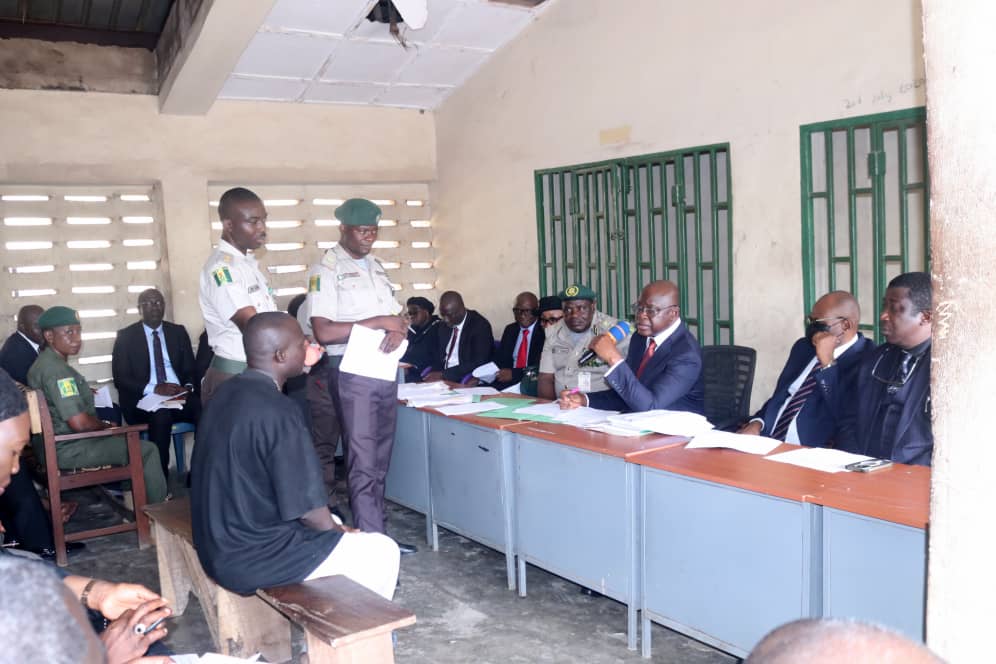
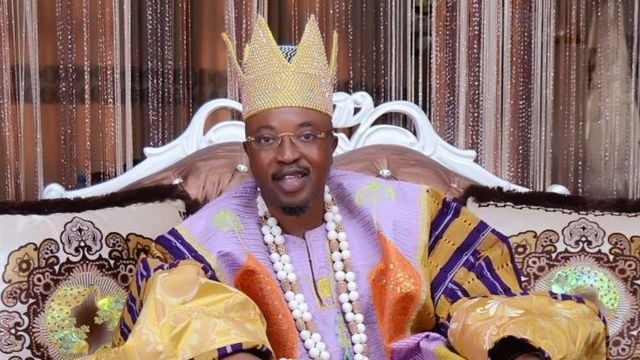
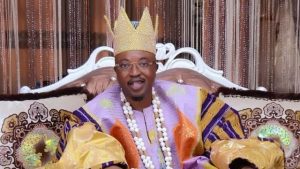
The Olofin of Isheri, Oba Sulaiman Bamgbade, Ayodele III, has handed over a newly built Isheri High Court to the Ogun State Government, in what he described as a contribution to strengthening the state’s justice delivery system.
The monarch said the gesture was driven by a desire to promote quicker access to justice and ease the workload of existing courts.
During the official handover, Oba Bamgbade explained that the judicial facility, which he singlehandedly built, represents his commitment to strengthening access to justice and ensuring that the people of Isheri and environs are better served by the rule of law.
In a statement on Friday signed by the Palace’s Office of Media and Publicity, the monarch stressed that a functional justice system was key to peace, order, and development in any society.
“Justice and healthcare are the twin pillars of a thriving society. By handing over the Isheri High Court to the Ogun State Judiciary, we are strengthening access to justice for our people, who previously had to travel as far as Itori and Ifo,” the monarch said.
Aside from the PHC, the traditional ruler also inaugurated the 20-bed Renewed Hope Primary Healthcare Centre in Isheri Olofin as part of efforts to boost access to quality healthcare for residents.
The monarch said that the project was conceived to address the pressing medical needs of his people, particularly women, children, and the elderly.
Speaking at the unveiling as part of events to mark his 4th coronation anniversary, the monarch explained that the facility would provide affordable and accessible healthcare services, noting that primary healthcare remained the foundation of any functional health system.
He stressed that strengthening grassroots health facilities was critical to reducing avoidable deaths and the burden on tertiary hospitals.
According to him, the center would reduce the long distances my people travel to access medical care, while also creating a safer environment for maternal and child health in the area.
“With the commissioning of the Primary Healthcare Center, we are also prioritising the health and well-being of our people, because only a healthy community can truly prosper.
“This brings an end to our people having to leave their community in search of medical attention,” the monarch said.
Dignitaries at the event include the First Lady of Ogun State, Mrs. Bamidele Abiodun; the Chief Judge of Ogun State, Justice Mosunmola Dipeolu, Senior Special Assistant to the President on Sustainable Development Goals, Adejoke Orelope-Adefulire; the Deputy Governor of Ogun State, represented by the Commissioner for Women Affairs and Social Development, Hon. Adijat Adeleye, and the Ogun State Commissioner for Health, Dr. Tomi Coker.
Others are Member, House of Representatives (Ado-Odo/Ota Federal Constituency), Hon. Tunji Akinosi, Member, Ogun State House of Assembly (Ifo II), Hon. Folawewo Salami, and the Executive Chairman, Ifo Local Government, Hon. Idris Kusimo. Also present were numerous traditional rulers, community leaders, and illustrious sons and daughters of Isheri.
On May 24, 2025, Oba Bamgbade appealed to the Lagos and Ogun State Governments, as well as the Federal Government, to support heritage initiatives that protect and promote the Awori history and identity.
The monarch also urged the government to support the kingdom in turning Isheri Olofin into a cultural tourism destination and a hub for economic empowerment.