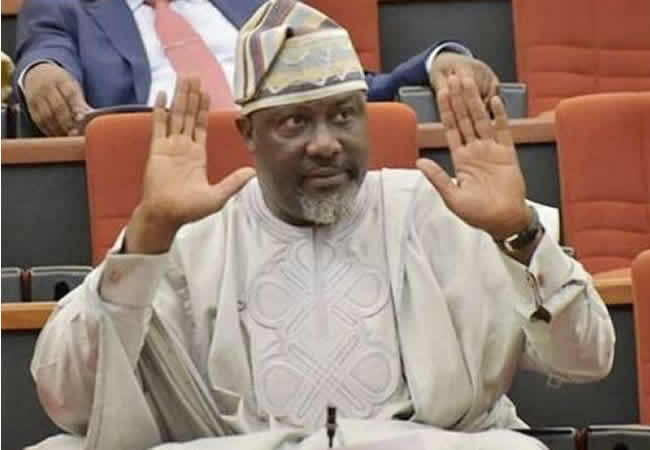
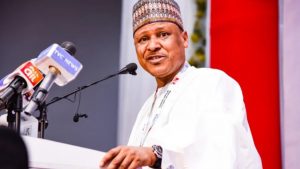
Former Kogi senator, Dino Melaye, has expressed regret for previously backing the All Progressives Congress, describing his past support as a mistake.
He also expressed confidence in the African Democratic Congress to present a strong contender capable of unseating President Bola Tinubu in 2027.
Speaking on Politics Today, a Channels Television programme aired on Friday, Melaye acknowledged his past alignment with the ruling party but said he had since turned a new leaf.
“Once I was blind, now I can see. I regret in totality.
“Just like you confess your sins daily in the Lord’s prayer, I ask for forgiveness.
“Anyone who has moved with the devil, anyone who has aligned with an unholy tendency, should regret it,” the former lawmaker said.
Melaye slammed the APC administration for worsening socio-economic conditions, saying hunger and poverty have reached dangerous levels across Nigeria.
“You don’t need a prophet to tell you what is happening in this country. It is visible even to the blind and audible to the deaf.
“The hunger in the land is shattered. People are dying of malnutrition in rural communities.
“Take a trip today to your village and just announce that you want to share two bags of rice.
“If you are not careful, there will be dead casualties from the struggle to get something,” he said.
Turning to 2027 politics, Melaye said the ADC was focused on building a stable party platform that would produce a credible presidential candidate to defeat Tinubu.
“Especially those of us in the ADC, we need to create a comfortable, stable platform.
“I believe that platform will produce a candidate that will unseat President Ahmed Bola Tinubu in 2027,” he said.
When asked if he would support former Vice President Atiku Abubakar, Melaye declined to endorse any aspirant, saying his focus was on strengthening the party first.
“I will not be talking about a presidential candidate or preference for anybody until we get the party completely stabilised and organise a transparently honest convention,” he said.
Although Atiku has not officially declared interest in the 2027 race, Melaye praised his ongoing political efforts.
“What Atiku is doing is rescuing this country, bringing together men of honour and valour to correct and palliate the satanic manifestation of the APC,” Melaye added.
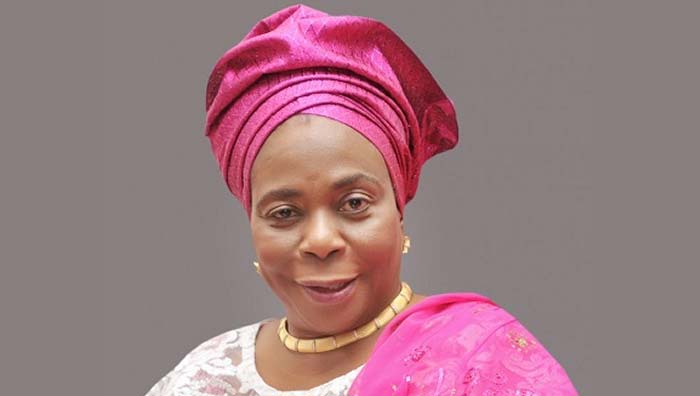
Former Deputy Governor of Ekiti State and ex-Senate Minority Leader, Senator Biodun Olujimi, has said that the political strategy and rhetoric used by Labour Party presidential candidate, Peter Obi, during the 2023 general election will not be effective in 2027.
Speaking on Channels Television’s Politics Today on Thursday, Olujimi dismissed the possibility of Obi mounting a serious challenge to President Bola Tinubu’s re-election bid.
“The rhetoric of the last election will not work again, except he comes with another gimmick. And you see, this (Tinubu) is a politician, a man who knows the terrain well,” she said.
Olujimi also took a swipe at former Ekiti State Governor, Ayodele Fayose, accusing him of destroying the Peoples Democratic Party in the state through what she described as autocratic leadership.
“Ayo Fayose killed the PDP in Ekiti. He alienated those who built the party, imposed candidates against popular will, and created factions that led to our repeated failures at the polls,” she said.
She noted that Fayose’s style of leadership alienated key stakeholders and sparked internal crises that weakened the party’s structure and performance in elections.
According to her, efforts by party loyalists to reconcile and rebuild the PDP in Ekiti were repeatedly undermined by Fayose’s “high-handedness and divisive politics,” making unity within the party nearly impossible.
“The PDP had a real opportunity to remain strong in Ekiti, but the selfish ambitions of one individual destroyed that chance,” she lamented.
Olujimi, who recently stepped aside from the party, added that the PDP’s failure to conduct transparent internal processes further contributed to the defection of loyal members and the erosion of public confidence in the party.
The Federal Government, on Monday, celebrated the triumphant return of Nigeria’s Super Falcons, who clinched the 2024 CAF Women’s Africa Cup of Nations title in Rabat, Morocco.
In a statement issued by the Minister of Information and National Orientation, Mohammed Idris, the government described the victory as not just a sporting achievement but a profound testament to the “resilience, excellence, and indomitable Nigerian spirit” embodied by the national team.
“The Super Falcons have, with unmatched skill, discipline, and unity, inscribed Nigeria’s name in gold on the continental stage. They have made the entire nation proud,” Idris said.
On behalf of President Bola Tinubu and the Federal Government, the minister commended the players, coaches, and technical crew for their commitment and courage throughout the tournament.
“You have inspired a new generation of Nigerians and demonstrated the power of sports as a unifying and uplifting force,” he added.
Idris also reaffirmed the Tinubu administration’s commitment to sustained investment in sports development and athlete support, promising enhanced resources and platforms to enable Nigerian sportsmen and women excel.
As part of celebrations marking the team’s return, the government announced a ceremonial procession for the Super Falcons in Abuja, starting from the City Gate through Eagle Square and culminating at the Presidential Villa, where the champions will be officially received.
“The Super Falcons have flown the Nigerian flag high and brought joy to millions of our citizens. Welcome home, champions of Africa,” the statement concluded.
The victory marks Nigeria’s 10th WAFCON title, further cementing the Super Falcons’ dominance in African women’s football.
Super Eagles striker Victor Osimhen has opened up about the challenges that come with fame, describing it as a restriction on his personal life and freedom.
In an interview posted on Monday via X by Instagblog, the Napoli forward shared a personal moment about missing out on his daughter’s first outing due to public attention and fan presence.
“I remember when I had my daughter and I wanted to take her somewhere with my family when they came to visit us in Italy. I couldn’t do much with my daughter on her first outing. I had to give her to my sister while I was just taking pictures, making videos and everything,” he said.
Reflecting on the effects of stardom, Osimhen remarked, “Fame is boring. Sometimes you want to go outside, and you cannot do a lot of things.”
Despite his global recognition, the 26-year-old emphasised his desire to remain grounded and connected to his roots.
“I just like to be around these people. I just like to stay close to them… This is how I was born, so for me, it’s just natural.”
Osimhen also acknowledged the support system that has helped him navigate success.
“One of the few lessons that I’ve also learned—my elder brother is there to guide my footsteps, which is very important,” he stated.
Osimhen added that he feels most comfortable when surrounded by ordinary people, even when accompanied by security personnel.
“If I have my security and they are strapped, for me, I’m good. I can be among these people. I don’t care. This is my life. This is how I live,” he said.
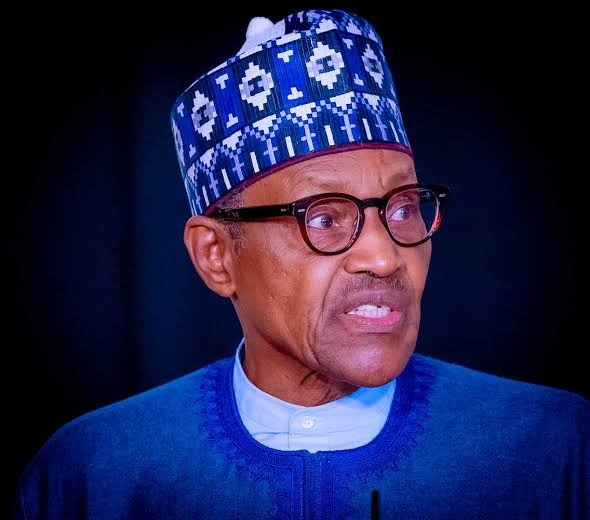
A former media aide to the late President Muhammadu Buhari, Garba Shehu, has said that Buhari’s frequent medical trips abroad were a matter of personal preference and not a dismissal of Nigeria’s healthcare system.
Shehu made this clarification during an appearance on Channels Television’s “Inside Sources” program on Saturday.
His comments were a direct response to remarks made by Femi Adesina, another of Buhari’s former spokespersons.
Adesina had previously suggested that Buhari “could have died a long time ago” if he had relied solely on Nigerian hospitals, citing a perceived lack of expertise within the country.
However, Shehu contradicted Adesina’s view, asserting that Buhari remained under the care of Nigerian doctors throughout his presidency, implying that the foreign trips were not due to a lack of local medical competence.
Shehu said, “I think it is wrong to assume that he fenced himself off from the Nigerian medical system.
“He had a Nigerian doctor, a chief personal physician and a state house clinic, also led by a medical consultant, a distinguished doctor of many years of practice.”
He emphasised that the president’s medical team was always available to meet his immediate health needs.
“In terms of the immediacy of his own medical needs, they were always present to administer to his own needs,” Shehu added.
While acknowledging Buhari’s consistent visits abroad for treatment, Shehu said this was due to the president’s longstanding medical relationship overseas.
“As for his attachment to his past practice abroad for his medicals, he had an attachment to that.
“It was not that he was disrespectful of Nigeria’s medical practice or that he didn’t believe,” he said.
Shehu also highlighted the presence of Nigerian-trained doctors working globally, noting that their competence is recognised worldwide.
“For most people who also travel abroad and they need to see doctors — I have experienced this in America — you go into the office of the doctor and you find that it’s a Nigerian surgeon, it’s a Nigerian doctor,” he noted.
President Muhammadu Buhari died on July 13 in a London clinic after a prolonged illness.
He was buried at his residence in Daura, Katsina State, on July 15.
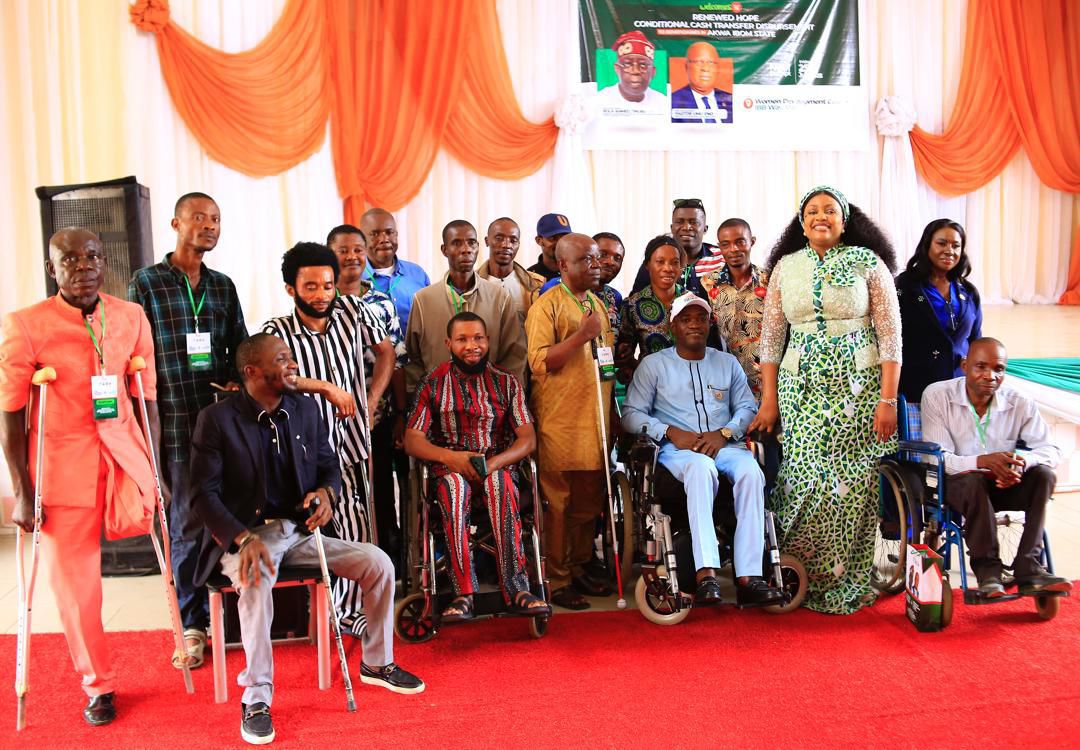
Governor Umo Eno of Akwa Ibom on Saturday commended President Bola Tinubu for extending the Renewed Hope Conditional Cash Transfer initiative to over 27,000 vulnerable residents of the state.
A statement issued by the governor’s aide on entrepreneurship development, Meflyn Anwana in Abuja disclosed that each beneficiary received N75,000 as part of the programme aimed at alleviating poverty and mitigating economic hardship.
Eno described the gesture as a timely intervention that aligns with his administration’s inclusive governance and humanitarian vision.
Speaking at the flag-off of the programme held at the Women Development Centre in Uyo, Eno, represented by the Coordinator, Office of the First Lady, Mrs. Helen Obareki, praised the President for prioritising the welfare of the poor and ensuring that his people are not left behind in the federal government’s social investment drive.
The statement partly read, “Through the Renewed Hope Agenda initiative of President Bola Ahmed Tinubu, over 27,000 Akwa Ibom people received a conditional cash transfer of ₦75,000 earlier today.
“This initiative, strategically designed to lift the poorest of the poor out of poverty and reduce economic hardship, is a social investment that aligns with the humanitarian model in Akwa Ibom State.
“His Excellency reaffirmed his commitment to partnering with the Federal Government to support vulnerable citizens, particularly through the implementation of the ARISE Agenda.”
The statement further highlighted that since assuming office in May 2023, Eno’s administration has placed a strong emphasis on social welfare and embedding humanitarian responses into state policy with the creation of the Ministry of Humanitarian Affairs.
“The state has delivered 205 homes, provided monthly stipends to 600 elderly persons, and facilitated health insurance coverage for 1,287 senior citizens and persons with disabilities.
“The governor also awarded educational grants to 243 students with disabilities, supported MSMEs with equipment and funds, and empowered youths with ₦50,000 grants.
“Our policies are not just about giving food or cash to people but about restoring dignity, driving economic empowerment, and building a state where no one is left behind,” Eno said.
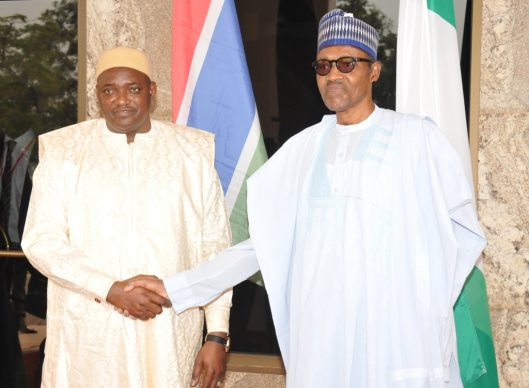
The President of the Republic of The Gambia, Adama Barrow, on Friday paid a condolence visit to the family of the late former Nigerian President, Muhammadu Buhari, at his hometown in Daura, Katsina State.
Barrow, who arrived in Katsina for the visit, was received by the Secretary to the Katsina State Government, Alhaji Abdullahi Garba-Faskari, alongside members of the Buhari family.
While offering his tribute, Barrow described the late Buhari as a pillar of democracy and a steadfast supporter of The Gambia.
“President Buhari stood by us and the Gambian people to ensure that our democratic mandate was fully respected and implemented to its ultimate end,” he said.
Barrow said that Buhari was more than a leader to him personally.
“Every time I saw Buhari, I saw a father, a brother, and an uncle standing before me,” he said.
Barrow highlighted Buhari’s role in promoting peace and democracy across West Africa through ECOWAS, the African Union, and on the global stage.
He stated, “I feel deeply obliged for what President Buhari has done — not just for The Gambia, but for ECOWAS, the African Union, and Nigeria’s image across the world.
“He stood for democracy, freedom, and justice.”
The Gambian leader extended his condolences to the Buhari family and the Nigerian people.
“We offer our heartfelt condolences to his family and to all Nigerians for the loss of a great man—one who helped shape who we are today,” he said.
In his remarks, Garba-Faskari described Barrow’s visit as a true reflection of African brotherhood.
He added that Buhari’s contributions to peace and stability in Nigeria and across the continent would never be forgotten.
Responding on behalf of the family, Yusuf Buhari, son of the late president, expressed heartfelt appreciation for the visit.
He said the gesture underscored the strong historical and diplomatic ties between Nigeria and The Gambia, as well as the late president’s enduring legacy in Africa.
The Mediation Training Institute has called on Nigerians to make mediation a daily practice to resolve disputes peacefully and build stronger relationships at all levels of society.
In a statement to mark the International Day of Mediation on Thursday, the MTI President, Segun Ogunyannwo, said mediation should be viewed as an essential life skill rather than an occasional option.
“Mediation should not be like a garment that you put on whenever it suits you and put off when it does not serve your interest or purpose.
“In our thoughts, words, and deeds, we should reflect the high standards and ideals of the very fulfilling ministry of reconciliation—mediation,” he said.
He noted that the institute chose July 24 as symbolic, underscoring the message that mediation should be practised “24 hours a day, seven days a week.”
Ogunyannwo urged Nigerians to use mediation to address disputes in families, workplaces, communities, and business relationships, stressing its role in sustaining harmony in a conflict-prone society.
He also encouraged individuals to take practical steps by mediating real disputes on the day and sharing their experiences with the institute via email for recognition of their peacebuilding efforts.
“Mediation skills are life skills”, Ogunyannwo noted, adding that these skills are vital for managing differences, preserving relationships, and fostering peaceful co-existence.
He reminded mediators to uphold confidentiality and respect privacy in all interventions, stating that the International Day of Mediation continues to serve as a platform to promote dialogue, tolerance, and reconciliation across Nigeria.
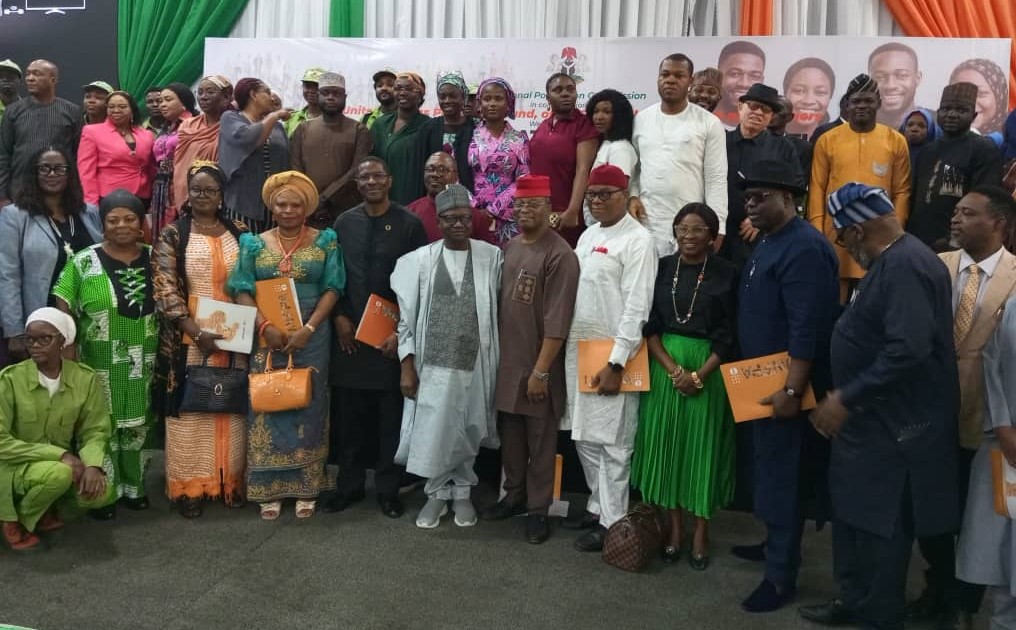
Lawmakers and population experts on Tuesday called for the urgent conduct of a credible population and housing census, warning that the continued delay undermines national development and the future of millions of young Nigerians.
Speaking at the 2025 World Population Day event held in Abuja, the Chairman of the Senate Committee on National Population and Identity, Senator Victor Umeh, emphasised the significance of this year’s theme: ‘Empowering young people to create the families they want in a fair and hopeful world.’
Umeh described it as a timely call to invest in youth by ensuring access to rights and informed decision-making.
The senator expressed concern over the lack of a credible national census since 2006, which has led to uncertainty about Nigeria’s actual population.
“Every day we hear that Nigeria has about 230 million people. But how can we address their needs if we don’t know who they are or how many they are?
“Just yesterday, someone claimed our population exceeds 300 million. I couldn’t dispute it—our last census was 19 years ago,” he noted.
The senator stressed that with more than half of Nigeria’s population under 30, the country’s future depends on its youth.
“To truly empower them, we need accurate, disaggregated data. This is why I strongly advocate for the timely conduct of a credible population and housing census in Nigeria, which is essential for inclusive development, equitable resource distribution, and youth-responsive policy,” he said.
Umeh cautioned that policies built on assumptions lead to misallocation of resources and a growing crisis in sectors like education, employment, and housing.
He pointed to the youth unemployment crisis as a direct result of poor planning.
The senator pledged that the Senate would provide the necessary legislative support and funding to the National Population Commission to ensure the next census is credible and timely.
“The senate is committed to providing the necessary legislative framework to ensure that Nigeria’s population data is accurate, timely, and inclusive, and that youth empowerment remains central to our national development agenda,” the senator added.
Umeh also stressed the need for data on housing, linking population figures to housing deficits and planning.
Similarly, the Chairman of the House Committee on National Population and Identity, Okunjimi Odimayo, stressed that accurate data is not a luxury but a necessity.
“We must be guided by one fundamental requirement: accurate data.
“This is actually what differentiates us from any advanced country in the world. Accurate data — this is what differentiates the private sector from the public sector,” Odimayo noted.
Odimayo urged President Bola Tinubu to make an immediate decision on the census, describing the data gap as “the problem of Nigeria now.”
“Without reliable data, we risk building policy on assumptions. Everything you see, any policy you see, is based on assumptions — and assumptions are not realistic. I can say it,” he added.
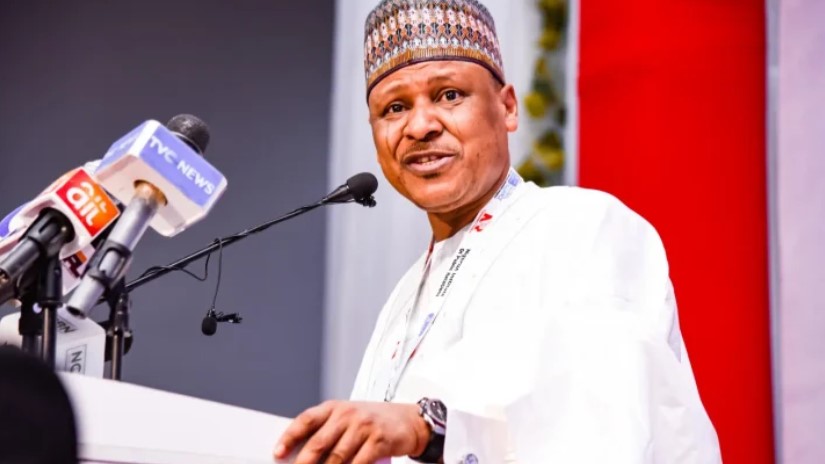
Also at the event, NPC Chairman Nasir Kwarra said the country’s youthful demographic offers a unique opportunity that must be strategically harnessed.
“More than 60 percent of Nigeria’s population is under the age of 30. That’s over 130 million young people whose dreams, potentials, and aspirations must be placed at the very centre of our national development priorities,” he said.
Kwarra underscored the need for investment in education, health, jobs, and governance, supported by up-to-date data.
“It also means investing in data management including ensuring compliance with the conduct of a population and housing census every ten years,” he said.
He concluded by encouraging all sectors of society to involve young people not just as beneficiaries but as active partners in national growth.
“Young Nigerians are full of ideas, creativity, and resilience. They want to contribute, they want to lead, and yes — they want to form families on their own terms, in an environment of dignity, fairness, and opportunity,” Kwarra said.
The United Nations Population Fund Deputy Representative Koessan Kuawu echoed the call for inclusion and data-driven policy, urging leaders to listen to the voices of youth.
“Starting on this World Population Day, let’s listen to what young people want and need, and create conditions that enable them to exercise their rights, make their own choices and enjoy a hopeful future,” he said.
Nigeria has been overdue for a national population and housing census since 2016.
The last enumeration exercise, held in 2006, recorded a population of over 140 million. That data remains the foundation for national planning despite significant demographic shifts.
Efforts to conduct a new census have repeatedly stalled due to security concerns, funding challenges, and political considerations.
A recent attempt under the administration of former President Muhammadu Buhari scheduled a digital census for May 2023, but the exercise was postponed just days before commencement to allow the incoming Tinubu administration to assume responsibility.
The lack of current demographic data has hampered policy planning, the delivery of social services, and the equitable distribution of resources. Global standards recommend a national census every 10 years.
Oyo State Emergency Management Agency, on Tuesday, alerted people living in flood-prone communities in the state to start preparing for heavy rain and its attendant flooding.
This was contained in a statement released by the Administrative Secretary of SEMA, Ojuolape Busari, in Ibadan, the state capital.
She explained that the reports from the state Flood Early Warning System indicated that the areas to the east and northeast of Ibadan city centre are likely to experience the heaviest rainfall.
Busari said, “This includes parts of Lagelu Local Government Area, especially areas like Iyana Offa; Moniya (eastern parts), and communities further east towards Osun State.
“According to the information made available by the state Flood Early Warning System, some parts of the north of Ibadan city, possibly parts of Egbeda LGA (eastern edges) and areas bordering Lagelu LGA, will experience heavy rainfall today.
“Communities along the Ibadan-Ife Road (A5 highway) eastward: Areas like Egbeda and further east on this major road, will also experience heavy rainfall.”
The administrative secretary further said areas with moderate to heavy rainfall, determined by the flood early warning system, and ascertained by Google Maps, will encompass most of Ibadan Metropolis (eastern and central parts).
She said, “This includes areas like IITA itself, the Ibadan Airport, University of Ibadan, Ojoo, Akobo, Basorun, Gate, Challenge, Ring Road, and many other densely populated areas within the city.
“Parts of Akinyele Local Government, especially the eastern and central parts, parts of Oluyole Local Government, especially Northeastern sections too.”
Busari assured all that the agency and other relevant agencies of government, voluntary agencies, and civil society groups are prepared to intervene and ameliorate the plight of persons and communities who might be affected.
She, therefore, urged people of the state to immediately commence preparations to avert dire consequences, saying, “discretion is the better part of valour.”