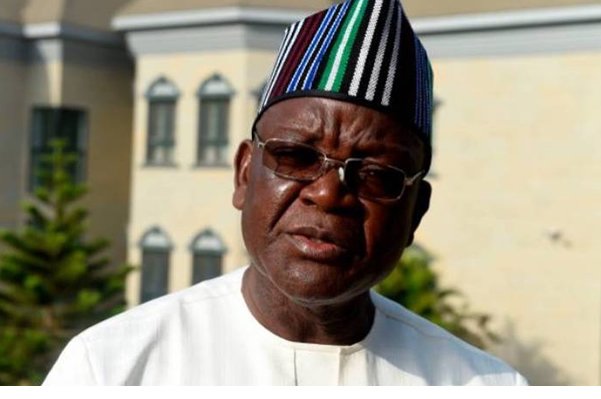
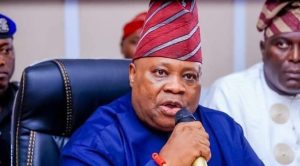
I didn’t hate Buhari, Ortom defends stance on Benue insecurity
Olugbenga Ige
A former Governor of Benue State, Samuel Ortom, has dismissed claims that he hated the late ex-President Muhammadu Buhari over his government’s handling of the security in the North Central state.
The chieftain of the Peoples Democratic Party stated this on Monday during an interview on Channels Television’s Politics Today.
Ortom stated that he only criticised Buhari’s government for not doing enough to address the security challenges in his state at the time.
The former Benue governor defended his actions, saying he had to speak out to protect his people.
He said, “I didn’t hate Buhari, I didn’t hate his government, I didn’t hate any Fulani man. All I was standing for was that I was elected to provide security and provide for the welfare of my own people.
“I was just doing my job, and I did accuse the last government for not doing enough to curb the security challenges that we had.
“I couldn’t just watch and continue to bury people, and I had to voice out but I did not stop at that. My government was able to provide a solution that, in our thought, we felt would solve this problem.”
The former governor said the insecurity problem still persisting in Benue State wouldn’t have existed if the Buhari administration had cooperated with him and adopted the solution he proposed to end it.
Ortom said he was frustrated under the Buhari administration and raised the alarm several times, stating that the Ruga ranching programme and similar ones proposed by the government to end the problem were merely a camouflage.
He insisted that there is no such thing as a herders-farmers crisis in Nigeria, saying that, instead, the intruding herders storm villages to kill, destroy farms, rape women, and commit other atrocities.
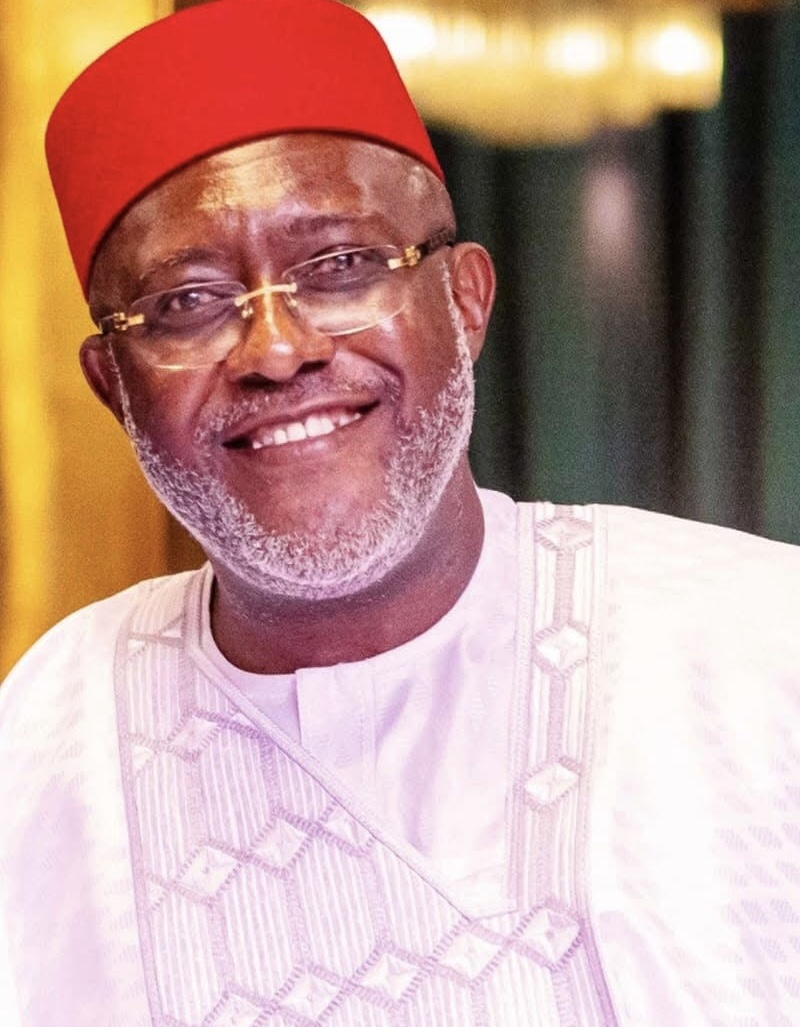
The former National Publicity Secretary of the Peoples Democratic Party, Olisa Metuh, has called on President Bola Tinubu to caution state governors over what he described as undemocratic restrictions on the constitutional rights of citizens.
Metuh made the call in a Facebook post on Sunday, reacting to the statement by Edo State Governor, Monday Okpebholo, that Labour Party’s 2023 presidential candidate, Peter Obi, must obtain security clearance before entering the state.
PUNCH Online had reported that Okpebholo made the comment while receiving a former federal lawmaker, Marcus Onobun, into the All Progressives Congress.
The governor had linked Obi’s recent visit to Benin, where he donated N15m to a nursing school, with renewed violence in the state.
“That man who says he has no ‘shishi’ came and dropped N15m. Where did he get it from?
“After he left, three people were killed.
“For this reason, Obi must not come to Edo without security clearance,” Okpebholo had said.
Reacting on Sunday, Metuh described the governor’s position as a threat to democratic values and individual freedoms.
“I have been recuperating from a spinal procedure, but have just read the disturbing news that the elected Governor of Edo State, who is otherwise a decent and distinguished senator, has banned a fellow Nigerian from visiting his state,” Metuh wrote.
He noted that a similar precedent had earlier been set by another governor from the North Central zone and cautioned against normalising what he called unconstitutional practices.
“Whilst one understands the zeal to prove wholesome support and loyalty to our president, it is incontrovertible that these acts, completely go against the bedrock and grundnorm of democratic governance, and are antithetical to the constitutionally guaranteed inalienable right to freedom and liberty irrespective of political beliefs or associations,” he said.
Metuh urged President Tinubu to distance himself from such practices and uphold the inclusive values he was known for during his tenure as Lagos State governor.
“We remember the Governor Bola Tinubu who ran a widely acclaimed all-inclusive cabinet/government, and made Lagos home for all Nigerians then,” he said.
He warned that continued silence from political elites may harm the country’s democratic fabric.
“Sadly, so many of our leaders have kept mute either on account of political correctness or for fear of personal reprisals or possible exclusion in the sharing of political appointments or perhaps in their quest for plain material benefits,” he added.
Metuh concluded by appealing to President Tinubu to “check this very disturbing trend by calling these governors to order.”
“Let Nigeria truly belong to all citizens and may all persons be accorded their freedom and liberties across the land,” he wrote.
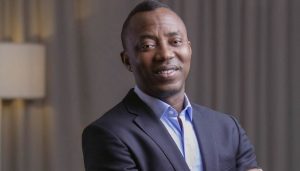
Political activist, Omoyele Sowore, speaks with ISMAEEL UTHMAN on the claim that the late former President Muhammadu Buhari left behind a legacy of integrity
The late former President Buhari was said to have left a legacy of integrity. Do you agree with that?
Absolutely not. The myth of Buhari’s integrity was one of the most dangerous propaganda projects ever sold to the people. For decades, a carefully curated image of a disciplined, incorruptible soldier-statesman was peddled, essentially to justify his return to power in 2015. But the reality, as Nigerians experienced it, was entirely different. Buhari didn’t just fail the integrity test; he also shattered it.
Under his watch, corruption was not only tolerated but institutionalised. Individuals under investigation or with established records of theft and abuse of office found refuge within his cabinet. His government protected some of the most corrupt figures in Nigerian history. Buhari’s so-called “integrity” never translated into accountability, transparency, or moral leadership.
How well did the former President rule the country?
Buhari ruled with a combination of detachment, arrogance, an iron hand and incompetence. He was never really present—physically or mentally—for the job. When he wasn’t abroad receiving medical treatment on public funds, he was absent from decision-making that affected millions. His regime was marked by economic collapse, growing insecurity, rising debt, and unprecedented suffering.
His idea of governance was nepotism, placing unqualified loyalists in key positions based on ethnic and religious identity. The result was paralysis across all sectors. Buhari ruled as if the nation were a military barracks, not a democracy. He failed to modernise Nigerian institutions, was unable to secure lives, and failed to provide any economic direction. The people bore the brunt of his cluelessness.
The former President respected the rule of law, according to his aide. Do you agree with this?
That statement is not just false, it is insulting. Buhari was one of the worst violators of the rule of law and human rights in the country’s democratic history. Under his watch, court orders were routinely disobeyed. Journalists, activists, and political opponents were jailed without trial. His regime criminalised dissent and weaponised security agencies against the people.
Let’s not forget his infamous statement that “national security is superior to the rule of law.” That alone tells you everything. The Department of State Services became his private Gestapo. Judges were assaulted in the middle of the night. I was also abducted first from my hotel room and also from a courtroom in 2019, after being granted bail. So, if Buhari respected the rule of law, it was only the law he made for himself.
The naira redesign was said to be done to guarantee a free and fair election. How do you react to this?
The naira redesign was never about free and fair elections; it was an economic disaster masquerading as electoral pretence. Beyond that, it was a corruption conduit for Buhari’s Central Bank Governor, Godwin Emefiele. It plunged millions into hardship, destroyed small businesses, and created a chaotic cash crisis that didn’t stop vote-buying. It only changed the players.
If the policy was meant to stop rigging, then why did the same rigged system produce a deeply flawed 2023 general election?
Buhari’s regime weaponised that policy not to protect democracy but to manipulate political outcomes. It was a cynical, ill-thought-out move that brought untold suffering to ordinary Nigerians who couldn’t access their own money. And in the end, the people who had access to the new naira notes were still the ruling elites. So, what exactly was achieved?
Do you agree that Buhari achieved success in his anti-corruption war?
There was no war. There was no battle, just propaganda. Buhari’s so-called anti-corruption campaign was selective, vindictive, and deeply hypocritical. His friends and cronies were protected. His political enemies were hunted. That’s not a fight against corruption; it was a weaponisation of anti-graft rhetoric.
Even the Economic and Financial Crime Commission and the Independent Corrupt Practices and Other Related Offences Commission lost credibility under him. Major scandals like the Maina pension case, the Nigerian National Petroleum Company contracts, and his Attorney General, Abubakar Malami, were openly and brazenly accused of corruption. The Central Bank of Nigeria’s opaque operations under Godwin Emefiele were swept under the rug until Buhari left office. He enabled corruption on a scale so vast that it will take generations to fully trace.
So no, he didn’t fight corruption. He fertilised it.
You have been criticising the former President even in death. Do you think that is fair to the dead?
Fairness is owed first to the living. Nigeria is filled with mass graves dug by Buhari’s failures and wickedness for victims of extrajudicial killings, banditry, hunger, poverty, terrorism, and neglect. Are we to pretend that the man who supervised so much suffering deserves silence now that he is dead? That would be a greater injustice. History doesn’t stop when a person dies. Memory doesn’t take a break. Those who hold public office, especially at the highest level, must know that their legacy belongs to the people, not their family or fan base or the graveyard.
Buhari betrayed the trust of a nation, and no amount of funeral diplomacy can change that.
I have no personal hatred for Buhari, but I do have a deep responsibility to speak the truth. We must stop canonising failed leaders simply because they are no longer here to defend themselves. Let their actions speak for them. Buhari’s own record is enough indictment.
Buhari came to power on the wings of hope and left on the wings of despair. His tenure was not marked by transformation, but by regression. He used Nigeria to prolong his own life while shortening the lives of millions. He ran a government where empathy died, where dreams were crushed, and where mediocrity reigned supreme.
Now that he is gone, Nigeria must have the courage to tell the truth, if not for the dead, then for the living and the unborn. We owe it to ourselves to stop recycling false legacies. Let Buhari’s story be a warning, not a model.
Former military Head of State, Gen. Yakubu Gowon (retd.), has said the Biafra civil war was never his choice.
Gowon was presiding over the affairs of Nigeria during the civil war from July 6, 1967 to January 15, 1970.
He described the civil war as the most difficult period of his life.
The former ruler spoke after he was honoured with a Life Time Integrity and Achievement Award at the fifth convention of the Christian Men’s Fellowship, Abuja Anglican Diocese on Saturday in Abuja.
He also disclosed that his decision to prosecute the Biafra civil war was never born out of hatred.
Gowon explained that he prosecuted the civil war due to the urgency to preserve national unity.
The former Nigerian ruler called for forgiveness, reconciliation and unity across faiths and ethnicities.
He said, “I always remember the civil war. It was the most difficult period of my life.
“It was not my choice, but I had to be there, and had to do what I did in order to keep this country together.
“It was never a hatred against any people, I can assure you.”
Reflecting on life after that period, the former Head of State stressed that his decisions had often been guided by prayers and a desire to act with integrity and compassion.
“As far as this heart is concerned, everything that I do, it is through prayers.
“I ask God to help me to do the right thing the way He thinks it should be done, with love and respect for all the people.
“That is why at the end, what do we have to say? As they say: no victor, no vanquished,” he added
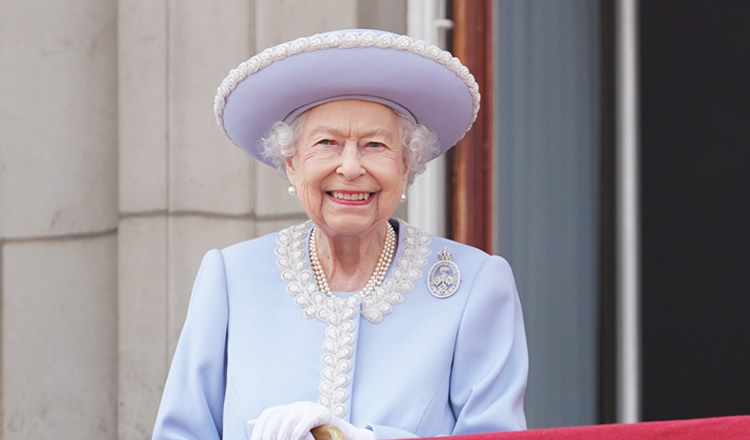
The popular Ijebu age grade, Egbe Bobakeye Okunrin Akile Ijebu, on Saturday, lamented the wrong narrative being circulated on social media about the visit of the late Queen Elizabeth II of England to Nigeria, particularly, Ijebu land in 1956.
While addressing journalists at Ijebu Ode on Saturday, Abiodun Onanuga, the Giwa of the age-grade, said that the narrative being pushed around that the late Queen Elizabeth II slept in the house of the late Ogbeni Oja of Ijebu land and famous industrialist, Chief Timothy Adeola Odutola, during her visit was an outright falsehood.
The group stated that the late monarch was received at Itoro by the late Awujale, Oba Daniel Adesanya, then she moved to the GRA residence of the colonial head of the old Ijebu Province, now housing the Egbe Bobakeye.
According to the group, they said she had her lunch there and left for Lagos.
Onanuga said that the foremost age grade decided to take it upon itself to clear the air about this unnecessary distortion of history, and the dissemination of untrue news to preserve the integrity of highly diligent and resourceful people.
He explained that the age group, about a year ago, commissioned two of its members, Kayode Adesanya and Lekan Odufunlade, to approach the British National Archives to research this controversial history and investigate the truth.
He stated that “The duo painstakingly checked through volumes of documents for several months and succeeded in obtaining a well compiled information on Her Majesty’s travel, meticulously detailing every point of her official visit to a few parts of the old Western Region of Nigeria, including where she had lunch.
“They ultimately obtained incontrovertible documentary evidence from the British Government on the itinerary of Her Majesty, Elizabeth II, the late Queen of England’s visit to Ijebu-Ode and our Ule Egbe in 1956.
“On behalf of Egbe Bobakeye, I can now state categorically and indisputably that our own Ule Egbe, which used to be the residence of the British resident in ljebu-Ode, was the venue where the Queen had her lunch.
“This record unequivocally debunks any claim that her Majesty spent the night in Ijebu-Ode because she left for Lagos after visiting the Awujale at Itoro and having lunch at our present Ule Egbe, which at that time was housing the colonials”.
Odunfunlade, one of the researchers commissioned for the research, said that the researcher got the truth from some documents obtained at the British National Archive.
Odunfunlade, however, called on the federal government to intensify efforts at preservation and documentation of the country’s history, such that it will be available for the yet unborn generation.
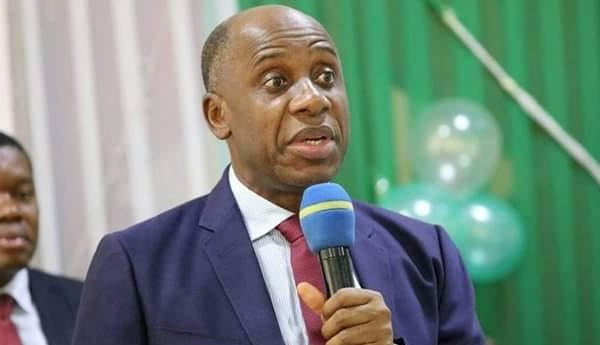
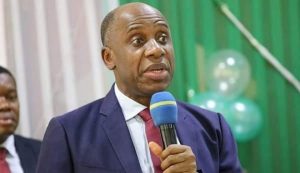
Former Minister of Transportation, Rotimi Amaechi, has criticised the current chairman of the Independent National Electoral Commission, Mahmood Yakubu, alleging that the All Progressives Congress would not have been registered or won the 2015 general elections if Yakubu had been in charge at the time.
Speaking on Arise TV on Tuesday night, Amaechi praised former INEC Chairman, Prof. Attahiru Jega, for ensuring a transparent electoral process that led to the APC’s registration and eventual victory in 2015.
He said, “The current chairman of INEC, if he was the chairman of INEC in 2015, we would not have won. That’s an important point. May God bless (Attahiru) Jega. Because the ground rules were clear. The current chairman of INEC can only be compared to Iwu.
“When we were to register APC, Jega opened the door and we complied with the registration requirements. He got APC registered. The current man, if you comply with all these, he would not register you.”
He further alleged that INEC under Yakubu is already showing signs of bias.
“Already, INEC is biased. So, the only thing I can tell you now is that, looking at the way Nigeria has run the election, even the Option A4 led us forward. At least a lot of transparency. You were sure of what was going on. Then we came back to meet people like Iwu and others and the current one and things got worse.
“So, you don’t know whether to say we are progressing or we are regressing. There’s a state capture using the electoral institution as a machine.”
The Presidency on Tuesday refuted criticisms by a faction of the Yoruba socio-political group, Afenifere, which claimed that the administration’s policies have resulted in economic hardship, democratic decline, and social regression.
A statement signed by the Special Adviser to the President on Media and Public Communications, Sunday Dare, described the group’s assessment as “deceitful,” “prejudiced,” and “not grounded in facts.”
The statement is titled ‘Response To Afenifere Faction’s Deceitful Statement On President Bola Tinubu’s Mid-term’.
Dare maintained that the Tinubu-led administration has made notable progress in stabilising the economy, strengthening democratic institutions, and implementing far-reaching reforms under its Renewed Hope Agenda.
“A balanced assessment based on available data reveals a more objective and progressive picture, with significant achievements amid the challenges expected from a country like Nigeria with decades-old problems,” Dare stated.
The Presidency’s reaction comes days after the factional Afenifere, in a widely circulated statement, accused the Tinubu administration of worsening human development indices, mismanaging the economy, and eroding democratic freedoms.
The group had labelled the President’s key reforms—such as fuel subsidy removal and naira floatation—as “unforced errors” that have deepened poverty and unrest.
But in Tinubu’s defence, Dare argued that these policies were necessary to stop the bleeding of public finances and build a sustainable future.
According to him, the removal of the fuel subsidy saved the government over $10bn in 2023, while exchange rate unification boosted foreign reserves and helped Nigeria record an N18.86tn trade surplus.
He also cited improvements in inflation control, foreign direct investment commitments, and debt service-to-revenue ratios as evidence that the economy is stabilising.
On the social front, the Presidency listed several interventions including the cash transfer programme reaching 5.7 million households, NELFUND student loans, and a raised NYSC allowance from N33,000 to N77,000.
Other highlighted achievements include the disbursement of palliatives to states, the rollout of CNG buses, the revitalisation of over 1,000 primary health centres, and the training of 150,000 youths under the 3 Million Technical Talent programme.
Addressing Afenifere’s claim that corruption is festering under Tinubu, Dare pointed to the suspension of a cabinet minister over mismanagement, the EFCC’s 4,111 convictions in 2024, and the forfeiture of high-value assets, including a 725-unit estate handed over to the Ministry of Housing in May.
On democratic governance, the Presidency dismissed claims of creeping authoritarianism, noting that the judiciary has upheld opposition victories and that recent electoral appointments have not been proven partisan.
“What is excused backstage will not be excused under the spotlight,” said Dare, quoting a widely shared maxim.
The Presidency concluded with a call for collective responsibility in nation-building and an appeal to political actors to work with the administration to fight disinformation, stabilise the economy, and deliver lasting change.
“Nigeria’s comeback story is not yet complete — but it is firmly underway,” the statement concluded.
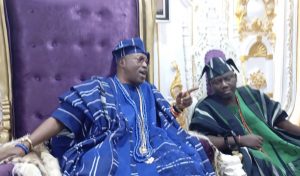
The Oluwo of Iwoland in Osun, Oba Abdulrasheed Akanni, has said that there is no he does not know any other title in Yorubaland that is superior to the Alaafin.
Oluwo, who described the Alaafin title as supreme to all other traditional titles in Yorubaland, said that the title was originally for oduduwa descendants.
He made this known, on Tuesday, when the Alaafin of Oyo, Oba Abimbola Owoade paid him a courtesy visit.
Oba Akanbi thanked Alaafin for the visit, adding that it would boost the relationship between the two towns.
He said, “I don’t know any other title in Yorubaland that is superior to the Alaafin.
“Alaafin will continue to be Alaafin because that is the title that Oramiyan adopted and I will also adopt the saying.
“Henceforth, I will also want to be called Alafin of Iwo and we will inform the government about it”, he said.
Akanbi also said that with the humility and exposure of the Alaafin, Oyo would witness peace and unprecedented development.
According to him, the existing good relationship between the towns will continue to flourish.
Earlier Owoade,who was accompanied by his wife, Abiwumi, and other chiefs, said that he came to the town to thank the Oluwo for attending his coronation ceremony in April.
The traditional ruler also said that Oluwo called to congratulate him when his name was announced as the Alaafin-elect.
“I came to see Oluwo because he was at my coronation ceremony in April.
“Even when my name was mentioned as Alaafin-elect, Oluwo called to congratulate me.
“It is also good to come around to pay him a courtesy visit”, he said.
The Alaafin, who noted that Oyo and Iwo had been enjoying a good relationship for years, said that he also came to Iwo to ensure that the relationship continued.
Owoade, who spoke in Yoruba, said that his predecessor, Oba Lamidi Adeyemi, had a good relationship with Iwo, hence, the relationship should be sustained.
“Iwo and Oyo have been enjoying a good relationship for years, even with my predecessor and I want that relationship to continue”, he said.
Owoade urged other traditional rulers in Iwo to continue to work with Oluwo with an open mind.
He said they should also continue to support and cooperate with the traditional ruler for the development of the town.
The News Agency of Nigeria reports that Owoade was crowned the 46th Alaafin of Oyo in April 2025 as the successor to the late Alaafin, Oba Lamidi Adeyemi III.
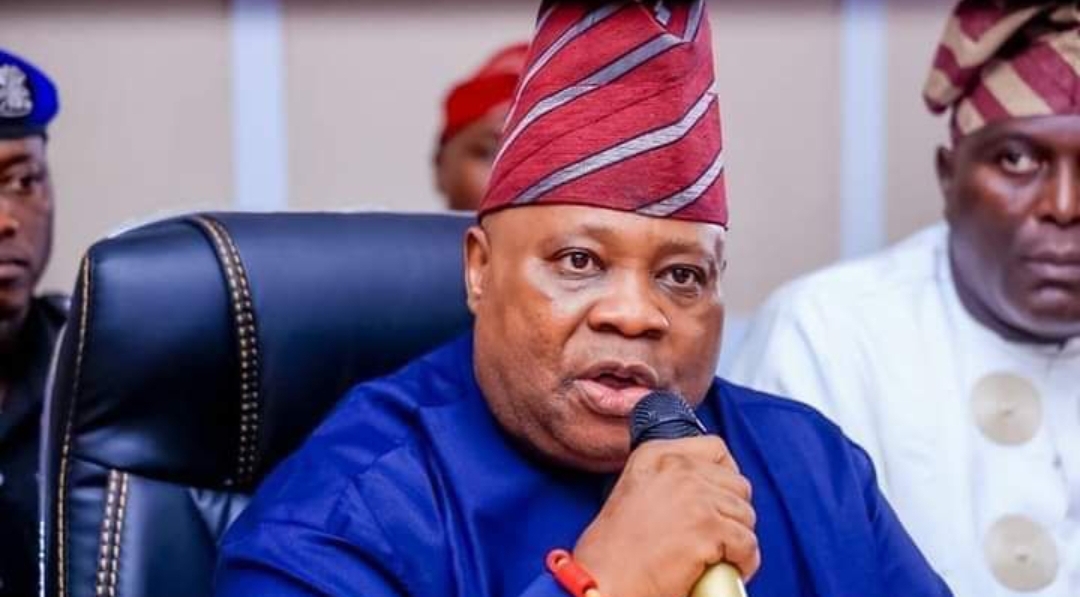
Osun State Governor, Ademola Adeleke, has called for the adoption of renewable energy sources to provide electricity across the six states of Nigeria’s South-West region.
Represented by his deputy, Mr Kola Adewusi, Adeleke made the remarks in Osogbo on Tuesday while officially opening the South-West Post-Conference Stakeholders’ Roundtable on Renewable Energy.
The governor stressed that climate change is no longer a distant threat but a pressing daily reality, and highlighted energy poverty as a fundamental human rights issue requiring urgent attention from all stakeholders.
“In this region, richly endowed with sunlight, wind, and innovation, it is deeply concerning that many communities still remain in darkness.
“The time for waiting has passed; localised action is imperative. We must power the South-West sustainably. In Osun State, we are embracing bold, evidence-based, and people-centred solutions.
“Today, we unveil our Climate-Smart Investment Portfolio, a strategic roadmap designed to attract responsible capital into renewable energy, sustainable infrastructure, and the circular economy,” Adeleke stated.
The governor also outlined plans to soon present the Draft Osun State Renewable Energy Policy, aimed at establishing a robust legislative and institutional framework for an inclusive energy transition at the subnational level.
Additionally, he revealed intentions to launch the Draft Osun State Climate Action Plan, developed in consultation with experts, grassroots communities, and development partners.
He added, “We are equally proud to introduce the IMOLE Solar Lantern Project, a practical and symbolic initiative for last-mile energy access. ‘One Child, One Lantern’ is our promise. Every child deserves light to study, dream, and grow, regardless of location or background.”
Earlier, the Lead Technical Consultant on Climate Change and Renewable Energy to the Osun State Governor, Professor Chinwe Obuaku, described the roundtable as a forum for honest dialogue, technical exchange, and legislative clarity.
“We will listen, challenge each other, and leave with a shared understanding of what it takes to enact sub-national renewable energy frameworks that are ambitious, bankable, and just,” Obuaku said.
She stressed that the roundtable marks a critical turning point.
“Following the momentum of the Renewable Energy Conference, we must ask: What next? How do we translate shared vision into state-backed action? How do we ensure national policies, from the Renewable Energy and Energy Efficiency Policy (NREEEP) to the Climate Change Act, become tangible instruments for job creation, clean energy access, and inclusive growth in Osun and the wider South-West?
“As Lead Consultant, I have engaged deeply with diverse actors — from lawmakers to community stakeholders, private sector pioneers to youth advocates. The truth is clear: we are ready. We have the intellect, infrastructure, and institutional awareness that renewable energy is not a luxury but a necessity.”
The National Youth Service Corps has advised members of the 2024 Batch B Stream I, who have just concluded their service year, to focus on wealth creation.
NYSC Coordinator in Rivers State, Mr Moses Oleghe, gave the charge on Tuesday during the passing-out ceremony of corps members held in Port Harcourt, the state capital.
He reminded the corps members of the core values instilled in them throughout their service year and encouraged them to become agents of positive change in society.
Oleghe discouraged the pursuit of white-collar jobs as the sole path to success, urging the corps members to embrace entrepreneurship and self-reliance.
“Creativity, hard work, discipline, focus, determination, and dedication are the ingredients needed to achieve your aspirations.
“Rather than wait for white-collar jobs, outgoing corps members should channel their energy into establishing businesses and creating wealth with their own hands,” he advised.
Presenting service statistics, Oleghe disclosed that a total of 2,302 corps members had successfully completed their service year in Rivers.
He noted that regrettably, two corps members died during active service, while 17, comprising seven males and 10 females, had their service extended.
Additionally, the NYSC coordinator reported that two corps members were granted pardon, while 23 others – 13 males and 10 females – absconded from service.