Adron Homes Chairman Commends Oyo State’s Real Estate Reforms, Urges Policy Continuity
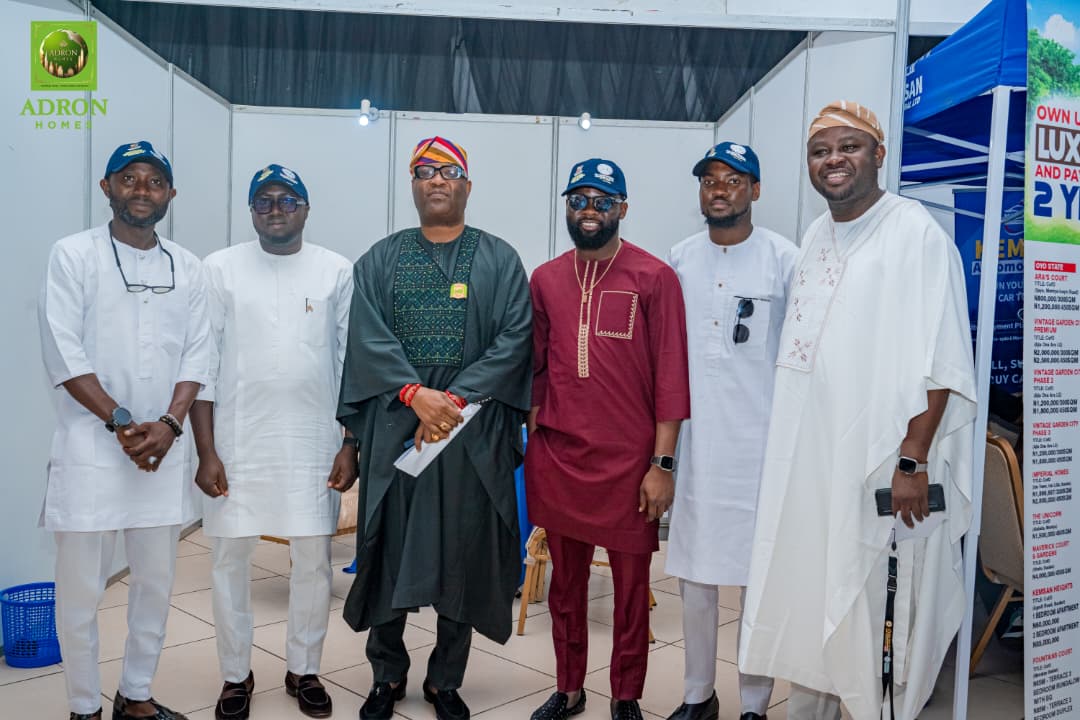
The Chairman and Chief Executive Officer of Adron Group, Aare Adetola Emmanuelking, KOF, has commended the Oyo State Government for its bold reforms in the real estate sector, describing the state as a land of “history, enterprise, and endless possibilities.”
Aare Adetola remarked while delivering a goodwill message titled “The Real Estate Called Oyo State” at the 2025 Oyo State Real Estate Conference, held in Ibadan.
The event, themed “Real Estate and Economic Development in Oyo State: Strategies for Success,” brought together top real estate developers, government officials, and investors to discuss strategies for improving housing delivery and driving economic growth in the state.
Organised by the Office of the Special Adviser to the Governor on Housing and Urban Development in collaboration with the Real Estate Developers Association of Nigeria (REDAN), the conference highlighted the need for policy stability, public-private partnerships, and innovation in real estate development.
In his address, the Speaker of the Oyo State House of Assembly, Rt. Hon. Adebo Ogundoyin, reaffirmed the government’s commitment to transparency and investor confidence through the digitalisation of land records (OYOGIS), improved urban planning, and major infrastructure upgrades across the state.
He also cited the passage of the Oyo State Land Control and Administration Bill, 2023, and the establishment of the Anti-Land Grabbing Task Force as key reforms curbing land disputes and promoting sustainable property ownership. Ogundoyin praised major developers such as Adron Homes and MKH Properties for their role in boosting investor trust in the Oyo property market.
In his goodwill message, Aare Adetola Emmanuelking applauded the administration of Governor Seyi Makinde, FNSE, for maintaining consistency in land policies and governance structures, which he said had continued to attract serious investors to Oyo State.
He recalled that Adron Homes made its foray into Ibadan nearly a decade ago based on the state’s stable policy environment, a decision that has since yielded impressive results. He, however, urged the state government and future administrations to ensure policy continuity, warning that inconsistency could derail the progress already achieved.
The conference ended with a collective resolve by stakeholders to deepen collaboration between the public and private sectors, strengthen regulatory transparency, and create a business environment that will make Oyo State a model for real estate investment in Nigeria.
Tension as Tenants Accuse Greenbirch Limited of Harassment and Disturbance of Public Peace
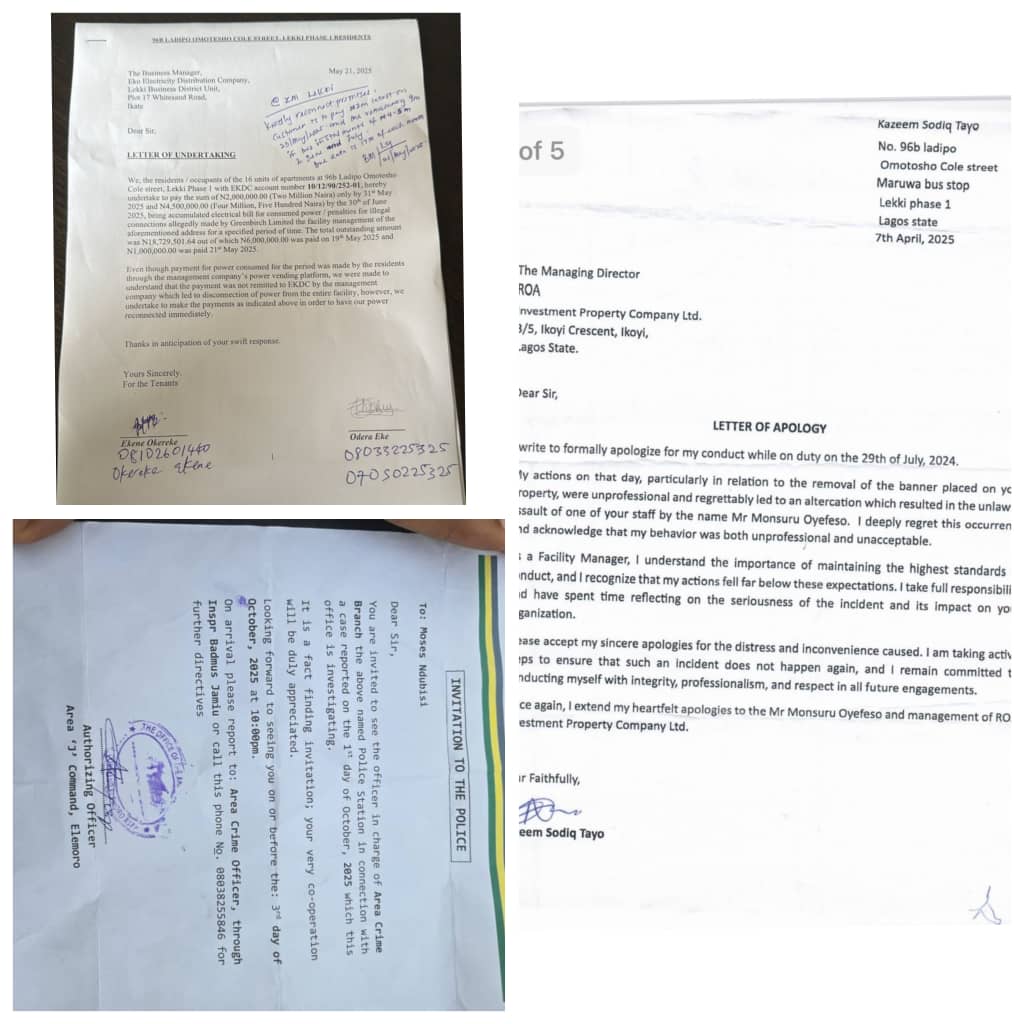
Residents of 16 units of three-bedroom apartments located at 96B, Ladipo Omotesho Cole Street, Lekki Phase 1, previously rented to Greenbirch Limited, have accused the company of unlawful entry, theft, intimidation, harassment, threats to life, and breach of public peace, among other offenses.
The sub-tenants allege that it was shocking to discover that the apartments actually belong to RAO Investment Property Company Limited owned by the Okoya’s, which is currently in a legal tussle to recover the property from Greenbirch Limited. They claim that the company led by Mr. Lawrence Uwaoma Onwukwem, his partner Mr. Davies Isaiah Ijele, and staff members Mr. Sodiq Tayo Kazeem and Ms. Peace Chidinma Igbo has made life unbearable for them through acts of aggression and persistent harassment.
According to Mr. Odera Emeka Eke, who rented two units in August 2021, he carried out extensive renovations on the apartments, including replacing all sanitary wares, light fittings, kitchen cabinets, and ceilings with POP. These works were conducted in the presence of Greenbirch officials, who took custody of the old materials removed from the apartments.
Eke further explained that, being a new company at the time, Greenbirch lacked the expertise to manage the facility and often relied on tenants for operational guidance. “Certain agreements were reached regarding the power distribution and billing system. We purchased new electricity meters on the condition that Greenbirch would reimburse us, but that refund is still outstanding to date,” he said.
The sub-tenants also alleged that Greenbirch informed them of an outstanding electricity bill of over ₦20 million owed to EKEDC, purportedly arising from high power consumption from the water treatment plant. However, they later discovered that all were lies and that the bill stemmed from an illegal power bypass allegedly perpetrated by Greenbirch, which attracted a heavy penalty and arrears of EKEDC bill which Green Birch refused to remit though they had been collecting same from the sub-tenant. The sub-tenants had to contribute funds to offset the debt, while Greenbirch only paid ₦2 million, yet they were still required to sign an undertaking to EKEDC before reconnection was granted.
Following a court judgment in favour of RAO Investment Property Company Limited, owned by renowned industrialist Chief Razak Okoya CON, terminating Greenbirch’s tenancy and right of occupation, the sub-tenants believed their ordeal had ended. However, according to them, Greenbirch retaliated by disconnecting power and water supply, and deploying armed men to intimidate workers and residents within the facility.
“These actions forced us to petition the AIG, Zone 2 Police Command, over the illegal activities and harassment by Greenbirch’s armed agents,” Eke explained. “Rather than stop, the harassment intensified. They repeatedly disconnected our essential services, prevented reconnection, and recently, policemen from Area J have begun summoning tenants to the station under false pretenses. We have also been reliably informed that Greenbirch plans to remove the generator and decommission the water treatment plant in furtherance of their intimidation campaign. Our petition on this matter remains pending at the AIG’s office, Zone 2.”
Another set of sub-tenants, Mr. and Mrs. Olusola and Olufunmilola Alabi, who rented Block A, Flat 3 from Greenbirch in May 2021 for use as a short-let (Airbnb) business, narrated a similar experience. The couple alleged gross breach of tenancy agreement, stating that despite seeking redress in court, Greenbirch broke into their apartment, carted away properties valued at over ₦23 million, and re-let the apartment to another person.
“In a bid to cover up this illegality,” Mr. Alabi said, “Greenbirch petitioned the AIG, FCID Annex, Alagbon, falsely accusing my wife and I of fabricated crimes. Upon investigation by the Police X-Squad, it was established that it was in fact the tenant (Green Birch) and his associates who committed the offense of breaking and entry. Consequently, we filed our own petition dated November 12, 2024, to the AIG FCID Annex, formally reporting a case of breaking and entry/stealing against Green Birch and his partners.”
According to the couple, Greenbirch then escalated the matter to the DIG, FID Abuja, with another petition containing the same false allegations. However, the “Team J” Police Unit at FID Abuja dismissed the claims after investigation, reaffirming that the case against Greenbirch and its associates was criminal in nature. The Abuja investigation report was later forwarded to the Lagos Annex for prosecution, but the Alabis allege that some officers “stylishly shelved the report” and advised them to await the outcome of the civil case despite several confirmations that the matter was indeed criminal.
Upon receiving a new police invitation at Alagbon, Greenbirch and its associates filed a Fundamental Rights Enforcement Suit at the Lagos High Court, joining the Alabis, the Inspector General of Police, AIG Alagbon, AIG Zone 2, and several police officers, seeking an order to restrain their arrest and investigation.
One of the company’s staff members, Ms. Peace Chidinma Igbo, was eventually arrested and charged to court for failing to produce Mr. Sodiq Kazeem, another staff member for whom she had stood surety. She was remanded in Kirikiri Correctional Facility for several days before meeting her bail conditions. The matter is currently before the Oyingbo Magistrate Court, Lagos, under Charge No: BG/K/23/25/2025 Commissioner of Police v. Peace Chidinma Igbo. Meanwhile, Mr. Lawrence Onwukwem, Mr. Davies Ijele, and Mr. Sodiq Kazeem are said to have gone into hiding and have repeatedly failed to honour police invitations.
It should be recalled that Chief Razak CON and Chief Mrs. Shade Okoya MON recently debunked stories circulating in the media that Senator Domingo Obende sought to take over the said property as collateral for a $250,000 loan, describing such claims as fictitious, baseless, and maliciously intended to create confusion.
They also stated that Greenbirch sublet the apartments to 16 sub-tenants during its lease period but has since resorted to blackmail, harassment, and the deployment of fake armed policemen to the premises to intimidate lawful occupants, despite a subsisting court judgment against it. Mr Lawrence and his agents are attempting to coerce tenants into paying advance rents running into millions of naira for several years before RAO Investment Property Company Limited reclaims its property. A payment they have no legal right to collect, yet they are still owing the Okoyas the outstanding rent.
The Okoya family in their statement therefore warned members of the public not to lease or transact any property dealings with the aforementioned individuals, describing them as persons with no fixed address and no lawful authority over the property.
Access Bank and Mastercard: Enabling Seamless Africa-Global Payments
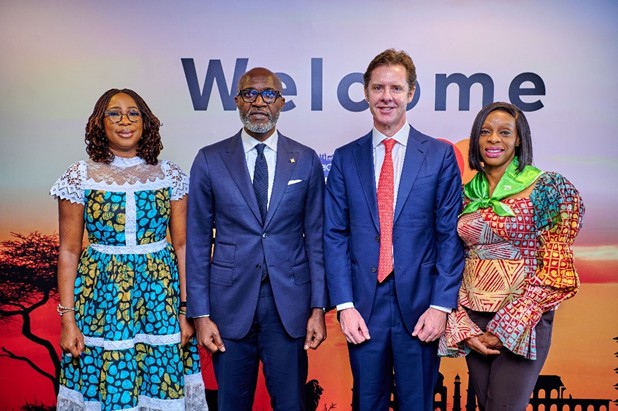
L-R: Folashade Femi-Lawal, Country Manager, West Africa, Mastercard; Roosevelt Ogbonna, Group MD, Access Bank; Mark Elliot, Division President, Africa, Mastercard; and Chizoma Okoli, Deputy MD, Access Bank at the Access – Mastercard Event.
In today’s interconnected world, seamless cross-border payments are vital for economic growth, business expansion, and personal empowerment. For decades, millions of Africans faced steep barriers in sending or receiving money internationally: high fees, opaque exchange rates, and long delays that made transactions uncertain and costly. Whether they are students paying tuition abroad or traders settling import bills and families depending on remittances, these challenges have touched every layer of society.
Africa’s fragmented payments landscape, marked by multiple currencies, varying regulations, and limited banking infrastructure, has long slowed financial inclusion. In this system, a trader in Lagos might wait weeks for funds from Nairobi, while a Ghanaian student in the United States could lose a significant portion of tuition to
intermediary charges. For many, especially in rural or informal sectors, formal banking channels were out of reach, forcing reliance on informal and risky alternatives.
Recognising the need for change, Access Bank, one of Africa’s largest and most innovative financial institutions, has partnered MasterCard, a global payments leader, to reimagine how money moves across borders. The collaboration aims to make cross-border payments faster, cheaper, and more transparent, empowering individuals and businesses to participate more fully in the global economy.
“By combining our strengths, we can unlock new opportunities, bridge the financial divide, and create a more inclusive and prosperous future for all Africans,” says Robert Giles, Senior Advisory, Retail Banking at Access Bank.
The partnership leverages Access Bank’s extensive African footprint and its Access Africa platform alongside MasterCard’s global network, treasury infrastructure, and advanced technology, particularly through the Mastercard Move system. Together, they have built an ecosystem that finally delivers on the promise of speed, convenience, and reliability.
The solution is designed to be inclusive and versatile, allowing users to send and receive money via multiple channels: bank accounts, cards, mobile wallets, and even cash. Whether a student in Ghana paying tuition in Europe, a trader in Lagos importing goods from China, or a family in Kenya receiving remittances, cross-border transactions are now simpler and safer.
For MasterCard, the goal extends beyond expanding services; it is about deepening financial inclusion. “This partnership transforms payment experiences, extending MasterCard’s digital ecosystem to ensure millions from underserved communities can participate in the evolving digital economy,” says Mark Elliott, Mastercard’s Division President for Africa.
The alliance builds on mutual strengths, Access Bank’s deep local knowledge and MasterCard’s global reach, to create a seamless payments corridor connecting Africa to the world.
A critical element of this innovation is the technical integration led by Fable Fintech, a MasterCard Express Partner under the Move Programme. Integrating Access Bank’s operations across multiple African markets was a massive undertaking, given diverse currencies and regulatory frameworks. The result is a unified cross-border payment experience, reducing complexity and delays.
“We were fortunate to be the fulcrum of the seamless multi-country integration of one of Africa’s largest banks using MasterCard’s cross-border assets,” a Fable Fintech representative noted. The platform now supports real-time or near-real-time transactions, offering resilience, scalability, and strong fraud protection.
Apart from technology, this partnership signals a paradigm shift, from dependency to empowerment, from financial fragmentation to unity. By democratising access to affordable and transparent payments, Access Bank and MasterCard are enabling millions of Africans to engage in international trade, education, and family support. The impact is tangible: faster transactions, lower costs, and increased financial inclusion.
Already, the ripple effects are visible. Informal traders in Kigali now use formal financial channels instead of risky agents. SMEs in Nairobi can settle invoices with international clients more predictably. Families in Accra receive remittances with less worry about lost payments, while students overseas manage tuition with ease. Each transaction strengthens Africa’s participation in global commerce.
The partnership also prioritises financial literacy and empowerment. Recognising that technology alone is not enough, Access Bank and MasterCard are educating users on digital payments, security, and the benefits of financial inclusion, particularly in underserved communities where awareness gaps remain.
The collaboration aligns with broader socio-economic goals such as job creation, poverty reduction, and gender inclusion. By expanding access to finance, it empowers women entrepreneurs, youth, and small businesses to thrive. A woman running a rural enterprise can now receive payments from clients abroad and reinvest in her community; a young professional can more easily fund studies or start a venture. The result is a more inclusive and resilient African economy.
This initiative also complements Access Bank’s wider sustainability agenda, seen in projects like the Access Clean Water Initiative, which integrates financial inclusion with social impact. The Bank’s approach underscores that responsible banking and profitability can go hand in hand.
Access Bank and MasterCard are looking at scaling their innovation, embrace emerging technologies, and deepen collaborations with governments and development partners to expand access even further. As Africa’s economies evolve, agile and secure payment systems will be essential to sustaining growth.
The partnership stands as example of what is possible when business, technology, and purpose converge. By harnessing shared vision and innovation, Access Bank and MasterCard are redefining Africa’s role in the global payments ecosystem, breaking down financial barriers and enabling millions to connect, trade, and thrive across borders.
UBA Business Series: Digital Entrepreneurs Highlight Authenticity, Consistency, Passion as Real Game-Changer
Directorate Head, Group Resources, United Bank for Africa(UBA), Tomiwa Sotiloye; Group Head, Remittances, United Bank for Africa, Uzomaka Oyeka; Nigerian Content Creator, Nasiru Lawal (Nasboi); Kenyan Actress and Media Entrepreneur, Catherine Kamau; Group Head, Marketing & Corporate Communications, Alero Ladipo; Managing Director/CEO at Nitro 121, Dr. Lampe Omoyele; Nigerian Digital Influencer, Enioluwa Adeoluwa and Digital Creator & Actor, Elozonam Ogbolu; at the UBA Business Series , themed , “Content that Converts: Building Influence and Driving Growth Through Strategic Marketing,” held at the UBA House in Lagos on Thursday
Africa’s Global Bank, United Bank for Africa (UBA) Plc, hosted another enlightening edition of the UBA Business Series, bringing together some of Africa’s most dynamic digital entrepreneurs and influencers to discuss the secrets behind building impactful online communities.
This edition of the Business Series, which had the theme, “Content that Converts: Building Influence and Driving Growth Through Strategic Marketing,” was held at the Tony Elumelu Amphitheatre in UBA Head Office, Marina, Lagos on Thursday.
The very engaging session, shed light on how authenticity, consistency, and passion remain true cornerstones of success in the ever-evolving digital landscape, while the content creators shared first-hand experiences from their journeys across diverse industries and markets.
UBA’s Group Head, Digital Banking, Kayode Olubiyi, who welcomed participants and the panellists to the session, reaffirmed the bank’s commitment to empowering entrepreneurs across Africa through knowledge-sharing and capacity-building initiatives such as the Business Series.
He emphasised that the quarterly event continues to serve as vital avenues for supporting innovation and entrepreneurship, equipping individuals with practical insights to grow their brands and businesses in a competitive digital economy.
In his keynote address, the Managing Director/CEO at Nitro 121, Dr. Lampe Omoyele, who said that “You can create something out of what appears to be nothing,” gave insight on key trends to develop content that creates Impact.
He noted that content creation should go beyond aesthetics or trends to focus on value, purpose, and agility as he pointed out that creators who aim to make a difference must develop a clear personal brand identity and remain consistent in delivering messages that resonate with their audience.
The panel session featured an impressive line-up of digital entrepreneurs and content creators, including Digital Creator and Actor, Elozonam Ogbolu; Digital Health Educator, Chinonso Egemba (Aproko Doctor); Kenyan Actress and Media Entrepreneur, Catherine Kamau; Content Creator, Nasiru Lawal (Nasboi) and Digital Influencer, Enioluwa Adeoluwa, who was also the moderator of the event.
Growth is very important, says Nasiru Lawal. “For the younger creators here, my best advice is this: please prioritise your growth. As a creator, the moment you become famous, you no longer move at your own pace; you move at the people’s pace. It is therefore important to ensure you grow consistently and then overtime, the recognition and the money begins to roll in.”
Elozonam Ogbolu who agreed with Lawal, had this to say: “Content creators have to engage their audience with proper storytelling, because brands are always out to carefully choose their creators. For the brands, you must pick your influencer or ambassador very deliberately and work together over time to grow. That is when you will see a proper return on investment.
In his submission, Chinonso Egemba, said, “If you’re building a business or doing content creation, treat content creation as a business. When you treat it as a business, it needs proper structure. Otherwise, it won’t last. If you don’t put structure in place, you’ll end up responsible for everything, and that leads to burnout. You have to build structure, because if you want longevity, structure is very essential.
For Catherine Kamau, it is important for content creators to find a balance and stay close to their community. “What I realized is I have a community that keeps me grounded, and that’s family. When you get famous, you tend to forget where you come from, you know, social media is an illusion and you start assuming that it is your real family until bad things happen to you. So please remember the real people in your life, because fame can get to your head, but those are not the people who are going to have your back when things go south.”
The creators while sharing their diverse experiences, they collectively emphasized that building a personal brand should take precedence over chasing financial gain. They also underscored the importance of originality, urging young creators to find their unique niche rather than replicating what others have done.
UBA’s Group Head of Marketing and Corporate Communications, Alero Ladipo, who commended panellists for taking time to share their useful insights at the event, took time to celebrate the UBA Management for organising conversations like this which according to her, ‘remain impactful and will impact not just the individual customers, but also the economies at large.”
United Bank for Africa is one of the largest employers in the financial sector on the African continent, with 25,000 employees group wide and serving over 45 million customers globally. Operating in twenty African countries and the United Kingdom, the United States of America, France and the United Arab Emirates, UBA provides retail, commercial and institutional banking services, leading financial inclusion and implementing cutting edge technology.
FirstHoldCo sustains growth momentum as gross earnings rise 17% to N2.6trn
By Chima Nwokoji
FirstHoldCo Plc has sustained its growth momentum across core business segments, reporting a 17.1 percent year-on-year increase in gross earnings to ₦2.64 trillion for the nine months ended September 30, 2025, compared to ₦2.25 trillion in the corresponding period of 2024.
According to the unaudited results released by the Group, interest income rose sharply by 40.4 per cent to ₦2.29 trillion from ₦1.63 trillion in September 2024, reflecting improved asset yields and loan book expansion. Net interest income also climbed 71.7 per cent year-on-year to ₦1.5 trillion, buoyed by stronger core banking operations.
However, non-interest income declined 49.2 percent to ₦296.9 billion, while impairment charges for credit losses surged 68.6 percent to ₦288.9 billion, reflecting prudent risk provisioning in a volatile operating environment.
Operating income rose 23.2 percent to ₦1.80 trillion, though profit before tax slipped 7.3 percent to ₦566.5 billion, down from ₦610.9 billion a year earlier. Profit after tax also fell by 15.5 percent to ₦450.9 billion, largely due to reduced fair value gains and higher operating costs, which jumped 39.3 percent to ₦942.7 billion.
Despite the profit decline, the Group maintained balance sheet stability, with total assets at ₦26.4 trillion, marginally lower than ₦26.5 trillion as of December 2024. Customer deposits rose 4.2 percent year-to-date to ₦17.9 trillion, while net loans and advances increased by 9 percent to ₦9.6 trillion.
Key performance ratios show that FirstHoldCo maintained a post-tax return on average equity of 19.9 per cent and a post-tax return on assets of 2.3 percent. The Group’s cost-to-income ratio stood at 52.4 per cent, compared with 46.4 percent a year earlier, while the non-performing loan (NPL) ratio improved to 8.5 per cent from 10.2 percent in December 2024.
Group Managing Director, Adebowale (Wale) Oyedeji, described the results as a reflection of the Group’s underlying resilience and commitment to sustainable growth.
“FirstHoldCo has once again demonstrated solid earnings capability,” Oyedeji said. “Our interest and operating income grew strongly by 40.4 percent and 23.2 percent, respectively, supported by a 26.9 percent rise in fees and commission income. The decline in profit before tax was due to the normalisation of fair value gains and balance sheet strengthening initiatives.”
He noted that the Group’s strategic risk management measures were already yielding results, as seen in the improved asset quality.
On the recapitalisation of FirstBank, Oyedeji disclosed that the first phase of its private placement capital raise had been successfully executed and is awaiting final regulatory approvals.
“We expect to conclude this phase in November 2025, ensuring FirstBank’s full compliance with the new minimum capital requirements by year-end,” he said. “Subsequent capital raising rounds will further enhance our financial solutions and support value-accretive initiatives.”
Oyedeji reaffirmed the Group’s commitment to achieving its 2029 financial targets, noting that FirstHoldCo remains well-positioned to deliver stronger shareholder value through operational scalability and prudent capital management.
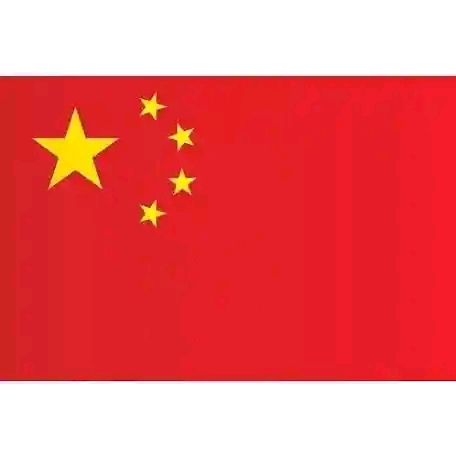
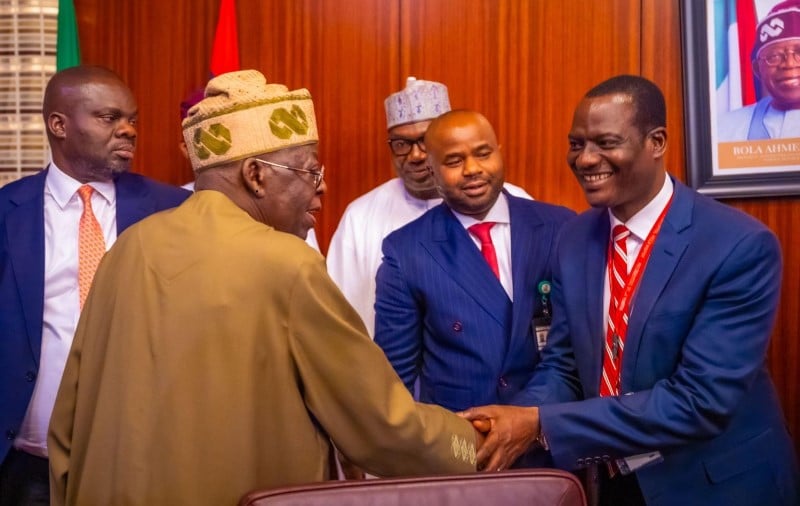
China warns against interference in Nigeria’s affairs after US threat of military action
The Chinese government says it firmly supports the President Bola Tinubu administration as it “leads its people on the development path suited to its national conditions”.
Addressing a press conference on Tuesday, Mao Ning, spokesperson of China’s foreign ministry, said “as Nigeria’s comprehensive strategic partner, China firmly opposes any country using religion and human rights as an excuse to interfere in other countries’ internal affairs, and threatening other countries with sanctions and force”.
Ning was answering a question on US President Donald Trump’s threat of military action in Nigeria over alleged persecution of Christians.
The Presidential Fiscal Policy and Tax Reforms Committee has released detailed clarifications addressing concerns by Nigerians in the diaspora about the new tax reforms taking effect in 2026.
This was disclosed in a material obtained by PUNCH Online on Thursday from the Chairman of the Presidential Fiscal Policy and Tax Reforms Committee, Taiwo Oyedele.
According to the document, “genuine personal transfers such as family remittances, gifts, refunds (e.g., flight tickets), or community savings contributions are not treated as taxable income.”
It explained that “only income earned or deemed to be income (e.g., wages, business profits, investment returns) is subject to tax,” adding that “every individual is required to self-report their income and pay tax where applicable.”
On double taxation, the committee clarified that “income earned abroad and brought into Nigeria by a non-resident individual is now specifically exempted from tax in Nigeria regardless of whether tax was paid abroad or not.”
It added that “Nigeria has Double Taxation Agreements (DTAs) with several countries, and the new tax laws provide for a unilateral relief where a DTA does not exist to ensure that the same income is not taxed twice.”
Explaining how residency is determined, the statement said, “Residency is based on the 183-day rule (cumulative days of physical presence in Nigeria within a 12-month period). Non-residents are taxed only on income derived from Nigeria (e.g., rental income, dividends, business profits).”
The committee clarified that “diaspora Nigerians living abroad who are not tax resident in Nigeria are not taxed on their foreign employment or business income,” and that “dual citizenship has no impact on the tax status of an individual whether resident or non-resident in Nigeria.”
On investments, it noted that “income from investments in Nigeria are either exempt, subject to capital gains tax (CGT) or withholding tax as a final tax,” adding that “government bonds, including Sukuk are tax exempt.”
It further stated, “CGT applies to the sale of real estate other than sale of owner-occupied buildings. Shares are exempt up to proceeds not exceeding ₦150 million and ₦10 million gains in a year.
“Dividends, non-government bond interest and rental income are subject to withholding tax at 10% as final tax which may be reduced to 7.5% for recipients in certain countries such as the UK, South Africa and China.”
Addressing questions on pensions and remote work, the material noted that “only income that arises in Nigeria is taxable for non-residents. Pensions and stipends from abroad are not taxed in Nigeria unless received for work done in Nigeria.”
It added, “Remote workers are taxed based on the rules in the country where they are resident or earn such income, not merely where payment is made.”
On tax identification requirements, the committee explained that “a TIN is not required and there is no requirement to file tax returns unless you earn employment or business income from Nigeria.”
It continued, “Non-residents without Nigerian-source income are not obliged to file annual returns. Those with taxable employment or business income in Nigeria are required to file returns. Simplified channels (e.g., TaxProMax, online TIN applications) are available to ease compliance.”
“For individuals, a TIN can be obtained from the Joint Tax Board via https://tin.jtb.gov.ng. For companies, TIN is now automatically assigned at the point of registration with the Corporate Affairs Commission,” the committee said.
Regarding NGOs and diaspora-owned businesses, it stated that “NGOs are tax-exempt if they are registered and operate strictly for charitable purposes, and comply with reporting and filing requirements.”
“Diaspora-owned SMEs in Nigeria are treated like local businesses, taxed on profits but eligible for incentives and reliefs available to small enterprises,” the material added.
The document also noted that the reforms mandate transparency measures, including public reporting, governance structure and independent oversight for tax revenues.
“Other fiscal measures are being strengthened to link tax revenues to visible infrastructure and service delivery with safeguards against corruption and framework to prevent and punish misuse of taxpayer data,” it said.
On incentives, the committee explained that “incentives under the new laws apply generally to certain investments including diaspora-led investments in key sectors (e.g., priority sector incentives in agriculture, creative sector, manufacturing, etc.), SME corporate tax exemption threshold, exemption of VAT on real estate, etc.”
According to the Presidential Fiscal Policy and Tax Reforms Committee, reforms make the tax system in Nigeria fairer and more friendly to Nigerians in the diaspora, address incidence of double taxation, align Nigeria with global best practice, simplify and provide clarity where tax is payable or filing obligation is applicable.
The cost of buying and selling bots varies extensively based on features and customisation choices. Free and open-source bots with primary functionality are available but usually lack assist and advanced features. When selecting a bot, consider how much you’re willing to take a position. More refined bots are probably to cost more but provide larger https://arbinio-official.com flexibility and assist.
Users can also download free information or import from their dealer or provider. Construct Alpha additionally supports Binance integration with more coming. The hottest methods are usually Monte Carlo Simulations which inject randomness into the trade outcomes or market knowledge to produce new equity curves.
Begin Trading
DCA by GoodCrypto is designed to assist you navigate trending and risky markets. It dynamically averages down the entry price and Take Profit goal when the market moves against you, boosting your probabilities of locking in earnings when the worth recovers. You can import value knowledge, different data, customized knowledge, and so forth. There are not any limitations on the importation of custom data for buying and selling bot improvement.
Can I Customize The Strategies For The Crypto Trading Bot?
Buying And Selling bots can achieve higher returns by operating continuously, free from the affect of human feelings like worry or greed. Additionally, bots can course of massive data sets rapidly and execute trades based on predefined rules and parameters. This capability to act persistently and rationally permits bots to capitalise on alternatives that human merchants might overlook. Whereas buying and selling bots may be a highly effective software for merchants, they do include some risks. One of the most important risks is that the bot could not carry out as expected, leading to losses. It is important to totally take a look at and optimize the bot earlier than using it in stay buying and selling.
From technical indicator-based strategies to our most popular trading automations and customised bots,you’ll find a pro buying and selling tool that works for you. Quad Terminal is an-all in a single crypto buying and selling platform with a spread of professional buying and selling instruments designed for traders of each ability level. Out There throughout each the desktop and cellular internet versions of the Exchange, the TWAP Trading Bot executes trades based mostly on an average-weighted price over a specified time frame.
You supply the logic; they control the risk, capital, and execution. Yes, Growlonix allows customers to customise trading methods to match their threat tolerance and trading targets. Uncover our advanced trading terminal, tailor-made for merchants who know their method around complicated instruments.
Other well-liked platforms embody 3Commas, Cryptohopper, and TradeSanta, which cater to each crypto and inventory markets. Many providers supply demo modes or trial versions, allowing users to test bots earlier than committing to a purchase order or subscription. When choosing a trading bot, it’s important to assume about elements corresponding to your trading goals, threat profile, and technical necessities. Since bots range considerably in complexity and performance, a structured method may help determine the right bot for your wants. You concentrate on constructing your strategy, whereas we handle seamless execution immediately with your dealer.
Bridge the gap to main crypto exchanges and uncap exceptional buying and selling prowess with the superior effectivity of Bitsgap’s cutting-edge bots. Seamlessly execute your buying and selling methods 24/7 by connecting them on to Delta Trade using easy webhooks. Whereas there is a month-to-month subscription fees to create bots greater than the limit current in free plan. Unlock ultra-fast trade execution, priority help, and custom change integration on a dedicated non-public server—designed for HNIs, fund managers, and skilled traders. Dive into the crypto realm confidently with our AI-assisted bots. Set it up effortlessly and let the bot deal with your trades, optimizing for growth while you study the ropes.
They assist traders keep away from emotional decisions and implement complex methods, even in risky markets like crypto and shares. By operating throughout numerous asset courses, they allow faster identification of alternatives and extra exact commerce execution. Trading bots automate buying and selling strategies, allowing traders to function across the clock with out handbook intervention. These bots are significantly well-liked within the unstable cryptocurrency market because of their capacity to react to market movements instantly.
No fiddly settings — simply select the bot, select pair, and it’s ready to go. Protect and monitor your assets, even while you’re logged out. Entry your Hopper from any system, including net, cellphone, pill and even your smartwatch. Regardless Of these advantages, traders ought to remain cautious and understand the limitations of those instruments. We employ top-notch safety measures to guarantee that your funds remain secure whereas using our bots.
Enigma’s Catalyst is an algorithmic trading platform for crypto traders built on prime of the Zipline project. This platform is made for knowledgeable Python developers looking to develop, backtest, and stay trade their methods across multiple cryptocurrency exchanges. First, a market information analysis module collects and interprets data from the change. Second, a sign generator evaluates this information to identify potential buying and selling alternatives. Finally, an execution module places the trades, often quicker than any human may.
Alternatively, customers can choose from a choice of prebuilt baskets and diversify their portfolio in only a few clicks. Simply automate trades for multiple tokens on the Crypto.com Exchange. Improve DCA methods in an instant with Crypto Baskets, a new enhancement to the DCA Bot, obtainable in the net version of the Crypto.com Change. With Crypto Baskets, users no longer need to create a trading bot for every token they wish to automate their purchases for.
Crypto traders can now simply choose various crypto symbols and their favourite chart sample and take a look at its profitability, regulate stops, add targets all level and click. All chart pattens could be included as entry or exit signals in trading bot creation. When it involves AI crypto buying and selling, we are raising the bar. AlgosOne’s next-generation machine studying algorithm learns because it goes, more and more successfully optimizing profit alternatives and mitigating risk. Each sort of bot differs in performance, features supplied, and target users – from beginners to skilled traders. Publish indicators, scripts, or automated methods that traders can license and run independently.
Then I learn that there are some bots that are shopping for coins for a lesser value on one trade and promote it on another exchange the place that cash is at higher value. For some reason it sounds simply incorrect but seems like that is what they do. On this sub, persons are speaking about bots destroying reddit avatar minting gen3. As far as I perceive, they are bascially making an analysis, a prediction of the value primarily based on some parameters, shopping for and promoting – making trades. GoodCrypto is amongst the most safe crypto buying and selling apps available on the market.
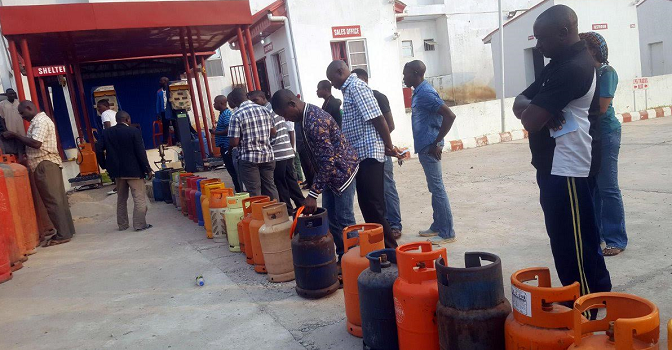
Many residents of the Federal Capital Territory have decried the high cost of Liquefied Petroleum Gas, popularly known as cooking gas, calling on the government to find a lasting solution to the persistent price hikes.
Residents who spoke to the News Agency of Nigeria on Tuesday in Abuja said the recent surge in gas prices is unsustainable and negatively affecting household expenses.
The PUNCH recalls that the prices of cooking gas rose recently from an average of N1,000 per kilogram to about N2,000/kg in some locations. This followed the recent strike by the Petroleum and Natural Gas Senior Staff Association of Nigeria during the rift between it and the Dangote refinery.
A businesswoman, Mrs Tina Okojie, said she refilled her 12.5kg cylinder for N18,125, up from N15,000.
“I had to visit three outlets in my area before I finally bought at Shafa filling station. We are already struggling with other bills, and this is affecting my expenditure on other needs. I hope the government can address the issue because many Nigerians rely on gas for cooking,” she said.
A security guard, Mr Nura Idris, said he could no longer afford to refill his 5kg cylinder and called on the government to intervene.
“I usually fill my 5kg cylinder for between N5,500 and N5,800. Now it costs N8,000. I just bought 3kg at N4,800 and have been managing. I call on the government to please help Nigerians; we are going through a lot of hardship. Let them find a solution to the high cost of cooking gas,” he said.
Similarly, Mrs. Bose Ajibade, a tailor, said she could not refill her 12.5kg cylinder until the price comes down.
“I was refilling at N14,000; now it’s N21,000. The difference is too much. How many Nigerians can afford this? I just bought what N14,000 could give me because I’ve already budgeted that amount. Going beyond that will affect my expenses on other items. I have cautioned my children not to waste gas. I am calling on the government to come to our aid,” she said.
A civil servant, Mrs Beatrice John, said she resorts to charcoal whenever gas prices increase.
“Whenever gas goes up, I use my charcoal stove. It’s not convenient, but what can one do? I have a large family, and with the current price, it’s difficult to sustain its use alongside other bills. The government needs to find a lasting solution,” she said.
However, some residents are still able to access gas at lower prices. Mrs. Ese Okoro, a public servant, said she purchased her cylinder from major marketers amid long queues.
“I refrained from using roadside outlets due to the price surge and bought from NIPCO, which sells at about N1,120 per kg. I filled my 12.5kg cylinder for N14,000 after queuing for a few hours. The situation seems to be easing gradually. I urge the Federal Government to ensure full product circulation to restore normalcy and affordability,” she said.
Following the price hike, the Federal Government directed the Nigerian Midstream and Downstream Petroleum Regulatory Authority (NMDPRA) to intensify monitoring of LPG depots to prevent hoarding.
The Minister of State for Petroleum Resources (Gas), Dr. Ekperikpe Ekpo, said the surge was mainly caused by the PENGASSAN strike at the Dangote Refinery and ongoing maintenance at Nigeria LNG Train Four, which reduced LPG availability.
He assured that operations at the Dangote Refinery have resumed, with LPG now being loaded for the domestic market.
“Similarly, the Bonny River Terminal operated by Seplat Energy has commenced loading, while the Nigeria LNG is gradually restoring normal operations as maintenance nears completion,” Ekpo said.
He appealed to Nigerians to remain calm and assured that the situation is temporary. He also called on marketers, distributors, and stakeholders in the LPG value chain to be patriotic and desist from hoarding.
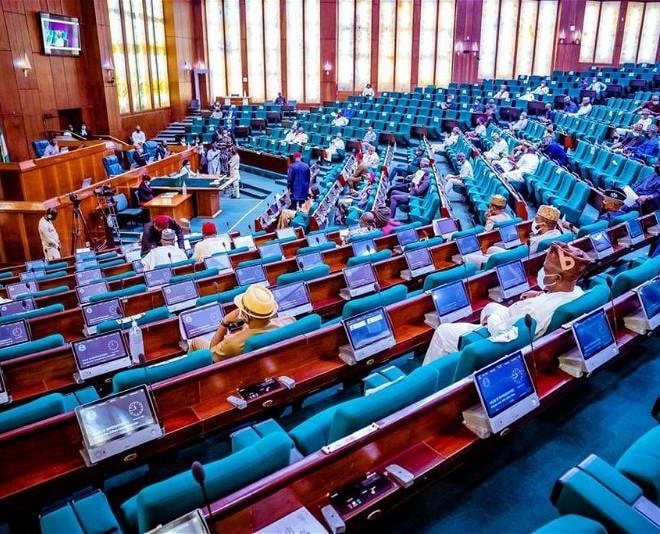
The House of Representatives, on Tuesday, urged the Federal Government, through the relevant agencies, to provide relief materials to cushion the effects of the recent boat mishap that took the lives of five persons in the Nafada River, Gombe State, North-Eastern Nigeria.
The resolution of the House was sequel to the adoption of a motion of urgent public importance by the member representing Dukku/Nafada Federal Constituency, Gombe State, Abdullahi El-Rasheed.
The five persons, including four young girls and a boy, reportedly lost their lives on Saturday, October 25, 2025, onboard a boat sailing across the Nafada River.
Incidents of boat mishaps have been a regular occurrence across Nigeria’s waterways, continually claiming lives and heightening tension over maritime safety, particularly in rural areas.
El-Rasheed said, “The House is disturbed that unless relevant government agencies intensify their regulatory oversight and enforce strict compliance with maritime safety standards and operational guidelines, these devastating incidents will continue to occur.”
Shortly after the adoption of the motion, the House observed a minute of silence in honour of the victims and condoled with the families of the departed.
It thereafter urged the National Emergency Management Agency and the North-East Development Commission to, as a matter of urgency, “provide relief materials and necessary support to the affected families and the grieving communities.”