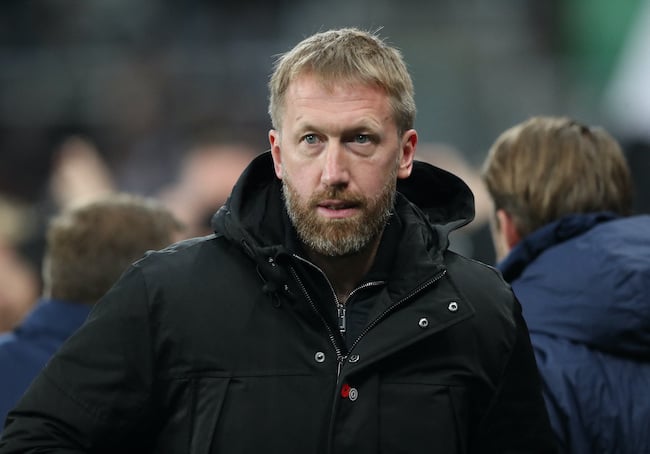
Former Chelsea and Brighton manager Graham Potter has been officially appointed as the new head coach of the Sweden men’s national football team, the Swedish Football Association confirmed on Monday.
According to Fabrizio Romano’s X post on Monday, “Graham Potter, new head coach of Sweden until March 2026, as an initial short-term contract with World Cup mission. Deal agreed last week and signed in the last 24h as former West Ham manager returns immediately.”
He replaces Jon Dahl Tomasson, who was dismissed earlier this month following Sweden’s dismal start to World Cup qualifying, sitting bottom of Group B with just one point from four matches.
PUNCH Online had reported that West Ham United sacked Potter following a disappointing run of form stretching from the second half of last season into the start of the 2025/26 campaign.
Potter is no stranger to Swedish football. He began his managerial career in Sweden with Östersunds FK, transforming the small-town club from the fourth tier to the Allsvenskan and European competition in just over seven years.
His success there earned him a move to England, where he later managed Swansea City, Brighton, and Chelsea.
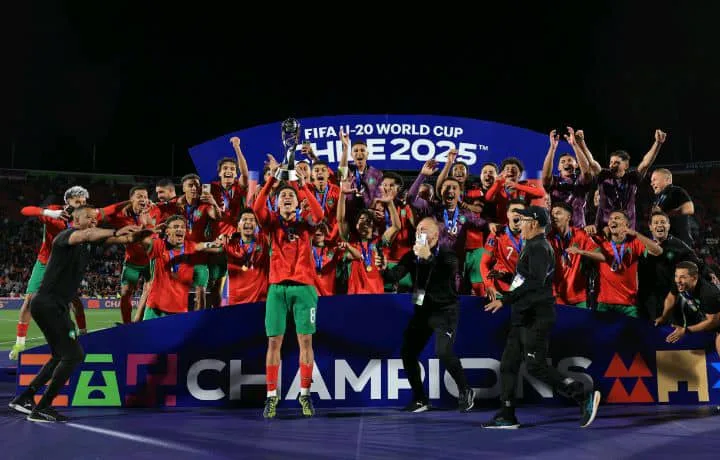
In a landmark moment for African football, Morocco clinched the 2025 FIFA U-20 World Cup title with a commanding 2-0 victory over Argentina in the final, held early Monday morning in Santiago, Chile.
The North African side owed their historic win to rising star Yassir Zabiri, who struck twice in the first half, once in the 12th minute and again in the 29th, to silence the Argentine crowd and secure the title.
Despite Argentina’s best efforts in the second half, they were unable to break through a disciplined Moroccan backline.
According to ESPN, captain Rayan El-Mourabet led by example, anchoring a rock-solid defence, while goalkeeper Youssef Bakkali delivered a standout performance, making several key saves to maintain a clean sheet.
Morocco’s road to glory was anything but easy. Drawn into a daunting group alongside football heavyweights Spain, Brazil, and Mexico, the Atlas Lions topped the group despite an opening loss to Mexico.
They went on to defeat Brazil and Spain in impressive fashion to advance.
The knockout rounds saw Morocco eliminate South Korea in the round of 16, outclass the United States in the quarter-finals, and edge out France on penalties in a nerve-wracking semi-final. Their victory over Argentina in the final capped a sensational tournament run.
With this triumph, Morocco becomes the second African country to win the U-20 World Cup, following Ghana’s memorable 2009 victory over Brazil.
This win not only marks Morocco’s first FIFA trophy at any level but also underscores the country’s emergence as a growing powerhouse in global football.
PUNCH Online reports that it is a defining moment for Moroccan sport and a proud day for African football.
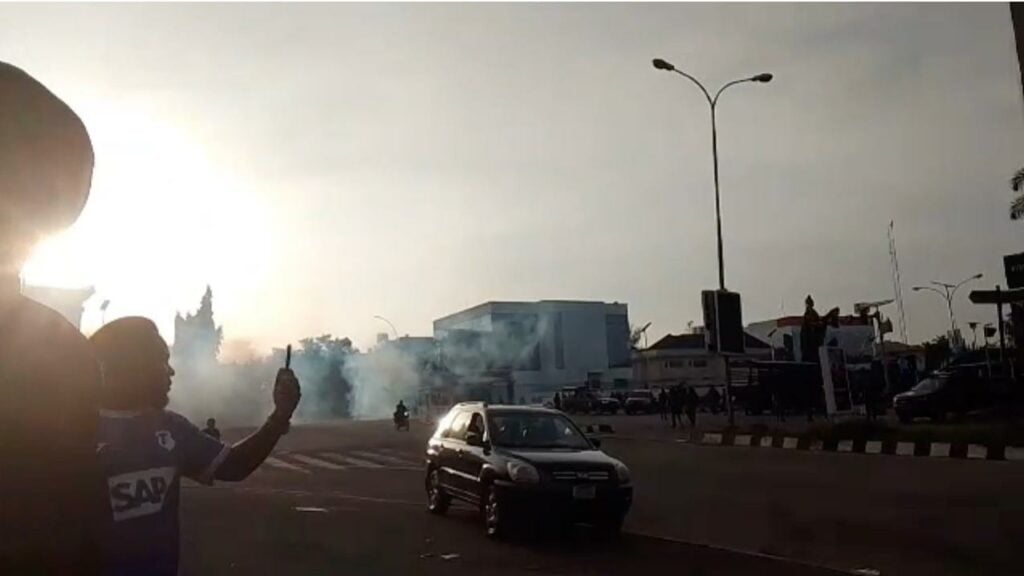
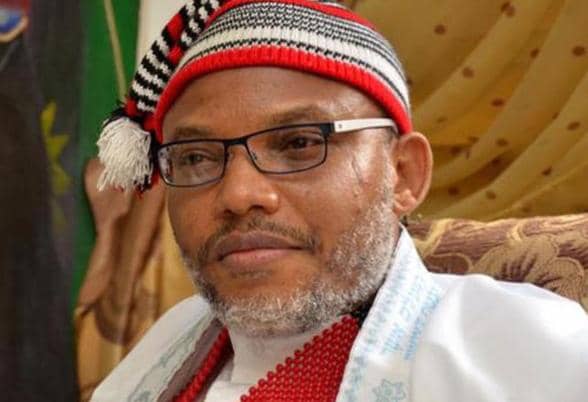
Security operatives on Monday fired tear gas canisters at protesters, including human rights activist Omoyele Sowore, who had gathered in Abuja to demand the release of the detained leader of the Indigenous People of Biafra, Nnamdi Kanu.
The protest, tagged #ReleaseNnamdiKanuNow, was planned to take off from the Transcorp Hilton area and other parts of the Federal Capital Territory (FCT), but was disrupted as police officers moved in early, firing multiple rounds of tear gas to disperse participants and passersby.
The operatives, who had cordoned off the hotel and adjoining streets, began firing tear gas even before protesters arrived in large numbers.
Our correspondent had observed a visibly tightened atmosphere across the city on the way this morning.
Soldiers, police, and operatives of the Department of State Services were deployed to key locations, including the Three Arms Zone, Eagle Square, Federal Secretariat, Unity Fountain, and routes leading to Aso Rock.
Human rights activist and former presidential candidate, Omoyele Sowore, has urged Nigerians to join a nationwide protest demanding the release of detained Indigenous People of Biafra’s leader, Nnamdi Kanu, despite a court order restricting demonstrations around key government areas in Abuja.
In a post on X (formerly Twitter) on Monday morning, Sowore called on citizens to take to the streets in peaceful protest.
“Good morning, wherever you may be this morning, do not stop moving. Carry a sign, sing a song, make a statement!” he wrote.
He had earlier shared a message on Sunday night welcoming participants to the protest tagged#FreeNnamdiKanuNow.
“We warmly welcome everyone who has travelled from far and wide to join the #FreeNnamdiKanuNow protest tomorrow. Your courage, sacrifice, and solidarity speak volumes. Together, we are writing history,” he wrote.
Sowore announced that protesters would converge in front of the Transcorp Hilton Hotel, Abuja, at 7 am, urging them to “come ready, come peaceful, come determined.”
He also shared a Facebook post that read, “We want to put one million people on the streets of Abuja tomorrow for #FreeNnamdiKanuNow — let’s make it happen.”
However, the planned march comes in defiance of an interim injunction issued by Justice Mohammed Umar of the Federal High Court, Abuja, which restrained Sowore and other organisers from protesting in or around sensitive government areas, including the Presidential Villa, National Assembly Complex, Force Headquarters, Court of Appeal, Eagle Square, and Shehu Shagari Way.
Reacting to the reported order on Saturday, Sowore questioned its legitimacy and the perceived double standards of law enforcement.
“Suppose a court order truly exists restricting protests around Aso Rock Villa; it begs the question: why hasn’t the same police force obtained a similar order against those protesting freely for three consecutive days opposing Nnamdi Kanu’s release?” Sowore asked.
“The hypocrisy is glaring. The double standards are undeniable,” he added.
The activist disclosed that his legal team, comprising 115 lawyers, would challenge the alleged court order once it is formally served on Monday.
He maintained that the planned October 20 #FreeNnamdiKanuNow protest would proceed as a peaceful and lawful march, declaring, “October 20 #FreeNnamdiKanuNow remains sacrosanct. We march peacefully, lawfully, and powerfully.”
The demonstration also coincides with the fifth anniversary of the #EndSARS protests of October 2020, which culminated in the alleged Lekki Toll Gate massacre — a period now remembered for its call for police reform and justice for victims of brutality.
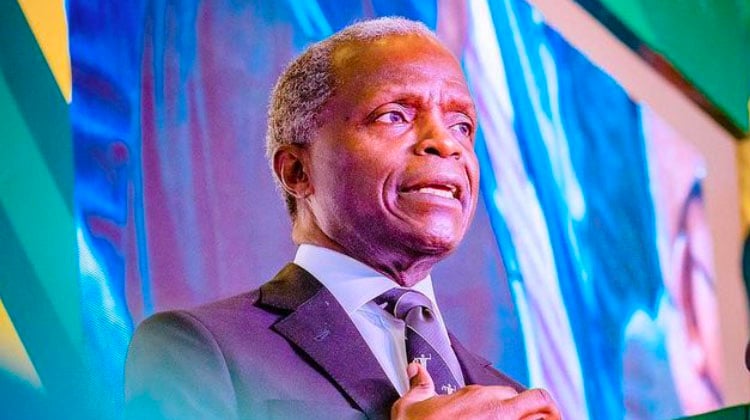
Former Vice President Yemi Osinbajo (SAN) has been appointed by the Economic Community of West African States to head its Election Observation Mission for the forthcoming presidential election in Côte d’Ivoire.
According to a statement from ECOWAS, the election is scheduled to be held on October 25, 2025, while the observation mission will be deployed from October 19 to 29, 2025, in accordance with the provisions of the ECOWAS Supplementary Protocol on Democracy and Good Governance.
“As Head of Mission, Osinbajo will lead a delegation of eminent West Africans who will engage with key national stakeholders to encourage a peaceful and credible electoral process,” the statement said. “The team will also collaborate with international and domestic observer groups to assess the conduct of the polls.”
The regional body said the deployment of the mission underscores ECOWAS’ commitment to promoting peace, stability, and credible elections across West Africa.
The Côte d’Ivoire election comes at a critical time for the region, where several member states are preparing for key national polls amid efforts to consolidate democratic governance.
The Equipment Leasing Registration Authority and the Bureau of Public Procurement have signed a Memorandum of Understanding to integrate leasing into Nigeria’s public procurement framework.
This was disclosed in a statement signed by the Head of Media and Corporate Communication of ELRA, Adebola Brookslyn, in Abuja on Sunday.
Brookslyn said the Registrar/Chief Executive Officer of ELRA, Donald Wokoma, after the signing ceremony, noted that the agreement was a move aimed at promoting transparency, efficiency, and fiscal prudence across government operations.
According to Wokoma, through the MoU, ELRA and BPP will jointly develop clear policy guidelines and standard documents for lease-based procurement.
He added that it would also build the capacity of procurement officers across Ministries, Departments, and Agencies and integrate ELRA’s registration system into the procurement workflow for improved accountability.
This, he also said, would pilot leasing projects in key sectors such as health, education, transport, agriculture, and ICT.
Wokoma expressed appreciation to the Director-General of BPP and his team for their foresight and cooperation, reaffirming ELRA’s commitment to ensuring that every lease transaction under the partnership delivers measurable value to national development.
He further explained that the collaboration would reduce fiscal pressure on government budgets, enhance service delivery, and improve asset management, aligning with the Renewed Hope Agenda and Nigeria’s drive toward economic diversification and sustainable growth.
In his remarks, the Director-General of BPP, Dr Adebowale Adedokun, commended ELRA for initiating the collaboration and reaffirmed BPP’s commitment to developing a procurement system that reflects global best practices.
“This MoU is timely and strategic. Leasing provides a viable alternative financing mechanism that supports service delivery while safeguarding public resources.
“By working together with ELRA, we are ensuring that leasing transactions in the public sector are not only transparent but also deliver real value for money,” Adedokun said.
He further noted that the partnership would strengthen institutional capacity within MDAs and enhance accountability in public expenditure management, particularly in the area of compliance. Those who will go into the leasing sector must show clearly that they are registered with ELRA.
“BPP will ensure compliance without which a Certificate of No Objection will not be issued by the Bureau,” he added.
Under the Equipment Leasing Act, 2015, ELRA is empowered to regulate and register all leasing transactions in Nigeria, ensuring credibility, accountability, and investor confidence.
Similarly, the Public Procurement Act mandates BPP to guarantee value-for-money and competitiveness in government transactions.
The partnership harmonises these mandates, creating a unified process for all lease-related procurements to be duly registered, marking a major milestone in Nigeria’s journey toward efficient and sustainable public procurement.
The Federal Government has officially handed over four Technical Aid Corps volunteers to the Government of the Republic of Sierra Leone.
The formal ceremony took place in Freetown on Thursday, October 16, 2025. Representing Nigeria at the event, Chargé d’Affaires of the Embassy of Nigeria, Ambassador Anthony Ebipador, officially presented the volunteers to Sierra Leonean authorities, who were represented by the Director of Education, J. Momoh.
According to a statement signed and released by the spokesperson for the Ministry of Foreign Affairs, Kimiebi Ebienfa, on Sunday, the four volunteers include two professors, one PhD holder, and one Master’s degree holder, with expertise in law, medicine, and science.
They will be deployed across various institutions in Sierra Leone, where they are expected to contribute to human capital development through knowledge transfer, capacity building, and support for socio-economic progress.
“The Ministry of Foreign Affairs is pleased to announce the successful deployment and formal handing over of four Nigerian Technical Aid Corps volunteers to the Government of the Republic of Sierra Leone. The volunteers comprise two Professors, one PhD holder, and one Master’s degree holder.
“This deployment reflects the commitment of His Excellency, President Bola Tinubu, to strengthening the bonds of fraternity and solidarity between Nigeria and her sister nations across Africa and the Caribbean.
“The four volunteers, carefully selected and equipped with expertise in law, medicine, and science, will be integrated into various institutions across Sierra Leone.
“Their mission is to support the human capital development goals of the Government and people of Sierra Leone through knowledge transfer, capacity building, and contributions to socio-economic development,” the statement read in part.
According to the statement, Ebipador stressed the historical ties and enduring cooperation between the two nations, adding that Nigeria has consistently provided development assistance and volunteers to Sierra Leone and remains committed to strengthening the institutional framework of the country in all ramifications.
Founded in 1987, the TAC Scheme continues to serve as a cornerstone of Nigeria’s foreign policy, reflecting the country’s sustained commitment to South-South cooperation and Pan-African ideals, the statement added.
Last month, the Director General of NTAC, Yusuf Yakub, revealed that the agency was developing a legal framework to facilitate the structured export of skilled Nigerian professionals, in a move aimed at curbing brain drain and boosting diaspora earnings.
Yakub also revealed that the agency has deployed 396 volunteers to various countries over the past two years.
Fans of Nollywood actress, Regina Daniels, have expressed concern over her well-being following a disturbing video that surfaced online on Friday, showing her in tears and alleging domestic violence in her marriage to billionaire politician, Ned Nwoko.
In the viral clips, the visibly distraught actress was seen sitting outside in the dark, sobbing as she lamented her alleged ordeal. Amid tears, she said, “In Ned Nwoko’s house, I am nothing. But in my house, I am a queen.”
Her young son could be heard trying to console her, but she replied emotionally, “Baby, what again? I cannot stand this violence. It’s too much.”
The tense scene appeared to escalate when some men, believed to be security aides, tried to pacify the actress and her siblings, but her brother, Sammy, confronted them.
Shortly after, Sammy took to Instagram to defend his actions, writing, “Makachi! E pain me say una wan finally laugh my sister. Let me repeat — anywhere wey man dey beat woman, whether na my sister or not, I go fight with my blood!”
The controversy deepened when fans resurfaced an old video of Nwoko jokingly saying, “She will tell me I’m not her father, and I’ll say, no, I’m your husband.” In the clip, Regina quickly knelt and replied, “You’re my everything,” in an attempt to diffuse the tension.
As the story gained traction, social media users began tagging actress, Angela Okorie, recalling her recent online spat with Daniels. Their feud began after Okorie made a controversial post about Mercy Johnson, which Daniels publicly condemned.
The disagreement quickly turned personal, with Okorie mocking Regina’s marriage to Nwoko, while Regina alleged that Okorie once showed interest in the billionaire.
Reacting to being dragged into the latest drama, Okorie wrote on Instagram, “Nigerians, na me dem beat for Ferrari and private jet house with 8 wives? Why una dey tag me kwanu? Oh chim, Angelaaaa.”
Meanwhile, several entertainers and fans have voiced support for Daniels.
Actor Stanley Ontop wrote, “Nothing should happen to my Gina ooo… make hand no touch her abeg.”
Fans also flooded social media with mixed reactions.
One user, @sawiitee, asked, “Hope say no be movie?”
Another fan, @yourmosttrustworthyattorney, lamented, “This is too sad. I was hoping it was a skit.”
User @vivibleez added, “Noooo, it’s for better or for worse. Who she wan leave am for?”
Another fan, @bigbillzbaby, criticised, “She chose this life forced on her by her mother, who doesn’t know any better.”
@victoriakelly wrote, “But why Ned go lay hand on her? Old man wey dem dey manage.”
Echoing similar sentiments, @callmeoche commented, “She really needs to stop talking. Why marry someone old enough to be your grandfather? He’ll always see you as a child. Honestly, this situation is partly her fault.”
As of press time, neither Regina Daniels nor Ned Nwoko has issued an official statement regarding the incident.
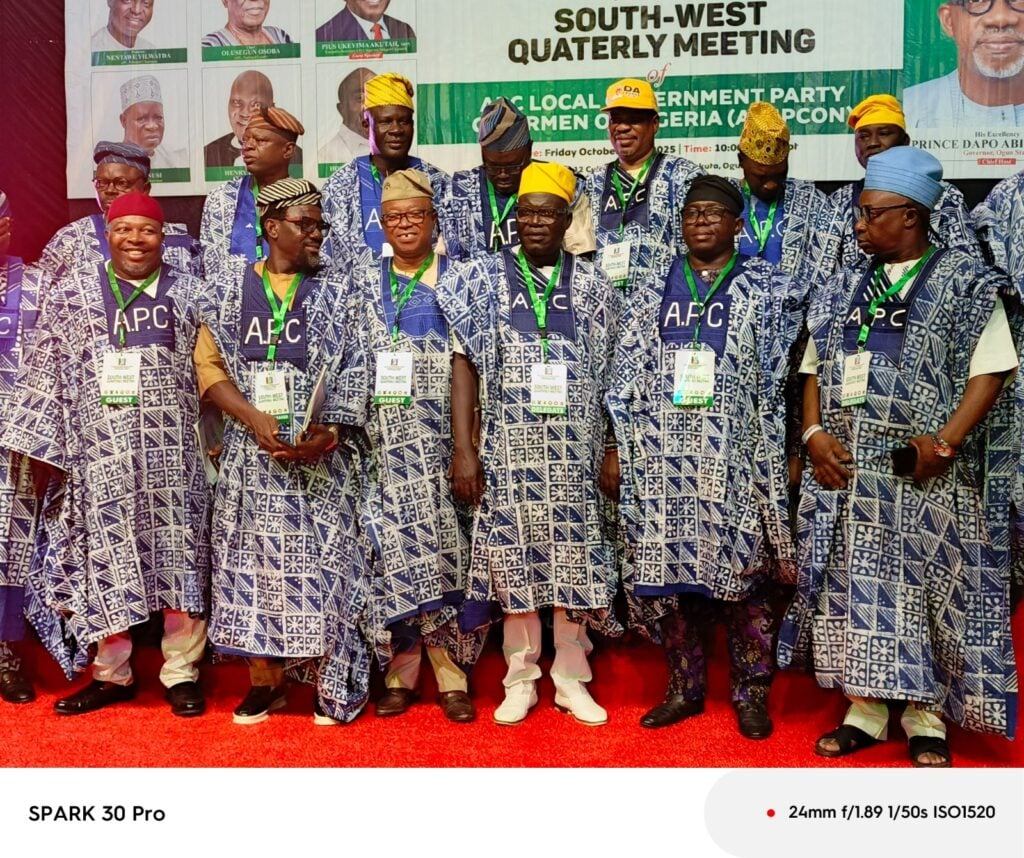
The Forum of All Progressives Congress Local Government Party Chairmen of Nigeria, Southwest Zone, has declared its support for the re-election of President Bola Tinubu in 2027.
During its Southwest quarterly meeting held on Saturday at the June 12 Cultural Centre, Abeokuta, the forum also vowed to embark on massive grassroots mobilisation, not only to ensure a landslide victory for Tinubu in 2027 but also to reclaim Oyo and Osun States, currently under the opposition Peoples Democratic Party.
The Southwest APC LG chairmen said there was no disputing the fact that Tinubu had taken several decisive and courageous steps to return the country to the path of economic prosperity and stability, stressing that he should be allowed to continue his strategic leadership and deliberate reforms until 2031.
Speaking at the event, the National Chairman of the Forum, who also doubles as the Chairman of APC LG Chairmen in Ogun State and the party chairman of Abeokuta South Local Government, Mr Henry Fagbenro, commended Tinubu and Ogun State Governor, Dapo Abiodun, for prioritising projects that accelerate economic growth and prosperity.
Fagbenro said, “The Southwest is the home base of our hardworking President, Asiwaju Bola Ahmed Tinubu. He has done fantastically well in redefining good governance since his election over two years ago.
“The Southwest is saying that President Tinubu deserves another term till 2031, and we are going to do everything within our ability, as permitted by law, to work with other Nigerians to make this a reality.
“Already, we have four Southwest states — Ekiti, Ondo, Lagos and Ogun — under the APC. For the two remaining states, Oyo and Osun, we shall embark on massive grassroots mobilisation. We will go from door to door, house to house, community to community, and market to market to further strengthen the party in the Southwest and mobilise for its victory in both the presidential and governorship elections.”
Fagbenro also highlighted the remarkable progress recorded in Ogun State under Governor Abiodun and urged him to remain committed to improving the lives of residents.
In his address, the Southwest Coordinator of the group, Elder Rufus Awotidoye, said that returning President Tinubu for another four-year term in 2027 was “non-negotiable.”
He, however, called for unity within the party, stressing that all members must work together to achieve the shared vision.
“The 2027 Presidential Election is a defining moment for the All Progressives Congress (APC) and for our dear President, Asiwaju Bola Ahmed Tinubu. As the political home of Mr President, the Southwest carries a special responsibility to stand united, committed, and focused in ensuring that the APC continues to lead Nigeria on the path of renewed hope, progress, and prosperity,” Awotidoye said.
He further urged APC members in the Southwest to put aside their differences and work as a formidable team to deliver a landslide victory for the party in the 2026 governorship elections in Ekiti and Osun States.
The National Secretary of the Forum and Chairman of APC LG Chairmen in Delta State, Mr Norbert Sochukudinma, charged Southwest APC members to remain steadfast and work hard for President Tinubu’s re-election, noting that all eyes were on the zone as the President’s home region.
He said the Southwest’s performance would significantly influence the direction of other geopolitical zones in 2027.
The Speaker of the Ogun State House of Assembly, Rt Hon Daisi Elemide, who chaired the occasion, called for the restoration of party supremacy to strengthen Nigeria’s democracy and promote good governance. He also threw his weight behind President Tinubu’s second-term bid, adding that the President had demonstrated a genuine commitment to national progress.
The immediate past Nigerian High Commissioner to the United Kingdom, Ambassador Sarafa Ishola, also emphasised the need for unity and inclusivity within the party ahead of the 2027 elections, saying that only a united front could guarantee victory.
The guest speaker at the event, the Executive Secretary of the Nigerian Shippers’ Council, Dr Pius Akutah, who was represented by Atiso Mofiren, charged the APC LG chairmen to intensify efforts at the grassroots to promote the ideals of the Renewed Hope Agenda.
Akutah explained that the Renewed Hope Agenda focuses on returning the country to the path of economic prosperity, food sufficiency, improved infrastructure, enhanced security, protection of the vulnerable, and expanded access to quality education through student loans, among others.
He added that “all these laudable initiatives of President Tinubu must be allowed to continue until 2031.”
PUNCH Online reports that in May 2025, the APC formally endorsed Tinubu as its sole candidate for the 2027 presidential election, signalling the party’s official support for his second term.
The Southwest zone of the APC, Tinubu’s home region, has repeatedly pledged to provide him support for the 2027 polls, emphasising massive grassroots mobilisation across the six states in the zone
The Commissioner for Health, Lagos State, Prof. Akin Abayomi, has decried the many lives lost on Lagos roads due to delays caused by onlookers taking videos instead of assisting first responders.
Represented by the Director of Medical Services, Lagos Health Service Commission, Dr Olawale Adegbite, Abayomi spoke in Lagos at a Symposium for stakeholders to mark the 2025 World Trauma Day with the theme: “Reducing Needless Deaths on Our Roads: Everybody’s Responsibility.”
He urged Lagosians to respect ambulances and prioritise saving lives first before taking videos at the scene of accidents, saying that saving lives on the road was not just the government’s responsibility, but a collective moral and civic duty of every Lagosian.
“Every time we block an ambulance or ignore an emergency call, someone’s parent, spouse, or child could be dying. Trauma care begins with public responsibility,” he said.
He reiterated resolution of the state government to strengthen emergency preparedness and trauma response mechanisms to reduce preventable deaths on Lagos roads.
He said that most trauma cases on Lagos roads were not accidents but preventable incidents caused by human errors.
He stressed that the state’s emergency systems, especially pre-hospital care and ambulance services, have been instrumental in saving lives but require continuous improvement and public cooperation.
Highlighting Lagos’ ongoing investments in emergency medicine, Abayomi noted that most trauma cases brought in by the Lagos State Ambulance Service (LASAMBUS) recorded higher survival rates compared to those transported by bystanders.
“Proper pre-hospital intervention makes the difference between life and death.
“Continuous staff training and retention were critical to sustaining success in trauma management,” he said.
Earlier, in her opening remarks, the Special Adviser to the Governor on Health, Dr Kemi Ogunyemi, described trauma as one of the leading causes of preventable deaths and disabilities globally, particularly from road traffic crashes.
Represented by the Senior Special Assistant to the Governor on Health, Dr Oluwatoni Adeyemi, Ogunyemi noted that Lagos State has made significant progress under the leadership of Gov. Babajide Sanwo-Olu, citing improvements in ambulance coverage, response time, and coordination among first responders.
She said: “We recently launched ten emergency ambulance bikes to ensure faster access to victims in congested areas and also commissioned modular high-dependency units in Ifako and Mushin General Hospitals.
“These interventions are part of our drive to bring critical care closer to communities and reduce delays in life-saving interventions.”
She further emphasised that the theme of this year’s commemoration underscored the fact that reducing trauma-related deaths goes beyond government efforts.
“It requires everyone—drivers, pedestrians, health professionals, civil society, and the media—to play their roles in building a culture of prevention and prompt response,” she said.
In his remarks, the Permanent Secretary, Lagos State Ministry of Health, Dr Olusegun Ogboye, said the story of “Mr Andrew,” a trauma survivor treated at the Lagos State Accident and Emergency Centre (LASAEC), represented the essence of the symposium.
Ogboye recounted how coordinated emergency response and government-backed trauma care saved a man who was left comatose after a crash on the morning of his daughter’s wedding.
He stressed that pre-hospital care was a crucial but often neglected component of healthcare.
He revealed that the Lagos State Government was expanding trauma centers across the state, with new facilities being established in Epe, Eti-Osa, and Badagry corridors in partnership with private sector allies such as Custodian Allied Insurance and Access Bank.
He added that the state’s ambulance service had evolved into a world-class system with well-equipped vehicles serving as mobile intensive care units.
“There’s hardly any equipment you’ll find in advanced ambulance systems that our units don’t have – ventilators, defibrillators, and fully trained emergency technicians. Lagos has come a long way,” he said.
The Permanent Secretary also called for attitudinal change among motorists and the general public, especially in giving ambulances the right of way.
“You move aside for convoys and security vehicles, yet block ambulances carrying lives. That behavior must change. It could be your loved one in that ambulance,” he warned.
In his presentation titled “The Traumatic Story Being Rewritten,” the Medical Director, LASAEC, Dr Adeolu Arogundade, told the true story of Mr Andrew, who was hit by a car and left unconscious for months but survived through state-funded care.
Arogundade said the case epitomised the 41,000 trauma cases successfully treated at LASAEC in the last 15 years, with a commendable mortality rate of just 1.4 per cent .
He lauded the Lagos State Government for sustaining a policy that guarantees free emergency care for all trauma victims within the first 24 hours, emphasising that the policy’s funding—though sometimes delayed—remains vital to saving lives.
“Behind every statistic is a human story. Each percentage represents someone’s father, mother, or friend who lived because a system worked.
“Our success is proof that trauma care is everyone’s business; from road users to rescuers and administrators,” he said.
The Lagos State Sector Commander of the Federal Road Safety Corps (FRSC), Mr Kehinde Hamzat, underscored the grim reality that most crash-related deaths were avoidable.
Citing WHO data, Hamzat, also a Guest Speaker, said that Africa bore a disproportionate share of the 1.3 million global deaths from road traffic crashes yearly, with Lagos inclusive due to high vehicle density and weak road discipline.
Hamzat warned that unsafe behaviours such as speeding, drunk driving, and disregard for traffic laws remain major culprits, stressing that effective trauma management begins with prevention.
“No matter how advanced our hospitals become, if we don’t change road behaviour, we’ll keep losing lives needlessly.
“Our collective vigilance, compliance, and compassion are what will make our roads safer and our emergency systems more responsive,” he said.
As the symposium ended, participants resolved to deepen inter-agency collaboration, intensify public sensitization, and push for behavioural change campaigns across the state.