A speech by U.S. President Donald Trump will mark the opening of the 80th session of the annual General Debate of the UN General Assembly in New York on Tuesday.
Other speakers on the agenda for the first day are Brazilian President Luiz Inácio Lula da Silva, Turkish President Recep Erdoğan, and French President Emmanuel Macron.
The speeches are scheduled to start at 9 am (1300 GMT).
UN Secretary General António Guterres and General Assembly President Annalena Baerbock are also to speak.
A session of the UN Security Council on the Ukraine war, which Ukrainian President Volodymyr Zelensky is expected to attend, is also scheduled.
Around 150 heads of state and government are set to speak over the week ahead, with the Middle East conflict and the war in Ukraine.
The UN’s precarious finances would not be left out, along with the changing geopolitical role of the United States under Trump.
Nigeria’s Vice-President, Sen. Kashim Shettima, who is leading the country’s high-powered delegation to the annual global event, has since arrived in New York.
The News Agency of Nigeria reports that Shettima is representing President Bola Tinubu at the UN epochal event.
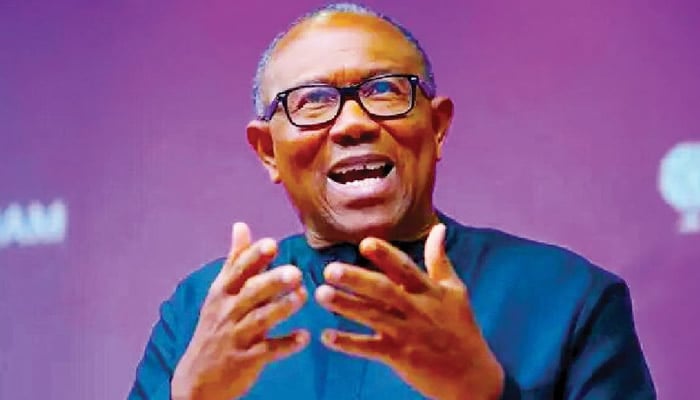
The Labour Party presidential candidate in the 2023 general elections, Peter Obi, has expressed concern over the rising cases of attacks and killings of security personnel across the country.
Obi, in a post via his official X (formerly Twitter) handle on Tuesday, described the spate of violence against soldiers, policemen, members of the Nigeria Security and Civil Defence Corps, and vigilante groups as tragic and unacceptable.
The former Anambra State Governor stressed that the sacrifices of security operatives to the nation must not go unappreciated.
“The country has been thrown into mourning yet again with the reported tragic killings of our security personnel. Our men and women in uniform have paid the ultimate price in the line of duty, dedicating their lives to the safety and stability of our dear nation,” Obi said.
He urged leaders at all levels to take urgent steps to better equip and motivate security operatives, insisting that security must form the foundation of governance.
According to him, Nigeria cannot continue to bury its security personnel while abandoning their families. He stressed the need for adequate compensation and support for the dependents of fallen officers.
“Our government must rise to the responsibility of ensuring that the wives, children, and parents of these fallen heroes are fairly compensated and supported. That is the least a grateful nation can provide. It is not charity, it is justice,” Obi added.
The former governor offered prayers for the repose of the souls of the slain operatives and assured their families of solidarity and support.
“To every fallen hero, may your soul rest in perfect peace. Your sacrifice and patriotism will never be forgotten. And to the families left behind, you are not alone. May God continue to provide you with strength and comfort,” he concluded.
Adron Homes Sponsors Olojo Festival 2025, Celebrates Heritage and Tourism Development
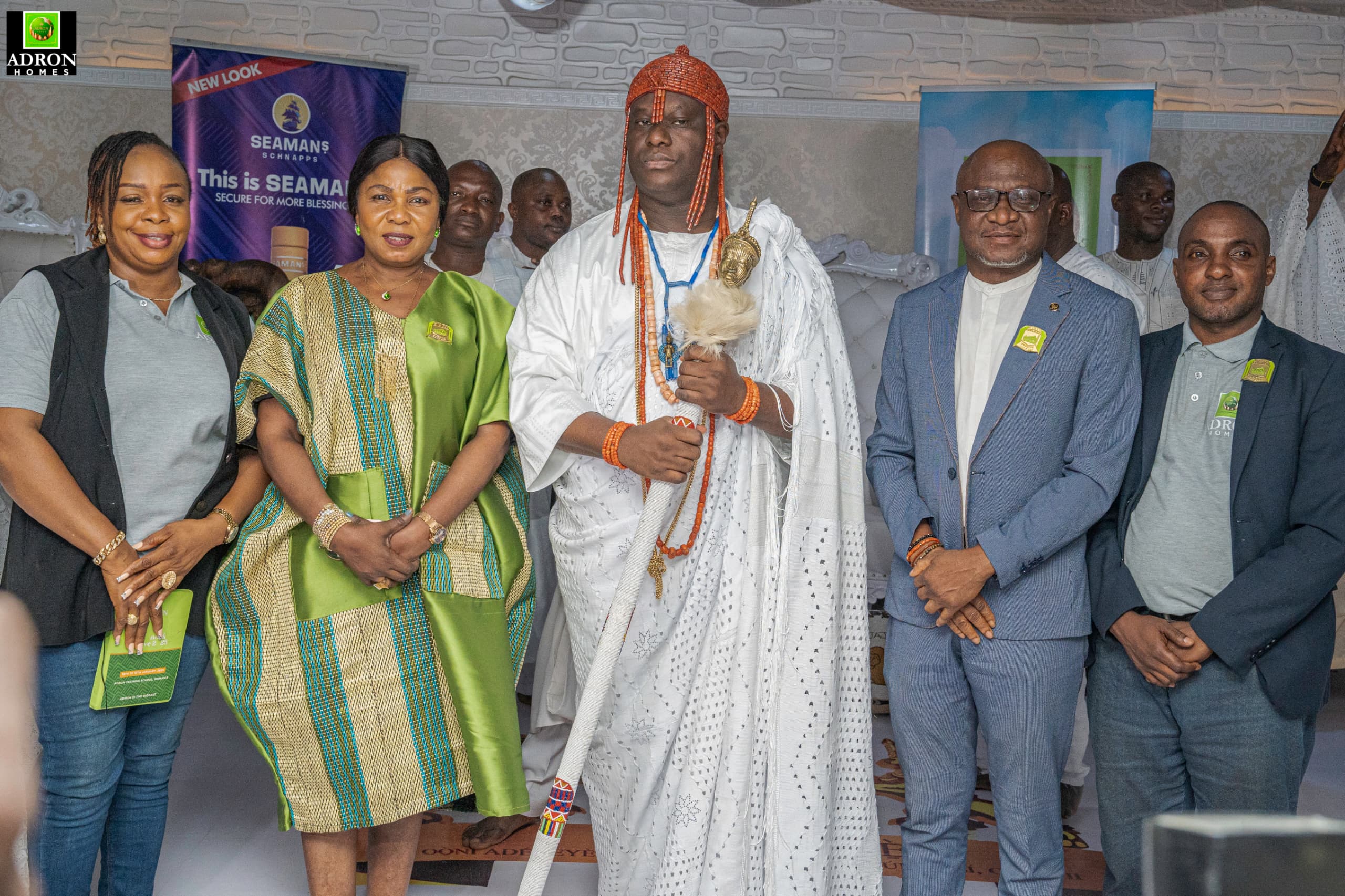
Adron Homes and Properties Limited, one of Nigeria’s leading real estate companies, has reaffirmed its commitment to cultural preservation and community development by officially supporting the 2025 Olojo Festival themed “Tourism for Inclusive Growth with Cultural Rebirth.”
In a press conference held recently at the Palace of His Imperial Majesty, Oba Eniitan Adeyeye Ogunwusi, CFR, Ojaja II, the Ooni of Ife, highlighted the festival’s enduring significance as a symbol of Yoruba heritage and a catalyst for economic and social development.
Representing the Chairman/CEO, Aare Adetola Emmanuelking, the Managing Director of Adron Group, Mrs. Adenike Ajobo, described the Olojo Festival as “more than a cultural gathering, a living heritage that connects the Yoruba civilization to the global stage, strengthening local economies, uniting people, and inspiring generational pride.”
She noted that Adron Group’s sponsorship aligns with its mission to build communities that honour tradition while creating sustainable opportunities.
“Tourism and housing share a common purpose which connects people, places, and possibilities. At Adron, we believe that true development must respect heritage while driving progress for future generations. Supporting Olojo Festival reflects our commitment to inclusive growth and cultural rebirth,” she stated.
The Olojo Festival, recognised as one of Africa’s foremost cultural events, continues to attract international attention while reinforcing Ile-Ife’s status as the cradle of Yoruba civilization. With the support of organisations like Adron Group, the festival is expected to further project Nigeria’s culture globally, boost tourism, and inspire unity across communities.
Adron Group extended prayers for the continued reign of His Imperial Majesty, Kabiyesi Ojaja II, and expressed optimism that the 2025 Olojo Festival would be peaceful, impactful, and a beacon of pride for Yorubaland, Osun State, and Nigeria at large.
Nigerians filed over 7,646 asylum applications in Sweden between 2000 and 2024, according to official figures from the Swedish Migration Agency, Migrationsverket.
Data obtained by Saturday PUNCH from the agency’s portal, covering the period, showed a consistent stream of Nigerian asylum seekers in the Nordic country.
A total of 6,783 asylum applications from Nigerian nationals were recorded between 2000 and 2021.
In 2022, there were 288 applications, followed by 200 in 2023, and 375 in 2024. Of the 375 applications received in 2024, 239 were first-time claims, while 136 were follow-up “extension” requests from persons whose temporary status was about to expire.
Women filed nearly two-thirds (159) of all first-time Nigerian claims, and half of every Nigerian applicant was between 25 and 44 years old, as no one over 64 applied in 2024.
Children accompanied 60 adult applicants, while one child travelled alone and registered as an unaccompanied minor.
Similarly, in 2023, there were 160 adults, 39 children in families, and one unaccompanied child among first-time asylum seekers from Nigeria.
Over the longer period from 2000 to 2021, a total of 132 unaccompanied minors from Nigeria applied for asylum.
The number of new applications for international protection peaked in 2003 at 452 and again in 2013 at 601, but the volume has never reached the scale of applications seen from countries experiencing internal conflicts.
Across Africa, Nigeria is among the top five countries of origin for asylum seekers in Sweden.
However, Somalia, Eritrea, Sudan, and Ethiopia far surpass it in numbers due to ongoing conflict and instability.
Somalia alone accounted for more than 54,128 applications since 2000, followed by Eritrea with over 39,000, then Sudan, Libya, Morocco, and the Democratic Republic of the Congo.
Other countries include Uganda, Egypt, Cameroon, The Gambia and Burundi, Kenya, Algeria, Tunisia, Rwanda, Tanzania, Ghana, Guinea, Sierra Leone, Mali, Zambia, Djibouti, Côte d’Ivoire, Angola, Zimbabwe, Burkina Faso, and single-digit applications from Benin, Niger, Equatorial Guinea, the Central African Republic and Mauritania. Nigeria, however, remains West Africa’s largest contributor of asylum seekers.
According to the reports, the migration from these countries is often directly tied to large-scale conflict and instability, a factor that distinguishes them from the lower, more consistent flow of applicants from Nigeria.
Swedish authorities say the distinction is significant as it enables a fast-track process for nationalities with historically high rejection rates, defined as a rejection percentage of 85 per cent or higher.
In 2024, Nigerian asylum seekers had an 88 per cent rejection rate while Colombians had 99 per cent.
Globally, the highest asylum grants in Sweden went to nationals of Syria, Afghanistan, Eritrea, Somalia, Iraq, Iran, Ethiopia, Palestine, Ukraine, and stateless persons.
On the other hand, the highest denials were recorded among applicants from Nigeria, India, Bangladesh, Albania, Georgia, Mongolia, Russia, Morocco, Algeria, and Tunisia.
The Swedish government says it prioritises claims linked to war, persecution, or statelessness over applications driven by economic factors.
Sweden’s asylum regime is rooted in the Aliens Act (Utlänningslagen), which incorporates both EU asylum directives and the 1951 UN Refugee Convention.
A successful applicant must demonstrate either refugee status (fear of persecution), eligibility for subsidiary protection (risk of serious harm in war or conflict), or humanitarian grounds such as severe illness or family reunification.
In recent years, however, Sweden has shifted toward more restrictive policies.
Since 2022, it has issued more temporary residence permits, limited family reunification programmes and tightened deportation enforcement.
Following the record influx of asylum claims in 2015, the Swedish parliament introduced a temporary emergency law that curtailed family reunification rights and made almost all new permits temporary. The main features were ratified in July 2021.
Under its 2023 Tidö Agreement, the current centre-right coalition, bolstered by the far-right Sweden Democrats, imposed “the EU’s minimum level” of protection, which uses tougher naturalisation and welfare rules as explicit deterrents.
To be granted asylum in Sweden today, an applicant must clear at least one of the classic Geneva or EU thresholds—fear of persecution, risk of torture or death, or indiscriminate violence—or demonstrate “exceptionally distressing” humanitarian circumstances.
Meanwhile, Abuja-based development economist Dr Aliyu Ilias, reasoned that the exit of more Nigerians and their permanent settlement abroad meant a loss of skilled labour for the country.
He said that with Nigerians battling economic headwinds and deteriorating security at home, the asylum route, however uncertain, still appeared to offer a better prospect.
“So, it is a total brain drain in the long run, and for the economy, it is reducing our GDP. The appalling part is that most of our Nigerian brothers and sisters who go out do not return,” he added.
The Olofin of Isheri, Oba Sulaiman Bamgbade, Ayodele III, has handed over a newly built Isheri High Court to the Ogun State Government, in what he described as a contribution to strengthening the state’s justice delivery system.
The monarch said the gesture was driven by a desire to promote quicker access to justice and ease the workload of existing courts.
During the official handover, Oba Bamgbade explained that the judicial facility, which he singlehandedly built, represents his commitment to strengthening access to justice and ensuring that the people of Isheri and environs are better served by the rule of law.
In a statement on Friday signed by the Palace’s Office of Media and Publicity, the monarch stressed that a functional justice system was key to peace, order, and development in any society.
“Justice and healthcare are the twin pillars of a thriving society. By handing over the Isheri High Court to the Ogun State Judiciary, we are strengthening access to justice for our people, who previously had to travel as far as Itori and Ifo,” the monarch said.
Aside from the PHC, the traditional ruler also inaugurated the 20-bed Renewed Hope Primary Healthcare Centre in Isheri Olofin as part of efforts to boost access to quality healthcare for residents.
The monarch said that the project was conceived to address the pressing medical needs of his people, particularly women, children, and the elderly.
Speaking at the unveiling as part of events to mark his 4th coronation anniversary, the monarch explained that the facility would provide affordable and accessible healthcare services, noting that primary healthcare remained the foundation of any functional health system.
He stressed that strengthening grassroots health facilities was critical to reducing avoidable deaths and the burden on tertiary hospitals.
According to him, the center would reduce the long distances my people travel to access medical care, while also creating a safer environment for maternal and child health in the area.
“With the commissioning of the Primary Healthcare Center, we are also prioritising the health and well-being of our people, because only a healthy community can truly prosper.
“This brings an end to our people having to leave their community in search of medical attention,” the monarch said.
Dignitaries at the event include the First Lady of Ogun State, Mrs. Bamidele Abiodun; the Chief Judge of Ogun State, Justice Mosunmola Dipeolu, Senior Special Assistant to the President on Sustainable Development Goals, Adejoke Orelope-Adefulire; the Deputy Governor of Ogun State, represented by the Commissioner for Women Affairs and Social Development, Hon. Adijat Adeleye, and the Ogun State Commissioner for Health, Dr. Tomi Coker.
Others are Member, House of Representatives (Ado-Odo/Ota Federal Constituency), Hon. Tunji Akinosi, Member, Ogun State House of Assembly (Ifo II), Hon. Folawewo Salami, and the Executive Chairman, Ifo Local Government, Hon. Idris Kusimo. Also present were numerous traditional rulers, community leaders, and illustrious sons and daughters of Isheri.
On May 24, 2025, Oba Bamgbade appealed to the Lagos and Ogun State Governments, as well as the Federal Government, to support heritage initiatives that protect and promote the Awori history and identity.
The monarch also urged the government to support the kingdom in turning Isheri Olofin into a cultural tourism destination and a hub for economic empowerment.
The presidential candidate of the defunct Nigeria for Democracy in the 2019 election, Asuquo Archibong, has said that the emergency rule imposed on Rivers State and subsequently suspended is not about Governor Siminalayi Fubara.
This is as he commended President Bola Tinubu for ending the six-month emergency rule and reinstating Fubara to office.
Recall that Tinubu declared a state of emergency in the oil-rich state on March 18, following a frosty relationship between Gov Fubara and members of the State House of Assembly.
The development made it impossible for the governor to present the Rivers State 2025 Appropriation Bill before the legislature for its input.
The Federal Government swiftly waded in and appointed retired Vice Admiral Ibok-Ete Ibas as Sole Administrator to oversee the running of the state for an initial period of six months, which elapsed on Thursday, September 18, 2025.
In a statement issued on Friday in Abuja, Archibong described Fubara’s return to office as “A respect for the rule of law and democracy in Rivers State.”
He added, “The return of democracy in the state will promote peaceful co-existence. Everything that played out will strengthen democracy.
“Anytime we have an aberration in terms of governance or the rule of law, it’s a painful experience. The emergency rule was not particularly pleasant. We should naturally welcome the reinstatement of democracy in River State.
“It’s not really about Fubara, but the experience of democracy so that we can have uninterrupted dividends of democracy in the state.”
While urging the relevant stakeholders to put the past behind them and give peace a chance, Asuquo stated that the good thing is that Fubara has stepped into the office he was elected into by the Rivers electorate and urged the three arms of government to work together.
“That’s why we have the three arms of government, and they are all equal arms.
“The executive branch is at the same level as the legislature and is at the same level as the judiciary, and they all have to work together for the betterment of the people. This is the principle of democracy,” he added.
He urged the Rivers State House of Assembly to be cordial with Governor Fubara in the interest of the state.
He also commended the Minister of the Federal Capital Territory, Nyesom Wike, for his role in the reinstatement of Gov Fubara after six months of emergency rule in the state.
The European Union proposed Friday to bring forward a ban on Russian gas imports as part of a new package of sanctions aimed at sapping Moscow’s war chest — and pleasing US President Donald Trump.
Under the measures presented for approval by the bloc’s member states, the European Commission said it aims to phase out liquefied natural gas purchases from Russia by January 2027 — one year earlier than planned.
“Russia’s war economy is sustained by revenues from fossil fuels. We want to cut these revenues. So we are banning imports of Russian LNG into European markets,” Commission chief Ursula von der Leyen said.
“It is time to turn off the tap”.
The proposal comes as the United States pressures the EU to end fossil fuel imports from Russia — and the bloc seeks in turn to persuade Trump to take a tougher stance on Moscow over its invasion of Ukraine.
The US leader has so far held back from upping pressure on Russian President Vladimir Putin but said last week he was ready to do so if allies stopped buying Russian oil and hit China with tariffs.
The 27-nation EU has already banned most Russian oil under previous rounds of sanctions — slashing the share it imports from 29 per cent in early 2021 to two per cent by mid-2025.
Only Hungary and Slovakia, friendly to Moscow and Trump, still buy the stuff.
– ‘Pay the price’ –
Presenting the new EU sanctions package — the 19th targeting Moscow since the Ukraine war began in 2022 — von der Leyen made no mention of oil.
But EU foreign policy chief Kaja Kallas said the bloc was bringing forward by 12 months a previous pledge to end all imports of LNG by the end of 2027.
“Our aim is to speed up the phase-out of Russian liquefied natural gas by 1 Jan 2027,” she wrote on X.
“Moscow thinks it can keep its war going. We are making sure it pays the price for it.”
Despite a push to end decades of European dependency, Russia still supplied 19 per cent of the EU’s gas in 2024 — down from 45 per cent before the war.
This is in part due to an increase in purchases of LNG transported by sea, which has partially offset a sharp fall in pipeline imports.
In 2024, 32 billion cubic metres of gas entered Europe via the TurkStream pipeline, and 20 billion cubic metres through liquefied natural gas (LNG) shipments.
Most LNG is imported through terminals in France, Spain, Italy, the Netherlands and Belgium — although it is hard to know how much is also consumed there or simply passes through towards other nations.
The United States — the world’s top oil producer — is the largest supplier of the stuff, accounting for almost 45 per cent of total EU LNG imports.
A former Big Brother Naija housemate Victoria Adeyele, popularly known as Vee, has sparked a major online discussion after revealing her personal dating philosophy.
In a video shared on her TikTok page on Tuesday, the 29-year-old stated that it is her “mission in life to avoid the wrong man getting me pregnant”.
Vee, who had a romantic relationship with fellow housemate Neo Akpofure on the 2020 BBNaija show before they ended things in February 2022, explained that her cautious approach to dating is a form of self-preservation.
“It is my own personal mission. It may not be your own mission, but it’s my mission,” she said.
She was quick to clarify her stance, adding, “It’s not to say that I’m better than the women who have been in that position. It’s simple, I know myself. I know what I’m like, and I try to avoid certain situations that will put me in a state of psychosis.”
She described dating in Lagos as being particularly difficult, referencing a past negative experience.
“I’m a 29-year-old living in Lagos and… dating is hard, but dating in Lagos, there’s a tweet Offset made that haunts me to this day. I don’t want to put myself in a position where a man can tell me such.”
Vee candidly admitted that her strong resolve might be a barrier to finding love, but it’s a trade-off she’s willing to make.
“I am passionate about not getting f#cked over. And maybe that’s what stops me from finding unapologetic love. I’m stubborn. Yes, I’m hard-headed, but I’m not stupid,” she said.
She also emphasised the importance of making careful choices, even when it comes to choosing a partner.
“I need to make sure that when it comes to choosing a life partner, I try my best to get it right. People say experience is the best teacher. Not in my world… I don’t need to experience something to know that it’s not going to work for me,” she said.
In the now-viral moment, Vee concluded by stating she has a limited number of chances left for dating.
“I just turned 29… I have two more tries left in me sha. Just two. You see these two fingers? Two. Let it pass that two. The way these men are doing.”
The Nigeria Immigration Service has officially ended passport production at multiple centres, transitioning to a single, centralised system for the first time in 62 years.
Minister of Interior, Dr Olubunmi Tunji-Ojo, said this on Thursday while inspecting Nigeria’s new Centralised Passport Personalisation Centre at the NIS Headquarters in Abuja.
He stated that since the establishment of NIS in 1963, Nigeria had never operated a central passport production centre, until now, marking a major reform milestone.
“The project is 100 per cent ready. Nigeria can now be more productive and efficient in delivering passport services,” Tunji-Ojo said.
He explained that old machines could only produce 250 to 300 passports daily, but the new system had a capacity of 4,500 to 5,000 passports every day.
“With this, NIS can now meet daily demands within just four to five hours of operation,” he added, describing it as a game-changer for passport processing in Nigeria.
“We promised two-week delivery, and we’re now pushing for one week.
“Automation and optimisation are crucial for keeping this promise to Nigerians,” the minister said.
He noted that centralisation, in line with global standards, would improve uniformity and enhance the overall integrity of Nigerian travel documents worldwide.
Tunji-Ojo described the development as a step toward bringing services closer to Nigerians while driving a culture of efficiency and total passport system reform.
He said the centralised production system aligned with President Bola Tinubu’s reform agenda, boosting NIS capacity and changing the narrative for better service delivery.
The African Democratic Congress has cautioned President Bola Tinubu against interfering in the affairs of state governments, declaring that the Nigerian Constitution does not empower the President to hire or fire elected governors.
ADC, in a statement by its National Publicity Secretary, Bola Abdullahi, on Thursday, emphasised that such actions undermine democratic principles and the autonomy of states.
Siminalayi Fubara has returned to his role as Governor of Rivers State, with the State House of Assembly also resuming its legislative activities.
This follows the lifting of the six-month emergency rule earlier imposed on the state by President Tinubu.
Tinubu officially ended the emergency rule on Wednesday, bringing to a close the special measures he had declared in Rivers State on March 18, 2025.
In a speech on the cessation of the emergency rule, the President said, “The Governor, His Excellency Siminalayi Fubara, the deputy governor, Her Excellency Ngozi Odu, and members of the Rivers State House of Assembly and the speaker, Martins Amaewhule, will resume work in their offices from September 18, 2025.
“It, therefore, gives me great pleasure to declare that the emergency in Rivers State of Nigeria shall end with effect from midnight today.”
Reacting, ADC accused Tinubu of masking politics as leadership, saying his actions in Rivers will define his legacy.
It stated, “On Wednesday, September 17, Nigerians witnessed a curious spectacle: President Tinubu directing the Governor, Deputy Governor, and members of the State Assembly in Rivers State to resume duties after serving his six-month suspension from office.
“The President’s decision to arrogate to himself the power to suspend and recall elected officials in Rivers State, as he had done, is whimsically autocratic and should be recognised and condemned as a threat to our democracy.
“The African Democratic Congress reiterates that what has happened in Rivers State over the last six months is a brazen manipulation of constitutional provisions to serve narrow political interests.
“We harbour no doubts that the situation that served as the pretext for the declaration of the state of emergency was a clear act of political contrivance that only demanded the President’s unbiased political intervention. Instead, the President chose to serve the will of demagogues in his government, deploying the power of the constitution to attack what he should have protected.”
The party decried that for six months, the will of Rivers people was ignored and their elected leaders sidelined not by a court, but by a fellow elected President.
It continued, “Now, with the wave of a hand and the ink from his pen, the same President has decided to ‘allow’ other duly elected officials back to work, as though they were his political appointees.
“Let us be clear: Governors and legislators in a democracy do not draw their legitimacy from Aso Rock. They derive it from the people who elected them. Only a competent court can remove or restrain them — not a press statement or presidential proclamation. The President is not a Headmaster, and Governors are not his pupils to be sent home and recalled at his discretion. Yet, we recall that this President once claimed to be a federalist who, as a state governor himself, fought to protect the relative autonomy of his state.
“However, with this action, the President and his men have achieved their goals, and that goal was not to restore peace to Rivers State. They now have a thoroughly pacified government in Rivers State, which has learnt its hard lessons that its primary loyalty is not to the people of Rivers State, but to Abuja. More importantly, the Rivers experience would now serve as a clear warning to other state governments in the country to behave themselves.
“In keeping with their well-worn propaganda, presidential aides announced that the President had cut short his vacation to attend to the worsening security situation in the country. This claim is indeed laughable. But it is now made clear: the President did not return because Nigerians are being killed, or because life has become unbearable for the majority. He returned for one reason only to personally oversee the return of Fubara to office and bask in the glory of the dictatorial powers that he had assumed for himself.
The ADC urged the judiciary, particularly the Supreme Court, to firmly address the issue, warning that it sets a troubling precedent.
It continued, “By removing a sitting governor and now personally directing his return, the message could not have been clearer: ‘I removed you, and I alone can bring you back.” This was not about law, or justice, or even governance. It was about control. It was about reinforcing the idea that, in today’s Nigeria, institutions may exist, but they remain subordinate to the will of one man.
“For avoidance of doubt, Section 305 of our Constitution, which provides for emergency power,s was never intended to be used as a tool for settling political scores or exerting unconstitutional control over a state. It exists for moments of genuine public danger, such as floods, epidemics, or insurrections, not for political convenience.
“The ADC, therefore, calls on the judiciary, especially the Supreme Court of Nigeria, to take a clear position on this matter, which has set a dangerous precedent. In moments like this, the judiciary cannot maintain silent indifference, or history will record them as collaborators in the subversion of our democracy.”