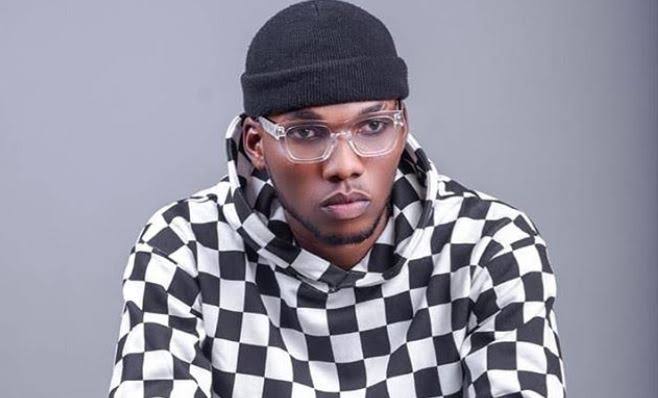
The Kano Court of Appeal has set aside the death sentence on a singer, Yahya Aminu, who allegedly blasphemed against the Prophet of Islam, and ordered a retrial.
Justice Nuradeen Sagir, who is the state Chief Judge, and his co-panellist, Justice Nasiru Saminu, gave the directive in their judgement on Thursday.
They said the first trial was full of irregularities as the appellant was not given legal representation.
According to them, the judgement by an Upper Sharia Court, Hausawa Filin Hockey, contravened section 2-6-9 of the ACJN.
The judges ordered that the case be retried at the same court but that the appellant should be given a fair hearing and should be fully legally represented.
They also ordered that the appellant should be tried by another judge.
Recall that Yahya Aminu Sharif was sentenced to death by hanging by an Upper Sharia Court on August 10, 2020.
His lawyers filed an appeal at the State Appeal Court on October 15, 2020 challenging the death penalty.
Similarly, the appeal filed by Abdul Umar Faruk on alleged derogatory remarks on the Prophet of Islam has been set aside by the court in view of the fact that the person in question was a minor.
Dave Chappelle has tested positive for coronavirus amid a multi-night standup residency in Austin, Texas.
A representative told TMZ that the veteran comedian is currently in quarantine and is experiencing no symptoms. Nevertheless, he has canceled all of his remaining shows scheduled at Austin concert venue Stubb’s.
Chappelle launched the 10-date residency at Stubb’s last week and had been scheduled to perform there through this weekend. Several of the shows featured Joe Rogan as a co-headliner.
Because of social distancing requirements, no individual seats were sold to the shows. Instead, attendees had to purchase a table of four, six, or eight seats. Upon entry into the event, attendees received a rapid COVID-19 antigen test and were asked to wear face masks at all times.
Prior to testing positive for COVID-19, Chappelle was photographed backstage with Rogan, Elon Musk, Grimes, and restaurateur C.K. Chin. In another photo, he posed alongside Musk, Grimes, and comedians Michelle Wolf, Ron White, and Donnell Rawlings. No one was wearing a mask in either photo.
Grimes herself recently battled coronavirus. On January 9th, she confirmed her positive diagnosis in an Instagram Story, writing, “Finally got COVID, but weirdly enjoying the DayQuil fever dream … 2021.”
Ecobank Nigeria says it is partnering Ultima Studios on the Lions’ Den TV reality show to further its aspiration to support entrepreneurs who have good business ideas but need to raise funds for advancement. Managing Director, Ecobank Nigeria, Patrick Akinwuntan who stated this in Lagos reiterated Ecobank’s commitment to be the foremost financial institution in the country providing thought leadership within the Small and Medium Enterprises (SMEs) space and also supporting them with access to financial products and services to succeed. Ecobank is the Lead Sponsor of the TV reality show hitting TV screens in 2021.
Lions’ Den which is being packaged and produced in Nigeria by Ultima Limited, a leading reality television programmes producer in West Africa, is a spinoff of the popular ‘Dragons Den’ and ‘Shark Tank’ in the UK and US respectively. The TV show brings together budding entrepreneurs and innovators with seasoned investors and business leaders to create an avenue where compelling best ideas are supported and funded.
Mr. Akinwuntan said he is optimistic that the show would attract the target group including established SMEs seeking seed or expansion capital , aspiring entrepreneurs and young graduates with bright business ideas. He reiterated that the TV show has a proven track record of appealing to both male and female audiences across the globe.
“ SMEs and entrepreneurs in the country are looking for a viable partner that will help them build sustainable businesses. Customers have become more discerning, they are not looking for any partner, but the right partner – one that is not just providing financial support but is investing in their growth; this is what Ecobank represents. We have been actively supporting SMEs because we recognise them as the engine of growth of any economy. This TV show will further create more entrepreneurs. We are pleased to partner with Ultima Limited who have a pedigree of producing world class programmes such as ‘Who Wants To Be A Millionaire?’ and ‘Project Fame West Africa’. We believe the target group will embrace the programme and at the end of the day, we will achieve our objectives of supporting small businesses and helping aspiring entrepreneurs in the country realize their dreams.”
Recently, the Chief Executive Officer, Ultima Studios, Femi Ayeni said he has reached an agreement with UK-based Sony Pictures Television to produce the Nigerian version of the globally acclaimed business reality television show, ‘Lions’ Den’. He said the show, the first of its kind in Nigeria, is a variation of the original show that was first aired in Japan and has now been produced in over 30 countries. The show targets entrepreneurs who have good business ideas but need to raise funds to advance their business. According to him, Ultima’s choice of Lions’ Den is a celebration of the entrepreneurial spirit of Nigerians, adding that the programme will not only provide exciting viewing for viewers at home, but also provide an opportunity for serious entrepreneurs to attract much-needed investments.
Lions’ Den is the world’s number one business reality show – adapted in over 30 countries worldwide. In summary, five investors listen to pitches from budding and innovative entrepreneurs who present their innovative ideas/ business plans in return for capital. Entrepreneurs with successful pitches on the show do not only obtain investments but also acquire mentors and partners for the lifespan of their business. The show, which appeals to adults 18 -54 years, generates consumer engagement opportunities as well as long term business relationships with participants, both on and off the show. It provides a platform for business education, directly and indirectly expanding on several business concepts such as investments, demand and supply, branding, business accounting and entrepreneurship. Entrepreneurs on the show and those viewing the show will acquire insightful business knowledge, through the questions, comments and suggestions offered by the Lions over the course of the show.
BUA Group has donated three ambulances and 100,000 facemasks to the Yobe State Government.
As COVID-19 cases continue to rise across Nigeria, BUA has donated three ambulances and 100,000 facemasks to the Yobe State Government as part of its social support and humanitarian commitment to combat the COVID-19 pandemic in the country.
Presenting the donations on behalf of the Chairman of BUA Group, Abdul Samad Rabiu at the Government House, Damaturu, Aliyu Idi Hong, Director of Government Relations, BUA Group commended Governor Mai Mala Buni of Yobe State for his tireless efforts in curbing the COVID-19 pandemic in the state.
According to Hong, “So far, the Chairman of BUA Group, Abdul Samad Rabiu has given more than 8 billion Naira worth of support to towards the fight against COVID-19 in Nigeria.”
“With the second wave spreading across Nigeria, we are expanding the scope of our intervention to various states and will continue to support initiatives aimed at helping to curb the spread of the virus in Nigeria,” Hong added.
Reacting, Governor Buni thanked Abdul Samad Rabiu, Chairman/Founder BUA Group, for his humanitarian gesture to the nation especially to Yobe State noting that the “donation is coming at the right time because of the second wave of the pandemic”.
The governor reminded the Yobe people to adhere strictly to the covid-19 preventive measures by wearing facemasks, keeping social distancing and washing their hands.
Regardless of how Ugandans decide to vote in today’s presidential elections, the incumbent Yoweri Museveni will most likely be declared the winner. Museveni has ruled the country for five consecutive terms. He has historically been able to manipulate elections in his favour, because he controls Uganda’s military, judiciary, and Electoral Commission with an iron fist.
Throughout this electoral campaign, however, the long-standing Ugandan president has been upstaged by a formidable young challenger: popular musician-turned-parliamentarian Robert Kyagulanyi, aka Bobi Wine. Since being elected as a Member of Parliament in 2017, the 38-year-old leader of the National Unity Platform has become the new face of Uganda’s opposition.
There are four things worth knowing about Bobi Wine and Uganda’s politics.
Building a movement, defying expectations
Bobi Wine has repeatedly been underestimated by government supporters and critics since he first ran for parliament. He was forced to run as an independent after the two major opposition parties, the Forum for Democratic Change and the Democratic Party, turned him away.
He nevertheless easily won the by-election in the Kyandondo East constituency within Kampala with 78% of the vote. Since then, he has proved himself to be a skilled politician who has successfully built a strong political movement – from scratch.
Within his first two years in office, he forged a reputation as a principled and fearless opponent of Museveni’s policies. He was a leading voice against the president’s ultimately successful effort to remove presidential age limits from the constitution. He also led protests against the government’s proposed tax on social media in July 2018.
Over the course of that same year, he endorsed opposition candidates who went on to win four consecutive parliamentary by-elections.
By 2018, he had created a political pressure group called People Power, Our Power. When the government blocked its registration as a formal political party, Bobi Wine outmanoeuvred the Electoral Commission by aligning himself with a smaller, pre-existing one, which he re-christened as the National Unity Platform. Almost immediately more than 20 MPs left more established opposition parties to join his party.
A target of unprecedented state repression
Bobi Wine has been a regular target of state repression.
The Museveni regime responded to his early successes by repeatedly blocking him from holding concerts and banning the public from wearing People Power’s trademark red berets.
Since being elected, Bobi Wine has been arrested countless times. He has never been convicted on any of the charges. Some of his movement’s members and supporters have been killed, sometimes in suspicious circumstances.
Many have been arrested. Perhaps most notoriously, in August 2018, as he campaigned for a fellow independent candidate in a by-election in Arua in northwestern Uganda, Bobi Wine and at least 35 of his political associates were arrested following dubious reports that Museveni’s motorcade had been stoned. That same night the opposition leader’s driver, Yasin Kawuma, was murdered with a bullet that Bobi Wine believes was intended for him.
In the aftermath of these arrests, the Kyadondo East MP was charged with treason and possession of illegal firearms. Over his next ten days in custody, he was beaten so brutally by government security forces that he could not stand, sit or walk. He eventually sought treatment for his injuries in the US.
International outrage at this incident has not stopped the Museveni regime from escalating its tactics of repression during this election cycle.
The arrests have continued unabated throughout the current campaign. In addition, campaign rallies have been restricted and the government has met opposition supporters with deadly force on multiple occasions. Most tragically, following Bobi Wine’s arrest in mid-November, nationwide protests erupted during which state security forces killed at least 54 people.
In response to these abuses, in early January, Bobi Wine and two other co-claimants filed a 47-page complaint to the International Criminal Court against Museveni and nine of his regime’s security officials, accusing them of gross human rights violations dating back to 2018.
Generational dimension
Uganda’s changing demographics have a great deal to do with Bobi Wine’s electoral appeal. The East African country of 46.5 million people has one of the world’s youngest populations, with a median age of 16.7. Just over one in five Ugandans are between the ages of 15 and 24 and 77% of the country’s population is under the age of 30.
Although these young people have benefited from reforms to public education introduced by the Museveni regime, they see little hope for the future. By some estimates, youth unemployment in Uganda is as high as 70%. Frustrated young people can, therefore, easily identify with Bobi Wine, who grew up in the Kampala ghetto of Kamwokya. Like him, they have only known life under Museveni. He was not even four when Museveni first came to power in 1986.
Bobi Wine has skilfully appealed to this demographic. He frames his political movement in generational terms: the “Facebook generation”, which he represents against the “entrenched interests of the ‘Facelift generation’” of the Museveni regime. He has been able to speak to – and articulate – the deep sense of anger and grievance that young Ugandans feel towards the Museveni regime. In so doing, Uganda’s “Ghetto President” has come to be the face and voice of young people’s collective desire for generational political change.
Populism
In the final weeks of the campaign, Museveni derided Bobi Wine as a populist politician. While this adjective was intended to dismiss his young adversary, there is some truth to this label. In my research, I argue that Bobi Wine’s inclusionary brand of populism has also been a key to his political success.
His use of populist rhetoric has effectively forged a new collective sense of identity among his mostly youthful supporters around the nodal point of “the people” and in antagonistic opposition to the country’s political elite .
But Bobi Wine’s brand of populism is novel because his conception of “the people” is defined not in ethno-nationalist terms (as with right-wing politicians in the US or Western Europe). Rather it’s defined largely in generational ones. This has helped him to build a burgeoning political coalition across ethno-regional lines.
If Bobi Wine’s brand of generational populism proves successful, its repercussions could be felt across Africa. It could serve as a model for opposition politicians who are operating in countries with similar demographic characteristics and facing many of the same political obstacles.
Rep. Liz Cheney, the third-ranking House Republican, said Tuesday she will vote to impeach President Donald Trump, as at least four GOP lawmakers will move to charge the president from their own party with high crimes and misdemeanors.
She is the highest-ranking Republican to call for the president’s impeachment in the wake of last Wednesday’s deadly Capitol Hill riot, which Trump helped incite with lies and incendiary rhetoric.
Rep. John Katko, R-N.Y., earlier said he would support impeachment after the president stirred up a mob that attacked the Capitol while Congress counted President-elect Joe Biden’s presidential win. Reps. Adam Kinzinger, R-Ill., Fred Upton, R-Mich., and Jaime Herrera Beutler, R-Wash., later joined Cheney and Katko. The riot left five people, including a Capitol police officer, dead.
In a statement, Cheney said Trump “summoned this mob, assembled the mob and lit the flame of this attack.”
“Everything that followed was his doing. None of this would have happened without the President,” the Republican conference chair said.
“The President could have immediately and forcefully intervened to stop the violence. He did not. There has never been a greater betrayal by a President of the United States of his office and his oath to the Constitution.”
Vice President Mike Pence said Tuesday evening that he will not try to remove Trump from office by invoking the 25th Amendment.
“I do not believe that such a course of action is in the best interest of our Nation or consistent with our Constitution,” Pence wrote in a letter to House Speaker Nancy Pelosi, D-Calif.
Pence did not specifically mention the impeachment push. However, he did urge Congress “to avoid actions that would further divide and inflame the passions of the moment” as “we prepare to inaugurate President-elect Joe Biden as the next President of the United States.”
The House plans to vote Wednesday on whether to charge Trump with high crimes and misdemeanors. Democrats have said they have enough votes to impeach the president for an unprecedented second time.
In a statement Tuesday evening, Pelosi named nine impeachment managers for the impending trial. Rep. Jamie Raskin, D-Md., will serve as the lead manager. He will be joined by Rep. David Cicilline, D-R.I., Rep. Ted Lieu, D-Calif., Rep. Diana DeGette, D-Colo., Rep. Joaquin Castro, D-Texas, Rep. Eric Swalwell, D-Calif., Stacey Plaskett, the Democratic delegate for the U.S. Virgin Islands, Rep. Joe Neguse, D-Colo., and Rep. Madeleine Dean, D-Pa.
Once the House impeaches Trump, the Senate will decide whether to convict him. The chamber may not have time to vote to remove him from office before Biden takes office a week from Wednesday.
Even so, conviction in the Senate would prevent Trump from holding elective office in the future and he could lose perks given to former presidents.
The House Republicans revealed their stances as The New York Times reported that Senate Majority Leader Mitch McConnell, R-Ky., has told associates he thinks Trump committed impeachable acts. The newspaper did not detail whether McConnell would vote to convict the president if the House sends articles of impeachment to the Senate or whether he would urge Republicans to vote the same way.
More Republicans could join Cheney, Katko and Kinzinger in backing the effort. No House Republicans voted to impeach Trump in 2019 for abuse of power and obstruction of Congress.
“Good for her for honoring her oath of office,” Pelosi said in response to Cheney’s support for impeachment. “Would that more Republicans would honor their oaths of office.”
The move by Cheney, a Wyoming Republican, breaks from House Minority Leader Kevin McCarthy, who has opposed impeaching Trump. He and Minority Whip Steve Scalise, R-La., objected to counting Biden’s certified election victories in Arizona and Pennsylvania after the attack on the Capitol.
Cheney is the daughter of former vice president and Defense Secretary Dick Cheney. He joined the nine other living Pentagon chiefs earlier this month in warning against involving the military in disputes over election results. The Washington Post op-ed came three days before the Capitol attack.
Trump earlier said Democrats’ push to impeach him was dangerous and could spark more violence. Some of his Republican allies have argued the effort would hinder attempts to reduce tensions in the country.
Impeachment supporters have said Congress should not move on until they hold Trump accountable for his supporters’ attempt to disrupt the peaceful transfer of power.
The impeachment article Democratic leaders have appeared to back, titled “Incitement of Insurrection,” accuses Trump of committing high crimes and misdemeanors by encouraging an attack on a co-equal branch of government. It says the president, by lying to his supporters about the election results for two months and then encouraging them to fight the outcome shortly before the invasion of the Capitol, helped to spur the riot.
With days to go before Trump leaves office, the House rushed through the traditional process to bring impeachment to a swift vote in the full chamber. In a report supporting the impeachment measure, House Judiciary Committee staff said Tuesday that Trump “repeatedly sought to overturn the results of the election” and “continued a parallel course of conduct that foreseeably resulted in the imminent lawless actions of his supporters.”
The report goes on to say: “President Trump committed a high Crime and Misdemeanor against the Nation by inciting an insurrection at the Capitol in an attempt to overturn the results of the 2020 Presidential Election. The facts establish that he is unfit to remain in office a single day longer and warrant the immediate impeachment of President Trump.”
CATHOLIC Bishop of Sokoto Diocese, Matthew Kukah, has been called upon to “quickly and quietly leave the seat of Caliphate” or immediately stop his “malicious vituperations against Islam and Muslims” and tender unreserved apology to the Muslim Ummah.
The call by the Muslim Solidarity Forum, Sokoto was contained in a press statement. It came amidst allegations by the Department of State Services of a plot to incite religious violence in some states by some elements working with external forces.
The acting Chairman of MSF, Prof Isa Maishanu, while reacting to Kukah’s Christmas message, stated that Kukah, with his statements, was trying to break the age-long peaceful coexistence between the predominantly Muslim population and their Christian guests.
According to the statement, “In February 2020, he (Kukah) staged a demonstration in the heart of Sokoto over the killing of a single Christian priest, presumably, by the Boko Haram insurgents, but did not consider hundreds of Muslims, Fulani herders that were mercilessly killed by the Christian militia in Taraba state in 2018.”
The statement went further to ask the fiery clergy what he thought would happen if the peace-loving Muslims of the seat of Caliphate, responded to his incessant provocative attacks on them and their religion like what happened in Kafanchan 1987, Zango Kataf 1992, Tafawa Balewa in 1991, 1993, 1995 and 2001, Yelwa Shandam 2004, Zonkwa and Jarkasa in 2011?”
Reacting, the Chairman of CAN in Kaduna State and its National Vice Chairman (19 Northern States and Abuja), Rev. Joseph John Hayab, and Executive Director of FJPD, Kwamkur Samuel, said the Christian Association of Nigeria and the Foundation for Justice Peace Development faulted the quit notice served Bishop Kukah by the forum.
Hayab said, “We have tolerated them so that we can continue together and build a nation of respect for others’ opinion. We, therefore, see this call for an apology from Bishop Kukah by this group as a show of disrespect and a display of complex attitude to abuse our tolerance spirit and our desire for a peaceful Nigeria.
“We see this group as agents of blackmail and intimidation who want to infringe on the right and freedom of expression of citizens, which our constitution guarantees.”
In the same vein, Samuel said, “Those terrorising Nigerians daily are so strong that they are rewarded almost on daily basis with ransom even in foreign currency under the supervision of authority while those crying on pages of papers like Bishop Matthew Hassan Kukah, due to losses, experience and excruciating pains and love for the nation, are easily identified, intimidated and vilified by the same authority that is not able to secure the lives and property of Nigerians.
“I will advise this group of young and energetic Nigerians who are calling for the head of Kukah to join the families of victims of terrorists, kidnappers and bandits in Katsina, Maiduguri, Zamfara and other parts of Nigeria to get to the source and sponsors of killers of Nigerians.”
The future of Africa is on the right tracks all thanks to the selfless and innovative activities The Future Africa Leaders Foundation an initiative of the Rev. Dr. Chris Oyakhilome, with the aim of exploring and expanding the leadership potentials in Africa and for Africa. The foundation was established for identifying, celebrating and supporting young Africans who have demonstrated exemplary leadership by impacting their generation positively through education, youth empowerment and mentoring through other projects aimed at building young people and preparing them for a positive future.
In an event recently in Lagos, the organization showcases some exceptional young people whose selfless contributions to humanity made them worthy to be picked among the top 10 young African leaders between the age of 16 and 23 years from a pool of 30 individuals from 20 African countries to be a recipients of the most sought-after Future African Leadership Awards (FALA) 2020.
The recipients who were honoured with the global recognition awards, which comes with a Star Award Winner that will receive a token amount of $25,000 as a show of encouragement and $10,000 each for other nominees from the founder and chief motivator of the Future Africa Leaders ‘Awards, Rev. Chris Oyakhilome on 31st December 2020 were full of joy and appreciation to God and the organizers they since were going about their functions with no expectation from anybody or even to hope that someone would notice.
Star Award winner, 22 years old Gwei Michael Wawa from Cameroun is a social activist who is passionate about using technology solution for advancement of Africa. His NGO Youths Empowerment through Science and Technology (YEST), has in collaborations with College of Technology impacted 18,000 youths in Cameroun through 34 conferences and 18 seminars.
Other award recipients are 23 years old Christian Majeed Kwesi, from Ghana who has impacted over 3,000 girls and women and also inspired over 10,000 youth through his different programmes; Elsa Cethia Milandou from Congo Brazzaville, who had worked tirelessly to end the suffering of children and youths, she had launched campaign to sensitize young women against unwanted pregnancy, she also distribute foods, sanitizers and washing gel as palliatives to many home during this COVID-19 pandemic outbreak.
Mary Mukueba Julius is a 22 years old recipient from South Sudan who has helped disadvantaged youths in refugee camps in South Sudan and Northern Uganda, she had provide planting seed and teach the youths about farming, she started agricultural projects in 5 refugee camps, she also started 2 greenhouses which fruits, vegetables and herbs were distributed to 14,382 households to across the 5 camps to help sustain them. Others in the top 10 are; 22 years old Victor Emeka Mba from Nigeria, 23 years old Tebogo Moroe from South Africa, 23 years old Michelle Mumba from Zambia, Avante Susan Mafusire from Zimbabwe, 20 years old Aicha Elhaj Mahamat from Chad and 18 years old Mayamiko Banda from Malawi.
The project coordinator Dr. Jumoke Akinsanya, explained that the project is non-religious and it is opened to people of African descent who falls between the age of 16 to 23 years, she state further that the foundation has been organising the awards for the past 8 years and that apart from providing financial help it also provides training opportunities to the participants.
Wole Soyinka, Nobel laureate, says it is best for his sanity to forget about the existence of the administration of President Muhammadu Buhari.
In an interview with Kaftan TV aboard the Lagos-Ibadan train service, Soyinka said one must forget about the government to have a sense of balance.
“I don’t want to talk about Muhammadu Buhari’s administration,” he said when asked if the train service is a plus to the Buhari administration.
“I think it is best for my sanity just to avoid that overall question. I can take bits and pieces of Nigeria’s present predicament but I think for one’s sense of balance, one must forget the existence of the Buhari administration.”
The professor said the train service would boost commerce in the region, narrating how he spent hours in traffic on a trip from Lagos to Abeokuta, Ogun state capital.
“It is a work in progress but it is a very impressive work in progress considering the difficulty of really executing anything in this country,” he said.
“I think we are looking at a virtual transport revolution which is long overdue. I had an engagement in Lagos which I nearly postponed because of the road but for some time I have been saying wait a minute, this thing (train) is supposed to be running and I checked the timetables and I said if I catch the train in Abeokuta I would be in Lagos in an hour and a half, I would be picked up, run around quickly, do my business and here I am.
“I left Abeokuta this morning, I am going back to Abeokuta to eat my Ilafun (yam/cassava flour) and I am going to sleep in my bed this evening.
“It is marvellous. That is what one has been doing in Europe. Why has it taken so long for that to happen here?”
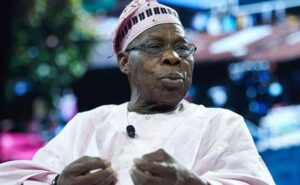
A statement by his media adviser, Paul Ibe, on Monday in Abuja, said Mr Abubakar, former vice president and presidential candidate of the People’s Democratic Party in the 2019 general elections, took the decision because the Muhammadu Buhari government has destroyed the economy.
”It assumed greater urgency in the last last five years, because this Government has been preoccupied with destroying a legitimate business that was employing thousands of Nigerians because of politics,” a part of the statement read.
Mr Abubakar, who was Vice President between 1999 and 2007, said”there should be a marked difference between politics and business.
The statement further said the former Vice President sold his shares in Intels and redirected his investment to other sectors of the economy for returns and creation of jobs.
Mr Abubakar has been having running battle with the Nigerian government over some remittances Intels ought to make into the government’s coffers.