Tinubu: Nigeria Met Non-Oil Revenue Target Early, Unfazed by U.S. Tariffs
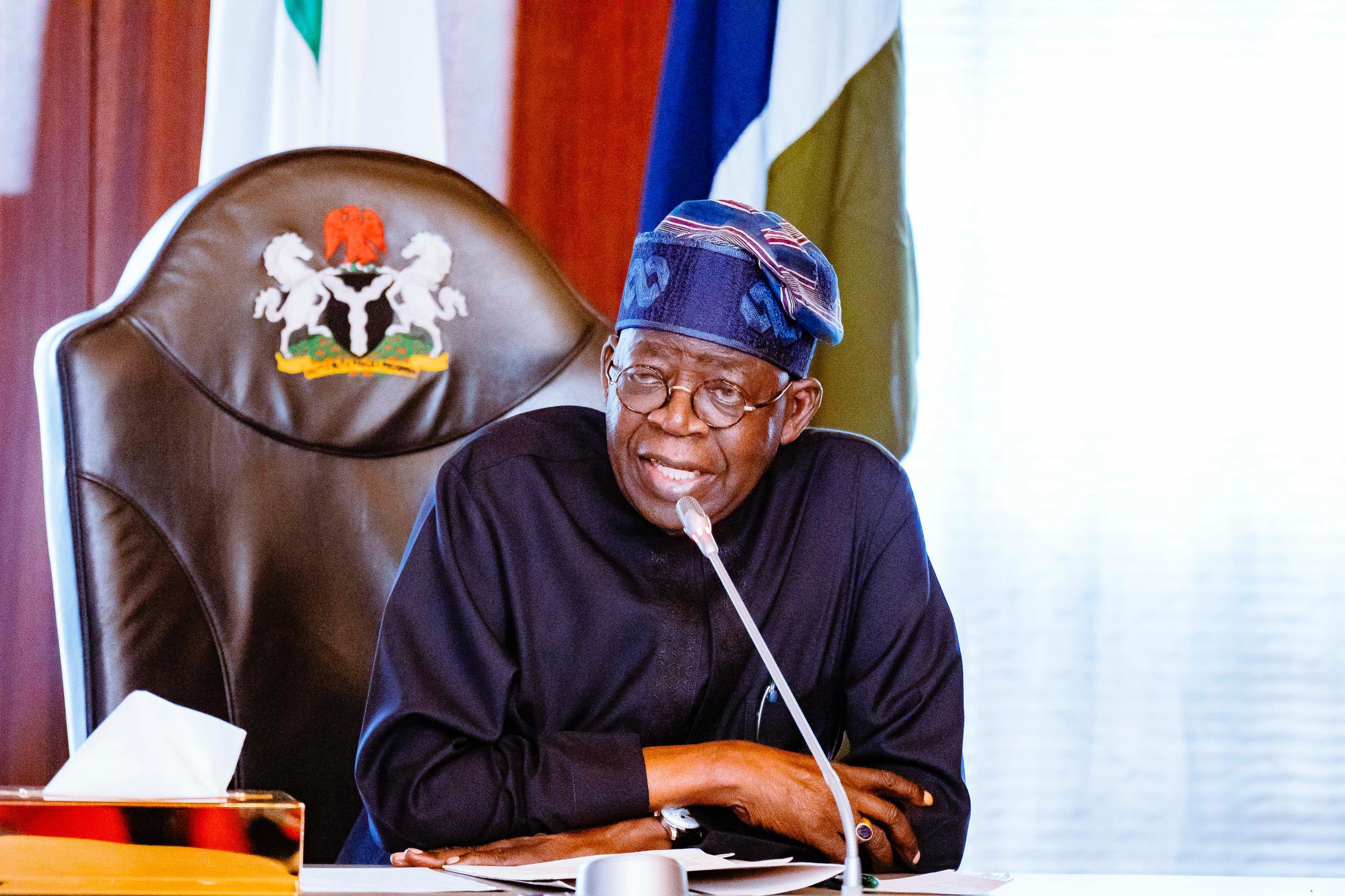
President Bola Tinubu on Tuesday declared that his administration remains resilient and unshaken by U.S. President Donald Trump’s new trade policies, including tariffs targeting Nigerian exports.
Speaking at the Presidential Villa in Abuja while receiving a delegation of The Buhari Organisation led by former Nasarawa State Governor, Senator Tanko Al-Makura, Tinubu said Nigeria’s growing non-oil revenues provide a buffer against external shocks.
“If non-oil revenue is growing, then we have no fear of whatever Trump is doing on the other side,” the President said, noting that Nigeria had already met its 2025 revenue target by August and that the naira had stabilised at around ₦1,450 to the dollar, up from ₦1,900 when he assumed office in May 2023.
Trump, in his second term, has rolled out sweeping trade measures under the “America First” agenda, including a 10 per cent baseline tariff on nearly all imports and additional country-specific levies of up to 50 per cent. Nigerian exports now face a 15 per cent tariff effective August 7, though energy products like oil and gas remain exempt.
Tinubu also cited his government’s agricultural reforms and nationwide mechanisation drive as part of efforts to ensure food security. “If we remove hunger, we have defeated poverty,” he said.
On a lighter note, the President recalled internal clashes with the late Muhammadu Buhari during the 2013 merger talks that birthed the All Progressives Congress (APC). “We even argued over a symbol. He insisted on parliament, and I insisted on broom. He’s so stubborn,” Tinubu recounted to laughter.
The meeting, which also had in attendance Katsina State Governor Dikko Radda and former Governor Aminu Masari, is seen as part of efforts to consolidate APC’s northern bloc ahead of the 2027 elections.
Revolutionizing Nigeria’s Energy Future: The Gbenga Komolafe Story
By Moses Udo
Among the constellation of Nigeria’s leadership, there are individuals whose vision and tenacity do more than just inspire people, they are representation and an architect of transformation. Engr. Gbenga Komolafe, helming the Nigerian Upstream Petroleum Regulatory Commission (NUPRC), is irrevocably one such luminary. His leadership over this critical agency has been exceptionally administrative; it is emblematic of the purposeful reform which has become one of the answers to the clarion calls within the broader framework of President Bola Ahmed Tinubu’s Renewed Hope Agenda.
Komolafe’s leadership is one that has yielded structural innovations, an article which can be likened to a Master builder who is laying the foundation for a high skyscraper. He is constructing a new framework for the Nigeria’s oil and gas industry. And for the record, he has championed non-kinetic strategies to quell crude oil theft, a feat which has remarkably reduced losses to 5,000 barrels per dau, and has stabilized production at 1.7 million barrels per day. Under his Project 1 MMBOPD initiative, there is an expectancy for additional million barrels per day by December 2026. This type of gains are what cannot just be conjured from rhetoric, but only from disciplined execution by a focused leader.
However, what we can call the most compelling evidence of Komolafe’s reformative ascendancy lies in report of N5.21 trillion mid-year revenue generated by the NUPRC in the first half of 2025 alone. To put this in better context, this figure represents a 42.7% of the record N12.2 trillion garnered in the entire year of 2024. Even against the N15 trillion target of 2025, this constitutes 34.7% already achieved in just six months. This is a sterling pace amid global oil market volatility and domestic production challenges. This monetary performance is not merely impressive, it is massive, and undoubtedly transformative.
Moreover, Engineer Komolafe strategies have strengthened the confidence of investors and also repositioned Nigeria’s upstream sector as a reliable sector for the country’s revenue. It’s no mean feat that the nation now holds the largest gas reserves and the second-largest oil reserves in Africa; this enviable status owes much to the labor and strategic framework he has painstakingly put in place.
It is also worth nothing to state that Komolafe’s tenure is equally defined by transparency, sustainability, and inclusivity. In achieving this feat, he has pioneered the Nigeria Gas Flare Commercialisation Programme (NGFCP) and the Carbon Credits Earning Framework, becoming a twin initiative which is positioned at the intersection of environmental responsibility and economic sustainability. These flagship projects aimed at not just eliminating the challenges of gas flaring but also reducing methane emissions, encouraging carbon capture technologies, monetizing the decarbonization strategy, remaining at the vanguard of the country’s energy transition, and promoting sustainable energy practices.
In complementing these, he established the Host Community Development Trusts (HCDTs) and an Alternative Dispute Resolution Centre (ADRC), which help to create a participatory governance and further fostering conflicts resolutions that once marred upstream operations.
Under his leadership, the upstream sector has achieved fiscal discipline through metering reforms, transparent cargo declarations, and simplified royalty frameworks as a result of his adoption of progressive regulation, which is a plan that is rooted in the Petroleum Industry Act (PIA), the 10-Year Regulatory and Corporate Strategic Plan (2023–2033), and the 2024 Regulatory Action Plan.
The Energy Policy Advancement Centre (EPAC) lauded this performance as a salient testament to strategic governance, foresight, and institutional discipline. Their Director-General, Dr. Ibrahim Musa, asserted, “NUPRC has moved beyond passive regulation to active value generation”, and he further emphasized that what sets this leadership apart “is not just the quantum of revenue but the discipline with which it is being pursued”
Musa also praised NUPRC’s debt recovery drive, which yielded $459,226 from outstanding obligations — part of a cumulative $1.436 billion owed from crude oil lifting contracts.
He said: “Debt recovery may not attract headlines, but it is the backbone of fiscal discipline. Every dollar recovered is a step towards stabilising government finances and strengthening our economic resilience. The NUPRC’s persistence in this regard is commendable,”
But why do all these matter within President Tinubu’s Renewed Hope Agenda? At its heart, the president agenda seeks to restore public confidence, strengthens institutional capacity, and rejuvenate Nigeria’s struggling economy. Fortunately for Nigerians, Engr. Komolafe’s conduct encapsulates these ideals. Komolafe is not merely an agent of reform; he is an embodiment of that agenda’s promise. His work is the praxis through which Renewed Hope becomes a loved reality, and more than just a campaign slogan it used to be known for.
History praises visionaries, because they alone perceive possibilities where others see only patches, and Komolafe exemplifies this through his strategic foresight in curbing theft and production stabilizaion within the oil and gas sector. His holistic reforms has integrated environmental imperatives, enshrined accountability within the NUPRC, and created community welfare; His ability to leverage policies and frameworks to recalibrate oil and gas governance has fostered institutional renewal; and his ability to deliver tangible gains for the federation’s revenue base has ensured fiscal prominence.
As we have found ourselves in an era where grandiloquence often eclipses genuine progress, and political ambitions serves personal interest, the tenure of Eng. Gbenga Komolafe in NUPRC is one which has stand among others as impactful, transformative, and substantive. He is not a mere bureaucrat, he is an architect of modern Nigeria’s energy future, who builds a legacy of reforms, and not rhetoric.
His contributions ripple outside the confmes of the oil and gas sector, nourishing the ethos and reinforcing the Renewed Hope Agenda upon which our collective future depends. Thanks to him, the oil Industry is now much more efficient as a result of the implemented strategic reforms which have drastically reduced capital and operational expenditure in oil production.
Indeed, a man of vision is not just an asset but a lodestar to his nation, and In Gbenga Komolafe, we find a man of vision who is unequivocally an invaluable asset to our great nation.
Udo is a public affairs analyst writing from Glasgow, United Kingdom.
FALEKE: Understanding Trust and Loyalty in Leadership
By William Ochonu
Rt. Hon. James Abiodun Faleke stands as a towering figure of loyalty and transformative leadership, his name etched in the annals of Nigeria’s history for his unwavering commitment to public service. Faleke’s career radiates strategic brilliance and selfless dedication.
As President Bola Ahmed Tinubu’s steadfast ally, his pivotal leadership in the 2023 presidential campaign and resolute embrace of the Renewed Hope Agenda have solidified his title as the “dependable ally.” Through his sharp legislative insight, profound humility, and remarkable ability to unite diverse stakeholders, Faleke not only drives Nigeria’s progress but also forges a lasting legacy of trust and sacrifice, paving the way for a united and prosperous future.
Born on December 25, 1959, in Ekinrin Adde, Ijumu Local Government Area of Kogi State, Chief Faleke has built a remarkable career defined by dedication, integrity, and loyalty. Rt. Hon. Faleke’s political journey began with his appointment as the pioneer Executive Secretary of Ojodu Local Council Development Area (LCDA) in Lagos State, a role he held from 2003 to 2004. His diligent service earned him the trust of the people, who subsequently elected him as the substantive chairman of the LCDA for two tenures, serving until 2011.
In 2011, Rt. Hon. Faleke was elected to represent Ikeja Federal Constituency in the House of Representatives, a position he has held with distinction. His legislative contributions, marked by insightful debates and impactful work, have been notable. He has served as Chairman of the House Committee on Anti-Corruption, National Ethics and Values, and later as Chairman of the House Committee on Finance, earning widespread respect for his commitment to public service.
Rt. Hon. Faleke’s exemplary performance, patriotism, and steadfast support for both President Bola Ahmed Tinubu and the All Progressives Congress (APC) culminated in his appointment as the National Secretary of the APC Presidential Campaign Council for the 2023 election. His strategic leadership and dedication were pivotal to the campaign’s success.
If a new word were to be added to the Oxford Advanced Learner’s Dictionary as a synonym for loyalty, it would undoubtedly be Rt. Hon. James Abiodun Faleke. His unwavering faithfulness to President Tinubu is legendary, comparable to few in Nigeria’s political history. For instance, the bond between Sir Ahmadu Bello, the Sardauna of Sokoto and Premier of Northern Nigeria, and Alhaji Maitama Sule, a close associate, exemplified such loyalty.
Maitama Sule’s dedication to Bello’s vision for Northern Nigeria mirrors the commitment Faleke demonstrates. Similarly, Anthony Enahoro’s unwavering loyalty to Chief Obafemi Awolowo’s ideals reflects the same steadfast allegiance Faleke shows toward Tinubu’s vision.
In the complex dynamics of principal-agent relationships in politics, where loyalty can waver amid power and wealth, Rt. Hon. Faleke remains a beacon of trust and dependability. His loyalty to President Tinubu has been proven time and again, most notably through his strategic and decisive contributions to Tinubu’s emergence as president during the 2022–2023 campaign. Despite daunting challenges, criticism, and opposition, Faleke’s resolute support for Tinubu’s Renewed Hope Agenda has earned him the moniker “dependable ally” and “workhorse” from the President himself.
Faleke’s commitment is further reflected in his alignment with Tinubu’s governance priorities, including transparency, anti-corruption, and youth empowerment. As Chairman of the House Committee on Finance, he has consistently championed these ideals, demonstrating his belief in the President’s vision through his public stands and legislative efforts.
A man of integrity and reliability, Faleke has never taken his decades-long relationship with President Tinubu for granted. Instead, he has worked tirelessly as a servant of the President’s agenda, prioritizing empowerment, inclusivity, and teamwork. His leadership style mirrors Tinubu’s, reflecting a shared commitment to building a united and progressive team without pursuing personal political ambitions.
Faleke’s trustworthy demeanor has inspired confidence in others, who rely on his sense of responsibility, compassion, and understanding. His humility and approachable nature have become a source of strength, drawing many to President Tinubu’s camp. By valuing others’ input and consistently following through on commitments, Faleke has earned respect and built a strong track record as a leader.
Strategically aligned with President Tinubu’s vision, Faleke’s legislative contributions and innovative insights make him an effective confidant and advisor. His ability to navigate complex challenges and deliver results has solidified his reputation as a dependable leader. President Tinubu trusts Faleke’s judgment, often seeking his counsel on critical issues, leveraging his deep experience to shape policies and decisions.
Faleke’s emotional intelligence, humility, and collaborative spirit have positioned him as a vital bridge between President Tinubu and various stakeholders. His ability to connect with people from diverse backgrounds has earned him recognition as a unifying force in Nigerian politics. His tireless work ethic and passion for results underscore his commitment to public service.
Indeed, Rt. Hon. James Abiodun Faleke has proven beyond doubt that he is willing to go to great lengths for President Tinubu. As a kingmaker in Abuja, he works relentlessly to achieve results, embodying the essence of trust and loyalty in leadership.
Ochonu is a public affairs analyst writing from Abuja.
PMAN Backs Police Report on Kukwaba Land Dispute, Cuts Ties with Olusc
Abuja, Nigeria — The Performing Musicians Employers’ Association of Nigeria (PMAN) has endorsed the findings of the Inspector-General of Police (IGP) Monitoring Unit on alleged fraudulent activities linked to Olusco Heritage & Investment Ltd and its Managing Director, Mr. Olufemi Olumeyan, in relation to Plot 504, Kukwaba, Abuja.
According to the police investigation, there is a prima facie case of fraud, intimidation, violence, and breach of peace arising from unauthorised dealings on the land. PMAN, the rightful title holder, said the report confirms long-standing concerns about irregular transactions and thanked the police for their professionalism.
The controversy began in 2023 when PMAN signed a joint venture agreement with Olusco. The agreement, however, was subject to the payment of a premium which Olusco never fulfilled, leaving it unenforceable. Despite this, Olusco allegedly went ahead to advertise and sell portions of the land.
PMAN said the situation worsened after Olusco requested that foreign investment funds be paid into a personal account, a move the association rejected. Later, it emerged that Olusco had struck a separate ₦350 million development deal with G & D Building & Engineering Ltd before disputes arose, leading to petitions to the police.
The Monitoring Unit also flagged the involvement of former PMAN officials, including Mr. Boniface Itodo and entertainer Mr. Zakky Azzay, who were accused of impersonating executives after their dismissal, thereby misleading the public and aggravating the crisis.
On December 7, 2024, PMAN formally terminated its arrangement with Olusco, citing breaches and risks to the public. The association has since tightened security on the site with police support. During one operation, officers dispersed trespassers, and one person sustained a minor injury while fleeing. PMAN clarified that no shots were fired, countering sensational online reports.
National President, Pretty Okafor, said PMAN’s focus is now on accountability and protecting members of the public. “Anyone who paid money to unauthorised parties should come forward. We are working with the IGP Monitoring Unit and EFCC to trace funds, identify victims, and ensure justice,” he said.
PMAN stressed that no sale or allocation on Plot 504 is valid without its written approval and urged potential buyers to exercise caution
Adron Homes Chairman Hosts NSE Ibeju-Lekki Executives, Explores Strategic Partnership
Left to Right- Vice Chairman NSE Ibeju-lekki Branch, Engr. Tirimisiu Bello, Managing Director, Adron Group, Adenike Ajobo, Chairman/CEO Adron Group, Sir Aare Adetola Emmanuelking KOF, Chairman NSE Ibeju-lekki Branch, Engr. Olufemi Dare FNSE, Chief Operating Officer, Construction Project and Housing Design, Adron Homes, Tsgt. Oyetola Adeolu
The newly approved Ibeju-Lekki Branch of the Nigerian Society of Engineers (NSE), which recently emerged as the 91st branch of the Society, has paid a courtesy visit to the Chairman/CEO of Adron Homes and Properties Limited, Sir Aare Adetola EmmanuelKing KOF, at the company’s headquarters.
The delegation of engineers, led by Engr. Olufemi Dare, FNSE, the Chairman of the Branch, described the visit as a strategic step towards strengthening relationships with corporate organizations that have consistently upheld professionalism and structural integrity in their projects.
In his remarks, Engr. Dare praised Adron Homes for its exceptional commitment to quality housing delivery across Nigeria and beyond, emphasizing that the company’s reputation for structural integrity and innovation in real estate development stands as a reference point for engineering excellence. He further informed the Adron Chairman that the branch would be conferring an award of recognition on him at their forthcoming official inauguration ceremony, in acknowledgment of his outstanding contributions to housing development and infrastructural growth in Nigeria.
The discussions also explored potential partnership opportunities between NSE Ibeju-Lekki and Adron Homes in areas relating to engineering, professional development, and sustainable housing innovations.
Responding, the Chairman of Adron Homes, Sir Aare Adetola EmmanuelKing, warmly welcomed the delegation and expressed delight at the prospect of a lasting partnership. He acknowledged the critical role engineers play in national development, while also noting the numerous challenges facing the engineering sector in Nigeria. He stressed that these challenges can only be surmounted by engaging qualified and dedicated professionals, a principle upon which Adron Homes has built its reputation.
According to him, “Engineering is the backbone of any meaningful infrastructural advancement, and as developers, we cannot afford to compromise on professionalism. This is why i am excited about this partnership and look forward to building a mutually beneficial relationship with NSE Ibeju-Lekki branch.”
The NSE Ibeju-lekki delegation included Engr. Tiramisu Bello, MNSE (Vice Chairman); Engr. Omolola Adetola, FNSE (General Secretary); Engr. Taiwo Musa, MNSE (Assistant General Secretary); Engr. Ayodele Agunloye, MNSE (Financial Secretary); Engr. Opeyemi Olabisi, MNSE (Technical Secretary); Engr. Oluwadare Raji, MNSE, among several others.
On the part of Adron Homes, the Chairman was joined by key members of the executive team, including Adenike Ajobo, Managing Director; Tolani Roberts, Deputy Managing Director, Business Investment and Development; Mr. Kunle Ifeanyi Konwea, Director of Brand and Communications; Maureen Echefu, Chief Press Secretary, among others.
The visit not only highlighted Adron Homes’ enduring commitment to professional engineering standards, but also set the tone for a new chapter of collaboration between the real estate giant and the newly inaugurated NSE Ibeju-Lekki Branch, with both parties pledging to drive innovations that will redefine housing and infrastructural development in Nigeria.
Aare Adetola EmmanuelKing Congratulates Hon. Adesola Ayoola-Elegbeji on Election Victory
The Chairman/CEO of Adron Group, Sir Aare Adetola EmmanuelKing KOF, has congratulated Hon. Adesola Ayoola-Elegbeji on her resounding victory in the just concluded by-election for the Remo Federal Constituency seat in the House of Representatives.
In a goodwill message issued by him, he described the victory as “a historic moment for the Remo people, coming at a time when the constituency yearns for a leader with vision, courage, and genuine commitment to service.”
He noted that the outcome of the election was an attestation to the trust and confidence reposed in Hon. Ayoola-Elegbeji by the people, adding that her sterling qualities, integrity, accessibility, and compassion for the grassroots had endeared her to the electorate.
“The overwhelming support you garnered at the polls is proof that you are the right voice at the right time to carry the aspirations of Remo to the national stage,” he stated.
While acknowledging that the by-election followed the painful demise of the late Hon. Adewunmi Oriyomi Onanuga (Ijaya), Aare Adetola EmmanuelKing said Hon. Ayoola-Elegbeji’s emergence symbolizes the continuity of purposeful representation. He expressed confidence that she would not only sustain the legacy of her predecessor but also surpass it with new energy, innovative ideas, and progressive leadership.
The Adron Group Chairman further prayed for divine wisdom, strength, and compassion for the Member-Elect as she assumes office, expressing confidence that her tenure will usher in meaningful development, economic empowerment, and greater opportunities for the people of Remo Federal Constituency.
UBA to Empower Female Entrepreneurs, Drive Financial Inclusion with N5 Billion BOI MSME Fund
Africa’s global bank, United Bank for Africa (UBA) Plc, has secured a N5 billion loan facility from the Bank of Industry (BOI), to boost key sectors of the economy and support the growth of sustainable and viable businesses in the country, especially the micro, small, and medium enterprises (MSMEs) owned by women.
The facility disbursed through the Federal Government’s MSME Fund, is designed to stimulate key sectors of the economy, while offering affordable financing to support businesses, with a primary focus on Green Energy, Education, Healthcare, and Women-Owned Enterprises.
UBA’s Group Managing Director/CEO, Oliver Alawuba, who spoke about the facility emphasised the bank’s commitment to fostering economic growth by empowering MSMEs, which he described as the “livewire of any developing economy.
He said, “At UBA, we recognize the pivotal role MSMEs play in driving economic development, and how they make up a sizeable portion of what drives our economic growth. It is in this vein that we have decided not to rest on our oars by facilitating initiatives dedicated to empowering businesses with the financial support they need to thrive.”
Alawuba maintained that, “by offering loans at a competitive 9% interest rate with a three-year tenor, we are removing the traditional barriers that hinder SME growth in Nigeria and Africa. And by this, our message to business owners is simple: Don’t let this once-in-a lifetime-opportunity elude you,”
The facility provides a maximum loan amount of N5million per obligor, with a three-month moratorium on principal repayments, ensuring businesses have ample time to stabilise before they begin to service the loans.
UBA’s Group Head of Retail and Digital Banking, Shamsideen Fashola who highlighted the strategic importance of the targeted sectors to the nation’s continued growth, noted that the initiative will strengthen financial inclusion and set the country and indeed the continent on the path of sustainable development.
“We are structuring this facility to align with our broader mission of financial inclusion and economic empowerment. For us at UBA, we will be targeting Green Energy, Education, Healthcare, and Women-Owned Enterprises, which are critical to Nigeria’s sustainable development,” he noted.
Continuing, he said, “This facility is structured to ensure that businesses in these sectors can access affordable funding, expand their operations, and contribute meaningfully to the economy. We are excited to partner with BOI to make this a reality.”
Also speaking at the loan facility unveiling, Group Head, Marketing and Corporate Communications, Alero Ladipo, took time to highlight the competitive interest rate and government backing as well as urge business owners, especially women to take advantage of the initiative.
“What sets this program apart is its accessibility and affordability. We have worked closely with stakeholders to ensure the terms are business-friendly because we understand the challenges entrepreneurs face. I urge eligible businesses to visit any UBA branch or the bank’s official website to begin their application process right away,” Ladipo stated.
United Bank for Africa is one of the largest employers in the financial sector on the African continent, with 25,000 employees group wide and serving over 45 million customers globally. Operating in twenty African countries and the United Kingdom, the United States of America, France and the United Arab Emirates, UBA provides retail, commercial and institutional banking services, leading financial inclusion and implementing cutting edge technology
Eyewitness Account: Dangote Truck not responsible for Auchi Accident
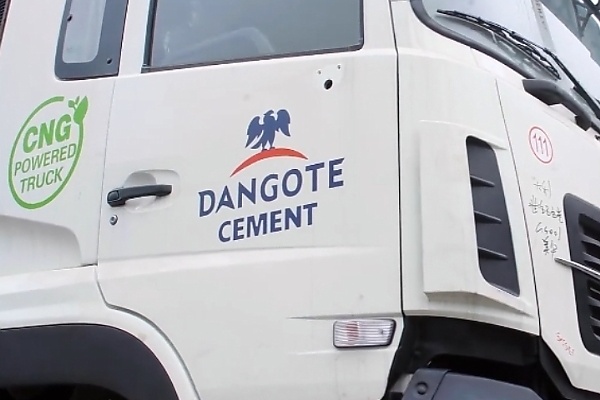
Dangote Cement truck did not cause the tragic accident, which occurred on the Auchi-Okpella-Okene road, near Omega Fire Ministry in Auchi, Etsako West Local Government Area of Edo State, contrary to online reports.
An eyewitness, Audu Omale, who gave a vivid account of the accident, recalled that “a third-party truck loaded with cement was moving in the opposite direction of the Dangote Cement (DCT) CNG truck on a slopy road. The commercial truck driver lost control of his truck due to a suspected brake failure, ran into a moving vehicle, a motorcycle and eventually crashed into the side of the DCT truck. The DCT CNG truck caught fire in the process.
“Consequently, three persons from the vehicle hit by the third-party truck lost their lives while two persons sustained varying degrees of injuries and were rushed to a nearby hospital for treatment. The DCT truck driver escaped to avoid mob attack,” Omale clarified.
In a related development, the Police Public Relations Officer (PPRO) of the Edo State Police Command, CSP Moses Yamu, confirmed that the accident involved two trucks, one belonging to Dangote Cement, another truck, which has not been identified, and a GLK Mercedes Benz car.
The Edo PPRO noted that all the three occupants in the GLK were confirmed dead in the hospital while the Dangote truck caught fire which was brought under control.
“I can confirm to you that three vehicles were involved in an accident in Auchi at midday, two trucks and one GLK Benz. The police moved to the scene of the accident and evacuated three occupants of the GLK to the hospital where they were confirmed dead.
“Two of the vehicles involved were trucks, one belonging to Dangote Cement and another unidentified one. The Dangote truck caught fire and was brought under control,” Yamu stated. He added that investigation was ongoing.
PASSEC Uncovers Forgery, Fraud under ASSBIFI President, Petitions Labour Minister
The Pan-African Society for Social and Economic Change (PASSEC) has formally appealed to the Honourable Minister of Labour and Employment, urging immediate action concerning serious allegations of forgery, fraud, and financial mismanagement within the Association of Senior Staff of Banks, Insurance and Financial Institutions (ASSBIFI).
The organisation claimed that the issues stem from the controversial leadership of Mr. Olusoji Oluwole, who was allegedly imposed as the National President following manipulated elections in 2022 that deprived the legitimate President-elect of the Association, Comrade Amina Danesi, who emerged after a free and fair election of her rightful mandate.
In a letter addressed to the Minister, PASSEC alleged that, Mr Oluwole’s appointment was facilitated through fraudulent means.
According to the society, Oluwole’s employment with Sterling Bank was terminated in 2020, rendering him ineligible for leadership under the Trade Union Act.
It was alleged that forged employment records—including falsified payslips, pension documents, and tax information—were produced with the complicity of certain staff members within Sterling Bank’s Human Resources Department.
The letter emphasised that the Managing Director of Sterling Bank may be unaware of these fraudulent activities, which could have significant implications for the bank’s reputation and operational integrity.
PASSEC argues that these developments not only jeopardize the credibility of ASSBIFI but also posed a threat to the principles of trade unionism in Nigeria.
Adding to the gravity of the situation, PASSEC claims that over N300 million has been misappropriated since Mr. Oluwole’s leadership began in November 2022.
The organization further alleged that officials within the Ministry of Labour have ignored formal petitions submitted by aggrieved ASSBIFI members, calling into question the transparency and accountability of the Ministry’s oversight role.
In light of these allegations, PASSEC has called for several urgent actions from the Ministry of Labour and Employment:
The union called for independent investigation into Oluwole’s current employment status, to be conducted jointly by the Ministry and Sterling Bank and a formal request for Sterling Bank to release Oluwole’s original payslip, pension, and tax records from 2020 to present.
Also a directive to the Trade Union Congress (TUC) to suspend recognition of the disputed ASSBIFI leadership pending investigation results and referral of the matter to relevant law enforcement agencies—including the Economic and Financial Crimes Commission (EFCC), Department of State Services (DSS), Central Bank of Nigeria (CBN), and Independent Corrupt Practices Commission (ICPC)—for thorough investigation and potential prosecution.
And the initiation of a process to restore lawful leadership within ASSBIFI based on its constitution and the will of its members, which originally elected, Comrade Amina Danesi in a free and fair election on November 12, 2022.
Comrade Basah Mohammed, Executive Director of PASSEC, stressed the need for prompt intervention by the Minister to uphold the integrity of Nigeria’s trade union system and prevent a precedent of fraudulent leadership.
“We stand ready to cooperate with your Ministry and relevant agencies to ensure that justice is served and the sanctity of public and labour institutions is upheld,” he said.
As this situation unfolds, all eyes will be on the Ministry of Labour and Employment to respond decisively to these serious allegations that threaten not only ASSBIFI but also the broader landscape of labour governance in Nigeria.
AFRIMA 2025: FG, Lagos State Declare Readiness to Host Africa In November at Patron’s Dinner with the Jury
L-R: AFRIMA Jury members, Anthony Joseph, (Eastern Africa), Victoria Nkong, Associate Producer, AFRIMA, Motolani Alake, (Nigeria, West Africa),Messie Mboukoud, (Central Africa), Kobele Keita, (Diaspora, North America), Neza Guy, (Côte d’Ivoire, West Africa), AFRIMA President/Executive Producer, Mike Dada, Lagos State Commissioner for Tourism, Arts and Culture, Mrs. Toke Benson-Awoyinka, AFRIMA Chief Experience Officer, CXO, Aderenle Niyi, Lucy Ilado, (Eastern Africa), Delani Khalima , (Zimbabwe, Southern Africa) and Marwane Fachane, (Northern Africa), at the AFRIMA 2025 Patron’s Dinner with the Jury held on Thursday, August 14 at Victoria Island, Lagos, Nigeria
It was a dazzling evening of elegance, warmth, and celebration as the All Africa Music Awards, AFRIMA, hosted its 2025 Patron’s Dinner with the International Jury in Lagos, Nigeria.
The gathering brought together policymakers, stakeholders in Africa’s creative economy, music executives, artists, media representatives, and AFRIMA’s international jurors from 14 countries who are responsible for ensuring the credibility of Africa’s global music awards.
The event was hosted by AFRIMA Patron, Dr. Bisi Onasanya, Chairman of The Address Homes.
This year’s jury session has brought together jurors from across the five regions of Africa and the diaspora in Lagos, Nigeria. For over a week, they worked tirelessly to select nominees from a total of 10,717 entries received for AFRIMA 2025. The AFRIMA 2025 Nominees List will be announced to the public on August 24, following the conclusion of the adjudication process.
Barrister Hannatu Musawa, Nigeria’s Minister of Arts, Culture, Tourism and the Creative Economy, who led a strong cast of dignitaries to the event, praised AFRIMA’s global impact.
“AFRIMA is a testimony of how the creative sector in Nigeria has developed to a global standard, even without strong government backup. We are proud of what AFRIMA stands for and the impact it has made in Africa and on a global scale, projecting our identity, culture, language, and music. As a government, we will continue to support initiatives like this not just because it celebrates art but because it strengthens the economy and unites us,” she said.
Representing the Lagos State Government, Commissioner for Tourism, Arts and Culture, Toke Benson-Awoyinka, assured stakeholders, artistes, and fans across Africa that the State is fully prepared to welcome the continent and the rest of the world.
Benson-Awoyinka, who was joined at the event by the Lagos State Commissioner for Information and Strategy, Gbenga Omotosho, said, “I think we are in the right place at the right time. For us in Lagos, hosting AFRIMA 2025 is not just another event; it is a big honour. People say we are the culture and entertainment capital of Africa, and we are ready to welcome the whole continent and the world to our city for this great event. We thank the Federal Government, our partners, and all those supporting AFRIMA for trusting Lagos to host again.”
In collaboration with the African Union Commission, AFRIMA 2025 is being organised alongside the Federal Government of Nigeria and the Official Host City, Lagos State.
For the Patron, Dr. Onasanya, who was acxompanied to the event by his wife, Mrs Olufunke Onasanya, families and friends and business mogul,Chief Musa Danjuma and Dayo Adeola, the focus is on creating a sustainable legacy and delivering the best AFRIMA yet.
“Tonight, we proudly recognise the incredible work of our jury members and say a big thank you to them. This year, we are excited to welcome Africa to AFRIMA. Africa and the rest of the world will see an amazing show in Lagos because we are confident of organising a successful event. I sincerely thank the Federal Government of Nigeria and our Official Host City, Lagos State, for their tremendous support, as well as our sponsors and every stakeholder who believes in AFRIMA. The last edition was fantastic, but I assure you that AFRIMA 2025 will be the best”
One of the jury members, Guy Neza, an Ivorian who is representing West Africa on the panel, said, “It has been an amazing journey for me to be part of this journey. Africa is full of amazing talent, and it makes me happy to see our music and creativity receiving the recognition they deserve, as AFRIMA is the continent’s biggest music entity. Every artist who sends in their work is helping our creative industry grow stronger. With the quality of music we have screened, I can confidently say that the future of the industry is promising.”
AFRIMA President and Founder, Mike Dada, thanked the jury, patrons, and creative stakeholders for their role in sustaining AFRIMA’s growth and success.
“I am truly grateful for the support from every corner of our creative industry; from the Federal Government of Nigeria, our Official Host City, Lagos State Government and Governor Babajide Sanwoolu, our Patron, to the media, to the artists, producers, and record executives. It is inspiring to see us working hand in hand with one shared goal to elevate Africa’s global music. We said at the beginning of this journey that we would not joke with the credibility of this awards; we insisted that any artist who will be nominated or win award must submit their work to qualify and this patron’s dinner is our way of honouring the AFRIMA jury, who dedicate their time to carefully select the finest talents from thousands of entries for nomination in their rightful categories,” he said.]
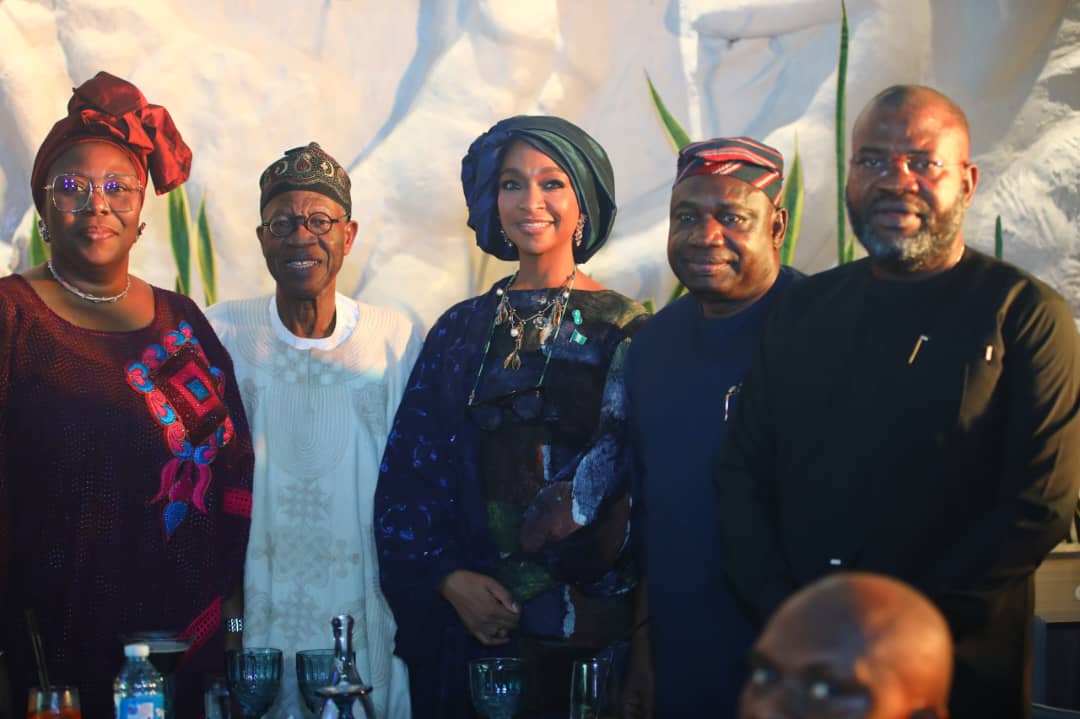
L-R: Lagos State Commissioner for Information and Strategy, Mr. Gbenga Omotoso, founder, Africa International Film Festival, AFRIFF, Chioma Ude, Minister of Arts, Culture & Creative Economy, Hannatu Musawa, President/Executive Producer, All Africa Music Awards, AFRIMA, Mike Dada, Lagos State Commissioner for Tourism, Arts and Culture, Mrs. Toke Benson-Awoyinka, AFRIMA’s Patron, Dr. Bisi Onasanya and former minister of Information and Culture, during the AFRIMA 2025 Patron’s Dinner with the Jury held on Thursday, August 14 at Victoria Island, Lagos, Nigeria
Guests were also treated to a soulful performance by fast-rising star Qing Madi. Adding to the sparkle of the night were appearances from music stars Ice Prince Zamani, Orezi, Praiz, and DJ Nana, among others.
The roll call of high-profile dignitaries included Lai Mohammed, former Minister of Information and Culture; media moguls Kenny Ogungbe, Dayo Adeneye and Id Ogungbe; respected journalists Mayor Akinpelu, Ayo Aminu, Mojeed Jamiu, Azu Arinze; Founder of AFFRIF, Chioma Ude, media and Entertainment personalities Olisa Adibua, Ali Baba, Sunday Are, Ehiz and Uti Nwachukwu, among others; alongside other notable figures from the arts, culture, and media space.
The AFRIMA 2025 celebration is set to take place from November 25 to 30 in Lagos. The week-long show will include a variety of events, such as the Welcome Soiree, the AFRIMA Music Village, the African Music Business Summit, a Host City Tour, the Nominees Party, and the main awards ceremony. This ceremony will be broadcast live to over 84 countries.
Lagos State Commissioner for Tourism, Arts and Culture, Mrs. Toke Benson-Awoyinka, former minister of Information and Culture, Lai Mohammed, Minister of Arts, Culture & Creative Economy, Hannatu Musawa, Lagos State Commissioner for Information and Strategy, Mr. Gbenga Omotoso, and President/Executive Producer, All Africa Music Awards, AFRIMA, Mike Dada during the AFRIMA 2025 Patron’s Dinner with the Jury held on Thursday, August 14 at Victoria Island, Lagos, Nigeria