The Nigeria Governors’ Forum has commiserated with the Niger State Government on the flood, which has claimed many lives in the Mokwa Local Government Area of the state.
In a statement signed by the NGF chairman, AbdulRaman AbdulRazaq, on Friday, the forum said that it was shocked by the magnitude of the flood, which has claimed many lives and property in the community.
However, it commiserated with Governor Usman Bago, the government, and the people of the state for the loss of lives and property.
It would be recalled that no fewer than 21 people had died and property worth millions of Naira had been damaged by the flood which ravaged Mokwa in the state.
AbdulRazaq, who is the governor of Kwara State, wrote, “The Nigeria Governors’ Forum stands in solidarity with the government and people of Niger State on the devastating flood that has wreaked huge havoc in Mokwa town of the state.
“We are shocked by the magnitude of the flooding, which has resulted in the loss of lives and properties in the community.
“We sincerely commiserate with the affected families and express our support to the state government at this difficult time.
“We also commend the interventions of the Niger State Government and its coordination with the emergency responders to support the victims of this disaster.
“This flood again reminds us of the stark realities of climate change and the accompanying effects on how we live. We commit ourselves as leaders of our people to continue to work with the Office of the National Security Adviser (ONSA) and the National Emergency Management Agency (NEMA) to not only help our people cope with this global challenge but also to strengthen mitigative actions and relief institutions.
“We pray God to console families who have lost loved ones and properties in the Mokwa incident, and we urge citizens to support the government’s efforts to mitigate the impacts of climate change and to cooperate with agencies working to assist those in urgent need at this time.”
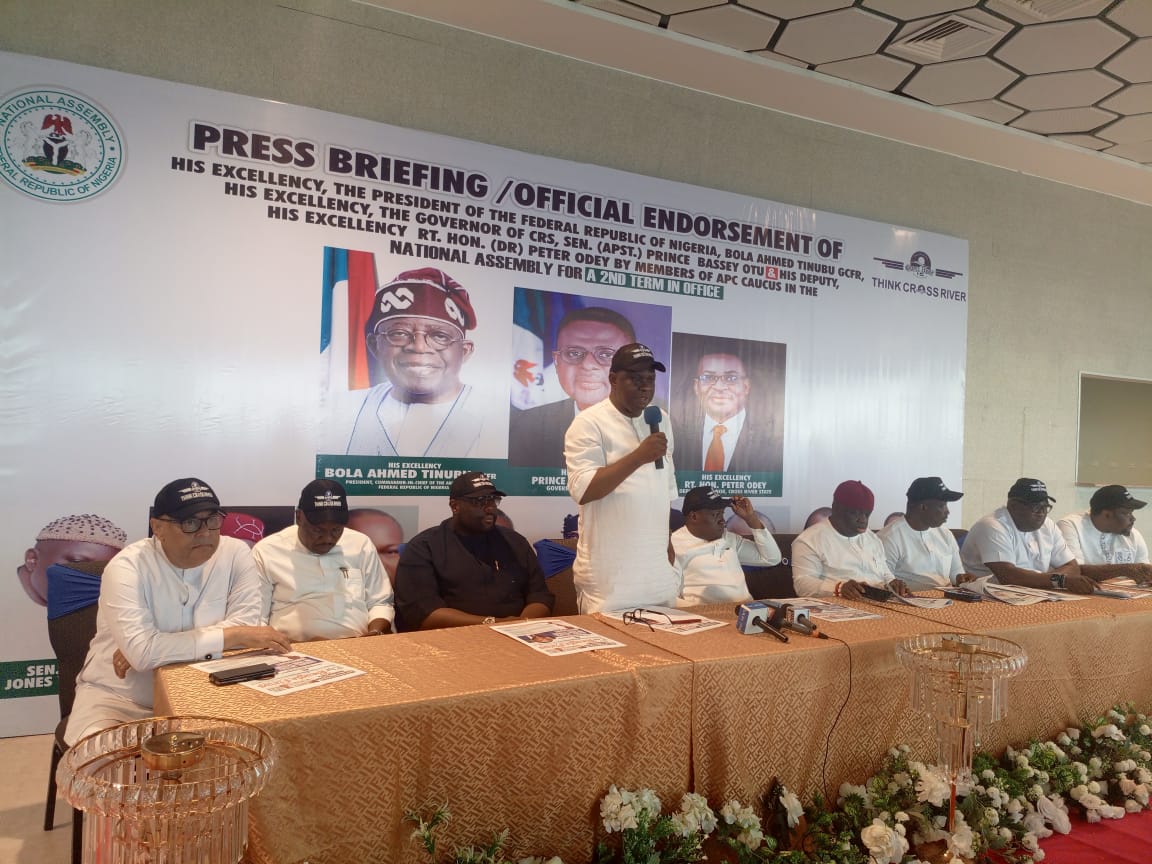
Ahead of the 2027 general elections, all National Assembly members from Cross River State have endorsed President Bola Tinubu and Governor Bassey Otu for a second term in office.
The endorsement was delivered under the banner of the ruling All Progressives Congress Caucus in the state within the party’s structure across the Senatorial districts and 18 local government areas of the state.
Speaking to newsmen and supporters on Thursday in Calabar, the Caucus Chairman and Senator representing Cross River Central Eteng Williams, described the endorsement as a collective and deliberate decision, urging all people of the state to rally behind Otu and Tinubu for a second term.
He said, “Our president has done so well, and for us in the National Assembly, we have seen it, especially the Lagos-Calabar Coastal Highway, which you and I shall enjoy.
“For that reason, we endorse him for a second term so that the road can be completed. Let us all vote for President Tinubu as our sole candidate for the 2027 elections.”
Williams applauded Tinubu for the student loan initiative and infrastructure development across the geopolitical zones in the country, as well as other developmental strides in other sectors of the economy, including the oil and gas industry, describing him as a courageous leader.
He further noted that Otu has made visible progress across the state, including the rehabilitation of the state library and the improvement in security through the recently launched Operation Okwok.
“Today, what we have seen is enough for us to go back and sleep and ask Sen. Bassey Otu to continue the good works.
“Our governor has done well and deserves our accolades. We are not mincing words; we are asking that he continue his good works in the state. So we endorse him for a second term,” he added.
In his remarks, Mike Etaba, representing Obubra/Etung Federal Constituency, stated that the endorsement is intended to allow both leaders to focus on governance without distractions.
On his part, Bassey Akiba of Calabar Municipality/Odukpani Federal Constituency echoed the same sentiment, aligning the endorsement with legislative practice.
A former chairman of the Peoples Democratic Party in Oyo State, Kunmi Mustapha, on Thursday, backed Governor Seyi Makinde for President in 2027.
Mustapha, in a statement he signed in Ibadan, the state capital, to mark Makinde’s sixth anniversary as governor, said the bravery and leadership qualities the governor exhibited placed him a better candidate for the presidency.
“The current situation of the main opposition party in Nigeria is not an indication that the PDP cannot snatch power at the centre in 2027.
“Makinde’s giant strides in developing the state and his contributions to the progress of Nigeria are unequal,” he said.
He urged Nigerians to look out for real politicians who have their welfare at heart, rather than those who create suffering for them.
“Makinde has distinguished himself as a brave man who exhibits uncommon leadership traits.
“There has not been any politician in Yorubaland, apart from Pa Obafemi Awolowo, who has a vision for the development of the masses and put all his heart into actualising those visions.
“Urban renewal, education, health and infrastructural revamping are part of where he scored greatly, not to talk of promotion of agri-economy, workers’ welfare, unequal employment drive and care for the elderly and other neglected population of the state since he assumed office in 2015,” he said.
Mustapha, who is also the Special Adviser to Makinde on Political Affairs, said, “Come rain or shine, we commit our loyalty to him. We, therefore, urge him to start working towards 2027.”
The party chieftain appreciated the efforts of the acting PDP National Chairman, Umar Damagum, the Deputy National Chairman (South), Taofeek Arapaja, BoT member, Chief Bode George and other national leaders for their efforts in uniting the party.
The All Progressives Congress has commended President Bola Tinubu for his bold and transformative economic reforms, declaring that they have significantly stabilised Nigeria’s macroeconomic fundamentals and repositioned the country for sustainable growth.
In a statement issued on Thursday by the APC National Publicity Secretary, Felix Morka, the ruling party said Tinubu’s decisive actions, particularly in the areas of fuel subsidy removal, foreign exchange unification, and debt restructuring, have helped address long-standing distortions that plagued the nation’s economy for decades.
According to Morka, the Tinubu administration’s far-reaching reforms have not only restored investor confidence but also attracted over $50 billion in foreign direct investments, achieved consecutive trade surpluses since 2023, and reduced the debt servicing ratio from 98 percent to 68 percent.
“These reforms were inevitable and crucial to stabilising and positioning the economy for steady and sustainable growth,” Morka said.
He noted that the removal of fuel subsidies and harmonisation of exchange rates were landmark decisions that previous administrations failed to implement, often preferring to “kick the can down the road.”
Morka stated that under Tinubu’s leadership, Nigeria has recorded a GDP growth of 3.38 percent in the fourth quarter of 2024, a development lauded by both the International Monetary Fund and the African Development Bank as a clear indicator of a rebounding economy.
The party spokesperson also highlighted other notable achievements of the administration, including the clearance of the Central Bank’s backlog of foreign exchange obligations, overhauling the tax system, granting financial autonomy to local governments, and improving oil production which now stands above 1.8 million barrels per day.
“In the face of daunting generational challenges, this President demonstrated political will never before recorded in our contemporary political history.
“Like a confident surgeon, he has enacted and continues to enact policy reforms skillfully designed to give our country not just a chance of urgent resuscitation but a real shot at rejuvenating wellness”, Morka noted.
While acknowledging the temporary hardships imposed by the reforms, the APC maintained that the policies were designed with the long-term wellbeing of Nigerians in mind.
It urged citizens to remain patient and supportive as the administration continues to unfold the Renewed Hope Agenda.
The statement comes as President Tinubu marks the midpoint of his first four-year tenure, with the APC expressing confidence in the administration’s commitment to delivering even greater benefits to Nigerians in the years ahead.
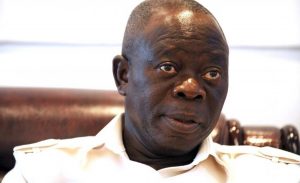
2023 Presidential Candidate of the African Action Congress, Omoyele Sowore, and the Senator representing Edo North Senatorial District, Adams Oshiomhole, on Thursday disagreed over Nigeria’s democratic model with both men expressing variant views on the progress of democracy in Nigeria since 1999.
Sowore, while speaking during a panel session of a book launch written by Senator Abdul Oroh’s “Demonstration of Craze: Struggles and Transition to Democracy in Nigeria”, stated that the country’s transition to democracy in 1999 was hijacked by those he referred to as charlatans, adding that pro-democracy activists at the time of transition to a democratic government “made a mistake”, by allowing only a set of persons to acquire power for themselves.
“There was a mistake we must admit to that we made when democracy came about in 1999. In all fairness, we shouldn’t have allowed charlatans to hijack the democratic process; we did.
“And we are guilty of where we are today. In the US, they refer to democracy as government of the people, by the people and for the people.
“Abdul’s book title refers to democracy as ‘demonstration of craze’.
“But I have always referred to Nigerian democracy as ‘morontocracy’, a democracy that was hijacked by morons, and that is the result you can get,” Sowore said.
The two-time Presidential Candidate of the AAC argued that the government of the day still persecuted civil rights activists because there was no structure put in place to guarantee the fundamental human rights and well-being of citizens in the country, stating that countries like South Africa had a democracy that ensured that those who fought against the apartheid were rewarded.
Addressing the forthcoming elections in 2027, Sowore stated that what the country had during the 2023 general elections was a selection, adding that the country might witness another selective process in 2027.
He further alleged that the biggest culprits during the elections were the security agents who helped political office holders to rig elections, and not just the Independent National Electoral Commission.
“I have been introduced here as a Presidential Candidate; it is true that I ran for election twice in this country.
“Although I ran for election, I only saw on the day of the election a selection. And if we are not careful, which I’m sure you all know, the day will pass, and a set of people will have also selected themselves in power. And nothing will change in our lives.
“And I can say this because I know what we now have in terms of our electoral politics, that whoever you see in INEC today is most likely an APC card-carrying member.
“And for those of you who think INEC is the problem, you are making a mistake. The biggest people who rig elections in Nigeria, who fix selection, are in the military, the security services. I was in the DSS when the Kogi election happened in 2019.
“They emptied the place; the only people that were left at the DSS were the guys who were guarding myself, and the guys at the gate.
“Every other person went to Kogi State to rig the election for Yahaya Bello. That is what will continue to happen in this country,” he said.
In response, Oshiomhole during his goodwill message, faulted Sowore’s cynicism and dismissal of the democratic process, arguing that many activists at the time shunned the call to be part of the fight to entrench a better model of democracy.
He urged leaders not to discourage citizens from believing in a better future, adding that the gaps in the democratic system should rather serve as an “incentive for us not to give up on ourselves.”
The senator said, ”In the course of talking, he (Sowore) said we made a mistake in not contesting in 1999. It is this same cynicism, doubt, dismissal, sweeping generalisation, that misled those, or some of those, who struggled for democracy, to say nothing good can come out of the military, they don’t mean it, there would be no election, a rat cannot give birth to a rabbit.
“There were all kinds of stories. How can the military midwife real democracy? No, it is not possible. Because it’s always better to dismiss everything to get louder applause.
“Then the bad guys decided, since you guys who fight keep dismissing those who were in charge of the system you want to change, we will go in there.
“They went in and they captured power, and they changed the culture of power, they changed the rules of the game.
“And I can speak with authority when I say that when you dismiss in a very sweeping manner that the country is hopeless, the system is impossible, so we should begin to cry? “
Oshiomhole urged leaders not to discourage hope, saying that while the past and present aren’t ideal, the gap between where we are and where we want to be should inspire us to keep striving.
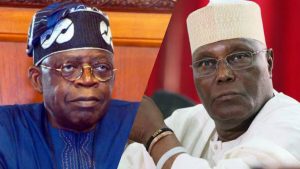
Former Vice President Atiku Abubakar has criticised the decision of the President Bola Tinubu-led administration to seek new external and domestic loans, describing the move as reckless and a threat to Nigeria’s economic future.
In a statement on Thursday via X, Atiku said the proposed borrowing of $21.54 billion, €2.19 billion, and ¥15 billion — totaling over $24 billion — would dangerously increase the country’s debt profile, raising concerns about long-term sustainability.
“This borrowing spree will raise our total public debt from ₦144.7 trillion to a crushing ₦183 trillion,” Atiku stated, warning that the new loans represent more than 60% of Nigeria’s total foreign exchange reserves.
He noted that Nigeria’s debt burden has already reached alarming levels, with public debt standing at $94 billion (₦144.7 trillion) as of December 31, 2024.
Atiku further said, “Since President Tinubu assumed office in 2023, public debt has jumped by 65.6%. Under the APC-led administration since 2015, public debt has ballooned by 1,048%, from ₦12.6 trillion to ₦144.7 trillion.”
He decried the country’s debt-to-GDP ratio exceeding 50% and a debt-service-to-revenue ratio of over 130%, arguing that the government is spending more on repaying loans than it earns.
“This is not just unsustainable — it is immoral. The Tinubu administration is borrowing money not for development but to service existing loans, fueling a debt spiral that leaves nothing for infrastructure, education, healthcare, or jobs,” he said.
The former Vice President described the pattern of borrowing as a “Ponzi scheme,” warning that “Nigeria is now caught in a vicious cycle that mortgages the future to pay for the past.”
Calling the plan economic sabotage, Atiku urged immediate action to stop what he described as a looming catastrophe.
“We demand that this reckless borrowing plan be halted immediately. We call on lawmakers, civil society organisations, the media, and the international community to take urgent action to stop this looming catastrophe. Nigeria must not be sold into debt slavery,” he added.
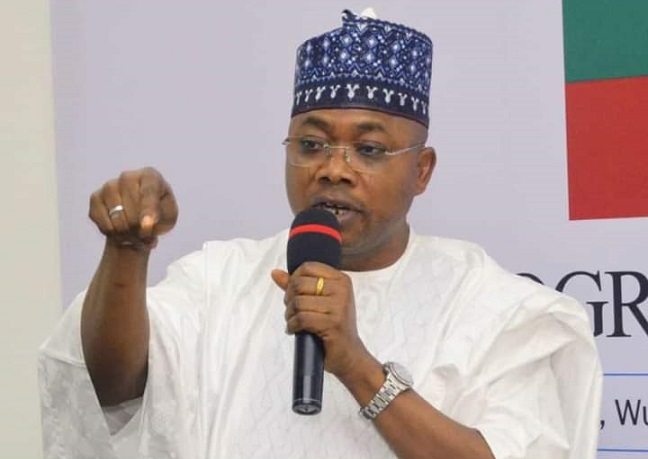
Kogi State Governor, Ahmed Ododo, has congratulated President Bola Tinubu on the occasion of his second year in office.
In a congratulatory message on Thursday, Ododo lauded Tinubu for demonstrating visionary leadership and for inspiring resilience among Nigerians through bold and transformative policies.
This was contained in a statement issued by the Special Adviser to the Governor on Media, Ismail Ishaq, on Thursday.
Ododo said, “Today marks two years of visionary leadership under our leader, President Bola Ahmed Tinubu.
“Your Renewed Hope Agenda has brought bold reforms, national recalibration, and a new sense of purpose across critical sectors of our economy and governance.”
He described the President’s second year as a season of harvest, emphasising that Nigeria is beginning to experience tangible benefits of the far-reaching economic reforms initiated during the first year of the administration.
“Key policy decisions such as the removal of the fuel subsidy, unification of the foreign exchange system, and reforms in the tax and financial sectors were credited for stabilising the economy and restoring investor confidence in Nigeria.
“President Tinubu’s second year in office has been about deepening reforms, managing the effects of bold policy initiatives, and translating difficult decisions into real economic gains.
“We are beginning to see signs of macroeconomic stability, increased non-oil revenue, and renewed private sector interest in key sectors such as gas, agriculture, transportation and technology,” he added.
Ododo also pointed to the Presidential Compressed Natural Gas Initiative, the Renewed Hope Infrastructure Development Fund, the Nigerian Education Loan Fund, and the administration’s push for food security and revitalisation of manufacturing as clear evidence of a strategic, long-term transformation agenda.
“We in Kogi State align fully with this national direction, building infrastructure, expanding access to healthcare and education, and creating opportunities for our people.
“The spirit of Renewed Hope is alive in our communities and in the hearts of our citizens,” Ododo said.
He reaffirmed Kogi State’s commitment to supporting the Federal Government’s agenda by tailoring state policies to attract investment, empower youth and extend the impact of national reforms to the grassroots.
In further support of the clean energy transition, the governor noted that Kogi was actively participating in the CNG revolution by training youths in conversion technology, a move he noted promotes cleaner alternatives, reduces dependency on fossil fuel, and generates sustainable jobs.
He also announced the planned launch of intra-city bus services in the state capital to ease urban transportation as part of the dividends of the renewed hope agenda.
“On behalf of the government and the good people of Kogi State, I congratulate Mr. President and all Nigerians on this important milestone. Together, we will continue to build a stronger, safer, and more prosperous nation.
“As the president marks this second anniversary in office, we celebrate your resilience, foresight, and unwavering commitment to building a Nigeria that works for all. The journey may be challenging, but your courage and dedication continue to inspire hope and confidence across the nation,” he restated.
As the crisis within the Peoples Democratic Party over the position of National Secretary remains unresolved, Senator Samuel Anyanwu, who maintains that he is still the PDP National Secretary, stated that no intimidation will make him disown the Minister of the Federal Capital Territory, Nyesom Wike.
In an interview with journalists in Abuja on Wednesday, Anyanwu questioned what offenses he could have committed for Oyo State Governor Seyi Makinde and Enugu State Governor Peter Mbah to want him removed.
Since the 2023 elections, the PDP has been mired in internal conflicts, which intensified in December 2024 when the South East Zonal Caucus and a lower court recognised former National Youth Leader Sunday Udeh-Okoye as the party’s National Secretary.
While PDP governors, the Board of Trustees, and the National Working Committee accepted the court ruling, Senator Samuel Anyanwu, supported by the Minister of the Federal Capital Territory, Nyesom Wike, challenged it at the Supreme Court. On March 21, the court nullified Anyanwu’s removal, ruling that internal party matters are beyond the judiciary’s jurisdiction.
Following the ruling, on April 14, PDP governors requested the South East to present a new nominee, resulting in Deputy Secretary Setonji Koshoedo being appointed Acting National Secretary. His nomination was ratified by the NWC during its 600th meeting on April 29.
Despite this, the dispute over the National Secretary position continues to divide the party’s leadership, with many blaming former Rivers State Governor Wike, who on Sunday withdrew from the PDP peace pact.
Anyanwu questioned the urgency behind some PDP governors’ efforts to remove him, especially with less than five months remaining in his term.
He stated, “My question is, what will Governor Makinde say that I did to him? Have I stressed him for any reason? Have I called him funny names? What is my sin? What is my problem with him? Have I done anything against him? What have I done against him? I consider him as my friend.
“When people have a motive, a vision, what would my vision be? Whether you want to be president, whether you want to be governor, what would my position do? My position will end by December. Election is 2027. Primaries are 2026. I will not be there. So what would my position now do?
“His Excellency, the FCT Minister, is my friend and my boss, and I can never, for any intimidation, deny him. Nobody can make me deny my friend because after position, there’s still life.
“This is what I tell my NWC members. We came here as a united family. It would be nice for us to go as a united family. So that we can still meet tomorrow and say we are brothers. We served an organization. Let nobody try to fragment the National Working Committee. We have been here for three years plus. We just have four months to go. Let us do it and go in peace.
“We just have a few months to go. Why would anybody want to break his head? Some people will say Senator Anyanwu, he is pro-Wike. What is pro-Wike? Everybody knows his role in this party. Everybody knows when it mattered most. He was there for the party.”
Anyanwu urged party leaders to handle the situation carefully to protect the future of the PDP.
He continued, “So, I think that our parties should be very careful. They should be very, very careful.
“And you see, I respect our governors. I respect them because I know it’s not easy to be a governor. But that you’re a governor does not mean that you cannot come out and tell your colleagues the truth. They know the truth. Why are they shying away from it? They know the truth.”
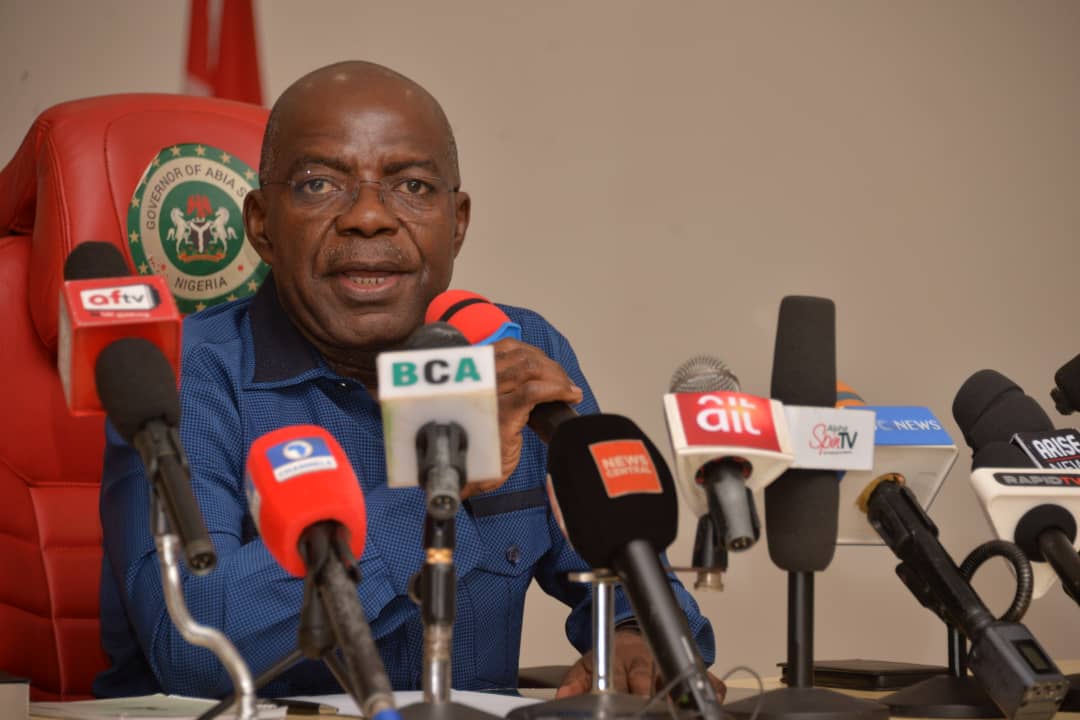
Abia State Governor, Alex Otti, has said that his administration will only borrow money to run the state when it is absolutely necessary.
The governor made the vow in Umuahia on Wednesday during a lecture series to mark his two years in office.
Otti, while responding to some of the issues raised by the lecturer, Dr Idika Kalu, a one-time Finance Minister, said borrowing was not to be done recklessly, adding that he would only borrow when necessary.
The governor said he had to inculcate financial discipline and responsibility in the system to get the state to a greater level.
He said he had been paying workers and pensioners, having found that it made more economic sense to pay than to keep the money at the bank.
“We shall commit the remaining two years of this term to institutionalising the reforms that have been initiated.
“Collectively, we shall make Abia the hub of transformational ideas; we shall not be tired of listening to new ideas, for that is the path to continuous growth and progress,” Otti stated.
The governor thanked Kalu for accepting the invitation to deliver his administration’s second anniversary lecture.
Otti said the state put the lecture together to “talk to ourselves honestly and evaluate how far we have come, what we have done right, and what we can do better.”
In his lecture, the former Minister of Finance urged the governor to borrow to expand projects that would create value for the state.
The octogenarian maintained that such borrowing was not bad once it was done in the interest of the state.
The lecture was titled, “Two years of transformation; Sustaining the momentum.”
Kalu also urged Otti to use the media in major roles in his development efforts because of its power to cause change.
“The media can help this nation get back to life so don’t give them minor roles but give them key roles,” Kalu said.
Kalu commended Otti for his numerous projects some of which he said he had seen delivered while some are still ongoing.
He urged the government to always abide by the rule of law and to show examples of how things should be done rightly and uprightly.
Kalu harped on the need to punish errant persons who instilled impunity in the society, noting that a society where impunity reigned was not modernised.
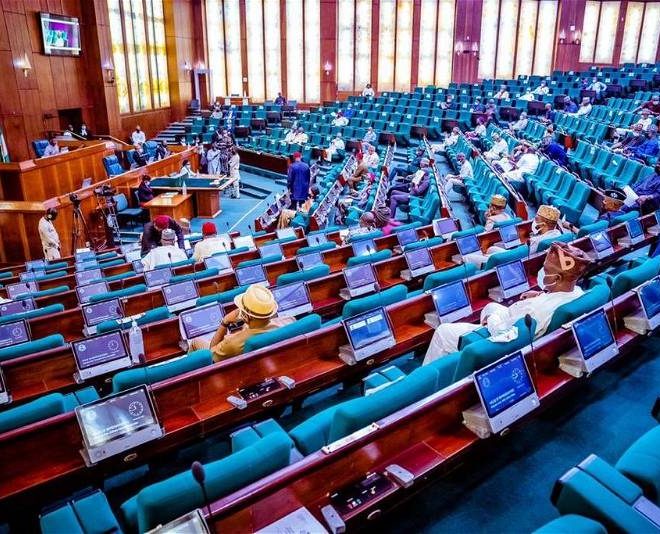
The House of Representatives on Wednesday passed the tax reform bills transmitted to the National Assembly by President Bola Tinubu in October 2024.
The bills were passed at a session presided over by the Deputy Speaker, Benjamin Kalu.
The development followed the adoption of the harmonised versions of the reform bills by both the House and the Senate.
At plenary on Wednesday, the House of Representatives considered the report of the conference committee, which harmonised the bills.
The Chairman of the House Committee on Finance, Abiodun Faleke (APC, Lagos), who headed the House team to the conference committee, presented the conference report to the House for consideration.
According to him, the Conference Committee met and agreed on all areas of difference in the version passed by both chambers of the National Assembly.
He stated that there were 45 areas of difference in the Nigeria Tax Administration Bill, 12 areas of difference in the Nigeria Revenue Service Bill, 9 areas of difference in the Joint Revenue Board Bill and 46 areas of difference in the Nigeria Tax Bill, adding that all grey areas were resolved ahead of the passage.
While the conference committee agreed to retain the Senate version in some of the clauses, they also retained the House version in some others, making amendments in a few others.
The conference committee agreed to the imposition of a 4 per cent development levy on the assessable profit of all companies chargeable to tax under Chapters 2 and 3, except small companies and non-resident companies.
They also agreed that the levy shall be collected by the Nigeria Revenue Service and paid into a special account created for the same purpose.
In the sharing formula, the committee agreed that 50 per cent of the tax would go to the Tertiary Education Trust Fund, 15 per cent to the Education Loan Fund (up from 3 per cent agreed by the House), and 8 per cent to the Nigeria Information Technology Development Fund.
Similarly, the National Agency for Science and Engineering Infrastructure is to get 8 per cent (down from 10 per cent earlier agreed by both chambers), the National Board for Technology Incubation is to get 4 per cent from the fund, defence and security infrastructure is to get 10 per cent while cyber security fund will get 5 per cent.
Meanwhile, the Social Security Fund, Nigeria Police Trust Fund, and National Sports Development Fund were excluded from the list of beneficiaries passed by the House of Representatives.
The committee also adopted a new clause 158, which imposes a 5 per cent surcharge on chargeable fossil fuel products provided or produced in Nigeria and shall be collected at the time a chargeable transaction occurs.
The controversial Value Added Tax sharing formula was not part of the areas of disagreement between the two legislative chambers.
In his remarks, Kalu said the parliament has played its part in ensuring that the country moves forward, even as he urged the executive arm of government to do its part.
In his contribution, a member of the House representing Gwoza/Damboa/Chibok Federal Constituency, Borno State, Ahmed Jaha warned those who will clean up the bill not to tamper with any of the clauses passed, saying “Where the T is not crossed, don’t cross it, where the I is not dotted, don’t do it. We have the original copies of the bills as passed before and after harmonisation.
“We have had cases in the past where those in charge of cleaning up the bills tamper with it and at the end of the day, the President will withhold assent. That must not happen.”
That said, the All Progressives Congress lawmaker singled out Speaker Tajudeen Abbas and Deputy Speaker, Benjamin Kalu for praise, saying, “I want to thank your leadership for the role you played in making these bills a success. I also want to thank the Chairman of the Committee, Abiodun Faleke. He showed that he is truly a good elder. He provided a lot of training for some of us, and I want to say that this is the way to go.”