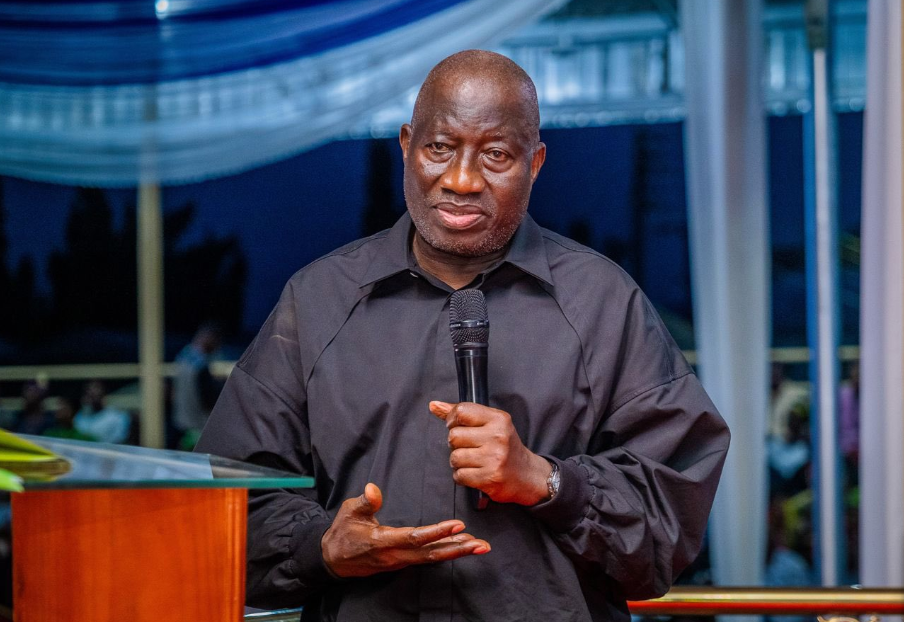
Former President Goodluck Jonathan has mourned the passing of former Kenyan Prime Minister, Raila Odinga, describing him as a true African patriot and a symbol of democratic struggle on the continent.
Jonathan, in a statement titled “Adieu H.E. Raila Odinga” shared on his official X account on Thursday, paid glowing tribute to the late Kenyan statesman, whom he hailed for his courage, resilience and unwavering commitment to democracy in Africa.
PUNCH Online, in an agency report titled “Kenyan opposition leader Raila Odinga dies in India”, reported that Odinga, 80, died in India after collapsing during a morning walk, leading to widespread mourning across Kenya and the continent.
Reflecting on Odinga’s legacy, Jonathan described him as a leader who placed service above self and who embodied the hope of a united, progressive Africa.
“I am saddened by the news of the passing of H.E. Raila Odinga, former Prime Minister of Kenya and a distinguished African statesman whose life symbolised resilience, courage, and democratic struggle in Africa.
“Kenya has lost a patriot, and our continent has lost a great leader, one who understood that leadership is not about self, but about service; who believed and looked forward to Africa’s greatness and ascendancy”, the statement partly read.
The former Nigerian president further celebrated Odinga as a fellow advocate of democracy and a devoted pan-Africanist whose impact would continue to resonate across generations.
He prayed for history to remember Odinga kindly and for Africa to draw continued inspiration from his legacy.
“I honour him not just as a brother in the cause of democracy, but as a committed pan-Africanist whose light will continue to shine.
“May history remember him kindly, and may Africa continue to be blessed by his hope, wisdom and sacrifice”, Jonathan’s statement concluded.
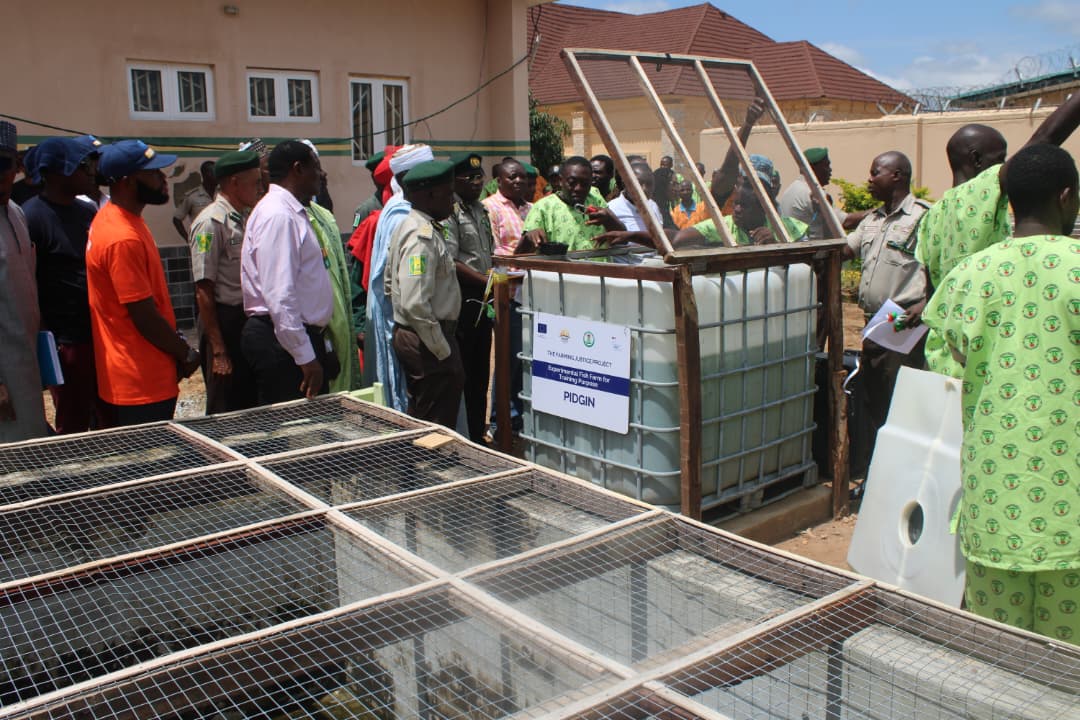
A Non-Governmental Organisation, Hope Behind Bars Africa, has inaugurated the Farming Justice Project at the Kuje Custodial Centre in Abuja to promote inmate rehabilitation and tackle food insecurity within correctional facilities.
The initiative, implemented in partnership with the Nigerian Correctional Service, is funded by the European Union through International IDEA under the Rule of Law and Anti-Corruption Programme.
At the official launch on Tuesday, the Executive Director of HBBA, Funke Adeoye, described the project as a practical response to Nigeria’s evolving correctional mandate.
“With the change in nomenclature from ‘prison’ to ‘correctional service,’ there is a need to ensure that our custodial centres reflect that change through genuine rehabilitation and empowerment,” she said.
Adeoye explained that the Farming Justice Project integrates agriculture with restorative justice principles, giving inmates the opportunity to gain life skills and contribute meaningfully to society both during and after incarceration.
She noted that the initiative seeks to empower inmates through agricultural training and practical food production, adding that over 80 inmates are currently being trained in modern techniques for okra, watermelon, and tomato cultivation.
“Some of our harvested okra has already been consumed by inmates, showing real progress in tackling food shortages in custodial centres,” she said.
The project currently operates at the Kuje Custodial Centre and the Dukpa Farm Centre in Abuja, with plans to replicate the model in other facilities across the country, including Lagos, where HBBA has previously worked with female inmates on similar agricultural initiatives.
“Our goal is to reduce recidivism by equipping inmates with viable means of livelihood after serving their sentences.
“We are calling on partners and well-meaning Nigerians to support the NCoS in ensuring effective rehabilitation and reintegration of inmates,” Adeoye added.
She commended the Comptroller General of the Nigerian Correctional Service, Sylvester Nwakuche, for his support and openness to public-private partnerships aimed at reforming correctional practices.
On the broader issue of incarceration, Adeoye emphasised the importance of preparing inmates for reintegration into society.
“Out of over 80,000 inmates nationwide, only about 3,600 are on death row. This means a large number will eventually return to our communities. Therefore, it is our responsibility to ensure they come out better prepared for productive living,” she said.
In his welcome remarks, the Controller of Corrections for the FCT Command, Christopher Jen, praised the initiative as a significant step towards building a more peaceful and secure Nigeria.
“My desire is to see a better Nigeria tomorrow where everyone will live without fear or anxiety.
“The enthusiasm and willingness of inmates to learn skills today give me confidence that such a future is possible,” Jen said.
He described the Kuje Custodial Centre as a “centre of excellence” in vocational training, listing ongoing programmes such as barbing, embroidery, carpentry, plumbing, electrical work, shoemaking, soap making, and fishery.
In a goodwill message, Joseph Odeh, a representative of International IDEA, stressed the importance of collective effort in justice reform.
“Justice reform is not the responsibility of one institution alone. It is a shared mission that requires the active participation of all sectors of society.
“Let this day mark the beginning of a new chapter in our justice system—one that prioritises human development, community reintegration, and sustainable transformation,” he said.
The event featured a guided tour of the Kuje facility, the unveiling of the Farming Justice Project, and visits to various skill acquisition centres where inmates are receiving hands-on vocational training.
No fewer than 117 beneficiaries from northern Nigeria have departed for Algeria to pursue various academic programmes under a fully funded study scholarship facilitated by the Sheikh Dahiru Usman Bauchi Foundation.
Speaking during a send-forth and orientation ceremony organised for the beneficiaries in Bauchi, the Chairman of the Foundation, Sayyadi Aliyu, explained that the scholarship was secured through the Darika Tijjaniyya Islamic Sect in collaboration with the Algerian Government.
According to him, “We were able to secure 140 slots, but only 117 met the complete requirements. The remaining ones will join them later.”
Aliyu noted that Bauchi State, being the host of the foundation, produced the highest number of beneficiaries, while others were drawn from Gombe, Taraba, Yobe, and other northern states.
He disclosed that 50 of the slots were allocated for Medicine, while the remaining were distributed among other disciplines such as Computer Science, Engineering, and Islamic Studies.
The chairman added that the scholarship covers feeding, accommodation, healthcare, and other essential needs, urging the students to remain law-abiding and disciplined throughout their studies.
“You must be good ambassadors of Nigeria and of those who facilitated this opportunity.”
“You have already been introduced to Arabic and French to help you settle in quickly. Islam is a religion of knowledge, and whoever neglects to seek it is going against its teachings, ”Aliyu charged.
He cautioned the students against distractions, urging them to remain united and focused on their purpose of acquiring knowledge for the benefit of Islam and humanity.
In his remarks, the Emir of Bauchi, Dr Rilwanu Sulaimanu Adamu, advised the beneficiaries to uphold Nigeria’s image abroad and avoid any act capable of tarnishing the country’s reputation.
Expressing concern over negative reports involving Nigerians abroad, the Emir said:
“The Nigerian flag has in many instances been blackened abroad, contrary to its true green-white-green identity. Green, as we know, is the colour associated with the house of Prophet Muhammad (Peace Be Upon Him).
“You must uphold this symbol with dignity and commit yourselves to the pursuit of knowledge.”
The Nigerian Meteorological Agency has predicted sunshine and cloudiness from Monday to Wednesday across the nation.
NiMet`s weather outlook released in Abuja envisaged sunny skies on Monday with patches of clouds over the northern region.
It anticipated prospects of isolated thunderstorms with light rains over parts of Taraba and southern Kebbi states during the morning hours.
“Later in the day, isolated thunderstorms with moderate rains are expected over parts of Taraba, Adamawa, Kaduna, Borno, Bauchi, Gombe, Kebbi and southern Sokoto states.
“For central region, cloudy skies with spells of sunshine are expected with prospects of morning thunderstorms with moderate rains over parts of Niger, Benue, Plateau and Kogi states.
“Later in the day, isolated thunderstorms with moderate rains are anticipated over parts of the Federal Capital Territory, Niger, Kogi, Kwara and Nasarawa states,“ it said.
According to NiMet, a cloudy atmosphere is anticipated over the southern region with prospects of morning thunderstorms and light rains over parts of Ogun, Ondo, Ekiti, Imo, Ebonyi and Abia states.
It forecast isolated thunderstorms with moderate rains over most parts of the region later in the day.
NiMet predicted sunny skies on Tuesday with patches of clouds over the northern region during the morning period.
It envisaged isolated thunderstorms with moderate rains over parts of Kaduna, Taraba, Bauchi, Southern Kano, Southern Jigawa and Adamawa states later in the day.
The agency anticipated sunny skies with patches of clouds over the central region.
NiMet forecast morning thunderstorms with light rains over parts of Nasarawa, Kwara, Kogi, the Federal Capital Territory, Niger and Benue states.
According to it, isolated thunderstorms with moderate rains are anticipated over part of Nasarawa, the Federal Capital Territory, Niger and Kogi States later in the day.
“For southern region, cloudy atmosphere is anticipated over the southern region with prospects of morning rains over parts of Ogun, Ondo, Ebonyi, Lagos, Cross River, Rivers, Bayelsa and Akwa Ibom states during the morning hours.
“Later during the day, isolated thunderstorms with moderate rains are anticipated over parts of Imo, Ebonyi, Abia, Oyo, Ekiti, Osun, Cross River, Rivers and Akwa Ibom states,“ it said.
NiMet predicted sunny skies on Wednesday with patches of clouds over the northern region and thunderstorms with light rain over parts of Taraba State during the morning hours.
The agency envisaged isolated thunderstorms with Light rains over parts of Kaduna, Adamawa and Taraba States later in the day.
According to the forecast, a cloudy atmosphere with intervals of sunshine is anticipated over the central region with chances of thunderstorms and light rains over parts of Niger, Kwara and Benue States during the morning period.
The agency predicted isolated thunderstorms with moderate rains over parts of Kogi, Benue, Niger, Nasarawa and the FCT later in the day.
“Cloudy atmosphere is anticipated over the southern region with prospects of thunderstorms with light rains over parts of Cross River, Akwa Ibom, Rivers and Bayelsa during the morning hours.
“Later in the day, thunderstorms with moderate rains are anticipated over most places in the region,“ it said.
NiMet urged the public to drive under the rain with caution, ensure that loose objects are fastened to avoid collision and disconnect electrical appliances from electrical sockets.
It further urged the public to stay away from tall trees to avoid impact from falling branches and broken trees.
“Farmers should avoid leaching of nutrients by refraining from applying fertiliser and pesticides right before the rains.
“Airline operators are advised to get airport-specific weather reports (flight documentation) from NiMet for effective planning in their operations,” the statement added.
Three years after the tragic passing of Big Brother Naija star and singer, Patrick Fakoya, popularly known as Rico Swavey, his management and fans have paid emotional tributes to his memory.
In a heartfelt post shared on Monday on X, the management described Rico as a beacon of love and creativity, saying his memory “blooms like a garden of everlasting flowers.”
“On this 3rd anniversary, we remember not just your departure, but the life you lived and the love you gave. Keep resting, Rico,” the post read.
Rico Swavey, who featured in the 2018 Double Wahala edition of BBNaija, died on October 13, 2022, from injuries sustained in a car accident in Lagos.
The incident, which occurred along a poorly lit section of the Lekki-Ajah Expressway, drew widespread grief across the country.
His mother in an interview with Journalist Chude Jideonwo emotionally recounted watching her son die in her arms at a Lekki hospital, pleading for him to “come back to her.”
Amid public speculation at the time, an eyewitness, Sunday Michael, the Uber driver who was with Rico in his final moments clarified that the late reality star was not intoxicated before the crash.
Doren Specialist Hospital, where the deceased was initially treated, also denied allegations of negligence and dismissed claims that its staff filmed him on his sickbed.
Earlier this year, Big Brother Naija Season 10 honoured three late former housemates , Francisca Owumi, Joseph Ada, and Rico Swavey, with a tribute segment and a minute of silence.
Rico Swavey, remembered for his calm demeanour and artistic flair, remains one of the show’s most loved alumni, with his legacy still celebrated across the entertainment industry.
The World Health Organisation sounded the alarm on Monday over soaring numbers of drug-resistant bacterial infections, compromising the effectiveness of life-saving treatments and rendering minor injuries and common infections potentially deadly.
The United Nations’ health agency warned that one in six laboratory-confirmed bacterial infections worldwide in 2023 showed resistance to antibiotic treatments.
“These findings are deeply concerning,” Yvan J-F. Hutin, head of the WHO’s antimicrobial resistance department, told reporters.
“As antibiotic resistance continues to rise, we’re running out of treatment options and we’re putting lives at risk.”
Bacteria have long developed resistance against medicines designed to fight them, rendering many drugs useless.
This has been accelerated by the massive use of antibiotics to treat humans, animals and food.
Antimicrobial-resistant (AMR) superbugs directly cause over a million deaths and contribute to nearly five million deaths every year, according to the WHO.
In a report on AMR surveillance, the WHO examined resistance prevalence estimates across 22 antibiotics used to treat infections of the urinary and gastrointestinal tracts, the bloodstream, and those used to treat gonorrhoea.
‘Flying blind’ –
In the five years leading up to 2023, antibiotic resistance increased in over 40 per cent of the monitored antibiotics, with an average annual rise of between five and 15 per cent, the report found.
For urinary tract infections, resistance to commonly used antibiotics was typically higher than 30 per cent globally, it showed.
The report looked at eight common bacterial pathogens, including E. coli and K. pneumoniae, which can lead to severe bloodstream infections that frequently result in sepsis, organ failure and death.
The WHO warned that more than 40 per cent of E. coli infections and 55 per cent of K. pneumoniae infections globally are now resistant to third-generation cephalosporins — the first-choice treatment for these infections.
“Antimicrobial resistance is outpacing advances in modern medicine, threatening the health of families worldwide,” WHO chief Tedros Adhanom Ghebreyesus warned in a statement.
The WHO hailed improvements in surveillance but warned that 48 per cent of countries were still not reporting any AMR data.
“We are definitely flying blind in a number of countries and regions that have insufficient surveillance systems for antimicrobial resistance,” Hutin acknowledged.
‘Future threat’ –
Judging from the available data, most resistance was found in places with weaker health systems and less surveillance, the WHO said.
The highest resistance was found in the Southeast Asian and Eastern Mediterranean regions, where one in three reported infections were resistant.
In the African region, one in five infections was meanwhile resistant.
Silvia Bertagnolio, who heads the WHO unit for antimicrobial resistance surveillance, told reporters it was unsurprising that resistance would be higher in places with weaker health systems, since they may lack the capacity to diagnose or treat pathogens effectively.
The differences could also be linked to the fact that countries with less surveillance may test and provide data on fewer patients and only those with the most serious infections, she said.
The WHO has warned that there are not enough new tests and treatments in the pipeline to tackle the growing spread of drug-resistant bacteria.
This is creating a significant “future threat”, Hutin cautioned.
“The increasing antibiotic use, the increasing resistance and the reduction of the pipeline is a very dangerous combination.”
US President Donald Trump and his Egyptian counterpart Abdel Fattah al-Sisi will on Monday chair a Gaza peace summit in Sharm el-Sheikh, also attended by world leaders, including the UN chief.
The gathering in the Red Sea resort town will bring together “leaders from more than 20 countries”, Sisi’s office said.
It will aim “to end the war in the Gaza Strip, enhance efforts to achieve peace and stability in the Middle East, and usher in a new era of regional security and stability”.
UN Secretary-General Antonio Guterres said he will attend, as will Britain’s Prime Minister Keir Starmer, his Italian counterpart Giorgia Meloni and Pedro Sanchez of Spain.
French President Emmanuel Macron and Turkish President Recep Tayyip Erdogan will also travel to Sharm el-Sheikh, according to their offices.
The European Council will be represented by its president, Antonio Costa, a spokesperson said.
“The plan offers a real chance to build a just and sustainable peace, and the EU is fully committed to supporting these efforts and contributing to its implementation,” the spokesperson added.
Jordan’s King Abdullah II is also expected to attend, according to state media.
There was no immediate word on whether Israeli Prime Minister Benjamin Netanyahu would participate, while Hamas has said it will not take part.
Hossam Badran, a Hamas political bureau member, told AFP in an interview that the Palestinian militant group “will not be involved”.
Hamas “acted principally through… Qatari and Egyptian mediators” during previous talks on Gaza, he said.
The Kano State Fire Service has confirmed the death of two children who drowned on Thursday while swimming in a stream at Hayin Yawa Gada in the Tudun Wada Local Government Area of the state.
Similarly, the agency also confirmed the death of a man whose body was discovered in a well at Jaba Masaka Shago Tara.
The Public Relations Officer of the agency, Saminu Abdullahi, disclosed the incidents in a statement made available to our correspondent on Saturday.
“On Thursday, 09th October 2025, the Emergency Response Unit of the Tudun Wada Fire Service received a call for emergency assistance from CG Hisba reporting an incident at Hayin Yawa Gada in Tudun Wada LGA at about 14:00 hrs.
“Our men from Tudun Wada attended the scene of incident and on arrival they found two children, by names Habu Sani and Haruna Isah, all about 15 years old, who had entered into a stream passing through a major road that crossed the main road bridge,” it read.
According to Abdullahi, the children drowned “in the water way with the intention of local swimming.
“Our men successfully rescued them unconscious and later confirmed dead and men handed over the victims to Inspector Usaini Iliya of Tudun Wada police division.”
He further explained that another tragedy occurred the following morning.
He said, “The second incident occurred on Thursday, 10th October 2025, at about 08:15 am, when the central control room received an emergency call from P & G Kwalli police division reporting the discovery of a human body in a well at Jaba Masaka Shago Tara.
“Our men from the state headquarters were mobilised to the scene of the incident, on arrival they successfully removed the victim from the well. The victim was handed over to the Ward Head of the area, Ado Idris.”
Abdullahi appealed to parents and communities to be vigilant.
He, therefore, appealed to parents and the community to prevent children from going near puddles and any place where water collects.
In a similar tragedy, a 17-year-old boy, Lurwanu Suleiman, in July, drowned in open water in Dandalama village, located in Dawakin Tofa Local Government Area of Kano State.
The National Primary Health Care Development Agency, in collaboration with state governments and development partners, has intensified efforts to vaccinate 106 million Nigerian children against vaccine-preventable diseases.
The nationwide initiative aims to raise awareness for the ongoing Integrated Measles-Rubella, Polio, and Human Papillomavirus vaccination campaign, which will run from October 2025 to February 2026.
This large-scale vaccination exercise reflects the agency’s commitment to ensuring that no child is left unprotected while strengthening partnerships between national and state health authorities to achieve improved health outcomes for children across the country.
On October 6, the First Lady, Senator Oluremi Tinubu, who flagged off the Measles–Rubella campaign, described the exercise as a bold step toward protecting the lives and future of children.
Speaking during a road walk and health show in Abuja, the Director of Disease Control and Immunisation at NPHCDA, Dr Garuba Rufai, described the exercise as part of a broad awareness campaign currently taking place across 11 states and the Federal Capital Territory.
“This is part of our awareness campaign for the measles-rubella integrated campaign that is currently ongoing in 11 states and the FCT.
“As we speak, in those 11 states and the FCT, children aged zero to 14 years are being vaccinated with the measles-rubella vaccine and the polio vaccine. The HPV vaccine is for girls aged nine to 14 years, alongside the routine immunisation vaccines,” Dr Rufai explained.
He added that the campaign is being implemented in collaboration with other health programmes, including malaria and Neglected Tropical Diseases (NTDs).
“We are also collaborating with the malaria programme, and we are providing what we call seasonal malaria prophylaxis in a couple of the states. We’re also working with the NTDs programme to manage some of the diseases in states where they are prevalent,” he noted.
According to Dr Rufai, several strategies have been deployed nationwide to ensure that the campaign reaches every eligible child.
“We have all of our social mobilisation efforts, including the use of public announcement vans. We have engaged with communities and different groups — teachers, parents, physicians, ministries such as education, religious bodies, and traditional leaders,” he said.
He disclosed that similar road walks are being replicated across participating states, supported by state governments, the wives of governors, and local government chairpersons.
Rufai revealed that while the first phase of the campaign covers 11 states and the FCT, the next phase will commence soon.
“We intend to vaccinate 106 million Nigerians by the end of February. We’re starting with 11 states and the FCT now. By October 18, we’ll move to the next stream of states, which will complete the first phase for this year. By January next year, we’ll continue with phase two, and also in February,” he explained.
He urged parents and caregivers to take advantage of the ongoing exercise.
“Nigerians should come out en masse and get their children vaccinated — not just for this campaign, but also by taking their children to health facilities for routine vaccines. The diseases are not waiting; they do not know any political party, religion, or tribe.
“When a child catches one of these diseases and develops complications, something as seemingly simple as measles can make a child go blind. Why would anyone wait for that to happen? Why would any woman allow herself to give birth to a child only to lose them before they reach their full potential?” he added.
The World Health Organisation (WHO) FCT Coordinator, Dr Kumshida Balami, emphasised that vaccines are both safe and effective, stressing the need to eliminate diseases that should no longer claim lives in the 21st century.
“We cannot be in this century and still have children coming down with measles or polio. We cannot still have women dying from cervical cancer simply caused by the human papillomavirus — a disease that can be prevented through vaccination,” she said.
She further urged parents and caregivers to ensure that all eligible children receive the necessary vaccines, noting that the goal is to safeguard lives and build trust in the nation’s health system.
Similarly, the Executive Director of the NPHCDA, Dr Muyi Aina, together with the Mandate Secretary of the Health Services and Environment Secretariat of the Federal Capital Territory Administration, Dr Adedolapo Fasawe, on Friday led a joint monitoring team to assess the progress of the ongoing vaccination campaign.
The monitoring team visited Primary Health Care Centres within and outside the FCT, including the Chikora North PHC in Kogi Local Government Area, Kogi State, and the New Township PHC in Abaji Area Council, Abuja.
A press statement released on Saturday and signed by Mrs Bola Ajao, Special Adviser to Dr Fasawe, noted that the team also visited surrounding communities, sensitising mothers and caregivers on the importance of immunisation and advising them to ensure their children are vaccinated and properly finger-marked as evidence of vaccination.
Dr Aina commended the dedication of frontline health workers and encouraged them to maintain accuracy and honesty in data reporting, stressing that verified data — whether targets are achieved or not — are crucial for effective planning and sustainable health sector improvement.
He explained that the monitoring visits were designed to evaluate coverage levels and workforce commitment, particularly in hard-to-reach areas, and to ensure credible, on-the-spot assessments of field operations.
Aina further assured health providers that the Federal Government is aware of their challenges and is taking steps to address them under the Renewed Hope Health Reform Agenda of the present administration, aimed at delivering equitable and efficient healthcare services across the nation.
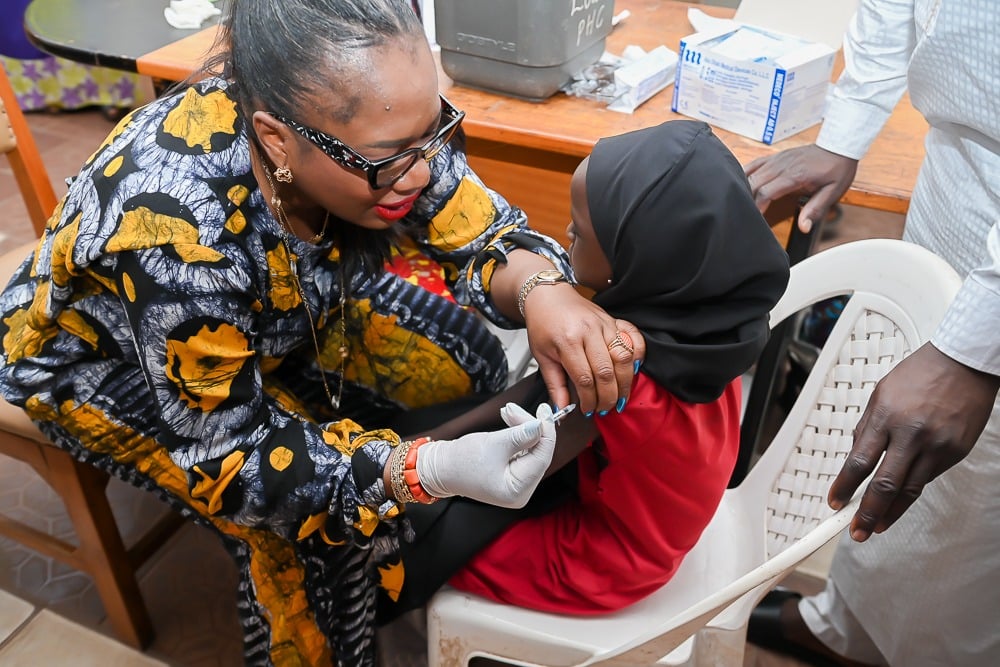
“At the New Township PHC, Abaji, Dr Fasawe personally administered vaccines to infants and sensitised mothers on the importance of routine immunisation to prevent child-killer diseases and avoidable deaths. She urged parents to spread the message within their communities, noting that unvaccinated children remain at high risk of contracting measles (rubeola) and rubella (German measles) — viral infections that can lead to blindness, brain damage, hearing loss, congenital defects, and even death.
“Both health leaders commended the turnout and coverage recorded by the vaccination teams so far, urging them to remain proactive and adhere strictly to safety standards. During the visit, the delegation also attended to a 13-year-old patient at the Kogi PHC and recommended follow-up care to ensure effective service delivery,” the statement highlighted.
As the world marks the International Day of the Girl Child, a non-governmental organisation, the Gender Educators Initiative (GEI), has called on the Federal Government to prioritise the creation of safe spaces for girls living in conflict-affected and crisis-prone communities across Nigeria.
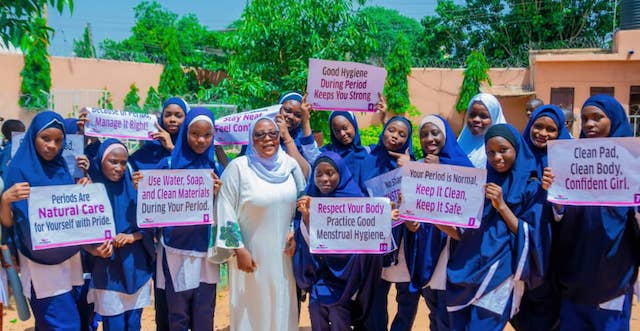
The Executive Director of GEI, Shafa’atu Suleiman, made the call on Friday during a sensitisation programme on menstrual hygiene for female students in private schools across Sokoto State, held in commemoration of the International Day of the Girl Child on October 11, 2025
Suleiman expressed concern that insecurity, displacement, and poverty have continued to expose young girls — particularly in northern Nigeria — to violence, abuse, and early marriage.
“Thousands of girls across northern Nigeria are growing up amid crises — from insurgency to banditry and forced displacement. “Many have lost access to education, healthcare, and the basic sense of safety every child deserves. It is therefore imperative that government, development partners, and community leaders act urgently to protect and empower them,” she said.
She explained that establishing safe spaces within internally displaced persons (IDP) camps and vulnerable communities would provide psychosocial support, ensure continuity of education, and offer mentorship for affected girls.
“When girls are safe, educated, and empowered, entire communities benefit. Investing in girls is investing in peace and progress,” Suleiman added.
The GEI boss also urged the Ministries of Women Affairs, Education, and Humanitarian Affairs to collaborate with civil society organisations to design gender-sensitive interventions tailored to the needs of girls in crisis zones.
As part of activities marking the day, GEI organised a menstrual hygiene awareness campaign to educate young girls on how to manage their health during their menstrual periods.
Speaking at Sahaba Academy in Sokoto, the school’s Principal, Mrs Ana, commended GEI for its efforts, while the Proprietor, Ahmed S. Fada, called on the government to give more attention to girls’ education and provide adequate facilities for their comfort and health in schools.
Also speaking, GEI’s Programme Officer, Linda Idoko, encouraged girls to take pride in their womanhood and prioritise their health.
“Being a woman is an amazing thing. Our organisation uses this opportunity to educate the girl child on the importance of menstrual hygiene and how to choose safe products to stay healthy and protected,” she said.
This year’s International Day of the Girl Child, themed “The Girl That I Am, The Change I Lead,” underscores the importance of empowering girls to lead change within their communities.
Reaffirming GEI’s commitment to advancing gender equality, Suleiman stressed that no girl should be left behind due to where she was born or the crises surrounding her.