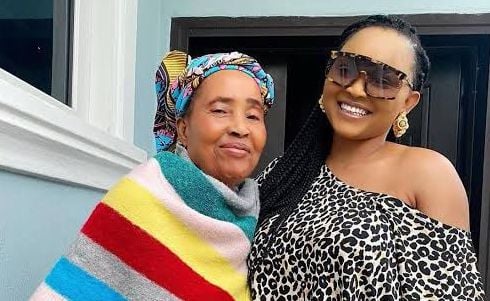
Nigerian singer and songwriter, Tiwatope Savage, popularly known as Tiwa Savage, has revealed that her 2021 leaked sex tape was circulated as part of a bet, describing the experience as one of the most painful moments of her life. The Afrobeats star also disclosed that she has remained celibate for the past three years.
The revelation was made during an interview with The Breakfast Club, released on Tuesday, where she spoke candidly about how the scandal affected her personal life, career, and mental health.
Savage said she initially coped with humour and by channelling the pain into her songs, but admitted the episode cut deeper. “
When I talked about the sex tape … that’s how I was able to kind of like, try and get through it. But in hindsight, did I really deal with it? I don’t think so. I was hurt… I was a victim,” she said.
She revealed that while her boyfriend at the time claimed the tape was leaked accidentally, she later learned it had been circulated as part of a bet.
“He said he was trying to save it, and then he pressed send by accident… I later on found out that it was a bet with his friends,” she said.
The singer added that many assumed she staged the leak for attention.
“They thought I did it for PR. A lot of people thought, ‘oh, she’s not relevant anymore, and she’s doing this.’ And I’m like, guys, trust me, if I wanted to do that, I would have had better lighting,” she said.
Attempts to pursue the case also failed because of the emotional toll.
“We tried, actually. But yeah, we couldn’t. And me trying was just, it was just too traumatic for me to keep talking about it. I just wanted to move on from it,” she explained.
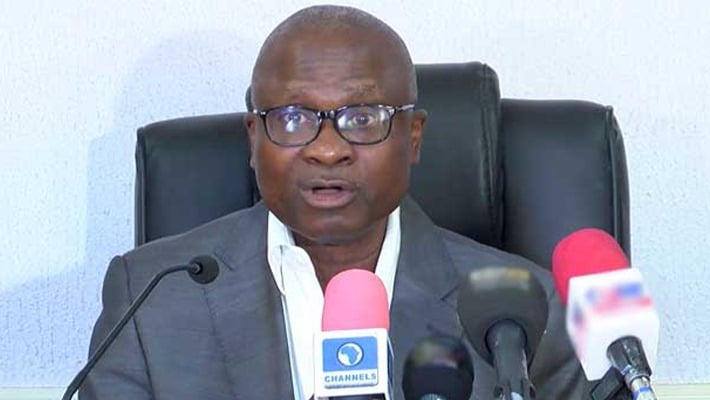
The Nigeria Centre for Disease Control and Prevention has confirmed that two recent suspected cases of viral hemorrhagic fever in Abuja have tested negative for both Ebola Virus Disease and Marburg Virus.
The NCDC, in a public health advisory issued on Friday and signed by its Director General, Dr Jide Idris, noted that further tests are ongoing for other hemorrhagic fevers, including Lassa fever and dengue fever.
The advisory comes amid public concern and speculation following reports of suspected viral hemorrhagic fever cases in Abuja.
Ebola virus disease, formerly known as Ebola Hemorrhagic Fever, is a severe, often deadly disease caused by the Ebola virus, with a fatality rate of 25–90 per cent.
The NCDC said people become infected with Ebola either through contact with infected live or dead animals (usually following butchering, cooking, or eating) or through contact with the body fluids of infected humans.
Most cases are caused by human-to-human transmission, which occurs when blood, bodily fluids, or secretions (stool, urine, semen) of infected people enter a person’s body through broken skin or mucous membranes.
Ebola symptoms vary, but commonly experienced symptoms include the sudden onset of fever, intense weakness, muscle pain, headache, and sore throat, especially at the beginning of the disease.
“The NCDC wishes to inform the public that two recent suspected cases of viral hemorrhagic fever in Abuja both tested negative for Ebola and Marburg viruses. We are currently testing samples for other viral hemorrhagic fevers like Lassa fever and dengue fever,” the advisory partly read.
The most recent case involved a traveller who, after returning to Nigeria from Kigali, responsibly presented himself immediately to a hospital in Abuja when he felt unwell.
“His decision to report early, combined with the vigilance of the attending clinician and hospital team, ensured that our public health system was promptly activated and that the risk to the public was minimised.
“This responsible action is highly commendable and a good practice all Nigerians are urged to emulate; when you feel unwell, especially after travel, seek care early. Doing so protects you, your family, and your community.
“We deeply commend the clinicians and staff at the Nisa Premier Hospital, Abuja, whose high index of suspicion and immediate reporting triggered a rapid, coordinated response. We also recognise the FCT Epidemiology and Rapid Response Teams, the Port Health Services, the National Reference Laboratory, airline and immigration partners, and other stakeholders whose swift collaboration with NCDC demonstrates the strength of Nigeria’s preparedness system. Together, their actions exemplify how vigilance and teamwork prevent potential public-health emergencies,” the agency stated.
The agency assured Nigerians that it has activated anticipatory measures nationwide following recent Ebola outbreaks in other countries.
It said the measures include heightened surveillance at ports of entry, alerting isolation facilities, and prepositioning infection-prevention supplies.
“We are currently collating and analysing all the relevant data and information to improve our response. As part of its mandate to safeguard the health of the nation, the NCDC has already conducted a Dynamic Risk Assessment following recent reports of Ebola viral disease in other countries, and anticipatory measures are being implemented nationwide.
“We have activated multidisciplinary collaboration with federal and state health authorities, strengthened surveillance at points of entry, placed isolation/treatment facilities on alert, and prepositioned critical infection-prevention and related case management supplies.
“The NCDC national reference laboratories remain on standby to provide rapid testing, and public-health teams are ready to conduct contact tracing if needed. Beyond these immediate steps, NCDC is also working with states and partners to strengthen readiness across all 36 states and the FCT.
“This includes upgrading isolation facilities, reinforcing IPC training for healthcare workers, conducting simulation exercises, and ensuring a clear pathway for access to medical countermeasures such as vaccines and therapeutics if ever required,” it added.
It urged states to strengthen surveillance and keep isolation centres ready, while healthcare workers, especially in private hospitals, must stay vigilant, follow strict infection-prevention measures, and promptly report unusual cases through official channels.
Nigerians were also advised to practice good hygiene, avoid risky animal contact, seek care immediately if symptoms arise after travel, and rely only on official updates from NCDC.
It said suspected cases can be reported through the NCDC’s 24/7 Connect Centre via toll-free number 6232, WhatsApp at +234 708 711 0839, SMS at +234 809 955 5577, or email at info@ncdc.gov.ng
According to the World Health Organisation, 48 confirmed and probable Ebola cases have been reported, and 31 people have died in the Democratic Republic of Congo.
A former Big Brother Naija housemate Victoria Adeyele, popularly known as Vee, has sparked a major online discussion after revealing her personal dating philosophy.
In a video shared on her TikTok page on Tuesday, the 29-year-old stated that it is her “mission in life to avoid the wrong man getting me pregnant”.
Vee, who had a romantic relationship with fellow housemate Neo Akpofure on the 2020 BBNaija show before they ended things in February 2022, explained that her cautious approach to dating is a form of self-preservation.
“It is my own personal mission. It may not be your own mission, but it’s my mission,” she said.
She was quick to clarify her stance, adding, “It’s not to say that I’m better than the women who have been in that position. It’s simple, I know myself. I know what I’m like, and I try to avoid certain situations that will put me in a state of psychosis.”
She described dating in Lagos as being particularly difficult, referencing a past negative experience.
“I’m a 29-year-old living in Lagos and… dating is hard, but dating in Lagos, there’s a tweet Offset made that haunts me to this day. I don’t want to put myself in a position where a man can tell me such.”
Vee candidly admitted that her strong resolve might be a barrier to finding love, but it’s a trade-off she’s willing to make.
“I am passionate about not getting f#cked over. And maybe that’s what stops me from finding unapologetic love. I’m stubborn. Yes, I’m hard-headed, but I’m not stupid,” she said.
She also emphasised the importance of making careful choices, even when it comes to choosing a partner.
“I need to make sure that when it comes to choosing a life partner, I try my best to get it right. People say experience is the best teacher. Not in my world… I don’t need to experience something to know that it’s not going to work for me,” she said.
In the now-viral moment, Vee concluded by stating she has a limited number of chances left for dating.
“I just turned 29… I have two more tries left in me sha. Just two. You see these two fingers? Two. Let it pass that two. The way these men are doing.”
Nigeria singer and songwriter Oludipe David popularly known as Spyro has announced his engagement to his partner, Janet Atom.
The “Who Is Your Guy?” crooner took to his Instagram page on Friday to make the announcement, sharing pictures of his proposal to Atom.
Singer Spyro proposes to lover. Credit: Instagram | spyro__official
Singer Spyro proposes to lover.
Singer Spyro proposes to lover. Credit: Instagram | spyro__official
Spyro revealed that he met his fiancée on March 30, 2024, at 2:48 a.m. while working at a club in Lagos.
He wrote, “The 30th of March 2024, my world paused as I found love in an unexpected place (sic) at exactly 2:48am I met the answer to my prayers #_callme_njure in a Lagos Club while at work and from then till now I have lived every single day a very happy man.
“Thank you for saying YES my sweet J. I can’t wait to spend the rest of my life with you.”
Spyro is well known for his song “Who is your Guy?” which was first released in November 2022 and re-released in March 2023 as a remix featuring Tiwa Savage.
Local government chairmen in the Kwara South Senatorial District have ordered the immediate closure of all Kara (cattle) markets in the area over security concerns.
The decision, announced on Thursday, was taken under the aegis of the Forum of Seven Local Government Chairmen in Kwara South after what they described as “extensive stakeholders’ engagement and reviews.”
The chairmen said the shutdown, which takes effect from Friday, September 19, would remain in place until further notice.
They added that all other produce markets in the senatorial district must also close by 6pm on market days.
In a jointly signed statement, the council bosses said the measure was part of efforts to protect lives and property in the zone, which has witnessed a series of violent attacks in recent months.
“While the invading criminals have been operationally decimated in the last few weeks, clean-up operations by the military and hybrid operatives are still ongoing. Therefore, all Kara markets have been ordered to shut down with immediate effect,” the statement read in part.
They acknowledged the economic impact of the closure on residents but maintained that security must come first.
“We’ve chosen to prioritise the safety of lives and property and adhere to long-term coordinated and structured security advisement over and above short-term inconveniences,” the chairman added.
The leaders assured residents that the state government and security agencies were working with local councils to restore peace, urging communities to cooperate with security operatives.
The statement was signed by the executive chairmen of Ifelodun, Isin, Irepodun, Ekiti, Oke-Ero, Offa and Oyun Local Government Areas.
Earlier on Friday, PUNCH Online reported that the National Youth Service Corps has relocated its orientation camp in Kwara State from Yikpata, Edu Local Government Area, to the Kwara State Polytechnic, Ilorin, over rising insecurity.
State Coordinator, Mr Onifade Olaoluwa Joshua, confirmed the relocation to our reporter in Ilorin, saying the approval came from the state government after concerns were raised about the safety of corps members.
He said, “We are fully prepared to host the orientation course, and the welfare of participants will be safeguarded. Soldiers and other security personnel will be deployed to guarantee the safety of corps members during the three-week exercise.”
The Federal Government, through the Ministry of Power and its agencies, said it is prepared to partner with the government of Akwa Ibom State to realise its resolve of delivering a reliable and affordable electricity to its people.
The Minister of Power, Adebayo Adelabu, made the pledge during his opening remarks at the Akwa Ibom State Electricity Summit 2025 held in Ikot-Ekpene Local Government Area on Thursday.
The minister, who was represented at the occasion by his chief Technical Adviser, Adedayo Olowoniyi, said only through collaboration can such an ambition be realised.
” As Akwa Ibom State embarks on the development of the electricity market, let me reaffirm that the federal government, through the Ministry of Power and its agencies, stand ready to partner with the state government to realise its resolve of delivering reliable and affordable power supply to its people.
”We believed such ambition can only be achieved through a strong partnership, cooperation between the federal, state and local government levels.
While noting the constitutional rights of the government of Akwa Ibom State to fully determine the trajectory of its electricity market, Adelabu emphasised the importance of effective coordination with the federal government
He said as custodian of the national grid and wholesale market, such coordination is necessary to ensure state-level initiatives align with national frameworks to safeguard stability, reliability and efficiency of the entire electricity value chain.
In his remarks, the governor of Akwa Ibom State, Umo Eno, expressed delight with the hosting of the summit, emphasising that it should not be another talk shop but must chart a roadmap and be seen as a call to action, with clear timelines and expectations outlined.
Eno said that only through this can the state successfully said to be ready to move forward on the journey to achieving electricity for all.
The governor, who noted that the state is blessed with abundant resources, lamented that many homes, hospitals and schools are still grappling with epileptic power supply, adding that the question must be asked on why the state-owned power plant with an installed capacity of 191 megawatts, is not working optimally for the benefit of the people since it was established in 2001?
‘Eno said, ‘We are blessed with abundant gas, a State-owned power plant, yet too many of our homes, businesses, schools, and hospitals are grappling with epileptic power supply. The question then becomes: Why is our State-owned Ibom Power Plant, which has an installed capacity of 191 megawatts, not working optimally for the benefit of our people since it was established in 2001?
”What clear path can we adopt to make it work despite the huge resources that have been sunk into its operations, of which we, today, are repaying the Afreximbank loan of 9m USD? Do we undertake an overhaul or institute a PPP arrangement?
”Therefore, this Electricity Summit, even though it holds great promise to us, should not just be another talk shop. It should chart a Roadmap and be seen as a call to action, with clear timelines on who should do what, when such should be completed, and clear expectations outlined. Only then can we successfully tell ourselves we are ready to move forward on our journey to achieving electricity for all.”
The governor said the state’s vision for electricity access is anchored on the principle that electricity is not a luxury but a fundamental enabler for modern life.
He said, ‘Our vision in Akwa Ibom for total electricity access is anchored on a simple principle: electricity is not a luxury; it is a fundamental enabler of modern life. When a rural health clinic has steady power, lives are saved. When our farmers can process and store their produce, incomes rise.
”When our artisans have reliable energy, productivity soars. When our children can study under good lighting, the future becomes brighter, both literally and figuratively. Electricity is the basic and most important resource to give our people the opportunities to live longer and to live better.”
The Nigeria Immigration Service has officially ended passport production at multiple centres, transitioning to a single, centralised system for the first time in 62 years.
Minister of Interior, Dr Olubunmi Tunji-Ojo, said this on Thursday while inspecting Nigeria’s new Centralised Passport Personalisation Centre at the NIS Headquarters in Abuja.
He stated that since the establishment of NIS in 1963, Nigeria had never operated a central passport production centre, until now, marking a major reform milestone.
“The project is 100 per cent ready. Nigeria can now be more productive and efficient in delivering passport services,” Tunji-Ojo said.
He explained that old machines could only produce 250 to 300 passports daily, but the new system had a capacity of 4,500 to 5,000 passports every day.
“With this, NIS can now meet daily demands within just four to five hours of operation,” he added, describing it as a game-changer for passport processing in Nigeria.
“We promised two-week delivery, and we’re now pushing for one week.
“Automation and optimisation are crucial for keeping this promise to Nigerians,” the minister said.
He noted that centralisation, in line with global standards, would improve uniformity and enhance the overall integrity of Nigerian travel documents worldwide.
Tunji-Ojo described the development as a step toward bringing services closer to Nigerians while driving a culture of efficiency and total passport system reform.
He said the centralised production system aligned with President Bola Tinubu’s reform agenda, boosting NIS capacity and changing the narrative for better service delivery.
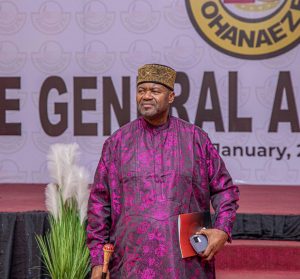
The President General of Ohanaeze Ndigbo Worldwide, Senator John Azuta-Mbata, has called on the Federal Government to release the detained leader of the proscribed Indigenous People of Biafra, Nnamdi Kanu, to enable him to seek proper medical attention.
This is as Azuta-Mbata called on Igbos across the country to ensure they register in the ongoing voters’ registration exercise and obtain their voter cards.
Azuta-Mbata said this in a short video message of himself speaking, which he sent to our correspondent on Thursday.
Kanu’s detention has remained one of Nigeria’s most contentious political and security issues in recent years. Kanu, who was first arrested in 2015 on charges bordering on treasonable felony, jumped bail in 2017 and fled the country.
He was rearrested in Kenya in June 2021 in a controversial operation by Nigerian security operatives and has since been held in the custody of the Department of State Services.
He also urged the government to explore a political solution in handling the issue of the detained IPOB leader, saying the apex government does not have any advantage in the continuous detention of the IPOB leader.
Azuta-Mbata stated, “I’m calling upon Ndigbo-nine (Igbos in general) wherever you are in Nigeria to quickly go and take advantage of the voter registration exercise that is going on right now. Go and get your cards as quickly as possible.
“Secondly, I would like to call upon the federal government of Nigeria to quickly release Nnamdi Kanu. The Government has no serious advantage in keeping him. It is important that the government ensures his safety and his welfare, and that the Government must allow him to go and get medical treatment as quickly as possible.
“The Government must adopt a political solution to this situation. I do not believe that the Government has any serious advantage in keeping him any further.”
Natasha Osawaru, the Deputy Majority Leader of the Edo State House of Assembly, has poured glowing tributes on her husband, Innocent Idibia, popularly known as 2Baba, as the Afrobeats legend clocked 50 on Thursday.
In an Instagram post, Osawaru described the music star — who is 20 years older than her — as “the love of my life,” adding that waking up beside him daily was “one of the greatest gifts ever.”
“Happy birthday to the love of my life. You are 50!!!!! Oh wow!!!!!! You spaced me with 20 years and you look younger than I do…
“Innocent Ujah Idibia my husband… words cannot express the joy you’ve brought into my life. My joy is complete with you in it,” she wrote.
The lawmaker and the multi-award-winning singer tied the knot in a private traditional wedding in Benin City in April, barely months after 2Baba ended his long marriage with actress Annie Macaulay-Idibia.
The traditional rites, held at the residence of the Esama of Benin, drew close family and associates but were kept off-camera in a bid to preserve the ceremony’s privacy.
2Baba had earlier, in February, confirmed his relationship with Osawaru publicly, declaring: “Yes, I love her. I want to marry her.”