
Tinubu condoles with FIRS, UBA over Afriland fire tragedies


President Bola Tinubu has expressed deep condolences to the families of victims and to the management and staff of the Federal Inland Revenue Service and United Bank for Africa following Tuesday’s fire outbreak at Afriland Building on Broad Street, Lagos Island.


PUNCH Online reports that seven victims have been confirmed dead after the fire incident at the Tower.


The victims were said to have died in hospitals across the state, where they had been rushed to after being evacuated from the high-rise building.


Among the victims are four staff members of FIRS, which occupies the sixth and seventh floors of the Towers.

In a statement signed on Thursday by Bayo Onanuga, the President’s Special Adviser on Information and Strategy, Tinubu commiserated with Afriland Properties Limited, FIRS and UBA over the loss of lives.


He extended sympathy to those injured, who are receiving medical attention.

The statement read, “President Tinubu extends his condolences to the management and staff of Afriland Properties Limited, the FIRS, UBA, and particularly those who lost loved ones in the inferno, and the injured who are currently receiving medical attention.


“The President commends the emergency responders, including the Federal Fire Service, first aiders, medical personnel, and members of the public, for their quick intervention and notes their deep sense of responsibility during the evacuation.


“President Tinubu advises more caution, training, and alertness to avert such emergencies in the future.


“The President prays that God Almighty will receive the souls of the departed and grant quick recovery to the injured.”


PUNCH Online gathered that doctors are battling to save the lives of the remaining victims in the hospitals.


The incident was one of two separate fire incidents that rocked the Lagos Island Business District on Tuesday, which left several others injured and goods worth millions of naira destroyed.


Nigeria’s nightclubs turn restrooms into luxurious selfie spots


With its marbled walls, exposed lightbulbs, and plentiful mirrors, the bathroom at The Library, a nightclub in Lagos, Nigeria, is practically begging patrons to snap a photo.


Then it comes, a message delivered on a gold-framed sign: “No selfies in the restroom… just kidding.”


In Nigeria, bathroom selfies are no joke.


From the buzzing mega-city of Lagos to the stuffy capital Abuja and conservative Kano in the north, bars and lounges are decking out their restrooms—not just to catch up with times but also to bring in new customers.

AFP sent reporters to women’s bathrooms across Africa’s most populous country to document the trend.


Renovations have been made, mirrors rearranged, and lighting adjusted. More is more: Marble and gold, sometimes of the faux variety, are popular design choices.


At Zaza, a nightlife staple, pressing a button on the bathroom wall will summon a complimentary glass of champagne that pops through a small window. It’s all part of a campaign to ease nerves—and draw smiles—among those in front of the mirror.


“The decor plays a huge role, especially for Nigerian ladies. And we try to attract as much as we can,” Johnny Franjeh, assistant general manager of Zaza, told AFP.


Inside, women adjusted the necklines of their brightly coloured dresses, swayed their hips, and batted their fake eyelashes, phones in hand.


The walls are adorned with floral wallpaper and multiple mirrors, allowing for different shooting angles.


From Abuja to Kano

There is something in it for the clubs, as well: the free advertising that comes with so many people posting their selfies to social media—including influencers with massive followings.


One such influencer, known as Comiebarbie, with 100,000 followers on Instagram, admitted that one of the first things she does upon arriving at a trendy locale is to “quickly go to the restroom with my friends so I can take pictures.”


In the smartphone era, the bathroom mirror selfie might be a long-established trend.

But Lagos, a boisterous megalopolis home to more than 20 million people, has found a way to make it an over-the-top novelty—as have quieter places like Abuja, the all-work-and-no-play planned city that serves as the nation’s capital.


Psychedelic-patterned walls adorn the “selfie room,” just off the women’s restroom at A Bar Called Paper, in the upscale Maitama neighbourhood.


“The most important thing I’m looking for is a suitable angle,” said Stephanie, a 26-year-old wearing a sequined, halter-neck dress that reflected endlessly as it bounced across multiple mirrors.


The trend extends all the way up to Kano, the cultural and economic capital of Nigeria’s mostly Muslim, largely conservative north.


At Antika, a lounge popular with the city’s youth, the dresses are looser and less revealing, their sleeves are longer, and patrons’ make-up is more subtle.


But once they make their way to the bathroom, they have plenty in common with partygoers in the south, spending long minutes playing with their reflections in mirrors carefully arranged against tropical wallpaper.


‘We invented that trend!’

Amid the current restroom arms race, there are also rivalries and claims of being first.


“We invented that trend!” Ghada Ghaith, CEO of Rococo, another Lagos haunt, told AFP.


Two weeks before opening, staff from the cabaret bar posted a photo from its bathroom.


“Maybe two hours later… we got like 200 requests for booking,” Ghaith said, with those making reservations mistaking the restroom for the restaurant itself.


It’s easy to understand the mix-up: no toilets were visible in the photo, though a crystal chandelier was.


AFP

BREAKING: Six more deaths confirmed in Afriland Towers fire


At least six additional deaths have been confirmed following the fire outbreak at Afriland Towers, a six-storey commercial building on Broad Street, Lagos Island, Lagos State.


The victims were employees of United Capital, a financial and investment services firm occupying the 3rd and 4th floors of the tower.


The confirmation comes just hours after the Federal Inland Revenue Service announced that four of its staff members also died in the incident on Wednesday evening.


The PUNCH reported that the fire, which reportedly started in the inverter room in the basement around 1:30 pm on Tuesday, sent thick smoke into the air and triggered panic among occupants. Some individuals were seen attempting to escape through windows as emergency responders battled the flames.

Officials of the Federal Fire Service, Lagos State Fire and Rescue Service, and other first responders rescued at least nine persons from the building. Five were revived, while four remained unconscious.


“A total of nine victims have been rescued. Five individuals have been resuscitated. Several others escaped unhurt, while efforts are ongoing to revive the remaining four,” the Lagos State Fire and Rescue Service said in a statement on Tuesday, raising concerns about possible casualties.


In an exclusive statement shared with our correspondent on Thursday morning, United Capital confirmed it lost six members of staff to the tragedy. This takes the confirmed number of deaths from the Afriland Towers fire tragedy to 10.


“It is with profound grief that the Management and Staff of United Capital Plc announce the passing of six of our dear colleagues, following the tragic fire at Afriland Towers on Tuesday, September 16, 2025.


“Our departed colleagues were an integral part of our company and family. Their painful loss leaves an immeasurable void. We extend our deepest and heartfelt condolences to their families, friends, and loved ones, and we continue to hold them in our thoughts and prayers, as well as provide all the support we can to them during this most difficult time.


“We are making preparations for an appropriate memorial service to honour their lives and mark their passing with dignity and solemnity. We thank the emergency services and all those who responded for their valiant assistance at the time of the incident.


“In this moment of untold grief, we stand together in solidarity, drawing strength from one another as we navigate this period. May the souls of the departed rest in peace,” the company said.


Emergency responders had earlier confirmed rescuing several occupants after the fire, which was believed to have been triggered by an inverter explosion. While officials have yet to release an official casualty figure, eyewitnesses and internal company sources insist that “not everyone made it out alive.”

Attempts to reach the Lagos State Fire and Rescue Service, the National Emergency Management Agency, and the Lagos State Emergency Management Agency for confirmation were unsuccessful at the time of filing this report.

Reclaiming our ancestors’ land, ‘African tribe’ defies eviction in Scotland


A self-styled African tribe in Scotland has claimed woodland near Jedburgh in Scotland as ancestral land and set up camp there, despite repeated evictions.


The Scottish Borders Council said sheriff officers had already cleared the group from private land on Tuesday, but not long after, they moved a few metres away onto council-owned property. The council has now launched fresh court proceedings to remove them.


As reported by BBC on Tuesday, the three members of the self-proclaimed “Kingdom of Kubala” were woken by sheriff officers at 08:00 on Tuesday and removed from their original encampment in private woodland.


However, the group, led by Ghanaian Kofi Offeh, 36, who calls himself King Atehehe, alongside Zimbabwean Jean Gasho (Queen Nandi) and American Kaura Taylor (Asnat), quickly re-established their camp over a fence on council land.

Kofi Offeh, who calls himself King Atehehe, is from Ghana. Photo credit: BBC

They insist they are “reclaiming land stolen 400 years ago”, a claim dismissed by the council as unlawful occupation. “We are not trespassers, we are reclaiming what belongs to our ancestors,” Offeh declared.


Deputy leader of the council, Scott Hamilton, confirmed that new legal papers had been filed. “They have rebuffed every opportunity to engage with us. We can help them, but we won’t sit back and let them break the law,” he said.

The eviction order was issued last week by Sheriff Peter Paterson after the group ignored earlier instructions to vacate. Officials and police officers spent nearly 90 minutes dismantling their tents and packing up belongings before the relocation.


The group, which first arrived in Jedburgh in the spring, have attracted a significant online following, with more than 100,000 supporters across TikTok and Facebook.


They previously camped at multiple sites, including hillside land above the town and woodland near an industrial estate, each time facing legal challenges from landowners.


Local officials said the repeated encampments had left owners with “no option” but to seek court-backed eviction orders. Hamilton described the latest move as “disappointing but not surprising.”


Despite mounting legal pressure, the “Kingdom of Kubala” has vowed to remain in Jedburgh, insisting its claim to the land is legitimate and symbolic of its ancestral rights.

The group previously camped on the left of the wire fence and has now moved a few metres to the right. Photo credit: BBC

A’Ibom commissioner condemns abuse of tradition


The Akwa Ibom State Commissioner for Local Government and Chieftaincy Affairs, Frank Archibong, has condemned in the strongest terms recent abuses of tradition and culture in the state.


He cited specific instances of individuals using the internet to hurl insults at the Governor and a case where a masked individual inflicted physical harm on a citizen.


Disturbing footage of one Princess Udoito, summoning the state governor, Umo Eno, before a deity of Eket, had surfaced on social media. Dressed in tight black clothes with rafia leaves knotted around her ankle and waist, Udoito was seen standing before a tree, clutching a local bottle of gin and performing a ritual.


Speaking during a visit to the Traditional Rulers Council in Uyo on Wednesday, Archibong emphasised that while the government cherishes and promotes culture, it will not tolerate its perversion into a tool for violence and intimidation.

He therefore directly appealed to the Royal Fathers, as custodians of peace and order, to curtail such excesses within their domains.


“While the state government is not against culture, it will not condone harmful practices against the people in its name,” he stated.


He also called for unified and sustained support from traditional rulers for Governor Umo Eno’s administration and its transformative ARISE agenda.


Archibong stated that the depth and quality of the Governor’s development blueprint for the state necessitate a broad coalition of support from every sector.

While thanking the Royal Fathers for their support thus far, Archibong passionately appealed for this collaboration to continue through the Governor’s first term and beyond, adding that such an enduring partnership is crucial to consolidating the developmental gains already achieved.


“This support for the governor has been remarkable, and I’m sure it will continue. We must support him in all ramifications, 360 degrees,” Archibong declared.


He assured the monarchs that their efforts are highly valued, noting, “I appreciate the royal fathers for their work, and I know the governor does not take their contributions for granted.”


He described the traditional institution as the bedrock of societal stability, indispensable for ensuring order and fostering an environment where government policies can flourish for the benefit of all citizens.


Reflecting on his own experience as a former Council Chairman, the Commissioner acknowledged the relentless service and challenges faced by traditional rulers and expressed profound gratitude for their steadfast backing.


On civic duties, the Commissioner urged the traditional leaders to champion the ongoing voter registration exercise, as the response so far has been unimpressive.

He explained that as key influencers, their role is critical in strengthening the state’s democratic foundations by ensuring a fully enrolled electorate, which is essential for fair political representation and development planning.


The Commissioner also highlighted the upcoming state anniversary celebrations on September 23rd, an event designed to honour the traditional institution and therefore called for their full cooperation to ensure its success, framing it as a testament to the government’s respect for the royalty.

Two Ebola survivors discharged in DR Congo


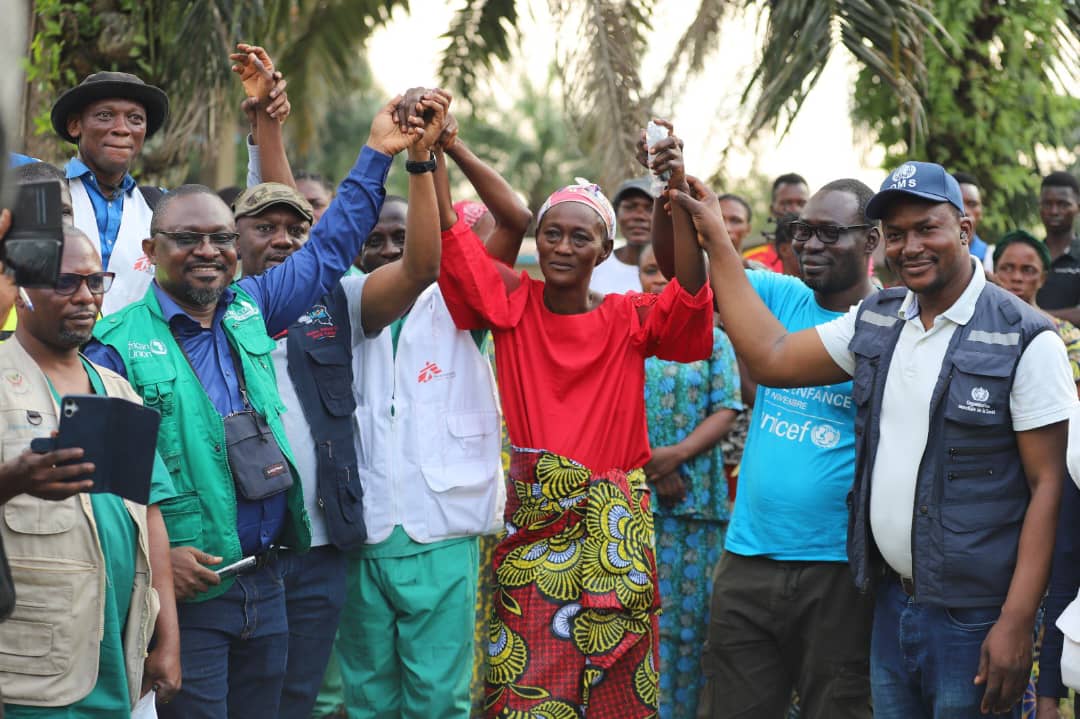
Health officials in the Democratic Republic of Congo have announced that the first two patients treated for Ebola in the Bulape health zone, Kasai Province, have fully recovered and been discharged from the local treatment centre.


This was disclosed by the World Health Organisation Regional Office for Africa on its X handle on Tuesday.


The milestone marks a significant step forward in the country’s ongoing fight against the virus, which re-emerged in the region earlier this month.


The recoveries were made possible through strengthened clinical care and rapid response measures introduced over the past week.


These efforts were supported by the Ministry of Health in DR Congo, with assistance from the WHO, Médecins Sans Frontières, ALIMA, and other humanitarian partners working on the ground.


“@MinSanteRDC—with support from @WHO, @MSF, @ALIMA_ORG and other partners—has accelerated response actions to improve the quality of clinical care over the past week.


“Appropriate control measures are being rolled out to curb the spread of the virus, save lives, and end the outbreak as quickly as possible,” WHO posted.


On September 4, health authorities in the DR Congo declared an outbreak of Ebola virus disease in Kasai Province.

The Ebola outbreak in DR Congo comes at a time when much of Central and West Africa continues to grapple with overlapping health and humanitarian crises, including cholera outbreaks, malnutrition, and displacement.


The DR Congo’s last outbreak of Ebola virus disease affected the north-western Equateur Province in April 2022.


It was brought under control within three months, thanks to robust efforts by the health authorities. In Kasai Province, previous outbreaks of Ebola virus disease were reported in 2007 and 2008. In the country overall, there have been 15 outbreaks since the disease was first identified in 1976.


Ebola virus disease is a rare but severe and often fatal illness in humans. It is transmitted to people through close contact with the blood, secretions, organs, or other bodily fluids of infected animals such as fruit bats (thought to be the natural hosts).


Human-to-human transmission occurs through direct contact with the blood or body fluids of a person who is sick with, or has died from, Ebola; through objects contaminated with body fluids from an infected person; or through the body of a person who died from the disease.

As of September 4, 2025, the WHO said 28 suspected cases, including 15 deaths (case fatality ratio: 54 per cent), had been reported from three areas of the Bulape health zone (Bulape, Bulape Com, and Dikolo) and the Mweka health zone. Among the deaths, four were healthcare workers. About 80 per cent of the suspected cases are aged 15 years and older.

Meanwhile, the global health body said an initial 400 doses of the Ervebo Ebola vaccine—from the country’s stockpile of 2,000 doses pre-positioned in the capital, Kinshasa—have been delivered to Bulape, one of the current hotspots of the outbreak.


It said additional doses will be delivered to the affected localities in the coming days.


Private sector key to future of Carnival Calabar, says festival chairman


The Chairman of Carnival Calabar, Gabe Onah, has called for stronger private sector investment to sustain the popular street party.


Onah made the call on the sidelines of the 21st Akwaaba African Travel Market on Tuesday in Lagos.


The chairman said the annual carnival, which would turn 20 this year, was originally designed as a strategy for community participation and economic development.


“Carnival Calabar must breathe beyond the stranglehold of government.

“For sustainability, the private sector has to take more than a passing interest,” he said.


Onah credited the continuity of the festival to successive governors of Cross River, such as Donald Duke, Liyel Imoke, Ben Ayade, and the present governor, Bassey Otu.


He, however, emphasised that the community buy-in and the welcoming spirit of Calabar’s people were just as significant.


“The smiles of our people, the restfulness of the city and our natural blessings – vegetation, mountains, waterfronts and greenery – are what make Calabar stand out,” he said.


Speaking on Akwaaba’s role in regional tourism, Onah described the event as the melting point for the travel and trade industry.


“In tourism, we will keep saying partners must collaborate, not compete.


“Akwaaba has successfully done this for Nigeria,” he said.

Highlighting emerging trends, he said today’s tourists are digital, unique and global.


Onah emphasised the need to embrace artificial intelligence in tourism promotion.


The chairman added that families were becoming more central to travel decisions, which he said informed the upgrade of the children’s carnival to a junior carnival in Calabar.

Onah also noted that there was a growing demand for takeaways and memorabilia, as visitors seek lasting connections to cultural experiences.


It can be recalled that PUNCH Online reports on January 11, 2025, that the Cross River Tourism Bureau reported that the 2024 Calabar Carnival drew over 300,000 tourists between November 1 and December 31, marking a 42 per cent increase from 2023.


The month-long festival also attracted an estimated 450,000 onsite spectators for signature events such as the Cultural Carnival, Children’s Carnival, and Bikers Carnival, while more than 1.2 billion viewers tuned in globally via DSTV and over 100 million through live online streaming.


Most visitors came from Abuja, Lagos, and Akwa Ibom, which boosted Calabar’s hotel occupancy rate to 68 per cent, with more than 90 per cent of hotels fully booked during the peak period in December.


According to the bureau’s Managing Director, Ekpenyong Ojoi, the festival generated significant economic impact, with hotel bookings valued at N2.79 billion and food sales estimated at N900 million.

Major events such as Funfest and the Calabar Fashion Show brought in N100 million, while nightclubs generated N400 million. Ancillary activities, including online streaming, car rentals, and food and drinks, added another N1 billion, while visitor transportation costs reached N8.87 billion, underscoring the carnival’s growing role as a key driver of tourism and revenue for Cross River State.


Carnival Calabar has shown its strength as both a cultural celebration and an economic driver for Cross River State. But as Chairman Gabe Onah noted, its long-term success will rely on greater private sector involvement to ensure the festival continues to thrive beyond government support.

NEMA leads evacuation as flood ravages Adamawa communities


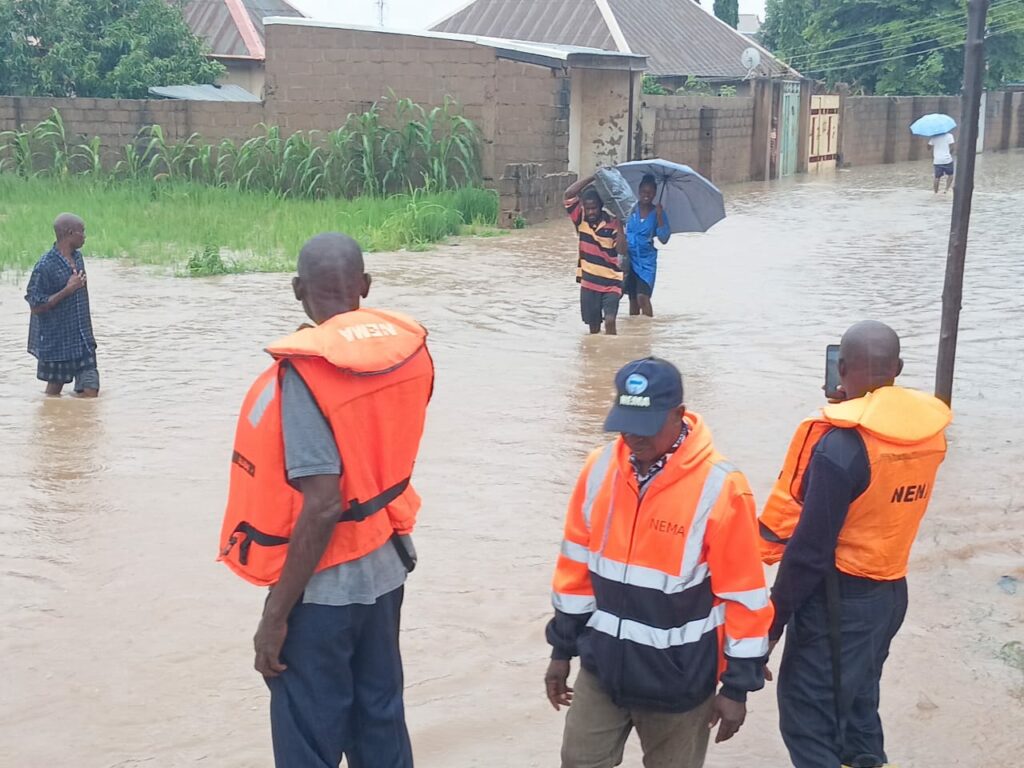
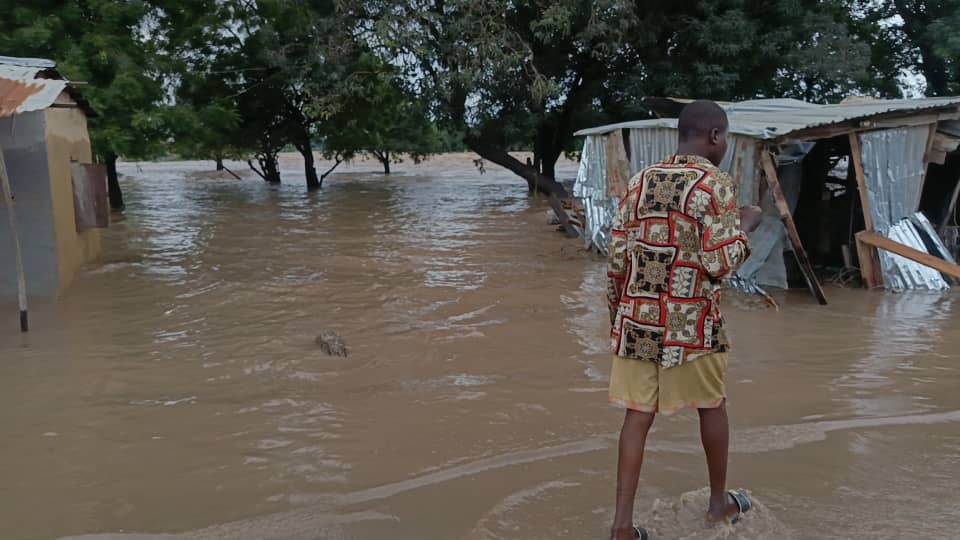
The Yola Operations Office of the National Emergency Management Agency has led search, rescue, and evacuation efforts after severe flash flooding submerged 13 communities across Yola North and Yola South Local Government Areas of Adamawa State on Tuesday.


The downpour, which began around 4 a.m. and lasted until noon, left worship centres, residential buildings, and business premises inundated.


Thousands of households were displaced in areas including Damilu, Jambutu, Bachure, Runde, and Shinko, with many families forced to shelter along major roads.


This comes barely two months after a similar disaster claimed over 30 lives in the state.

On Sunday, the Federal Government had warned that 32 locations across 11 states, including Adamawa, were at risk of heavy rainfall and flooding between September 14 and 18, 2025.


Speaking exclusively to The PUNCH, the Executive Secretary of the Adamawa State Emergency Management Agency, Dr. Celine Laori, described the situation as devastating.

“So far, there is no life lost recorded. My office, the police, fire service and other security agencies are all carrying out rescue operations now in the affected areas,” she said.


The spokesperson for the Adamawa State Police Command, SP Suleiman Nguroje, in a statement, said the command had deployed its marine unit to support rescue missions.


“The Commissioner of Police, CP Dankombo Morris, has personally visited some flood-affected areas of Limiwa, Rumde, Shinko, Jambutu, amongst others, to assess the situation for necessary assistance. Members of the public in the affected areas are advised to remain calm, avoid flooded zones, and ensure the safety of their families and property,” he stated.


On its official X handle, NEMA confirmed that its rapid-response teams, working alongside ADSEMA, the fire services, local emergency volunteers, and security agencies, had evacuated vulnerable households, including women, children, the elderly, and persons with disabilities, from high-risk zones to temporary shelters.

“NEMA teams conducted rapid on-the-spot assessments to determine the extent of flooding, damage to property and infrastructure, and urgent humanitarian needs,” the agency added, noting that the operation was carried out in close collaboration with state authorities and humanitarian partners to ensure timely assistance and prevent duplication of efforts.

Flood submerges farmlands, 18 communities in Niger


Flood has submerged several farmlands in some communities in Niger State.


This followed an early morning rainfall on Sunday which ripped through farmĺands in Kafin Koro, Paikoro local government areas of the state.


The flood also affected 18 communities in Lapai Local Government Area of the state where some farmlands were also affected, and many others at risk of being swept away.


Some of the affected communities include Dere, Eshi, Apataku, Tsakanabi, Kuchi Kakanda, Arah, Achiba, Rebba, Ebwa, Pele, Edda, Rigido, Gbami, Yawa, Baka, and Muye.


The state government on Sunday re-echoed its earlier warning to riverine communities in the state to immediately relocate to higher grounds, saying the rains have intensified across the state.


The Special Adviser to the Governor on Communication, Media and Strategy, Jonathan Vatsa, in a statement, appealed to communities in the affected areas to immediately relocate to a safer place to avoid further disaster in the state.


Vatsa said that though the government understood the people’s attachment to their ancestral homes, there is the need for them to adhere to the government warning and relocate pending when the rains woulď be over.

“We as a government will continue to be proactive by appealing to the people, especially those in the flood-prone areas, to immediately move upland to avoid the experience of the Mokwa disaster.

“The government is aware of their attachments to their ancestral homes and lands, but with the various flood alerts, and what we are already experiencing, there is an urgent need for them to heed to the government’s warning.


“The Mokwa experience is still very much with us, and we can not afford a repeat of such an experience.


“That is why the government is urging the people to move to a higher ground,” Vatsa said.


The special adviser disclosed that the Nigerian Meteorological Agency had previously identified 15 out of the 25 local government areas in the state as very vulnerable to flooding every rainy season.


The Federal Government had instructed residents of four local government areas of the state to move to safer locations as heavy rainfall was expected to trigger flooding between July 31 and August 5, 2025.


This latest directive by the Federal Government follows a flood alert issued by the National Flood Early Warning Centre under the Federal Ministry of Environment, which revealed that communities in Rijau, Sarkin Pawa, Suleja, and Mashegu are at high risk of flooding during the forecast period.

The Federal Government’s warning was contained in a statement titled “Flood Prediction”, signed by the Director of Erosion, Flood, and Coastal Zone Management Department, Usman Bokani, where he urged relevant authorities to take proactive measures to mitigate any disaster.


While disclosing that the state government would soon embark on an enlightenment campaign to all the flood-prone communities, Vatsa called on traditional rulers, community and religious leaders to join the government in sensitising the people.

Rainstorm destroys 50 houses in Plateau community


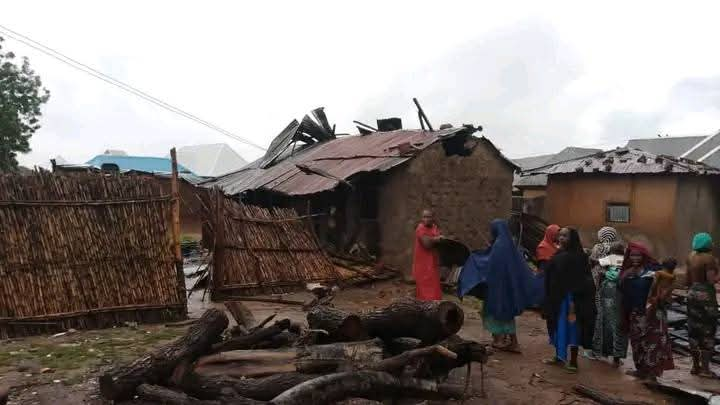
A severe rainstorm swept through the Shimankar District in Shendam Local Government Area of Plateau State on Sunday, leaving a trail of destruction in its wake.


According to eyewitnesses, at least 50 houses, including schools and worship centres were destroyed in the Menkaat community.


A resident of Menkaat community, Lawrence Longwwlk, confirmed the incident to PUNCH Online in Jos on Sunday.


He said the devastating storm, which occurred early Sunday morning, blew off roofs and caused several buildings to collapse.


He added that residents of the affected area are in dire need of assistance, with two primary schools and a worship centre completely destroyed.


“We’ve been hit seriously by this rainstorm. At least 50 houses have been affected.

“Two primary schools and a worship centre in Shimankar was completely blown down by rainstorm.


” From the level of damage, the people need urgent help.” Longwalk said, echoing the sentiments of the community, who are calling for intervention from relevant authorities.


The incident highlights the vulnerability of communities in Plateau State to natural disasters, particularly during the rainy season.


With the state’s geography characterised by rocky formations and high altitudes, residents are often exposed to harsh weather conditions.


The Executive Secretary of the State Emergency Management Agency, Sunday Abdu, was not immediately available for comment when contacted by our correspondent.


However, a staff member of the agency, who preferred to remain anonymous, confirmed that the agency was aware of the havoc caused by the rainstorm in Shendam and was making plans to visit the affected community to assess the situation and provide possible assistance.

Exit mobile version