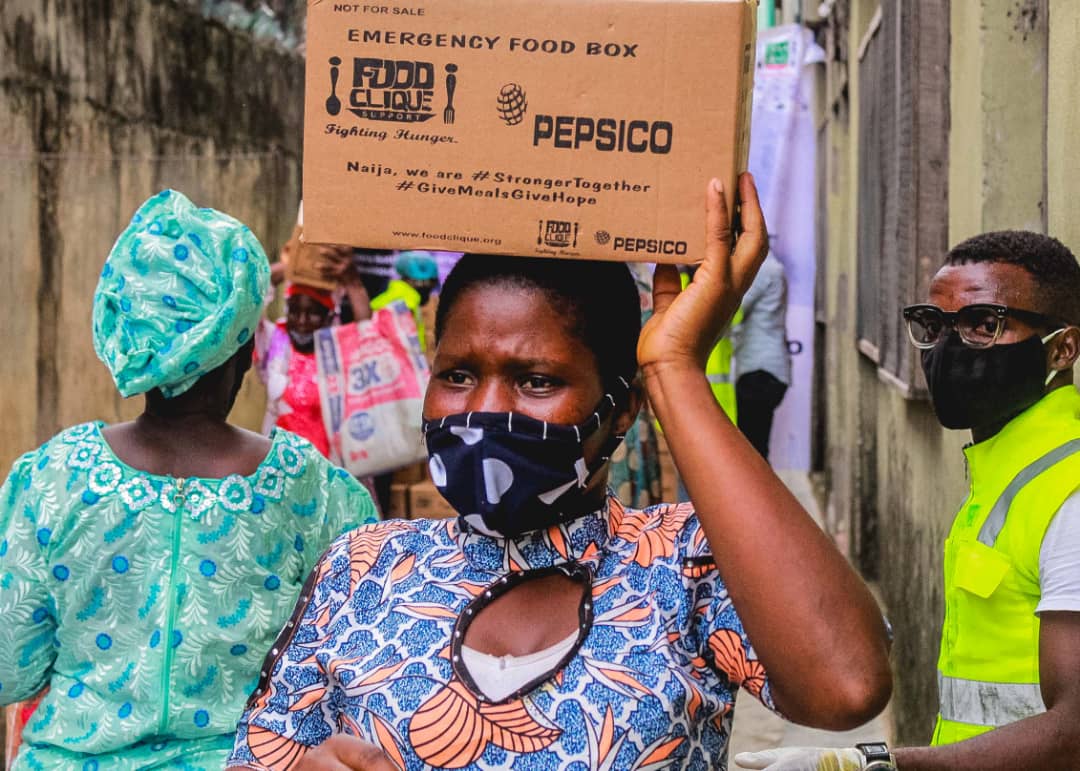
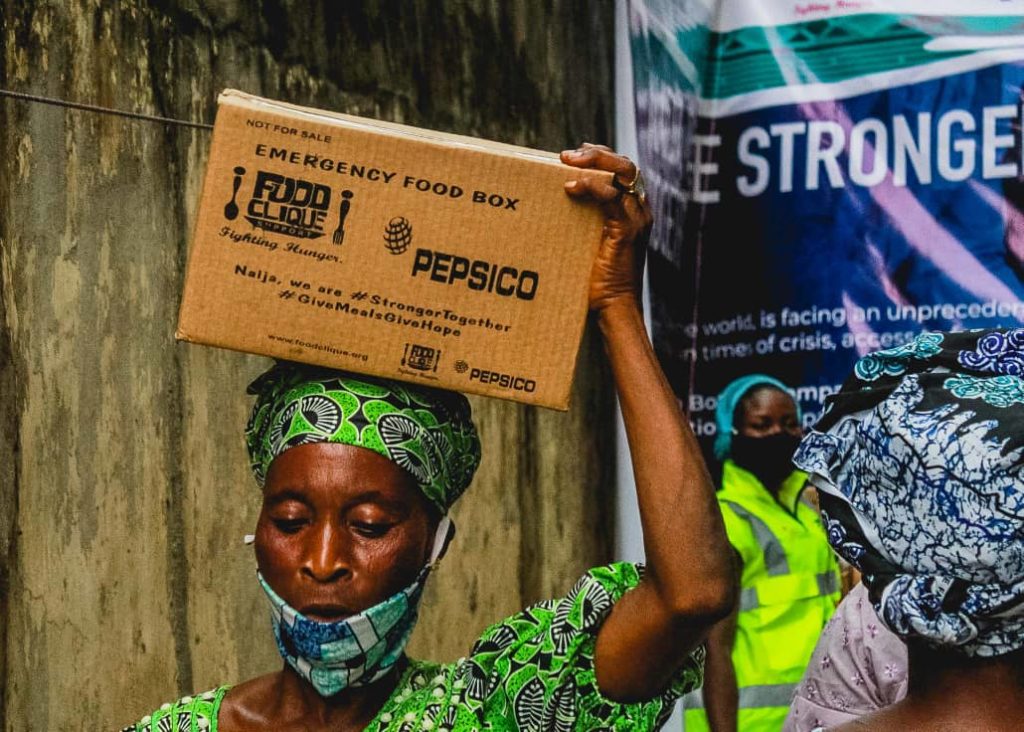
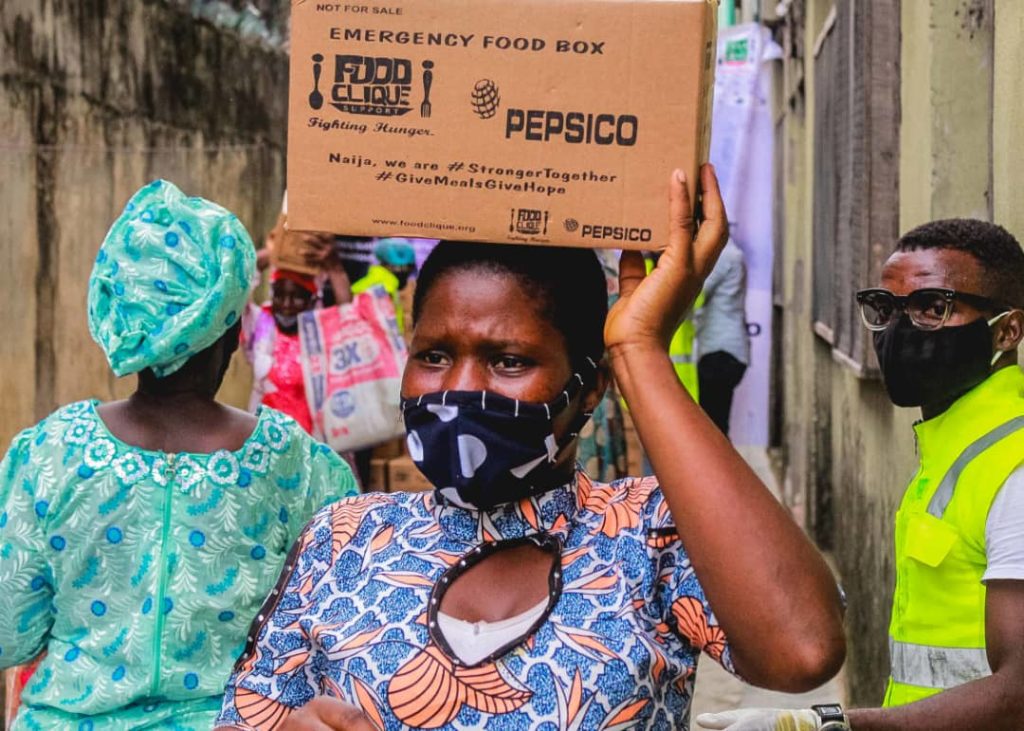
PepsiCo Nigeria has unveiled its one million meals initiative hashtag #GiveMealsGiveHope to feed vulnerable communities amidst the COVID-19 crisis. Enabled by the PepsiCo Foundation, the meals will be packaged and distributed by FoodClique Support Initiative, an NGO with proven reputation in fighting hunger, identifying the most vulnerable communities through their volunteer network and working with community leaders.
PepsiCo’s Sergio Paya, General Manager Sub-Saharan Africa Beverages said, “We launched the Give Meals, Give Hope program to meet the basic needs of the most impacted segments of the Nigerian population, as food is at the heart of what PepsiCo does. As one of the leading food and beverages companies in Nigeria and across the African continent, we believe that we have a responsibility to focus on providing essential food items to those affected by this pandemic.”
FoodClique’s Founder and CEO, Bolajoko Fadipe explains, “We are at the forefront of the fight against hunger in Nigeria. The current pandemic has exacerbated the need to provide food across the country. Through our #GiveMealsGiveHope partnership with PepsiCo, we will organize food boxes and leverage on our network to distribute to those who need support the most.”
The #GiveMealsGiveHope relief initiative is part of a US$45 million global initiative launched by PepsiCo and The PepsiCo Foundation, focused on helping people and communities most affected by this devastating virus.
The company is funding vital support including protective gear for healthcare workers, testing and screening services, and is already in the process of distributing more than 50 million nutritious meals to at-risk populations by supporting Food Banks and other partners around the world.
Call for Increased Investment in Digital Connectivity
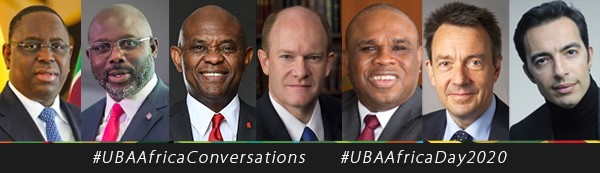
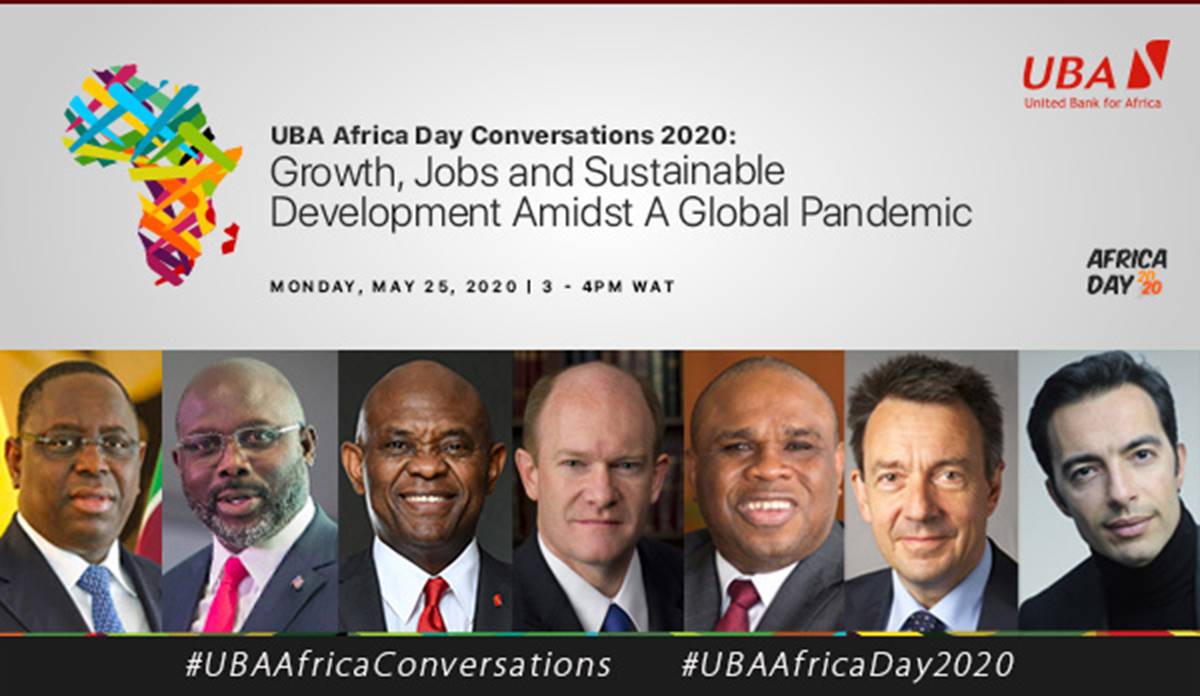
United Bank for Africa (UBA) celebrated Africa Day 2020, by bringing together global leaders at the 2nd UBA Africa Day Conversations, screened live across the continent. UBA helps set the debate around African economic development through its series of “Africa Conversations”. This year, the focus was on the Sustainable Development Goals (SDGs) and the Covid-19 pandemic. Leaders emphasised the need for meaningful collaboration between governments and the private sector, as a requirement for the quick recovery of the economy of the African continent post Covid-19.
The panel included the President of Liberia, H.E George Weah; United States Senator Chris Coons; the President & Chairman of the Board of Directors of the African Export–Import Bank (AFREXIMBANK), Professor Benedict Okey Oramah; President, International Committee of the Red Cross (ICRC), Peter Maurer; and was moderated by the Group Chairman, UBA Plc, Tony O. Elumelu.
Other leading voices contributing were the Founder, Africa CEO Forum, Amir Ben Yahmed; the Secretary-General of the African Caribbean and Pacific Group of States (ACP), H.E George Chikoti; Administrator, United Nations Development Program (UNDP), Achim Steiner and Donald Kaberuka, the former President of the African Union.
Elumelu spoke on the need to mobilise quickly and explained the necessity to identify a more fundamental solution to Africa’s challenges. “This is the time for us to deal with the situation, this is not the time for finger pointing, but for collaborative efforts by governments and organisations, to fight the pandemic globally. There is need to flatten the curve, we need global co-operation to stem global depression. Africa requires a large stimulus package, and we need long-term solutions to prevent a cycle of debt.”
Liberian President, George Weah, demonstrated how collaboration has assisted his country to stem the sufferings brought about by the coronavirus pandemic. “In Liberia we have taken measures to ease the financial burden on vulnerable business in the informal sector by providing small loan assistance to SMEs and traders. In addition, we are working with commercial banks to manage the repayment of loans as well as to create stimulus packages for citizens,” President Weah said.
US, Senator Chris Coons made valuable contributions to the discussions, saying “We must develop a vaccine that is free and affordable and freely distributed so that full economic activities can return. This is no time to be looking backwards. We recognise the power of collective collaboration on the continent.”
Prof. Benedict Okey Oramah called for the swift implementation of the African Continental Free Trade Area (AfCFTA) agreement and disclosed that Afrexim has made available $200million to supply fertilisers and grains amongst across Africa. The Afrexim boss asserted “If Africa allows hunger takeover the people, it will see an increase in insecurity, which will take a long time to overcome.”
George Chikoti of ACP, said that the huge task of economic recovery on the continent, rests on both the government and the private sector. “African governments need to accept the support of the Private Sector in alleviating the impact of the COVID-19 pandemic in Africa. We have so far been able to release $25m to all member states”, Chikoti added.
Achim Steiner of the UNDP focused on digital connectivity as an enabler of development. “What we need to look at is to find a way for government as a regulator and also as an investor, to leverage private sector investment into these areas” Steiner said.
Peter Maurer, President, ICRC, said there is the need to look at pandemics as part of a broader health system which needs stabilisation. “We must do more than life-saving. This pandemic has illustrated the weakness of health, water, sanitation and social systems, and we have to heavily invest into the stabilisation of these systems,” he said.
Amir Ben Yahmed said the crisis is going to be a super accelerator of already existing trends. “We have to get away from the commodity driven model which has failed in creating prosperity. “We need to use this crisis to take Africa to the next level. We also need to attain self-reliance. Self-reliance is an important goal,” Yamed said.
The UBA Africa Conversations concluded with the need to act quickly and effectively, highlighting that Africa has lessons to teach the world in containment, but was economically vulnerable.
The United Bank for Africa is a leading pan-African financial institution offering banking services to more than twenty million customers globally. With footprint in 20 African countries and presence globally in the United Kingdom, the USA and France, UBA is connecting people and businesses across Africa through retail, commercial and corporate banking, innovative cross border payments and remittances, trade finance and ancillary banking services.
…Global co-operation needed to stem global depression
Global leaders at the second edition of United Bank for Africa (UBA) African Day Conversations, have emphasised the need for meaningful collaborations between governments and the private sector as a panacea for the quick recovery of the economy of the African continent post Covid-19.
The leaders which included the President of Liberia, H.E George Weah; United States Senator Chris Coons; the President & Chairman of the Board of Directors of the African Export–Import Bank (AFREXIMBANK), Professor Benedict Okey Oramah; President, International Committee of the Red Cross (ICRC), Peter Maurer; President spoke on Monday at the virtual Leadership Panel which was moderated by the Chairman, UBA Plc, Tony Elumelu.
Other leading voices who made up the panel were the Founder, Africa CEO Forum, Amir Ben Yahmed; the Secretary-General of the African Caribbean and Pacific Group of States (ACP), H.E George Chikoti; Administrator, United Nations Development Program (UNDP), Achim Steiner and Donald Kaberuka.
While moderating, Elumelu, who is also the Founder of the Tony Elumelu Foundation, spoke on the need to mobilise everyone and explained the necessity to discover a more fundamental solution to Africa’s challenges through collaborative efforts.
“This is the time for us to deal with the situation we have and also forge a better situation for everyone, acting again collectively,” he said. “This is not the time for finger pointing but for collaborative effort by governments and organizations to fight the pandemic globally.”
Continuing, Elumelu pointed out that all hands must be on deck if the African continent is to have a quick recovery from the pandemic, adding “There is need to flatten the curve, we need global co-operation to stem global depression. Africa requires a large stimulus package, and we need long-term solutions to prevent a cycle of debt.”
In his submission, the Liberian President, George Weah, established how collaborations worked in his government in an attempt to stem the sufferings brought about the coronavirus pandemic.
“In Liberia we have taken measures to ease the financial burden on vulnerable business in the informal sector by providing small loan assistance to SMEs and traders. In addition, we are working with commercial banks to manage the repayment of loans as well as to create stimulus packages for citizens.”
On his part, US, Senator Chris Coons, said, “It is important to take a moment to look at how African leaders have reacted to the pandemic. In order for us to recover from this pandemic, we must develop a vaccine that is free and affordable and freely distributed so that full economic activities can return. There are ways we can invest in debt relief, invest in infrastructure and human development. This is no time to be looking backwards. We recognise the power of collective collaboration on the continent.
While pointing out that the pandemic poses an opportunity for Africa to be independent and promote its growth and development as a people without external help; Prof. Benedict Okey Oramah, on his part, said COVID 19 has taught Africa that there comes a time when every group of people will fend for themselves.
He called for the swift implementation of the African Continental Free Trade Area (AfCFTA) agreement, adding, “The priority of government should be to make sure that the AfCFTA gets implemented without delay. If there was any doubt about the importance of that agreement, this pandemic has told us that this is the way to go.
Continuing, Oramah said, “The pandemic has shown so many weaknesses we have across our continent. We know that hunger is looming if we do not do anything. If we allow hunger to take over from the COVID 19 pandemic, we will begin to see political problems filling in. For Africa the problems go beyond health challenges to other areas such as food supply. Hunger is looming and if action is not taken, Africa will see political problem. Africa has become the epicenter of the economic devastation that this pandemic has unleashed upon us.”
While disclosing that Afrexim has made available $200million to supply fertilizers and grains amongst others across Africa, the Afrexim boss added that “If Africa allows hunger takeover the people, it will see an increase in insecurity, which will take a long time to overcome.”
George Chikoti of ACP, said that the huge task of economic recovery on the continent, rests on both the government and the private sector. “The responsibility of COVID-19 does not rest on the government alone, the private sector needs to play a big role in lifting the burden of the pandemic. African governments need to accept the support of the Private Sector in alleviating the impact of the COVID-19 pandemic in Africa,” he said.
“We have been able to release $25m to all member states. One of the major challenges is to make sure that in all countries, we have agricultural activity and high productivity. What we should learn from the impact of this pandemic is that the international community can look at how well they can fund all these initiatives that come from our countries, Chikoti added.
Achim Steiner of the UNDP noted that Digital connectivity is very essential as it is a crucial opportunity to connect all schools across the continent, adding that emphasis on Healthcare is also very important. “Digital connectivity is very crucial to connect schools to the internet. We need to address inequality; also, the virus has put a spotlight on Africa’s healthcare system. Africa needs to look at intermediate strategies like micro-insurance to ramp up this sector. Healthcare has the ability to make a large percentage of the occupation fall into extreme poverty.
“What we need to look at is to find a way for government as a regulator and also as an investor, to leverage private sector investment into these areas” Steiner said.
Peter Maurer, President, ICRC, said there is the need to look at pandemics as part of a broader health system which needs stabilisation; A lot of vulnerable populations in Africa have been heavily infected by the pandemic. “We must do more than life-saving. This pandemic has illustrated the weakness of health, water, sanitation and social systems, and we have to heavily invest into the stabilization of these systems.
Throwing more light on this, Maurer said, “Two things need to follow after live saving during the pandemic. First, the pandemic has illustrated the weak situation of health, water and food systems and we need to heavily invest both by the public and private sectors to stabilize the health sector. Secondly, investment has always gone into the more developed parts of Africa and not the fragile parts. We need Private Public Partnerships and investments by multi-corporate institutions to develop these areas’ he noted.
Amir Yahmed said the crisis is going to be a super accelerator of already existing trends. “We have to get away from the commodity driven model which has failed in creating prosperity. Secondly, self-reliance should be one of the major objectives. The pandemic is wake up call for Africa – Creating new streams of revenue and self-reliance by the African continent”
“We need to use this crisis to take Africa to the next level. This crisis is going to be a super accelerator of already existing trends. I think it has to be a wake-up call for us to attain goals we haven’t reached. Create new revenues for the economy. We also need to attain self-reliance. Self reliance is an important goal. Africa manufactures [only] 2% of what it produces. We need to use this crisis to take Africa to the next level. Invest in digital infrastructure, digital education, agriculture is another opportunity we need to grab. We need to get the AFCTA working,” Yamed said.
Donald Kaberuka on his part opined that “What we need (for this crisis) is something unusual, it is not business as usual. It is not marginal action, it is radical action.”
Top business amazon and the Iyalaje of the Source and Apapa at large, Princess Dr. Toyin Kolade has expressed her joy for all Muslims on the celebration of the 2020 Eid-il-Fitri. The sultry and workaholic Chairman/CEO of Fisolak Global Ventures took time out to felicitates with Muslim brothers and sisters who have the rare opportunity of witnessing this year’s fasting period successfully.
She urged then to be grateful to go for the uncommon achievement adding that it is the time for Muslims to be more closer to the Almighty Allah and also be more prayerful and helpful to the needy.
Princess Dr. Toyin Kolade, the royal apparel who has been a constant helper of the poor masses and a woman of great philanthropic gestures then called on all Nigerians to be wary about the presence of the corona virus disease, urging all and sundry to be protective and obey the rules guiding the spread of the dangerous killer virus. She also prayed that the Almighty Allah shall intervene as soon as possible in eradicating the pandemic from the surface of the entire universe. Princess Kolade on behalf of her husband the indomitable Customs topshot, Prince Kayode Kolade and their children wishes all Muslims brethren more Eid-il-Fitri to be celebrated.
The President of Senegal, H.E. Macky Sall, President of Liberia, H.E George Weah and United States Senator Chris Coons will form part of a high-level leadership panel to be moderated by the Chairman, United Bank for Africa (UBA) and Founder of the Tony Elumelu Foundation, to discuss Africa’s economic recovery in the 2020 edition of UBA’s Africa Conversations.
The African Presidents and global leaders will be joined on the panel by other global leaders including the President & Chairman of the Board of Directors of the African Export–Import Bank (AFREXIMBANK), Professor Benedict Okey Oramah; President, International Committee of the Red Cross (ICRC), Peter Maurer and President and Founder, Africa CEO Forum, Amir Ben Yahmed.With over 60% of Africans living below the poverty line, the pandemic poses an existential threat to Africa’s economic growth and this session will define the lessons learned and the roadmap to economic growth and sustainability.
Together, the leading voices will speak on Monday, May 25th, 2020, on the theme ‘UBA Africa Day Conversations 2020: Growth, Jobs, and Sustainable Development Amidst a Global Pandemic,’ This will be the second edition of the symposium organised annually by UBA, in celebration of Africa Day.
The open event will be held virtually starting at 3pm WAT and interested participants can register on the UBA website here.
Africa Day is celebrated worldwide on May 25th, to showcase the diversity and beauty of Africa and its people. The United Bank for Africa, with its pan-African footprint spanning 20 African countries, New York, Paris, and London, continues to lead the conversation and focus on the the development, growth, and unity of the continent.
If music be the food of love, play on, William Shakespeare said in the first line of the play Twelfth Night asking for music after he was frustrated in courtship.
This no doubt picture where words fail and music remain the only voice for the voiceless. Ajiboye Olakunle Michael popularly known as King Omo Eqo is one of the few sonorous voice versatile singer who brings life to humanity through his music. His deep lyrics without exaggeration open the secret of life bringing peace while abolishing strife. The creative singer cum songwriter has been in the music scene professionally since 2010 with the launch of his debut single “My Eqo” that enjoyed tremendous airplay and download on radio and music blogs in Nigeria and international borders.
This time around, Michael is not ready to relent on his effort to turn things around in the most competitive industry as he is ready to drop a new single “Keep Rocking” from his upcoming EP “Bo Lo Ya”.
The cool dude in a quest to explore the world while showcasing his music dexterity, he left the shores of Nigeria in 2013 for South Africa where he’s making the country proud.
King Omo Eqo as Michael is fondly called has shared stage with various well known artists such as Tuface, Sound Sultan, Harry Song and artists around African continent like; iFani from South Africa, SB from Mozambique, Buffalo soldier from Zimbabwe, CTEA BEAT from Ghana to name but a few. When he was asked, what inspire his music, he said “My music is a fusion of metaphorical street rap and Afro style and I make sure I choose my lyrics because life is like a beautiful melody, only the lyrics can lift a soul and Music is the language if the spirit.
It opens the secret of life bringing peace, abolishing strife.” On those he looked up to, he said “I started music at a time when Nigerian artists only look up to American artists. So, on the international scene I would say Wyclef Jean, Nas, Nate Dogg and back home people like Mode9, 2Face, 9ice Burna boy and few others I can’t remember right now”.
Meanwhile, as Nigeria artistes continue to make fame breaking world records but still live in penury, King Omo Eqo has this to say “If I’m given an opportunity to change something about the music industry in Nigeria it will be our publishing and distribution network because artist hardly make a living doing music due to poor publishing and distribution network.” He concluded
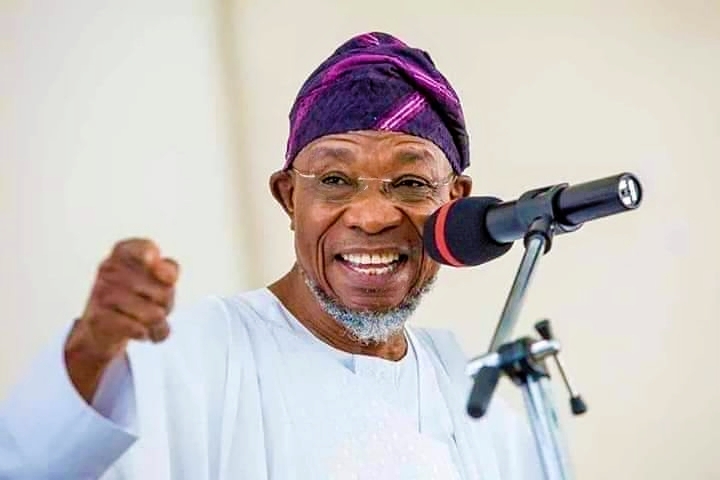
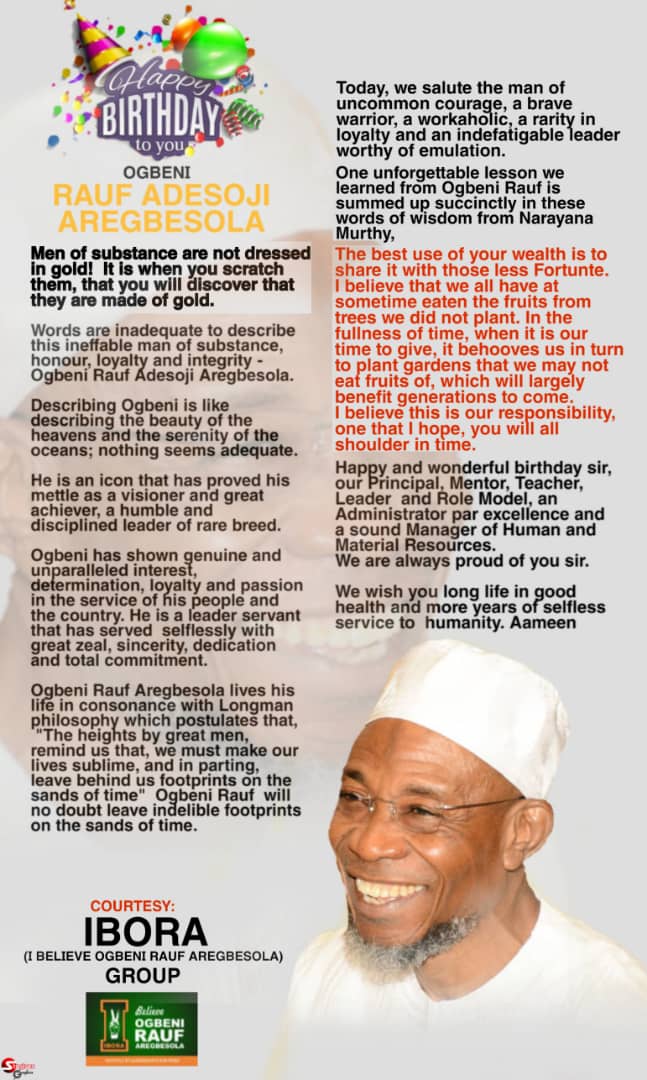
I Believe Ogbeni Rauf Aregbesola ( I.B.O.R.A) celebrates one of Nigeria’s most influential politician, Ogbeni Rauf Adesoji Aregbesola, as he clocks 63.
According to a press release by the group, he is a man of uncommon courage, a brave warrior, a workaholic, a rarity in loyalty and an indefatigable leader worthy of emulation.
The group noted that he Is an icon who has proved his metro as a visioner, a humble and disciplined leader of a rare breed.
Also, the group asserted that he has shown genuine interested and unparrelled interest, determination, loyalty and passion and service of his people and the country.
Similarly, one of the core value learned from him, according to the group, is giving cheerfully to the less fortunate and lifting those who are struggling to reach the top.
They further asked that God gives him long life in good health and more years of selfless service to humanity.
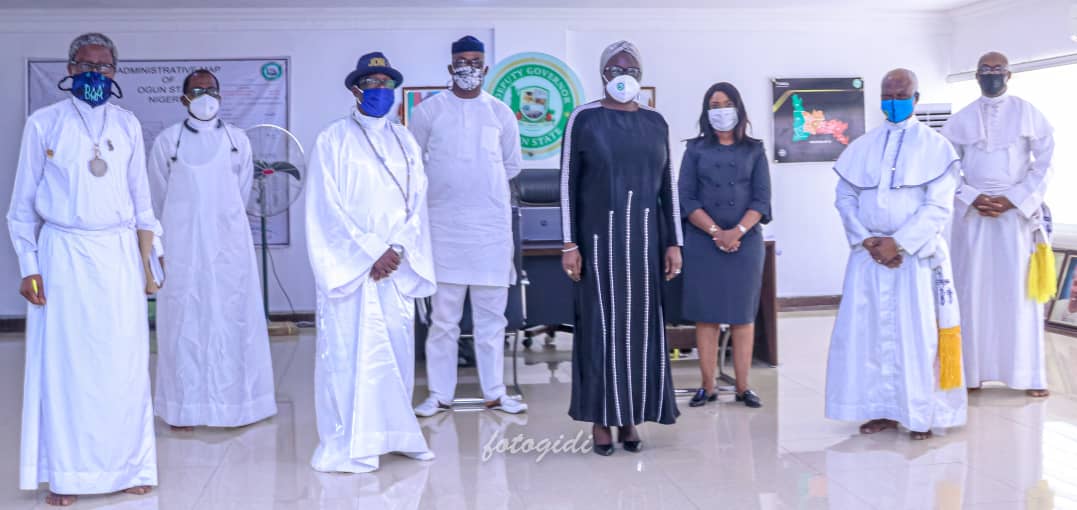
Deputy Governor of Ogun State, Mrs Noimot Salako Oyedele with te Celestial Church delegation
The Celestial Church of Christ Worldwide through its Pastor, Reverend Emmanuel Mobiyina Oshoffa, has made a donation of N25,000,000 (Twenty Five Million Naira) to Nigeria Centre for Disease Control (NCDC), as well as Lagos and Ogun State governments to support Nigeria’s fight against the deadly COVID-19 pandemic,
While presenting the donation at the Governor’s Office, Oke-Mosan, Abeokuta, Ogun State, spokesman for the church’s delegation Superior Evangelist Bola Akinterinwa lauded the efforts of the government at combating the deadly scourge especially as regards the provision of medical facilities and palliatives for the citizens of Ogun State in particular and Nigeria in general. He assured the Government of the continued support of the Pastor and the entire congregation of the Celestial Church of Christ Worldwide and seized the opportunity to inform the Governor of Ogun State of the church’s plan to commence the construction of a world-class university in the Celestial City, Imeko, Ogun State before the year runs out. He prayed for government’s intervention for the re-construction and possible dualisation of the Abeokuta-Imeko Road.
Responding, the Deputy Governor of Ogun State, Mrs Noimot Salako Oyedele who received the church delegation on behalf of the Governor expressed appreciation for the donation and assured that the donation would be used to tackle the deadly virus. She further assured that she would convey the prayers of the church concerning the proposed Celestial International University, Imeko, Ogun State and the re-construction of the Abeokuta-Imeko Road to the Governor of Ogun State.
Prayers for the Government and people of Ogun State were offered by the leader of the delegation, Most Superior Evangelist J.D. Nunayon. Also in the church delegation were Superior Evangelist M.O. Shodunke, SVMSE Kayode Ajala and Evangelist Gbenga Daniel Adebayo. The delegation thereafter paid a condolence visit to General Ekundayo Opaleye, a former Military Administrator of Ondo State and member of the Pastor-In-Council at his G.R.A Abeokuta residence to commiserate with him on the recent demise of his son.
One of the youngest, popular and flamboyant monarchs in Lagos and Nigeria, Oba Saheed Ademola Elegushi, Kusenla III, the Oba Elegushi of Ikateland and his drop-dead gorgeous wife, Oloori Sekinat Aramide celebrated another blissful year of marriage, today, Sunday, May 24, 2020.
The lovely duo, Oba Saheed and his adorable Sekinat started this novel relationship as undergraduates during their university days in Lagos and they have kept it strong for years as a royal couple and still best of friends.
With their almost two decades of unblemished royal matrimony will continue to be a case study and reference point for aspiring couples, especially in this turbulent days of crashed marriages among royalties & celebrities in their ilk.
For His Royal Majesty, Oba Saheed Ademola Elegushi of Ikateland and his charming wife, Olori Sekinat Aramide has been together for 17 long years of unquantifiable marital union, even in the face of skirmishes here and there to keep the marriage brimming with love. Perseverance, respect, resilient, commitment, tolerant and fear of God could have been the benchmark words steering their marriage for years, much to the envy and amazement of many.
Even when reality tested their bountiful and lovely union, delectable Olori Sekinat remains unperturbed in professing unflinching love and undivided devotion to King Gushi which makes their love continue to wax stronger and stronger.
Olori Sekinat has steadfastly remained a strong pillar of success behind her husband’s resounding success in the firmament of daunting royal duties and traditional responsibilities without let or hindrance. Other women in her ilk would have caved into such inanities like the arrival of a rival in her homestead which has been her stronghold for years without any inhibition.
Oba Elegushi eulogizes Olori Sekianit on his micro-blogging site, Instagram, with pictorial reminisce of their very beginning to celebrate their 17th wedding anniversary. He left a very loving and appreciating message for her. He wrote: Which of the favours of Allah shall we deny? (Quran 55 vs 13) 17years ago, when we started this journey, it was with mixed feelings; one, there was love, true love that existed between us; secondly, the anxiety that comes with two young minds deciding to live as one.
From our humble and modest beginning, we’ve come this far and gotten better and proven to the world that ours is an inimitable choice.
Join me in thanking my Olori for all she has been. I thank you for our amazing Angels; I thank you for the peace; I thank you for the love; I thank you for bringing finesse, panache and reverence to this Stool and the kingdom; I thank you for your firm belief in our collective dream.
Only you could have started and steered this ship. I pray Almighty Allah will continue to keep us safe in love, sound in good health and success in all our affairs, till forever. Happy Anniversary to us.”
To say that the happiest moments of their life have been those days they had spent at home in the bosom of their nuclear family, despite the lull of time posed by palace duties as they’re still fond of each other.
Nigeria’s most effervescent monarch, Oba ‘Gushi and his beautiful, stylish and fashionista wife, Aramide (nee Ipaye), is blessed with three lovely children and seventeen years down the line, the bond keeps waxing stronger and the couple seems determined to maintain that tempo of love.