Heritage Bank, PWC, Deloitte canvass use of tech to rescind effects of Covid-19, tackle fraud

Heritage Bank Plc, Nigeria’s Most Innovative Banking Service provider has called on internal auditors of banks to adopt the various digital technologies to prevent fraud and annul the adverse impact of Covid-19 on the financial ecosystem.

Speaking at the just concluded 47th Quarterly Meeting of the Association of Chief Audit Executives of Banks in Nigeria (ACAEBIN), the MD/CEO of Heritage Bank, Ifie Sekibo disclosed that for improved banking operations and safer financial system for stakeholders, internal auditors must be dynamic and quick to adopt various digital measures.

Raising the alarming impact of fraudulent activities in the banking sector, Sekibo quoted PricewaterhouseCoopers’ (PWC’s) Global Economic Crime and Fraud Survey 2020, revealing that that the total cost of cybercrimes is worth an eye-watering $42 billion, which was cash taken straight off companies’ bottom line, whilst 13% of those who had experienced  fraud said they had lost $50 million-plus.

Sekibo, who spoke on the theme, “Elevating Internal Audit’s Role in the Face of Emerging Risks and Opportunities” organised virtually and hosted by the Heritage Bank, urged, “While it was sufficient for yesterday’s auditor to understand regular and routine banking practices such as credit, treasury, etc in his traditional assurance role, for him to be relevant in harnessing the opportunities in today’s business world, he must become versed in cybersecurity, artificial intelligence, data analytics, fraud management, regulatory pronouncements, forensics etc and having equipped himself, present balanced, objective audit reports to Executive Management while striking the right balance between the assurance and consulting responsibilities.”

In her keynote address, titled, “Elevating Internal Audit Role In The Face Of Emerging Risks and Opportunities,” Ibukun Beecroft, Partner Risk Advisory at Deloitte, noted that the banking industry in Nigeria today has adopted various digital measures to keep the business running and delivering services to the customers but there was need for Internal Audit (IA) positioned to provide the required assurance and consulting services in the face of the changes and attendant risk, particularly increased cyber-risks.

Quoting 2018 Financial Stability Report by the Central Bank of Nigeria, she stated that Banks recorded 25,029 confirmed cases of fraud and this resulted in a loss of N2.21 billion. More than 90% of fraud cases in 2018 were perpetrated via technologically driven channels.

“As Internal Auditors, the knowledge of technology would enable us identify gaps in our core banking applications and other applications and provide relevant recommendations to eliminating loopholes that may serve as an avenue for potential fraud.

She, however, advised auditors on the need to focus on advanced technologies and risk management operations as reflected around the Three Lines of Defense (3LOD) churned out by the Institute of Internal Auditors, which create opportunities for IA and its future role.

Beecroft warned that the ever-changing landscape and evolving risks in the banking industry could render the current internal audit plan obsolete.

According to her, internal auditors should reprioritise the audit plan as soon as possible to provide assurance over the most consequential risks while being cognisant of the impact on operations.

“To take advantage of these changes and disruptions, auditors need to rethink their role by adapting to and embracing change, enabling the IA function to become more agile, nimble, and forward-looking, thus driving change through the 3LOD,” Beecroft stated.

Yetunde Oladeji, Director Internal Audit Services at PricewaterhouseCoopers Limited (PWC), who spoke on the theme, “Elevating IA’s role to meet today’s emerging risks,” advised that the banking sector should be dynamic, prioritse digitization and flexibible workforce strategies as these would determine its ability to adapt to rapidly changing circumstances to survive and thrive.

Ecobank Digital Series: Vanguard Conferences and Economic Forum Series Partners Ecobank to Convene Digital Financial inclusion Summit

Ecobank Nigeria in partnership with Vanguard  Conferences and Economic Forum Series have announced that it is convening a Digital Financial inclusion Summit to drive, promote and deepen financial inclusion amongst the unbanked and underbanked population in Nigeria. Current statistics shows that 84.6 million Nigerians accounting for 47% of the population are unbanked, against mobile phone penetration which is up to 94.5%.

The Digital Financial Inclusion Summit slated for October 21st, will bring together trade groups and associations with large unbanked populations and individuals within the lower rung of the society who have not seen the need to be included in the financial sector or adopt financial services through digital platforms. This is a direct response to encourage the adoption of innovative payment solutions and digital banking services in the post covid-19 era.

Announcing the summit in Lagos, Head, Consumer Banking, Olukorede Demola-Adeniyi said the Digital Financial Inclusion Summit will be a platform to discuss the need for a comprehensive alignment of policy and regulatory frameworks among regulators like CBN, NCC, NITDA to support a sustainable digital financial inclusion growth, examine key issues and ways of advancing digital financial inclusion for women, youths and MSMEs and discuss the role of interoperability in mobile payment innovation. Further she mentioned that the role and impact of agency banking for financial inclusion growth will be x-rayed as well as the need for public and private sector investments in internet infrastructure and mobile connectivity growth in rural areas.

According to Demola-Adeniyi, the digitisation of payment and financial services has become an important economic development priority with the prospect of reaching far more people with a broad range of financial services they need, to fight poverty and build resilience. She noted that new data on mobile phone ownership and internet access show huge opportunities to drive digital financial Inclusion in Nigeria. She reiterated that this was in line with Ecobank’s vision which is to consolidate a modern pan-African bank and to contribute to the economic development and financial integration of the continent.

In her words “ there is no better time than now to harness the strength of our population, and support people to embrace the financial system. Financial inclusion for us at Ecobank means taking banking to the people wherever they are. Our agency banking, that is the Ecobank Xpress Points, for instance create a consumer experience which is very good, as the customers can do simple deposit, payment and transfers in their own neighbourhood rather than travel for hours to a bank branch. The aim of the Xpress Point is to let every Nigerian and household have access to Ecobank services within their neighborhood to provide easy banking services. This is the same objective for our mobile app and USSD platforms. We are desirous to put banking services at the finger tips of every citizen, no matter where they live”

Also speaking, Jude Ndu, Director Vanguard Conferences and The Economic Forum Series, says “as a follow up to the huge success of the Ecobank Agribusiness Summit, we are indeed pleased and delighted with the ongoing high level partnership with Ecobank Nigeria in the area of strategic thinking, conceptualisation and execution of high profile bespoke events. The upcoming Digital Financial Inclusion Virtual Summit speaks to the strong sense of confidence the bank has in us to help create content and context for the promotion and positioning of the brand given the strategic and thematic nature of conversation, marketing power and prowess of our thought leadership programs in critical stakeholder audience engagements across different industry sectors and customer segments”.

The Ecobank Digital Series is a virtual programme organised by Ecobank to educate and enlighten the public on crucial issues of public interest, especially as it relates to their financial freedom.

Ecobank is the “Go to” Bank for Regional Trade in Africa – Akinwuntan

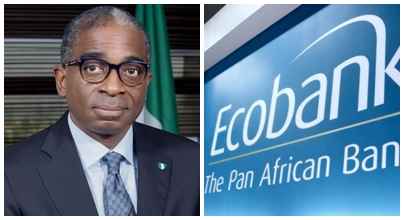
The Managing Director, Ecobank Nigeria, Patrick Akinwuntan has reiterated that Ecobank remains the gateway financial institution for African regional trade. Akinwuntan who was speaking at the Ecobank Digital Series virtual Africa Trade Conference 2020 titled: ‘Facilitating Regional Trade in the emerging AfCFTA Era’ maintained that Ecobank, the pan – African bank was set up to be the leader in intra-Africa trade, adding that leveraging on its knowledge, footprint and digital payment platforms, the bank is set to lead the financial services support for the new Africa Continental Free Trade Area. 

According to him, “while intra Africa trade provides opportunity for the growth of our economy in Africa, Ecobank is ‘the go to bank’ for Africa regional trade”. He stressed that the Ecobank Regional Trade conference was designed to “primarily explore the massive trade opportunity before us in Africa, particularly after the pandemic. Ecobank decided to set the agenda for Africa to take its place in global trade. The opportunity is massive: withmarket size of 1.2 billion, estimated GDP of $2.5 billion, Africa free trade area is the largest since the formation of the World Trade Organization (WTO); more than 65 member states across the African union, population to reach 2.5 billion by 2050”.

lso speaking, Segun Awolowo, Executive Director/ Chief Executive, Nigeria Export Promotion Council (NEPC), said with a market of 1.2 billion people and combined GDP of $3 trillion, there is huge potential for Nigeria to increase its export to Africa. According to him, most exports had been informal exports but with platforms, like Ecobank, it is going to be official and add real value to the economy.  He said in 2018, the export value of Nigeria to Africa totaled around $6.99 billion but its export to the rest of the world totaled $45.92 billion. However, Nigeria export is majorly crude oil and natural gas which constitute 91%.

Speaking on “International trade, the pan African perspective”, Tei Konzi, Commissioner, Trade, customs and free movement, ECOWAS, represented by Kolawale Sofola, Acting Director, Trade ECOWAS said  85 % of our products go outside the continent and this must be changed. “We can bring these trade back to Africa and increase activity in the continent in agriculture, mining amongst others.  We are yet to conclude our tariffs, but at the moment, ECOWAS trade more with outside countries than it does with African countries and this is why we are bent on making sure the AfCFTA succeeds”.

 He noted that the AfCFTA is a comprehensive trade agreement that seeks to create a single market for goods and services and free movement of persons through the progressive liberation  of the market  for goods and services and also contribute to the movement of capital to facilitate investment. He said it is meant to be the foundation of  continental customs union at a later stage.

The Ecobank Nigeria ‘Africa Trade Conference 2020’  which is part of the Ecobank Digital Series is to showcase Ecobank’s unique intra-Africa trade solutions that enable settlements of international transactions and mitigation of payment risk while providing regional solutions to exporters. Ecobank trade products and solutions are designed around two broad areas; trade finance and trade services. Trade Finance enables customers benefit from adequate and well mitigated credit facilitation in the area of Import finance, export finance, bill discounting, trade loans, distributor finance, payables and receivables finance, structured trade and commodity finance amongst others while trade services, offer our customers the advantage of speedy turn around and error free processing of their import letter of credits, import collections, avalised bills, Customs bonds, export collections as well as their local purchase orders and payment invoices, via our electronic trade platforms OMNI e-Trade and OMNI eFSC (electronic financial supply chain. 

FIRSTBANK ANNOUNCES APPOINTMENT OF MRS. OLUWANDE MUOYO AS NON-EXECUTIVE DIRECTOR

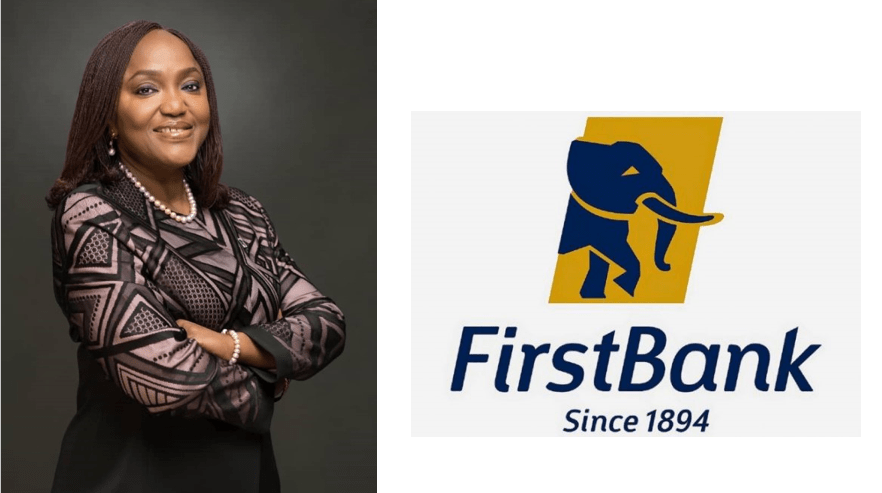
First Bank of Nigeria Limited, Nigeria’s premier and leading financial inclusion services provider, today announced the appointment of Mrs. Oluwande Muoyo as a Non-Executive Director. Mrs. Muoyo joined the board of FirstBank from FBN Holdings Plc., the parent company of First Bank of Nigeria Limited.

Speaking on her appointment, Dr. Adesola Adeduntan, CEO, FirstBank said, “We are excited to welcome Mrs. Oluwande Muoyo to the FirstBank Board. She brings to the Board her depth of experience which spans over three decades in various leadership and strategic positions across the private and public sectors. I am assured that these rich experiences will have an immediate impact in the board which will transcend the activities of the Bank as a whole.”

“On behalf of the board, management and staff of FirstBank, I congratulate Mrs Muoyo and look forward to working with her,” he concluded.

Oluwande Muoyo was appointed to the Board of First Bank of Nigeria Limited in 2020.  She is a Chartered Accountant, Banker and former Honourable Commissioner for Budget and Planning in Ogun State.

Prior to being appointed an Honourable Commissioner, Oluwande worked with Stanbic IBTC Bank for over 22 years in various parts of the bank, including Financial Control, Treasury and Financial Services, Trade Finance and Corporate Banking. She holds a BSc degree in Accounting from the University of Lagos. She started her professional career with the international firm Price Waterhouse (now PriceWaterhouseCoopers). A Fellow of both the Institute of Chartered Accountants of Nigeria and the Chartered Institute of Taxation of Nigeria, Oluwande has, over the years, acquired competencies and skills in public financial management, policy formulation, business development, banking, budgeting, planning, auditing and taxation.

Her past Directorships include the Governing Board of the International Crop Research Institute for the Semi-Arid Tropics and FBN Holdings Plc. Oluwande has attended many training programmes including Strategic Marketing Management at Harvard Business School, Advanced Strategy at INSEAD and Advanced Management Programme at the Lagos Business School. Oluwande is married with children and enjoys reading and swimming.

Ecobank Digital Series: Nigeria Will Take Full Advantage of the AfCFTA – Awolowo

Chief Executive /Executive Director, Nigeria Export Promotion Council (NEPC), Segun Awolowo has said with a market of 1.2 billion people and combined GDP of $3 trillion, there is huge potential for Nigeria to increase its export to Africa. According to him, most of exports had been informal exports, but with platforms like Ecobank, it is going to be formal and add real value to the economy.  He said in 2018, the export value of Nigeria to Africa totaled around $6.99 billon but its export to the rest of the world totaled $45.92 billion. However, Nigeria’s export is majorly crude oil and natural gas which constitute 91%.

Mr. Awolowo, who was speaking at the Ecobank Digital Series virtual Africa Trade Conference 2020, revealed that using the international trade center export’s tool, NEPC has identified areas of untapped potential for Nigeria in Africa such as fertilizer, ginger and sesame, as these are what other African countries are buying. “Nigeria must, and can, live in a world where it no longer sells oil. Nigeria is working on key game changers in infrastructure in order to achieve this, especially in the area of ease of transportation and also in the area of incentives, export expansion grant like pre-shipment incentives and  export development fund, which serve to prepare , facilitate and support exporters to the global market”. He stated

Speaking on “International trade, the pan African perspective”, Tei Konzi, Commissioner, Trade, Customs and Free Movement, ECOWAS, represented by Kolawole Sofola, Acting Director, Trade ECOWAS said  85% of our products go outside the continent and this must be changed. “We can bring these trade back to Africa and increase activity in the continent in agriculture, mining amongst others.  We are yet to conclude our tariffs, but at the moment, ECOWAS trade more with outside countries than it does with African countries and this is why we are bent on making sure the AfCFTA succeeds”.

He noted that the AfCFTA is a comprehensive trade agreement that seek to create a single market for goods and services and free movement of persons through the progressive liberation  of the market  for goods and services and also contribute to the movement of capital to facilitate investment. He said it is meant to be the foundation of  continental customs union at a later stage.

In his presentation, the Chief Executive Officer, Ecobank Transnational Incorporated (ETI), Ade Ayeyemi has reiterated that African countries must adopt a continent wide approach to business and also focus on wealth creation to be relevant in the global value chain.  According to Ayeyemi for the African Continental Free Trade Agreement (AfCFTA) to become a reality there must be commitment and readiness for trade facilitation by the individual nations. He noted that African governments must unequivocal commit to the agreement and their preparedness as  individual nations with their implementation strategies, commitment to free movement-signing and ratification of protocol on free movement of people and country’s Visa openness, readiness for trade facilitation – quality of trade infrastructure and efficiency of ports/Customs, which is still work in progress in nearly all countries.

Ayeyemi noted that Ecobank is fully committed to Africa as the foremost Pan-African Bank to Unequivocal support for the implementation of AfCFTA, readiness to use its unique pan-African platform to facilitate trade, payment and business and deployment of its  strong Africa knowledge to support governments and businesses. The Ecobank CEO emphasized that  “no country is so poor that it has nothing to give and no country is so rich that it has nothing to receive. All of us must come together to become better.”

The  Ecobank virtual Nigeria ‘Africa Trade Conference 2020’  which is part of the Ecobank Digital Series is to showcase Ecobank’s unique intra-Africa trade solutions that enable settlements of international transactions and mitigation of payment risk while providing regional solutions to exporters. Ecobank trade products and solutions are designed around two broad areas; Trade Finance and Trade Services. Trade Finance enables customers benefit from adequate and well mitigated credit facilitation in the area of Import finance, export finance, bill discounting, trade loans, distributor finance, payables and receivables finance, structured trade and commodity finance amongst others while trade services, offer our customers the advantage of speedy turn around and error free processing of their import letter of credits, import collections, avalised bills, Customs bonds, export collections as well as their local purchase orders and payment invoices, via our electronic trade platforms OMNI e-Trade and OMNI eFSC (electronic financial supply chain.

SMART MONEY WOMAN: FIRSTBANK PARTNERS ARESE UGWU, UNVEILS TV SERIES OF THE AWARD WINNING BOOK

First Bank of Nigeria Limited has announced its partnership with Arese Ugwu for the TV adaptation of her best seller, Smart Money Woman. The weekly show – in its first season – is billed to premiere on Africa Magic Showcase on Wednesday, 23rd September 2020 at 9:30pm.

The Smart Money Woman is a programme that shows the experiences, sacrifices, struggles and vigour of women in society as they carry out their day to day activities in spite of the gender imbalance in the society, especially in Africa.  The series is an adaptation of Smart Money Woman written to tackle debt, providing tips on inculcating the right savings culture of the African middle class (why don’t we say – every individual – as against limiting to African middle class), the fear and misconceptions surrounding money and the lack of it, love, friendships, cultural and societal pressures and the roles they play in success.

The half hour 13-episode series which is directed by Bunmi Ajakaiye and Co-, produced by Kemi Lala Akindoju, Akin Marinho and Arcadia Tv Africa will have viewers exposed to financial literacy nuggets. Its cast include; Osas Ighodaro, Toni Tones, Ini Dima-Okojie, Eby Eno, Eso Okolocha, Timini Egbuson, Karibi Fubara, Tope Tedela, Seun Ajayi and Temisan Emmanuel.

According to Author and Executive Producer, Smart Tribe Media, Arese Ugwu; “The Smart Money Woman is a love letter to every modern and upwardly mobile African women who are exploring life opportunities and experiences to find that right balance in their day to day activities especially in their career, friendship, relationship and of course, family.”

“We thank First Bank of Nigeria Limited for being the first corporate sponsor to believe in my dream and take a chance on a first-time producer. This is a partnership we are pleased to reckon with, whilst we recognise how they have successfully empowered women across the geo-political zones in Nigeria through its various initiatives, especially the FirstGem product. They have provided mentoring, support and capacity building opportunities for all to create a new generation of financially literate women thereby contributing to the continued growth and development of the country.”

Speaking on the TV show, Folake Ani-Mumuney, the Group Head, Marketing & Corporate Communications, First Bank of Nigeria Limited said “FirstBank has been at the forefront of promoting female empowerment and we understand the role financial literacy plays in deepening financial inclusion, whilst promoting female independence. The essence of the TV programme is to raise financial awareness to inspire every individual in the society, especially women, to make informed choices and take effective actions for their financial wellbeing, she concluded.”

CIBN Recognises Ecobank Academy

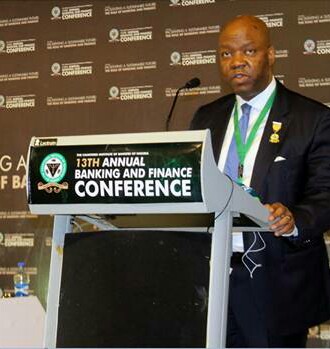
The Chartered Institute of Bankers of Nigeria (CIBN) has rated Ecobank Nigeria Academy as one of the best banking training institutes in the country. In its award ceremony as part of its 13th Annual Banking And Finance Conference in Abuja last week, CIBN, the umbrella body of all employees of financial institutions in the country announced Ecobank Nigeria Academy as the third best among all the banks in the country.  Since the accreditation of the state of the art Ecobank Nigeria Academy in August 2019, it has served as a platform to train thousands of professional bankers in different categories, including  Entry Level employees, Graduate and Management Trainees and a cross section of staff recertification training.

Commenting, Ayotunde Opeoluwa, Manager, Learning and Development, Ecobank Nigeria, said the award was a welcome development to the bank as the Academy was only accredited a year ago, stating that the bank will continue to churn out excellently trained banking professionals at various levels  Opeoluwa who is also the head of the Academy further said “This is good news for us as a bank. It reinforces our people centric strategy to equipping our staff with the right skills and competence in line with global practices. Let me use this opportunity to thank our Management for the great support and members of our internal faculty for their dedication toward achieving this milestone. We will continue to seek improvement to maintain industry and global standards.”

In presenting certificate of accreditation to the ultra-modern, state of the art Ecobank Nigeria Academy last year, CIBN said the accreditation was based on the report of its Capacity Building and Certification Committee that the training school has met all the parameters of measurement, stressing that it was a manifestation of the importance the Management of the bank place on capacity building of its workforce.

According to the Institute, “As an Institute, we congratulate Ecobank for the accreditation of its Academy. This comes after rigorous accreditation processes by members of our Capacity Building and Certification Committee which showed that Ecobank has complied with and satisfied the provisions and requirements of the Competency framework for the Nigerian Banking Industry as mandated by the Central Bank of Nigeria (CBN) through CIBN.  The Academy was found to have scored above the threshold on all the parameters of measurement. We firmly believe this accreditation would not only enable Ecobank comply with the provisions of the Competency Framework but also strengthen the intellectual resources and capabilities available in the bank.”

The state of the art academy Ecobank Academy is a deliberate policy by Ecobank to train and equip its workforce is in line with its transformation drive to make the bank the most preferred financial institution in the country. As a response to COVID-19, the Academy has recently organised virtual graduation ceremony for 53 Management Trainees and 57 graduate trainees following an intensive training programme.  The trainees have since been absolved into the bank as full time employees.

Heritage Bank’s MD calls for more impactful role in banking to aid speedy economic recovery

In the quest to aid speedy economic recovery and impactful service delivery to stakeholders caused by macro-economic headwinds and Covid-19, banking sector’s players have been charged to maximize the opportunities by re-strategizing its roles that will address emerging risks.

The MD/CEO of Heritage Bank Plc, Ifie Sekibo made the call during the 47th Quarterly Meeting of the Association of Chief Audit Executives of Banks in Nigeria (ACAEBIN) with the theme “Elevating Internal Audit’s Role in the Face of Emerging Risks and Opportunities” held virtually on Microsoft Team’s platform, which was organized and hosted by the Heritage Bank, at the weekend.

Sekibo who was represented by his Executive Director, Jude Monye, whilst addressing internal auditors of banks, inquired from the bankers on the readiness of the Internal Audit function to lend the necessary support in exploiting and maximising the opportunities without impairing their independence.

He, however noted that with the rapid changing developments forced by the pandemic sweep across globe that have upended organisations in every sector of the economy, banking inclusive; internal auditors would notice that their modus operandi are outdated.

To this end, he stated that this was the most auspicious time for Chief Audit Executives to rethink how they perform various aspects of their audit assignments.

Sekibo suggested that auditors must “become versed in cybersecurity, artificial intelligence, data analytics, fraud management, regulatory pronouncements, forensics etc and having equipped himself, present balanced, objective audit reports to Executive Management while striking the right balance between the assurance and consulting responsibilities.”

He further hinted, “Embracing new processes and tools to modernize and maximize the audit function helps not only with the perception of internal audit’s value, but also the reality of its contributions. Opportunities to evaluate include virtual auditing, electronic workflow management, and distance team-building and development.”

According to him, it becomes imperative for audit teams to embrace change, harness it and use this season to strategize on what internal audit can be in the future, whist noting that only Chief Audit Executives that maximize the opportunity to refresh and reposition will make their role more relevant and impactful for stakeholders.

Meanwhile, he commended auditors for their contributions to the industry including inputs made in shaping policy directions by regulators and the fight against fraud and other financial crimes which helped in no small measure in deepening confidence of the banking public.

In the same vein, the Chairman of ACAEBIN, Yinka Tiamiyu, reiterated the need for internal auditors to maximize opportunities of the current challenges facing the industry, as each day brings new developments that directly influence the likelihood and potential impact of banking future.

According to him, there are challenges on our part as Bankers in meeting up with the needs of our customers and the general public, and we must ensure that such challenges are surmounted.

He stressed on the need for regular annual audit plan to be reviewed quarterly to address current events that have significant impacts on the business, whilst ensuring that the key players continuously provide banking services to customers in a convenient and safer way.

“On our part, the need for improvement in service delivery and safety of customer’s funds as we digitalized our product offerings are concerns facing the industry, as such we must not relent in our efforts to get strong authentication mechanisms as we make our services more convenient and easier for Customers.  Banks should strive to find solution to the problems associated with identity theft as we pursue digital products and inclusive banking. This is to ensure that customers are happy with us and complaints minimized,” Tiamiyu urged internal auditors of banks.

Innovations, Disruptions Will Continue To Define Future Of Banking In Nigeria – Akinwuntan

The Managing Director, Ecobank Nigeria, Patrick Akinwuntan has reiterated that the future of Nigerian banking would continue to be shaped by innovations and technology disruptions, stressing that only financial institutions that are amenable to such transformation will remain relevant in the sector. According to Akinwuntan, there was no way banks can remain competitive and relevant without embarking on digital transformation. He noted that banking has come to represent ‘what you do’ without necessarily referring to a particular location.

In his words “there is massive disruptions in the banking space and this is good of the sector. Take a second look at the evolution in the use of cards in ATM and PoS today and its interoperability, USSD, agency banking, blockchain, crypto currency and others. The sector is being democratized for full participation. What about the mobile phone which was essentially for receiving calls but today every Nigeria can make transaction on their phones using the mobile app, or the USSD string. The whole idea is bringing financial services to every household so that we can all participate effectively in the growth of the largest economy in Africa.”

Akinwuntan who was speaking on “Innovations and disruptions: How Fintechs are defining our future at the 13th annual banking and finance conference of the Chartered Institute of Bankers of Nigeria (CIBN) pointed out that Fintechs are making impacts in the financial services.

Also speaking, Ade Bajomo, Executive Director, Information & Operations, Access Bank, said the emergence of Fintechs startups is threatening to displace incumbents with innovative solutions, noting that digital transformation was no longer optional as companies can no longer stay relevant and compete with others than going through digital transformation process.

He observed that the journey from the industrial age into the information age, more specifically the birth of internet, has unlocked unprecedented disruption of business models.

Further Bajomo said “Digital disruption will hit every industry; it is what you make of it that counts. Fintechs are instrumental to closing the financial inclusion gap. Regulation is key to building the desired Fintech ecosystem. Cyber security will be one of the top risks facing financial institutions, upskilling and reskilling is key. Any bank that doesn’t have an online platform will struggle to survive the pandemic. “

THE VOICE NIGERIA SEASON 3; REFINING CRUDE MUSIC TALENTS

This feature article by Segun Kasali takes a look at how The Voice Nigeria Season 3 is discovering raw music talent in the country and nurturing them into music superstars in the nearest future.

The challenges of cost of production, cost of promotions and especially identification with renowned music record label, amongst others, have been identified as among the many challenges confronting upcoming artistes while making efforts at showcasing their talents. Asides the talent showcase of the craft, music plays a pivotal role at providing employment opportunities for key players in the industry – especially musicians – at making ends meet, whilst contributing their quota to the growth of the industry and the national economy as a whole.

These challenges undoubtedly handicap the young talents from realizing their potentials which invariably translate to debarring them from making meaningful contributions to the country’s Gross Domestic Product  as it had been said that the entertainment sector contributed 2.3% (NGN239 billion) to Nigeria’s Gross Domestic Product (GDP) in 2016 and has been one of the priority sectors identified in the Economic Recovery and Growth plan of the Federal Government of Nigeria with a planned $1billion in export revenue by 2020.

In contributing to the growth of the music industry in the country, The Voice Nigeria was launched on the 10th April, 2016. The Voice Nigeria has since refined and helped unleash the brightest of Nigerian musical talents for the global stage as the country’s music industry continues to enjoy international attention. The Voice is a multinational singing competition with a television franchise in over 50 countries around the world.

The winner of the maiden edition of the music reality show, Agharese Emokpae was awarded a recording contract, an SUV worth N7 million and a 4-night all-expense paid ticket to Abu Dhabi, courtesy Etihad Airways. Sharing her experience, she noted that that they (participants in the competition) were on a different journey in terms of attention to detail, mentorship by the coaches and the incredible training sessions. All the contestants showed incredible growth personally and professionally with gratitude for the experience, the exposure and the platform which attests to discovering, nurturing and empowering musical talents.

Also, in Season 2 of The Voice Nigeria, Daniel Diongoli, popularly known as Idyl, was announced the winner beating finalists Ebube, Syemca, Wow, Chris Rio, J’Dess, Jahtell and Yimika to win the grand prize of a record deal with Universal Music Africa, a GAC car and an all-expense paid trip to Dubai.

One of the sponsors of this year’s edition, First Bank of Nigeria Limited has expressed its delight over the partnership with UN1TY Limited, organisers of The Voice Nigeria Season 3, as it is poised to empowering and investing in the Nigerian youths and demonstrating its contribution to the projected revenue of 86 million dollars by 2021 from the Nigerian music industry aimed at promoting a diversified economy in line with the federal government of Nigeria’s economic diversification policy.

Interested participants are to register via the link www.thevoicenigeria.com with their FirstBank account number as a requirement. Should one not have an account with the Bank, then dial the Bank’s USSD code, *894*0# to be a FirstBank account holder. The audition is open to individuals within the age of 18 -50 years who are have been residing in Nigeria for 12 consecutive months. The registration for audition closes at 11:59pm on Saturday, 19 September 2020.

The financial institution also stated its unrelenting passion for giving voice to the young and indeed all Nigerians, which would translate to creating employment, economic empowerment in the country.

Expressing her delight on the partnership, Folake Ani-Mumuney, Group Head, Marketing & Corporate Communication, FirstBank said; “FirstBank has given voice to Nigerians for the past 126 years, and will continue to give voice to Nigerians by creating employment, economic empowerment in the country through its products, services and initiatives and it remains committed to strengthening the creative industry which is fast growing into a multibillion-dollar business, with potential to be a leading contributor to Nigeria’s GDP in the near future.”

She concluded that supporting The Voice Season 3 means a lot to the Bank, especially as “it is a demonstration of the bank’s commitment to contributing to the projected revenue of USD86 million by 2021 from Nigeria’s music industry aimed at promoting a diversified economy in line with the Federal Government’s diversification policy.”

Sunday Tribune gathered that the registration for The Voice Season 3, which is open to both female and male contestants who are Nigerians and have a government-issued means of Identification, is free. Further to registering, talents are to have a one-minute video singing without a sound track, upload and fill the form on the website.

Talents and fans will go home with over 100million naira in prizes as The Winning Talent of The Voice Nigeria Season 3 will go home with monetary reward, a brand-new car and an international recording contract. The Voice Nigeria will take an interesting twist this year with many virtual engagements with fans, talents and the general public.


Exit mobile version