Our attention has been drawn to the news reports online with the conflicting claims that FirstBank branch or/head office has been sealed.
Please be informed that the referenced story is a misrepresentation of the facts and misleading. Neither our branch nor head office was sealed. On the 4th of August, 2022, there was an unlawful enforcement at the Bank’s Coomassie House Branch of a garnishee order issued by a Federal High Court sitting in Abuja which order the Bank is still challenging in court.
While the Bank has taken appropriate legal steps to deal with the situation, we wish to reassure our customers of unhindered banking services and unique customer experience in all our branches and through our numerous alternative channels.
FIRSTMONIE AGENTS TRANSACT OVER 1 BILLION TRANSACTIONS, REINFORCES FIRSTBANK’S LEADING ROLE IN PROMOTING FINANCIAL INCLUSION IN NIGERIA
The Bank’s Firstmonie Agents play a critical role in promoting financial inclusion in the country
The Bank currently has over 180,000 Firstmonie Agents spread across 772 Local Government Areas in Nigeria
Since 2020, FirstBank has economically empowered thousands of its Firstmonie Agents with over 100 billion naira credit facility
FirstBank of Nigeria Limited, Nigeria’s premier and leading financial services provider has announced that its agent banking network – Firstmonie Agents – spread across the nook and cranny of the country has collectively processed transaction volume in excess of 1 billion, amounting to over 22 trillion naira. The Bank currently has over 180,000 Firstmonie Agents, spread across 772 of the country’s 774 Local Government Areas.
Firstmonie Agents have been integral to bringing financial services closer to the underbanked and unbanked segment of the society, providing convenient banking services that are easily accessible, thereby saving time and travel costs for individuals in the suburbs and remote environments with no access to financial services.
Popularly referred to as the ‘Human ATM’, Firstmonie Agents are empowered to reduce the reliance on over-the-counter transactions while providing convenient personalized services. Amongst the services carried out by the Agents include; Account Opening, Cash Deposit, Airtime Purchase, Bills Payment, Withdrawals and Money Transfer.
Through various empowerment and reward schemes implemented to put its Firstmonie Agents at an advantage to economically impact their immediate communities whilst importantly having their business sustained, the Bank’s Agent Banking scheme has remained a toast to Nigerians, irrespective of where they are in the country. Amongst these schemes is the Agent Credit – launched in 2020 – which has had the Bank provide credit facilities to the tune of 238 billion naira to its teeming Firstmonie Agents.
Expressing his appreciation to the Firstmonie Agents, Dr. Adesola Adeduntan, CEO, FirstBank said “since the relaunch of our Agent Banking scheme in 2018, our Firstmonie Agents have played a vital role in bridging the financial inclusion gap in the country, as many more people have been able to undertake various financial and business transactions in cost-effective ways, thereby saving a lot of time and money in travelling over long distances for basic banking services.”
“We are delighted by the giant strides of our Firstmonie Agents in promoting financial inclusion and commend them for their efforts in taking banking to the doorsteps of Nigerians – irrespective of where they are – in a very effective way”, he concluded.
Wema Bank Records Impressive Financial Performance In 2022 Half-Year Reports
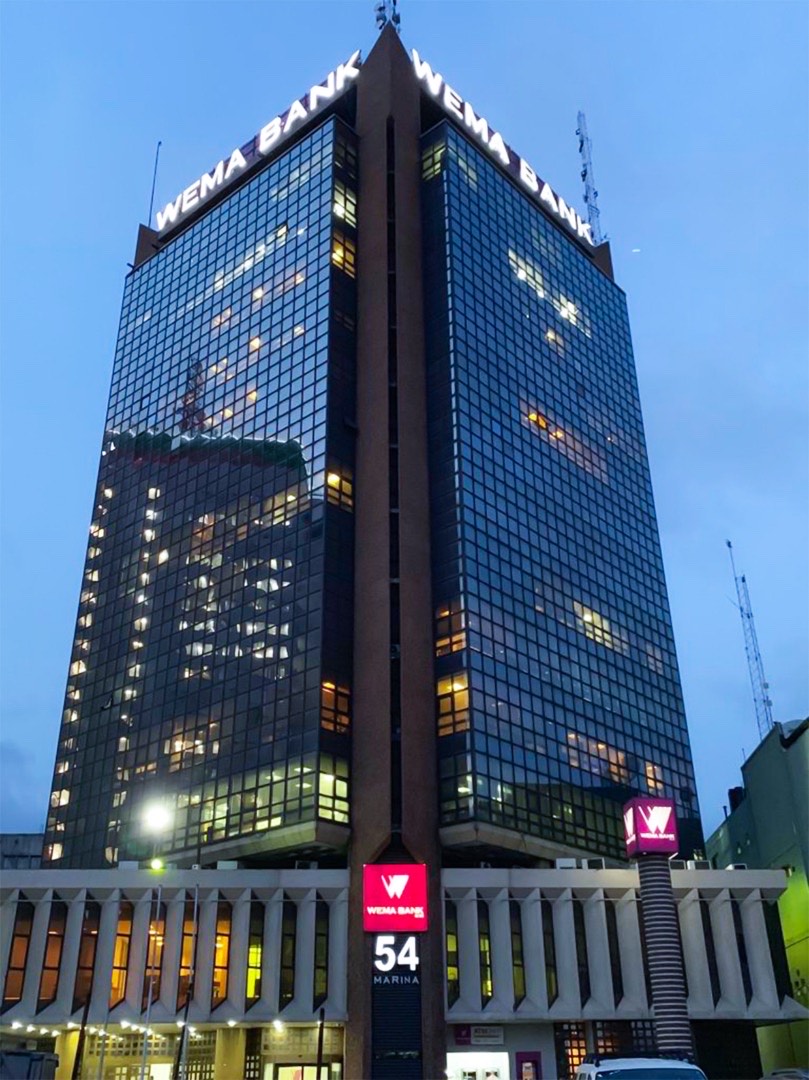
Wema Bank Plc, pioneer of Africa’s first fully digital bank and one of Nigeria’s most resilient banks, has posted a growth performance across all financial indices in the First-Half of its 2022 operations. This information is contained in the Financial Results for the Period Ended 30 June, 2022 released in Lagos on 28 July, 2022.
In the report, the bank recorded an increase of 50 percent in its Gross Earnings from the ₦39.82 billion it recorded in H1 of 2021 to ₦59.59 billion. It also grew its Interest Income by 55 percent year-on-year, from the ₦32.19 billion recorded at this period last year to ₦49.75 billion. The bank’s Non-Interest Income went up from ₦7.64 billion in the period ended 30 June, 2021 to ₦9.85 billion, an increase of 29 percent.
Similarly, Wema Bank recorded a 43 percent increase in Profit before tax (PBT) from ₦4.30 billion over the same period last year to ₦6.13 billion for the period under review. The bank’s Profit after tax (PAT) also increased from ₦3.72 billion in H1 2021 to ₦5.30 billion reflecting a raise of 42 percent.
The bank also grew its deposit by 13 percent from ₦968.17 billion reported in FY 2021 to ₦1.09 trillion in the H1 2022. It also grew its loans and advances from ₦418.86 billion to ₦447.23b in H1 2022, an increase of seven percent.
Ademola Adebise, the Managing Director/Chief Executive officer of the bank, attributed the remarkable performance to increased customer satisfaction the bank delivers through its investment in technology.
“Our performance has shown strong and promising results in the second quarter. Customers have continually shown trust in our proficiency, innovation, and service delivery even as the market gets more challenging. That said, I am confident, that despite increased volatility and uncertainty, we will continue to scale up, manoeuvre the environment, creatively manage our resources, and drive long-term, substantial returns for shareholders.”
In his own remarks, the bank’s Chief Finance Officer, Mr. Tunde Mabawonku, explained that the strong performance stems from the bank’s diversification of its business and value derived from its digital assets.
“This has been a strong first half with Interest Income up 55% and Profit Before Tax up 43% compared to H1 2021.” Mabawonku said.
“This strong showing is down to diversification at different levels of our businesses. Also, it is a testament to the advantage of our investment in digital banking assets which have continued to boost customer satisfaction and build trust for us. Also, we are aware of the challenges that the rising cost of living is having on our customers and stakeholders. Given the size of our balance sheet and income growth, we have trust in our ability to continue to provide support and help cushion the impact of growing costs in the market,” he explained.
Ecobank Nigeria Appoints Ichie (Dr) Nnaeto Orazulike as Non-Executive Director
The Board of Directors of Ecobank Nigeria Limited has announced the appointment of Ichie (Dr) Nnaeto Orazulike as a Non-Executive Director. Ichie (Dr) Nnaeto Orazulike is a seasoned business magnate, corporate administrator, and philanthropist. He is the Founder and Group Managing Director of Genesis Group – a proudly Nigerian conglomerate with interests in Restaurants, Cinemas, Hotels, Food Production and Oil & Gas Services and Production.
According to the Board, the new director has distinguished himself as a leader in his various endeavors, pioneering and promoting professions through the growth of indigenous talents in Nigeria and beyond. He embodies the Pan-African vision of the bank and brings with him the wealth of experience, professionalism, and integrity which has earned him national and international acclaim.
Ichie (Dr) Nnaeto Orazulike is a graduate of University of Nigeria, with a Bachelor of Science in Accounting degree and an alumnus of Harvard Business School, Executive Training Program. He was also awarded the prestigious Honorary Doctor of Science degree by University of Port Harcourt in 2015
Ichie who had previously served on the Board of Fidelity Bank Plc between 2008 to 2017, is the National Chairman of the Nigerian Association of Chambers of Commerce, Industry, Mines and Agriculture Trade Group on Tourism and Hospitality. He also currently sits on the boards of various companies and organizations including Shelf Drilling Nigeria, West African Metal Processing Co. Ltd., Fate Foundation, and Spiritan University, Nnochi Imo State.
Ichie Nnaeto joined the Board of Ecobank Nigeria in April 2022.
Redefining Supply Chain in Nigeria’s retail market space
There is hardly a neighbourhood in the country where a retailer is not found and a vacuum automatically gets created in the absence of a formal retail store on any street.
The retail business is growing with the redefinition of how supply meets demand. Most recently, retailers need not worry on how to restock their stores with groceries as technology is being deployed by fast rising business to business (B2B) firms.
This evolution is bringing more fulfilment to retailers, wholesalers, manufacturers and these tech firms that play the middleman role with their services readily accessible online and offline.
A micro business owner, Aliyu Bala Idala in Kano is happy that Alerzo, a B2B e-commerce firm goes the extra mile by offering free delivery of goods he orders.
He shared:”I do buying and selling in Kachachi market, a local government in Kano. I sell provisions and food items at wholesale prices. I have been running this business for the past 10 years. We give glory to God that I have been doing business with Alerzo for the past two years and I am happy doing business with them.
“In the past, we usually wouldn’t get goods delivered to us. We would go round the markets buying from one shop to the other. But now we don’t go through the stress of going to the markets; we order what we want and they deliver to us at our shop. This is a big achievement for Alerzo.”
Not only that he and other traders get his goods delivered at the right time for free by Alerzo, he added that Alerzo empowered them with PoS machines, “We enjoy making use of the PoS. It helps in our daily dealings with customers.
Bayelsa Govt. seeks Heritage Bank support on Youth Development in sport
Daniel Igali; Commissioner for Youths and Sports, Bayelsa State; Osepiribo Ben-Willie, Directorate Head, South-South, South-East & Private Wealth Management; Senator Lawrence Ewhrudjakpo, Deputy Governor; Jude Monye, Executive Director, Heritage Bank and Hon. Tare Porri, Chairman House Committee on Sports – Bayelsa state house of assembly during a courtesy call by the officials of Bayelsa State Government on the Management of the Bank, at Heritage’s Head Office in Lagos recently
The Deputy Governor, Senator Lawrence Ewhrudjakpo disclosed the interest of the State Government during a courtesy call with the Commissioner for Youths and Sports, Daniel Igali and others on the Management of the Bank, at Heritage’s Head Office in Lagos recently.
Ewhrudjakpo expressed the State Government’s readiness to collaborate with Heritage Bank to empower youths and develop sports at all levels with the intent to put measures in place to play-up their socio-economic wellbeing and for the identification and development of budding talents.
He also commended Heritage Bank for its pivotal role in enhancing youth development and supporting the entrepreneurial spirit for economic growth.
“We believe with that, there is going to be first, removing our youths from drugs dependency and we are also using them to win.
We really want to see how Heritage Bank can partner with us or support of which we have adequate publicity,” he stated.
Meanwhile, Ewhrudjakpo affirmed that Governor Douye Diri-led administration would do everything within its reach to foster a mutually beneficial partnership.
Whilst responding, the Executive Director of the Bank, Jude Monye who welcomed the delegates assured the Deputy Governor of Heritage’s readiness to support the Bayelsa Government on youth empowerment and sport development.
He noted that with the bank’s feats toward empowering young Nigerians and sport development showed the bank has strong desire towards developing and positioning youths to become world-class citizens equipped and ready to be absorbed into an increasing competitive professional skills and endeavours.
Monye further disclosed that Heritage Bank have been at the forefront of supporting good courses involving youth and sport, whilst reiterating the bank’s MD/CEO, Ifie Sekibo’s readiness to partner with Bayelsa State Government.
“On behalf of the CEO and the Board, I want to say, we will support the course of Bayelsa State as far as sports in concerned. Whether it is wrestling, athletic, football, soccer, we will be part of it,” he assured.
Adding, the ED said, “We have always supported good courses; we are a small bank and relatively new. We will support the Bayelsa State Government because we want to see the youth brought out of drug peddling and drug consumption to where their life can be useful.”
He recalled that when it concerns youth empowerment and sport development, the Bank had carved a niche in collaborating with public and private organisations, especial state governments such as Lagos, Rivers State, Ibadan amongst others to build a culture of sports together with the formal education and entrepreneurship in a bid to secure the future of the teaming population.
“As a bank, we have done something in sports known as schoolympics which was organised by the bank, partnered with the 3rd Edition of the annual Lagos Value Jet Para Table Tennis championship, Ibadan Golf Club’s 30th anniversary, 14th edition of the West African Universities Game (WAUG), partnered with Lagos State Government to back the 3rd Edition of the annual Lagos Value Jet Para Table Tennis championship, 2014 Port Harcourt Amateur Open Golf Championship, IBB Golf Tournament in Abuja to list but few,” he hinted.
According to him, “Heritage Bank believes in development. We have the tenacity to develop, and sport is a way of developing Nigerians both young and old to help foster their physical, social, and emotional wellbeing. It is a well-known fact that physical education and sports help in character and community building, delinquency reduction, community safety, economic and social development.”
Monye further noted that the drive to continue in the support of youths was to create, preserve and transfer wealth across generations.
He explained that the entrepreneur schemes of the bank in the support for business especially among the youths have always focused on dependable job-creating sectors, such as agricultural value chain (fish farming, poultry, snail farming), cottage industry, mining and solid minerals, creative industry (tourism, arts, and crafts), and Information and Communications Technology (ICT).
Ecobank Nigeria Extends Remittance Services To Business Accounts Holders
Ecobank Nigeria has extended its innovative remittance services to its business account holders. This implies that Business Account holders can now receive funds sent through Ecobank Rapidtransfer or any of its Remittance franchise partners through the Business to Business (B2B), Business to Customer (B2C) and Customers to Business (C2B) transaction types directly into their business accounts. The bank is also working to enlist other International Money Transfer Operators (IMTOs) for a more robust remittance offering.
Disclosing this in Lagos, Head of Consumer Banking Korede Demola – Adeniyi, said the launch of the service affords business owners in Nigeria to receive monies sent by both individuals and corporate organizations anywhere in the world instantly to their Ecobank domiciliary accounts, stating that the bank has put in place seamless account opening procedures for those who do not have domiciliary accounts for them to enjoy the service. She maintained that the development is in line with the bank’s strategy to provide accessible remittance services to Nigerians, listing the various channels which these remittances can be accessed as Rapidtransfer app, Ecobank Mobile App, Ecobank Online, and any of the bank branches.
“For us as a bank, we are excited about these and other future collaborations as our contributions to drive remittance inflows into the country, promotes trade and foreign direct investments, create businesses, spur entrepreneurship, and generally develop the Nigerian economy. Some of the benefits for business account holders includes no limits to how much they can receive, no hidden charges and there is also the opportunity to invest the funds received in foreign currency at a competitive rate.” “The Rapidtransfer is our proprietary product. It is licensed by the nation’s apex bank; Central Bank of Nigeria (CBN) as an international money transfer product and it is also licensed in Europe. Diaspora remittances can be sent from anywhere in the world using the Rapidtransfer app – available for download in the Google play and iOS stores.”
ZENITH BANK RANKED NUMBER ONE TIER-1 BANK IN NIGERIA FOR THE THIRTEENTH YEAR IN A ROW IN THE 2022 TOP 1000 WORLD BANKS RANKING
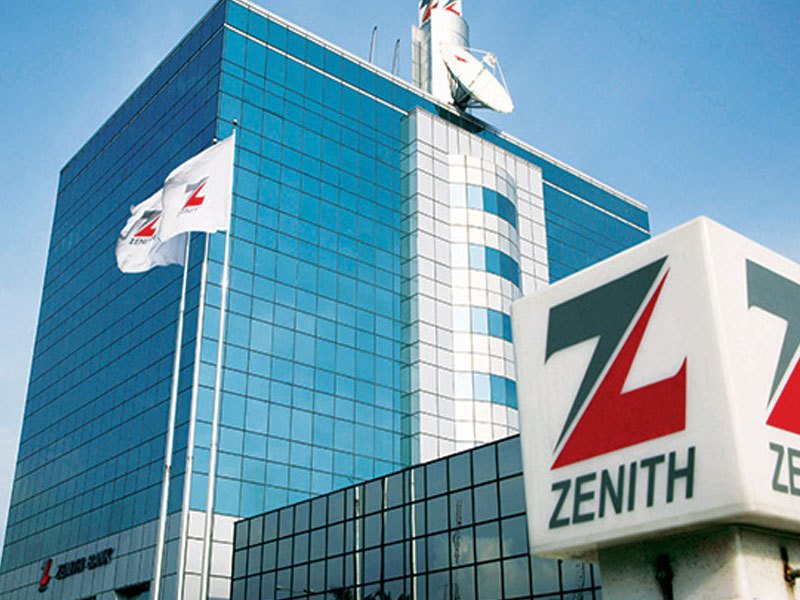
Zenith Bank Plc has been ranked as the Number One Bank in Nigeria by Tier-1 Capital in the 2022 Top 1000 World Banks Ranking published by The Banker Magazine. For the thirteenth consecutive year, the Bank retained its position as the number one Tier-1 bank in Nigeria with a Tier-1 Capital of $2.75 billion, emerging as the 460th Bank globally.
The ranking, which was published in the July 2022 edition of The Banker Magazine of the Financial Times Group, United Kingdom, was based on the 2021 year-end Tier-1 capital of banks globally. Zenith Bank’s financial performance for the year was underpinned by double-digit growth of 10% in gross earnings, with an improved market share in both retail and corporate sectors despite a very challenging macroeconomic environment aggravated by the COVID-19 pandemic.
Commenting on the 2022 Top 1000 World Banks Ranking, the Group Managing Director/CEO of Zenith Bank Plc, Mr. Ebenezer Onyeagwu, said: “This ranking is a testament to our resilience and doggedness as an institution despite economic headwinds and a persistent challenging macroeconomic environment. Indeed, being ranked as the Number One Bank in Nigeria by Tier-1 Capital for the thirteenth year in a row underscores our commitment to sustaining the superior performance we are renowned for and creating value for our highly esteemed customers.” He expressed his appreciation to the Founder and Chairman of Zenith Bank Plc, Jim Ovia, CON, for his guidance and for laying the foundation and building the structures of an enduring and very successful institution; the Board for the outstanding leadership they provide; the staff, whose drive and commitment sustains the exceptional performance; and the Bank’s customers for their unflinching loyalty to the Zenith brand.
Tier 1 Capital describes capital adequacy, which is the core measure of a bank’s financial strength from a regulator’s point of view. According to the ranking, Tier 1 Capital, as defined by the latest Bank for International Settlements (BIS) guidelines, includes loss-absorbing capital, i.e. common stock, disclosed reserves, retained earnings and minority interests in the equity of subsidiaries that are less than wholly owned.
Zenith Bank’s track record of excellent performance has continued to earn the brand numerous awards, with this latest accolade coming on the heels of several recognitions, including being recognised as the Best Bank in Nigeria for three consecutive years from 2020 to 2022, in the Global Finance World’s Best Banks Awards; Best Commercial Bank, Nigeria 2021 and 2022 in the World Finance Banking Awards; Best Corporate Governance Bank, Nigeria in the World Finance Corporate Governance Awards 2022; Best in Corporate Governance ‘Financial Services’ Africa, for three consecutive years from 2020 to 2022, by the Ethical Boardroom; Best Commercial Bank, Nigeria and Best Innovation In Retail Banking, Nigeria in the International Banker 2022 Banking Awards; and Bank of the Year (Nigeria) in The Banker’s Bank of the Year Awards 2020. Also, the Bank emerged as the Most Valuable Banking Brand in Nigeria in the Banker Magazine Top 500 Banking Brands 2020 and 2021, and the Retail Bank of the year at the BusinessDay Banks and Other Financial Institutions (BOFI) Awards 2020 and 2021.
Similarly, Zenith Bank was honoured as Bank of the Decade (People’s Choice) at the ThisDay Awards 2020 and emerged winner in four categories at the Sustainability, Enterprise, and Responsibility (SERAS) Awards 2021, carting home the awards for “Best Company in Reporting and Transparency”, “Best Company in Infrastructure Development”, “Best Company in Gender Equality and Women Empowerment”, and the coveted “Most Responsible Organisation in Africa.
NON-OIL EXPORTS KEY TO NIGERIA’S ECONOMIC REJUVENATION, SAY STAKEHOLDERS AT ZENITH BANK INTERNATIONAL TRADE SEMINAR
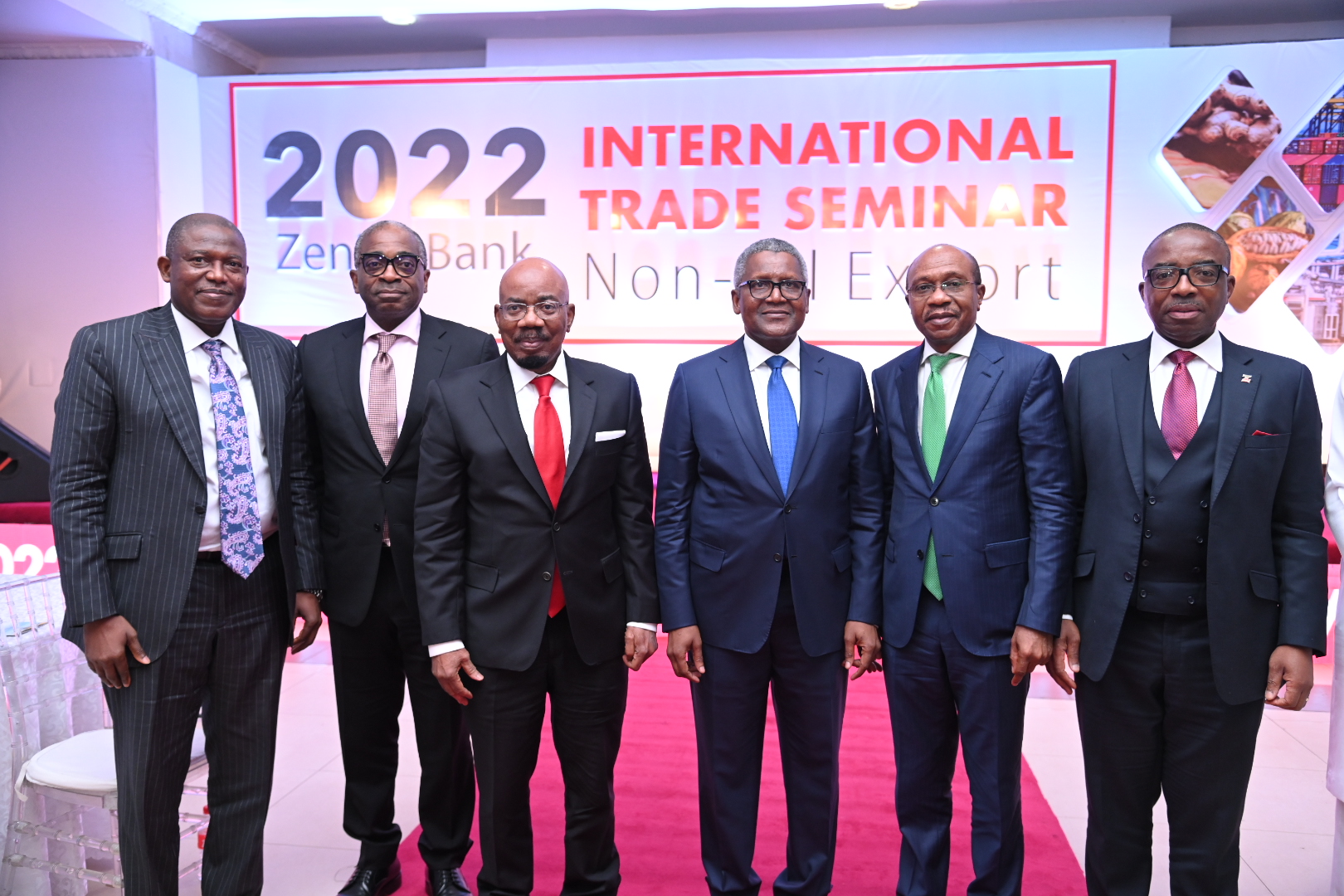
R – L : Group Managing Director/CEO, Zenith Bank Plc, Mr. Ebenezer Onyeagwu; Central Bank of Nigeria (CBN) Governor, Mr. Godwin Emefiele; President & Chief Executive of Dangote Group, Alhaji Aliko Dangote; Founder and Chairman of Zenith Bank, Mr. Jim Ovia; former Chief Executive/Executive Director of the Nigerian Export Promotion Council (NEPC), Mr. Olusegun Awolowo; and Managing Director/CEO, Bank of Industry, Mr. Olukayode Pitan at the 2022 Zenith Bank International Trade Seminar held at the Civic Centre Lagos, yesterday.
Stakeholders unanimously called for support of Nigeria’s Non-Oil Export Sector at the 7th Annual Edition of the Zenith Bank International Trade Seminar themed “Unlocking Opportunities in Nigeria’s Non-Oil Export Business”, which was held on Wednesday, July 20, 2022, at the Civic Centre, Victoria Island, Lagos and virtually.
In his Goodwill Message Presentation, the Founder and Chairman of Zenith Bank Plc, Mr. Jim Ovia, CON, called for a concerted effort towards diversifying Nigeria’s export base through the promotion of non-oil exports. Highlighting the importance of non-oil export to the nation’s economy, Ovia pointed out that Nigeria exported cocoa and several other non-oil products for years before oil was discovered. He cited the example of the 25-storey Cocoa House in Ibadan, which was built with proceeds from cocoa exports. He pointed out that many countries in the world, such as Japan and China been successful because they are doing a great deal of innovation, production and manufacturing of goods and services. According to him, we should also look at promoting the nation’s non-oil export sector through technology to create technological giants like Apple, Tesla, and Google. And we already have technology companies in this mould in Nigeria, such as Flutterwave, which has a valuation of $3 billion, making it more valuable than some banks in Nigeria. Speaking further on the enormous potential in Nigeria’s non-oil sector, Ovia highlighted the phenomenal growth of Nigeria’s emerging financial technology (Fintech) companies such as Flutherwave, OPay, Interswitch, Kuda and Paystack, with market valuations of $3 billion, $2 billion, $1 billion, $500 million, $200 million, respectively. According to him, this underscores the enormous opportunity in the Fintech space. He also noted that the most capitalized companies in the world, such as Apple, Microsoft, Alphabet (Google), Amazon, Tesla, Visa, etc., are not oil companies but are in the technological innovation space.
In his welcome address, the Group Managing Director/CEO of Zenith Bank, Mr. Ebenezer Onyeagwu, said that the annual Zenith Bank Trade Seminar has served as a veritable platform to deepen the conversation on promoting non-oil export in Nigeria, bringing together non-oil export practitioners and relevant government agencies to interact and explore the opportunities and proffer solutions to the challenges of non-oil export in the country. Speaking on the origin of the Zenith Bank Annual International Trade Seminar, Onyeagwu said that the commodity price slump of 2014-2016 was a watershed moment. According to him, “when crude oil prices plummeted from $114.55 per barrel in June 2014 to $28.76 in January 2016, with an attendant effect on the availability of foreign exchange, it was time to look towards the non-oil export sector for a more sustainable source of foreign exchange that is not susceptible to external shocks and price volatility.
Highlighting some of the salient outcomes of the past six Zenith Bank Annual International Trade Seminar editions, Onyeagwu noted that previous editions’ outcomes have found expression and influenced policy initiatives. For instance, the extension of the period of repatriation of Non-Oil Export proceeds from 90 days to 180 days and the policy mandating shippers not to carry export without a Nigeria Export Proceeds (NXP) Form Number were recommendations from previous seminars. Also, the need to incentivize exporters to repatriate their export proceeds through the official channels and the recommendation to create export terminals across various export hubs in the country were also from past seminars. Also, previous editions recommended having Export Desks in commercial banks, which has now been instituted. He also stated that Zenith Bank has trained over 100 exporters through its Zero to Hero programmes which provide a platform for grooming and exposing beginners to become strong exporters by providing training on documentation, product sourcing, access to market and financing. He noted that Zenith Bank will continue the advocacy of promoting non-oil export.
Delivering his goodwill message, the Central Bank of Nigeria Governor, Mr. Godwin Emefiele, CON, commended Zenith Bank and its leadership led by the Founder and Chairman of the Board, Jim Ovia, for its laudable initiative in organizing an annual export seminar to explore opportunities in Nigeria’s non-oil export with a view to increasing the nation’s non-oil export base and ultimately increasing its share as a percentage of total export. In his words: “This is why the theme of this year’s seminar “Unlocking Opportunities in Nigeria’s Non-Oil Export Business” is timely and appropriate. This is because the global economy and structure are changing rapidly before our eyes. The previous world economic order underpinned by globalization and seamless trade possibilities seems to be suffering major disruptions lately. We believe Nigeria has a lot of potentials, and we can harness this for the good of our people and country.” He pointed out that the CBN has undertaken several initiatives to promote the non-oil export sector because of its firm belief that the non-oil export sector holds enormous potential to contribute to employment generation, wealth creation and economic growth of the country.
In his keynote address, the President & Chief Executive of Dangote Group, Alhaji Aliko Dangote, GCON, said that “Nigeria’s non-oil export is quite low compared to other African top oil producers. This exposes the economy to oil price/production risks. There is much room for growth, and the CBN is helping drive this through the RT200 programme”. According to him, the CBN RT200 FX programme, which aims to achieve $200 billion in foreign exchange earnings from non-oil proceeds over the next 3-5 years, has very laudable objectives, including enhancing foreign exchange inflow, diversifying the source of FX inflow, increasing the level of contribution from non-oil export, and ensuring stability and sustainability of FX flows.
In his Goodwill Message, His Excellency, Wamkele Mene, Secretary General, African Continental Free Trade Area (AfCFTA) Secretariat, enumerated the progress and achievements of the African Continental Free Trade Area and the efforts to improve intra-Africa trade. Also, in his Goodwill Message, Professor Benedict Oramah, President / Chairman of African Export-Import Bank (Afreximbank), highlighted the efforts of Afreximbank to enhance intra-Africa trade through the implementation of the Pan-African Payment and Settlement System (PAPSS). According to him, the Pan-African Payment and Settlement System will make it easy and seamless for Africans to trade amongst themselves and receive payment for goods and services in their local currencies, eliminating currency conversion challenges.
Zenith Bank remains committed to promoting the non-oil export sector in Nigeria by identifying emerging opportunities which help stimulate non-oil exports and develop robust financial products and incentives for operators in the sector. The bank launched the Non-Oil Export Seminar in 2017 as an initiative to deepen the discourse on promoting the non-oil export business in Nigeria.
The job fair, scheduled to hold on the 3rd of August, 2022 at the International Conference Centre, Abuja is intended to attract, qualified candidates for job opportunities in IP technologies, Information Technologies, Channel management, Programming, Data Engineering, Account Management, Delivery Management, Procurement, Channel Sales and others.
This will afford candidates the opportunity to listen and connect to prospective employers. Recruiters would be looking out for Huawei certified applicants, experienced applicants, Interns and graduate trainees. The company says this is also open to NYSC members needing a place of primary assignment.
Nigeria is Africa’s largest economy and most populated country with great potentials for development, especially in ICT. The ICT sector is crucial to it’s national growth, a strong tool for sustainable development, increasing productivity and Economic expansion.
The job fair is intended to attract, qualified candidates for job opportunities, in IP technologies, Information Technologies, Channel management, Programming, Data Engineering, Account Management, Delivery Management, Procurement, Channel Sales and others.
Companies in attendance will include Huawei, its partners, customers and contractors. This is one of the profound components of Huawei skills development strategy and the youths are urged to seize the opportunity by ensuring that they market themselves and showcase their potentials.
The Job Fair is an important part of the Huawei talent ecosystem development strategy which aims at developing talents, promoting a favorable business environment and strengthening partnership within the industry.
A key aspect of ICT development in Nigeria is the cultivation of ICT talents in all industries. Looking to bridge the gap between Industry requirements and the Academia, Huawei continually leverages on the technologies, knowledge, experience, and successful practices it has gained over years of operations in the ICT industry to cultivate more high-quality ICT talent. Huawei does this through building sustainable partnership between the Industries, Government and the Academia.
As part of this, Nigeria’s Ministry of Communication and Digital Economy recently partnered with Huawei towards developing ICT Talents by signing an MOU with the Ministry of Communications and digital economy to train 3,000 students in ICT thereby expanding the digital economy. This is done through different initiatives, one of which is the Huawei ICT Academy which has partnered with over 100 educational institutions in Nigeria, including Ahmadu Bello University, University of Port Harcourt, University of Ibadan, Rufus Giwa Polytechnic and other renowned institutions.