UK Prime Minister, Sir Keir Starmer has condemned the decision to ban supporters of Israel’s Maccabi Tel Aviv from attending their November 6 UEFA Europa League clash against Aston Villa, describing it as “the wrong decision,” The Independent on Friday reports.
Starmer’s remarks come after Opposition Leader Kemi Badenoch blasted the move as “a national disgrace,” accusing authorities of sending “a horrendous and shameful message” that there are parts of Britain “where Jews simply cannot go.”
The Prime Minister joined calls for Birmingham City Council’s Safety Advisory Group and West Midlands Police to reverse the decision and allow Maccabi fans to attend the November 6 match at Villa Park.
Starmer, in a post on X (formerly Twitter), criticised the Birmingham authorities for bowing to those concerns rather than ensuring proper security for all fans.
“This is the wrong decision. We will not tolerate antisemitism on our streets.
“The role of the police is to ensure all football fans can enjoy the game, without fear of violence or intimidation,” he wrote.
Aston Villa announced late Thursday that the club had been instructed by the Safety Advisory Group (SAG) — the body responsible for issuing matchday safety certificates — that no away fans will be permitted for the fixture at Villa Park on Thursday, November 6.
According to the club, the SAG reached the decision after advice from West Midlands Police, who raised public safety concerns outside the stadium and cited potential difficulties in managing protests during the match.
“Following a meeting this afternoon, the SAG have formally written to the club and UEFA to advise no away fans will be permitted to attend Villa Park for this fixture.
“The club are in continuous dialogue with Maccabi Tel Aviv and the local authorities throughout this ongoing process, with the safety of supporters attending the match and the safety of local residents at the forefront of any decision,” Aston Villa said in a statement.
However, Badenoch — responding to the club’s announcement on X also on Thursday — criticised the move, calling it an unacceptable failure of the government’s promise to ensure safety for British Jews.
“This is a national disgrace. How have things come to this? Starmer pledged that Jews are welcome and safe in Britain. That he stands shoulder to shoulder with the Jewish community and will use the full force of his government to prove it.
“Will he back those words with action and guarantee that Jewish fans can walk into any football stadium in this country? If not, it sends a horrendous and shameful message: there are parts of Britain where Jews simply cannot go,” she wrote.
PUNCH Online, however, reports on Friday that UEFA and Maccabi Tel Aviv have yet to issue formal statements on the development.
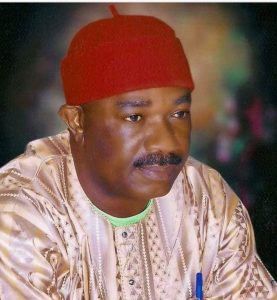
The founder and Board of Trustees Chairman of the New Nigeria Peoples Party, Dr Boniface Aniebonam, has said that politicians defecting to the All Progressives Congress are doing so out of their own free will and not under any coercion from President Bola Tinubu.
Aniebonam stated this on Friday in Lagos while reacting to recent defections by governors and lawmakers from opposition parties to the APC.
He said the decision to join or leave any political party in Nigeria remained voluntary, stressing that no evidence had shown that anyone was being forced to join the ruling party.
“We are yet to see politicians who defected to the APC or any other political party in Nigeria at gunpoint, except for their personal convictions and choices,” he said.
According to him, allegations that Tinubu is attempting to turn Nigeria into a one-party state are unfounded.
He added, “We have 18 registered political parties in Nigeria, which underscores the essence of a multi-party system in our constitution. Even if all the PDP governors and a few others of the registered political parties join the APC, it doesn’t make Nigeria a one-party state.
“The President had once said that he would not stop anyone who wishes to join the APC because it is their right. President Tinubu and the APC have the right to seek more members for their reelection.
“To claim that Nigeria is tilting to a one-party state is unfounded because INEC has not deregistered any of the existing political parties in Nigeria.
“What the elected office holders do not understand is that Nigerians are getting wiser and conscious of their political environment in dealing with politicians.”
The NNPP leader also faulted some state governors for poor governance, saying many of them were seeking refuge in the ruling party to avoid scrutiny.
“Many of these governors are practically not doing much for their states, and they think that running into the APC will provide them a second opportunity. And cover from investigation.
“The truth is that APC needs to be very careful with the movement of politicians crossing over in droves; it is easier to fight from within than from outside.
“Whenever systems collapse, tactics take over, politicians can be anything overnight,” he added.
Aniebonam encouraged Nigerians to channel their grievances appropriately and advised politicians to stop blaming the President for their own failures.
“Tinubu is seeking a rerun, and it is his right to welcome anyone who will help him win the election.
“It appears that some politicians are already afraid even before the election, hence the cries of a one-party state.
“What is the population of the governors and party members compared with those who will vote? They are merely a minority of eligible voters in Nigeria,” he said.
The NNPP leader, however, urged the Economics and Financial Crimes Commission to ensure that state governments are kept in view and any governor who has embezzled state funds should be investigated and made to face trial in court at the appropriate time.
“We encourage President Tinubu to continue to prioritise the needs of Nigerians with the available resources and ensure popular policies for the good of greater numbers.
“The fact remains that some operators of institutions of administration and management are failing Nigerians.
“It is our hope that INEC, the judiciary and law enforcement agencies will live up to expectations and join in taking Nigeria to the desired heights.
“The NNPP is also open to all Nigerians who consider him or herself worthy and popular for the vote of Nigerians to come forward. President Tinubu is not stopping anybody from testing his or her popularity,” Aniebonam stated
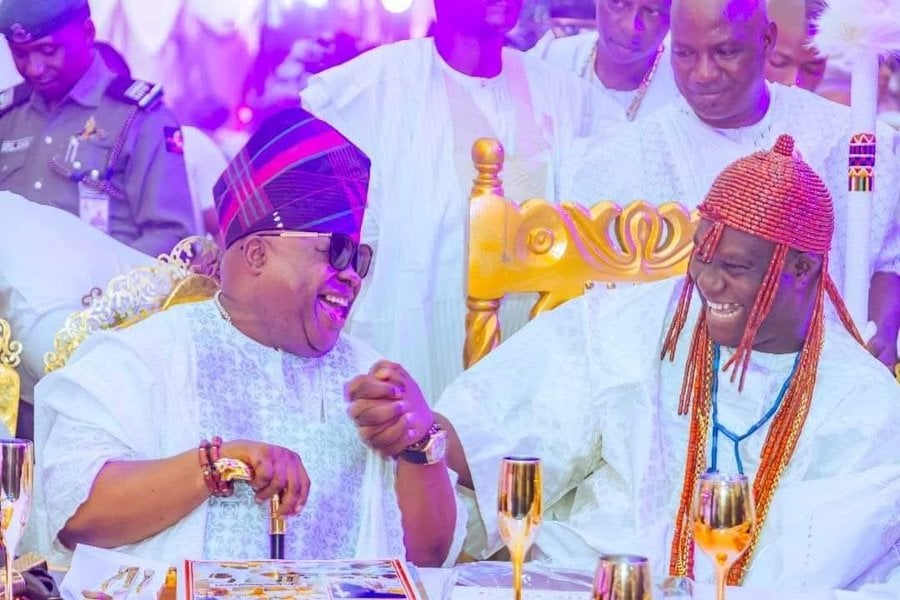
Osun State Governor, Senator Ademola Adeleke, has extended warm felicitations to the Ooni of Ife, Oba Adeyeye Ogunwusi, on the occasion of his 51st birthday.
This is as he described the revered monarch as “a beacon of peace, cultural rebirth, and national inspiration.”
In a Friday statement signed by his spokesperson, Olawale Rasheed, Adeleke lauded the enduring legacy of the Arole Oduduwa.
He also noted that the Ooni’s reign has become synonymous with “transformational traditional leadership, youth empowerment, and cultural diplomacy.”
“It gives me immense pleasure to celebrate our royal father, His Imperial Majesty, Oba Adeyeye Enitan Ogunwusi, Ojaja II, on the occasion of his 51st birthday.
“Kabiyesi’s life and reign continue to exemplify vision, courage, and compassion, attributes that define great leaders and enduring legacies,” Adeleke stated in his congratulatory message.
The governor praised the monarch’s contributions to the social and economic rejuvenation of Ile-Ife and his efforts in promoting unity among Nigeria’s diverse peoples and faiths.
“Kabiyesi has continued to project the glory of Yoruba culture and tradition on the world stage, advancing values of peace, unity, and progress.
“His consistent advocacy for youth inclusion and community development reflects a deep understanding of leadership as service to humanity,” the governor added.
Adeleke also highlighted the Ooni’s pivotal role as Chairman of the Osun State Council of Traditional Rulers, commending his commitment to fostering collaboration among royal fathers and strengthening traditional institutions across the state and beyond.
“As Kabiyesi marks this new age in good health and divine favour, I pray to Almighty God and Eledumare to continue to grant him wisdom, long life, and renewed strength to guide his people and contribute to the prosperity of Osun State and Nigeria,” Adeleke concluded.
PUNCH Online reports that the monarch is the 51st traditional ruler of the ancient and historic town. He became the Ooni after his predecessor HRM Okunade Sijuwade in August 2015.
Cole Palmer has been ruled out of action for six more weeks, Chelsea manager Enzo Maresca said on Friday.
The England midfielder has not played since Chelsea’s 2-1 defeat at Manchester United on September 20 — when he came off midway through the first half.
Maresca initially said he hoped Palmer, 23, would be back after this month’s international break.
“I was wrong. Unfortunately, he needs to be out for probably six more weeks. So, yes, this is the update,” he said.
The Italian said he was confident that the forward would not require surgery.
“We try just to protect Cole as much as we can, and the most important thing is that when he comes back, he’s fully recovered,” he added.
Maresca, whose team faces Nottingham Forest on Saturday, said replacing “one of the best players in the Premier League” was difficult.
“For sure, we need to find a different solution, we need to find different skills, because we don’t have another player like Cole,” he said. “Because Cole is unique.”
Northern Ambassadors For Renewed Hope Endorse Tinubu For 2027, Name Matawalle As Grand Patron
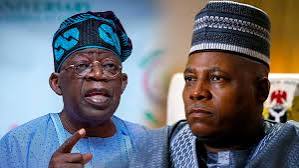
The Northern Ambassadors for Renewed Hope, a powerful coalition representing the collective aspirations of the 19 northern states, has endorsed President Bola Ahmed Tinubu for the 2027 presidential election.
With a membership exceeding one million, the group announced its resolute support during a landmark press conference in Abuja, signalling robust regional backing for Tinubu’s transformative leadership and his Renewed Hope Agenda.
Adding further weight to the declaration, the coalition appointed Bello Matawalle, the Minister of State for Defence, as its Grand Patron, recognising his instrumental role in advancing security and youth welfare in the North.
The coalition praised President Tinubu’s commitment to Nigeria’s progress, particularly his focus on economic revitalisation, infrastructural development, and national unity.
“President Tinubu has shown remarkable vision in steering Nigeria toward prosperity,” said Comrade Usman Musa, National Coordinator of the Northern Ambassadors for Renewed Hope.
“His policies are not only bold but inclusive, ensuring that every region, especially the North, feels the impact of his governance.
“From agricultural transformation to job creation for our youth, Tinubu’s Renewed Hope Agenda is laying a solid foundation for a stronger Nigeria.”Musa emphasized the tangible benefits of Tinubu’s reforms in the northern region, citing investments in farming, rural infrastructure, and education as game-changers.
“The North is witnessing unprecedented attention to its needs. Farmers are receiving support to boost productivity, schools are being revitalized, and our roads are improving. These are not mere promises but realities we can see and feel,” he stated.
He further lauded Tinubu’s ability to foster unity across Nigeria’s diverse regions, describing him as a leader with the foresight to bridge divides and build a cohesive nation.
“Tinubu’s leadership transcends tribal and regional lines. He governs with fairness, ensuring that every Nigerian has a stake in the nation’s progress,” Musa added.
The group expressed unshakable confidence in Tinubu’s ability to lead Nigeria into a prosperous future. “We believe in President Tinubu’s vision for a Nigeria that works for all.
“His economic reforms are stabilising our currency, attracting investments, and creating opportunities for our people. We are proud to stand with him and pledge our full support for his re-election in 2027,” Musa declared.
He called on northerners and Nigerians at large to rally behind Tinubu, emphasising that his leadership offers the best path to sustainable development and global competitiveness.
On Matawalle, the group added: “He is a leader who understands the pulse of the North. His reforms in the defence sector, from improving troop welfare to equipping our forces with modern tools, have significantly weakened the grip of bandits and insurgents.
“We are safer today because of his dedication.”
Musa further praised Matawalle’s hands-on approach to governance, noting his regular engagements with northern communities to address their concerns.
“Matawalle is not a distant leader. He listens to the people, works with traditional and religious leaders, and ensures that our youth are not left behind. His programs for skills acquisition and entrepreneurship are giving hope to thousands of young northerners,” he stated.
The coalition highlighted Matawalle’s role in fostering collaboration between security agencies and local communities, which has led to a marked decline in violent incidents across the region.
“By naming Matawalle our Grand Patron, we honour his tireless efforts and signal our trust in his ability to continue delivering for the North and Nigeria,” Musa added.
The Northern Ambassadors for Renewed Hope underscored the powerful synergy between Tinubu and Matawalle as a driving force for national progress.
“President Tinubu and Minister Matawalle are a formidable team. Their combined efforts in governance and security are setting Nigeria on a path to greatness,” Musa affirmed.
He highlighted Tinubu’s trust in capable leaders like Matawalle as evidence of his commitment to building a competent and result-oriented administration.
“Tinubu’s choice of leaders like Matawalle shows he values excellence and delivery. Together, they are addressing our challenges with precision and passion,” he said.
Musa called on Nigerians to unite behind Tinubu’s vision, emphasising the importance of collective action in achieving national goals.
Parliamentary Watch Initiative Lauds Senators Asuquo Ekpenyong, Sani Musa as Outstanding Legislators on Constituency Projects
The Parliamentary Watch Initiative (PWI), a non-partisan civil society organization dedicated to promoting legislative excellence and accountability in Nigeria, has commended three standout senators for their exemplary delivery on constituency projects and national reforms during the 10th National Assembly.
The PWI hailed Senators Asuquo Ekpenyong (Cross River South), Sani Musa (Niger East), and Ipalibo Banigo (Rivers West) as “trailblazers and seasoned leaders who embody the Renewed Hope agenda through tangible impacts on their constituents and the broader federation.”
In a statement signed by Comrade Tanko Yerima, Executive Director of PWI, the group praised Senator Asuquo Ekpenyong, Chairman of the Senate Committee on the Niger Delta Development Commission (NDDC), as a beacon of grassroots innovation since his inauguration in June 2023.
According to Yerima, his portfolio boasts the installation of 6,870 solar-powered streetlights across 156 locations, enhancing nighttime safety in rural and urban communities; the construction of 11 new roads totaling 16 kilometers and the rehabilitation of eight key thoroughfares in Calabar, including Mayne Avenue, Inyang Street, Goldie Street, Ephraim Street, Hewett Street, Queen Duke Street, Edim Otop Street, and Hall 2 Road at the University of Calabar.
“Ekpenyong’s water security initiatives include seven solar-powered boreholes—one in each of the seven local government areas—while ongoing projects like the Odukpani Police Station construction promise bolstered security,” Yerima said.
“Health and education remain cornerstones, with three medical outreaches benefiting 4,422 residents, scholarships and instructional materials for 1,700 students, 31 foreign scholarships, and the establishment of two NITDA Digital Economy Centers at Government Secondary Schools in Idang and Ehom.
“Beyond infrastructure, Ekpenyong’s legislative acumen shone during Wednesday’s Senate plenary, where he sponsored the Factoring Regulation Bill, 2024 (SB.474), which passed second reading.
“The bill targets delayed payments crippling over 40 million MSMEs—Nigeria’s job-creation engine—by unlocking over $1 billion annually in financing.”
In Niger East, the group added that Senator Sani Musa—affectionately dubbed “313” for his unyielding loyalty—has redefined governance as Chairman of the Senate Finance Committee, overseeing fiscal discipline, appropriations, and national planning with patriotic precision.
Yerima added: “His constituents’ moniker reflects a transformative legacy: from renovating classrooms and building a principal’s office at Government Technical College, Minna, to establishing an ICT Centre in Ija Gwari, Tafa LGA, empowering rural youth in the digital economy.
“Musa’s scholarships span primary to tertiary levels, including international undergraduate programs in China and India for top talents. Recent empowerment drives distributed cash grants of ₦50,000 to 2,868 residents across six local governments, alongside items like tricycles, motorcycles, grinding machines, deep freezers, generators, and sewing machines to over 500 women and youths.
“Infrastructure feats include solar streetlights, motorized boreholes, market stalls, road constructions, and state-of-the-art mini-stadiums in Minna and Kuta (Shiroro LGA), fostering sports and community cohesion. ”
PWI noted his recent launch of fully paid scholarships for 100 students to study medicine in India, addressing healthcare shortages in Zone B.
Rounding out the trio, Senator Ipalibo Banigo, Chairman of the Senate Committee on Health (Secondary & Tertiary), has been recognised for her outstanding contributions to public health resilience and constituency outreach.
A medical doctor and advocate for the Renewed Hope agenda, the group said Banigo has championed girl-child education and maternal health, launching several initiatives to reduce out-of-pocket expenses.
“In an era demanding results over rhetoric, Senators Ekpenyong, Musa, and Banigo exemplify legislative service that bridges constituency needs with national progress,” stated Comrade Yerima.
“Their projects—spanning infrastructure, education, health, and economic empowerment—have illuminated communities, empowered futures, and fortified Nigeria’s health architecture. “
TINUBU’S RENEWED HOPE AND CIVIL AVIATION TRANSFORMATIONAL FOOTPRINTS
By Michael Ado
To still state that President Tinubu’s reform programs are working in all sectors is overemphasizing realities.
To add that they are positively impacting the everyday life of the citizens and residents of the country is an understatement.
Truth is, however, that there is need for sectoral analysis for a point-by-point understanding of the impact of the Renewed Hope initiatives. Through that, citizens and even the international community can better appreciate what is happening in Nigeria, and the point-men who are making those things happen.
The Nigerian civil aviation corridor has suffered years of neglect, leading to a comatose state.
The long-standing infrastructural decay and systemic neglect, occasioned by endemic and widespread corruption and abuse, rendered the civil aviation compliant to numerous sectoral dysfunctions.
Some of the identified challenges, which otherwise negatively impacted the growth of the sector, limiting safety and its overall efficiency, prompting calls for reforms and increased investment, include aging airport infrastructure and inadequate facilities, safety issues like bird strikes, runway skids, and ageing aircraft fleets, coupled with high operational costs, foreign exchange scarcity, and blocked funds for foreign airlines.
There were also challenges of inconsistent regulatory policies and lack of effective oversight, with acute manpower shortage and grossly inadequate trained professionals, caused by several years of neglect and airlines failing to invest in training programs.
Militating against the sector also was the challenge of inconsistent and unreliable foreign exchange, which was equally scarce and inaccessible to foreign airlines, resulting in flight suspensions and increased fares.
While associated with the challenge was high cost of operation due to rising cost of jet fuel prices and other operational costs, contributing to increased air ticket prices. And because of limited space and various role conflicts, there were constant rivalries between government agencies, such as FAAN and NCAA, hindering effective collaboration and oversight with incessant noncompliance issues, especially from some private jet operators operating chartered services without proper licenses, and rendering consumers liable to several abuses, poor treatment, including flight delays, cancellations, and lack of transparency in pricing, without any form of established protection.
However, with the assumption of Captain Chris Najomo as the Acting Director General of the Nigerian Civil Aviation Authority (NCAA), all these have changed.
A man determined, like William Blake, not to resolve all contradictions but to live with them and rise above them, Captain Chris came with the Midas touch of positive solutions.
Mindful of the challenges, Capt. Najomo set out first to address the lingering infrastructural deficit, thereby upgrading the Federal Airports Authority of Nigeria (FAAN) through the installation of airfield lighting systems at Murtala Muhammed Airport’s Runway 18R, reducing flight delays by 25%, coupled with the completion and commissioning of long-abandoned projects, such as the NCAA Regional Office in Port Harcourt and the Kano Regional Office, enhancing the NCAA’s operational capabilities.
The introduction of airport concessions in 2025, which saw the private sector into full participation in the modernization of the airport infrastructure, became the icebreaker leading to the rapid boost and enhancing operational efficiency, attracting significant investment, improving consumer experience.
It is noteworthy that Capt. Chris also implemented various measures aimed at instilling probity, accountability, and transparency into the regulatory dynamics of the Nigerian Civil Aviation Authority (NCAA), including the establishment of a Consumer Protection Directorate to address issues like flight delays and cancellations, and the Consumer Protection Portal to address passenger complaints and improve service quality, showcasing his commitment to consumer welfare, and expanding access and availability through the development of new airports, such as the Ogun Gateway Airport, which has since commenced commercial operations, marking a significant milestone in Nigeria’s aviation industry.
Another novel masterpiece is the implementation of various initiatives to enhance safety in Nigerian aviation, such as the establishment of the Flight Data Analysis Centre (FDAC) to detect anomalies and prevent safety challenges, as well as the prompt implementation of aircraft entry policy to allow smaller airlines to operate with fewer aircraft, fostering competition and growth.
A forward-thinking administrator, Captain Najomo also recertified two notable international airports, namely the Murtala Muhammed International Airport (MMIA) and Nnamdi Azikiwe International Airport (NAIA), thereby bringing to an end over 160 compliance issues, and demonstrating Nigeria’s capacity, leadership, and commitment to global safety standards.
These reforms, and the filling in of infrastructural gaps, have not just greatly added value to the sector but have become a springboard of attraction, building confidence, ensuring reliability, and bringing in many foreign direct investments, including public-private partnerships (PPPs), which are presently relentlessly driving inclusivity and growth in the aviation sector.
The various citizen-centred concessional arrangements include terminal concessions at major airports and Build-Operate-Transfer (BOT) models and arrangements for cargo terminals and maintenance hangars.
While improving the overall efficiency, safety, and competitiveness of Nigeria’s aviation sector, the various reforms also aim at repositioning the sector for formidable growth and development, enabling it to contribute not less than 2.5% to Nigeria’s GDP by the end of this year and supporting the employment of over 200,000 youths, while also stabilizing the finances of the sector through the “no pay, no service” policy, compelling airlines to settle their debts to the NCAA, significantly improving the agency’s financial health, and establishing a culture of collaboration and understanding between management and workers, leading to increased productivity and efficiency in the aviation sector.
Through the superlative resounding performance of Captain Chris Najomo, through sound and articulate demonstration of leadership and dedication, he has made positive impact on the Nigerian aviation sector, prioritizing safety, consumer protection, and regulatory excellence, thereby justifying the trust of Mr. President, and proving once again Mr. President’s efficiency and capacity for placing a square peg in a square hole, and getting the right people for the job, not necessarily out of sentiments but based on merits, innovation, and results.
There is no doubt that the NCAA is getting it right. More than right in Captain Chris Najomo’s agency, demonstrating team spirit, cohesion, unity of purpose, appreciation, and assimilation of the leadership of their MD, while positively aligning with the Renewed Hope Mandate of the Civil Aviation Sector for the overall growth of the economy and national development sustainability.
APPRAISING DANTSOHO AND HIS PORTS MANAGEMENT STRATEGY
By Joseph Onwe
Nigeria is experiencing rapid change anchored on the Renewed Hope Initiatives of the transformational leadership of President Bola Ahmed Tinubu.
Associated with the pragmatic leadership which is bringing about systemic and generalized changes in all facets of national life and all sectors of the economy, is the superlative positive volte-face experienced at the Nigeria Ports Authority (NPA), under the distinguished visionary directives of Dr. Abubakar Dantsoho.
Surmounting several challenges, which before now militated against the overall efficiency and competitiveness of Nigerian ports, consequently resulting in a decline in trade and economic growth, notably infrastructural deficits due to aging port infrastructure and inadequate facilities, traffic congestion and gridlock on the main access roads leading to the ports, and inadequate truck handling systems leading to delays and increased costs, and a growing endemic corruption and inefficiency, with the poor management of empty containers adding to environmental risk and avoidable health risks, Dr. Dantsoho’s sagacity has led to the implementation of various initiatives.
With several years of outstanding, strong, and unwavering focused leadership, Dr. Dantsoho has demonstrated effectively his desire to actualize strategic action plans and consider key factors for a robust and effective transformation of the Nigeria Ports Authority.
An apostle of clear goals and objectivity, his well-defined, measurable, and achievable goals align with President Tinubu’s vision and mission as encapsulated in the Renewed Hope Mandate.
An effective result-oriented leader, his devoted inspiration, motivation, and guidance has stimulated collaboration and a strong team spirit, thereby enhancing the achievement of strategic objectives.
His objective involvement and buy-in from relevant stakeholders has notably transformed the ports into a positive beehive of economic activities and sustainable growth.
A devoted administrator with several decades of selfless and productive service to the nation, Dr. Dantsoho’s adequate and efficient allocation of financial, human, and technological resources to support strategic initiatives has gained him the respect and admiration of all.
To further entrench the spirit of excellence and reliability, Dr. Dantsoho introduced result-based Performance Metrics and Accountability indicators which hold employees accountable for results.
Known for his effective communication, the introduction of regular tracking of progress, identification of deviations, and adjustments to stay on course has aided the ports in responding to changing circumstances, such as market shifts or unexpected obstacles.
Dr. Abubakar Dantsoho’s leadership of the NPA represents resounding significant achievements through strategic initiatives which have transformed the agency and improved the efficiency of port operations.
An intentionally committed administrator, Dr. Dantsoho’s leadership is indeed modernizing port infrastructure, promoting trade facilitation, and encouraging private sector participation through public-private collaboration.
Notably poised to become a major player in the regional maritime industry, driving economic growth and development in Nigeria, Dr. Dantsoho since his appointment in July 2024 has remarkably improved the revenue of the NPA by 111%, from a low ₦424.2 billion in 2023 to an outstanding ₦893.6 billion in 2024, thereby reemphasizing remarkable growth and reechoing the testament of an effective management guru and strategic planner.
Through his systematic and forward-looking initiatives, Dr. Dantsoho has brilliantly transformed the NPA through consistent, comprehensive port modernization projects, including the reconstruction of the Tin Can Island Port Complex and the rehabilitation of other critical port infrastructure.
Dr. Dantsoho’s initiatives foster operational efficiency, reduce congestion, and increase cargo handling capacity.
Building on the new digital age, Dr. Dantsoho through his ingenuity introduced a robust Port Community System (PCS) and National Single Window (NSW) to streamline port operations, reduce bureaucracy, and eliminate corruption.
These digital platforms have improved the efficiency of cargo clearance and enhanced transparency, recording an upbeat increase in cargo throughput, with a 45.1% growth in cargo traffic and a 9.7% increase in container throughput.
This growth is attributable to improved operational efficiency and enhanced trade facilitation initiatives.
Dr. Dantsoho’s leadership has attracted wide accolades and recognition regionally and internationally, earning him election as the President of the Port Management Association of West and Central Africa (PMAWCA) and Vice President of the International Association of Ports and Harbors (IAPH), a recognition that underscores his commitment to promoting regional cooperation and best practices in port management.
Through his leadership of the strategic forum, he prioritized the implementation of various trade facilitation initiatives, including the automation of port operations and the introduction of electronic payment systems, thereby reducing transaction costs and fostering an admirable business ambience; this, coupled with infrastructural development, including the construction of new ports and the rehabilitation of existing ones, has decidedly increased port capacity and improved operational efficiency.
Dr. Dantsoho has launched initiatives that aim at encouraging private sector participation in port operations, including the development of new terminals and logistics facilities, with the intention of leveraging private sector expertise and investment to enhance port efficiency and competitiveness.
Indeed, Dr. Abubakar Dantsoho as the Managing Director of the Nigeria Ports Authority (NPA) has demonstrated proficiency and genuineness in his strategic action plans and the management of the ports, attracting public interest and appreciation, and proving what happens when productivity and success meet the right person.
Nigeria has taken the top spot in Sub-Saharan Africa’s higher education rankings, with 24 universities listed in the 2026 Times Higher Education World University Rankings.
This makes Nigeria the most represented country in the region, ahead of South Africa, which has 13 universities on the list.
The Times Higher Education Sub-Saharan Africa Insights 2026 report, released on Thursday on THE’s website, shows that the region now has a record 55 universities from 14 countries in the global rankings, which is a significant rise from just 10 universities less than ten years ago.
The report described this as a “moment of celebration” for African higher education, noting that universities are improving not only in number but also in quality and global visibility.
South Africa still leads in performance, with four universities ranked among the world’s top 500. The University of Cape Town is Africa’s highest-ranked institution at 164th globally, its best-ever position.
The University of Johannesburg also reached a major milestone by entering the global top 400 for the first time, while the University of Pretoria returned to the 501–600 range after some years.
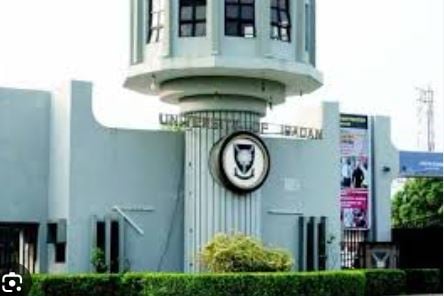
For Nigeria, the University of Ibadan and the University of Lagos both entered the world’s top 1,000 universities for the first time.
Ghana’s University of Cape Coast and Uganda’s Makerere University also featured in the same range, marking steady progress for West and East Africa.
Other countries also improved their presence. Ghana now has four ranked universities, while Botswana has two. Kenya and Tanzania maintained two each.
Senegal made a debut in the rankings through Université Cheikh Anta Diop de Dakar marking a new era for Francophone Africa.
The report showed how fast the region has grown in the rankings over time. From just 12 universities in 2017, the number has grown steadily to 18 in 2020, 25 in 2022, 43 in 2024, and now 55 in 2026, the highest ever.
Times Higher Education’s Chief Global Affairs Officer, Phil Baty, said Africa’s progress is not just about numbers but quality.
“We are not just seeing improvements in representation; we are seeing improvements in quality too… a great opportunity to build on the momentum and make sure Africa’s universities are ready to drive innovation and development,” he said.
The top 10 universities in Sub-Saharan Africa, according to The Times Higher Education Sub-Saharan Africa Insights 2026 report include:
1. University of Cape Town (=164 globally)
2. Stellenbosch University (301–350)
3. University of the Witwatersrand (301–350)
4. University of Johannesburg (351–400)
5. University of KwaZulu-Natal (501–600)
6. University of Pretoria (501–600)
7. University of the Western Cape (601–800)
8. Makerere University (801–1,000)
9. University of Cape Coast (801–1,000)
10. University of Ibadan / University of Lagos (801–1,000)
The report also noted that the global higher education system is changing. Some of Asia’s top universities, such as Tsinghua University and the National University of Singapore, have slowed in growth, while many US and European universities are facing challenges from funding cuts and political pressure.
These changes, the report said, create a new opportunity for Africa to rise further by focusing on research, innovation, and strong international partnerships.
PUNCH Online reported that the University of Ibadan also topped Nigeria’s domestic rankings for 2026, moving up from fourth position in the previous year to become the nation’s best university.
According to the PUNCH Online report, the Times Higher Education World University Rankings 2026 noted that UI and the University of Lagos share the same global ranking band (801–1,000), followed by Bayero University, Covenant University, and Landmark University in the 1001–1200 range.
The PUNCH Online report also highlighted that Nigerian universities performed differently across the five indicators used by THE: teaching, research environment, research quality, international outlook, and industry impact.
The University of Lagos scored highest among Nigerian institutions for research quality, Bayero University topped the list for international outlook, while Covenant University led in industry engagement.
The Lutheran Church of Norway on Thursday apologised to the country’s LGBTQ community, at a gay pub in Oslo, for the discrimination and harassment it subjected them to in the past.
“The Church of Norway inflicted shame, serious harm and pain on gay people,” said Olav Fykse Tveit, presiding bishop of the Church of Norway, in a speech at the London Pub, a prominent venue for the gay community.
“It should never have happened and to them I say today: I’m sorry,” he said, acknowledging that the “discrimination, unequal treatment and harassment” caused some to lose their faith.
In the 1950s, the church said gay people were a “global social danger” and qualified their acts as “perverse and despicable.”
Over time, the Church of Norway — which has 3.4 million members, representing over 60 percent of the Norwegian population — has adopted a more liberal approach.
It has allowed gay pastors since 2007 and religious unions for same-sex couples since 2017.
Thursday’s apology was “strong and important” but comes “too late for those of us who died of AIDS … with hearts filled with anguish because the church considered the epidemic to be God’s punishment,” said Stephen Adom, leader of Norway’s Association for Gender and Sexual Diversity.
“We are seeing a populist and conservative Christian wave sweeping across country after country. In the United States, in Hungary, but also in Norway, it is becoming increasingly accepted among religious and political leaders to denigrate the human diversity of identities and bodies,” he lamented.
The London Pub was one of two bars targeted in a shooting that left two dead and nine injured during Oslo’s Pride parade on June 25, 2022.
The perpetrator, Zaniar Matapour, a Norwegian of Iranian origin who had pledged allegiance to the Islamic State group, was sentenced to the maximum penalty, 30 years in prison which can be extended indefinitely, for committing an “aggravated terrorist act.”
In 2023, Tveit himself participated in the Pride parade, a first for a Church of Norway presiding bishop.
According to a survey conducted by the Opinion Institute for the Church of Norway, 65 percent of respondents said it was “high time” for the institution to apologise to gay people.
Other Protestant churches in England and Canada have issued similar apologies in recent years.