Popular Lagos-based Pastor Dr. Chris Okafor reacts to Doris Ogala with biblical passages …Says the law will address all her purported allegations accordingly.
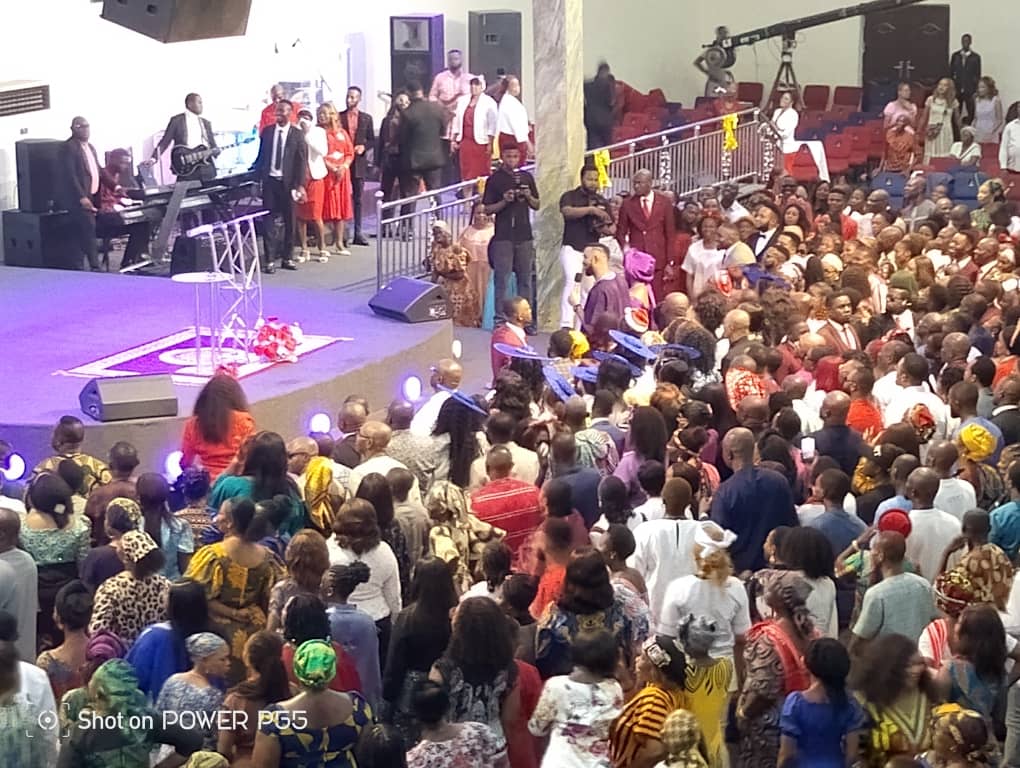
Sunday service of December 21, 2025, at Grace Nation International aka Liberation City, is a special day since it coincides with the wedding thanksgiving service of the Senior Pastor and International Prophet, Dr. Chris Okafor which was held at the Church headquarters in the Berger area of Lagos, attracting over 8,000 congregants.
The newly wedded Pastor had shared during the service stating that prosecution is one of the criteria to identify God’s followers, explaining that Jesus was also persecuted for healing the afflicted, reading from the gospel according to Matthew 9, he explained that since we are Christ-like, we should also be expecting antagonism.
Dr. Chris Okafor, however stated that Matthew 11 vs 6 where Jesus states, “Blessed is the one who is not offended by me,” meaning those who don’t stumble, turn away, or lose faith in Him, especially during difficult times or when His actions challenge their expectations, has been a source of consolation for him.
He also explained that his faith is reinforced since his relationship with God is confirmed daily just like when Nicodemus confirmed Jesus mandate according to John 3 vs 2 where describes the Pharisee visiting Jesus at night, acknowledging Jesus as a teacher sent from God because of the miraculous signs He performed, stating, “Rabbi, we know that You are a teacher who has come from God. For no one could perform the signs You are doing if God were not with him”
The International Prophet also talked about how everybody must align and conform with the laws of the land. He said whoever say or accuse anybody must be ready to prove it before relevant institutions, in his words “we will continue to pray, while we will allow laws to take its due course”.
DHI Ghana Launches Thorntina-74 Herbal Mixture in Nigeria
Diagnostic Herbal Industry (DHI) Ghana has officially launched Thorntina-74 Herbal Mixture, a general wellness herbal product, into the Nigerian market following its recent approval by the National Agency for Food and Drug Administration and Control (NAFDAC).
The formal launch, which took the form of a press briefing and product unveiling, was held recently at the Eridan Space Centre, Alausa, Ikeja, Lagos, and was well attended by journalists, media executives, regulatory representatives, and stakeholders in the health and wellness industry.
Thorntina-74 Herbal Mixture, popularly known as T-74, is a herbal formulation designed to support general wellbeing, immune function, and daily vitality. The product has recorded wide acceptance in Ghana, with growing presence in South Africa, Sierra Leon and the United States, before its introduction into Nigeria.
Speaking at the event, directors of Diagnostic Herbal Industry Ghana highlighted the brand’s commitment to quality, safety, and regulatory compliance. Present at the launch were Dr. Kwame Osei-Konadu, Director; Nana Yao Owuzu-Jyyaponj, Director; Dr. Benjamin Adzekey, Technical Director of DHI Ghana; and Mr. Henry L. Seymour, Nigeria Country Manager for Thorntina-74.
In his address, Dr. Kwame Osei-Konadu said the Nigerian launch represents a significant milestone for the company’s expansion across West Africa, noting that the product was developed through extensive research and quality control processes.
“Thorntina-74 is the result of years of scientific and traditional herbal research. Our entry into Nigeria, backed by NAFDAC approval, reflects our commitment to delivering safe and effective herbal wellness solutions to African consumers,” he said.
Also speaking, Dr. Benjamin Adzekey, Technical Director of DHI Ghana, explained that Thorntina-74 was formulated as a general wellness product, stressing the importance of responsible communication around herbal products.
“T-74 is positioned as a general wellness herbal mixture. It is not marketed as a cure for diseases, but as a natural support for the body’s overall wellbeing,” he clarified.
On his part, the Nigeria Country Manager, Mr. Henry L. Seymour, said the company has adopted a controlled distribution model for the Nigerian market. According to him, Thorntina-74 will be sold strictly through accredited agents and approved retail partners, rather than the open market, to ensure product authenticity and consumer protection.
“Our focus is to build trust in the Nigerian market. By working only with accredited agents and partner pharmacies, we can guarantee that consumers are getting the original product at the right quality and standard,” Seymour stated.
The event also featured presentations by the brand owners, a product unveiling ceremony, and an interactive question-and-answer session with members of the press.
Industry observers believe the entry of Thorntina-74 into Nigeria further strengthens Ghana/Nigeria collaboration in herbal medicine and wellness, at a time when demand for regulated and natural health products continues to rise.
With the Lagos launch concluded, the company says nationwide awareness and distribution activities will commence immediately, as Thorntina-74 positions itself as a trusted African herbal wellness brand in Nigeria.
Wema Bank Unveils ₦120M Grand Prize Pool as 35 Teams Advance to Hackaholics 6.0 Finale
Wema Bank, Nigeria’s most innovative bank and pioneer of Africa’s first fully digital bank, ALAT, has announced a ₦120 million prize pool for the Hackaholics 6.0 Grand Finale. This announcement follows the emergence of 35 teams from regional pitch sessions that recorded 1,460 participants across seven cities in Nigeria.
Announcing the prize structure, MD/CEO Wema Bank, Moruf Oseni, disclosed that the ₦120 million will be awarded across several winning categories at the finale. The Ideathon prizes include ₦25 million for first place, ₦20 million for the first runner-up and ₦15 million for the second runner-up. In the Hackathon category, the first to fourth-place teams will receive ₦20 million, ₦15 million, ₦10 million and ₦5 million respectively. In addition, two women-led innovations, one from each vertical, will receive ₦5 million each in recognition of Wema Bank’s commitment to advancing female participation in technology and innovation.
According to Moruf Oseni, “Hackaholics continues to demonstrate the power of young people to shape the future of technology and nation-building. We believe strongly in the ideas, resilience, and ingenuity of the Nigerian youth, and our investment in this initiative is a clear testament of our commitment to giving them the resources, mentorship, and platform they need to transform their ideas into real-world solutions. As these finalists head to Lagos, we are confident that their innovations will create meaningful impact across industries and communities, and we are proud to be a champion for that transformation.”
The 35 finalist teams emerged from a regional pitch cycle that received over a thousand applications across eight pitch centres: Ahmadu Bello University (ABU Zaria), Federal University of Technology Akure (FUTA), Lagos State University (LASU), University of Uyo (UNIUYO), Babcock University, University of Ibadan (UI), Veritas University Abuja and Purple Academy Lagos. Each centre provided students with access to industry-led masterclasses, hands-on mentorship and structured pitch development sessions, culminating in highly competitive presentations before expert judges.
The finalists include 17 Ideathon teams, 12 Hackathon teams and six women-led teams, each tackling challenges across fraud detection, customer experience, onboarding, acquisition, credit management and other social impact areas. All teams will participate in a three-day pre-finale mentorship and shortlisting programme ahead of the Grand Finale in Lagos.
Finalists expressed excitement about advancing to the Lagos finale and the opportunities ahead. The team leader of Veritas’ Hackathon winner, Tensor, Medugu Wali, shared the reason they are participating in the competition. “We built ‘Wallet Padi’ because we believe it can genuinely improve how Nigerians manage their money. Advancing to the pre finale leg of Wema Bank Hackaholics is a big step toward bringing that vision to life, and we appreciate Wema Bank for creating this platform.”
Babcock’s Ideathon winner, Akobundu Gift, a participant who had earlier attempted the Hackaholics challenge in 2023 but didn’t win, expressed great enthusiasm at the prospect of moving on to the next stage. Extending his gratitude to Wema Bank, he reminisced on the journey of his Startup, ‘Chao’. According to him, “Chao started as a small campus food-delivery idea in 2023, and it has grown far beyond what we imagined. Reaching the Hackaholics finals again reflects how much we’ve evolved. We’re grateful to Wema Bank for the opportunity and excited to compete at the next stage.”
Ogunlana Tosin, founder of Eutopia.ai, the women-led project winner at Veritas University, also shared her joy after being announced winner at her Pitch Centre, adding “Not making it at Babcock was honestly painful, but we were determined to win so we took the feedback, refined our solution and returned to try again. Advancing beyond the preliminaries this time showed me what’s possible when we don’t give up. I’m truly grateful to Wema Bank for this opportunity and for continuing to champion women empowerment, helping women-led innovation to thrive, and supporting women through initiatives like SARA,” she said.
Since its inception in 2019, Hackaholics has grown into one of Nigeria’s most influential youth innovation platforms, attracting more than 12,000 applicants across 15 schools and disbursing over $300,000 in funding and support. Between 2023 and 2024 alone, ₦75 million was awarded to women-led teams. With the launch of the Hackaholics Accelerator and Collective Program earlier this year, Wema Bank now provides ongoing support to early-stage founders beyond the competition cycle.
The Hackaholics 6.0 Grand Finale will bring together industry leaders, policymakers, investors and technology experts in Lagos for live pitches, product showcases and the unveiling of Nigeria’s next generation of transformative founders. For more information, visit hackaholics.wemabank.com or follow Wema Bank’s digital platforms.
Wema Bank Davido 5ive Tour To Hold In Abuja on December 14
Unarguably one of the most highly anticipated music tours in Nigeria this year, the Davido 5ive Tour brought to you by Wema Bank, is set to make its 5th stop, in Abuja, Nigeria, on December 14th, 2025.
Following the release of his 5th studio album, 5ive, Afrobeats Artiste David Adeleke, a.k.a. Davido, kicked off a world tour tagged the “5ive Tour”. After a successful run across major North American cities, Davido announced that the 5ive Tour would be coming home to Nigeria where it all started.
Since its kickoff in October, the 5ive Tour Nigeria has toured cities across 4 regions of Nigeria, creating unmatched excitement and engagement from over 80,000 fans so far. Now, the Wema Bank Davido 5ive Tour is set to make its 5th stop in the capital city of Abuja on December 14, and the excitement is off the charts.
As tickets continue to sell out fast, fans await in eager anticipation for what may be the most intriguing show on the tour so far. Wema Bank, as usual, is showing up in grand style, with free Davido 5ive Tour Merch, limited edition tickets, exciting financial perks like cashback on transactions, free transfers for select card holders and many more irresistible rewards and freebies.
Tickets are still up for sale using the link in Davido’s bio. Those interested in getting free tickets from Wema Bank are encouraged to follow the Bank on all social media platforms @wemabank and turn on post notifications to get firsthand updates as the countdown to the tour begins.
Aare Adetola Emmanuelking Hails Ooni of Ife at 10, Praises Reign of Unity
The Chief Executive Officer of Adron Group, Sir Aare Adetola Emmanuelking, KOF, has congratulated His Imperial Majesty, Oba Adeyeye Enitan Ogunwusi, CFR, Ojaja II, the Ooni of Ife, on the occasion of his 10th coronation anniversary.
In a goodwill message, Aare Emmanuelking described the monarch’s decade-long reign on the revered throne of Oduduwa as divinely inspired, visionary, and transformational, noting that it has ushered in a new era of cultural renaissance and national unity.
He stated that since his ascension, the Ooni has redefined traditional leadership by modernising kingship, reviving Yoruba cultural identity, and strengthening Ile-Ife’s position as the spiritual and cultural epicentre of the Yoruba people.
According to him, the monarch’s leadership has significantly advanced youth empowerment, cultural diplomacy, innovation, and community development, while also strengthening ties between Africa and the global African diaspora.
Aare Emmanuelking commended the Ooni for successfully combining the preservation of ancient traditions with progressive governance, peacebuilding, and sustainable development initiatives, describing him as a beacon of cultural pride and purposeful leadership.
Speaking on behalf of his family, the Board, and Management of Adron Group, he expressed gratitude to God for the monarch’s impactful reign. He prayed for renewed strength, wisdom, and long life as he continues to serve the Yoruba nation and Nigeria at large.
Cost of Services in Nigeria’s Oil and Gas Industry is Cheapest in Africa – PETAN President
The President, Petroleum Technology Association of Nigeria (PETAN), Engr. Wole Ogunsanya on Wednesday declared that the cost of providing services in Nigeria’s oil and gas industry is relatively the cheapest on the African continent.
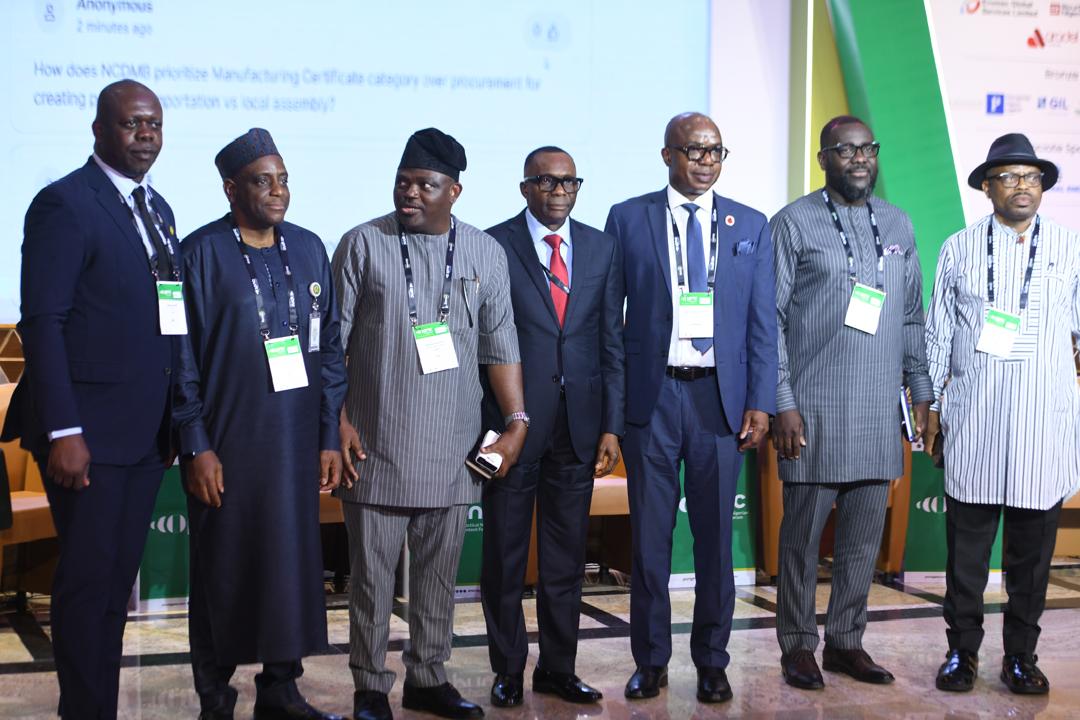
He spoke at a Townhall Session at the 14th Practical Nigerian Content (PNC) Conference and Exhibition at the Nigerian Content Tower (NCT), Yenagoa and provided a detailed analysis of project costs across Africa and elsewhere.
Engr. Ogunsanya insisted that a distinction must be made between the capital expenditures (CAPEX) of the oil industry and operating expenditures (OPEX), stressing that Nigeria’s CAPEX rates were arguably the lowest in Africa. He attributed what some industry observers refer as Nigeria’s uncompetitive costs of production to challenges of evacuation, security costs and the activities of portfolio companies that habitually manipulate their clientele.
According to him, PETAN, the umbrella body of reputable indigenous technical oilfield service companies, has been analysing production costs in different countries over time, using capital expenditure (CAPEX) and operating costs/expenditure (OPEX), and, in the case of Nigeria, carefully identifying cost elements at successive stages of oil and gas production.
In his words, “The number one cost driver in Nigeria’s oil and gas industry operations is evacuation of crude oil and gas. Our pipelines are vandalised, and some companies use vessels, barges to move crude oil, at a cost of US$12 per barrel.” Costs include payments to security agents as guards or escorts.
The PETAN boss, who is also Chairman/Chief Executive Officer of Geoplex Drillteq Limited, said whereas contracting a land rig in India costs as much as US$60,000 per day, the same services in Nigeria cost as low as US$30,000 for the same duration. Part of the explanation for the relatively lower costs in Nigeria, he noted, is that “Local content policy and practice in the industry here subsidises oil and gas production” in ways that might not be very apparent to some analysts, he said.
He lamented that some portfolio companies in Nigeria, companies without the requisite operational assets often constitute another grievous dimension in the escalation of costs. PETAN, he revealed, is “aware of portfolio companies that had previously obtained the Nigerian Content Equipment Certificate (NCEC), became registered on NIPEX (Nigerian Petroleum Exchange) and had services, projects awarded to them.”
The Presidential Directive on Local Content Compliance Requirements introduced in March 24, 2024, had mandated that such portfolio companies be barred from participating in the Nigerian oil and industry, while companies bidding on projects must demonstrate genuine, tangible capacity to perform the work independently.
Ogunsanya called on the NCDMB to allow specialists in PETAN to provide guidance on equipment required for different industry operations. He also wants the Federal Government and the NNPCL to facilitate efforts of PETAN to establish the cost of projects in other markets, to enable the Association advise the authorities on trends globally, “so when any of the IOCs or even indigenous companies say we are doing a US$5 billion project to produce 100,000 barrels, we have a basis for comparison.”
Other issues deliberated upon at the Townhall Session, moderated by the General Manager, Corporate Communications Division (CCD) of the NCDMB, Dr. Obinna Ezeobi, include key requirements for NCEC, whether the US$400 million Nigerian Content Intervention Fund (NCDF) of the NCDMB could be accessed by startup companies or for Research and Development.
On NCEC requirements, the Director of Capacity Building, of NCDMB, Engr. Abayomi Bamidele disclosed that NCDMB has developed “Guidance Notes,” showing documents that are mandatory and others that are specific to assist companies or individuals seeking the certificate.
He advised companies applying for the NCEC to choose one or two of the eight categories of NCEC in which they possess the requisite equipment and assets and not attempt to register for all. A promise was made by Engr. Bamidele and Dr. Ezeobi that a platform would be opened by the NCDMB for complaints relating to NCEC.
On the Nigerian Content Intervention Fund (NCI Fund), the Director of Finance and Personnel in the NCDMB, Mr. Uchendu Ossaowa, said Research and Development (R&D) operations are not eligible to borrow from the NCI Fund scheme because the fund is specifically for contributors and firms that have running contracts with oil and gas operating firms.
However, companies engaged in R&D could access the US$50 million Nigerian Content Research and Development Fund, instituted by the Board, the Director, Corporate Services of the NCDMB, Dr. Abdulmalik Halilu, clarified.
He also pointed out that there are hackathons – innovation contests sponsored by the NCDMB, where R&D focused firms can benefit from the Board’s support.
The 14th PNC Conference and Exhibition ended on Thursday with site visit by delegates to an oil and gas facility, with specialty in electrical services and related solutions.
Aare Adetola Emmanuelking Celebrates Akarigbo at 63, Commends Monarch’s Exemplary Leadership
Aare Adetola Emmanuelking has joined well-wishers across Remoland and beyond to celebrate the Akarigbo and Paramount Ruler of Remoland, His Royal Majesty Oba Babatunde Adewale Ajayi, Torungbuwa II, as he marks his 63rd birthday. The Chairman/CEO of Adron Group and Otun Akile of Remoland delivered a heartfelt tribute to the revered monarch in honour of the milestone.
In his message, Aare Emmanuelking described the Akarigbo as a ruler whose life radiates uncommon wisdom, authenticity, and grace. He noted that under Oba Ajayi’s steady and visionary leadership, the Remo Kingdom has continued to flourish, earning him the admiration of his people and respect across Yoruba land.
He praised the monarch’s intellectual brilliance, humility, and deep compassion, qualities he described as central to the Akarigbo’s enduring impact. “Your Majesty’s wisdom illuminates minds, your presence uplifts hearts, and your life exemplifies the harmony of intellect, humility, and grace,” Aare Emmanuelking stated.
He further highlighted that Akarigbo’s reign has been one of dignity, intention, and positive transformation. According to him, it is the character of the man behind the crown that truly endears Oba Ajayi to the people, noting that his counsel often “creates ripples of influence far beyond the palace walls.”
As Kabiyesi marks his 63rd year, Aare Emmanuelking offered prayers for continued good health, peace, joy, and divine wisdom, expressing confidence that the monarch’s legacy of service and enlightenment will continue to guide future generations.
Oba Babatunde Adewale Ajayi, who ascended the throne in 2017, is widely regarded as a progressive and community-focused leader, one whose modern, people-centric approach has strengthened unity and development across Remoland.
Allegation of System Glitch Induced Multi-million Naira Fraud Rocks ADE BURAIMO’s Alpha Morgan Bank
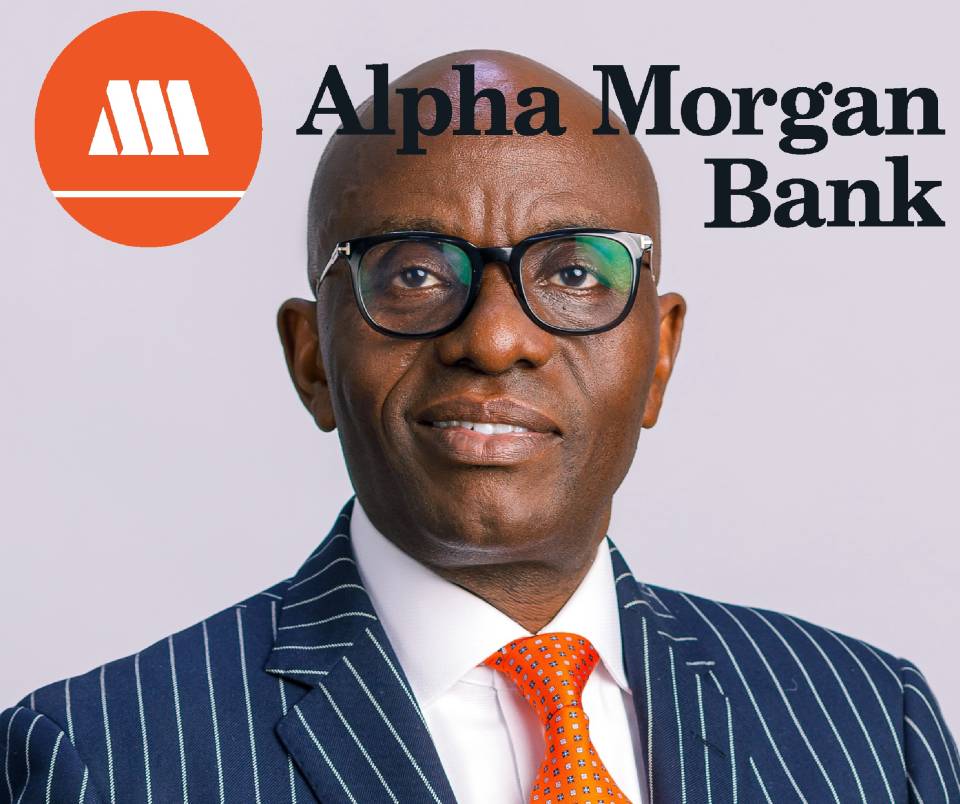
Leadership at Alpha Morgan Capital (often referred to informally as “Alpha Morgan Bank”), led by Group Managing Director Ade Buraimo, has come under public scrutiny following a wave of online complaints alleging that a system glitch resulted in the loss or unauthorized movement of approximately N230 million from customer accounts.
The bank and the affected customers have taken the matter to court, jointly suing 19 financial institutions in an attempt to recover the allegedly stolen funds.
A total of N230,978,536 was allegedly stolen from the accounts of NEM Insurance Plc and Extension Publications Limited at Alpha Morgan Bank through unauthorized transfers to multiple accounts across 19 financial institutions during what the bank described as a system glitch.
According to multiple customers who shared their experiences on social platforms and consumer-complaint channels, the alleged incident involved unexpected debits and a prolonged lack of official communication from the institution. Some account holders reported that their attempts to seek clarification or restitution were met with silence or delayed responses, increasing frustration and fuelling speculation about internal lapses.
The suit, filed at the Federal High Court in Lagos, seeks urgent orders to block multiple bank accounts across the financial sector and recover the allegedly diverted funds.
According to an affidavit sworn to by Dayo Abe, a litigation officer at the law firm of Babafemi Akinsete & Co., the technical malfunction in Alpha Morgan Bank’s system was exploited by certain service-merchant agents operating as digital financial-services providers.
These agents, the affidavit states, “took advantage of the glitch and unlawfully initiated multiple transfers” from the customers’ accounts into accounts domiciled in the 19 financial institutions now listed as defendants.
Further investigation by Alpha Morgan Bank reportedly revealed that the total amount illegally moved from the accounts of NEM Insurance Plc and Extension Publications Limited was N230,978,536, spread across multiple bank accounts linked to several BVNs.
Following the bank’s complaint, the 19 financial institutions were said to have placed temporary post-no-debit restrictions on the suspicious accounts.
However, the plaintiffs warn that unless all accounts connected to the perpetrators’ BVNs—including accounts not yet identified—are frozen, the funds may be irretrievably lost.
The affidavit explains that the suspects had already begun transferring the money from the first-level beneficiary accounts into other banks to “continue to unlawfully dissipate the said funds.”
The plaintiffs argue that the bank and its affected customers have suffered “humongous fraud” resulting from the system glitch, and that failure to immediately block the linked accounts will cause “untoward hardship and dire financial loss” to both the bank and its shareholders.
They are therefore asking the Federal High Court to issue an order compelling the 19 banks to reverse and refund all “wrongfully, illegally, and illicitly debited” sums back into Alpha Morgan Bank’s settlement and collection account.
The court has not yet fixed a date for the hearing.
Several individuals affected by the incident claim they have been left without clear explanations regarding when the alleged “massive glitch” occurred, how the reported N230 million outflows happened, and what remediation steps the institution is taking.
A few customers described the experience as “distressing,” stating that they had received no direct updates other than automated acknowledgements.
While the complaints do not provide evidence of intentional wrongdoing, the situation has raised questions about internal controls, technical safeguards, and executive oversight under Ade Buraimo’s leadership. Industry analysts note that even unintentional system failures can severely impact customer confidence if not communicated promptly and transparently.
Financial-sector observers emphasize that regulatory guidelines require firms to promptly notify clients of significant service disruptions and to maintain strong protections against erroneous or unauthorized transactions.
MFM Refutes Ex-Pastor’s Claims, Says Church Was Never Involved in His Arrest or Jail Ter
Fresh details have emerged concerning the case of former Mountain of Fire and Miracles Ministries (MFM) pastor, Mr. Femi Jimoh, who recently alleged that the church and its General Overseer, Dr. Daniel Kolawole Olukoya, masterminded his arrest and imprisonment several years ago.
The Church, in a detailed statement signed by its Chief Legal Adviser, Mr. Davidson Adejuwon, described Jimoh’s claims as baseless, malicious, and deliberately aimed at misleading the public and discrediting the church’s leadership.
According to Mr. Adejuwon, the allegations that MFM fabricated robbery charges against Mr. Jimoh are completely untrue and without any legal or factual foundation. He explained that investigations and court records clearly showed that it was the Nigerian Police Force, acting on credible intelligence, that arrested and prosecuted Jimoh and his accomplices for attempted robbery.
“Mr. Femi Jimoh was a former worker in the Press Department of the Church who was disengaged following numerous acts of misconduct, including theft of church materials and moral lapses. Sometime after his dismissal, he conspired with others to rob the Church of its First-Fruit offerings but was apprehended by the Police before the plan was carried out,” Adejuwon stated.
Eyewitnesses and police reports from 2007–2008 corroborated this account. One of the witnesses, Mr. Fatai Adebayo, had earlier narrated how Jimoh tried to lure him into the robbery plot, describing the former pastor as the mastermind of the operation.
Further confirming the account, retired Commissioner of Police, Mr. Kayode Samuel, who was then the Divisional Police Officer (DPO) in charge of Yaba and Iwaya, explained that the police had received intelligence about a planned armed robbery targeting the church’s collections.
“We had spies everywhere, and we were informed that some men, led by an insider at MFM, were planning to rob the church. The insider was identified as Pastor Femi Jimoh. We decided to monitor their meetings and planted a secret camera where they gathered. They were trailed, and the operation was foiled before they could strike,” Samuel said.
He added that the arrest and prosecution were carried out strictly according to law and that neither the General Overseer nor any church official influenced the process.
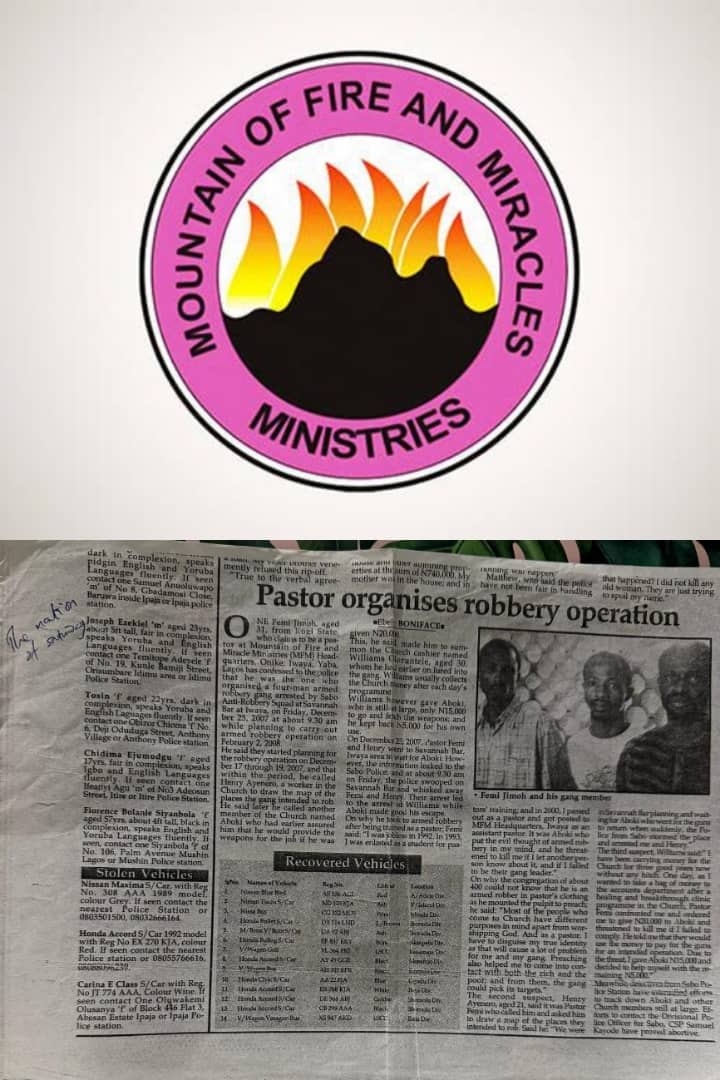
The Church also pointed to the confession made by Mr. Jimoh at the time of his arrest, as reported by several national newspapers, including The Nation in 2007 and 2008. In the report, Jimoh admitted to leading a four-man gang and planning to divert church money to buy weapons.
He had told investigators that he was motivated by “financial frustration,” adding that he used his position as a pastor to gain access to the church’s funds and identify potential targets.
Despite these revelations, MFM has maintained that its approach to discipline remains rooted in love and restoration. The Church reiterated that while it does not condone sin or indiscipline, its objective remains to “win souls for Christ” and uphold the highest moral standards among its ministers and members.
The statement reads: “For over three decades, Dr. D.K. Olukoya has led the Mountain of Fire and Miracles Ministries with integrity and deep commitment to the word of God. His focus has never shifted from evangelism, holiness, and soul-winning. Any attempt to drag his name into baseless controversies will not succeed.”
MFM further warned against the deliberate circulation of falsehood by individuals seeking attention or vengeance against the Church, emphasizing that it will take legal action against any publication or online platform that continues to propagate defamatory content.
“Our mission remains clear — to depopulate hell and populate heaven. No amount of lies or distractions can derail this divine mandate,” the Church declared.
The leadership of MFM reaffirmed its commitment to transparency, lawfulness, and collaboration with security agencies, adding that the Church has always respected due process in all matters relating to discipline or staff management.
Dr. Olukoya, described by many as a global evangelist and teacher of righteousness, continues to lead the ministry’s worldwide branches in fervent evangelism, charity, and prayer-driven outreach.
With millions of members across over 100 countries, MFM has continued to uphold its foundational values of holiness, integrity, and deliverance through the power of Jesus Christ — principles, the Church insists, stand in direct contrast to the false narrative being spread by its estranged former worker.
Abisola Munis: Exemplifying Excellence in Public Service and Strategic Event Leadership
Mrs. Abisola (Ann) Munis, the Senior Special Assistant on Public Hearing and Event Management to the President of the Senate, Federal Republic of Nigeria, stands out as a distinguished professional whose work continues to shape the operations, visibility, and efficiency of high-level public institutions. With over thirteen years of proven experience in protocol management, public affairs, and strategic organizational coordination, she has consistently demonstrated an exceptional capacity to manage complex assignments with precision and grace.
A resourceful and articulate administrator, Abisola has earned a reputation for excellence across both the public and private sectors. Her unmatched ability to harmonize human and material resources for optimal productivity reflects not only her technical expertise but also her remarkable leadership and interpersonal skill set. Her work ethic is grounded in discipline, innovation, and a deep commitment to delivering results that reflect the goals of the organizations she represents.
In her role as Senior Special Assistant to the President of the Senate, she plays a critical function in the planning and execution of public hearings, state functions, institutional engagements, and high-profile events. Her strategic oversight ensures that protocols are observed, stakeholders are effectively coordinated, and the Senate’s public engagement activities reflect dignity, organization, and national significance. Her contributions continue to enhance the credibility and public image of legislative governance in Nigeria.
Prior to her current role, Abisola served as Senior Special Assistant on Establishment to the Lagos State House of Assembly Service Commission, where her administrative insights supported the structural development of the Assembly’s operations. She previously advanced the Speaker’s office in Lagos State through her contributions as SSA on Protocol and Foreign Affairs, as well as SSA on Public Relations and Media, where she managed publicity strategy, media campaigns, stakeholder relations, and ceremonial protocol with exceptional professionalism.
Beyond public service, Abisola has also made her mark in political leadership structures, including her involvement in the APC National Youth Wing Campaign Advisory Council, and her impactful role in the Social and Humanitarian Committee of the Tinubu/Shettima Presidential Campaign Council. Her passion for community engagement and national development underscores her commitment to fostering unity, empowerment, and civic participation.
Abisola’s educational foundation is equally impressive. She holds a Bachelor’s degree in Computer Science from Olabisi Onabanjo University and has continued to sharpen her leadership capacity through global executive development programmes, including certifications from the University of Cambridge and the University of North America in leadership, governance, organizational change, negotiation, and strategic communication. Her pursuit of knowledge reflects her belief in continuous growth, capacity building, and responsive leadership.
A forward-thinking, diligent, and visionary professional, Abisola Munis represents a new generation of public administrators who are redefining leadership through competence, character, and purpose. Her journey remains an inspiring example of what is possible when talent meets dedication and service.