Sources close to Nigeria’s foremost thespian, Dr Helen Paul have revealed that she is on the verge of becoming a professor, as she is currently taking a post-doctorate study in a United States of America university.
Last year, the versatile entertainer became Nigeria’s first popular stand-up comedian to bag Doctorate Degree, after completing her Ph.D programs in Theatre Arts from the prestigious University of Lagos (UNILAG).
But Dr Helen’s quest for education is obviously unstoppable as she is reportedly set to become a Professor.
According to our source, “Yes, Helen Paul has been shuttling between Nigerian and the US for some months now. While studying to become a Professor, she is also working as a lecturer in one of the institutions in the US.
“She is really an inspiration to this generation because combining these academic feats with her comedy career in Nigeria is no child’s play.”
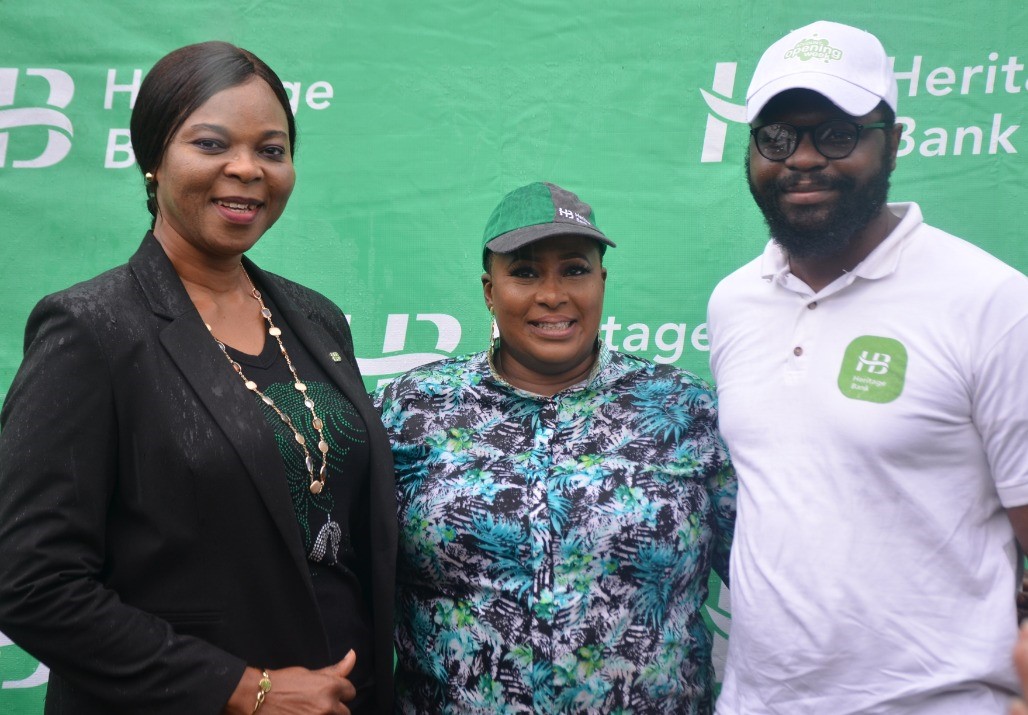
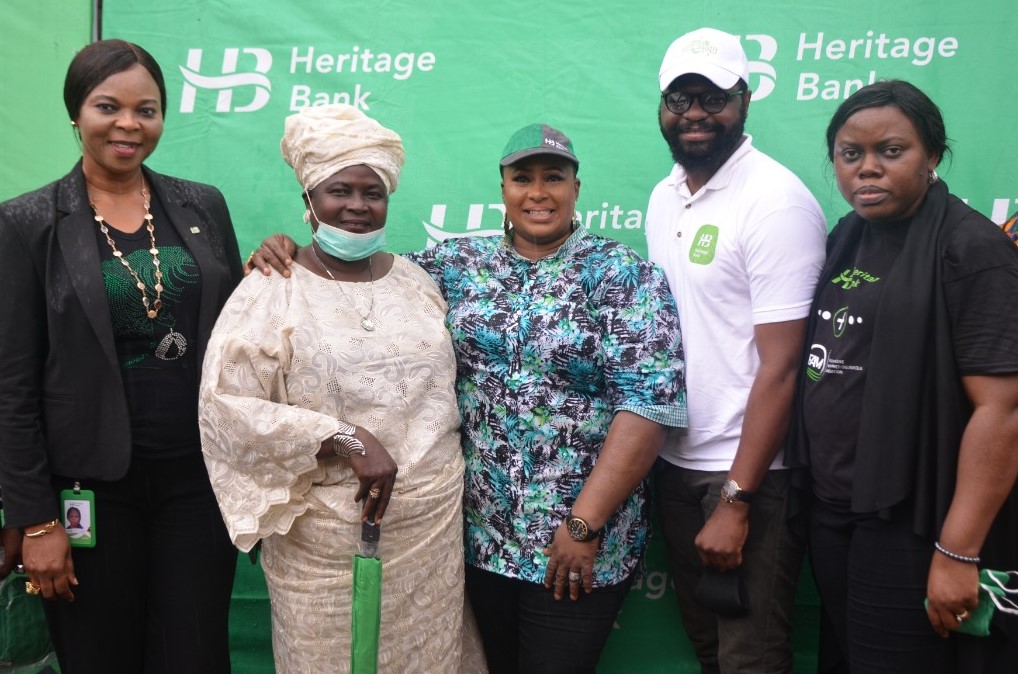
As part of efforts to cushion the effects of the COVID-19 on the education sector, Heritage Bank Plc in partnership with Honourable Fatima Mohammed (FAMO) foundation has provided succor to over 300 affected private school teachers and small medium enterprises (SMEs).
The challenges posed by the COVID-19 pandemic, have continued in the shutdown of schools for months leaving the private school teachers without any means of livelihood and no source of income.
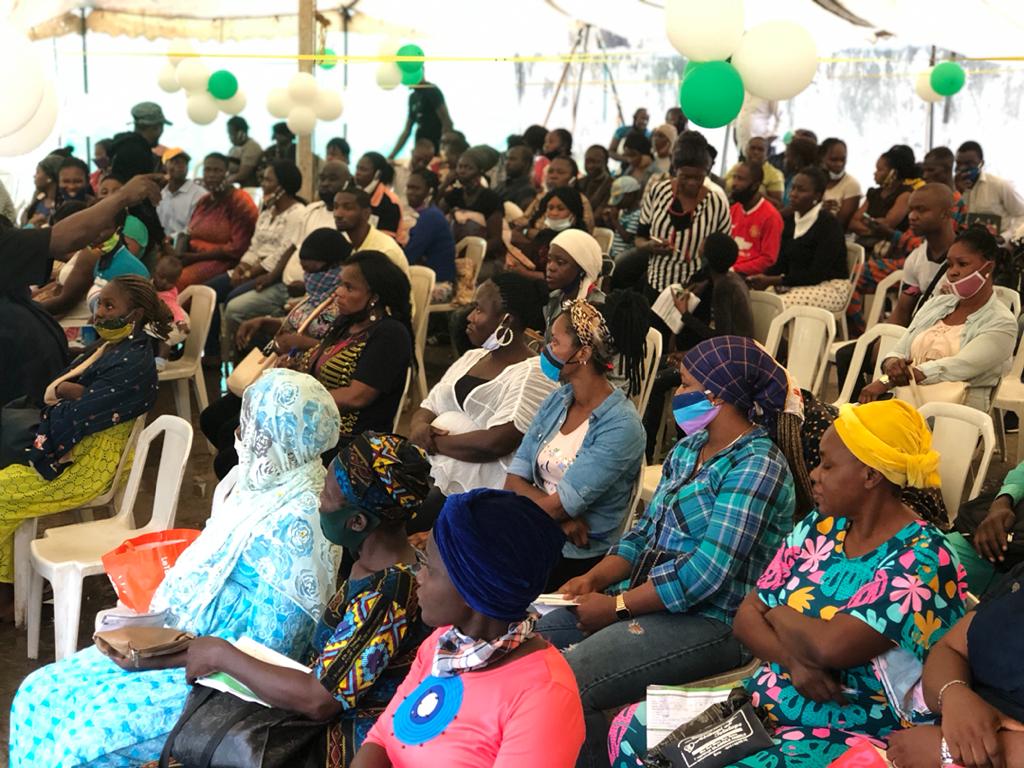
To this effect, in alleviating the challenges, Heritage Bank and its partner supported over 300 Private School Teachers and small businesses as palliatives in 15 local governments; including five major markets in Ojokoro Local Council Development Area of Ifako Ijaiye, in Lagos State, weekend.
Speaking at the event, Mother Dan-Egwu, Group Head, Education, NGO & Faith Groups, Lagos Mainland Zone of the bank, stated that as educational-friendly financial institution, Heritage Bank appreciates the socio-economic role the sector plays in the country.
According to her, Heritage Bank deemed it necessary to partner FAMO to champion the corporate social responsibility of the bank in supporting private school teachers and small businesses out of hardship and the quagmire plunged into nationwide by the pandemic.
She further explained to journalists that Heritage Bank and the Foundation seek to help teachers in phases.
Dan-Egwu said that this phase will comprise of 300 teachers who will get food items and cash worth Ten Thousand Naira (N10, 000)each.
On the mood of selection adopted, she stated that FAMO selected the teachers based on the regions, as the first phase comprised of 300 teachers and SMEs in the South West (Lagos) would be assisted and the poorest of the poor were the main target through the help of National Association of Private School Teachers (NAPST) to identify those teachers in direst need of the assistance.
She, however, disclosed Heritage Bank’s strategy to provide basic palliative care to the educational system at the resumption of academic activities in schools.
According to her, the bank has three areas of basic supports in providing mentorship program for schools, school portal and school health plan in partnership with Health Maintenance Organisations (HMOs).
She further explained that support programs churned out by the bank are designed to instill value and keep students focused on making the best of their lives through corporate models, help school authorities to manage operations and steer them into moving educational system to the new digital era; where teachers can use technology in classroom management, administration, engagement with parents.
For the school health plan, Dan-Egwu hinted Heritage Bank would help to provide a very affordable health plan to ensure that every member of the school community is covered medically, as this will reduce the anxiety amongst teachers, parents and school authorities.
In her address, the Convener of FAMO, Honourable Mohammed, commended Heritage Bank for its bold steps in joining hand-in-hands to support the challenged private school teachers, SMEs sectors and the roles the bank plays in championing CSR in the country.
Mohammed stated that the primary aim was basically to cushion the effect of poverty especially as it concerns the private school teachers.
“The private school teachers because of the pandemic haven’t been paid for 6months and there are a lot of such cases around here. Ifako-Ijaye is the second largest LGA in Lagos State; therefore, it is time to reach out to the people. During the pandemic, we have reached out to them about 2 to 3 times. I reached out to Heritage Bank and they heard my voice just to partner with us with my palliative team just to cushion the effect,” she said.
Meanwhile, for the SME owners, she further stated that additional plans have been agreed upon with the Agency Banking Unit of Heritage Bank to empower them to function as agents in this space.
She also commended Heritage Bank as a youth friendly bank for their numerous supports to young Nigerians in helping to promote their businesses and dreams.
Stakeholders in the Nigerian Education sector have advocated more private sector investment, tax concession, import duty waivers for educational equipment and special intervention funds to revamp the sector in the face of the negative impact of the COVID-19 pandemic. The stakeholders comprising public and private sector participants who spoke during the Ecobank Digital Series titled “Education in Nigeria – The role of private investment” noted that education is a critical sector that contributes to human capital development and sustainable future for the country and must therefore not be overlooked. They called on the private sector to invest more in education in the form of corporate social responsibility (CSR), scholarships, provision of palliatives, support to reconstruction and rehabilitations of schools across the country.
Key participants at the event included the Honourable Minister of Education, Mallam Adamu Adamu, represented by the Assistant Director & Head, PPP/NGOs, Elizabeth Afape; The Honourable commissioner of Education, Lagos State, Mrs. Folasade Adefisayo; The Honourable commissioner of Education, Katsina State, Prof. Badamasi Lawal Charanchi; The Deputy Executive Secretary, National Universities Commission (NUC), Dr. Suleiman Ramon-Yusuf; Director General, Lagos Chamber of Commerce and Industry (LCCI), Dr. Muda Yusuf and Keynote speaker and Pro-Chancellor Achievers University, Dr. Olabode Ayorinde, and also the National President, Association for Formidable Educational Development (AFED), Mr. Orji Kanu Emmanuel amongst others.
In his presentation, Professor Olabode Ayorinde, stressed the need for government at all levels to place high priority on the education sector when providing intervention funds, urging commercial banks to also lend more to this sector at low interest rate. According to him, “The private sector has played a significant role in education development. However, funding has been a major issue. A critical analysis shows inadequate infrastructure, lack of equipment and teaching aids, high teacher to student ratio, all of which requires a loan facility to solve. Regrettably, we see the government and its agencies providing intervention funds to the aviation sector, agriculture, creative sector without considering the education sector.”
On his part, Dr. Suleiman Ramon-Yusuf, of the NUC, attributed the poor state of the nation’s economy to the inability of the private sector in making the right impact on the education sector, noting that endowments, scholarships and bursaries would create access for schools to admit more students. He disclosed that the NUC will continue to provide an enabling environment for education and learning to thrive in the country, urging the private sector to invest more in human capital development, while limiting undue interference from the investors.
Also on the Ecobank Digital series platform, Dr. Muda Yusuf of the LCCI, called for government’s intervention in the education sector, especially at the foundation level, maintaining that it was not easy to sustain the education sector with loans from the commercial banks because of high interest rates. He canvassed for tax concession for private investments in education, adding that “Licensing for private universities should be made easy to enable inclusiveness and a model that will include scholarships and bursary should be enacted.”
In her contribution, Mrs. Folashade Adefisayo, Commissioner for Education, Lagos State, said there are more private schools in the state than public schools and most of them may not survive the grueling effects of the Covid-19 pandemic. According to her, “Land and access is the main hinderance to building of more schools in Lagos State. Currently, the government is working on synergy between the public and private sectors, reviewing and optimizing the school curriculum, improving the quality of primary education, investing in teaching aids for schools and much more.” Towing the same line Prof. Badamasi Lawal, Commissioner for Education, Katsina State, posited that “Initiatives for teachers development, public and private sector partnership, better and favorable legislation, corporate social responsibility like scholarship, bursary and tax concession would go a long way in providing the enabling environment for education sector to thrive in the country.
Segment Head, Public Sector, Ecobank Nigeria, Mrs. Annabel Ikuenobe, stated the readiness of the bank to keep supporting the growth of the education sector in the country. She enumerated the bank’s several products and initiatives available for Ecobank customers. According to her, one of our products to serve the education sector is the “Ecobank School Bundle. The bundle comprises of a current account, which runs at a zero maintenance fee. We also have in place digital banking services, which include PoS, corporate card and Omnilite for easy disbursement of funds; E-billspay, to support collections and administration of the school portal, which promotes remote learning for students, receipt generation and the school’s communication management. Loans are also available for Ecobank customers.”
Welcoming guests earlier to the Ecobank Digital Series, Carol Oyedeji, Executive Director, Commercial Bank noted that private sector participation in the education sector cannot be overemphasized. She stated that education ensures a brighter future for our generation. She enjoined all stakeholders to proffer ways forward for the sector. She noted that the Ecobank Digital Series is a virtual programme organized by Ecobank to educate and enlighten the public on crucial issues of public interest, especially as it relates to their financial freedom.
Covid-19 brought a huge challenge to education and literacy, First Bank of Nigeria Limited responded with a Rosetta stone of innovative e-learning initiatives that have far-reaching effects
Since 1967 that the United Nations Educational, Scientific and Cultural Organization (UNESCO) have been celebrating International Literacy Day to promote the importance of literacy and education, every September 8 had witnessed book gifting, book reading and related activities are undertaken by the UN body and its coalition of partners.
But this year is a departure as such enshrined activities are suspended and replaced with virtual meetings, a gesture that reflects the sign of the precarious situation of the world is as it is grappling with the devastating coronavirus pandemic.
Education has been in a state of limbo since schools––primary, secondary and tertiary institutions––and research institutes across the world were abruptly shut down as countries enforced lockdown to contain the ravages of the novel Covid-19. The disruption, a setback for education globally, inevitably fostered a lull in the effort to enhance literacy. And in the meantime, the world shifted to an alternative learning method which, by and large, is narrowed down to digital learning.
These challenges provided the backdrop for the theme of this year’s International Literacy Day: “Literacy Teaching and Learning in the COVID-19 Crisis and Beyond,” which threw open discourse on how innovative and effective education and teaching methodologies are to be adopted or adapted in youth and adult literacy programmes during the period of the pandemic and beyond. In line with this thematic direction, countries are reviewing how they have fared in the new normal, and evaluation of various initiatives by individuals, corporate bodies and governments are being undertaken to ascertain how they align with the reality and what gaps needed to be filled.
For Nigeria, the stake is higher. Burdened with a high rate of illiteracy, inadequate digital infrastructure and an economy in dire straits, Nigeria has on its hand a challenging learning situation in the of the new order. The possibility of the country being further left behind in the race to literacy was writ large, an uncomfortable fact that raised several legitimate concerns bordering on how to ensure that students have access to learning resources, how they can be fully engaged to make them competitive internationally with their peers and how such engagement can help close the gap created by the closure of all educational institutions nationwide. While a cocktail of initiatives surfaced in the past few months to address these concerns and challenges, there was none as suitable, comprehensive and far-reaching as the e-learning initiatives of the First Bank of Nigeria Limited.
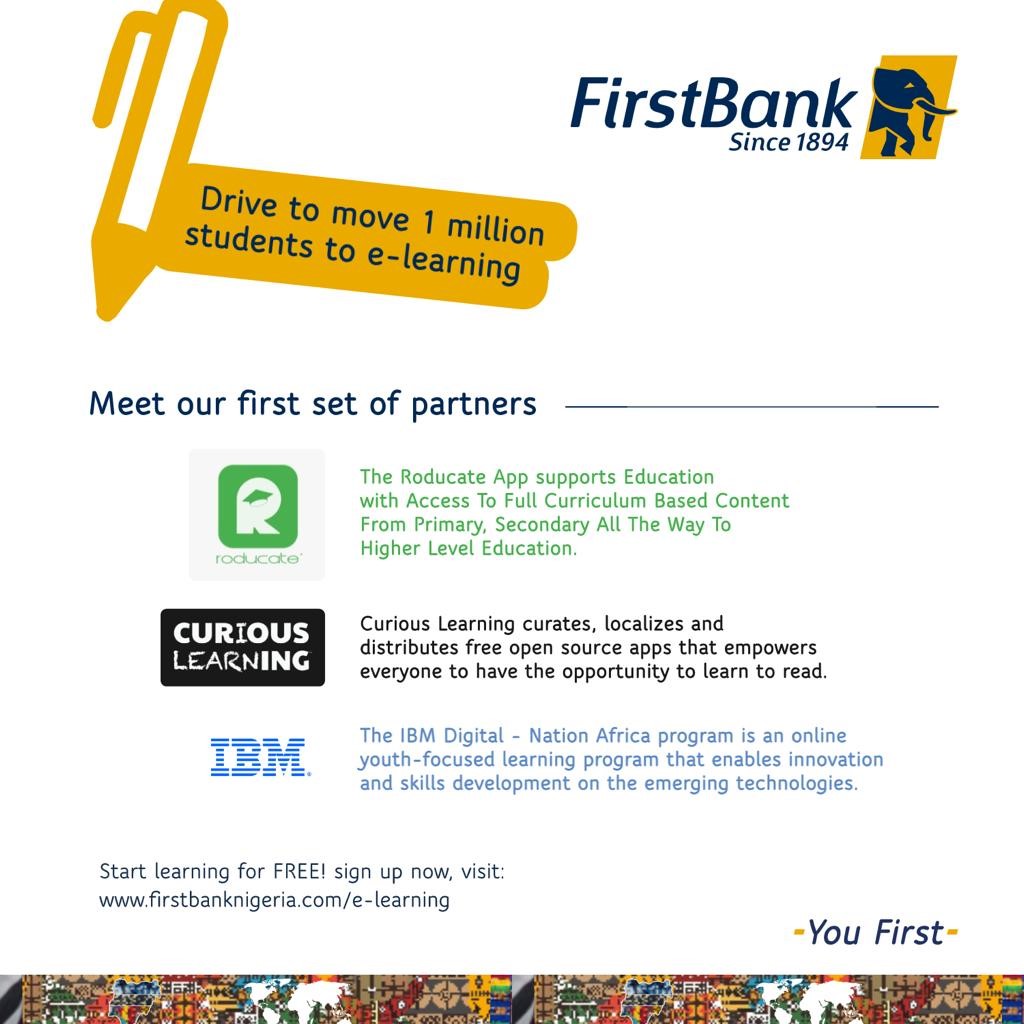
The initiative which could as well be nicknamed “Operation Moving One Million Nigerian Students To e-Learning” is a tripartite effort between the bank, Lagos State government and Roducate, an innovative technology firm that is providing educational solutions that enable primary, secondary and university students to continue to study the government-accredited curriculum of various subjects and disciplines in the convenience of their home.
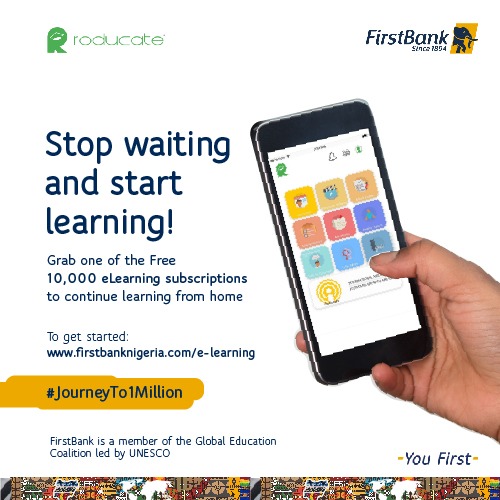
Out of the mushroom of e-learning platforms in the aftermath of the lockdown, the First Bank initiative came with a big difference: the Roducate e-learning platform is available for free at www.firstbanknigeria.com/e-learning.
Secondly, the content is boosted with value-added features such as tutorial videos, assignments, mock exam, note-taking, podcast and online games that further promote interactive learning and deepen digital skills of the learner.
Thirdly, the initiative is further reinforced with the provision of free 20, 000 units of e-learning devices for pupils, which FirstBank presented to the Lagos State government on June 11. This helped to break the barriers of data cost and device affordability as the low-end smartphones are preloaded with offline content for children who may not have access to devices or data. By all means, this initiative has been an outstanding effort and a boon to digital learning in the country.
The inevitability of the adoption of e-learning technology goes hand-in-hand with the imperative of imparting skills in emerging digital technologies. In this regard, FirstBank went an extra mile with the rollout of complementary initiatives that justifiably empowered youths with the required capability.
The Bank’s partnership with IBM, for instance, brought the benefit of the global tech company’s Digital-Nation Africa programme to youths in tertiary institutions. The online youth-focused learning programme enables innovation and skills development on emerging technologies in key areas such as Artificial Intelligence, coding, cloud, internet of things, blockchain, Data Science and analytics, and cybersecurity. A second partnership with Curious Learning, a non-profit organisation renown for providing learning apps for kids, afforded pupils in the age range of three to eight years old the use of fun, self-guided learning apps to help them with their cognitive skills at a fundamental level.
The significance of the FirstBank e-learning initiatives cannot be overemphasized. As schools are gearing up to resume soon, there are over 10,000 sign-ups on the Roducate e-learning platform. It is expected that the students have had a grasp of the nitty-gritty of e-learning which, going forward, is expected to be integrated into the country’s educational system.
For FirstBank, a member of UNESCO’s Global Education Coalition, the initiatives are an attestation to its longstanding tradition of supporting education in various ways, a commitment succinctly echoed by its Chief Executive Officer, Dr Adesola Adeduntan: “The e-learning initiative aligns with our Corporate Responsibility and sustainability initiatives and falls under one of our key strategic pillars, thus Education through Support to our Communities.” Indeed, the Bank has a portfolio of projects in support of education, including infrastructure projects in 10 universities and three secondary schools, support for professorial chairs in 10 universities and teaching of financial literacy and entrepreneurial and career counselling to over 80,000 students in over 80 secondary schools in the country via its FutureFirst programme.
The e-learning initiatives further reinforced FirstBank’s status as an important stakeholder, leader and innovator in the country’s education space, a fact amplified by the Lagos State governor, Babajide Sanwo-Olu, who, having noted that the “intervention by FirstBank could not have come at a better time,” went on to declared his delight that the state government “have found a real development partner in FirstBank.”
UBA Foundation, the corporate social responsibility arm of the United Bank for Africa (UBA) Plc, has today commenced the 2020 edition of its annual National Essay Competition in Nigeria with a call for entries.
Now in its tenth year, the National Essay Competition (NEC) is part of UBA Foundation’s education initiative which is aimed at promoting the reading culture and encouraging healthy and intellectual competition amongst secondary school students in Nigeria and across Africa.
This year’s edition, which is the 10th since inception, has been modified to ensure ease of access and increased participation of senior secondary school students from the comfort of their homes through the introduction of a digital submission portal.
Taking into consideration the effects the Covid-19 pandemic has had on lives and incomes across board, the UBA Foundation has also increased the prize money for the 2020 edition of the NEC by 33 per cent as the first prize winner will get an educational grant of N2.5m, up from N2m in 2019. The second and third prize winners will now receive N2m and N1.5m educational grants respectively, from N1.5m and N1m which were awarded in the previous year’s competition.
The Chief Executive Officer, UBA Foundation, Mrs. Bola Atta stated that with the newly introduced digital submission portal, more students in secondary schools across the country will have the opportunity to scan and send in their entries and compete to win educational grants for study at any university of their choice on the African continent.
She said, “As a Foundation, which is the CSR arm of the United Bank for Africa – a fully digitalised bank, we are driven by the mantra to always innovate and adapt to our constantly changing environment. This year, we thought hard about how to ease the pains that everyone is feeling. Students have not been able to go to school and there has been a lot of anxiety in families trying to ensure that educational gaps do not emerge. It is imperative for us at the UBA Foundation that our impact programmes do not wane. We also need to design them to be as inclusive as possible so that those students who don’t have easy access to computers can still participate in the competition with a chance to win grants towards their tertiary edification.’
Atta explained that the choice of topic for this year’s edition is one that helps promote creative and analytical thinking in students whilst helping them become problem solvers. The essay topic selected is “Do you think that the lock – down during the Covid-19 pandemic was an essential measure in spite of the hardship it has brought economically? What would you have done differently and why?”
All entrants are to hand write their essays and upload scanned copies of their handwritten entries as well as ID on the digital portal atwww.ubagroup.com/national-essay-competitionbefore October 2,2020. They may also drop off the handwritten essays at their nearest UBA business office for onward submission to the UBA Foundation.
The judges who are made up of esteemed professors from reputable Nigerian Universitieswill receive all the essays on a digital drive, evaluate them and select the top 12 finalists all of who will take home consolation prizes including personal computers.
The finale of the NEC this year will be conducted virtually as the initiative rolls out across 19 more countries in Africa.
UBA Foundation embodies the UBA Group’s CSR objectives and seeks to impact positively on societies through several laudable projects and initiatives. The Foundation has donated hundreds of thousands of books to students across Africa under the ‘Read Africa’ initiative aimed at encouraging and promoting the reading culture in African youths.
A young Nigerian, Miss Adjwoa Awe, 15 years of age has been honoured with The Diana Award for going above and beyond in their daily life to create and sustain positive change.
The award was announced on Wednesday 1 July; during the 2020 Diana Awards Virtual Ceremony held to celebrate all the awardees amazing achievements and introduce them to the rest of the world.
Awe is being recognized with the highest accolade a young person can achieve for social action or humanitarian efforts – The Diana Award.
Established in memory of Diana, Princess of Wales, the Award is given out by the charity of the same name and has the support of both her sons, The Duke of Cambridge and The Duke of Sussex.
Awe, a student of Olashore International School had an active role in the development of several new projects in her community. Her activism began with the development of ‘Our Voices Have To Be Heard’, an initiative committed to raising awareness of child rigshts and prevent abuse. Recognising the further needs of her community, she and her schoolmates followed this project with ‘Healing Every Living Person’, to combat poverty by equipping young people with skills through entrepreneurial training. This brought a tremendous impact in Awe’s community with 100 new subscribers to the programme. Awe’s kindness and leadership have provided essential skills for her community and inspired others to take similar positive action.
Speaking on the award, the CEO of The Diana Award, Tessy Ojo stated, “We congratulate all our new Diana Award recipients who are changemakers for their generation. We know by receiving this honour they will inspire more young people to get involved in their communities and begin their own journey as active citizens. For over twenty years The Diana Award has valued and invested in young people encouraging them to continue to make positive change in their communities and lives of others.”
Reacting to development, the awardee’s parents, Olugbenga and Linda Awe expressed their appreciation, thereby stating, “We are proud of the impact our daughter is making in co-creating sustainable livelihoods. She has our continuous support. We also commend her school Olashore International School Iloko-Ijesha in creating the conducive environment for her as she nurtures her dreams.”
WHAT IS THE NOMINATION PROCESS?
Award recipients have been put forward by adults who know the young people in a professional capacity and recognised their efforts as a positive contribution to society. Through a rigorous nomination process, these nominators had to demonstrate the nominee’s impact in five key areas: Vision, Social Impact, Inspiring Others, Youth Leadership, and Service Journey.
There are 13 Diana Award Judging Panels representing each UK region or nation and a further three panels representing countries outside of the UK. Each panel consist of three judges; one young person, an education or youth work professional, and a business or government representative. The panels have an important main purpose: to determine which nominations from each UK region/nation/country will receive The Diana Award.
Nominations are judged using the Criteria Guide and Scoring Guide which have been created to measure the quality of youth social action.
Being the most prestigious award any young changemakers below 25 can receive, the Diana Award develops and inspires positive change in the lives of young people through three key programmes which include; a mentoring programme for young people at risk, a youth-led anti-bullying ambassadors campaign and a prestigious award which publicly recognises young people – The Diana Award.
Nigeria’s leading financial inclusion services provider, FirstBank, has unveiled enhanced palliative measures to help its customers and Nigerians through these times of the extended COVID 19 lockdown in some states.
Amongst these measures are; the introduction of special waivers on repayment fees on the Bank’s credit cards as well as up to 90-days moratorium on SME loans. The aim of these is to cushion the impact of the toll on employment and livelihoods.
It was announced in the course of the week that the Lagos State Government & Roducate e-learning initiative – sponsored by FirstBank – had kicked off. The initiative includes the government accredited curriculum for primary, secondary and tertiary schools designed to ensure children are adequately guided and engaged through their learning experience.
Upon the lockdown in March, the Bank had announced to move One Million children to e-learning which is implemented with a number of renowned organisations that have come on board from within and outside the continent. These partners include IBM, which is providing opportunities for the acquisition of digital skills including Coding, Artificial Intelligence and Data Science & Analytics which would promote opportunities to learn skills of the future. These measures are taken in identifying with the roles of children at securing the future of any country.
Reflecting on the words by Benjamin Franklin, thus ‘an investment in knowledge pays the best interest’ Dr. Adesola Adeduntan, CEO, FirstBank said “in keeping with who we are at FirstBank, our commitment to self-development and continuous improvement is never far from our thinking. As such we are encouraging all to consider and register for any of the excellent programmes being offered free by Ivy League schools and have curated a list of them covering topics such as management, personal development, and entrepreneurship which can be found on our website.
In addition, Dr. Adeduntan stated that “with these measures, we are delighted to support our customers because you all have empowered us to do so by choosing to Bank with us. This is indeed a time to double down efforts and explore opportunities to ease the impact of the extension on you.
Once again, we appreciate our customers for the giant strides achieved on our alternative channels, as we assure you of our commitment to continue to work tirelessly to provide essential banking services across these channels. The transaction volumes is a positive testimony to the resilience of our staff and your Bank to keep things going as COVID 19 will neither defeat nor slow us down. We remain fully persuaded that together we will overcome this too.”
“Our experience over 126 years tells us the solutions lie within us, more than ever as we uphold our promise to you to be here for you and put You First always,” he concluded.
First Bank of Nigeria Limited has saluted medical professionals tackling the COVID-19 pandemic in Nigeria and the world..
The Bank in series of tweets on its Twitter page on Friday, acknowledged the role medical experts are playing to fight the virus.
Some of the messages read: “No capes, just heroes. To all the health professionals at the frontline of efforts to tackle COVID-19, we say thank you. Your timeless efforts are much appreciated. The world called and they responded.”
“No cape, just lab-coats. No superhuman capability, just dedication, strength, and compassion. As we play our parts of staying at home, we thank our medical professionals for being our ‘Avengers’.”
“The world called and they responded. We salute our frontline warriors.”
FirstBank has been in the forefront of supporting the drive to flatten the curve with promoting public enlightenment being among its many measures to check the rising spread of Coronavirus since the outbreak of the disease in Nigeria.
Recall, the lender, as part of a robust effort to combat the deadly virus, recently announced a donation of N1 billion to the federal government of Nigeria for the expansion of health facilities, purchase of relief materials, critical care facilities, protective gears to contain the spread of the virus and treating individuals diagnosed with the disease.
The donation is in addition to the Bank’s drive to move one million children to e-learning, together with an early partner – Roducate – as recommended by the Lagos State Ministry of Education.
According to the Chief Executive Officer of FirstBank, Dr. Adesola Adeduntan, the e-learning initiative is a complementary effort in education to support students and minimise the disruption to their education resulting from closure of schools.
The Nigeria Centre for Disease Control (NCDC) on Friday night confirmed 20 new cases of Coronavirus (COVID-19) in the country.
Eleven cases were confirmed in Lagos, three cases confirmed in the FCT, 3 in Edo, two in Osun and one in Ondo
“Two new deaths have been recorded in Lagos and Edo States, with 25 cases discharged. This brings the total number of confirmed cases in Nigeria to 210,” the centre said.
The CEO of FirstBank Dr. Adesola Adeduntan has announced that the Bank in partnership with government and other stakeholders is extending its attention to immediate needs in our society in the face of the widespread COVID-19 by putting in place complementary efforts in education to support students and minimize the disruption to education resulting from schools’ closure. This is following the activation of the Bank’s Business Continuity Process and subsequent deployment of safety initiatives and measures implemented across its business outlets nationwide, to help flatten the curve and ensure the safety and wellbeing of staff customers and other stakeholders.
Dr Adeduntan explained that many parents are concerned about children and wards whose education is truncated by the current crisis and are particularly worried about keeping children at home idle as all schools from primary through to tertiary institutions are closed across the nation. Emphasising the urgent need to ensure that our children are not disadvantaged, remain engaged and stay safe during this period, he announced the Bank has concluded plans with the necessary authorities to enable as many children as possible access e-learning.
Speaking on the initiative to enable as many children move on to safe e-learning, Dr Adeduntan said “we are warmed by the fact that different organizations have risen to the various challenges and are supporting in areas such as health and welfare, and we feel the peculiar needs of our children and youth must not be left out and have therefore elected to focus on contributing to solving the current education challenge. Education remains the bedrock of any society and we believe that when we educate our children we enable our nation and produce global citizens who provide ground breaking solutions for the continent and the world at large. So, building educational partnerships is an avenue to support our children to remain resourceful and fully engaged at this time so they can compete favorably with their peers internationally. It’s a responsible approach to empower them given that they are our future and the foundation to build our country to greatness. By partnering on this we are solving a problem for families and for our future.”
To this end, we are working with the States; United Nations Global Compact; innovative technology firms such as Robert & John to provide e-learning solution with the Government approved curriculum for students across the country. The roll out begins first week in April starting with Lagos State where FirstBank will support the roll out of Roducate which has been adjudged a best fit solution by educators, teachers and all necessary authorities. This solution has the full curriculum on both the online and offline versions with the offline version of particular interest as it eliminates the challenge posed by data affordability.
We call on well-meaning organisations and individuals to join us and collectively rise to address the challenges this current pandemic presents to our children and youth and are reaching out to other organisations with complementary solutions to also partner on this initiative for the youth who are our future. They must not be lost in this pandemic’.
For more information on how you can partner, please click on the link below