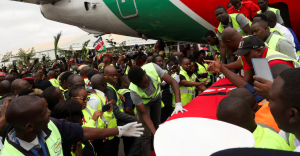
The coffin of a much-beloved opposition leader, Raila Odinga, arrived by helicopter to a stadium in his heartland of western Kenya on Saturday, where tens of thousands were packed in to see him.
AFP journalists said there were already signs of chaos as a huge group of mourners breached a security gate to the stadium and clambered over walls.
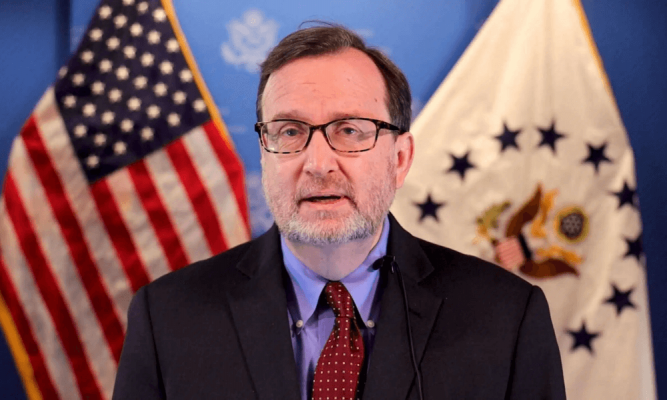
The United States Embassy in Abuja has issued a security alert to Americans in anticipation of a planned protest scheduled for Monday in the Federal Capital Territory.
The protest, organised under the banner #FreeNnamdiKanuNow, is expected to draw crowds to Eagle Square and the Central Business District.
The planned protest was announced by activist and former presidential candidate of the African Action Congress, Omoyele Sowore, on his X (formerly Twitter) account on October 9.
Sowore stated that the protest would take place on October 20 and be directed toward the Aso Rock Presidential Villa, describing it as a “historic” and peaceful demonstration aimed at securing the release of the leader of the proscribed Indigenous People of Biafra, Nnamdi Kanu.
The activist wrote, “We now have a date for the historic #FreeNnamdiKanuNow protest march to the Aso Rock Villa in Abuja. It is October 20 at 7 am.”
Kanu, who is currently facing terrorism charges at the Federal High Court in Abuja, has been in custody since June 2021 following his controversial extradition from Kenya.
In a statement published on its website on Friday, the Embassy cautioned that the protest could lead to disruptions and potential violence.
It advised US citizens to steer clear of the protest areas and limit their movement across the city.
“The US Embassy in Abuja informs US citizens that the Free Nnamdi Kanu Now protest has called for peaceful demonstrations on Monday, October 20th, 2025, in Abuja.
“There may be roadblocks, traffic congestion, and confrontations between police and protestors that could turn violent around Eagle Square and the Central Business District.
“The Embassy advises all U.S. citizens to avoid this area and to severely limit all movement throughout the city on Monday, October 20th,” the statement read in part.
With safety in mind, the Embassy recommended that children stay home from school and that domestic staff who commute from outside Abuja not report to work on that day.
“The Embassy recommends children in Abuja stay home from school and domestic staff who travel from outside of Abuja to stay home as well,” it added.
Americans in Nigeria are being urged to take heightened security precautions.
“Avoid areas where protests are taking place. Avoid crowds. Exercise caution if unexpectedly in the vicinity of large gatherings or protests,” the advisory continued.
The Embassy also reminded US citizens to monitor local news, keep a low profile, and be alert in public places such as shopping centres, movie theatres, and places of worship.
“Review your personal security plans and keep your cell phone charged in case of emergency,” the message advised.
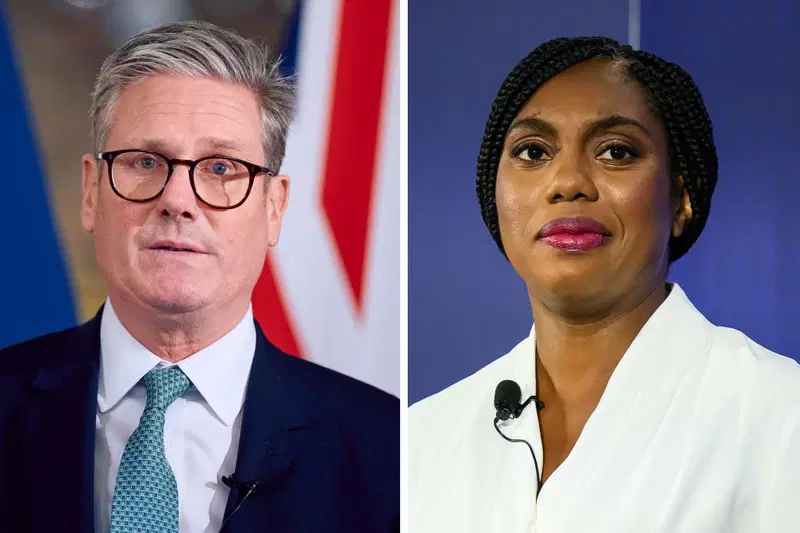
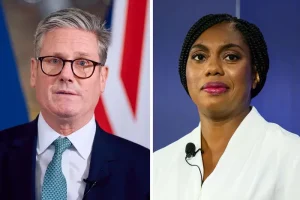
UK Prime Minister, Sir Keir Starmer has condemned the decision to ban supporters of Israel’s Maccabi Tel Aviv from attending their November 6 UEFA Europa League clash against Aston Villa, describing it as “the wrong decision,” The Independent on Friday reports.
Starmer’s remarks come after Opposition Leader Kemi Badenoch blasted the move as “a national disgrace,” accusing authorities of sending “a horrendous and shameful message” that there are parts of Britain “where Jews simply cannot go.”
The Prime Minister joined calls for Birmingham City Council’s Safety Advisory Group and West Midlands Police to reverse the decision and allow Maccabi fans to attend the November 6 match at Villa Park.
Starmer, in a post on X (formerly Twitter), criticised the Birmingham authorities for bowing to those concerns rather than ensuring proper security for all fans.
“This is the wrong decision. We will not tolerate antisemitism on our streets.
“The role of the police is to ensure all football fans can enjoy the game, without fear of violence or intimidation,” he wrote.
Aston Villa announced late Thursday that the club had been instructed by the Safety Advisory Group (SAG) — the body responsible for issuing matchday safety certificates — that no away fans will be permitted for the fixture at Villa Park on Thursday, November 6.
According to the club, the SAG reached the decision after advice from West Midlands Police, who raised public safety concerns outside the stadium and cited potential difficulties in managing protests during the match.
“Following a meeting this afternoon, the SAG have formally written to the club and UEFA to advise no away fans will be permitted to attend Villa Park for this fixture.
“The club are in continuous dialogue with Maccabi Tel Aviv and the local authorities throughout this ongoing process, with the safety of supporters attending the match and the safety of local residents at the forefront of any decision,” Aston Villa said in a statement.
However, Badenoch — responding to the club’s announcement on X also on Thursday — criticised the move, calling it an unacceptable failure of the government’s promise to ensure safety for British Jews.
“This is a national disgrace. How have things come to this? Starmer pledged that Jews are welcome and safe in Britain. That he stands shoulder to shoulder with the Jewish community and will use the full force of his government to prove it.
“Will he back those words with action and guarantee that Jewish fans can walk into any football stadium in this country? If not, it sends a horrendous and shameful message: there are parts of Britain where Jews simply cannot go,” she wrote.
PUNCH Online, however, reports on Friday that UEFA and Maccabi Tel Aviv have yet to issue formal statements on the development.
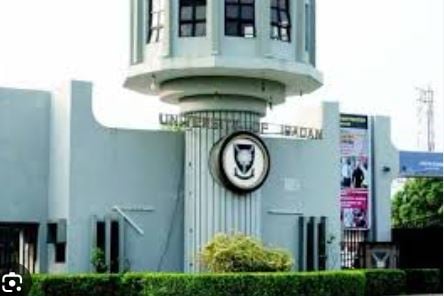
Nigeria has taken the top spot in Sub-Saharan Africa’s higher education rankings, with 24 universities listed in the 2026 Times Higher Education World University Rankings.
This makes Nigeria the most represented country in the region, ahead of South Africa, which has 13 universities on the list.
The Times Higher Education Sub-Saharan Africa Insights 2026 report, released on Thursday on THE’s website, shows that the region now has a record 55 universities from 14 countries in the global rankings, which is a significant rise from just 10 universities less than ten years ago.
The report described this as a “moment of celebration” for African higher education, noting that universities are improving not only in number but also in quality and global visibility.
South Africa still leads in performance, with four universities ranked among the world’s top 500. The University of Cape Town is Africa’s highest-ranked institution at 164th globally, its best-ever position.
The University of Johannesburg also reached a major milestone by entering the global top 400 for the first time, while the University of Pretoria returned to the 501–600 range after some years.
For Nigeria, the University of Ibadan and the University of Lagos both entered the world’s top 1,000 universities for the first time.
Ghana’s University of Cape Coast and Uganda’s Makerere University also featured in the same range, marking steady progress for West and East Africa.
Other countries also improved their presence. Ghana now has four ranked universities, while Botswana has two. Kenya and Tanzania maintained two each.
Senegal made a debut in the rankings through Université Cheikh Anta Diop de Dakar marking a new era for Francophone Africa.
The report showed how fast the region has grown in the rankings over time. From just 12 universities in 2017, the number has grown steadily to 18 in 2020, 25 in 2022, 43 in 2024, and now 55 in 2026, the highest ever.
Times Higher Education’s Chief Global Affairs Officer, Phil Baty, said Africa’s progress is not just about numbers but quality.
“We are not just seeing improvements in representation; we are seeing improvements in quality too… a great opportunity to build on the momentum and make sure Africa’s universities are ready to drive innovation and development,” he said.
The top 10 universities in Sub-Saharan Africa, according to The Times Higher Education Sub-Saharan Africa Insights 2026 report include:
1. University of Cape Town (=164 globally)
2. Stellenbosch University (301–350)
3. University of the Witwatersrand (301–350)
4. University of Johannesburg (351–400)
5. University of KwaZulu-Natal (501–600)
6. University of Pretoria (501–600)
7. University of the Western Cape (601–800)
8. Makerere University (801–1,000)
9. University of Cape Coast (801–1,000)
10. University of Ibadan / University of Lagos (801–1,000)
The report also noted that the global higher education system is changing. Some of Asia’s top universities, such as Tsinghua University and the National University of Singapore, have slowed in growth, while many US and European universities are facing challenges from funding cuts and political pressure.
These changes, the report said, create a new opportunity for Africa to rise further by focusing on research, innovation, and strong international partnerships.
PUNCH Online reported that the University of Ibadan also topped Nigeria’s domestic rankings for 2026, moving up from fourth position in the previous year to become the nation’s best university.
According to the PUNCH Online report, the Times Higher Education World University Rankings 2026 noted that UI and the University of Lagos share the same global ranking band (801–1,000), followed by Bayero University, Covenant University, and Landmark University in the 1001–1200 range.
The PUNCH Online report also highlighted that Nigerian universities performed differently across the five indicators used by THE: teaching, research environment, research quality, international outlook, and industry impact.
The University of Lagos scored highest among Nigerian institutions for research quality, Bayero University topped the list for international outlook, while Covenant University led in industry engagement.
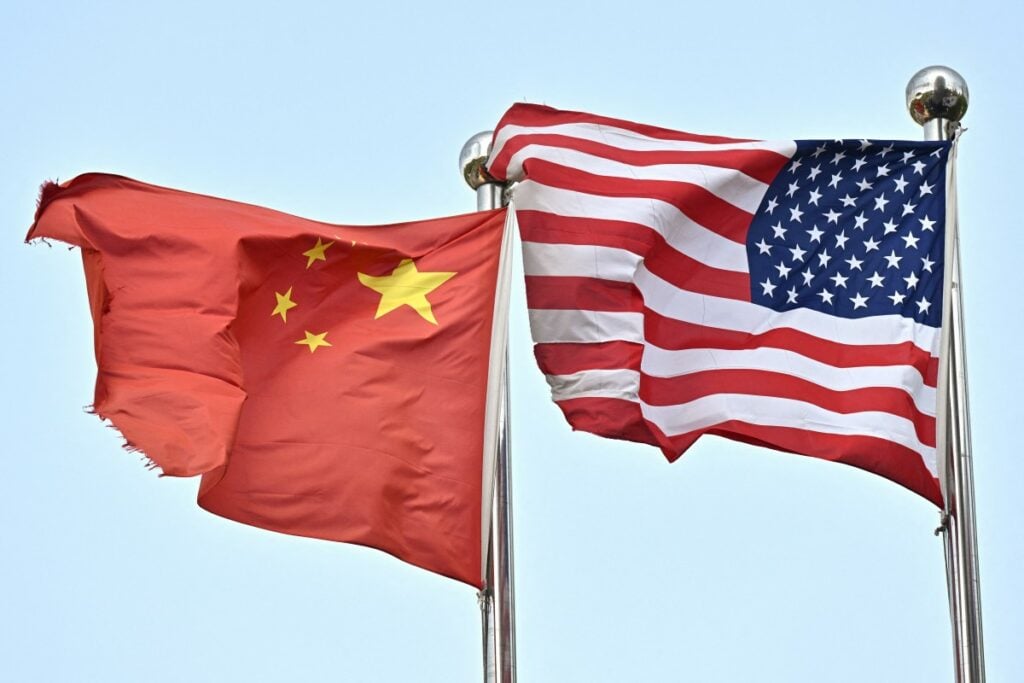
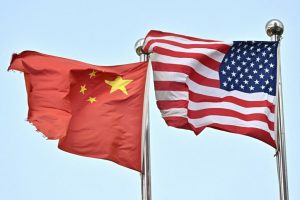
China said Thursday that its purchases of Russian oil were “legitimate” and decried recent “unilateral bullying” measures by the United States as the trade row between the two countries continues to intensify.
Trump said Wednesday that Indian Prime Minister Narendra Modi had promised him New Delhi would stop buying Russian oil, and that he would get China to follow suit.
Trump has accused both China and India of funding the three-year Ukraine war through the purchases, and has also demanded that European allies immediately stop buying oil from Russia.
India neither confirmed or denied it was shifting its policy.
Asked on Thursday about Trump’s intention to pressure China further, Beijing’s foreign ministry defended its “normal, legitimate economic, trade, and energy cooperation with countries around the world, including Russia”.
“The actions of the United States are a typical example of unilateral bullying and economic coercion,” ministry spokesman Lin Jian said at a press briefing.
If China’s interests are harmed, it will “take firm countermeasures and resolutely safeguard its sovereignty”, he warned.
Beijing and Moscow are key trading partners, and China has never denounced Russia’s war, nor called for it to withdraw its troops.
Kyiv and Western governments have long accused Beijing of providing political and economic support for Moscow.
– ‘Profoundly detrimental’ –
Beijing on Thursday also criticised recent US moves to expand export controls and impose new port fees on Chinese ships, saying the measures had a “profoundly detrimental” impact on trade talks between the two superpowers.
While tensions between Washington and Beijing have de-escalated from their peak, the truce remains shaky.
After Beijing imposed fresh controls on the export of rare earth technologies and items, Trump said he would roll out an additional 100 per cent tariff on the country’s goods from November 1.
The United States announced in April it would begin applying fees to all arriving Chinese-built and operated ships after a “Section 301” investigation found Beijing’s dominance in the industry was unreasonable.
Section 301 of the US Trade Act of 1974 enables Washington to impose trade penalties on countries whose practices are deemed unfair or harmful to American commerce.
Beijing responded last week by announcing “special port fees” on American ships arriving at Chinese ports. Both sets of fees took effect Tuesday.
Commerce ministry spokeswoman He Yongqian said Thursday the US moved ahead with the measures while “disregarding China’s sincerity in consultations”, causing “severe damage to China’s interests… (and) a profoundly detrimental impact”.
“The Chinese side expresses strong dissatisfaction with and resolutely opposes the series of actions taken by the US side,” He Yongqian said.
She urged Washington to “immediately rectify its erroneous practices” and respect the outcomes of recent trade talks.
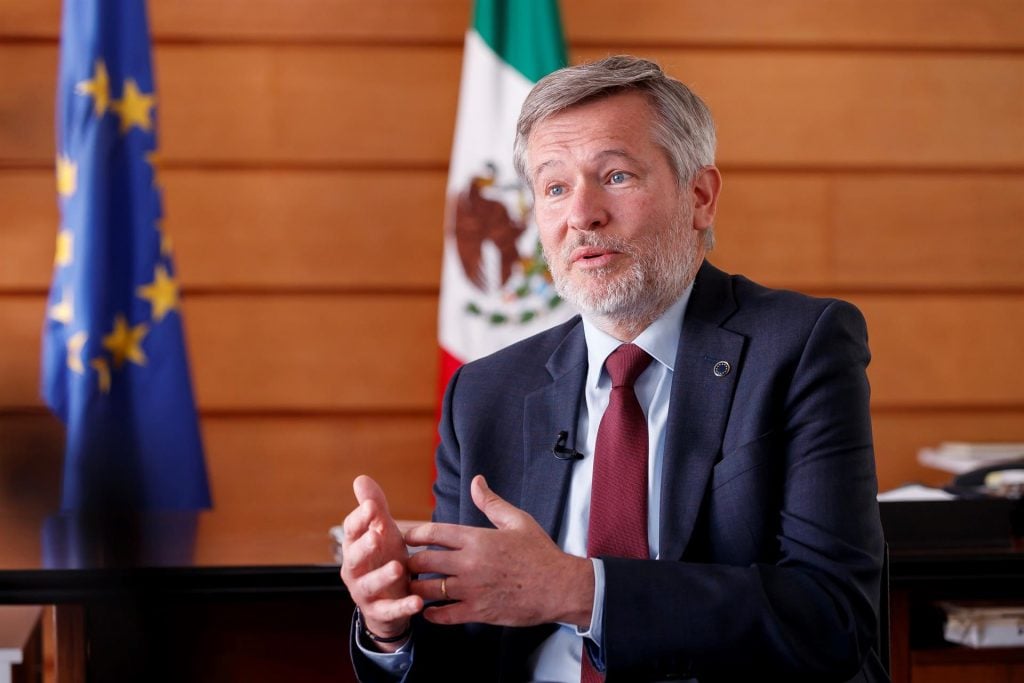
As Nigeria moves to strengthen renewable energy manufacturing and champion local content, the European Union on Thursday said that creative partnerships between the public and private sectors, including research and innovation ecosystems, are key to achieving the country’s clean energy goals.
Describing how innovative breakthroughs are reshaping the global energy landscape, the EU praised Nigeria’s abundant and exceptional human talent and natural resources, describing them as critical ingredients for building innovation ecosystems.
The EU Ambassador to Nigeria and ECOWAS, Gautier Mignot, who was represented by the Deputy Ambassador, EU Delegation to Nigeria and ECOWAS, Zissimos Vergos, disclosed this during the Nigeria Renewable Energy Innovation Forum in Abuja, according to a statement by the EU.
He highlighted how over €200 million in grants from the EU has continued to strengthen the country’s power sector since 2008.
He said, “Our most recent energy sector programme, launched in 2021 with a €100 million (₦175 billion) budget, is aimed at adding 400 megawatts of new renewable capacity by 2027, directly benefitting more than five million Nigerians.”
Mignot noted that innovation that accelerates inclusive energy and digital transformation processes has become an essential intergenerational process and an integral part of political legacies that will be duly recognised by future generations.
Explaining how proper synergy between the public and private sectors and research and innovation ecosystems works, he said, “The public sector brings the policy frameworks; the private sector brings agility and technical expertise; research institutions bring insight and innovation.”
Further stating that effective policies and regulations, together with strengthened capacity building, are essential to scale energy solutions sustainably, he added, “Across rural Nigeria, off-grid renewable solutions are transforming lives. Mini-grids and solar home systems, powered by creative public–private partnerships, are lighting homes, energising small businesses, and expanding opportunity.
“Research institutions must continue providing evidence-based insights on energy demand, consumer behaviour, and resilient business models to ensure that innovation truly serves local communities.”
Reiterating the EU’s commitment to Nigeria’s energy security and economic resilience, especially through programmes like GET.invest Nigeria and the EU’s Global Gateway, he said, “The EU remains deeply committed to supporting these efforts through direct research grants, local capacity development, and mobilising private investment, demonstrating a shared vision for sustainable energy access, clean industry, and inclusive growth.
“Whether for large grid-connected solar farms or small decentralised systems, our shared path depends on harnessing Nigerian ingenuity, industrial potential, and entrepreneurial spirit.”
Hailing Nigeria’s advancement in the era of the green and circular economy, Amb. Mignot added, “The pace of this journey toward sustainable, accessible energy will depend on how successfully the public sector, private sector, and innovation ecosystem work together.”
PUNCH Online reports that Nigeria is currently working towards making significant strides in renewable energy, driven by government initiatives and international investments. The country aims to become Africa’s renewable energy hub, with a projected investment of over $410 billion by 2060.
Nigeria’s energy transition plan includes developing nearly 4 GW of local solar factory capacity, reducing reliance on imports, and creating jobs. The government has signed agreements worth over $400 million for renewable energy manufacturing and infrastructure deals, including solar panels, smart meters, and battery storage.
Additionally, Nigeria is promoting distributed renewable energy, with projects like mini-grids expected to reach 1.5-2 million rural customers.
The country has significant potential for solar and wind energy, with notable projects like the 140 MW Qua Iboe Power Plant and the 10 MW Katsina Wind Farm. Despite challenges like inadequate infrastructure and high costs, Nigeria’s renewable energy capacity is expected to grow, with projections indicating a compound annual growth of 9.88% from 2024 to 2034.
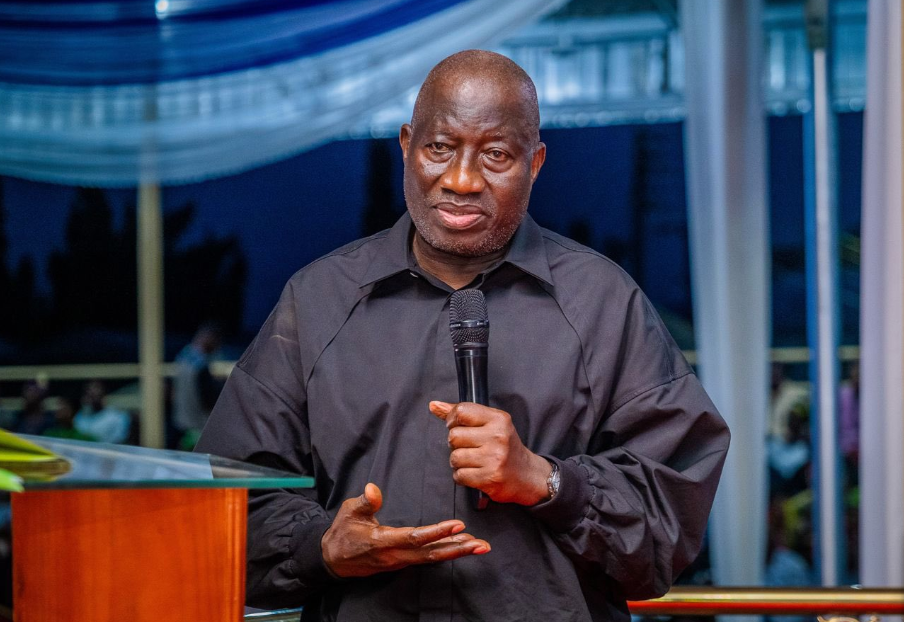
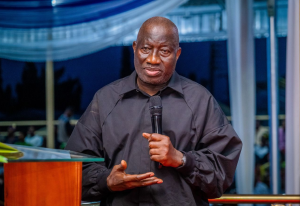
Former President Goodluck Jonathan has mourned the passing of former Kenyan Prime Minister, Raila Odinga, describing him as a true African patriot and a symbol of democratic struggle on the continent.
Jonathan, in a statement titled “Adieu H.E. Raila Odinga” shared on his official X account on Thursday, paid glowing tribute to the late Kenyan statesman, whom he hailed for his courage, resilience and unwavering commitment to democracy in Africa.
PUNCH Online, in an agency report titled “Kenyan opposition leader Raila Odinga dies in India”, reported that Odinga, 80, died in India after collapsing during a morning walk, leading to widespread mourning across Kenya and the continent.
Reflecting on Odinga’s legacy, Jonathan described him as a leader who placed service above self and who embodied the hope of a united, progressive Africa.
“I am saddened by the news of the passing of H.E. Raila Odinga, former Prime Minister of Kenya and a distinguished African statesman whose life symbolised resilience, courage, and democratic struggle in Africa.
“Kenya has lost a patriot, and our continent has lost a great leader, one who understood that leadership is not about self, but about service; who believed and looked forward to Africa’s greatness and ascendancy”, the statement partly read.
The former Nigerian president further celebrated Odinga as a fellow advocate of democracy and a devoted pan-Africanist whose impact would continue to resonate across generations.
He prayed for history to remember Odinga kindly and for Africa to draw continued inspiration from his legacy.
“I honour him not just as a brother in the cause of democracy, but as a committed pan-Africanist whose light will continue to shine.
“May history remember him kindly, and may Africa continue to be blessed by his hope, wisdom and sacrifice”, Jonathan’s statement concluded.
Patrick Kluivert’s stint as Indonesia coach is over after they “mutually” agreed to part ways Thursday following a failed bid to reach the World Cup.
Indonesia’s hopes of qualifying for the tournament in North America next year ended with defeats to Iraq and Saudi Arabia in the past week.
The 49-year-old Netherlands and Barcelona great, who was only appointed in January, was in charge for just eight matches.
He won three of his games in charge, losing four and drawing one.
Writing on Instagram, Kluivert called it “an unforgettable journey”.
He added: “Even though I’m deeply disappointed and sorry for the fact that we didn’t make it to the World Cup, I’ll always be proud of what we built together.”
The Dutchman took over following the controversial sacking of South Korean Shin Tae-yong.
The former striker signed a two-year contract at the start of the year, tasked with taking Indonesia to their first World Cup since gaining independence in 1945.
The Football Association of Indonesia, PSSI, said Kluivert’s departure was “through mutual termination”.
“This step was taken as part of a comprehensive evaluation of the national football coaching and development programme,” it added.
The statement did not name Kluivert’s successor.
Amsterdam-born Kluivert retired as a player in 2008 after a stellar career that started at Ajax, where he won the Champions League, before moves to AC Milan and Barcelona.
Kluivert’s managerial career has not been nearly as spectacular.
His previous coaching role was in charge of Adana Demirspor in Turkey for five months in 2023.
Before that he was caretaker manager of Curacao in 2021.
He was also number two to Louis van Gaal with the Dutch national side in 2012-2014.
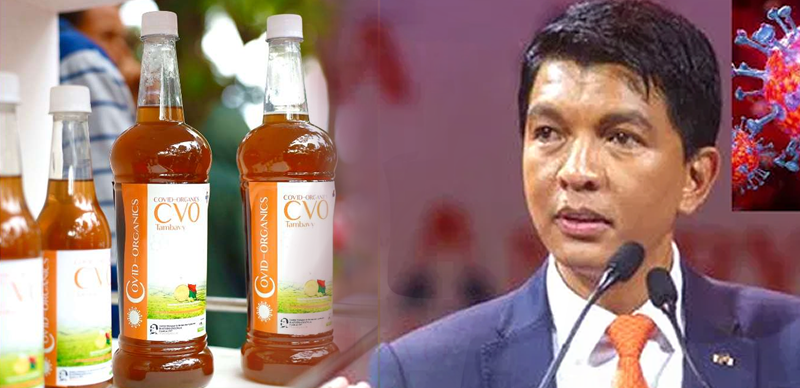
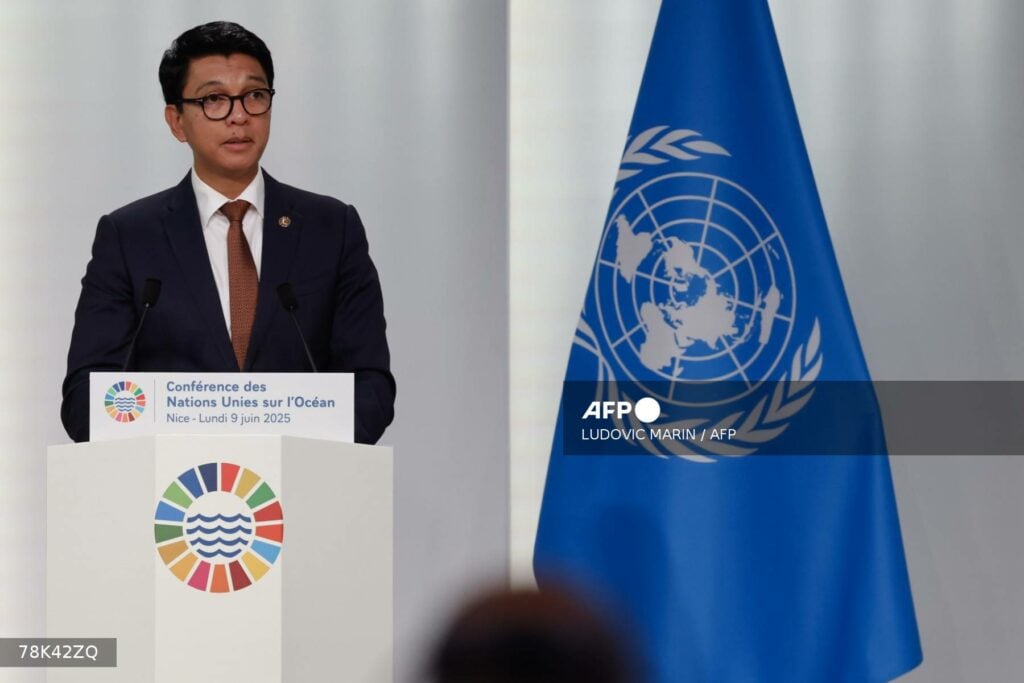
Placards and slogans against France that surfaced in demonstrations against impeached President Andry Rajoelina this week exposed deep resentment against the former colonial power.
“France out,” “Rajoelina and Macron out,” said banners after French media reported that the president had fled on a French military plane as an army unit threw its weight behind protesters calling for his resignation.
“They are still colonising us even though we are supposed to be independent,” said Koloina Andrianina Rakotomavonirina, a 26-year-old engineer.
“It’s unfair that they intervene in such a matter,” she told AFP at a demonstration in central Antananarivo.
With the whereabouts of the 51-year-old president unknown, the national assembly impeached him on Tuesday for desertion of duty, paving the way for a military unit called CAPSAT to seize power.
Negative perception about France was not surprising considering its history, Paris-based political scientist Christiane Rafidinarivo told AFP.
Its colonisation of the Indian Ocean island until independence in 1960 was marked by several atrocities, including the bloody repression by French forces of a 1947 uprising which claimed tens of thousands of lives.
“France represents colonialism,” Rafidinarivo said. “This perception runs through public opinion and is triggered depending on current events.”
While President Emmanuel Macron refused to confirm French involvement in Rajoelina’s evacuation, a presidential pardon for two French nationals jailed in Madagascar on coup charges—announced as the reports of his departure broke—raised suspicions of a deal.
Citizenship revelation
Rajoelina’s apparently chummy ties with Paris have long been criticised at home, but media reports in 2023 that he had obtained French nationality nine years before deepened the mistrust.
The revelation came just before the 2023 presidential race and led to calls for him to be disqualified, as the opposition claimed he should have lost his Madagascan nationality as a result, according to local law.
Rajoelina went on to win reelection, but the polls were boycotted by most opposition parties and marked by a low turnout.
That sparked new criticism against France “because the opposition accused him of being a French agent,” said Adrien Ratsimbaharison, author of a book on the 2009 coup that brought Rajoelina to power but denied him international recognition.
French president at the time, Nicolas Sarkozy, was the first foreign head of state to recognise Rajoelina as president during a state visit to France in 2011.
“People did not forgive in France for that, because that gave Rajoelina some kind of legitimacy,” Ratsimbaharison said.
There were also suspicions that Sarkozy sent financial aid to Rajoelina to engineer the 2009 protests and secure the support of military personnel to overthrow then-president Marc Ravalomanana, he said.
Rumours, resentment
In Madagascar’s social media mix of disinformation and rumour, a widely shared but out-of-context image that claimed to show the deployment of French gendarmes to support the embattled Rajoelina outraged those who believed it.
The photo showed a Malagasy gendarme wearing French colours, but this was only because he had undergone training in France, the gendarmerie told AFP.
Resentment towards the former colonial power is also fuelled by the awarding of major contracts to French companies and open French sex tourism on the impoverished island.
Some French businesses, such as call centres, meanwhile, use French-speaking Malagasy workers at a fraction of the wages they would earn in Europe.
At one demonstration, 27-year-old Mampionona Razafinjoelina said he quit his call-centre job because: “I was tired of being insulted by the French.”
Amid the long-running animosity, Macron said on a visit to the island in April he wanted to create the conditions for “forgiveness” for France’s colonisation, which has also left a bitter taste in its other former colonies such as Mali, Burkina Faso, Niger and Gabon.
This included returning the remains of a Malagasy king killed by the French army in an 1897 massacre that were taken to France as trophies, which happened in September, as well as the establishment of a Franco-Malagasy commission to look into atrocities of the time.
Madagascar’s President Andry Rajoelina on Tuesday dissolved the national assembly, pre-empting an opposition-led vote to force him out of office over the island nation’s spiralling political crisis.
Rajoelina has faced over two weeks of deadly street clashes, led largely by young demonstrators furious with the ruling elite, forcing the 51-year-old leader into hiding.
The decree to dissolve the assembly “shall enter into force immediately upon its publication by radio and/or television broadcast”, the presidency said in a statement published on Facebook.
Rajoelina, who has defied mounting calls to resign, defended the move in a separate social media post as necessary to “restore order within our nation and strengthen democracy.”
“The People must be heard again. Make way for the youth,” he said in a post on social media.
Opposition leader Siteny Randrianasoloniaiko said Monday they would vote to impeach Rajoelina for desertion of duty following reports he had fled the country.
Rajoelina, a former mayor of the capital Antananarivo, said late Monday he was sheltering in a “safe space” after attempts on his life, without revealing his location.
The protests began on September 25 and reached a pivotal point at the weekend when mutinous soldiers and security forces joined the demonstrators and called for the president and other government ministers to step down.
Among them was the elite CAPSAT unit, which played a major role in the 2009 coup that first brought Rajoelina to power.
To try to defuse the protests, the president last month sacked his entire government.
Radio France Internationale reported that Rajoelina departed Madagascar aboard a French military plane at the weekend but French officials have yet to respond to AFP’s request for confirmation.