No fewer than 117 beneficiaries from northern Nigeria have departed for Algeria to pursue various academic programmes under a fully funded study scholarship facilitated by the Sheikh Dahiru Usman Bauchi Foundation.
Speaking during a send-forth and orientation ceremony organised for the beneficiaries in Bauchi, the Chairman of the Foundation, Sayyadi Aliyu, explained that the scholarship was secured through the Darika Tijjaniyya Islamic Sect in collaboration with the Algerian Government.
According to him, “We were able to secure 140 slots, but only 117 met the complete requirements. The remaining ones will join them later.”
Aliyu noted that Bauchi State, being the host of the foundation, produced the highest number of beneficiaries, while others were drawn from Gombe, Taraba, Yobe, and other northern states.
He disclosed that 50 of the slots were allocated for Medicine, while the remaining were distributed among other disciplines such as Computer Science, Engineering, and Islamic Studies.
The chairman added that the scholarship covers feeding, accommodation, healthcare, and other essential needs, urging the students to remain law-abiding and disciplined throughout their studies.
“You must be good ambassadors of Nigeria and of those who facilitated this opportunity.”
“You have already been introduced to Arabic and French to help you settle in quickly. Islam is a religion of knowledge, and whoever neglects to seek it is going against its teachings, ”Aliyu charged.
He cautioned the students against distractions, urging them to remain united and focused on their purpose of acquiring knowledge for the benefit of Islam and humanity.
In his remarks, the Emir of Bauchi, Dr Rilwanu Sulaimanu Adamu, advised the beneficiaries to uphold Nigeria’s image abroad and avoid any act capable of tarnishing the country’s reputation.
Expressing concern over negative reports involving Nigerians abroad, the Emir said:
“The Nigerian flag has in many instances been blackened abroad, contrary to its true green-white-green identity. Green, as we know, is the colour associated with the house of Prophet Muhammad (Peace Be Upon Him).
“You must uphold this symbol with dignity and commit yourselves to the pursuit of knowledge.”
Air France said Tuesday it would extend the suspension of its flights to Madagascar at least until Friday because of unrest in the African country.
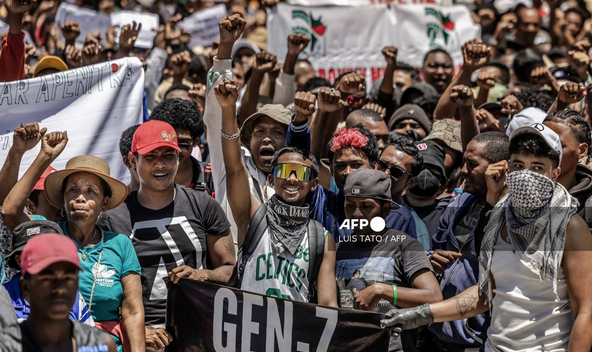
“The resumption of operations will remain subject to a daily assessment of the situation on the ground,” the French national airline told AFP, as Malagasy President Andry Rajoelina ruled out resigning in the face of protests that have shaken the country.
Air France initially suspended flights over the weekend for two days.
Air Austral, another French airline that serves Madagascar from its base in the Indian Ocean island of La Reunion, told AFP that it was maintaining services while watching the situation.
Rajoelina on Tuesday dissolved the national assembly, pre-empting a planned opposition-led vote to force him out of office over the island nation’s spiralling political crisis.
US President Donald Trump landed in Israel aboard Air Force One on Monday as a first group of Israeli hostages returned home from Gaza after two years’ captivity.
The US leader was greeted on a red carpet at Ben Gurion airport by Israel’s Prime Minister Benjamin Netanyahu and President Isaac Herzog.
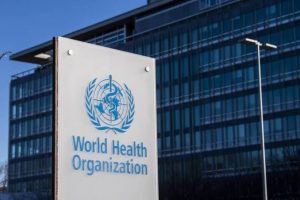
The World Health Organisation sounded the alarm on Monday over soaring numbers of drug-resistant bacterial infections, compromising the effectiveness of life-saving treatments and rendering minor injuries and common infections potentially deadly.
The United Nations’ health agency warned that one in six laboratory-confirmed bacterial infections worldwide in 2023 showed resistance to antibiotic treatments.
“These findings are deeply concerning,” Yvan J-F. Hutin, head of the WHO’s antimicrobial resistance department, told reporters.
“As antibiotic resistance continues to rise, we’re running out of treatment options and we’re putting lives at risk.”
Bacteria have long developed resistance against medicines designed to fight them, rendering many drugs useless.
This has been accelerated by the massive use of antibiotics to treat humans, animals and food.
Antimicrobial-resistant (AMR) superbugs directly cause over a million deaths and contribute to nearly five million deaths every year, according to the WHO.
In a report on AMR surveillance, the WHO examined resistance prevalence estimates across 22 antibiotics used to treat infections of the urinary and gastrointestinal tracts, the bloodstream, and those used to treat gonorrhoea.
‘Flying blind’ –
In the five years leading up to 2023, antibiotic resistance increased in over 40 per cent of the monitored antibiotics, with an average annual rise of between five and 15 per cent, the report found.
For urinary tract infections, resistance to commonly used antibiotics was typically higher than 30 per cent globally, it showed.
The report looked at eight common bacterial pathogens, including E. coli and K. pneumoniae, which can lead to severe bloodstream infections that frequently result in sepsis, organ failure and death.
The WHO warned that more than 40 per cent of E. coli infections and 55 per cent of K. pneumoniae infections globally are now resistant to third-generation cephalosporins — the first-choice treatment for these infections.
“Antimicrobial resistance is outpacing advances in modern medicine, threatening the health of families worldwide,” WHO chief Tedros Adhanom Ghebreyesus warned in a statement.
The WHO hailed improvements in surveillance but warned that 48 per cent of countries were still not reporting any AMR data.
“We are definitely flying blind in a number of countries and regions that have insufficient surveillance systems for antimicrobial resistance,” Hutin acknowledged.
‘Future threat’ –
Judging from the available data, most resistance was found in places with weaker health systems and less surveillance, the WHO said.
The highest resistance was found in the Southeast Asian and Eastern Mediterranean regions, where one in three reported infections were resistant.
In the African region, one in five infections was meanwhile resistant.
Silvia Bertagnolio, who heads the WHO unit for antimicrobial resistance surveillance, told reporters it was unsurprising that resistance would be higher in places with weaker health systems, since they may lack the capacity to diagnose or treat pathogens effectively.
The differences could also be linked to the fact that countries with less surveillance may test and provide data on fewer patients and only those with the most serious infections, she said.
The WHO has warned that there are not enough new tests and treatments in the pipeline to tackle the growing spread of drug-resistant bacteria.
This is creating a significant “future threat”, Hutin cautioned.
“The increasing antibiotic use, the increasing resistance and the reduction of the pipeline is a very dangerous combination.”
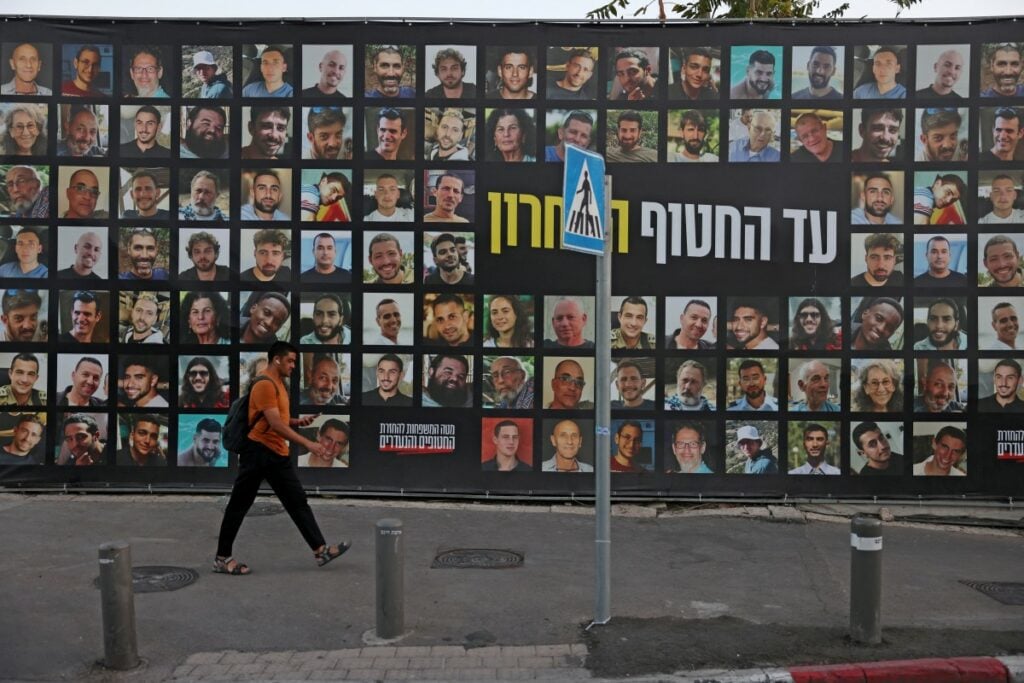
Hamas handed over the first seven of 20 surviving Israeli hostages to Red Cross representatives in Gaza on Monday, sparking cheers of joy in Tel Aviv, where a huge crowd was gathered to support hostage families.
Under a ceasefire agreement brokered by US President Donald Trump after two years of war, Hamas is due to release all surviving hostages on Monday in exchange for Palestinian prisoners held by Israel.
The releases came as Trump headed to the region for a peace summit, having declared the war “over”.
“According to information provided by the Red Cross, seven hostages have been transferred into their custody, and are on their way to IDF and ISA forces in the Gaza Strip,” the Israeli military and security service said.
“The IDF is prepared to receive additional hostages who are expected to be transferred to the Red Cross later on.”
In Tel Aviv, hundreds of people gathered on Hostages Square and erupted in joy as news broke of the first releases.
Among them, Noga shared her pain and joy with AFP.
“I’m torn between emotion and sadness for those who won’t be coming back,” she said.
On October 7, 2023, militants seized 251 hostages during Hamas’s unprecedented attack on Israel, which led to the deaths of 1,219 people, most of them civilians.
All but 47 of the hostages were freed in earlier truces, with the families of those that have remained in captivity leading lives of constant pain and worry for their loved ones.
In Gaza, too, the ceasefire has brought relief, but with much of the territory flattened by war, the road to recovery remains long.
“I returned to Sheikh Radwan with my heart trembling,” 38-year-old Fatima Salem told AFP after she returned to her neighbourhood in Gaza City.
“My eyes kept searching for landmarks I had lost — nothing looked the same, even the neighbours’ houses were gone.
“Despite the exhaustion and fear, I felt like I was coming back to my safe place. I missed the smell of my home, even if it’s now just rubble. We will pitch a tent next to it and wait for reconstruction.”
– ‘War is over. Okay?’ –
Trump’s lightning visit to Israel and Egypt aims to celebrate his role in brokering last week’s ceasefire and hostage release deal — but comes at a precarious time as Israel and Hamas negotiate what comes next.
Under the US president’s proposed roadmap, once the Palestinian militants have handed over the surviving hostages, Israel will begin releasing around 2,000 detainees in exchange.
Israel expects all 20 living hostages to be released to the Red Cross “early Monday morning”, according to a spokesperson for Prime Minister Benjamin Netanyahu’s office.
Speaking to reporters on Air Force One at the start of the “very special” visit, Trump brushed off concerns about whether the ceasefire would endure.
“I think it’s going to hold. I think people are tired of it. It’s been centuries,” he said of the fighting.
“The war is over. Okay? You understand that?” the US president added.
In Israel, Trump is due to meet the families of hostages before addressing the Israeli parliament in Jerusalem.
– Final details –
His trip is partly a victory lap over the Gaza deal he helped broker with a 20-point peace plan announced in late September.
“Everybody’s very excited about this moment in time,” Trump said earlier as he prepared to board the plane at Joint Base Andrews near Washington.
Negotiators were still wrangling late Sunday over the final arrangements for the exchanges, with two Hamas sources telling AFP the group was insisting that Israel include seven senior Palestinian leaders on the list of those to be released.
Israel has previously rejected at least one of those names.
The sources said the group and its allies had nevertheless “completed all preparations” for handing over to Israel all the living hostages.
Israel does not expect all of the dead hostages to be returned on Monday.
Under the plan, Hamas is to hand over the remaining 47 hostages, as well as the remains of a soldier killed in 2014 during a previous Gaza war.
Among the prisoners to be released, 250 are security detainees, including many convicted of killing Israelis, while about 1,700 were detained by the Israeli army in Gaza during the war.
– Peace summit –
After visiting Israel, Trump will head to Egypt where he and President Abdel Fattah al-Sisi will co-host a summit of more than 20 world leaders to back his plan to end the Gaza war and promote Middle East peace.
Trump will be looking to resolve some of the huge uncertainty around the next phases of the peace plan — including Hamas’s refusal to disarm and Israel’s failure to pledge a full withdrawal from the devastated territory.
Trump insisted he had “guarantees” from both sides and other key regional players about the initial phase of the deal, and the future stages.
Trump also said he would be “proud” to visit Gaza itself, but did not say when such a difficult security challenge would be possible.
A new governing body for devastated Gaza — which Trump himself would head under his own plan — would be established “very quickly,” he added.
Under the plan, as Israel conducts a partial withdrawal from Gaza, it will be replaced by a multi-national force coordinated by a US-led command centre in Israel.
Israel’s campaign in Gaza has killed at least 67,806 people, according to figures from the health ministry in the Hamas-run territory that the United Nations considers credible.
The data does not distinguish between civilians and combatants but indicates that more than half of the dead are women and children.
US President Donald Trump and his Egyptian counterpart Abdel Fattah al-Sisi will on Monday chair a Gaza peace summit in Sharm el-Sheikh, also attended by world leaders, including the UN chief.
The gathering in the Red Sea resort town will bring together “leaders from more than 20 countries”, Sisi’s office said.
It will aim “to end the war in the Gaza Strip, enhance efforts to achieve peace and stability in the Middle East, and usher in a new era of regional security and stability”.
UN Secretary-General Antonio Guterres said he will attend, as will Britain’s Prime Minister Keir Starmer, his Italian counterpart Giorgia Meloni and Pedro Sanchez of Spain.
French President Emmanuel Macron and Turkish President Recep Tayyip Erdogan will also travel to Sharm el-Sheikh, according to their offices.
The European Council will be represented by its president, Antonio Costa, a spokesperson said.
“The plan offers a real chance to build a just and sustainable peace, and the EU is fully committed to supporting these efforts and contributing to its implementation,” the spokesperson added.
Jordan’s King Abdullah II is also expected to attend, according to state media.
There was no immediate word on whether Israeli Prime Minister Benjamin Netanyahu would participate, while Hamas has said it will not take part.
Hossam Badran, a Hamas political bureau member, told AFP in an interview that the Palestinian militant group “will not be involved”.
Hamas “acted principally through… Qatari and Egyptian mediators” during previous talks on Gaza, he said.
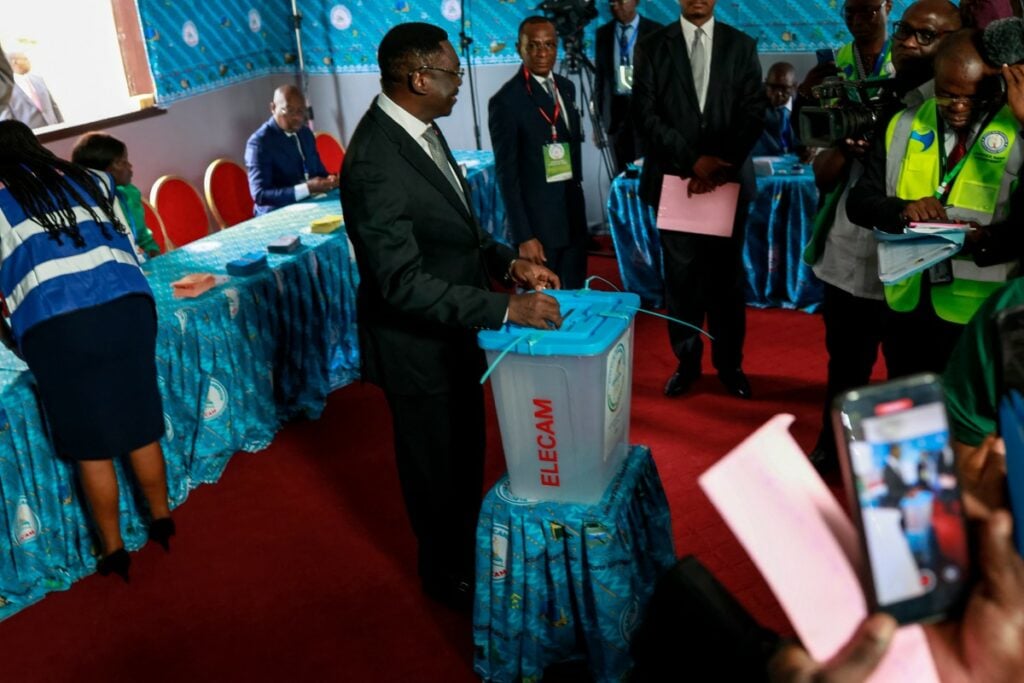
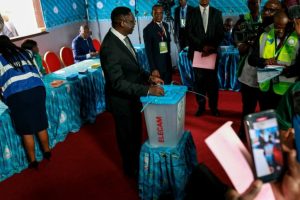
Voting began Sunday as Cameroon holds presidential elections, which 92-year-old Paul Biya, the world’s oldest serving head of state, is expected to win, extending his already 43-year grip on power.
Biya faces 11 opponents, including former employment minister Issa Tchiroma Bakary, 79, who has generated unexpected enthusiasm among voters in the central African nation, where half the population is under 20.
Polling stations opened at 8:00 am and will close at 6:00 pm (0700 to 1700 GMT).
The eight million Cameroonians who are eligible to vote in the one-round election have, for the most part, only known one ruler in their lifetime.
Biya has been in power since 1982 and has won every election in the past 20 years by more than 70 percent of the ballot.
“We shouldn’t be naive. We know full well the ruling system has ample means at its disposal to get results in its favour,” Cameroonian political scientist Stephane Akoa told AFP.
But he said that the campaign in recent days had been “much livelier” than was usually the case at that stage.
“This poll is therefore more likely to throw up surprises,” he said.
Biya has kept his customary low profile during the campaign, appearing in public on Tuesday for the first time since May, looking visibly fit.
He held a rally in Maroua in the strategic Far North region, which has 1.2 million eligible voters and makes up the second largest voting bloc in the country.
For years, it was considered a Biya stronghold, but several former allies from the area are now running against him.
Youth vote
The 11 rival candidates have made numerous public appearances in recent weeks, each promising a new dawn for Cameroon in place of Biya’s entrenched hold on public life.
The president’s main rival, Bakary, also campaigned in the regional capital, Maroua, this week.
In stark contrast to Biya, whose appearance attracted a sparse crowd of just a few hundred people, Bakary was welcomed in the streets of his home region by thousands of supporters waving placards that hailed “Tchiroma the Saviour”.
Bakary—who resigned from the government in June to join the opposition after 20 years at Biya’s side—is the leading challenger after top opponent Maurice Kamto was barred from the race.
Kamto came second in the 2018 presidential election but was banned from standing this year by the Constitutional Council, a move that rights groups, including Human Rights Watch, said undermined the credibility of the electoral process.
Biya is only the second president Cameroon has had since its independence from France in 1960.
It is Central Africa’s most diversified economy, with an abundance of natural and agricultural resources.
However, around 40 per cent of the population lives below the poverty line, according to World Bank figures for 2024, and unemployment stands at 35 per cent in the major cities.
Young people hunger for change, Akoa said, but not yet to the point where they will take the risk of protesting en masse as in other countries in Africa and Asia.
‘Sign of change’
Cameroonians complain about the high cost of living, a lack of clean drinking water, healthcare and quality education.
But their frustrations remain confined to social media for the time being.
“Many young people intend to vote,” Akoa said.
“There is a positive sign of change, but perhaps not strong enough to bring young people out onto the streets, as we saw in Madagascar, Tunisia, and elsewhere.”
The government has authorised 55,000 local and international observers to monitor the vote, including representatives of the African Union.
The Constitutional Council has until October 26 to announce the final results.
But several internet platforms say they will compile the results independently, drawing criticism from the government, which says they are attempting to manipulate public opinion.
The vote takes place in the shadow of a conflict between separatist forces and the government that has plagued the English-speaking regions since 2016.
Turnout was particularly low in these areas in 2018.
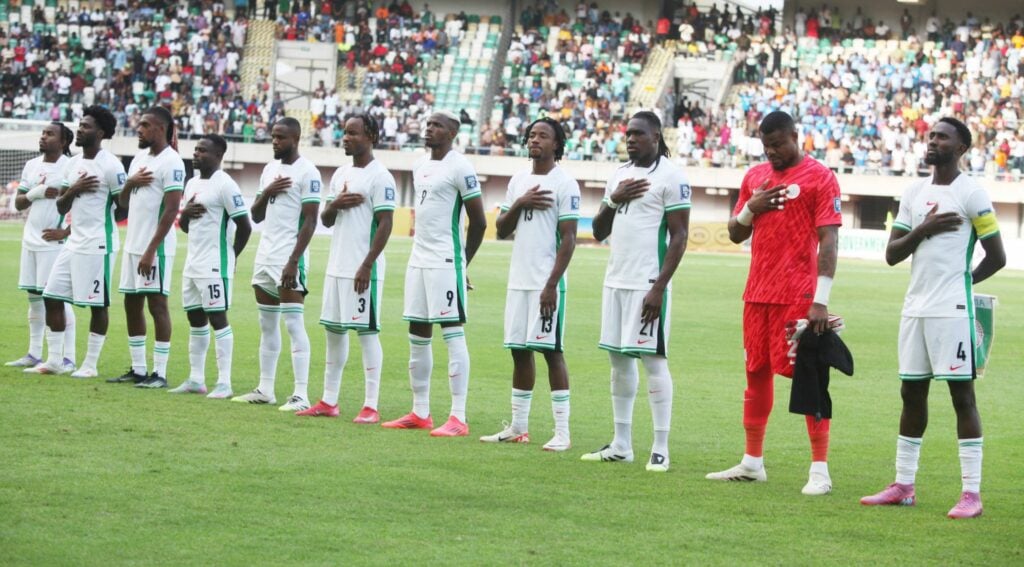
All eyes are on the New Peter Mokaba Stadium, South Africa, on Friday as the Super Eagles lock horns with the Crocodiles of Lesotho in what promises to be a last-chance match for Nigeria in the 2026 FIFA World Cup qualifiers.
The Super Eagles were almost certain to miss out on consecutive World Cup finals after their September 1-1 draw against South Africa’s Bafana Bafana.
However, they were handed a lifeline when South Africa were docked points for fielding an ineligible player, narrowing the gap at the top of Group C.
The ruling left Nigeria three points adrift of Benin and South Africa with two games remaining, reshaping the qualification race and keeping Nigeria’s hopes alive.
Decisive game for the Super Eagles
Nigeria cannot afford to lose either of their remaining two matches, starting with Friday’s fixture against Lesotho.
They must also hope South Africa slip up in their remaining games against Zimbabwe and Rwanda.
With several teams still mathematically capable of topping the group, a win in Polokwane is essential if the Super Eagles are to keep their campaign alive.
Group standings
Benin top the group with 14 points and a +4 goal difference, while South Africa are second on 14 points with a +2 goal difference. Nigeria sit third on 11 points and a +2 goal difference, followed by Rwanda on 11 points and a neutral goal difference.
Head-to-head
Since 2019, the sides have met three times: they have drawn once and Nigeria have won twice.
Lesotho held Nigeria to a 1-1 draw in the reverse fixture at the Godswill Akpabio Stadium, Uyo, on November 16, 2023, and will be looking to cause another upset in Polokwane.
Record so far
The Super Eagles’ World Cup qualifying campaign has been patchy. To date, they have recorded two wins, five draws and one defeat, while Lesotho have two wins, three draws and three losses.
Optimism, ready
Ahead of the crucial tie, head coach Éric Chelle and some Super Eagles stars have expressed optimism about their chances.
Speaking at a press conference in Polokwane on Thursday, Chelle said the team must begin the game aggressively and with full focus.
Chelle warned that football is unpredictable, considering factors such as weather, refereeing errors, and individual mistakes can influence outcomes.
But he insisted the squad’s attention must remain on securing three points.
Match details
Matchday nine will take place on Friday (today), October 10, at the New Peter Mokaba Stadium, Polokwane, with kick-off at 6:00 p.m. local time (5:00 p.m. Nigeria time).
Fans can watch on DStv’s SuperSport, SportyBet TV and AfroSport.
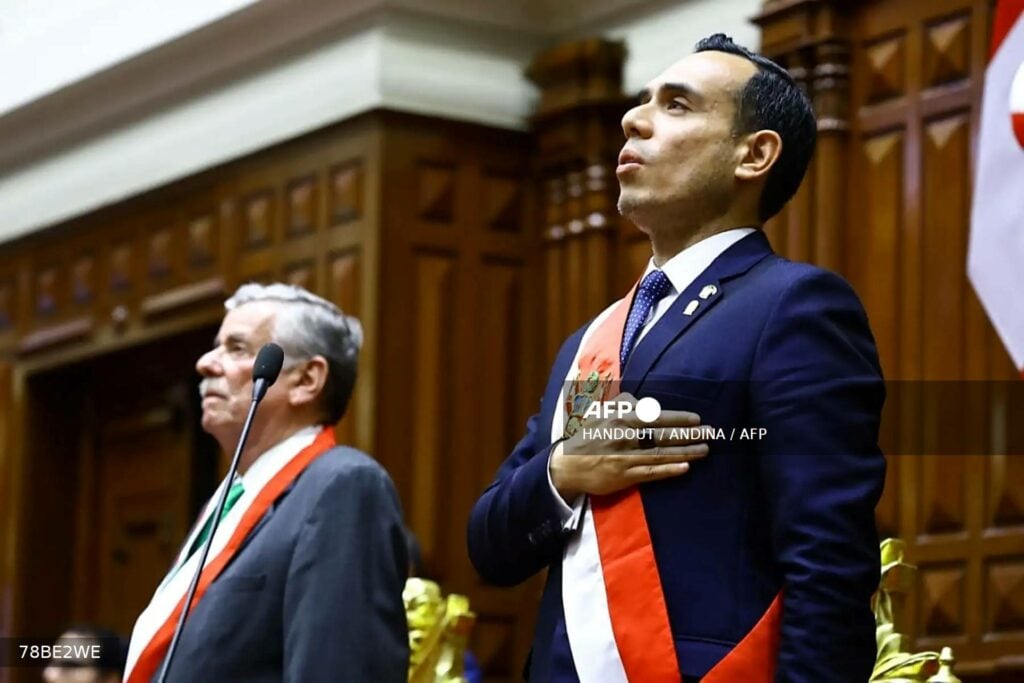
Lawmakers in Peru voted Friday to remove President Dina Boluarte, whose term has been marked by protests and accusations of failing to stem crime.
Boluarte refused to appear before Congress for an overnight hearing, after a majority of lawmakers, including some once loyal to her, voted to initiate impeachment proceedings.
They summoned Boluarte to appear before Congress at 11:30 pm (0430 GMT Friday), but she skipped the proceedings, which ended with 118 lawmakers voting for her impeachment.
“The president’s impeachment has been approved,” announced Congress leader Jose Jeri, who could take over as interim president until elections in April 2026.
Protests have marked Boluarte’s presidency, along with various scandals, investigations and a surge in gang violence.
She had already faced down multiple attempts to remove her from office.
The latest effort cited her “permanent moral incapacity” to carry out her duties since assuming office in December 2022.
Peru has had six presidents in about nine years.
Boluarte, who took office after her predecessor, Pedro Castillo, was impeached over a crackdown on protests that killed at least 50 people, had seen her approval rating plummet.
She is the subject of multiple probes, including one for her alleged failure to declare gifts of luxury jewels and watches, a scandal dubbed “Rolexgate.”
She also gave herself a large pay increase in July.
Anti-government protests have mounted in recent weeks after the government passed a law on September 5 requiring young people to contribute to private pension funds, despite job insecurity and an unofficial employment rate of more than 70 per cent.
Protests have also escalated over the past six months in the wake of a wave of extortion and murders by organised crime groups.
Cameroon’s Paul Biya, already the world’s oldest head of state, is the favourite to win Sunday’s presidential election, handing him an eighth term in power in the central African country.
A fractured opposition of 11 candidates is standing against the 92-year-old in the vote, whose credibility and fairness rights groups have called into question.
Most of the 7.8 million Cameroonians called to the ballot box can remember no leader other than Biya, who has held onto power with an iron fist since 1982.
Questions over the state of his health have only grown louder since he entered his 10th decade. Should Biya win, he would be nearly 100 by the end of his eighth term.
Though the opposition hopes to entice voters with promises of a new face and an end to the cost-of-living frustrations of the long Biya epoch, its most credible candidate, Maurice Kamto, had his candidacy barred by the courts.
Theophile, an artist in the economic capital Douala, branded the vote a “scam”.
The 24-year-old had hoped to vote for Kamto, who came second to Biya in the 2018 election.
“As long as the system remains in place, there is nothing that can be done. There has to be a change,” he told AFP.
Others value the veteran’s decades of experience in a country where half the population is under the age of 20.
“I say Paul Biya still has something to offer,” said Giovanni, a 20-year-old student in Douala.
“Even though some of his promises haven’t been kept, I’m counting on him. He’s a wise man with a wealth of experience and a long track record.”
– ‘Determination intact’ –
The longtime president was noticeably absent from the campaign trail.
He had taken a trip this month to Switzerland, his favoured destination for overseas jaunts, fuelling fresh speculation over the state of his health.
But he made a rare outing on Tuesday, holding a rally at a stadium in the town of Maroua in the Far North region, a key electoral battleground with 1.2 million registered voters.
It was his first public appearance since May.
“My determination to serve you remains intact,” he told the crowd in a 25-minute speech, which touched on youth, women and infrastructure.
Though his entourage expected nearly 25,000 people at the event, AFP reporters present estimated only a few hundred showed up.
Biya became Cameroon’s second president since independence in the 1960s in the 1984 election, when he ran unopposed and won 100 per cent of the vote.
He had already taken over two years earlier when his predecessor Ahmadou Ahidjo resigned suddenly.
He was re-elected in similar style in 1988 but after the introduction of multi-party politics only narrowly overcame challenger John Fru Ndi in 1992 by a four-per cent margin.
Biya turned to a mix of repression, regional alliances and overtures to his former rivals to curtail threats to his rule, Arrey Ntui, the International Crisis Group’s senior analyst for Cameroon, said.
His strategy bore fruit: he was re-elected with 93 per cent of the vote in 1997, 71 per cent in 2004, 78 per cent in 2011 and 71 per cent in 2018.
– ‘Protect the vote’ –
Human rights groups have spent years condemning Biya’s stranglehold on Cameroon’s institutions and election process.
“The electoral charade is unlikely to signal any potential change in the immediate future but rather the consolidation of the status quo,” said David Kiwuwa, who heads the School of International Studies at Nottingham University’s campus in China.
With four-in-10 Cameroonians living under the poverty line in 2024, according to the World Bank, economic fears have long loomed large in voters’ minds.
The high cost of living, as well as the lack of drinking water, quality schooling and healthcare, have long frustrated Cameroonians.
“I keep hoping for a better Cameroon where young people can find work,” Boris, a computer engineer in the coastal city of Buea, told AFP.
“I imagine a day when Cameroon looks like Paris, with accessible and affordable education, where we can drive safely on our roads.”
Yet those recurring complaints, widely shared on social media, have not led people to take to the streets in protest.
Several citizens’ associations have set up networks of observers at polling stations to “protect the vote” by counting ballots independently.
The government has slammed these as attempts to “manipulate public opinion” and “produce skewed results”.
The vote will be held in the shadow of a deadly conflict between separatist forces in Cameroon’s English-speaking regions and the government.
During the last vote in 2018, turnout was particularly low in anglophone Cameroon, where the fighting is fiercest.