Confront false narratives on religious conflict, Islamic council urges FG


The Nigerian Supreme Council for Islamic Affairs has called on the Federal Government to take a firmer stance against what it described as false and misleading claims of religious persecution in Nigeria, urging authorities to identify and address the sources of such narratives.


In a statement signed by its Deputy National Legal Adviser, Imam Haroun Muhammad Eze on Friday, the Council said it had observed “the avalanche of refutations by many agencies of the Federal Government of Nigeria, well-meaning Nigerians across religious divides and the National Assembly of the recent false allegation circulating on some international platforms and the social media that there is a systematic genocidal campaign against Christians in Nigeria.”


The NSCIA commended the Federal Government and other stakeholders who had publicly rejected the claims but expressed concern that their responses did not go far enough.


It said, “Council wondered why the government could not, at least for once, go the whole hog by calling a spade a spade, by speaking the whole truth.”

The Council maintained that insecurity in Nigeria affects citizens of all faiths and should not be portrayed as targeted at any single group.


It cited the US State Department’s 2023 Report on International Religious Freedom, noting that “terrorists, bandits and armed criminal groups target mosques and churches indiscriminately in Nigeria.”


The statement added, “In the first half of 2025 alone, terrorists and bandits are reported to have killed at least 2,266 civilians across Northern Nigeria, where Muslims are predominant, leaving over 2 million people displaced and over 7.8 million others in need of urgent aid.”


It also referenced findings by the US Commission on International Religious Freedom 2025 Annual Report, which acknowledged that both Muslims and Christians had been victims of attacks, stressing that the situation “does not take any pattern.”


The council said its decision to remain restrained in the face of allegations and misrepresentations was motivated by its commitment to national unity.


“Council wishes to place on record that its decision to be quiet in the face of all the attacks, innuendos and insults being hurled at Muslims in this country is as a result of the necessity of protecting the corporate existence of this nation,” it stated.


The NSCIA also referred to a comment by the Director of National Issues and Social Welfare of the Christian Association of Nigeria, who observed that insecurity affects all Nigerians, saying: “If they open fire in a marketplace, the bullets don’t look for a Christian or spare a Muslim or even spare a baby.”

Expressing concern about policies it believes could deepen divisions, the Council drew attention to a recent circular by the National Insurance Commission restricting co-insurance between conventional insurers and Takaful operators.


It stated, “This circular of exclusivity, which clearly violates the Nigerian Insurance Industry Reform Act (NIIRA 2025), is intended to further create a divide between the Muslims and the non-Muslims in the country.”


Reaffirming its commitment to peace and coexistence, the council said, “Council strongly believes in one and indivisible Nigeria, and it shall continue to work to preserve this ideal even in the face of the greatest provocation.”

It urged the Federal Government to strengthen public communication and ensure that misinformation capable of fuelling religious tension is swiftly addressed through accurate, evidence-based engagement.


The NSCIA’s statement comes amid growing international attention on religious freedom in Nigeria. Western advocacy groups and international media outlets have accused Nigerian authorities of failing to protect Christians from attacks, allegations which the Federal Government and local religious leaders have repeatedly dismissed as exaggerated and politically motivated.


In September, US Senator Ted Cruz introduced S.2747 — the Nigeria Religious Freedom Accountability Act of 2025, a proposed law seeking to compel the US Secretary of State to list Nigeria as a Country of Particular Concern for alleged breaches of religious freedom and to impose sanctions on certain Nigerian officials.


The bill builds on long-standing recommendations from the US Commission on International Religious Freedom, which has consistently urged Washington to apply the CPC designation to Nigeria, citing what it describes as federal and state-level shortcomings in safeguarding religious minorities.


In a plenary debate on Thursday, Senate President Godswill Akpabio warned against the framing of Nigeria’s security challenges in strictly religious terms, cautioning that doing so could distort the reality on the ground and deepen sectarian tension. https://punchng.com/akpabio-warns-against-framing-insecurity-along-religious-lines/


He urged that foreign narratives—particularly from Western media and legislators—should not be allowed to define Nigeria’s security discourse.


Akpabio insisted that terrorists and bandits do not discriminate by faith when launching attacks.


He emphasized that attacks in states like Borno, Kaduna, Benue, and elsewhere have victimized both Christians and Muslims alike, and thus must be approached as national security issues, not religious conflicts.


Dangote Refinery denies importing high-sulphur petrol


Dangote Petroleum Refinery has dismissed reports claiming it imported finished petrol with high sulphur content into Nigeria, describing the allegations as false and misleading.


An online publication, Sahara Reporters, had alleged that the refinery was bringing in high-sulphur petrol from the United Kingdom aboard the vessel MT Clearocean Mary, which it said was scheduled to arrive at the refinery’s offshore facility on October 9, carrying about 37,000 metric tonnes of petrol with a sulphur content of 690 parts per million.


But in a statement on Friday, the refinery clarified that the shipment in question was not finished petrol but an intermediate feedstock, a material used in refining processes to produce high-quality fuels.


“The cargo in question is an intermediate feedstock, not finished petrol.

“The feedstock will be fully refined in our processing units to meet both Nigerian and international quality standards,” the statement read.

The refinery, located within a Free Trade Zone, added that it produces and sells only fuels that comply with all regulatory standards, noting that its exports go to the United States and Europe.


The refinery further noted that all imported feedstocks are accompanied by quality certificates, which are transparently shared with regulators.


“We are also willing to make these documents available to the public in the interest of full transparency and accountability,” the statement added.


The company reaffirmed its commitment to advancing Nigeria’s energy independence, maintaining global best practices, and delivering cleaner, high-quality fuels for both domestic and international markets.

Enugu gov, exco, lawmakers defect to APC Tuesday


The All Progressives Congress has announced that Enugu State Governor, Peter Mbah, will officially defect from the Peoples Democratic Party to the ruling party on Tuesday, October 14, 2025, in Enugu.


Speaking to journalists after his swearing-in at the APC National Secretariat on Friday, the Enugu APC Caretaker Chairman, Dr Ben Nwoye, said Mbah would join the ruling party with several lawmakers and key leaders across the state.


The APC National Chairman, Prof. Nentawe Yilwatda, and the Deputy National Chairman (South), Emma Eneukwu, while inaugurating a seven-member caretaker committee for the party in Enugu, revealed that efforts were underway to strengthen the APC’s presence and influence in the South-East.


PUNCH Online recalls that the APC, on Wednesday, dissolved the Enugu State Executive Committee to pave the way for Governor Mbah’s defection to the ruling party.

Nwoye stated: “For the past 10 years, Enugu State has remained in opposition. But all that will change on Tuesday, the 14th of October, 2025, when the governor will be declaring for the APC.


“And the governor is not coming alone. The governor is coming in with 260 ward councillors. They will be declaring with the governor. He will be coming in with the 24 members of the House of Assembly. He will be coming in with members of the National Assembly. He will also be coming with the entire Exco.”


Earlier, Yilwatda informed members of the caretaker committee that he was aware they would need to rebuild the party in the state.

The APC National Chairman stated: “We know the challenges that we’re in, the need to rebuild the party, to keep the party, to refocus the party, to ensure that the party expands — expansion in terms of membership.


“We want to see the number of people that we have in the APC increase under your leadership, without forgetting the members that we already have in the APC. You can’t throw away what you have because you want to go and get what you don’t have. We must maintain our members — those who have laboured, who have suffered, who have built the party, who have sustained it. We are the building blocks of the party. We must be sustained, we must be kept, we must be nurtured, we must be honoured. That’s what keeps this party together.


“Secondly, the APC is a home to all. The person who came yesterday, the person that came today, the person that will come tomorrow, and the person that will come next tomorrow will all have equal rights and equal access, based on our Constitution.”


The chairman stated that as the 2027 elections approach, the ruling party is determined to achieve an overwhelming victory.


“The NWC has to follow due process in dissolving the state working committee. Ensure that all legal processes are followed.


“I don’t expect that you will go and form yourself into a group that will work based on personal interests or personal dislike for anyone. The fact that you are in an office means even your enemies must become your friends. You must treat your friends and your enemies equally. You must hold that office because you took an oath, and that oath specifies what you are supposed to do as a leader in the party. That is important for us. That is important for the party.”

NSCDC arrests drug dealer, hands over suspects to NDLEA in Kano


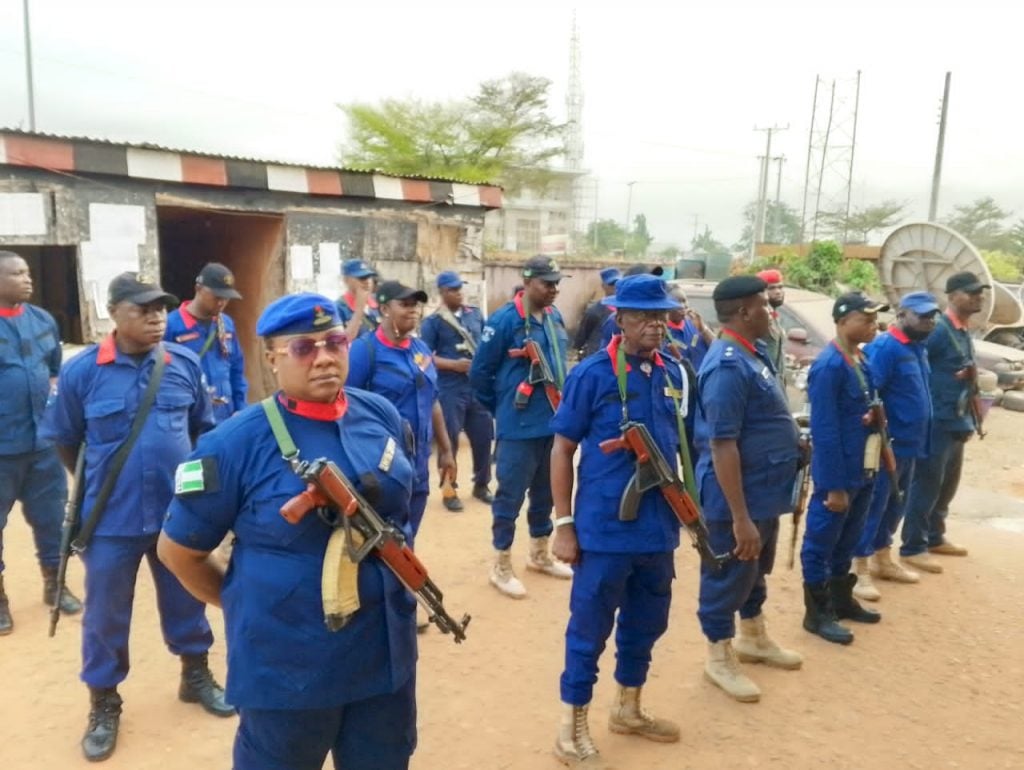
The Nigeria Security and Civil Defence Corps, Kano State Command, on Friday, handed over an Indian Hemp dealer with two other suspects to the officials of the National Drug Law Enforcement Agency in Kano.


The suspects were arrested in Doguwa Local Government Area of the State.


The NSCDC State Commandant, Bala Bodinga, stated this while addressing newsmen at the headquarters of the command shortly after handing over the suspects.
 

He said the suspects were apprehended on Tuesday, October 7, 2025, at Riruwai gate by the operatives of the corps in Doguwa division following a tip-off.

“You are invited here today to brief you on the recent milestone achieved by the Corps in its persistent efforts to rid Kano of criminally minded elements.


“On Tuesday, October 7, 2025, at about 02030hrs, operatives of the NSCDC, Doguwa division acting on credible intelligence, intercepted on a motorbike and apprehended a notorious Indian Hemp (Wiwi) dealer, Yusuf Alasan, 25 years.

“The suspect, a resident of Doguwa town, was arrested along with two other adults, Muktar Musa and Musa Sani, carrying three sacks (sugar size sacks) filled with marijuana, transporting it from Doguwa town to Kafau, Doguwa local government area of Kano State,” he said.


Bodinga said preliminary investigations have been concluded by the corps, and in the spirit of synergy and collaboration, “we are handing over the suspected drug dealer, as well as the other two suspects, along with the exhibits to the NDLEA, Kano State command for further investigations and necessary legal action.


He reiterated the commitment of the command to continue to collaborate with all the sister security agencies in the state to decimate the evil intentions of criminals wherever they might be in Kano state.


On August 6, 2025, operatives of the Nigeria Security and Civil Defence Corps, Kano State Command, arrested two suspected criminals found to be involved in drug dealing and burglary in Kano.


The arrest was confirmed in a statement by the command’s Public Relations Officer, Ibrahim Abdullahi.


“The NSCDC operatives have recorded another breakthrough in the fight against crime, following the arrest of two suspected criminals in separate operations,” he said.

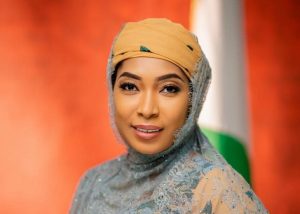
Kaduna school feeding empowers women, supports local farmers- Gov’s aide


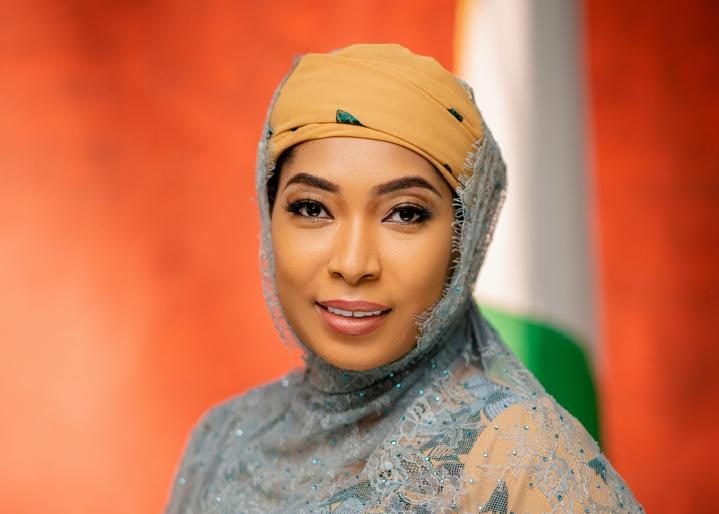
The Special Assistant to the Kaduna State Governor on School Feeding Programme, Dr Fauziya Buhari-Ado, says the scheme has continued to empower women employed as cooks and supports local farmers.


She also called for stronger humanitarian leadership and strategic partnerships to combat hunger and promote sustainable economic transformation across Africa.


Dr. Fauziya, who made the call while receiving the 2025 4th Humanitarian Bootcamp Award in Nairobi, Kenya, according to a statement she personally signed and released on Friday morning.


In her presentation, titled “Feeding the Future: Leveraging Humanitarian Leadership to Achieve Food Security and Economic Transformation in Africa,” Dr. Buhari-Ado expressed profound appreciation to Governor Uba Sani of Kaduna State, for his vision, trust, and leadership in championing the Kaduna State School Feeding Programme, a flagship social intervention that provides daily meals to thousands of schoolchildren across the state.

“Governor Uba Sani’s confidence in my capacity to serve has made it possible to impact the lives of children across Kaduna State,” she stated. “Under his leadership, the School Feeding Programme has become a model of inclusive development — improving nutrition, boosting school attendance, empowering women, and supporting local farmers.”


She described the initiative as a holistic approach that strengthens multiple sectors of the economy, noting that every meal served goes beyond nourishment to symbolise hope, care, and opportunity for the next generation.


“Each meal we provide is not just food; it is a bridge to learning, a shield against poverty, and a promise that we see these children, we care for them, and we will not abandon them,” Dr. Buhari-Ado said. “Feeding our children is not charity — it is nation-building.”


She further stressed that food security must be viewed as a strategic pillar of Africa’s social and economic development, adding that eradicating hunger is essential to ensuring stability, productivity, and peace across the continent.


Dr. Buhari-Ado also paid tribute to outstanding women leaders who have played pivotal roles in advancing humanitarian and leadership development across Africa. She commended Dr. Martina Nentawe Yilwatda, Patron of the Women’s Leadership Network, for her foresight and mentorship, and Mrs. Deborah Hornecker, the Network’s founder, for her resilience and commitment to women’s empowerment.

“The Women’s Leadership Network represents a powerful platform for collaboration and transformation,” she noted. “It brings together professional women from diverse sectors to drive inclusion, social impact, and leadership development across communities.”


In her closing remarks, Dr. Buhari-Ado urged governments, development partners, civil society organizations, and the private sector to work collectively to end hunger in Africa.


“When the day comes that no African child — and no African adult — goes to bed hungry, we will know that we have truly fed the future — not through power, but through humanity, compassion, and love,” she concluded.


The school feeding programme in Kaduna state is funded annually with over N4bn, according to data by the state government.

The state also noted that it feeds over 730,000 pupils and has over 7,000 cooks employed to prepare meals in a total of 3,400 schools.


The scheme aims to increase enrollment, support the local economy, and improve the nutrition of pupils.

Similarly, on October 3, 2025, President Bola Tinubu reaffirmed his administration’s commitment to reducing child malnutrition and improving school enrolment through the Renewed Hope Mo’Feed Project, a school feeding and empowerment initiative designed to reach over 600,000 vulnerable Nigerians across the six geopolitical zones.


The Senior Special Assistant to the President on School Feeding, Dr. Yetunde Adeniji, who represented the President, said this at the official launch of the project in Lagos.


She said the initiative aligns with the Renewed Hope Agenda by tackling food insecurity, poverty, and gaps in education.

2026 WCQ: Nigeria’s W’Cup hopes on the line today, kickoff time


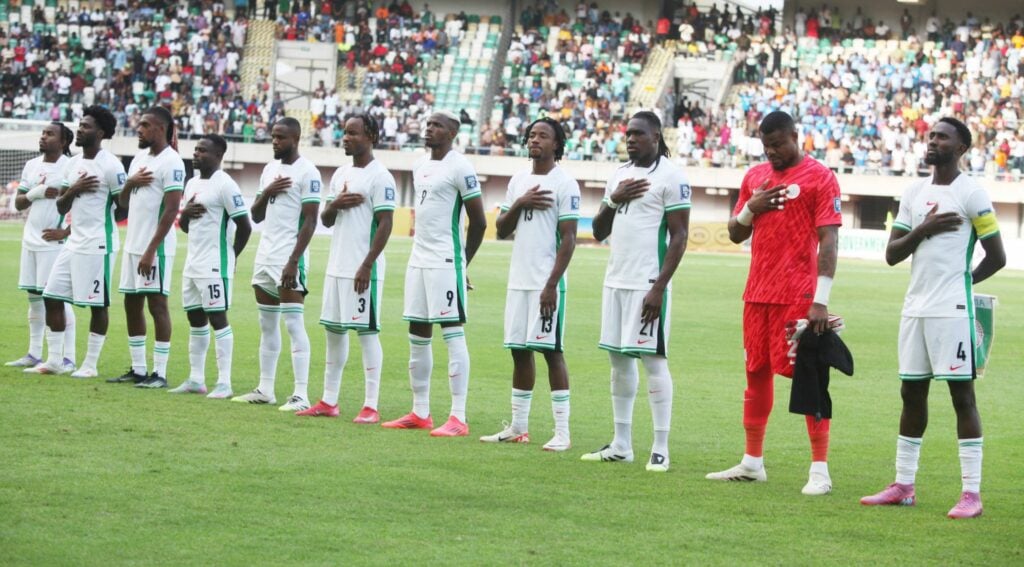
All eyes are on the New Peter Mokaba Stadium, South Africa, on Friday as the Super Eagles lock horns with the Crocodiles of Lesotho in what promises to be a last-chance match for Nigeria in the 2026 FIFA World Cup qualifiers.


The Super Eagles were almost certain to miss out on consecutive World Cup finals after their September 1-1 draw against South Africa’s Bafana Bafana.


However, they were handed a lifeline when South Africa were docked points for fielding an ineligible player, narrowing the gap at the top of Group C.


The ruling left Nigeria three points adrift of Benin and South Africa with two games remaining, reshaping the qualification race and keeping Nigeria’s hopes alive.

Decisive game for the Super Eagles

Nigeria cannot afford to lose either of their remaining two matches, starting with Friday’s fixture against Lesotho.


They must also hope South Africa slip up in their remaining games against Zimbabwe and Rwanda.


With several teams still mathematically capable of topping the group, a win in Polokwane is essential if the Super Eagles are to keep their campaign alive.


Group standings

Benin top the group with 14 points and a +4 goal difference, while South Africa are second on 14 points with a +2 goal difference. Nigeria sit third on 11 points and a +2 goal difference, followed by Rwanda on 11 points and a neutral goal difference.


Head-to-head

Since 2019, the sides have met three times: they have drawn once and Nigeria have won twice.

Lesotho held Nigeria to a 1-1 draw in the reverse fixture at the Godswill Akpabio Stadium, Uyo, on November 16, 2023, and will be looking to cause another upset in Polokwane.


Record so far

The Super Eagles’ World Cup qualifying campaign has been patchy. To date, they have recorded two wins, five draws and one defeat, while Lesotho have two wins, three draws and three losses.


Optimism, ready

Ahead of the crucial tie, head coach Éric Chelle and some Super Eagles stars have expressed optimism about their chances.


Speaking at a press conference in Polokwane on Thursday, Chelle said the team must begin the game aggressively and with full focus.


Chelle warned that football is unpredictable, considering factors such as weather, refereeing errors, and individual mistakes can influence outcomes.

But he insisted the squad’s attention must remain on securing three points.


Match details

Matchday nine will take place on Friday (today), October 10, at the New Peter Mokaba Stadium, Polokwane, with kick-off at 6:00 p.m. local time (5:00 p.m. Nigeria time).


Fans can watch on DStv’s SuperSport, SportyBet TV and AfroSport.

Arise News anchor’s murder suspects got arms from Niger Republic — Police


The Federal Capital Territory Police Command has revealed that the armed robbery gang responsible for the killing of ARISE News anchor, Somtochukwu Maduagwu, sourced their weapons from a supplier in the Niger Republic.


The Command’s spokesperson, SP Josephine Adeh, disclosed this in a statement on Friday while announcing the arrest of 12 suspects linked to the September 29, 2025, robbery and murder at Unique Apartments, Katampe Extension, Abuja, where Maduagwu and a security guard, Barnabas Danlami, lost their lives.


Adeh said preliminary investigations showed that the syndicate procured its firearms — including a locally fabricated AK-47 rifle, a pump-action gun, and a pistol — from an arms dealer operating across the Nigeria–Niger border.


“All the suspects are from Kaduna and Katsina States and have confessed to obtaining their weapons from a yet-to-be-identified supplier in the Niger Republic,” Adeh said.

The police listed the arrested suspects as Shamsudeen Hassan, Hassan Isah (22), Abubakar Alkamu (27), Sani Sirajo (20), Mashkur Jamilu (28), Suleiman Badamasi (21), Abdulsalam Saleh, Zaharadeen Muhammad (23), Musa Adamu (30), Sumayya Mohammed (27), Isah Abdulrahman (25), and Musa Umar (31).


Adeh said the suspects confessed to carrying out operations at Katampe 1, a hotel in Apo and Zuba, before the robbery that claimed the lives of Arise News anchor and the security guard.


“They have also confessed to participating in other armed robbery operations at Katampe 1, a hotel in Apo, and another in Zuba, all within the FCT, ” the statement added.


Adeh said further investigations confirmed that Hassan Shamsudeen fired the shot that killed the security guard during the attack.

“Further investigations confirmed that the fatal shot which claimed the life of the security guard, Mr. Barnabas Danlami, was fired by one of the suspects, Shamsudeen Hassan,” she said.


Explaining how the operation to apprehend the suspects was carried out, Adeh said the Commissioner of Police, Ajao Adewale, deployed a special investigation team led by DCP Aliyu Abubakar and assisted by ACP Victor Godfrey to track down and dismantle the network following the murder.


“Following the tragic incident, the Commissioner of Police, FCT Command, CP Ajao S. Adewale psc. mnips., established a Special Investigation Team led by the Deputy Commissioner of Police, State Criminal Investigation Department, DCP Aliyu Abubakar, and assisted by the Commander, Scorpion Squad, ACP Victor Godfrey, with a clear mandate to track down and dismantle the criminal network behind the attack. Leveraging digital reconstructive intelligence and conducting coordinated operations across the FCT, Nasarawa, and Kaduna States, the team successfully apprehended the suspects,” she said.


The police urged residents to remain alert and report suspicious movements through its emergency lines.


Nigeria has long struggled with the influx of illicit small arms and light weapons from neighbouring countries, especially Niger, Chad, and Cameroon.


In 2016, the United Nations raised concern over the widespread proliferation of illicit small arms and light weapons in Nigeria, estimating that about 350 million of the 500 million such weapons circulating in West Africa were concentrated within the country.

The figure is about 70 per cent of the regional total.

Peru’s president impeached by lawmakers amid crime crisis


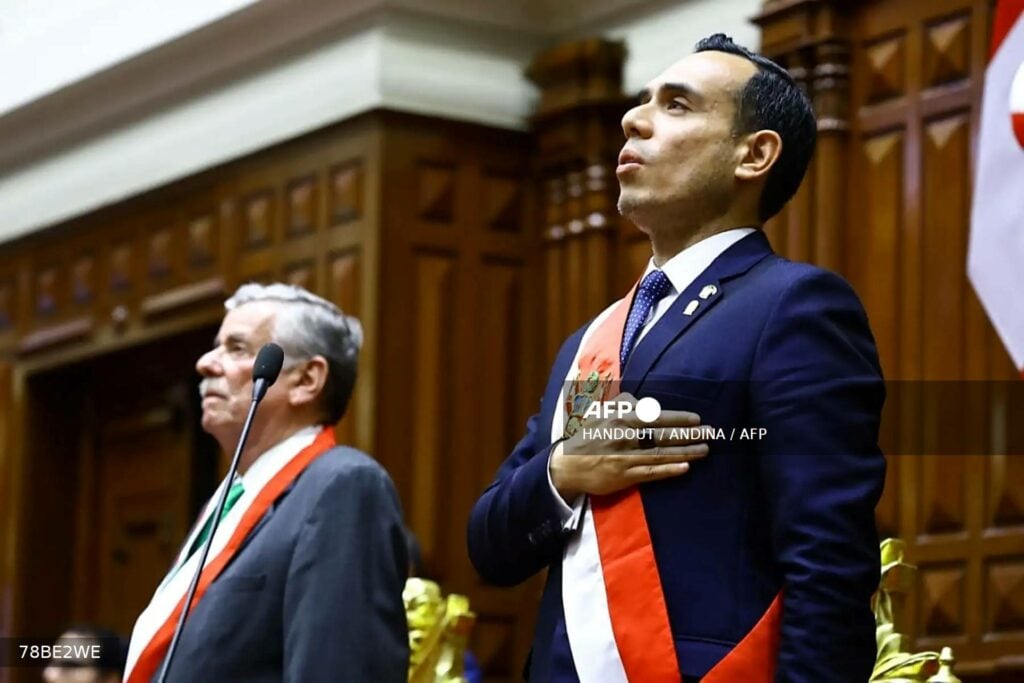
Lawmakers in Peru voted Friday to remove President Dina Boluarte, whose term has been marked by protests and accusations of failing to stem crime.


Boluarte refused to appear before Congress for an overnight hearing, after a majority of lawmakers, including some once loyal to her, voted to initiate impeachment proceedings.


They summoned Boluarte to appear before Congress at 11:30 pm (0430 GMT Friday), but she skipped the proceedings, which ended with 118 lawmakers voting for her impeachment.


“The president’s impeachment has been approved,” announced Congress leader Jose Jeri, who could take over as interim president until elections in April 2026.

Protests have marked Boluarte’s presidency, along with various scandals, investigations and a surge in gang violence.


She had already faced down multiple attempts to remove her from office.


The latest effort cited her “permanent moral incapacity” to carry out her duties since assuming office in December 2022.

Peru has had six presidents in about nine years.


Boluarte, who took office after her predecessor, Pedro Castillo, was impeached over a crackdown on protests that killed at least 50 people, had seen her approval rating plummet.


She is the subject of multiple probes, including one for her alleged failure to declare gifts of luxury jewels and watches, a scandal dubbed “Rolexgate.”


She also gave herself a large pay increase in July.


Anti-government protests have mounted in recent weeks after the government passed a law on September 5 requiring young people to contribute to private pension funds, despite job insecurity and an unofficial employment rate of more than 70 per cent.


Protests have also escalated over the past six months in the wake of a wave of extortion and murders by organised crime groups.


AFP

FRC, SEC push ethical governance at SCGN’s 20th anniversary


The Financial Reporting Council of Nigeria, the Securities and Exchange Commission, and other stakeholders have called for ethical governance at board levels as the nation faces multiple disruptions.


The call was made at the 20th anniversary corporate governance conference of the Society for Corporate Governance Nigeria on Thursday, themed ‘Strengthening Ethical Governance in a Disrupted World: Reflection on Governance’s Journey for a Sustainable Future.’


The SCGN conference marked two decades of promoting integrity, transparency, and responsible leadership. It provided a platform for regulators, board leaders, and governance professionals to explore practical strategies for building resilient, ethical, and future-ready institutions.


The Executive Secretary and Chief Executive Officer of the FRC, represented by the Coordinating Director, Directorates of Corporate Governance and Inspections & Monitoring, Titus Osawe, highlighted several emerging challenges threatening ethical governance in Nigeria.


He identified issues such as knowledge gaps, greenwashing, data manipulation, digital disruption, artificial intelligence, and digital assets. He stressed that organisations must demonstrate their commitment to ethics and integrity through strong ethical leadership and sound governance.


“Strengthening ethical governance is a collective responsibility. I call on all stakeholders, organisations, institutions, and individuals to prioritise ethics and integrity.


We must drive ethical governance intentionally by working together to build a more sustainable future for our country,” he said.


“We at the FRC are committed to promoting ethical governance. We will continue to set standards, provide guidance, monitor and enforce compliance, and where breaches occur, impose applicable sanctions. Together, we can create a culture of transparency, accountability, and integrity that benefits us all. We remain steadfast and resolute in strengthening ethical governance.”


In his remarks, the Director-General of the SEC, Dr. Emomotimi Agama, represented by the Head of the Lagos Zonal Office, John Briggs, underscored the urgency of addressing governance and sustainability challenges.


“The world is grappling with the interconnected challenges of climate change, social inequality, technological disruption, and evolving investor expectations,” he said.


“In this era of profound transformation, the principles of sound governance and transparent sustainability reporting have transcended mere compliance. They are now fundamental pillars of long-term value creation, competitive resilience, and sustainable national development. For emerging economies like Nigeria, this imperative carries particular weight. We face the dual challenge of stimulating economic growth and attracting investment while ensuring that such growth is inclusive, equitable, and responsible. Corporate governance provides the essential framework for meeting these challenges.”


Commending the SCGN for its role in promoting governance standards, Agama said, “Through its unwavering commitment to advocacy, capacity building, and research, the Society has consistently advanced awareness and best practices. Its focus on reviewing and highlighting governance and sustainability trends has provided an invaluable benchmark for boards, regulators, investors, and the public alike.

“This work has enriched national discourse, encouraged high standards, and prepared Nigerian businesses to engage confidently on the international stage. Therefore, this 20th anniversary is more than a milestone; it is a testament to the indispensable role institutions play in shaping a nation’s corporate character.”


He also called for the incorporation of good governance and sustainability principles into the “very DNA of institutions,” adding that transparency, accountability, and inclusiveness must not be treated as optional add-ons but as “fundamental, non-negotiable components” of doing business in Nigeria.

The keynote speaker, Dr Omobola Johnson, Board Chair of Guinness Nigeria Plc, emphasised that diversity on boards is key to achieving ethical governance.


“In a world without a rule book, no single demographic has a monopoly on the knowledge and expertise required for effective governance,” she said. “Diverse boards with different lived experiences bring richness and depth to discussions and decision-making. They also foster integrity and ethics by ensuring that boards are not monolithic but truly representative, essential for making ethically sound decisions that consider a broad range of stakeholders.”


She added, “Integrity and ethical governance go hand in hand. They are not merely top-down mandates but shared values that boards must champion. This requires a long-term view of enterprise success defined by broader metrics such as resilience, trust, and strategic clarity, all vital for navigating uncertainty in a constantly changing world.”


In his opening speech, the President of SCGN, Muhammed Ahmad, acknowledged the disruptive nature of today’s operating environment and the resulting need for stronger ethical grounding.


“In an environment that is highly challenging and disruptive, where AI is constantly reshaping our world, we must ask: what is the role of ethics? How can we ensure that ethical behaviour remains part of our DNA?” he asked.


“Ethics is not just about compliance or ticking boxes. It’s about living, acting, and relating with others based on the highest ethical standards. Governance, therefore, is about guiding our organisations to make the right choices, not taking shortcuts. The easy path is not always the right one. We must remain transparent, fair, and accountable to all stakeholders.”


One of SCGN’s founding directors, Professor Pat Utomi, brought a philosophical perspective to the discussions. Referencing economic historian Carlo Cipolla’s Five Laws of Human Stupidity, Utomi observed that “sometimes emotion overtakes reason,” and called for the development of conscience “so that we can always speak truth to power and help those who might otherwise be carried away.”


The conference also featured a panel discussion with prominent speakers, including the Chairman, Presidential Committee on Fiscal Policy and Tax Reforms, Mr. Taiwo Oyedele; CEO, LeadRight Consultant (South Africa), Ms. Kim Anderson; Director, NCGC, Mrs Yeside Kazeem; and Chairperson, Coronation Life Assurance Limited, Mrs Suzanne Iroche. The session was moderated by the Group Managing Director, Zedcrest Group, Mr. Adedayo Amzat.


Three new publications were launched at the event: Corporate Governance and Sustainability Reporting in Nigeria, Governance in Motion: 20 Years of Corporate Governance Influence and Impact, and the 28th edition of the Journal of Corporate Governance.

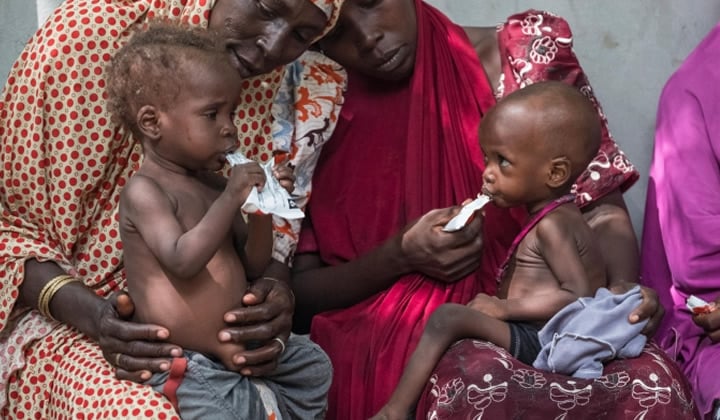
MSF highlights mental health crisis in malnourished children


As Nigeria joins the rest of the world to mark World Mental Health Day, international medical organisation, Doctors Without Borders/Médecins Sans Frontières has drawn attention to the hidden mental health impact of child malnutrition across northern Nigeria, calling for an integrated approach that treats both body and mind.


According to MSF, the burden of malnutrition in the region has reached alarming levels. In 2024 alone, over 300,000 malnourished children were treated in the organisation’s facilities across Zamfara, Kano, Katsina, Kebbi, Bauchi, Borno, and Sokoto states — a 25 per cent increase from the previous year.


Beyond the visible physical toll, MSF says malnutrition leaves deep psychological scars on children and their caregivers.


“Malnutrition doesn’t just affect the child physically,” explained Kauna Hope Bako, MSF’s Mental Health Supervisor in Bauchi.

“It has psychological, emotional, and behavioural implications”, he added.


Bako noted that malnourished children often become irritable, withdrawn, or unresponsive, struggling to meet developmental milestones such as walking and talking.


“The child feels detached, sad that he cannot play like others. He’s in pain—not just from hunger, but from the infections that come with it,” she added.


The link between malnutrition and mental health, according to MSF, is two-way. Emotional neglect, stress, or abuse can contribute to malnutrition, while poor nutrition can, in turn, worsen psychological distress. “They’re two sides of the same coin,” Bako said.


To tackle this, MSF has introduced mental health support in its 12 inpatient and over 30 outpatient feeding centres across northern Nigeria. Each centre features a playroom where daily mental health sessions are held for children and their caregivers. These include psycho-stimulation therapy, stress management training, support groups, recreational sessions, and individual counselling.


Recognising that caregivers also bear a heavy emotional burden, Bako said:

“If the mother is not able to manage her own stress, it may unconsciously spill over to the child. That’s why we also care for caregivers.”

MSF has also begun training all its medical staff—doctors, nurses, and support workers—in psychological first aid and effective communication.


“Communication is sometimes treatment,” Bako observed. “When the mother feels listened to, and the child feels safe, healing has already begun.”


Between January and June 2025, MSF admitted 32,940 severely malnourished children to inpatient centres and 136,255 to outpatient centres in northern Nigeria. During the same period, its teams conducted 30,880 mental health sessions.


In Bauchi alone, over 113,000 children and caregivers have received psychological support since 2024.

Bako said the integrated approach has shown encouraging results, including faster recovery and stronger emotional resilience among families.


She said, “It’s not just about treating the disease.


“It’s about restoring hope, dignity, and the bond that helps families heal.”


As MSF marks World Mental Health Day 2025, the organisation reaffirmed its commitment to providing holistic care to vulnerable families in crisis-affected regions.


“Every child deserves not just to survive, but to thrive—body and mind,” MSF stated.

Exit mobile version