The Kano State Fire Service has confirmed the death of two children who drowned on Thursday while swimming in a stream at Hayin Yawa Gada in the Tudun Wada Local Government Area of the state.
Similarly, the agency also confirmed the death of a man whose body was discovered in a well at Jaba Masaka Shago Tara.
The Public Relations Officer of the agency, Saminu Abdullahi, disclosed the incidents in a statement made available to our correspondent on Saturday.
“On Thursday, 09th October 2025, the Emergency Response Unit of the Tudun Wada Fire Service received a call for emergency assistance from CG Hisba reporting an incident at Hayin Yawa Gada in Tudun Wada LGA at about 14:00 hrs.
“Our men from Tudun Wada attended the scene of incident and on arrival they found two children, by names Habu Sani and Haruna Isah, all about 15 years old, who had entered into a stream passing through a major road that crossed the main road bridge,” it read.
According to Abdullahi, the children drowned “in the water way with the intention of local swimming.
“Our men successfully rescued them unconscious and later confirmed dead and men handed over the victims to Inspector Usaini Iliya of Tudun Wada police division.”
He further explained that another tragedy occurred the following morning.
He said, “The second incident occurred on Thursday, 10th October 2025, at about 08:15 am, when the central control room received an emergency call from P & G Kwalli police division reporting the discovery of a human body in a well at Jaba Masaka Shago Tara.
“Our men from the state headquarters were mobilised to the scene of the incident, on arrival they successfully removed the victim from the well. The victim was handed over to the Ward Head of the area, Ado Idris.”
Abdullahi appealed to parents and communities to be vigilant.
He, therefore, appealed to parents and the community to prevent children from going near puddles and any place where water collects.
In a similar tragedy, a 17-year-old boy, Lurwanu Suleiman, in July, drowned in open water in Dandalama village, located in Dawakin Tofa Local Government Area of Kano State.
Nigeria’s education system is crippled by a crisis of value, where teachers are underpaid, underappreciated, and overworked, says human resources and change management expert Yomi Fawehinmi.
Speaking in an interview with ARISE News on Saturday, Fawehinmi said that while Nigeria has begun to observe World Teachers’ Day, the deeper issues affecting teachers and the education sector remain unresolved.
“We went from a country that wasn’t celebrating World Teachers’ Day to this. Some states have used the opportunity to make a difference. Some give gifts, some give grants, which is good and very helpful, but as a profession all over the world, the teaching profession is one of the things that suffers the most.”
According to him, poor remuneration and entrenched social and gender biases have weakened the profession and diminished its appeal.
“Somebody in education earns about 25% less than his colleagues with the same degree elsewhere, even in America,” he said.
“Professions where there are more females tend to be paid less and tend to be overlooked. Compare it anywhere, nurses versus doctors, air hostesses versus pilots, the gender reflects the pay,” he added.
Fawehinmi argued that societies that value progress prioritise the quality of their teachers.
“In South Korea or Finland, the most brilliant students go into teaching. When you don’t get into the teacher’s college, then you go and become a doctor or lawyer. The most brilliant are teaching their children,” he said.
He contrasted this with Nigeria’s approach, where teaching often attracts the least performing students, a practice that undermines education from its foundation.
“We had a minister that said the lowest cut-off mark for university admission was for teacher training. It’s a strange system where the weakest students train your children,” he observed.
Fawehinmi said the impact of this misplaced priority is visible in the poor comprehension and reasoning skills of many young Nigerians.
“Go to social media and read people’s comments. You will know that English language wasn’t well taught. One of the biggest problems we have today is the problem of comprehension,” he said.
He also criticised the growing obsession with expensive private schools, noting that high tuition fees do not translate to better learning outcomes.
“If I pay ₦15 million for my child’s education and you pay ₦1 million, do you see ₦15 million reasoning in my child?” he asked. “These schools are just expensive; it’s not an efficient system.”
Fawehinmi further questioned the logic behind costly sports levies in private schools that yield no meaningful results.
“Why is it that you have schools where they tell you to pay hundreds of thousands for sports levy, and none of those schools has produced anyone that has represented Nigeria in any major sport in the last 15 years?” he asked.
He stressed that true education should be measured by learning outcomes, not infrastructure or prestige, urging parents to align schooling with their children’s individual talents and goals.
“The point is for us as parents to understand the choices we are making about schooling for our children and know the implications. There is no school that can do everything because every child has unique talents and needs,” he said.
Fawehinmi urged policymakers to redefine education beyond classroom learning and recognise that cultural values shape national development.
“We must redefine that word education. One of the biggest problems with our commissioners and ministers for education is they feel education is schooling. Education happens in school and outside of school,” he said.
He concluded with a call for a cultural reawakening in how Nigerians value learning and teachers.
“Education is not just about schooling; it’s about the total shaping of human thought and value. Until we treat teachers and education with dignity, Nigeria will continue to produce citizens who can read but cannot reason,” Fawehinmi said.
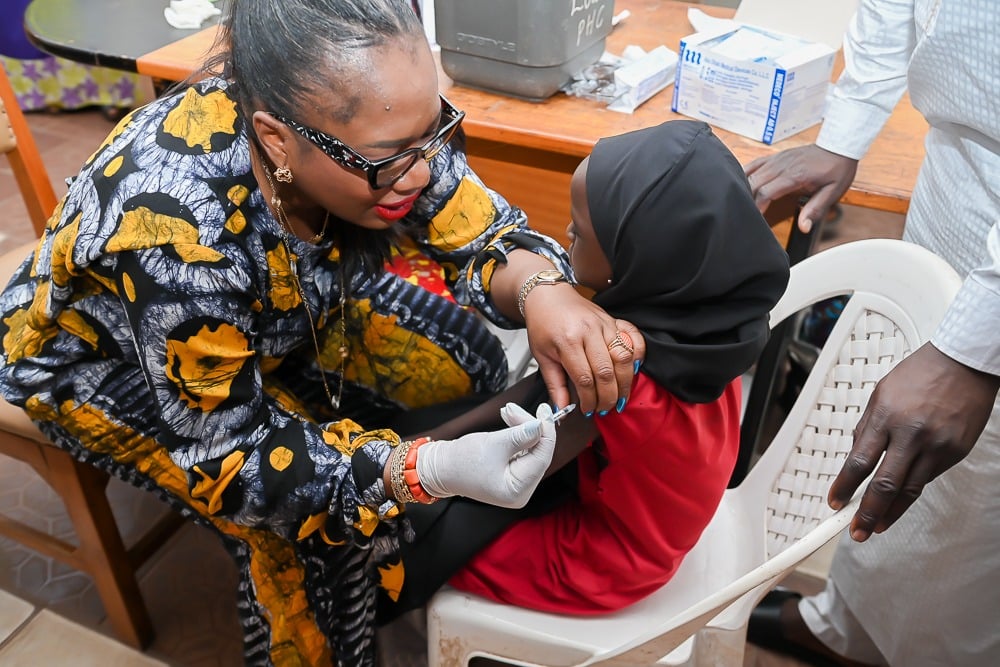
The National Primary Health Care Development Agency, in collaboration with state governments and development partners, has intensified efforts to vaccinate 106 million Nigerian children against vaccine-preventable diseases.
The nationwide initiative aims to raise awareness for the ongoing Integrated Measles-Rubella, Polio, and Human Papillomavirus vaccination campaign, which will run from October 2025 to February 2026.
This large-scale vaccination exercise reflects the agency’s commitment to ensuring that no child is left unprotected while strengthening partnerships between national and state health authorities to achieve improved health outcomes for children across the country.
On October 6, the First Lady, Senator Oluremi Tinubu, who flagged off the Measles–Rubella campaign, described the exercise as a bold step toward protecting the lives and future of children.
Speaking during a road walk and health show in Abuja, the Director of Disease Control and Immunisation at NPHCDA, Dr Garuba Rufai, described the exercise as part of a broad awareness campaign currently taking place across 11 states and the Federal Capital Territory.
“This is part of our awareness campaign for the measles-rubella integrated campaign that is currently ongoing in 11 states and the FCT.
“As we speak, in those 11 states and the FCT, children aged zero to 14 years are being vaccinated with the measles-rubella vaccine and the polio vaccine. The HPV vaccine is for girls aged nine to 14 years, alongside the routine immunisation vaccines,” Dr Rufai explained.
He added that the campaign is being implemented in collaboration with other health programmes, including malaria and Neglected Tropical Diseases (NTDs).
“We are also collaborating with the malaria programme, and we are providing what we call seasonal malaria prophylaxis in a couple of the states. We’re also working with the NTDs programme to manage some of the diseases in states where they are prevalent,” he noted.
According to Dr Rufai, several strategies have been deployed nationwide to ensure that the campaign reaches every eligible child.
“We have all of our social mobilisation efforts, including the use of public announcement vans. We have engaged with communities and different groups — teachers, parents, physicians, ministries such as education, religious bodies, and traditional leaders,” he said.
He disclosed that similar road walks are being replicated across participating states, supported by state governments, the wives of governors, and local government chairpersons.
Rufai revealed that while the first phase of the campaign covers 11 states and the FCT, the next phase will commence soon.
“We intend to vaccinate 106 million Nigerians by the end of February. We’re starting with 11 states and the FCT now. By October 18, we’ll move to the next stream of states, which will complete the first phase for this year. By January next year, we’ll continue with phase two, and also in February,” he explained.
He urged parents and caregivers to take advantage of the ongoing exercise.
“Nigerians should come out en masse and get their children vaccinated — not just for this campaign, but also by taking their children to health facilities for routine vaccines. The diseases are not waiting; they do not know any political party, religion, or tribe.
“When a child catches one of these diseases and develops complications, something as seemingly simple as measles can make a child go blind. Why would anyone wait for that to happen? Why would any woman allow herself to give birth to a child only to lose them before they reach their full potential?” he added.
The World Health Organisation (WHO) FCT Coordinator, Dr Kumshida Balami, emphasised that vaccines are both safe and effective, stressing the need to eliminate diseases that should no longer claim lives in the 21st century.
“We cannot be in this century and still have children coming down with measles or polio. We cannot still have women dying from cervical cancer simply caused by the human papillomavirus — a disease that can be prevented through vaccination,” she said.
She further urged parents and caregivers to ensure that all eligible children receive the necessary vaccines, noting that the goal is to safeguard lives and build trust in the nation’s health system.
Similarly, the Executive Director of the NPHCDA, Dr Muyi Aina, together with the Mandate Secretary of the Health Services and Environment Secretariat of the Federal Capital Territory Administration, Dr Adedolapo Fasawe, on Friday led a joint monitoring team to assess the progress of the ongoing vaccination campaign.
The monitoring team visited Primary Health Care Centres within and outside the FCT, including the Chikora North PHC in Kogi Local Government Area, Kogi State, and the New Township PHC in Abaji Area Council, Abuja.
A press statement released on Saturday and signed by Mrs Bola Ajao, Special Adviser to Dr Fasawe, noted that the team also visited surrounding communities, sensitising mothers and caregivers on the importance of immunisation and advising them to ensure their children are vaccinated and properly finger-marked as evidence of vaccination.
Dr Aina commended the dedication of frontline health workers and encouraged them to maintain accuracy and honesty in data reporting, stressing that verified data — whether targets are achieved or not — are crucial for effective planning and sustainable health sector improvement.
He explained that the monitoring visits were designed to evaluate coverage levels and workforce commitment, particularly in hard-to-reach areas, and to ensure credible, on-the-spot assessments of field operations.
Aina further assured health providers that the Federal Government is aware of their challenges and is taking steps to address them under the Renewed Hope Health Reform Agenda of the present administration, aimed at delivering equitable and efficient healthcare services across the nation.
“At the New Township PHC, Abaji, Dr Fasawe personally administered vaccines to infants and sensitised mothers on the importance of routine immunisation to prevent child-killer diseases and avoidable deaths. She urged parents to spread the message within their communities, noting that unvaccinated children remain at high risk of contracting measles (rubeola) and rubella (German measles) — viral infections that can lead to blindness, brain damage, hearing loss, congenital defects, and even death.
“Both health leaders commended the turnout and coverage recorded by the vaccination teams so far, urging them to remain proactive and adhere strictly to safety standards. During the visit, the delegation also attended to a 13-year-old patient at the Kogi PHC and recommended follow-up care to ensure effective service delivery,” the statement highlighted.
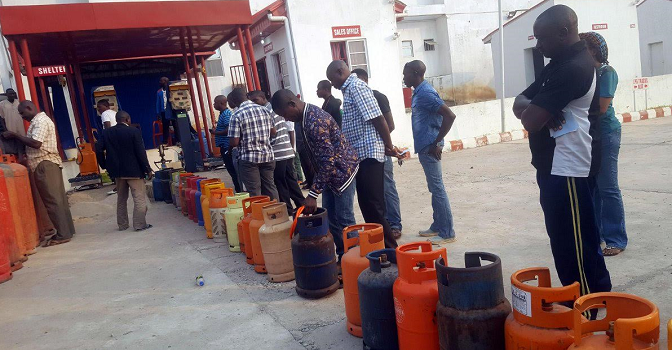
The Liquefied Petroleum Gas Retailers Association of Nigeria has said retailers should not be blamed for the current hike and scarcity of Liquefied Petroleum Gas, also known as cooking gas.
Mr Ayobami Olarinoye, Chairman of LPGAR under the Nigeria Union of Petroleum and Natural Gas Workers, said this in a statement released on Saturday in Lagos.
He said the rising cost and limited availability of LPG stem from supply challenges, not price manipulation by retailers.
“The recent scarcity and spike in LPG prices have brought untold hardship to millions of Nigerian households and businesses. We understand this pain and feel compelled to clarify the role of retailers in this crisis,” Olarinoye said.
The chairman was reacting to comments by the President of the Nigerian Association of Liquefied Petroleum Gas Marketers, who reportedly blamed retailers for the price surge.
Describing the allegation as “unfair and misleading,” Olarinoye explained that retailers neither operate at the depot level nor act as importers or primary off-takers.
“Our operations are limited to buying gas from plant owners and selling to end-users. Many of us travel to neighbouring states to purchase LPG at high costs due to supply shortages, which naturally affects retail prices,” he said.
According to him, although Dangote Refinery has not increased its gas price, supply irregularities have created a demand-supply imbalance that continues to drive up prices.
“Some retailers have had to shut their outlets for days or weeks because they couldn’t access supply, resulting in huge business losses and operational strain,” he said.
Olarinoye stressed that the price hike is driven purely by market forces.
“If plant owners increase prices, we have no choice but to adjust ours. We cannot be expected to sell at a loss,” he said.
He noted that while Dangote Refinery is a major market player, it currently lacks the capacity to meet Nigeria’s total LPG demand, which has risen from less than one million metric tonnes to over 2.3 million metric tonnes annually.
He said off-takers, who should complement Dangote’s supply by importing or sourcing from the Nigeria Liquefied Natural Gas (NLNG), have slowed operations due to uncompetitive pricing.
“Dangote sells a 20-metric-tonne truckload of LPG at about N15.8 to N16 million, while off-takers offer the same quantity at N18.5 to N18.6 million.
Naturally, buyers opt for the cheaper option, reducing importation and worsening scarcity,” he said.
He added that the recent PENGASSAN strike only aggravated an already fragile supply chain.
“Even after the strike was called off, supply has not stabilised. Some plant owners have paid for gas from Dangote but are yet to load due to long queues and limited availability,” he explained.
Olarinoye urged the government to bridge the price gap between Dangote and off-takers to ensure consistent supply and market stability.
“We don’t know the exact landing costs from NLNG, but if off-takers were making enough profit, they would price competitively. As it stands, they’re reluctant to restock,” he said.
He stressed that the ongoing crisis is rooted in systemic supply issues, not retailer manipulation, and called for collaboration among stakeholders.
“Blaming retailers will not solve anything. We urge the government and industry players to work together to boost domestic production, encourage competitive pricing, and stabilise supply nationwide,” he said.
Olarinoye assured customers that the union remains committed to restoring normalcy.
“We share the public’s frustration and are working toward solutions. Until then, supply and demand will continue to drive market prices,” he noted.
The recent spike in the price of cooking gas across Nigeria has been traced to temporary supply disruptions and rising distribution costs, according to the Nigerian Association of Liquefied Petroleum Gas Marketers.
PUNCH Online reports that the marketers said the scarcity and price hike were not due to hoarding or deliberate manipulation by retailers but stemmed from logistical challenges affecting product supply to depots nationwide. https://punchng.com/why-cooking-gas-prices-are-rising-marketers/
In several parts of the country, a kilogram of cooking gas now sells for between ₦1,800 and ₦2,000, compared to about ₦1,200 earlier in the year. The situation has deepened economic hardship for many households, forcing some Nigerians to revert to alternative cooking methods such as charcoal and firewood. https://punchng.com/when-cooking-becomes-luxury-gas-scarcity-deepens-hardship-as-citizens-return-to-charcoal-firewood
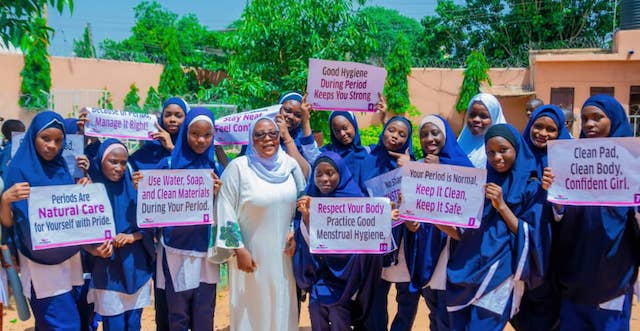
As the world marks the International Day of the Girl Child, a non-governmental organisation, the Gender Educators Initiative (GEI), has called on the Federal Government to prioritise the creation of safe spaces for girls living in conflict-affected and crisis-prone communities across Nigeria.
The Executive Director of GEI, Shafa’atu Suleiman, made the call on Friday during a sensitisation programme on menstrual hygiene for female students in private schools across Sokoto State, held in commemoration of the International Day of the Girl Child on October 11, 2025
Suleiman expressed concern that insecurity, displacement, and poverty have continued to expose young girls — particularly in northern Nigeria — to violence, abuse, and early marriage.
“Thousands of girls across northern Nigeria are growing up amid crises — from insurgency to banditry and forced displacement. “Many have lost access to education, healthcare, and the basic sense of safety every child deserves. It is therefore imperative that government, development partners, and community leaders act urgently to protect and empower them,” she said.
She explained that establishing safe spaces within internally displaced persons (IDP) camps and vulnerable communities would provide psychosocial support, ensure continuity of education, and offer mentorship for affected girls.
“When girls are safe, educated, and empowered, entire communities benefit. Investing in girls is investing in peace and progress,” Suleiman added.
The GEI boss also urged the Ministries of Women Affairs, Education, and Humanitarian Affairs to collaborate with civil society organisations to design gender-sensitive interventions tailored to the needs of girls in crisis zones.
As part of activities marking the day, GEI organised a menstrual hygiene awareness campaign to educate young girls on how to manage their health during their menstrual periods.
Speaking at Sahaba Academy in Sokoto, the school’s Principal, Mrs Ana, commended GEI for its efforts, while the Proprietor, Ahmed S. Fada, called on the government to give more attention to girls’ education and provide adequate facilities for their comfort and health in schools.
Also speaking, GEI’s Programme Officer, Linda Idoko, encouraged girls to take pride in their womanhood and prioritise their health.
“Being a woman is an amazing thing. Our organisation uses this opportunity to educate the girl child on the importance of menstrual hygiene and how to choose safe products to stay healthy and protected,” she said.
This year’s International Day of the Girl Child, themed “The Girl That I Am, The Change I Lead,” underscores the importance of empowering girls to lead change within their communities.
Reaffirming GEI’s commitment to advancing gender equality, Suleiman stressed that no girl should be left behind due to where she was born or the crises surrounding her.
The Nigerian Education Loan Fund has approved a final reopening for a period of hours to enable tertiary institutions yet to complete their student verification exercise to do so.
This is contained in a statement made available to newsmen in Abuja on Friday by Director, Strategic Communications of the Fund, Oseyemi Oluwatuyi.
Oluwatuyi said the portal would be accessible from 12:00 a.m. on Sunday, Oct. 12, to 12:00 a.m. on Tuesday, Oct. 14.
The extension, she said was intended to ensure that all eligible students were duly captured and verified by their respective institutions as part of the ongoing 2024/2025 NELFUND loan application process.
“Institutions are strongly advised to make full use of this final opportunity.
“Failure to complete the verification process within the stipulated period will result in the affected institutions forfeiting participation in the current loan cycle.
“A situation that will regrettably disadvantage their students who are the ultimate beneficiaries of the loan scheme,” she said.
She added that in the interest of transparency and accountability, the list of defaulting institutions would be published.
Oluwatuyi reiterated the Fund’s commitment to fostering equitable access to higher education through the efficient, transparent, and inclusive management of the scheme.
A paediatrician, Ayobola Adebowale, known as Your Baby Doctor, has explained that some newborn girls may experience light bleeding shortly after birth, a condition medically known as pseudo menstruation or neonatal menstruation.
Adebowale in a video obtained by our correspondent on Saturday said the condition occurs due to hormonal changes after delivery and is usually harmless.
She said,”Your newborn baby can actually menstruate and this is what we call pseudo menstruation or neonatal menstruation, and it occurs because your baby inside your womb was exposed to a lot of your hormones.
“When you bring them out suddenly at time of delivery, they have what we call withdrawal bleeding, which is basically menstruation, and this happens in newborn babies and it’s essentially normal.”
Adebowale advised parents not to panic when they observe such discharge in their baby girls.
“You have no reason to be scared. You have nothing to be worried about. Just observe the discharge and after a few days it will resolve by itself.
“You really don’t have to do anything and you have no reason to be worried and that child is not a witch,” she said.
She, however, added that if the bleeding persists, parents should consult a doctor for a proper check-up.
According to medical research, some newborn girls experience what’s called “neonatal menstruation” or “pseudomenstruation.”
It usually occurs within the first week after birth and is caused by a sudden drop in the mother’s oestrogen levels after delivery.
While the baby is still in the womb, she is exposed to high levels of maternal hormones.
After birth, those hormones quickly fall, and the baby’s uterus may respond by shedding a small amount of blood or mucus, just like a mini period.
Doctors advise parents to seek medical attention if the bleeding is heavy, lasts more than a few days, or occurs after the first week of life, as it could signal an infection or another medical issue.
Nigeria’s hopes of reaching the 2026 FIFA World Cup remain alive after a narrow 2-1 victory over Lesotho on Friday, but the Super Eagles face a challenging path to qualification.
Nigeria sit third in Group C with 14 points despite their win. South Africa are second with 15 points after drawing with Zimbabwe, while Benin Republic lead the group with 17 points.
The race for automatic qualification now goes down to the last group matches.
To keep their 2026 World Cup dream alive, Nigeria must beat Benin Republic by at least two goals when they meet in their final group game on 14 October. This is because Benin Republic leads on goal difference with five goals, while Nigeria and South Africa are both on three goals.
A strong win is essential, as goal difference could decide the group winner.
The Super Eagles will also need some help. South Africa must either lose or draw against Rwanda in their last match. If South Africa wins, Nigeria’s chances of qualifying automatically would be very slim.
Only the group winners secure direct qualification to the World Cup, while the four best runners-up go to the play-offs. This means every goal and point is now crucial.
The Super Eagles moved a step closer to 2026 FIFA World Cup qualification after edging Lesotho 2-1 on Friday in a match that could prove decisive for Nigeria’s campaign.
Troost Ekong gave Nigeria the perfect start in the 55th minute by converting a penalty following a handball in the Lesotho box, sending the home fans into jubilation.
Akor Adams later doubled the advantage with a clinical finish in the 80th minute, seemingly putting Nigeria in control. Lesotho responded in the 83rd minute with a goal from Kalake, but the Eagles held firm to secure the crucial three points.
However, Benin Republic scored in their own match, meaning Nigeria remain behind on points and goal difference in Group C. With only one game remaining in the group, the Eagles’ fate is not entirely in their hands.
With Nigeria on 14 points and Benin now leading the group with 17 points, the Eagles still have several pathways to automatic qualification:
The first pathway is to win the final match against Benin Republic. A victory is essential for the team to stay in contention.
The second pathway is for the Super Eagles to hope for a slip-up. Benin Republic and South Africa must drop points in their last fixtures.
The third pathway is to improve the goal difference. Nigeria trail Benin and South Africa, so scoring more goals and keeping a clean sheet could be decisive if teams finish level on points.
A final-day showdown could also be crucial. A strong performance in the last round could see Nigeria overtake the leaders, Benin Republic and secure the top spot.
For Lesotho, the defeat is a harsh blow, effectively ending their hopes of qualifying from the group. With nine points from five matches, they now need an almost impossible combination of results to stay in contention.
An Oyo State High Court 5 sitting in Ibadan, again, on Friday, extended ruling on applications filed by the United Bank for Africa Plc and other defendants in the suit instituted by the Attorney General of Osun State and one other person as claimants, till next Tuesday.
The applications before the court include one filed by UBA seeking an adjournment sine die (indefinitely) and another challenging the court’s jurisdiction, filed by counsel to the sacked All Progressive Congress Local Government Chairmen by the Senior Advocate of Nigeria, Kazeem Gbadamosi.
Some other parties, including the sacked APC Chairmen and the PDP, also filed applications seeking to be joined in the suit.
PUNCH Online reports that Court 5, presided over by Justice Ladiran Akintola, had, on Thursday, fixed Friday for the hearing of the case.
The UBA, while seeking the case to be adjourned indefinitely, said the local government funds in contention were still in its safe custody and untouched by any party.
Presiding Judge, Akintola, said the ruling date was set after due consultations with all parties to allow sufficient time for a well-considered ruling on the various applications.
He, therefore, extended order of Interim Injunction against UBA Plc till Tuesday, October 14, maintaining a no-debit restriction on 30 bank accounts into which withheld Osun State Local Government allocations were paid by the Central Bank of Nigeria.
During Friday’s proceedings, counsel to UBA, Mutalib Ojo, SAN, reminded the court of his earlier application that the matter be adjourned sine die pending the judgment of the Supreme Court on a related case.
Ojo explained that the substantive dispute had already been heard by the Supreme Court, which has reserved judgment, saying any ruling by the lower court might conflict with the apex court’s eventual decision.
“If this High Court proceeds to hear the suit, there is a 50-50 chance that whatever decision it makes may conflict with the outcome of the Supreme Court. The issue here concerns the hierarchy of courts. Proceeding further may amount to a waste of judicial time since the Supreme Court’s decision will ultimately prevail.”
He, therefore, advised the court to adjourn the matter indefinitely, assuring that the funds in question were still in the safe custody of UBA and untouched by any party.
However, counsel to the sacked APC chairmen, Gbadamosi, SAN, opposed the application, urging the court not to grant it until the issue of jurisdiction had been addressed. He described the bank’s application as “an anomaly” that should not be entertained.
“From the defendants’ originating summons, it is clear that there is a pending suit before the Supreme Court upon which this current case and its reliefs are predicated. This present suit was filed subsequently after the Supreme Court case was instituted. That in itself constitutes an abuse of court process which this court must not condone.”
In his response, counsel to the plaintiffs, Musibau Adetunmbi, SAN, countered the submission, explaining that his clients approached the court only after discovering that Federal agencies, including the CBN and the Accountant General of the Federation, had transferred the disputed funds to UBA despite the pending case at the Supreme Court.
“If the money had not been moved from the CBN, we would not have come before this court. The Supreme Court does not have original jurisdiction over UBA, but this High Court does, hence our action.”
Akintola, who retired briefly to his chambers after hearing extensive arguments and counterarguments from all counsels, then adjourned the case for ruling till Tuesday, October 14, 2025.
On October 7, a seven-member panel of the Supreme Court of Nigeria had reserved judgment in a suit seeking to urge the Attorney General of the Federation to release Osun State’s withheld local government funds, which he had already allegedly directed to be paid to the disputed local government chairmen elected on the platform of the All Progressives Congress.
The panel, which was presided over by Justice Uwani Aba’aji, reserved judgment after hearing arguments from Osun State’s Attorney General, represented by Musbau Adetumbi (SAN), and the Attorney General of the Federation’s counsel, Chief Akin Olujimi (SAN), in the suit numbered SC/CV/773/2025.
Justice Uwani Aba’aji said, “Date for judgment in the suit will be communicated to parties.”




















![[ICYMI] WCQ: Super Eagles revive World Cup hopes with 2-1 win over Lesotho](https://www.societygazetteng.com/wp-content/uploads/2025/10/SUPER-EAGLES-1024x585-1.jpg)