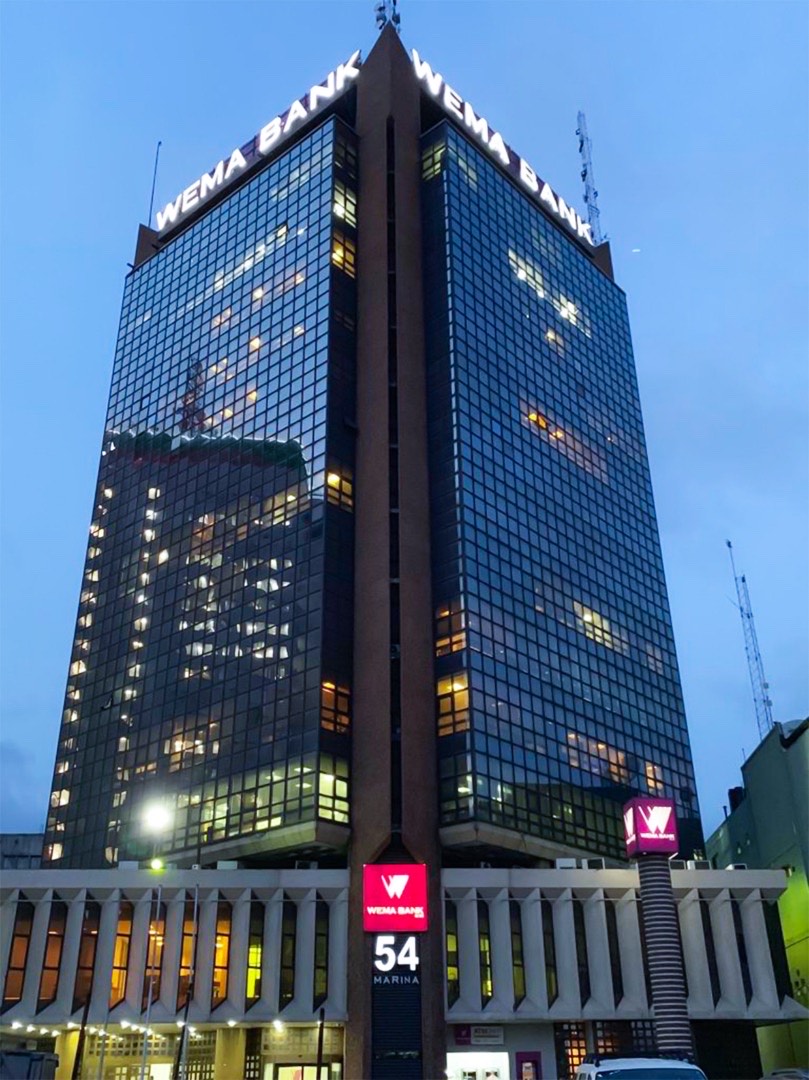

Ecobank Group has recorded a revenue of over N630 billion for the year ended December 31, 2020. This represents a 7% growth when compared to N586.9 posted in the corresponding period of 2019. In its unaudited report submitted to the Nigeria Stock Exchange (NSE) on Friday, the pan-African bank stated that value of its total assets now stands at N10.2 trillion after a 19% rise.
The bank also recorded superlative performance in other key financial indices despite the harsh operating environment. Summary of the report showed that Deposits from customers went up 23% to N7.3 trillion; Total equity up 17% to N805.1 billion; while Loans and advances to customers grew by 9% to N3.7 trillion.
However, despite the bank’s good showing in deposits from customers and revenue, profits was impacted by the provisioning for goodwill for the acquisition of Oceanic Bank in 2011. Consequently, the bank ended with profit after tax of N35.9 billion, while profit before tax and goodwill impairment closed at N126.4 billion. The Ecobank Group had stated that it is optimistic that with clean book aftermath of the full provisioning for Oceanic Bank, it will improve on its profitability in 2021 and other years ahead.
First Bank of Nigeria Limited is supporting schools with an array of educational based products and solutions targeted at enabling the acquisition of various facilities to boost the continuous expansion and improvement of the educational sector. Parents are not left out, as the Bank has bespoke products which empowers parents and guardians to meet the educational needs of their children.
The Bank’s educational products and solutions include the FirstEdu Loan, Operational Vehicle Loan, Term Loans for constructing new sites and extension of existing sites, Personal Loan Against Salary (PLAS) and FirstAdvance which enhances Parents/Guardians’ capacity to pay their wards’ school fees.
The FirstEdu loan offers short-term finance to private pre-primary, primary and secondary schools/ registered A level educational institutions with steady flow of income. The product offers opportunity for private schools to access flexible funding to meet urgent cash flow needs, replace old furniture and equipment or assets, purchase of fairly-used school buses, as well as refurbishing dilapidated buildings and classroom blocks. This product helps school owners/proprietors in bridging the “no-income” gap between school terms, and to enhance diverse assets acquisition. It allows schools access up to N20 million with no tangible collateral required apart from the domiciliation of school fees with the Bank. Schools with CAC registration that are yet to get Ministry of Education approval can access up to N2million without collateral for up to 90days. In a bid to cushion the effect of covid-19 pandemic, the Bank is in partnership with Lagos State Employment Trust Fund (LSETF) to finance low-cost private schools at a single digit interest rate where schools can access up to N5million.
The Bank is also in partnership with the apex association of private school owners in Nigeria, National Association of Proprietors of Private Schools (NAPPS) to finance member schools at a highly competitive rate. This reduces the cost of borrowing to the customer and eliminates the challenges posed by the provision of additional demanding collaterals.
The Operational Vehicle Loan is targeted at registered businesses. It allows the entrepreneur to acquire brand new vehicles for the day to day operation of the business. Organisations can take advantage of this facility to purchase school buses in the case of school proprietors and even upscale their staff welfare schemes through provision of staff buses. The product terms and conditions is competitive.
Personal Loan against Salary (PLAS) offers customers in paid employment access to cash to meet immediate financial needs such as payment of school fees, medical treatment, holiday expenses, etc. PLAS has a flexible repayment plan spread up to 48 months for our customers’ convenience. There is no equity contribution or collateral requirement.
FirstAdvance is a 30days tenured digital loan also available to salary customers who are in need of assistance to meet immediate financial needs. It empowers customers to access upto 50% of their net monthly salary in less than a minute at any desired time by dialing *894*11# or through our FirstMobile App. Only a salary account domiciled with FirstBank will qualify you for PLAS and FirstAdvance.
Beyond these, FirstBank is at the forefront of promoting virtual learning, whilst exposing not just school children but individuals of all ages to various e-learning initiatives, designed to promote innovation and skills development on emerging technologies through focus areas such as Artificial Intelligence, Coding, Cloud, Internet of Things, Blockchain, Data Science and Analytics, and Cybersecurity.
In achieving this, the Bank has collaborated with Lagos State government, IBM and Curious Learning to ensure the e-learning initiative swiftly moves across the country to school children and individuals with the need to promote the pursuit of knowledge, irrespective of age.
Speaking on the Bank’s support for schools, Mr. Chuma Ezirim, FirstBank’s Group Executive, e-Business & Retail Products, said “at FirstBank, we recognize the indelible roles the educational sector plays in promoting national economic development and we are delighted to support schools with collateral free educational solutions to meet various needs and projects to advance to the next level.”
“As schools proceed with the new term, we enjoin interested schools to visit the nearest branch or the Bank’s website for more information and encourage everyone to access our e-learning driven initiatives to keep learning and get exposed to various opportunities to stay ahead in today’s technologically advanced world.”
Fitch Ratings has assigned Ecobank Nigeria Limited (ENG) a Long-Term Issuer Default Rating (IDR) of ‘B-‘ with a Stable Outlook, Viability Rating (VR) of ‘b-‘ and National Long-Term Rating of ‘BBB (nga)’. The report, released Thursday, noted that Ecobank Nigeria IDRs are driven by its standalone creditworthiness, as expressed by its Viability Rating (VR).
The VR reflects the constraint of Nigeria’s challenging operating environment and modest core capital buffers amongst others. This is balanced by company profile strengths as well as a solid funding profile and good foreign-currency liquidity, which is enhanced by prudent liquidity management by the Ecobank group.
According to Fitch, “the Stable Outlook on ENG’s Long-Term IDR reflects our view that the bank has sufficient headroom at its current rating to absorb moderate shocks from sustained downside risks to the operating environment, the heightened level of risk in doing banking business in Nigeria and the ensuing risks to its financial performance (particularly asset quality) over the next 12-18 months. The Stable Outlook also reflects our expectations that capitalisation will remain resilient over this period with the bank maintaining adequate buffers over the minimum regulatory requirements”.
Fitch Rating reported that the VR benefits from ENG’s company profile strengths of being part of the leading pan-African Ecobank group. ENG is a 100% owned subsidiary of Ecobank Transnational Incorporated (ETI; B-/Stable). ETI is a regional bank holding company with fully-fledged banking subsidiaries in 33 African countries (collectively the group). The group also has a banking license in France and representative offices in Addis Ababa, Johannesburg, Beijing, London, and Dubai. The group’s operations are highly integrated, with all entities connected to a common operating platform and risk management framework, and common branding.
ENG is a material subsidiary for ETI, and its largest single entity, contributing to 23% of group assets at end-9M20. ETI continues to implement a turnaround strategy at Ecobank Nigeria, having deleveraged and de-risked the bank in recent years, although it returned to growth in 2020 and plans above-sector-average loan growth in the medium term. Fitch noted that ENG’s management quality is a relative strength, with ETI appointing experienced bankers to Ecobank Nigeria’s senior team.
“ENG has a solid funding profile, with low-cost current and savings accounts reaching 58% of total deposits at end-9M20 helping the bank to reduce its cost of funding. It has achieved good deposit growth through the expansion of digital channels and its financial inclusion initiatives. Retail and SME deposits to account for 58% of total customer deposits at end-9M20, which results in reasonable deposit concentration, with the top 20 customer deposits representing 29% of the total”. The report stated.
Fitch Ratings also views ENG’s liquidity management as prudent with contingency plans in place. Local-currency liquidity is underpinned by a high share of liquid assets (cash, interbank placements and sovereign securities) representing more than 50% of total assets at end-9M20. ENG’s foreign-currency funding benefits from sizeable interbank deposits, which represented about 15% of total funding at end-9M20. More than half of these deposits (about USD400 million) came from ETI’s affiliates at end-9M20. This reflects the group’s well-established inter-affiliate short-term deposit placement programme (IAP), amounting to USD650 million at end-1H20, which provides ENG with a significant competitive advantage compared with most other Nigerian banks, as ENG is able to rely on IAP funding when foreign-currency liquidity conditions temporarily tighten in Nigeria.
Our dear father, uncle, brother, friend and proactive media Comrade, the very brilliant veteran media guru, ace Broadcaster and a resourceful media trainer to the core, Chief Kingsley Uranta of Channels Television, I say a very big congratulations to you today on the occasion of your auspicious birthday anniversary.
No doubt, you’re such a committed, respected and loyal person who gives no room for fear or intimidation in the industry. I know you as a goal getter who stands by whatever cause you believes.
I appreciate your sense of humor and your journalistic sagacity is worth of emulation. I wish you long life and prosperity. I pray you and yours will never experience evils. May all your heartfelt desires be honored. Amen!
JCI Advisor for Africa and Middle East, JCI Senator Jide Adeyemi; Chairperson, Conference Organising Committee, JCIN Amb. Oluwatoyin Atanda; Former President, Federal Republic of Nigeria, Chief Olusegun Obasanjo; National President, JCI Nigeria, JCIN Amb. Abiola Olorunnisola and Chairman, Africa and Middle East Development Council, JCI Senator Rasheed Adeniyi at the Africa and The Middle East National Presidents meeting held on Saturday.
Former President of Nigeria, Olusegun Obasanjo has expressed delight, saying Junior Chamber International has reinstated his hope for a greater continent of Africa.
Obasanjo made this known at the Africa and The Middle East National Presidents virtual meeting held on Saturday.
The former President pointed that with the quality of young people in the organisation, he is more hopeful about the development of the continent of Africa through their impacting programs.
He however, urged the participants at the meeting to embrace change, saying it is the only thing that is permanent in the life of human beings and institutions, adding that nobody should be afraid of change.
According to Obasanjo, education and understanding the world we live in are major ways to foster positive changes around the world as people need to realize for that change is imminent.
“You must prepare yourself educationally for the world that is changing. Your education must be far and wide enough to prepare you for the changing world. I am not talking about classroom education alone, I am talking about education you get in all facets of life”, he pointed.
He added that people don’t appreciate the community they live in, let alone the nation and region they live.
“We must mentally and psychologically prepare for the world we live in. When we talk about change, some change will be gradual; some will come like Tsunami or storm. Whether it is political, technology, social or other sort of changes, we must be very prepared for it”, he said.
Obasanjo commended the determination of JCI’s members in their effort to make the world a better place to live, urging them not to forget their coming together which is stronger than their individual capacity.
The former president also called the presidents at the meeting to further identify problems at their different nations and find ways to solve them.
“African and Middle East are faced with the problem of insecurity; your responsibility as youths and members of JCI is to ensure peace in those regions of the world. There are a lot that we can do to bring out some of these solutions in your regions”
On the issue of the pandemic, he said there must be ways to do something in every corner of the world, Tough time does not last forever, tough people overcome tough time”, he urged.
“From my experience with JCI over the years, I believe that the members all around the world have a lot to offer to everybody in all over the world.” he said.
In his words, the National President of JCI Nigeria, Abiola Olorunnisola appreciated the former president for his fatherly wisdom and the advice he has offered to the national presidents of the organisations in different countries of Africa and the Middle East.
Olorunnisola promised that all the advice given by the former president will be adhered to and will help the organisation in making future plans in driving development changes in both Africa and the Middle East.
Nigeria has dropped to 149 on Transparency International’s 2020 Corruption Perception Index, the worst ranking received by Africa’s largest country in recent time. Nigeria also scored 25 out of a possible 100 points.
In the last TI rating in 2019, Nigeria was ranked 146th out of the 180 countries surveyed, scoring 26 points out of a possible 100. On a scale of zero to 100 in TI’s rating, zero means “Highly Corrupt,” while 100 stands for “Very Clean”.
This means that Nigeria is two steps worse off than she was in 2018 when she scored 27 points to place 144th out of 180 countries. The summation is simply that corruption in the country has worsened.
According to the latest ranking, Nigeria is now the second most corrupt country in West Africa with Guinea-Bissau the only country more corrupt than Nigeria in the sub-region.
In Africa, only 12 countries are perceived to be more corrupt than Nigeria. They are Zimbabwe, Chad, Eritrea, Burundi, Congo, Guinea Bissau, Democratic Republic of Congo, Libya, Equatorial Guinea, Sudan, Somalia and South Sudan. Both Somalia and South Sudan were ranked as the most corrupt nations on earth.
The least corrupt countries in the world are Denmark, New Zealand, Finland, Singapore, Sweden Switzerland, Norway, The Netherlands, Germany and Luxembourg.
The United Kingdom, Canada and Hong Kong were all ranked at 11 while the United States received one of its lowest ever rankings at 25.
Nigerian President, Major General Muhammadu Buhari (retd.), came into power with the promise of curbing corruption which has been plaguing Nigeria for decades.
However, Nigeria’s ranking on the corruption perception index has continued to drop in the last four years.
On Wednesday, Nobel Laureate, Prof. Wole Soyinka, said the President’s anti-corruption war had lost steam, adding that the rate of convictions was very low.
The President had in July removed the acting Chairman of the Economic and Financial Crimes Commission, Ibrahim Magu, amid allegations of corruption. Magu was the face of Buhari’s anti-graft war.
Transparency International said the interruptions caused by the COVID-19 pandemic gave room for corruption to thrive in countries with weak systems.
It said even countries like The Netherlands which are highly ranked as upright, failed to reveal details of contracts awarded to persons supplying COVID-19 equipment.
TI said former American President, Donald Trump, failed to properly oversight COVID-19 spending.
The report read, “Finally, the unique challenges wrought by the COVID-19 pandemic have tested high-scoring countries’ commitment to transparency and integrity in their own public sectors as never before.
“When the Organised Crime and Corruption Reporting Project created a database of how public money was spent on Personal Protective Equipment at the onset of the COVID-19 pandemic, in several countries they found a black box. Belgium (76/100), Denmark, the Netherlands and Norway did not publish details of contracts awarded, even withholding information on prices and the names of companies in some cases.
“In the US, the previous administration’s challenges to oversight of the unprecedented COVID-19 relief package raised serious anti-corruption concerns and marked a significant retreat from longstanding democratic norms promoting accountable government.
“Now, as we look hopefully ahead to 2021 as a year of widespread vaccinations and treatments, it is vital that there is transparency and accountability in how governments, especially in wealthy nations, acquire and distribute life-saving resources.”
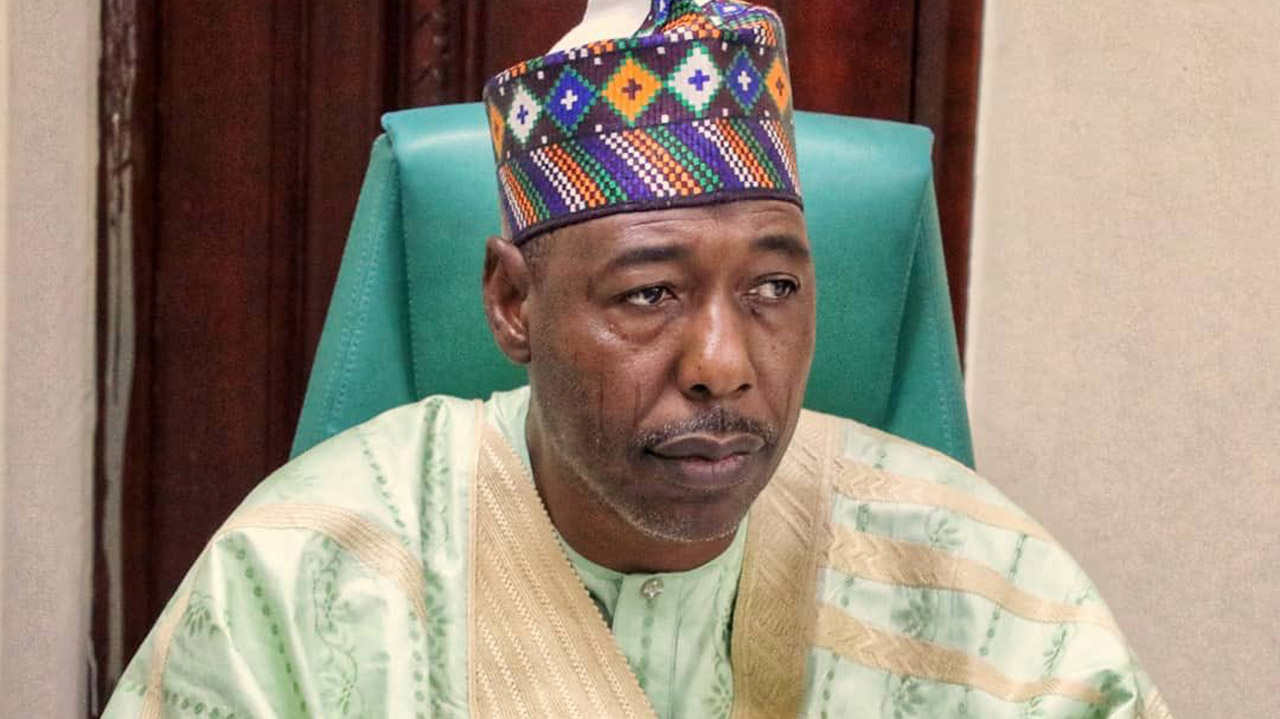
BENUE State Government on Wednesday raised the alarm of massive deployment of cows into the state.
The state Deputy Governor, Benson Abounu, who disclosed this to journalists in Makurdi said 376 cows have been impounded for flouting the state anti-open grazing law. Abounu said that state livestock guards apprehended the cows between January 23 and 26, 2021 at Kasima in the Guma Local Government Area of the state.
While stating that six herdsmen have also been arrested and handed over to police, the deputy governor expressed worry over the influx of herdsmen to the River Benue in Agatu and Gwer West axis of the state.
The deputy governor explained that the State Security Council members confirmed the massive deployment of armed herdsmen.
He said, “While we are still investigating the declaration made by Nasarawa State Governor of the presence of Boko Haram at Benue/Nasarawa border, we noticed massive deployment of herdsmen on the brink of River Benue.
“We also observed that a good number of these people are heavily armed; many of them with AK47 rifles. As if this was not enough, we have been able to apprehend a good number of them in a village called Kasima in Guma Local Government Area.
“On January 23, 156 cows belonging to these herdsmen were apprehended, and on the 26 of this month, another 220 cows were apprehended from the same vicinity.
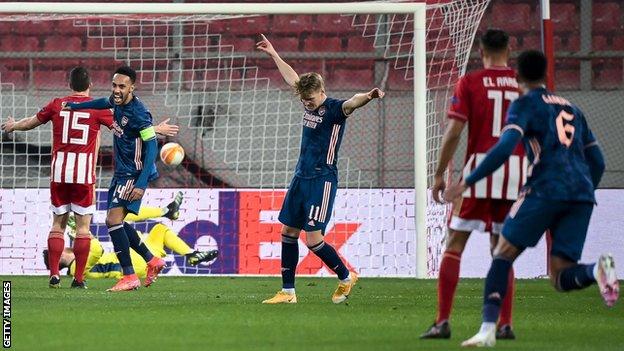
Bottom-of-the-table Sheffield United caused a stunning upset with a Premier League victory over title-chasing Manchester United at Old Trafford.
Ole Gunnar Solskjaer’s side needed three points to regain top spot from rivals Manchester City but were lacklustre for large periods of the contest as the away side picked up only their second win of the season.
The Blades took a shock first-half lead through Kean Bryan’s flicked header, which went in off the far post following John Fleck’s corner.
Anthony Martial had a goal ruled out as Harry Maguire was adjudged to have fouled Aaron Ramsdale, but the United skipper headed in the leveller just past the hour mark.
The visitors responded with 16 minutes remaining as Manchester United failed to clear and substitute Oliver Burke side-footed in via a deflection off Axel Tuanzebe for their first win over the home side since the opening day of the newly formed Premier League in 1992.
“It’s a long time to wait for a win at Old Trafford and it’s a special result, and a special performance,” said Blades boss Chris Wilder.
“I’m not saying an incredible escape is on but I want to show what we are about.”
Wilder’s side remain bottom, 10 points off safety, while Manchester United remain second.
On seven previous occasions this season, Solskjaer’s United had come from behind to win a league game and they looked on course to repeat the trick when Maguire headed in against his old club.
But recovering a deficit time and time again is unsustainable throughout a season and their luck finally ran out.
Unbeaten away from home this season, the Red Devils have dragged themselves into a surprise title challenge, with this their first defeat in 13 games since they lost at Old Trafford against Arsenal in November.
But it is their home form that is causing them the most harm – this is a fourth defeat at Old Trafford this season, following that loss to the Gunners, a hammering by Tottenham and a loss to Crystal Palace in their opening game.
And this damaging result will be a reality check for Solskjaer and his team, who were desperately poor throughout.
They failed to exert any real pressure on the Sheffield United backline and talisman Bruno Fernandes, so often the hero, has now hit a slump and gone four straight league games without a goal or an assist.
Marcus Rashford dragged an effort wide from the edge of the area early on and saw a long-range free-kick gathered by Aaron Ramsdale.
Mason Greenwood’s 25-yard drive straight was straight at the goalkeeper and Alex Telles’ shot looped on to the roof of the net but the strikes were all from long range and saves you would expect the keeper to make.
Edinson Cavani, impressive since joining on a free transfer last summer, was sent on after 66 minutes as the hosts chased a winner but ended up conceding.
With fellow title-chasers Leicester held to a 1-1 draw at Everton, United’s missed opportunity means Manchester City are in the ascendancy, a point clear at the top with a game in hand.
The Managing Director, Ecobank Nigeria, Patrick Akinwuntan has said the bank’s newly sourced N50 billion credit will be deployed to support Micro, Small and medium scale enterprises (MSMEs) and small corporates in the country. He pointed out that the bank recognizes MSMEs as the drivers of post COVID-19 economic recovery for Nigeria, stressing that additional funding support from the bank would further generate and bolster activities in the sector thereby driving the much-needed growth in the country, provide jobs and support wealth creation.
According to Mr. Akinwuntan, “The proceeds of the financing will support MSMEs in the country and is particularly useful for this segment where access to bank loans is considered as the biggest impediment to growth. As MSMEs currently account for about half of the country’s gross domestic product and circa 96 per cent of the total number of businesses, this support will definitely make a positive impact.”
He noted that “As an MSME friendly bank, we have been helping them with capacity building; providing simple and easy access to loans in various sectors including manufacturing, agriculture, creative industry, healthcare, general commerce and services. Our robust digital platforms help facilitate transaction convenience for our clients particularly during this Covid pandemic and helped with the ease of doing business. Our award winning Omnilite digital banking platform helps businesses with a wide array of payment services electronically, while our POS machines and Ecobankpay solutions are widely deployed to assist with collections.”
Adding further, the Executive Director, Commercial Banking, Mrs Carol Oyedeji affirmed that Ecobank Nigeria has been in the forefront in supporting small businesses. She stated that “The bank has entered strategic partnerships with various development institutions to support both funding and risk sharing for MSME lending across various sectors of the economy. Small business owners can therefore avail themselves of this opportunity presented to grow and further expand. ”
Ecobank was recently named among the top 3 banks for SMEs in the Customer Experience Satisfaction survey conducted by a leading audit and professional services company, KPMG Nigeria. Prior to this the bank was given the BusinessDay award for Best Agric Bank in Nigeria.
The N50bn raised was a bilateral funding and provides stable medium-term liquidity to the balance sheet of Ecobank Nigeria. It has positively improved its balance sheet ratios, especially the capital adequacy ratio and is for a tenor of 10 years
A midnight fire on Tuesday morning gutted some parts of the house of a popular Yoruba rights activist, Sunday Adeyemo, well known as Sunday Igboho, The PUNCH has learnt.
The fire reportedly started around 3am in the apartment located in the Soka area of Oyo State.
The source of the fire was unknown as of the time of filing this report but it was gathered that fire fighters from the Oyo State Fire Service arrived at the scene a few hours after to douse the fire.
No statement has been obtained from Sunday Igboho on the incident.
Igboho, who is the Akoni Oodua of Yoruba land, had asked herdsmen in Ibarapa Local Government Area of Oyo State to leave within seven days.
At the expiration of the ultimatum last week, he and his followers had stormed the Fulani settlement in the ancient town to eject Seriki Fulani, Salihu Abdukadir, and herdsmen accused of perpetrating crimes ranging from kidnappings, killings, rape to invasion of farmlands with their cattle.
Some houses and property in the settlement of the Fulanis were torched last week.