GTBank Customer Complaints to Disappearing Deposits, Deduction Issues, and the Silent MD
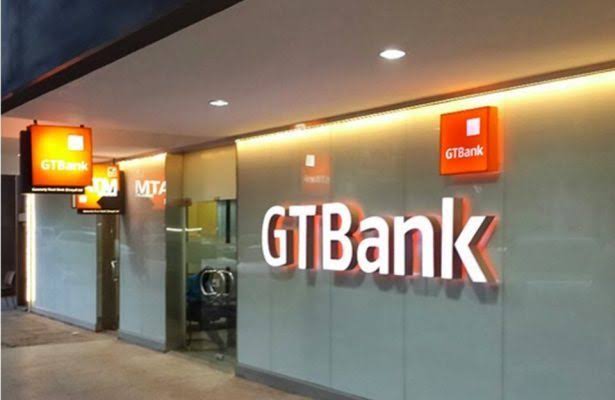
Customers of Guaranty Trust Bank (GTBank) have expressed growing frustration over unresolved issues, including disappearing deposits and unauthorized deductions. Many Nigerians are also voicing their concerns about the bank’s lack of communication, with customers facing difficulties accessing their funds and receiving little to no response from bank representatives.
GTBank’s Silence and Customer Service Challenges
Since Mariam Olusanya assumed the role of Managing Director (MD) in 2021, GTBank has maintained a notably quiet stance when it comes to addressing customer complaints. In fact, Olusanya has not made any public appearances or issued any official statements during her tenure. This lack of communication has left many customers feeling neglected and confused.
Industry experts have suggested that Olusanya’s silence could be attributed to the overbearing presence of Segun Agbaje, the Group CEO, who continues to dominate public events and media coverage, often overshadowing the MD. Despite Olusanya being regarded as highly capable, rumors indicate that Agbaje’s leadership style may be pushing her out of the spotlight.
GTBank’s Corporate Communication Breakdown
The silence from the bank’s leadership has extended to its customer service department, with many customers complaining about poor service and lack of transparency. Reports from GTBank account holders describe a snobbish attitude from the bank’s staff, who have failed to resolve critical issues such as missing funds and frivolous account deductions.
In addition, GTBank has been accused of misleading customers about the status of their system upgrade, assuring clients that the process was nearing completion, while many customers still report their savings being trapped weeks after the supposed improvements began.
Public Outrage and Calls for Regulatory Intervention
The absence of a clear statement from Mariam Olusanya and the overall communication failure from GTBank has led to widespread public outcry. Customers have taken to social media and online forums to share their experiences, calling on the Central Bank of Nigeria (CBN) and the Federal Competition and Consumer Protection Commission (FCCPC) to investigate the bank’s handling of customer funds and complaints.
With no sign of action from the bank’s leadership, customers are urging regulatory bodies to intervene and ensure consumer protection and accountability in the banking sector.
Conclusion: GTBank’s Growing Reputation for Customer Service Issues
In summary, GTBank is facing mounting dissatisfaction from customers due to poor customer service, disappearing deposits, and questionable deductions. The bank’s leadership, particularly Mariam Olusanya, has remained silent, which has only added to the frustration. As the situation worsens, many Nigerians are calling for stronger oversight from the CBN and the FCCPC to protect consumers and restore trust in the financial institution
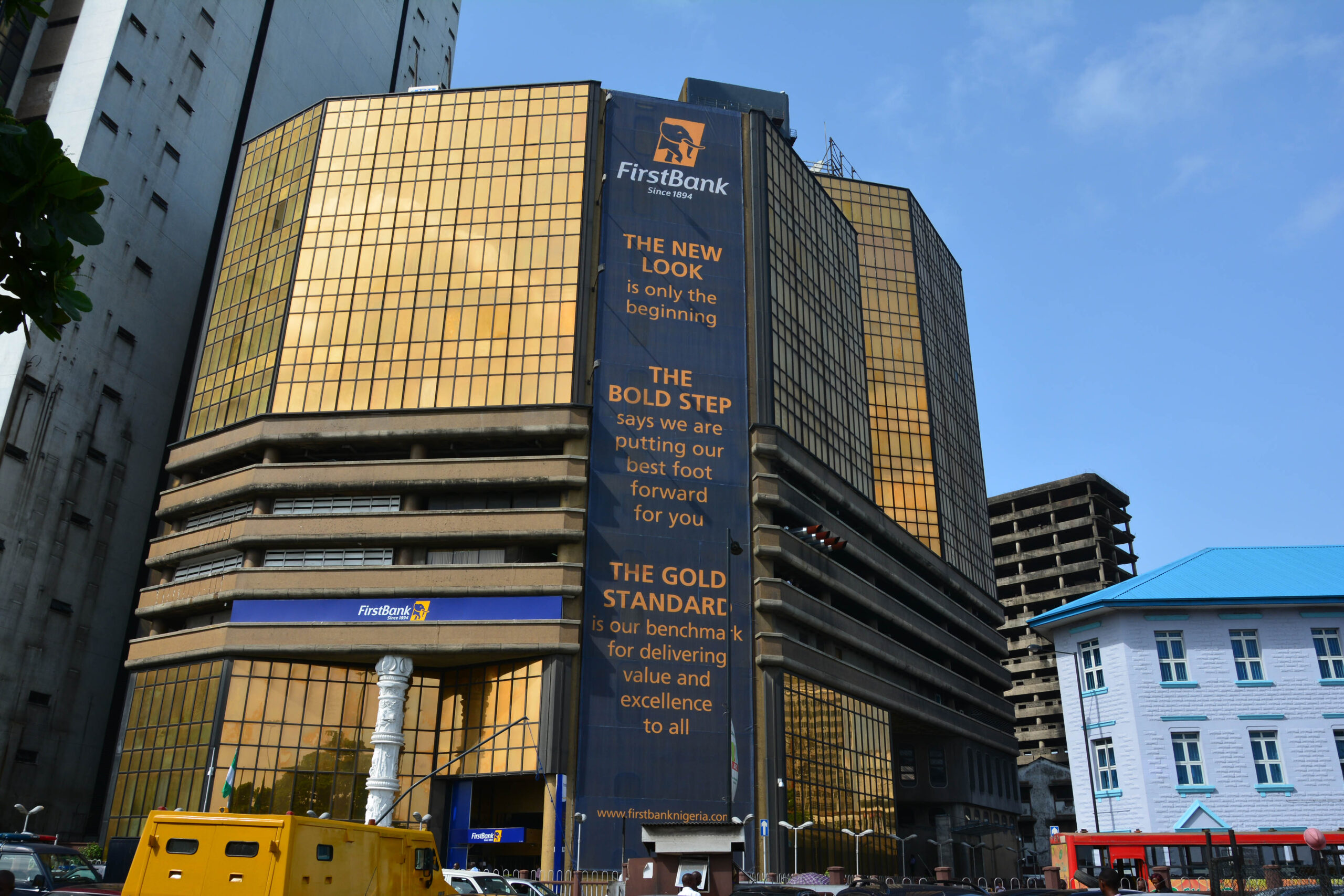
First Bank Recapitalization: How Boardroom Conflicts and Declining Customer Trust may Affect
First Bank of Nigeria Limited and its parent company, FBN Holdings, are facing scrutiny as Nigerians question why the bank is yet to announce the much-anticipated recapitalization plan. This comes at a time when other banks are actively engaging investors in a dynamic stock market.
Historically, First Bank has been a cornerstone of the Nigerian banking sector, known for producing several Central Bank Governors and maintaining strong liquidity. However, recent developments suggest that the bank’s leadership may be struggling to uphold its prestigious reputation.
Boardroom Conflicts and Management Issues
Since 2021, First Bank has grappled with significant boardroom conflicts that have polarized the organization. The dismissal of then-Managing Director Dr. Adesola Adeduntan by the bank’s board, in conjunction with FBN Holdings, was overturned by the Central Bank of Nigeria (CBN), which deemed the board’s actions illegal. This reinstatement led to a restructuring of both boards, highlighting the ongoing power struggles within the institution.
The conflict escalated with billionaire Femi Otedola acquiring a 13.16% stake in First Bank, positioning himself as the largest shareholder. This power struggle delayed the Financial Group’s Annual General Meeting (AGM), as shareholders aligned with ousted chairman Oba Otudeko sought legal intervention. Although the court dismissed their case, the AGM is now set for November 12, where a proposed N350 billion capital raise will be discussed.
Eroding Customer Trust Amid Fraud Allegations
Customer trust in First Bank is at an all-time low due to several fraud allegations. Notably, former employee Adesuwa Ezenwa accused Oba Otudeko of facilitating approximately N12 billion in unsecured loans to companies he had significant stakes in, misrepresented as loans to Stallion Group of Companies. Ezenwa, dismissed in 2016 and currently contesting her termination in court, claims she was unfairly blamed for approving these loans while senior executives were not penalized. She is seeking damages for her dismissal and alleges complicity among high-ranking officials, with losses amounting to over N15 billion.
In a shocking turn of events, reports emerged of a massive internal fraud scheme involving around $29 million. This led to the termination of approximately 100 employees who failed to detect or report the crime. The mastermind, branch manager Tijani Muiz Adeyinka, exploited weaknesses in the bank’s oversight mechanisms over two years, raising serious concerns about First Bank’s internal controls.
Looking Ahead
As First Bank navigates these turbulent waters, it is crucial for the institution to address these internal issues and restore customer confidence. The upcoming AGM and proposed capital raise are pivotal steps in the bank’s efforts to stabilize and revitalize its standing in the Nigerian banking sector.
For more updates on First Bank and the Nigerian banking industry, stay tuned.
Wema Bank Releases Q3 2024 Unaudited Results… Reports Profit Before Tax of ₦60.62billion, a 174% YonY Growth
Wema Bank Nigeria (“Wema” or “the Bank”)) has released its unaudited Consolidated Financial Statements for the period ended September 30th 2024, to the Nigeria Exchange Group (NGX). The Bank reported profit before tax of ₦60.62bn, representing an increase of 174% over the ₦22.13bn recorded in the corresponding period in 2023.
Wema Bank’s balance sheet remained well structured with total assets growing by 38% to
₦3,084.27 trillion in Q3 2024 from ₦2,240.06trillion in FY 2023. The bank also grew its deposit base year to date by 23% to ₦2,292.30bn from ₦1,860.57bn reported in FY 2023. Loans and Advances grew by 25% to ₦1003.28bn in Q3 2024 from ₦801.10bn in FY, 2023. NPL stood at 3.19% as at Q3 2024.
The bank recorded an improved 3rd quarter performance as Gross Earnings grew by 91% to
₦288.32bn (Q3 2023: ₦150.90bn)). Interest Income was up 81% y/y to ₦229.11bn (Q3 2023:
₦126.67bn). Non-Interest Income up 144% y/y to ₦59.21bn (Q3 2023: ₦24.23bn).
Return on Equity (ROAE) of 38.62%, Pre-Tax Return on Assets (ROAA) of 2.64%, Capital Adequacy Ratio (CAR) of 14.06% and Cost to Income ratio of 60.47%, speak to the resilience of the brand.
The Managing Director/Chief Executive Officer of the bank, Mr. Moruf Oseni said, ‘our Q3 2024 numbers speaks to our resilience despite a tough operating environment. We will sustain our growth trajectory into 2025. The performance is headlined by impressive improvements in Profit before Tax which grew strongly by 174%. The growth of Gross Earnings by 91.07%, Total Assets by 38% and earnings per share at 328.1kobo shows the core improvements to our balance sheet. In addition, our cost to income ratio at 60.48% has witnessed significant improvement from the previous period.
Wema Bank Launches Export Trade Academy to Empower Nigerian SMEs in International Markets
In a bold step towards empowering Nigeria’s small and medium enterprises (SMEs), Wema Bank has launched the Wema Export Trade Academy, a groundbreaking initiative designed to enhance the global trade capabilities of local businesses. This forward-thinking program demonstrates Wema Bank’s commitment to empowering Nigerian businesses and supporting their international growth potential.
Navigating the complex landscape of export trade involves overcoming regulatory, financial, and logistical hurdles, which can often hinder small businesses from establishing a foothold, the Wema Export Trade Academy is designed as a solution to these challenges faced by Nigerian SMEs when entering international markets. The Academy specifically structured to address each critical aspect of global trade, providing SMEs with targeted guidance on compliance, documentation, financial planning, and risk management.
Participants in the Wema Export Trade Academy will benefit from sessions led by industry experts as well as mentorship opportunities with seasoned professionals. The academy goes beyond conventional training by offering real-world insights into international trade practices, such as export documentation best practices and navigating trade agreements, positioning Nigerian SMEs to confidently expand their presence in the global marketplace. Additionally, the program fosters a collaborative environment, encouraging participants to network with fellow Nigerian exporters, exchange ideas, and build connections with international trade facilitators. This supportive ecosystem is aimed at enhancing productivity and positioning Nigerian businesses as strong contenders on the world stage.
As a trailblazer in digital banking and business innovation, Wema Bank continues to set high standard within Nigeria’s financial landscape. The launch of the Wema Export Trade Academy marks a new chapter in the bank’s mission to support Nigerian enterprises, solidifying its role as an indispensable partner in their journey to international success.
The Wema Export Trade Academy embodies Wema Bank’s pioneering spirit and commitment to providing SMEs with practical, impactful solutions. With comprehensive training on export processes and access to strategic financial products, the program stands as a testament to Wema Bank’s role as an enabler of growth for Nigerian enterprises.
Ecobank Nigeria to Host Design and Build Expo, Featuring Premier Exhibitors
Ecobank Nigeria is set to host its inaugural Design & Build Expo, aimed at highlighting the latest trends, innovations, and sustainable practices in architecture, construction, building materials, household appliances, engineering, and interior design. This carefully curated five-day event tagged “Building Nigeria Together” will take place from November 27 to December 1, 2024, at the Ecobank Pan African Centre (EPAC) on Victoria Island, Lagos, starting daily at 10:00 am. Approximately 60 exhibitors have already signed up to present their products and innovations at this significant fair.
During the event announcement in Lagos, Omoboye Odu, Head of SMEs, Partnerships, and Collaborations at Ecobank Nigeria, emphasized that the expo is part of the bank’s broader initiative to support the country’s economic development. The expo aims to provide a platform for professionals in the design and building sectors to showcase and sell their offerings to a larger audience, while also facilitating valuable networking opportunities for entrepreneurs, consumers, and stakeholders in the economy.
The expo will focus on businesses that include real estate development, kitchen fittings, tiling and flooring, interior design, lighting, woodwork, electronics, and construction tools and equipment.
“As a Pan-African bank, this expo aligns with our mission to contribute to the economic growth of the countries we operate in. It’s a unique opportunity for industry players to showcase their products, network, and promote the adoption of sustainable practices, emphasizing renewable materials and energy-efficient technologies,” Odu stated.
Ms. Odu also highlighted that exhibitors would gain significant exposure to key decision-makers, influencers, and potential clients, allowing them to showcase their offerings and engage in interactive sessions, workshops, and live demonstrations. This will enhance their brand visibility, provide valuable market insights, and help them explore emerging industry trends. She concluded with an open invitation to stakeholders and enthusiasts in the real estate sector – asking that they join us at this novel exhibition and collectively let us combine forces in Building Nigeria Together.
In addition to the expo, Ecobank Nigeria has launched various initiatives to support SMEs and boost the economy, including the successful Adire Lagos Experience, +234 Art Fair, Ecobank National Schools Team Chess Championship, and Oja Oge 2024. The bank is also conducting its monthly MySME Growth Series, aimed at training and empowering over 1 million SME operators nationwide by the end of the year.
INTRODUCING ALAT XPLORE APP: NIGERIA’S FIRST LICENSED BANKING APP FOR TEENAGERS
In today’s world, financial literacy has become an essential life skill, particularly for the younger generation. Recognising this need, Wema Bank—Nigeria’s most innovative bank and pioneer of Africa’s first fully digital bank, ALAT—proudly introduces the ALAT XPLORE App, Nigeria’s first licensed banking app specifically designed for teenagers aged 13 to 17.
The ALAT Xplore Appempowers young individuals to take control of their finances while acquiring vital money management skills. ALAT XPLORE is not just another banking app; it is a comprehensive financial tool that seamlessly combines education, engagement, and empowerment for teenagers’ financial success. With a user-friendly interface and interactive features, the ALAT Xplore app provides teenagers with a unique opportunity to learn about banking, saving, and spending in a safe and controlled environment, as they journey towards the realities of adulthood.
The App encourages teens to explore intelligently, providing seamless navigation across its various functionalities and offering teens the chance to customise the App based on their preferences and request one of three unique debit card designs. The ALAT Xplore Cards are issued in the teenager’s name, fostering a sense of ownership, pride and independence that simultaneously instills a sense of responsibility in them as they learn to manage their spending. To request for your ALAT Xplore Debit Card, click here.
One of the standout functionalities of the ALAT XPLORE App is the goal-setting feature. Teens can set savings goals on the App—whether it’s saving for a new gadget, planning a fun outing, or even making a charitable donation. They can track their progress, seamlessly on the App, making the saving process exciting and rewarding for them.
To ensure financial security for the teenagers, the ALAT Xplore App works hand in hand with the ALAT App, allowing parents to guide their children in making informed financial decisions. Teens can easily request money from their parents or guardians in a few clicks on the App, while parents grant the requests and can track their teens’ expenses on the ALAT Xplore App, via the ALAT App. This not only promotes healthy conversations regarding budgeting and financial goals, but also ensures that teenagers can explore financial opportunities with maximum security.
Here’s how the ALAT Xplore App works:
– The Parent or guardian opens an ALAT App Account for their teenager on the ALAT app.
– The teenager downloads the ALAT Xplore App, fills in the required information and sends a link to the parent/guardian requesting permission to use the ALAT Xplore App.
– The parent/guardian grants the permission via the ALAT App.
– Once approved, the teenager can login at anytime, request an ALAT Xplore Debit Card, set up Savings Goals and explore all the unique features on the App, on their phone.
As the first licensed banking app for teenagers in Nigeria, the ALAT XPLORE App powered by Wema Bank is set to revolutionise how teenagers approach money management towards building more financially responsible adults.
The ALAT Xplore App officially launches on Saturday, October 26, 2024. However, teenagers can click here to download the ALAT Xplore App now on PlayStore or AppStore, to start exploring the innovative App.
Want to attend to virtual launch event, click here to register.
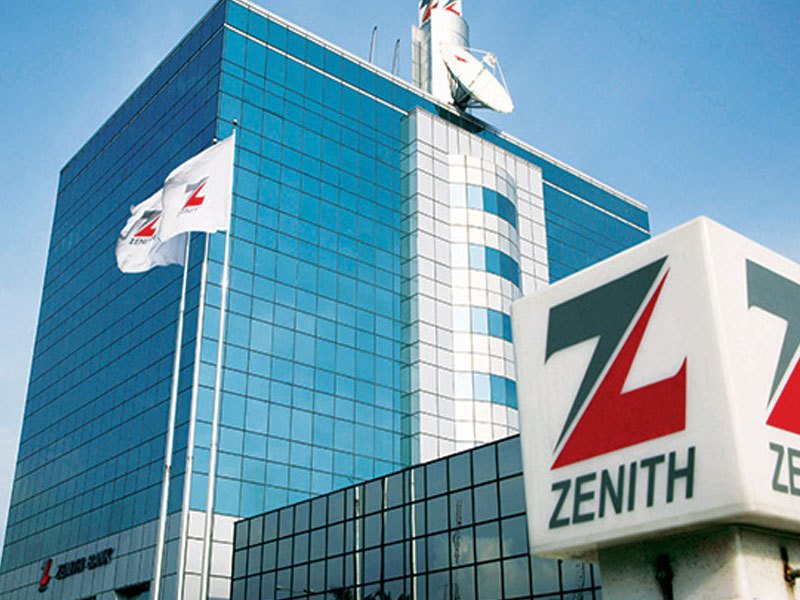
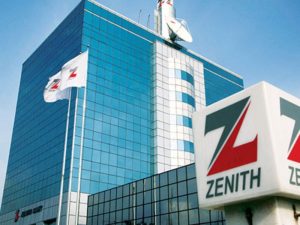
Zenith Bank Enhances Customer Online Experience with Revamped Digital Channels
Zenith Bank, one of Nigeria’s foremost financial institutions, has successfully restored full operational services across its electronic transaction channels, ensuring that customers can now enjoy seamless access to digital banking services.
This restoration follows temporary disruptions caused by a routine upgrade of the bank’s technology infrastructure, which aimed to optimize service delivery but impacted e-channel services recently.
In a post shared on Thursday through its social media platforms, the leading lender confirmed that all services across its electronic channels have been fully reinstated.
Reiterating its commitment to providing quality digital services, the bank assured customers of exceptional service with its newly enhanced technology infrastructure, designed to deliver seamless and innovative financial solutions.
The announcement stated:
“We are pleased to inform you that access to our digital channels has been restored, allowing you to perform transactions conveniently via your preferred platform.
We appreciate your patience during the IT infrastructure upgrade and sincerely apologize for any inconveniences you experienced.
Rest assured, we are dedicated to providing you with exceptional service, and the new IT infrastructure we have implemented will enable us to do so moving forward.
Thank you for choosing to bank with us.”
Important Reminder
Zenith Bank will NEVER call, SMS, or email you requesting your card details, PIN, token codes, mobile/internet banking login details, or any other account-related information.
We will also NEVER ask you to click on a link to update your bank information or activate your account. If you receive such messages, please DO NOT respond.
Segun Agbaje’s GTCO (GTBank) under Scrutiny over Huge Net Income Interest Profit Declaration, despite Pending Court Cases on Overcharging
Mark Twain, American humorist, journalist, lecturer, novelist and moralist was ascribed to have said “A banker is a fellow who lends you his umbrella when the sun is shining, but wants it back the minute it begins to rain.” This simply means one can’t expect bankers to be of help when they are really needed, this much can be used to describe how the Segun Agbaje led Guaranty Trust Holding Company Plc/ GTBank, has been working against its clients for personal profit.
There has recently been so much noise about the ₦1 Trillion plus profit declared by the financial institution. According to the report made available the Segun Agbaje led group was said to have made a large chunk of the announced growth of its income from the Net Interest Income (NII), which recorded a 176.9 per cent growth to ₦491.5 billion from ₦177.5 billion last year.
For a clearer understanding the Net Interest Income (NII), is the difference between the profit earned as interest on loans given to borrowers against the money it pays out as interest on deposits or loans to depositors and its lenders.
The most common effects of net interest income on borrowers according to findings includes; Higher Interest Rates (this is the period whereby financial institutions arbitrarily raise interest rates to enable them make money). Overcharging (this is such that the financial institution manipulate things so additional fees are imposed or charges on borrowers), Stifling Innovation and Growth and many more.
With Segun Agbaje’s GTCO announcing ₦314 billion increase on the previous year coupled with the current economic crisis facing the country, there is strong indication that the many accusations against the group as inherited from the GTBank on overcharging by several companies may be founded.
If it would be recollected, the bank before and after it metamorphous into the Holdings Company it currently is, is not new to sanctions that has to be with disregard for laid down rules, in 2018, the UK Financial Conduct Authority (FCA) stopped GTBank UK from taking on new customers, note GTBank UK is an independent subsidiary of the GTCO.
The bank was later fined £7,671,800 for serious weaknesses in its anti-money laundering (AML) systems and controls between October 2014 and July 2019, the huge fine became necessary when lesser fine of £525,000 in August 2013 for serious and systemic failings fails to deter the bank.
In a similar action of disregard to rules for profit maximization the GTBank Ghana’s Foreign Exchange Trading License was suspended earlier this year over breaches of foreign exchange market regulations which include incidents of fraudulent documentation within their foreign exchange operations for a month in accordance with the relevant law in Ghana.
The Segun Agbaje led organization’s knack for bending the rules for profit was a major reason most people are calling on CBN and other relevant agencies to investigate the announced profit especially with regards to NII as the litigation against the bank on issues that has to do with overcharging is still pending before various courts in Nigeria.
If it would be recollected, overcharging is the main bone of contention of the now more than ₦20 billion case between GTBank and Innoson Motors. Innoson had dragged the bank to court for over-charging on a loan facility it got from the Segun Agbaje led bank.
Information was that Innoson has decided to conduct a proper auditing when they started getting strange charges in their account, it was the process that revealed GTBank has over-charged it to the tune of ₦786million over the course of several years dating back to 2004, after which Innoson informed the bank.
It was when the bank denied it and insisted that Innoson is still owing them that the company was forced to seek court help where a subsequently judgement was given in May 2013, and the Segun Agbaje led bank was asked to pay the sum of ₦559,374,072.09, “with a 22 percent interest on the admitted sum to be paid from March 1, 2004 since that was the interest rate on the loan, till satisfaction of the judgment debt.
The court also added a 100% penalty as stipulated in the CBN Guidelines for excess charges by banks, which brought the total judgment cost then to ₦2.4 billion, but is likely to be more that ₦2o Billion at the moment because the bank has been finding way to stop the execution of the judgement.
Another case pending in court against the Segun Agbaje led GTCO, was made public knowledge last year when GTBank through a receivers’ manager tries to illegally (by pronouncement of a court) take over properties of Stallion Group Nigeria over a purported ₦13 billion debt, whereas the CFO of Stallion Nigeria contends that it is not owing GTB any longer and that on the contrary, it is on record that it has paid more than what was outstanding to GTB by ₦6,423,700,000.
Stallion Nigeria in its application, which was granted by the Court had explained that the preliminary KPMG forensic audit report had established that GTB overcharged Stallion, in excess, fraudulent and illegal charges of ₦4,693,625,637.49, adding that GTBank had accepted this finding by the auditors.
Stallion has been in court with GTBank since 2019 over allegations and claims with Stallion winning against GTBank at the Court of Appeal, Nigeria. The Court of Appeal presided over by the Honourable Justices Daniel-Kalio, Sirajo and Banjoko, had previously delivered Judgment in favour of Stallion Nigeria against Guaranty Trust Bank Plc on 24 February, 2022 and set aside the Ruling of Honourable Justice Saidu in favour of GTBank.
The problems that come with the Overcharging and Higher Interest Rate are some of the profit driven actions the Segun Agbaje led group, has been heaping on many of their customers that makes doing profitable business difficult. While some are locked in prolong legal battle with the bank and the group as a whole, some had been forced to throw in the towel.
One of the companies that was not so lucky because of the nature of business is Toyin Subair led HiTV, in an interview the lawyer turned businessman granted a news media in 2019, he lamented how 25% – 27% interest rate becomes a burden that killed the company in his word “At 25-27% interest on debt, most businesses cannot survive and you will be a slave to the banks for life. That is why they take collateral from you. They lend against your collateral not your business case. Regardless of our strong cashflows, the funding requirements continued to increase.” He explained
Stating further while advising prospects, “HiTV was paying an average of 1.1billion Naira approximately in interests and guarantee charges annually, for over 5 years! For a new company, we did a damn good job but really got blown out. I never live by debt and so was really ignorant about how interest works up till HiTV and of course since then you won’t catch me near it. But what do you do when you have to? They say internationally that “equity is more expensive than debt”, but that is NOT true in Nigeria. Debt is way too expensive and destructive.” He continued.
Knowing the antecedent of the Segun Agbaje led financial group well-meaning Nigerians has been calling on relevant regulatory agencies to look into the declared Net Interest Income and put in place measures to make sure the effort of the government to revamp the economy will not be frustrated by the company’s insatiable appetite for profit.
Group Investigates and Exposes GTBank Unprofessional Banking Practices
An investigation report by a civic organization has been released bordering on allegations of “unscrupulous, unethical and criminal activities” levelled against the Guaranty Trust Bank Limited (GTBank), a subsidiary of Guaranty Trust Holding Company Plc (also known as GTCO PLC).
The report was released by the Global Integrity Crusade Network (GICN) and signed by its President, Edwin Omaga on Friday.
The Guaranty Trust Bank is led by Segun Julius Agbaje who is presently the Group Chief Executive Officer since August 2021.
A statement signed noted that the Private Investigation Report (PIR) is compiled pursuant to Section 24 (d) and (e) of the 1999 Constitution of the Federal Republic of Nigeria (as amended) read together with our Objective No.2.
The statement noted that it was pertinent on the group to help ensure that corrupt practices are abolished in the country.
It was noted in the report that the Guaranty Trust Bank Limited was incorporated on 19 July, 1990 and licensed to engage in commercial banking and other allied services within Nigeria and elsewhere.
The report further stated that the Bank has Ordinary Shares of 25 Billion with 8 Active Directors but its only Shareholder and Person With Significant Control is Guaranty Trust Holding Company Plc, represented by Segun Julius Agbaje.
“In the United Kingdom, Segun Julius Agbaje started the Bank by registering same at the Companies House as Rainsouth Limited with Number 5969821 on 8 December, 2006. The said Rainsouth Limited went through various changes until it became Guaranty Trust Bank (UK) Limited on 17 March, 2008.”
The group further noted that as of the time of its report, there are over 10,000 customers exposed to grave danger without their knowledge, as accounts were allegedly opened in the Guaranty Trust Bank in their name without their consent.
“One of the corrupt practices recently linked to Guaranty Trust Bank Limited in Nigeria has to do with Unsolicited Accounts Opening. This is a situation where a customer did not approach the Bank or show any interest in maintaining an account with the Bank. Yet, the Bank goes ahead to source for the customer’s information such as telephone number, date of birth, Bank Verification Number (BVN) and other vital details to open account for the customer without his/her consent.”
“The aim of this practice is to increase the customer base of the Bank, thereby giving it high ranking in terms of size, capacity and profitability. We submit that Unsolicited Accounts Opening tantamount to breach of data privacy, identity theft and can expose the innocent account holders to lots of financial crimes. As at today, there are over 10,000 customers in the database of Guaranty Trust Bank Limited who are already exposed to grave danger without their knowledge.”
It was further noted in the report that some of the affected customers threatened to sue the Bank.
The Guaranty Trust Bank asides from this were alleged in the PIR of hurriedly putting together misleading financial statements and declaring false profits to mislead the public on its financial positions.
“We have equally uncovered that Guaranty Trust Bank Limited has been declaring profits that do not reflect its actual financial performance. For instance, GTCO PIc on 11″ September, 2024 released its Audited Consolidated and Separate Financial Statements for the period ended 30 June, 2024, to the Nigerian Exchange Group (NGX) and London Stock Exchange (LSE) wherein the whooping sum of #1.004 Trillion was declared as Profit Before Tax. This caused the Group to be reported all over media as “the first Nigerian financial institution to cross the N1trillion mark in profit.”
“It is our finding that these figures as contained in the Audited Statements are mere conjectures hurriedly put together by Segun Julius Agbaje and his team to deceive the Securities and Exchange Commission (SEC), Financial Reporting Council of Nigeria (FRCN), Central Bank of Nigeria (CBN), customers/investors and the general public into believing that all is well with GTB.”
It was further stated that the bank could not justify its stated profit of N1trillion which it released to the public, with a suspicion that the profit could have been declared through roundtripping.
“Ladies and Gentlemen, there is no gainsaying the fact that Guaranty Trust Bank Limited has become notorious over the years for engaging in deceptive accounting practices to artificially inflate profit figures. For instance, no substantial pieces of evidence presented by Segun Julius Agbaje to support the assertion that GTCO PIc made over #1 Trillion in profit as at 30 June, 2024. Even at that, it is very possible that the figures were generated through roundtripping.”
“This is a process where funds are moved in and out of the Bank through different accounts or entities to create an illusion of legitimate transactions. The combination of this process and other unethical business practices within the Bank points towards the direction of systemic corruption, fraud and money laundering, which are opened for further investigation by the relevant agencies.”
“It is feared that such ugly situation if not properly checked could have the tendency of not only undermining customers/investors’ confidence in the Bank but pose significant risks to the stability of Nigerian financial sector.”
It was also revealed in the PIR report that the Guaranty Trust bank had been punished severely for different violations at the international level.
“Surprisingly, Segun Julius Agbaje did not tell Nigerians that the corporate image of Guaranty Trust Bank Limited has been terribly battered in many foreign countries where it is carrying on business. He lied by stating in the recent Audited Statements that GTCO PIc ensures compliance with disclosure requirements under the Disclosure and Transparency Rules of the UK Financial Conduct Authority (FCA). The truth is that Guaranty Trust Bank (UK) Limited was sanctioned by the same FCA to pay a financial penalty of £525,000 for breaches of Principle 3 (Management and Control) of the Authority’s Principles for Businesses between 19 May, 2008 and 19 July 2010.”
“In another development, the FCA imposed on Guaranty Trust Bank (UK) Limited a financial penalty of £10,959,700 pursuant to Section 206 of the Financial Services and Markets Act 2000. As usual, the Bank agreed to resolve this matter at an early stage and was given a 30% discount which reduced the fine to £7,671,800. The FCA in justifying this financial penalty, which was paid with customers/investors’ funds not later than 24″ January, 2023, stated that Guaranty Trust Bank (UK) Limited again failed to put in place policies and procedures to prevent and detect money laundering. FCA considered this repeated misconduct to be a direct result of the inability of the Senior Management within the Bank, over a prolonged period of time, to formulate and implement an effective plan capable of addressing the weaknesses identified in its AML and financial crime systems and controls.”
The statement further revealed that the Guaranty Trust Bank had been suspended in Ghana for various breaches of foreign exchange operations.
“our investigation took us to the Bank of Ghana where we discovered that the Foreign Exchange Trading Licence of Guaranty Trust Bank Ghana Limited (GTB) was suspended for a period of 1 (One) month with effect from 18 March 2024.”
“ The Press Release dated 4 March 2024 indicates that the said Licence was suspended as a result of various breaches of the Foreign Exchange Market Regulations, including fraudulent documentation in foreign exchange operations. By the Press Release, the Bank of Ghana cautioned GTB to put in place effective controls to ensure strict adherence to the extant Regulations and Guidelines.”
The statement wondered why the Guaranty Trust Bank allegedly carried out many infractions in Nigeria without any due sanctions to it.
“One begins to wonder the number of infractions committed by GTB in its originating country – Nigeria without due sanctions from Regulatory Bodies and Anti-Corruption Agencies. We are certain that it is not too late for the Regulatory Bodies and Anti-Corruption Agencies to act by rescuing the soul of GTB. The time to act is now!” the statement read.
The report also recommended that the Governor, Central Bank of Nigeria (CBN) should forthwith dissolve the Board and Management of Guaranty Trust Bank Limited so as to allow thorough investigations.
They also called for the suspension of Segun Julius Agbaje as Group CEO of Guaranty Trust Holding Company Plc and retrieve from him all files or documents relating to Guaranty Trust Bank Limited to avoid interference with further inquiry into the issues raised in the PIR.
It was also stated that if found guilty of Corporate Governance, CBN acting jointly with the Economic and Financial Crimes Commission (EFCC), Nigerian Financial Intelligence Unit (NFIU), Independent Corrupt Practices and Other Related Offences Commission (ICPC), the Nigeria Police Force and Department of State Services (DSS) “should deal decisively with Segun Julius Agbaje and prosecute him like Mrs. Cecilia Ibru, who practically milked the defunct Oceanic Bank Plc dry before the Banks Consolidation era in Nigeria.”
Other recommendations made include that the Nigeria Deposit Insurance Corporation (NDIC), Securities and Exchange Commission (SEC), Nigerian Stock Exchange (NSE) as well as Financial Reporting Council of Nigeria (FRCN) “should urgently step into the affairs of Guaranty Trust Bank Limited with a view to safeguarding customers/investors’ funds and portfolios before the Bank fails completely”
It was also stated that the Senate Committee on Banking, Insurance and Other Financial Institutions, “House Committee on Banking as well as House Committee on Banking Regulations should jointly or individually convene a Public Hearing whereat Segun Julius Agbaje will be summoned to appear and defend the weighty allegations contained in our Private Investigation Report (PIR).”
The group also called on the UK National Crimes Agency (NCA), Crown Prosecution Service (CPS), Financial Conduct Authority (FCA), Financial Ombudsman Service, British Prime Minister, Governor Bank of England, US Department of Justice, US Securities and Exchange Commission, Federal Bureau of Investigation (FBI), US Federal Reserve Board (FRB), British High Commissioner to Nigeria and Governor Bank of Ghana to shut down all operations of Guaranty Trust Bank (GTB) in their territories.
“By so doing, GTB will be prevented from turning the United Kingdom, United States of America and Ghana into a safe haven for money laundering, terrorism financing and other sundry economic crimes.” the statement released noted.
“That in addition to the above, UK National Crimes Agency (NCA), Crown Prosecution Service (CPS), US Department of Justice and Federal Bureau of Investigation (FBI) are requested to commence prosecution of Segun Julius Agbaje in line with appropriate laws for all the infractions he has used GTB to commit within the territories of both United Kingdom and USA.”it further read
It was also recommended that all the properties allegedly acquired by Segun Julius Agbaje using proceeds of crime in Nigeria, United Kingdom, USA and other parts of the world be confiscated and forfeited permanently to the Federal Government of Nigeria.
Infrastructure Upgrade: Zenith Bank Apologizes for Disruptions, Assures Customers on Improved Services
Nigeria’s leading financial institution, Zenith Bank, has reassured its customers of improved services following recent infrastructure upgrades.
In a message posted on Thursday, the bank apologised for the service disruptions experienced across its e-channels during the upgrade period.
The bank clarified that the glitches were a result of routine information and technology maintenance, which is essential for optimizing service delivery.
Zenith Bank emphasized its commitment to ensuring 100% uptime, stating that it takes this responsibility “very personally” and continuously allocates resources to maintain uninterrupted service availability.
In the statement, the bank expressed its sincere apologies for any inconvenience caused to customers during the upgrade process, highlighting that the information technology enhancements are designed to improve the quality of service for its esteemed clientele.
The message reads in part:
Dear Valued Customer,
We sincerely apologise for the service disruptions you experienced recently on our banking channels. This was due to an information Technology upgrade aimed at improving the quality of service we provide.
We have made significant progress with the upgrade and you can now perform transactions conveniently with the following Zenith bank Channels:
Your Zenith Bank Debit Card
The Zenith Bank Mobile App
The Zenith bank Internet Banking Platform
Zenith Agents nationwide (Agent Banking)
You can also visit any of our branches nationwide to perform your transactions
Please direct all enquiries to Zenith Direct on +234 201 278 7000,
0700ZENITHBANK, 0904 085 7000 Or via email at Zenithdirect@zenithbank.com