The Alternative Bank Targets Women, Men, and Farmers with National Financial Inclusion, Entrepreneurship Drive

The Alternative Bank Targets Women, Men, and Farmers with National Financial Inclusion, Entrepreneurship Drive

The Alternative Bank, one of Nigeria’s leading non-interest banks, has ramped up its efforts to promote economic empowerment and financial inclusion for market traders and smallholder farmers across the country. With a focus on improving access to banking services, the Bank is providing critical financial support to some of Nigeria’s most underserved communities.

The initiative, undertaken through an agreement between Sterling Financial Holdings Company and the Association of Market Women/Men and Farmers of Nigeria (AMWMF), aims to address the challenges faced by millions of market women, men, and farmers who have long been excluded from formal banking systems. According to the Central Bank of Nigeria, approximately 26% of Nigerian adults, or about 28.8 million people, remain financially excluded, with rural communities and informal sector workers being particularly affected. is working to change this by making essential financial services accessible to these groups, particularly women.

Through this new initiative, The Alternative Bank is opening access to formal financial services for over 16 million members of the AMWMF. The collaboration is designed to provide members with access to a range of banking services, including zero-fee accounts, microloans, and SME funding, aimed at fostering business growth and financial independence.

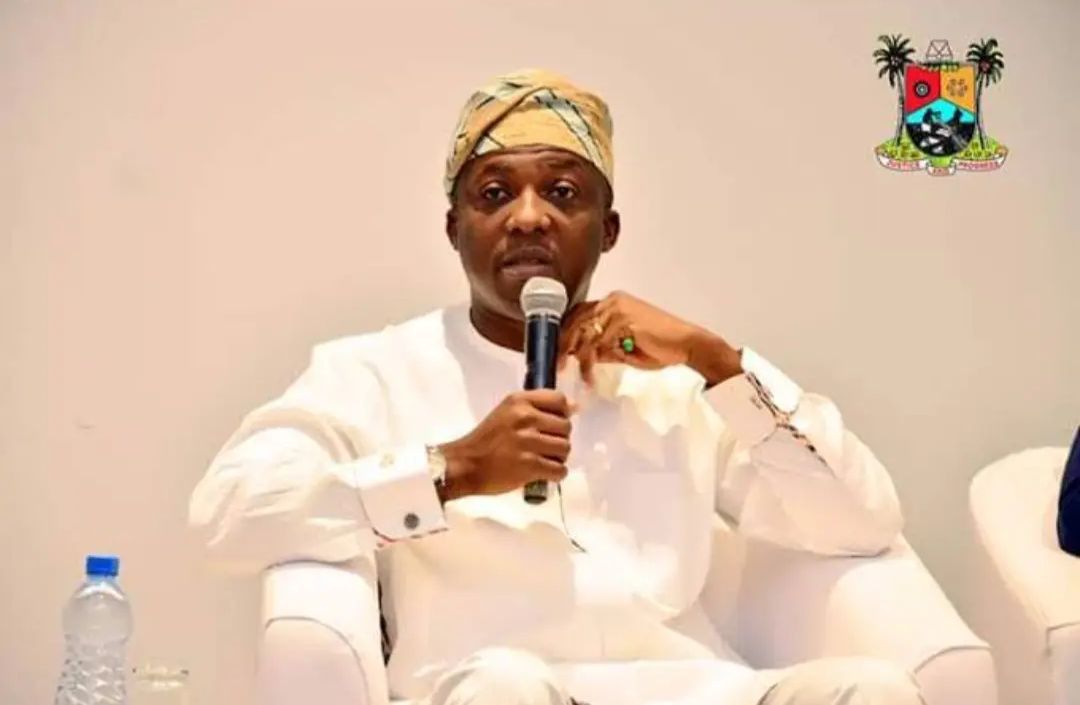
Korede Demola-Adeniyi, Executive Director at The Alternative Bank, shared her thoughts on the role of banks in supporting grassroots financial inclusion, saying, “To adequately bridge the financial inclusion gap, financial institutions must continue to devote resources towards removing the barriers that have historically hindered large segments of our population. For the unbanked and underbanked, the challenges go beyond the lack of physical infrastructure and extend to deeper issues of trust, financial illiteracy, and systemic exclusion from mainstream financial services.

“At The Alternative Bank, we are committed to breaking these barriers by offering tailored solutions and championing programs that empower people to take control of their financial futures. We believe that by simplifying access to financial services and addressing these long-standing obstacles, we can unlock the potential of millions of grassroots entrepreneurs and contribute to broader economic growth.”

Recognising education as a key factor in the country’s financial literacy gap, The Alternative Bank is offering the Association’s members access to financial literacy training and personalised business support, aimed at empowering them with the knowledge and skills to manage and grow their finances effectively. In addition, the Bank is also supporting business growth by offering no initial fees for point-of-sale (POS) terminals to vendors, making it easier for them to accept electronic payments.

The drive, which began in Oyo State, will extend to 15 other states across Nigeria’s geopolitical zones throughout the course of the year and has since received strong support from AMWMF’s leadership. Erelu Dr. Becky Olubukola, the National President of the Association, praised the collaboration as a crucial step towards realising the association’s vision of creating an environment where every member has the opportunity to thrive. She emphasised that, by working with financial institutions like The Alternative Bank, the association could vastly expand opportunities for its members and help drive local economic development.

In addition to banking services, The Alternative Bank is also exploring innovative solutions to meet the diverse and evolving needs of grassroots entrepreneurs. This includes the deployment of electric-powered tricycles for market vendors to help with the transportation of goods and the introduction of health and medical kiosks in underserved areas to improve access to basic healthcare. Furthermore, the Bank is committed to creating wealth for the Association’s members through initiatives like its waste-to-wealth program, which enables participants to convert waste materials into viable income-generating ventures.

Naira strengthens against dollar, closes week at N1,534.72


The Naira closed the week on a positive note, gaining 4.52 kobo against the U.S. dollar at the official market on Friday.


According to the latest figures from the Central Bank of Nigeria, the Naira traded at N1,534.72 per dollar.


The figure represents a modest gain of 0.05 per cent on Thursday, when it was valued at N1,534.79 to the dollar.

However, the Naira had experienced minimal losses earlier in the week, trading at N1,535.62 on Wednesday and N1,535.24 on Tuesday.


The trading week began with a minor decline of 20 kobo on Monday.


NAN

Reps to probe refineries’ TAM, crude access bottlenecks


The House of Representatives Committee on Petroleum Resources (Downstream) has resolved to carry out an investigation into the Turn Around Maintenance of the four state-owned refineries.

The Committee’s resolution is coming a few days after the House Committee on Petroleum Resources (Midstream) made a similar commitment to unravel why, despite an investment of $18bn in TAM, the refineries are not functioning optimally.

The Committee also announced plans to probe the bureaucratic bottlenecks on the path of local and modular refineries in accessing crude oil.

Speaking at a news conference on Wednesday, Chairman of the Committee, Ikenga Ugochinyere (PDP, Imo) expressed worry over the reported shutdown of the Port Harcourt and Warri refineries, a few weeks after they resumed production.

The Committee, he said, would unmask the reason for the failure of the maintenance operations given that the company which carried out the maintenance has a reputation for excellence in service delivery.

He also announced the setting up of multiple technical sub-committees to tackle critical challenges and pending investigations in the sector.

He said, “These technical sub-committees shall work towards fast-tracking the investigation of pending referrals to the committee, address crucial matters and developments that have arisen, which threaten sustainability in the downstream sector, to make the downstream sector stronger and more viable.”

The issues for investigation are the allegation of Dangote Refinery’s planned takeover of petroleum products transportation/retailing; turnaround maintenance of refineries, current state of the refineries, and suggested way out.

Others are OVH acquisition and complaints from the Nigerian National Petroleum Company Limited Retail staff, including House-ordered re-investigation; complaints of lack of feedstock by modular refineries and strategies to strengthen small/modular refining operations; review of Petroleum Industry Act to identify areas for amendment to strengthen the Nigerian Midstream and Downstream Petroleum Regulatory Authority and the incorporation of artisanal refiners into the official petroleum refining value chain, among others.

Speaking on the significance of the sub-committees, Ugochinyere said, “This initiative is aimed at addressing threats to the viability and sustainability of the downstream sector. We are committed to delivering real reforms that will ensure efficiency, fairness, and competitiveness across the board.”

The House Committee is expected to receive reports from the sub-committees in the coming weeks as part of expanded legislative efforts to reposition the nation’s oil and gas industry.

The House is considering amending the Petroleum Industry Act to address emerging issues not covered by the extant law, saying the committee intend to put together all such areas of amendment for the approval of the House to strengthen NMDPRA/downstream petroleum sector.

He disclosed that the Committee resolved to dismiss the petition asking for the dissolution of the NMDPRA because the PIA confer the appointing powers on the President, saying, “We cannot go back to the old order where every government fires people anyhow.

“We are not out to protect anybody. If anyone is found to have been engaged in corrupt activities, the law should be allowed to take its course.”

Ugochinyere, who represents Ideato South/Ideato North Federal Constituency, Imo state, assured that the 10th House will work against any attempt at creating a monopoly in the nation’s oil and gas industry, in the interest of all Nigerians.

Amaechi’s wife challenges Wike over N4bn NDDC funds 23rd July 2025


The wife of former Governor Rotimi Amaechi of Rivers State, Judith Amaechi, has denied allegations that she received N4bn monthly from the Niger Delta Development Commission as alleged by the Minister of the Federal Capital Territory, Nyesom Wike.


Speaking through her media aide, Dr Dike Bekwele, in a statement on Tuesday, Mrs Amaechi challenged Wike to make public his version of the forensic audit report on the NDDC, where either she or her non-governmental organisation, Empowerment Support Initiative, was indicted.


Wike, in an interview on Channels Television, had alleged that Mrs Amaechi was receiving N4bn monthly from the interventionist agency through her NGO.


During the interview, the FCT minister asked President Bola Tinubu to publish the forensic audit report of the NDDC, adding that if his claim was not there, he would resign as minister.


In a statement on Tuesday, Mrs Amaechi described Wike’s claim as not only false but also wild and unfounded.


The statement challenged Wike to make public his version of the forensic audit report.


“We therefore challenge Mr Wike to make public his version of the forensic audit report on the Niger Delta Development Commission, where Dame Judith Amaechi or the ESI were indicted.


“In the likely event that Wike fails to provide such report, then we challenge Mr Wike to actuate his boast and make bold to tender his resignation as Minister of the Federal Capital Territory, forthwith with an unreserved apology to the nation,” the statement read.


It asked Wike to await his prayers answered on the unpublished NDDC forensic audit report rather than to engage and indulge in a media trial on a live national telecast.


“Our attention has been drawn to a live television interview wherein a wild and unfounded allegation of corruption was made against Dame Judith Amaechi and the Empowerment Support Initiative (ESI) by Nyesom Ezenwo Wike, the Minister of the Federal Capital Territory.


“In one of his rather cyclic, hysteric, poor and recurring live television outings, Nyesom Wike, in his habitual manner, accused Dame Amaechi and the Empowerment Support Initiative (ESI) of receiving N4bn monthly from the Niger Delta Development Commission, NDDC; a report that has jostled well meaning Nigerians and has elicited calls and inquiry about the veracity of this story.


“We would have ignored the minister’s ranting as it is a mere blackmail intended to undermine the reputation and integrity of Her Excellency and the ESI.


“It is, however, imperative to state the obvious in the interest of right-thinking Nigerian citizens,” the statement read.

It added that Wike made the allegations without any iota of decency, and with disregard to the precision of facts, but rather to a mere vainglory in a bid to score cheap political goals.

“For the records, and in debunking these falsehoods, we wish to dismiss the allegations as untrue and categorically state the following:


“There is absolutely no iota of veracity in the allegation made by Mr Wike against Dame Amaechi and the Empowerment Support Initiative (ESI).


“Dame Amaechi did not and has never received N4bn from the Niger Delta Development Commission, NDDC.


“The Empowerment Support Initiative (ESI) was duly incorporated in 2011 as a non-governmental organisation with the Corporate Affairs Commission, and it has secured partnerships and collaborations with a memorandum of understanding with development partners, including the interventionist agency, the NDDC.”


It said the partnership between the ESI and NDDC was reciprocal, to jointly fund human capacity programmes and training for the teeming youth and women.


“This partnership has been successfully executed since its commencement to the satisfaction of both the ESI and the NDDC, with numerous youths and women within the Niger Delta region benefitting from the scheme for self-reliance and sustainability.


“Quite contrary to the falsehood concocted and diffused by Mr Nyesom Wike, the counterpart funding between the ESI and the NDDC is in public glare for scrutiny.


“It will be preposterous for Wike to allege that the Empowerment Support Initiative or Dame Judith Amaechi was indicted in the NDDC forensic audit report, which has not been published to the Nigerian public.


“It is both absurd, baseless, and a mere figment of Mr Wike’s imagination,” it said.


The statement advised Wike to stop bringing the country’s image to disrepute.


“His uncouth and uncultured attitude is capable of undermining and under-marketing the nation’s effort at attracting foreign investors,” it added.

Court restrains EFCC from arresting businessman declared wanted


The Federal High Court sitting in Kaduna has granted an interim order restraining the Economic and Financial Crimes Commission from arresting or harassing a Dubai-based Nigerian businessman, Alhaji Rabiu Tijjani, declared wanted by the commission over alleged $1.9m money laundering charges.


The two respondents in the matter are EFCC and one Ifeanyi Ezeokoli.


The order, granted on July 21 and obtained by our correspondent on Tuesday, was issued by Justice H. Buhari in response to an ex parte motion filed by the applicant’s counsel on July 16, 2025, seeking the protection of Tijjani’s fundamental rights to liberty and freedom of movement as enshrined in Sections 35 and 46 of the 1999 Constitution.


After reviewing the application, Justice Buhari granted an interim order restraining the EFCC from inviting, arresting, detaining, harassing, or prosecuting Tijjani, pending the hearing and determination of the substantive motion.


“An interim order restraining the commission or its agents, servants, privies, officer arresting, detaining, harassing, arraigning thẹ or relating to the complaint of the second respondent motion on notice.


“And such further others as this honourable court may deem fit to make in the circumstances of the case.

“Motion ex-parte dated 14th day of July and filed on 16th day of July, 2025 is granted as prayed,” the ruling reads in part.


The case was adjourned to September 18, 2025, for further proceedings.


The EFCC declared Tijjani wanted over alleged money laundering involving $1,931,700.12.


The declaration was made in a notice signed by Head of Media and Publicity at the EFCC, Dele Oyewale, dated July 11, 2025.


Reacting, he threatened legal action against the EFCC for allegedly damaging his reputation by declaring him wanted over a $1.9m money laundering allegation.


Auwalu described the allegation as false, insisting that the transaction in question was a legitimate business deal involving currency exchanges with one Ifeanyi Ezeokolu, totalling over $77m across a year.

Global markets brace for Trump’s August 1 tariff deadline


Asian markets were mixed Tuesday as traders kept an eye on earnings from Wall Street titans this week while tracking US trade talks just over a week before the deadline for a deal.


Japanese stocks edged up and the yen held gains after Prime Minister Shigeru Ishiba said he will stay in power despite the weekend election debacle.


Investors took a more cautious path after a largely positive day on Wall Street, where the S&P ended above 6,300 points for the first time and the Nasdaq chalked up yet another record.


Equities continue to rally on expectations that key trading partners will strike agreements with Washington before August 1 to avoid Donald Trump’s sky-high tariffs, with the US president stating that several deals are close. Just three have been struck so far.

His press secretary Karoline Leavitt, said more could be reached before next Friday, but also warned the president could unveil fresh unilateral tolls in that time.


While Trump’s initial tariff bombshell on April 2 rattled global markets before he delayed introducing the measures twice, they have seen more muted reactions to successive threats as traders expect him to eventually row back again.


That optimism has been helped by data indicating the US economy remained healthy despite the imposition of other levies that are beginning to be felt on Main Street.


And SPI Asset Management’s Stephen Innes warned traders could be in for a shock next week.


“The new tariff regime isn’t being priced — full stop,” he wrote.


“Markets have seen this movie before: tough talk, last-minute extensions, and deal-making in overtime. But this time, Trump isn’t bluffing. He’s already posted ‘No extensions will be granted’.


“The new rates — 30 per cent on the EU, 35 per cent on Canada, 50 per cent on Brazil — are politically loaded and economically radioactive. If they go live, there’s no soft landing.”


Hong Kong has been the standout in Asia this year, adding around a quarter thanks to a rally in Chinese tech firms and a fresh influx of cash from mainland investors.


And the Hang Seng Index continued its advance Tuesday, with Shanghai, Sydney and Taipei also up.


There were losses in Singapore, Seoul, Wellington and Manila.

Tokyo rose as investors returned from a long weekend to news that Ishiba would remain in power even after his ruling coalition lost its majority in Japan’s lower house elections Sunday, months after it suffered a similar fate in the upper house.


His refusal to leave helped the yen push higher against the dollar and other peers, though observers warned the government’s tenure remained fragile and investors remained nervous.


The yen strengthened to 147.08 Tuesday before paring some of the gains. That compares with 148.80 Friday.


But Franklin Templeton Institute’s Christy Tan said that “Ishiba now faces heightened political headwinds, including pressure over inflation, taxes, and US trade talks”.


Focus also turns this week to earnings from some of the world’s biggest names, including Tesla, Google-parent Alphabet, General Motors, Intel and Coca-Cola.


While there will be plenty of attention given to the results, the firms’ guidance will be key as investors try to gauge companies’ pulses in light of Trump’s trade war.


– Key figures at around 0230 GMT –


Tokyo – Nikkei 225: UP 0.2 per cent at 39,892.81 (break)


Hong Kong – Hang Seng Index: UP 0.3 per cent at 25,074.15


Shanghai – Composite: UP 0.1 per cent at 3,563.59


Dollar/yen: UP at 147.50 yen from 147.42 yen on Monday


Euro/dollar: UP at $1.1690 from $1.1688


Pound/dollar: DOWN at $1.3484 from $1.3485


Euro/pound: UP at 86.69 pence from 86.68 pence

West Texas Intermediate: DOWN 0.7 per cent at $66.70 per barrel


Brent North Sea Crude: DOWN 0.9 per cent at $68.62 per barrel


New York – Dow: FLAT at 44,323.07 (close)


London – FTSE 100: UP 0.2 per cent at 9,012.99 (close)


AFP

CAC defends new AI portal amidst complaints 20th July 20


The Corporate Affairs Commission has said its newly deployed Artificial Intelligence-driven registration platform, the Intelligent Companies Registration Portal, now handles over 11,000 company registration and compliance cases daily.


According to the commission, the portal recently processed 8,000 name reservation requests in a single day.


It noted that this same task used to take at least two weeks to complete under the old manual process.


The commission clarified in response to complaints of poor service delivery and technical hitches on its newly launched Artificial Intelligence-powered registration portal.


A statement signed by the management of the Corporate Affairs Commission and sent to our correspondent on Sunday pleaded for patience in direct response to teething challenges and complaints from users, particularly legal practitioners and business owners, over alleged glitches and delays on the agency’s newly deployed online registration portal.


However, the commission dismissed claims

insinuating poor service delivery and falsely portraying it as a threat to the ease of doing business in Nigeria.


The statement said, “In accordance with provisions of the Data Protection Act,2023, the Commission in its newly deployed Intelligent Companies Registration Portal, introduced additional security checks to, amongst others, prevent users from surrendering their access to third parties or operating multiple suspicious accounts.


“The ICRP requires that for each transaction with the CAC, a One Time Passcode, OTP must be generated, and it goes straight to the email or phone number of the original account holder.


“The newly deployed ICRP is no doubt a cost-effective system for our valued customers, as they no longer lose money on checking availability.


“The innovation has ensured that customers only proceed to payment after securing the name.


“The ICRP has so far been speedily responding to applications as it now treats over 11,000 cases per day.


“Interestingly, as of Friday, 16th July, 2025, 8,000 Name Reservation requests were received and processed.

“This is no doubt a feat that hitherto requires a minimum of 2 weeks to complete.”


Defending the portal’s performance, the CAC said the system had “greatly improved service delivery” and noted that over 3,000 emails are now handled daily, a volume that necessitated its automation drive.

Although the Commission admitted the transition phase came with “some expected teething challenges,” it assured customers that feedback from stakeholders was being integrated.


“We are not unmindful of complaints, but we are fully committed to delivering better quality services.


“The portal will soon perform optimally as a true champion of service excellence,” it said.


On the issue of registration delays due to data verification, the CAC clarified that glitches from the National Identity Management Commission had prompted it to adopt alternative technology to verify users’ details, while also ensuring real-time payments through expanded gateway options.


“The Commission already forwarded a request for additional payment gateways, and it is receiving due attention,” it noted, adding that the ICRP integrates with trusted partners such as Remita for stamp duty and service payments.


To enhance data privacy and curb abuse, the CAC said its new portal complies with the Data Protection Act 2023, introducing stricter access controls including mandatory OTP authentication per transaction.


“This ensures users do not surrender access to third parties or operate suspicious accounts,” CAC said.


Reaffirming its stance on reform, the CAC described the AI portal as a “customer-centric innovation” built to align with global best practices and improve Nigeria’s ease of doing business rankings.


“Our goal remains simple: to emplace processes and frameworks that will stand the test of time in corporate service delivery,” the Commission stated.

Nigeria exports $1.34bn crude oil to US in five months 2


Nigeria exported crude oil worth $1.34bn to the United States in the first five months of 2025, maintaining the country’s position as America’s leading African oil supplier.


Figures from the U.S. Census Bureau and Bureau of Economic Analysis show that the US purchased a total of 17.39 million barrels of Nigerian crude between January and May 2025.


Although energy-related goods like crude were exempted from recent import tariffs introduced by the administration of President Donald Trump, the volume still declined from the 20.4 million barrels valued at $1.52bn recorded during the same period in 2024.


The 12.7 per cent year-on-year drop in volume and 11.8 per cent decline in value point to shifting market dynamics and a potential reconfiguration of U.S. oil sourcing strategies, even as Nigeria remained top of the pile among African oil exporters.


In May 2025 alone, Nigerian crude exports to the U.S. stood at 4.2 million barrels, valued at $311m, a fall from $368m in April.


Crude oil continues to form the backbone of the country’s exports to the U.S., accounting for more than 62 per cent of American crude imports from Africa during the review period.


Nigeria’s shipments dwarfed those of Libya, Angola and Ghana, whose combined crude exports to the U.S. amounted to $811m.


Customs and C.I.F. (Cost, Insurance and Freight) data show that Nigeria’s oil exports to the U.S. stood at $1.34bn and $1.38bn, respectively, reinforcing its central role in U.S.–Africa energy trade, even as broader Nigerian exports have struggled under the weight of new U.S. trade rules.


While crude oil flows have remained relatively stable, Nigeria’s overall exports to the U.S. have declined sharply.


Total goods imported by the U.S. from Nigeria fell to $2.12bn in the first five months of 2025, compared to $2.65bn in the same period of 2024, a drop of $527m or nearly 20 per cent.


This comes amid a renewed protectionist agenda led by U.S. President Donald Trump, who signed an executive order on April 2 imposing a flat 10 per cent import tariff on most countries.


Nigeria, singled out for its previous trade surplus, was hit with a higher 14 per cent tariff rate.

Although crude oil was spared, the broader tariff regime has dampened U.S. demand for Nigerian non-oil goods, including agricultural produce and manufactured items.


In May 2025, total U.S. imports from Nigeria fell to $400m, down from $517m in May 2024.

The PUNCH observed that while Nigerian exports to the U.S. have weakened, American exports to Nigeria surged in the same period.


U.S. goods exports to Nigeria rose to $2.42bn between January and May 2025, up from $2.05bn in the corresponding period of 2024, a 17.8 per cent increase.


This sharp contrast led to a complete reversal in the trade balance between the two countries.


In the first five months of 2024, Nigeria held a $596m surplus over the U.S. By May 2025, the U.S. had flipped the script, recording a $295m surplus.


Monthly trade data further illustrate the shift. In May 2025, U.S. exports to Nigeria stood at $515m, while imports from Nigeria totalled $400m, giving America a monthly surplus of $115m.


One of the key contributors to the surge in U.S. exports to Nigeria is the automobile sector. In the first five months of 2025, the U.S. exported $426m worth of motor vehicles and parts to Nigeria, comprising $312m in passenger cars, $29m in trucks and buses, and $86m in parts.


Nigeria’s status as a top African trading partner of the U.S. appears to be waning. The country accounted for just 10.8 per cent of U.S. imports from Africa and about 14.8 per cent of exports to the continent during the first five months of 2025, both slightly down from the previous year.


Egypt emerged as the U.S.’s top African export destination, with American exports rising from $1.95bn in the first five months of 2024 to $3.43bn in the same period of 2025 — a staggering 76 per cent increase.


South Africa continues to dominate on the import side. The U.S. imported $8.67bn worth of goods from South Africa between January and May 2025, over four times what it imported from Nigeria.


Nigeria’s total trade volume with the U.S. now stands at $4.54bn, lagging behind Egypt and South Africa, and raising concerns about its competitiveness in the evolving U.S.–Africa trade landscape.

First Holdco, FCMB, Fidelity Bank drive 75% of NGX’s N500bn weekly trade


Stock market investors traded 17.498 billion shares worth N500.762 billion in 142,082 transactions this week on the floor of the Nigerian Exchange.


This contrasts with 5.390 billion shares valued at N107.811 billion traded last week across 134,390 transactions.

 

As a result, the transaction value on the Exchange surged by 78.48 per cent.


The market opened for four days, as Tuesday was declared a public holiday to honour the late President Muhammadu Buhari.


The Financial Services Industry led the activity chart with 15.771 billion shares worth N437.763 billion in 66,725 transactions.


This represented 90.13 per cent and 87.42 per cent of the total equity turnover volume and value respectively.


The ICT Industry followed, trading 325.134 million shares valued at N3.492 billion in 9,028 deals.


In third place was the Consumer Goods Industry, with 313.424 million shares worth N20.162 billion across 14,917 transactions.


First Holdco Plc, FCMB Group Plc and Fidelity Bank Plc accounted for 13.229 billion shares worth N367.498 billion.


These three equities represented 75.60 per cent of the turnover volume and 73.39 per cent of the value.

The NGX All-Share Index rose by 4.31 per cent to close at 131,585.66, while market capitalisation reached N83.241 trillion.


All other indices ended higher, except NGX Insurance, NGX ASeM, NGX Oil & Gas, NGX Growth and NGX Sovereign Bond.


These declined by 3.65 per cent, 9.56 per cent, 0.76 per cent, 4.80 per cent and 0.57 per cent, respectively.


Forty-nine equities recorded price gains during the week, lower than the 90 recorded the previous week.

Fifty-four equities lost value, up from 16 recorded last week, while 44 remained unchanged, compared to 41 previously.


Top gainers were Eunisell Interlinked Plc, BUA Cement, Associated Bus Company, Industrial and Medical Gases, and Secure Electronic Technology.


They gained N4.40, N29.40, N1.25, N8.45 and 21k respectively, representing increases of 32.59, 31.28, 28.41, 24.85 and 21.00 per cent.


Top losers included Academy Press, RT Briscoe, Cutix Plc, Caverton Offshore, and Champion Breweries Plc.


They lost N2.25, N1.00, 90k, N1.54 and N2.61 respectively during the week.


NAN

Wema Bank’s Digital Bank, ALAT, Emerges Nigeria’s Best Digital Bank at Euromoney Awards 2025


Wema Bank’s Digital Bank, ALAT, Emerges Nigeria’s Best Digital Bank at Euromoney Awards 202


In recognition of its position as a digital pioneer in the African banking landscape, Africa’s first fully digital bank, ALAT, a trailblazing digital platform pioneered by Nigeria’s oldest indigenous and most innovative bank, Wema Bank, has been awarded Nigeria’s Best Digital Bank at the Euromoney Awards 2025.


Euromoney is a leading provider of competitive intelligence and benchmarking insight for the global banking and finance industry, trusted for over 50 years to deliver data-led analysis that informs strategy, validates performance, and supports decision-making at the executive level. The Euromoney Awards, pioneered by Euromoney, are regarded as the ultimate accolade in banking; the industry-leading stamp of approval that banks across the globe work yearlong to achieve. Recognised as Nigeria’s leading financial institution in digital innovation, Wema Bank’s revolutionary digital bank, ALAT, was awarded Nigeria’s Best Digital Bank at the Euromoney Awards 2025 held at The Peninsula London Hotel in London on Thursday, 17th July, 2025.


Since its launch on May 2nd 2017, ALAT has bridged the gaps in delivery of financial services to Nigerians within Nigeria and globally, evolving remarkably into a holistic hub of lifestyle and financial solutions for Nigerian adults of all ages and from all walks of life. From simply being the first fully digital bank in Africa, ALAT has evolved remarkably into a digital platform with an ecosystem of dynamic financial solutions tailored to provide seamless, reliable, and convenient service for all. With ALAT, basic financial services like transfers, airtime & data purchases, bill payments and loans are placed at the fingertips of users, in addition to a wide range of advanced financial services and solutions that merge banking with lifestyle.


From in-app local and international flight bookings to tailored personal and group savings options, investments and stocks, movie and event tickets, deals and discounts on a limitless pool of products and services, 24/7 health consultation, and a suite of customised loan options for salary earners and non-salary earners; ALAT changed the game, redefining banking and financial services in a world where digital has become the future. In view of ALAT’s groundbreaking role in blazing the trail for FinTechs in Africa and its intentionally-curated wealth of features and offerings designed to meet the needs of Nigerians in Nigeria and the diaspora, it is evident that the Bank is undeniably deserving of the recognition and accolade.


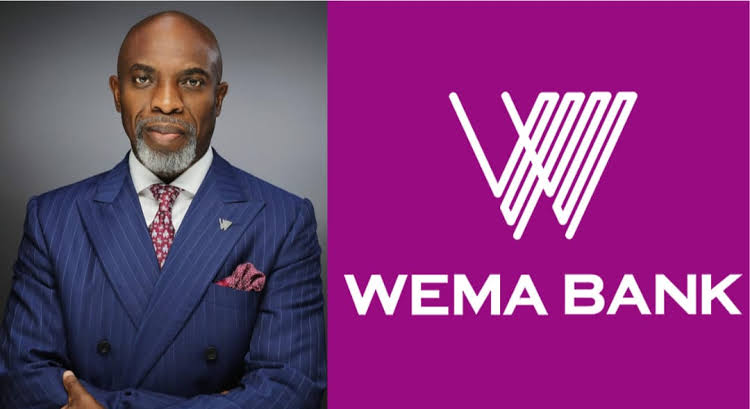
Underscoring Wema Bank’s commitment in shaping the future of banking through impactful innovations like ALAT, Wema Bank’s MD/CEO, Moruf Oseni, expressed appreciation to the Euromoney Awards for recognising the Bank’s impact on the proliferation of digital innovation in Africa, reiterating the Bank’s commitment to its sustainability vision of developing digital solutions for societal impact. Receiving the award, Oseni commented, “The world is moving fast and so is the permeation of ‘digital’ into the most critical aspects of our lives. 80 years ago when Wema Bank was established, typewriters were the extent of banking technology. Today, we have pioneered a fully digital bank, and possess technology advanced enough to power over 150 FinTechs. In ten years, one can only imagine what this fast-paced digital economy will bring. One thing is clear, any business, venture or institution that will remain relevant by the end of the next decade, must leverage digital technology today. This is why Wema Bank is so driven when it comes to digital. Innovation and empowerment”.


“As a Bank, our stance is clear. Wema Bank will never relent in empowering lives through innovation and developing digital solutions for societal impact. We will continue to pioneer innovation, empower innovators and bridge the gap between traditional and digital, leveraging the opportunities of the digital world to generate meaningful impact on lives and businesses in Nigeria, Africa and across the world. We have remained resilient in this commitment since 1945 and this award tells us that the world is feeling our impact. We are honoured by this recognition, and I take this opportunity to extend our sincerest gratitude to the Euromoney Awards. We take this as a challenge to keep up the good work, go harder, and continue going above and beyond in shaping the future of banking through digital innovation. Here’s to 80 years of impact and a future of limitless possibilities with Wema Bank”. Oseni concluded.


Wema Bank continues to raise the bar in financial services, placing Nigeria on the global map for banking and digital innovation. Since 1945, the Bank has spearheaded a positive transformation in Africa’s banking and financial landscape, proving that Nigerian-owned businesses have the capacity to last and stand the test of time. As the Bank celebrated its 80th anniversary on May 2nd 2025, its futuristic digital platform, ALAT simultaneously clocked 8, marking 8 years of digital transformation.


The world continues to watch in anticipation as Wema Bank leads the movement in digital innovation, shaping the future of banking in Africa.


ABOUT WEMA BANK


Established on May 2nd, 1945, Wema Bank is Nigeria’s oldest indigenous bank, most innovative, and pioneer of Africa’s first fully digital bank, ALAT. Commemorating a remarkable 80 years of impact and a future of possibilities, Wema Bank celebrated its 80th anniversary on May 2nd 2025 alongside the 8th anniversary of ALAT by Wema.


The publicly quoted Nigerian company has successfully built a legacy of trust, resilience and banking excellence that has won it the loyalty of its customers for 8 decades and counting. The Bank has remained innovative in delivering value to its stakeholders, constantly introducing products and services tailored to the needs of its customers at every stage of their lives.


Wema Bank is a proud partner to more than one million individuals, families, and businesses across Nigeria, helping them achieve their personal and financial goals.


Since its establishment in 1945, Wema Bank has built a legacy of pioneering innovation and empowering innovation to thrive, connecting traditional with digital and introducing several digital gamechangers and industry-firsts that have redefined standards across various industries and verticals.


From launching Africa’s first fully digital bank, ALAT, in 2017, Wema Bank went on to launch the ALAT For Business App, a business-focused version of ALAT; CoopHub App, a-first-of-its-kind digital solution designed to empower cooperatives for optimal productivity; Wema Phygital, a self-service implementation adding a digital touch to the physical experience in Wema Bank’s branches; ALATPay, an end-to-end payment gateway that provides instant settlement for business transactions; and the ALAT Xplore App, Nigeria’s first fully licensed banking app for teenagers, among others.

Exit mobile version