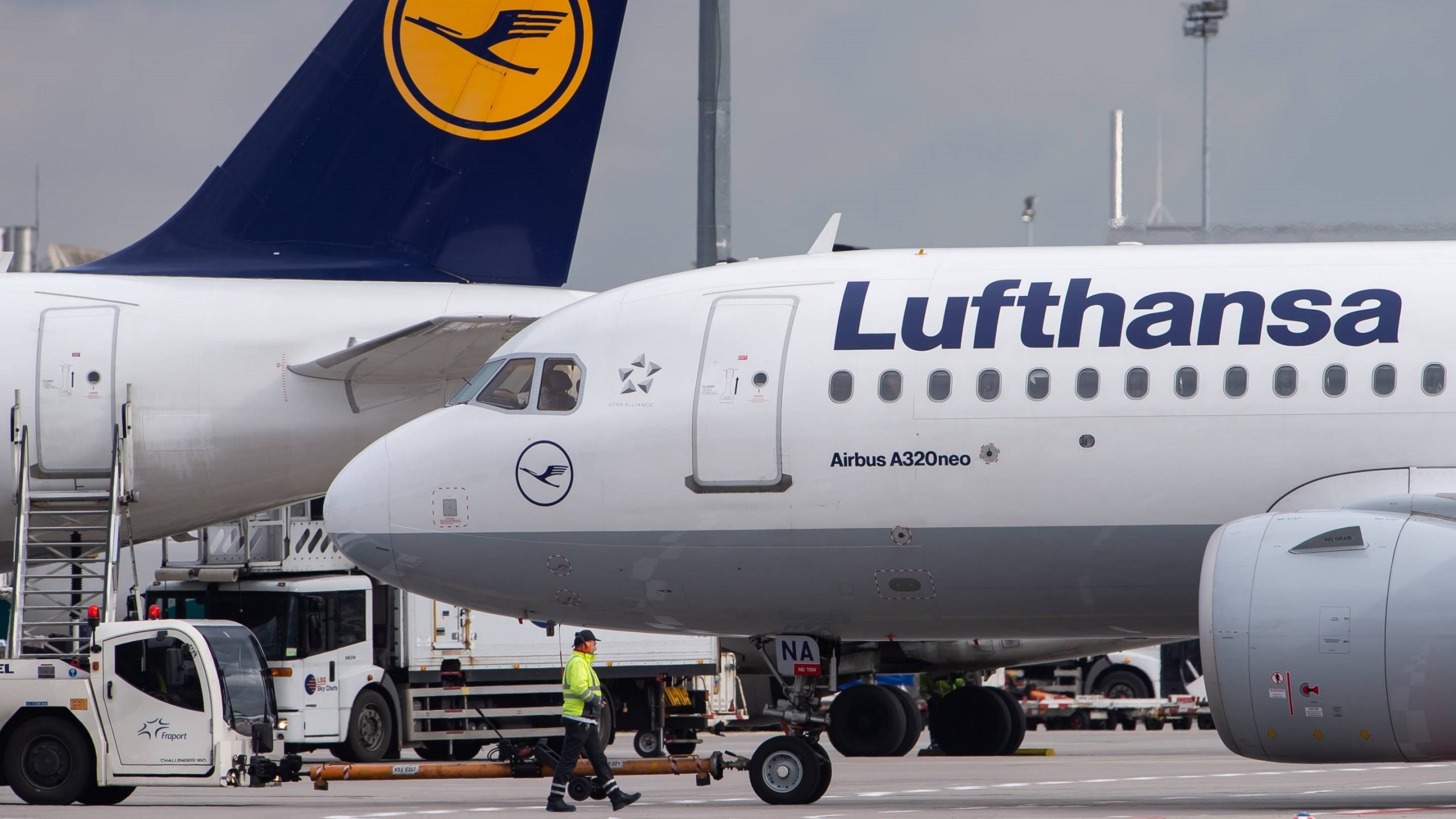
German airline group Lufthansa said Monday it will cut 4,000 jobs, nearly four percent of its workforce, underscoring the slump gripping Europe’s largest economy.
Lufthansa said the majority of the job cuts would be in Germany and take place by 2030, targeting administrative rather than operational positions.
The group, which employs around 103,000 people, includes Eurowings, Austrian, Swiss and Brussels Airlines, as well as the recently acquired Italian flagship airline ITA Airways.
Germany is facing a second straight year of recession, with unemployment at a decade high.
The downturn has hit some of the country’s corporate giants hard, squeezed by Chinese competition, high energy costs and slow adoption of new technologies.
Lufthansa’s announcement comes just days after another major German company, industrial giant Bosch, said it would cut 13,000 jobs, or three percent of its global workforce.
“The Lufthansa Group is reviewing which activities will no longer be necessary in the future, for example due to duplication of work,” the company said in a statement.
“In particular, the profound changes brought about by digitalization and the increased use of artificial intelligence will lead to greater efficiency in many areas and processes,” it said.
Lufthansa set new financial targets for 2028-2030, including an adjusted operating margin of eight to 10 per cent.
The National Hajj Commission of Nigeria has announced the approved fares for the 2026 Hajj.
In a statement signed by the management, NAHCON said the announcement followed “due consultations with all the relevant stakeholders, including the Forum of States leadership, and obtaining the approval of the Federal Government.”
The announcement comes shortly after top management staff of the Commission, led by the Chairman, Prof. Abdullahi Usman, embarked on a trip to Saudi Arabia to inspect facilities, negotiate service arrangements, and sign agreements with key service providers ahead of the 2026 exercise.
Earlier this year, NAHCON had announced a tentative fare of N8.5 million for the 2026 Hajj, clarifying that the amount was provisional and subject to review after negotiations with Saudi service providers and approval from the Federal Government.
The 2025 Hajj fares were fixed at N8.31 million for the Maiduguri-Yola Zone, N8.44 million for other northern states, and N8.76 million for the southern states.
However, the management said the 2026 fares have been reduced by N200,000 across all categories.
“The National Hajj Commission of Nigeria wishes to announce the Hajj Fare for the 2026 Hajj season. After due consultations with all relevant stakeholders, including the Forum of States leadership, and obtaining the approval of the Federal Government, the Chairman/CEO of the National Hajj Commission of Nigeria, Professor Abdullahi Sale Usman, hereby announces the 2026 Hajj Fare as follows: Maiduguri-Yola Zone (Yobe, Borno, Adamawa, Taraba) will pay N8,318,336.67; other Northern States will pay N8,244,813.67; Southern States will pay N8,561,013.67.”
“Compared to what was charged last year, each pilgrim is to pay an average of two hundred thousand naira less,” the statement partly read.
The Commission also revealed that its delegation currently in Saudi Arabia has finalised service arrangements with major providers.
“The NAHCON delegation, currently in Saudi Arabia, met and signed agreements with the 2026 Hajj Service Provider Company (Mashareeq Al-Zahabiyya) and the Transportation Company (Daleel Al-Ma’aleem),” the Commission stated.
The Chairman stressed the importance of timely payments, urging intending pilgrims to complete payments before December 31, 2025.
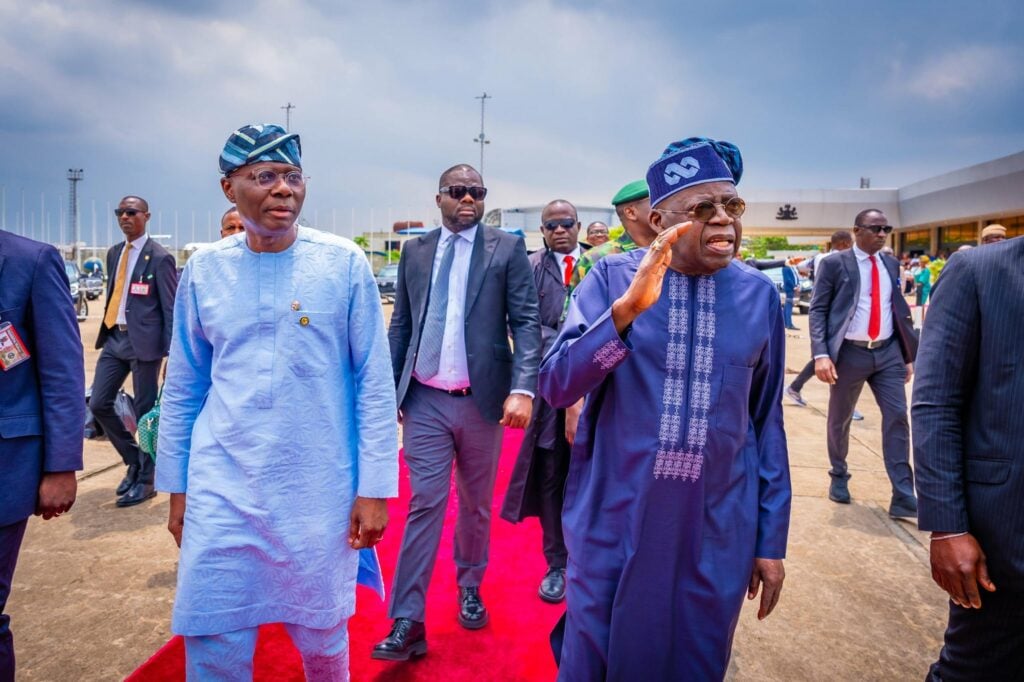
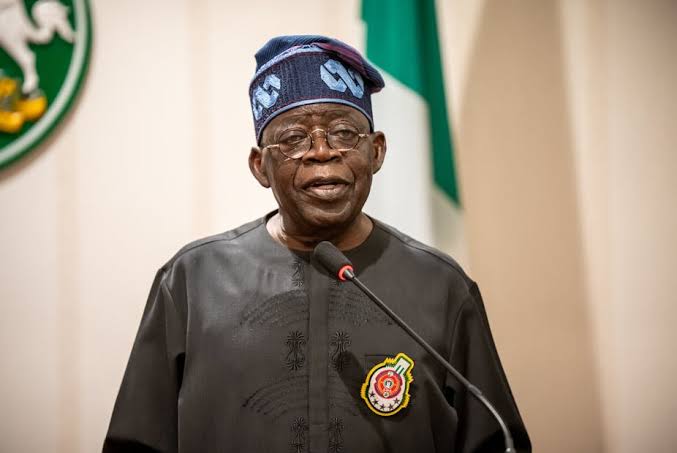
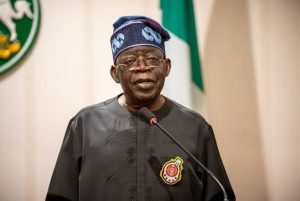
President Bola Tinubu on Friday arrived in Lagos on a working visit, shortly after attending the coronation of the 44th Olubadan of Ibadanland, Oba Rashidi Ladoja, in Ibadan, the Oyo State capital.
This was contained in a statement on Friday issued by the Special Adviser to the President on Information and Strategy, Bayo Onanuga.
According to the statement, the President’s visit comes as Nigeria prepares for a modest celebration of its 65th Independence Anniversary.
The statement stated that while in Lagos, Tinubu is expected to meet with key players in the private sector as well as senior government officials.
It noted that the President will proceed to Imo State on Tuesday, September 30, where he is scheduled to commission a number of projects executed by Governor Hope Uzodimma.
“As part of the Independence anniversary activities, Tinubu will also inaugurate the remodelled National Theatre in Lagos, which has been renamed the Wole Soyinka Centre for Culture and the Creative Arts,” the statement added.
PUNCH Online earlier reported that the President declared that Nigeria’s economy “has turned around” following the sweeping reforms introduced by his administration over the past two years.
Speaking in Ibadan at the coronation of Oba Ladoja as the 44th Olubadan of Ibadanland on Friday, the President assured Nigerians that the sacrifices of the past two years would soon yield tangible benefits.
“Today, I am honoured to bring the cheering news that our economy has turned around and there is now light at the end of the tunnel,” Tinubu said.
The President stated that the success of the reforms was owed to the support, endurance, and sacrifices of Nigerians, noting that the sacrifices made by Nigerians in the past 28 months were not in vain.
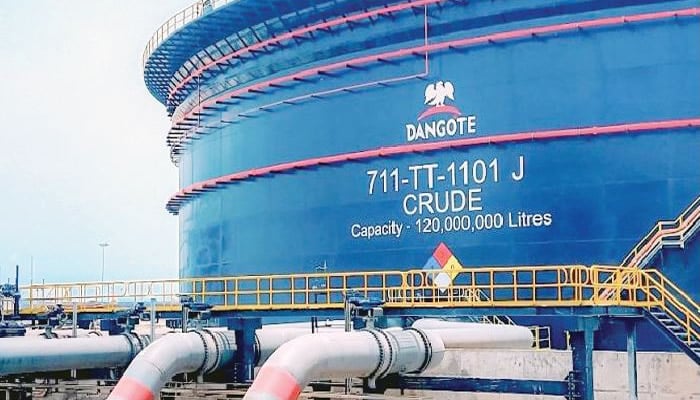
The Dangote Petroleum Refinery has announced the suspension of petrol sales in naira, a move that has unsettled marketers and raised fresh concerns about fuel pricing and foreign exchange pressure.
In an email sent to its customers at exactly 6:42 pm on Friday, the refinery disclosed that the decision would take effect from Sunday, September 28, 2025, citing the exhaustion of its crude-for-naira allocation as the reason.
The notice, signed by the Group Commercial Operations of Dangote Petroleum Refinery & Petrochemicals, was titled “Suspension of DPRP PMS Naira Sales – Effective 28th September 2025”.
The company also asked customers with ongoing naira-based transactions to formally request refunds.
It read in part, “We write to inform you that Dangote Petroleum Refinery & Petrochemicals has been selling petroleum products in excess of our Naira-Crude allocations and, consequently, we are unable to sustain PMS sales in Naira going forward.
“Kindly note that this suspension of Naira sales for PMS will be effective from Sunday, 28th of September, 2025. We will provide further updates regarding the resumption of supply once the situation has been resolved.
“All customers with PMS transactions in Naira who would like a refund of their current payments should formally request the processing of their refund.”
The announcement comes at a time the refinery is embroiled in a bitter dispute with labour unions over the alleged mass sack of more than 800 Nigerian workers, a development that has triggered outrage and calls for government intervention.
This is not the first time the refinery has suspended local currency transactions. In March 2025, Dangote had briefly halted sales of refined products in naira, insisting that its allocations under the crude-for-naira programme were inadequate to meet growing domestic demand.
The decision then sparked concerns over the dollarisation of fuel sales in Nigeria, escalating prices at the pump to almost N1,000 per litre.
Analysts warn that the latest move could again trigger volatility in the downstream sector, with fears of a potential hike in petrol prices if transactions are shifted predominantly to dollars.
The Chief Executive Officer of Petroleumprice.ng, Jeremiah Olatide, warned that petrol prices could soar above N900 per litre, noting that the Dangote Refinery had been instrumental in keeping pump prices lower in recent months
The suspension also coincides with heightened industrial tension at the refinery. The Petroleum and Natural Gas Senior Staff Association of Nigeria on Friday accused the company of anti-labour practices, following the termination of hundreds of Nigerian workers.
Union leaders have vowed to resist what they described as “an unjust and insensitive corporate decision,” threatening nationwide solidarity actions if the matter is not addressed.
With the refinery seen as critical to Nigeria’s energy security, stakeholders say the dual crises, naira sales suspension, and labour unrest could undermine government efforts to stabilise the fuel market under the current reform agenda.
No fewer than 20 states of the federation borrowed about N458bn in the first half of 2025, findings by Saturday PUNCH have revealed.
This comes against the backdrop of a soaring external debt servicing burden gripping state governments.
Collectively, the states spent about N235.58bn on servicing external debt within the period, representing a sharp rise of N95.65bn or 68.4 per cent when compared with the N139.92bn recorded in the corresponding half of 2024.
According to experts, the surge underscores the mounting pressure of dollar-denominated debt repayments on state finances in the wake of the naira’s depreciation.
An analysis of the Federal Account Allocation Committee disbursement data released by the National Bureau of Statistics shows that a total of N10.13 trillion, including statutory revenue, Value Added Tax, Electronic Money Transfer Levy and Exchange Rate Difference, was shared among the three tiers of government in the first half of this year.
Out of this, the states received N3.425tn, a 42.96 per cent increase from the N2.396tn they got in the first six months of 2024.
In H1 2024, the states received N379bn in January, N366.9bn in February, N396.8bn in March, N403bn in April, N388.4bn in May, and N461.97bn in June.
But in the same period this year, allocations surged to N590.6bn in January, N562.19bn in February, N530.45bn in March, N556.74bn in April, N577.84bn in May, and N607bn in June.
Despite the higher inflows, an analysis of states’ Q2 budget implementation reports showed that about 20 of them still resorted to fresh borrowings, both foreign and domestic, amounting to N457.66bn in the first half of 2025.
Leading the pack is Oyo State, which took a N93.4bn domestic loan, followed by Kaduna and Lagos, which took N62bn (foreign) and N50bn (domestic) loans, respectively.
States that took foreign loans include Gombe (N20.3bn), Zamfara (N28bn), Katsina (N20.7bn), Kebbi (N7.4bn) and Jigawa (N10.98bn).
While Bauchi took both domestic and foreign loans totalling N26.3bn, Borno, Taraba, Sokoto, Niger, Kwara, and Ekiti borrowed N18.2bn, N18.7bn, N15bn, N25.8bn, N2.18bn and N19.8bn respectively in foreign loans.
The foreign loan list also includes Ondo (N5.6bn), Abia (N7bn), Ebonyi (N10.9bn) and Enugu (N10.7bn).
Analysts warn that the continued reliance on foreign loans exposes states to even greater fiscal risks in the face of a weakening naira.
“Since most of the debts are dollar-denominated, every depreciation of the local currency automatically inflates repayment obligations, forcing states to channel a larger share of their revenues into debt servicing at the expense of development projects,” says a Professor of Economics at the Ekiti State University, Taiwo Owoeye.
Beyond repayment costs, Owoeye noted that heavy external borrowing also undermines states’ financial autonomy.
“By taking on more foreign obligations, many states risk mortgaging future federal allocations to meet repayment schedules, leaving them with little room to respond to emergencies or fund critical sectors such as health, education, and infrastructure,” he explained.
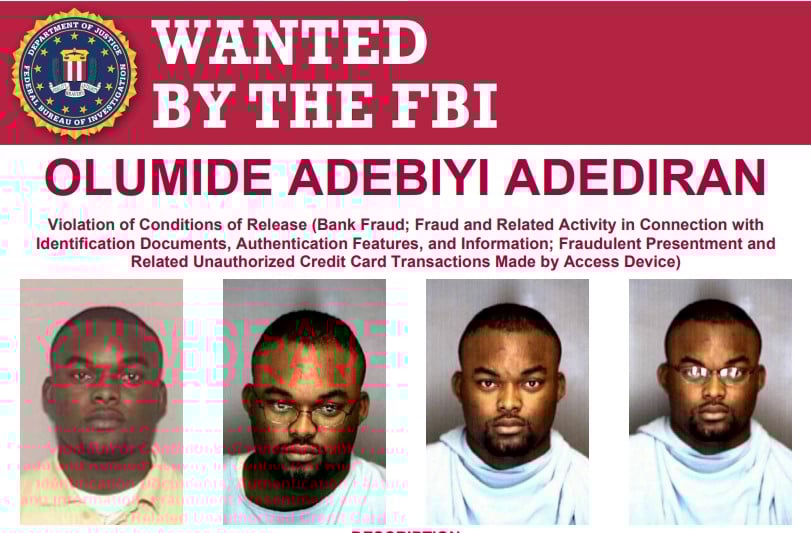
The Federal Bureau of Investigation has announced a $10,000 reward for information leading to the arrest and conviction of a Nigerian, Olumide Adebiyi Adediran, wanted in the United States for multiple fraud offences.
According to a statement on the FBI’s website on Wednesday, Adediran faces charges of bank fraud, identity document fraud and credit card fraud in connection with alleged crimes committed in Illinois as far back as 2001.
The 56-year-old, who also goes by several aliases including Kevin Olumide Adediran, Eric O. Williams, Maxo Alexandre, Olumide Adkins, and Edward N. Anderson, is accused of attempting to cash fraudulent checks and using stolen identities of US citizens to open bank and credit accounts.
According to the FBI, Adediran fled the Central District of Illinois in December 2001, shortly before his trial was due to begin.
A federal arrest warrant was subsequently issued on January 2, 2002, for violation of the conditions of release.
The statement read, “Olumide Adebiyi Adediran is wanted for Violation of Conditions of Release. In August of 2001, Adediran allegedly entered a bank in Champaign, Illinois, and attempted to retrieve funds from a deposited fraudulent check.
“He also allegedly used stolen information of United States citizens to open bank and charge accounts. Adediran fled the Central District of Illinois at the end of December 2001, shortly before his trial in the Central District of Illinois was set to begin on federal charges of Bank Fraud, Identification Document Fraud, and Credit Card Fraud.
“On January 2, 2002, a federal arrest warrant was issued for Adediran in the United States District Court, Central District of Illinois, Urbana, Illinois, after he was charged with Violation of Conditions of Release.”
The FBI noted that Adediran has ties to South Florida and remains on its wanted list.
He is described as being 5’11” tall, weighing 200 pounds, with black hair and brown eyes.
“The FBI is offering a reward of up to $10,000 for information leading to the arrest and conviction of Olumide Adebiyi Adediran,” the agency stated.
The FBI urged anyone with information on his whereabouts to contact its offices in the United States or the nearest American embassy or consulate.
Nigerian singer, Timi Dakolo, has announced plans to assist parents struggling to pay their children’s school fees as schools reopen for the new 2025/2026 academic session.
In a post on his official X handle on Wednesday, Dakolo acknowledged the financial strain many families face at the start of every term.
“I know it’s school fee season, it’s not always easy, I know this first-hand.
“So, let me help lessen that burden a little bit,” he wrote.
The singer directed parents and guardians to send their children’s school bills via Instagram to #TheOyindaOlu, adding that receipts of payments made to schools would be sent back to confirm the support.
“Just DM the school bill to
@TheOyindaOlu
on IG.
“We would DM you the receipt of what we sent to the school,” the artist wrote.
Dakolo’s announcement has drawn wide attention online from fans, with many commending the move at a time when households are grappling with mounting costs.
PUNCH Online had reported that as schools usher in the 2025/2026 academic session, the familiar buzz of children in freshly ironed uniforms returning to class has been met with a different kind of noise, the groans of parents weighed down by skyrocketing school expenses.
For many families, the joy of watching their children return to class has been overshadowed by the crushing weight of rising fees.
From tuition and levies to uniforms and textbooks, the cost of education has never felt heavier, forcing households into painful financial choices.
Dakolo, who is known for family-themed songs and community-driven messages, has previously lent his voice to issues affecting education and welfare.
His latest intervention adds to a growing trend of celebrities offering direct financial relief to fans in times of need.
The World Bank said seventeen African governments have committed to reforms and actionable plans to expand electricity access as part of Mission 300, an ambitious partnership led by the lender and the African Development Bank Group that aims to connect 300 million Africans to electricity by 2030.
The lender said in a statement on Wednesday that governments from Benin, Botswana, Burundi, Cameroon, Comoros, the Republic of the Congo, Ethiopia, Gambia, Ghana, Guinea, Kenya, Lesotho, Mozambique, Namibia, São Tomé and Príncipe, Sierra Leone, and Togo endorsed National Energy Compacts at the Bloomberg Philanthropies Global Forum.
The Bank described the compacts as policy blueprints intended to guide public spending, drive reforms, and attract private investment, while serving as a model for the rest of the world.
Nigeria was not part of the latest group; it had joined earlier this year alongside Chad, Côte d’Ivoire, Democratic Republic of Congo, Liberia, Madagascar, Malawi, Mauritania, Niger, Senegal, Tanzania, and Zambia. Collectively, those countries pledged more than 400 policy actions to strengthen utilities, reduce investor risk, and remove bottlenecks.
“Electricity is the bedrock of jobs, opportunity, and economic growth.
“That’s why Mission 300 is more than a target; it is forging enduring reforms that slash costs, strengthen utilities, and draw in private investment,” World Bank Group President Ajay Banga said.
Since the launch of Mission 300, 30 million people have already been connected, with more than 100 million in the pipeline.
African Development Bank Group President Dr Sidi Ould Tah said, “Reliable, affordable power is the fastest multiplier for small and medium enterprises, agro-processing, digital work, and industrial value-addition.
“Give a young entrepreneur power, and you’ve given them a paycheck,” he added.
National Energy Compacts are at the core of Mission 300, developed and endorsed by governments with technical support from development partners. Tailored to each country’s context, these practical blueprints integrate three core tracks: infrastructure, financing, and policy.
The World Bank Group and the African Development Bank Group are working with partners, including the Rockefeller Foundation, Global Energy Alliance for People and Planet, Sustainable Energy for All, and the World Bank’s Energy Sector Management Assistance Program trust fund, to align efforts in support of powering Africa. Many development partners and development finance institutions are also supporting Mission 300 projects through co-financing and technical assistance.
President of Botswana, Duma Boko, said, “This National Compact is our shared pledge to ensure accessible, reliable and affordable energy as a basic human need, to transform our economy and create jobs, and to electrify our journey to an inclusive high-income country.”
President of the Republic of Cameroon, Paul Biya, said, “The government of the Republic of Cameroon is committed, through its Energy Compact, to a determined transition towards renewable energies, promoting inclusive universal access and sustainable development based on partnerships and ambitious reforms to build a low-carbon future.”
President of the Union of the Comoros, Azali Assoumani, noted, “The Comoros Energy Compact is a call for collective action to achieve universal access to electricity by 2030, to ensure the country’s emergence in dignity, equity, and shared progress.”
President of Ethiopia, Taye Atske Selassie, noted, “Our National Energy Compact exemplifies Ethiopia’s unwavering dedication to ensuring universal, affordable, and sustainable energy access for all.
“By unlocking our vast renewable resources and strengthening regional interconnections, we aim to foster inclusive growth domestically and propel Africa’s collective momentum toward ending energy poverty. Together, we are committed to building a resilient, equitable, and sustainable energy future for generations to come.”
President Bola Tinubu has directed the Bank of Agriculture to clear outstanding arrears of N30bn owed to agro-dealers and input suppliers under the National Agricultural Growth Scheme and Agro-Pocket.
According to a statement issued on Wednesday by the bank’s External Media Relations Lead, Judith Ekwebelem, the directive followed the release of funds from the African Development Bank.
The bank explained that the move was aimed at strengthening support for farmers and stabilising the country’s food supply chain.
The Federal Government has also designated BOA as the custodian of all agricultural financing programme funds.
Ekwebelem said, “The move (the directive ) is seen as a turning point for the sector, with BOA tasked to ensure smooth and timely disbursement of funds to critical stakeholders in food production.
“The bank has, however, pledged to execute the approved payment schedule with urgency using its robust electronic wallet system to achieve payment to all complying agro-dealers within 24 hours, while also providing weekly progress updates until completion.”
She noted that the N30 billion represented the second tranche released by AfDB for the implementation of NAGS-AP, saying, “the funds are targeted at settling outstanding obligations from the 2024 dry and wet season programmes.
“Minister of Finance and Coordinating Minister of the Economy, Wale Edun, O.F.R., directed that the process be treated with the highest priority.”
“Accordingly, the NAGS-AP Secretariat and BOA formally kicked off the exercise on 18th September 2025 with the handover of beneficiary data.”
According to the statement, the Managing Director/Chief Executive of BOA, Ayo Sotinrin, described the appointment as a historic responsibility, saying, “This is a truly defining moment for our agricultural sector. This is more than just a fund; it is a bold commitment to ensuring our nation’s food security.
“By working hand-in-hand with the NAGS-AP team, we are cutting through bureaucratic delays to get payments directly to agro-dealers and suppliers.
“We are unlocking opportunities for farmers to move beyond subsistence farming into sustainable and profitable agribusiness.”
It added that BOA had outlined conditions for pre-qualified and registered agro-dealers and suppliers eligible for payment under the scheme, which include opening a BOA account, a mandatory step for claim processing.
Registration is free and can be completed online.
Sotinrin, who lauded the President and other stakeholders over the funds, urged all beneficiaries to comply without delay, warning that failure to do so could result in processing setbacks.
Tinubu, during a recent meeting with the Brazilian President, Luiz Inacio Lula Da Silva, has expressed assurance to remove all bottlenecks hindering the realisation of the agricultural sector’s potential to enable food sovereignty and export.
The President, in a bilateral meeting held with the Brazilian President, noted that bureaucracy contributes to delays in realising the agricultural sector’s potential.
He informed the Brazilian leader and delegation that Nigeria was already undergoing reforms to reposition the economy for global competitiveness, particularly in agriculture, where it already had a competitive advantage.
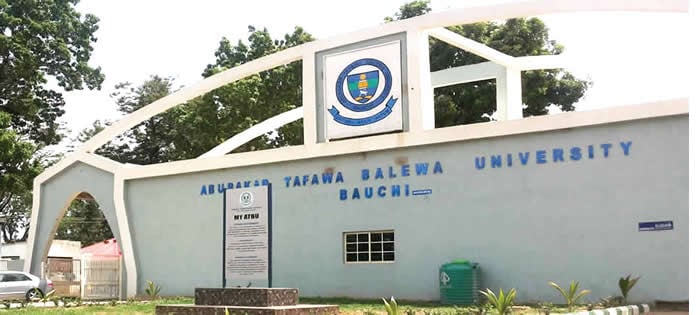
The management of Abubakar Tafawa Balewa University, Bauchi, has pledged to adopt financial prudence and academic justice in addressing the institution’s challenges.
The Vice-Chancellor, Professor Ibrahim Garba, gave the assurance when officials of the Senior Staff Association of Nigerian Universities and the Non-Academic Staff Union paid him a solidarity visit in his office on Wednesday.
Garba, who expressed delight over the visit, said the university community’s pride lay in seeing ATBU progress in its mandate as a citadel of learning.
According to him, his administration inherited a huge debt profile but has succeeded in offsetting nearly one-third of the loan without taking additional credit.
“When I assumed office, I met a huge amount of debt at the university. I have been able to settle nearly one-third of that loan in the last few months without incurring any fresh loan at all,” he said.
On welfare, the VC disclosed that five luxury buses had been refurbished to ease students’ shuttle between Gubi and Yelwa campuses, while a 32-seater bus was also being prepared to support staff transportation.
He further revealed that six of the 11 grounded tractors owned by the university had been refurbished for this year’s farming season, with two more almost ready.
The intervention, he explained, was to support staff and members of the Bauchi community farming on the campuses at subsidised rates of less than 30 per cent of commercial charges.
Garba also announced that management was working on a seamless promotion process to eliminate delays in staff promotion exercises.
Commending the university community for its support since he assumed office, Garba assured that his administration would continue to uphold transparency and justice in running the institution.
Speaking earlier, the SSANU Chairman, Comrade Sulisma Jatau, praised the VC’s leadership style, particularly in financial prudence, staff and students’ welfare, and academic quality assurance.
He, however, described a recent media campaign against the VC as regrettable, noting that the institution did not deserve negative publicity.
Similarly, the NASU Chairman, Yusuf Yusuf, faulted the escalation of negative reports linking the VC to a Federal Government policy decision on restructuring some faculties and courses.
He explained that the decision, announced by the Pro-Chancellor, was wrongly attributed to the VC, leading to the controversy.
Both unions assured Garba of their continued support in his efforts to reposition the university.
PUNCH recalls that a Bauchi-based group had accused the VC of unilaterally misleading the Governing Council to shut down the Faculty of Management Sciences and some courses in the Faculty of Technology Education, a decision later clarified as a directive from the Federal Government.