Grammy-winning rapper Cardi B, born as Belcalis Marlenis Almanzar, on Friday released her sophomore album Am I the Drama?, ending a seven-year wait since her Grammy-winning debut Invasion of Privacy.
The 23-track album, released via Atlantic Records, debuted at No. 1 on the US iTunes albums chart. It features guest appearances from Kehlani, Megan Thee Stallion, Selena Gomez, and Janet Jackson.
According to Rolling Stone, which rated the project 4.5 stars, the record “delivers raw energy and fearless storytelling.”
Cardi B also premiered a music video for the single Safe and appeared at an Apple Music event in New York City to promote the release. A world tour is planned for 2026.
The album’s arrival follows recent personal announcements. On September 17, PUNCH Online reported that Cardi B confirmed she is expecting a child with New England Patriots wide receiver Stefon Diggs after weeks of speculation. In an interview with CBS, she said, “I’m excited. I’m happy.”
It also comes after a legal victory earlier this month. On September 3, PUNCH Online reported that a Los Angeles jury cleared her of assault charges in a $24 million civil lawsuit filed by security guard Emani Ellis, who alleged Cardi B cut her cheek with a fingernail and spat on her outside an obstetrician’s office in 2018. After a week-long trial in Alhambra, the jury ruled in her favour.
With the new album topping charts, a cleared legal battle, and confirmation of her pregnancy, Cardi B’s career enters a fresh chapter marked by both professional and personal milestones.
AFRIMA 2025: FG, Lagos State Declare Readiness to Host Africa In November at Patron’s Dinner with the Jury
L-R: AFRIMA Jury members, Anthony Joseph, (Eastern Africa), Victoria Nkong, Associate Producer, AFRIMA, Motolani Alake, (Nigeria, West Africa),Messie Mboukoud, (Central Africa), Kobele Keita, (Diaspora, North America), Neza Guy, (Côte d’Ivoire, West Africa), AFRIMA President/Executive Producer, Mike Dada, Lagos State Commissioner for Tourism, Arts and Culture, Mrs. Toke Benson-Awoyinka, AFRIMA Chief Experience Officer, CXO, Aderenle Niyi, Lucy Ilado, (Eastern Africa), Delani Khalima , (Zimbabwe, Southern Africa) and Marwane Fachane, (Northern Africa), at the AFRIMA 2025 Patron’s Dinner with the Jury held on Thursday, August 14 at Victoria Island, Lagos, Nigeria
It was a dazzling evening of elegance, warmth, and celebration as the All Africa Music Awards, AFRIMA, hosted its 2025 Patron’s Dinner with the International Jury in Lagos, Nigeria.
The gathering brought together policymakers, stakeholders in Africa’s creative economy, music executives, artists, media representatives, and AFRIMA’s international jurors from 14 countries who are responsible for ensuring the credibility of Africa’s global music awards.
The event was hosted by AFRIMA Patron, Dr. Bisi Onasanya, Chairman of The Address Homes.
This year’s jury session has brought together jurors from across the five regions of Africa and the diaspora in Lagos, Nigeria. For over a week, they worked tirelessly to select nominees from a total of 10,717 entries received for AFRIMA 2025. The AFRIMA 2025 Nominees List will be announced to the public on August 24, following the conclusion of the adjudication process.
Barrister Hannatu Musawa, Nigeria’s Minister of Arts, Culture, Tourism and the Creative Economy, who led a strong cast of dignitaries to the event, praised AFRIMA’s global impact.
“AFRIMA is a testimony of how the creative sector in Nigeria has developed to a global standard, even without strong government backup. We are proud of what AFRIMA stands for and the impact it has made in Africa and on a global scale, projecting our identity, culture, language, and music. As a government, we will continue to support initiatives like this not just because it celebrates art but because it strengthens the economy and unites us,” she said.
Representing the Lagos State Government, Commissioner for Tourism, Arts and Culture, Toke Benson-Awoyinka, assured stakeholders, artistes, and fans across Africa that the State is fully prepared to welcome the continent and the rest of the world.
Benson-Awoyinka, who was joined at the event by the Lagos State Commissioner for Information and Strategy, Gbenga Omotosho, said, “I think we are in the right place at the right time. For us in Lagos, hosting AFRIMA 2025 is not just another event; it is a big honour. People say we are the culture and entertainment capital of Africa, and we are ready to welcome the whole continent and the world to our city for this great event. We thank the Federal Government, our partners, and all those supporting AFRIMA for trusting Lagos to host again.”
In collaboration with the African Union Commission, AFRIMA 2025 is being organised alongside the Federal Government of Nigeria and the Official Host City, Lagos State.
For the Patron, Dr. Onasanya, who was acxompanied to the event by his wife, Mrs Olufunke Onasanya, families and friends and business mogul,Chief Musa Danjuma and Dayo Adeola, the focus is on creating a sustainable legacy and delivering the best AFRIMA yet.
“Tonight, we proudly recognise the incredible work of our jury members and say a big thank you to them. This year, we are excited to welcome Africa to AFRIMA. Africa and the rest of the world will see an amazing show in Lagos because we are confident of organising a successful event. I sincerely thank the Federal Government of Nigeria and our Official Host City, Lagos State, for their tremendous support, as well as our sponsors and every stakeholder who believes in AFRIMA. The last edition was fantastic, but I assure you that AFRIMA 2025 will be the best”
One of the jury members, Guy Neza, an Ivorian who is representing West Africa on the panel, said, “It has been an amazing journey for me to be part of this journey. Africa is full of amazing talent, and it makes me happy to see our music and creativity receiving the recognition they deserve, as AFRIMA is the continent’s biggest music entity. Every artist who sends in their work is helping our creative industry grow stronger. With the quality of music we have screened, I can confidently say that the future of the industry is promising.”
AFRIMA President and Founder, Mike Dada, thanked the jury, patrons, and creative stakeholders for their role in sustaining AFRIMA’s growth and success.
“I am truly grateful for the support from every corner of our creative industry; from the Federal Government of Nigeria, our Official Host City, Lagos State Government and Governor Babajide Sanwoolu, our Patron, to the media, to the artists, producers, and record executives. It is inspiring to see us working hand in hand with one shared goal to elevate Africa’s global music. We said at the beginning of this journey that we would not joke with the credibility of this awards; we insisted that any artist who will be nominated or win award must submit their work to qualify and this patron’s dinner is our way of honouring the AFRIMA jury, who dedicate their time to carefully select the finest talents from thousands of entries for nomination in their rightful categories,” he said.]
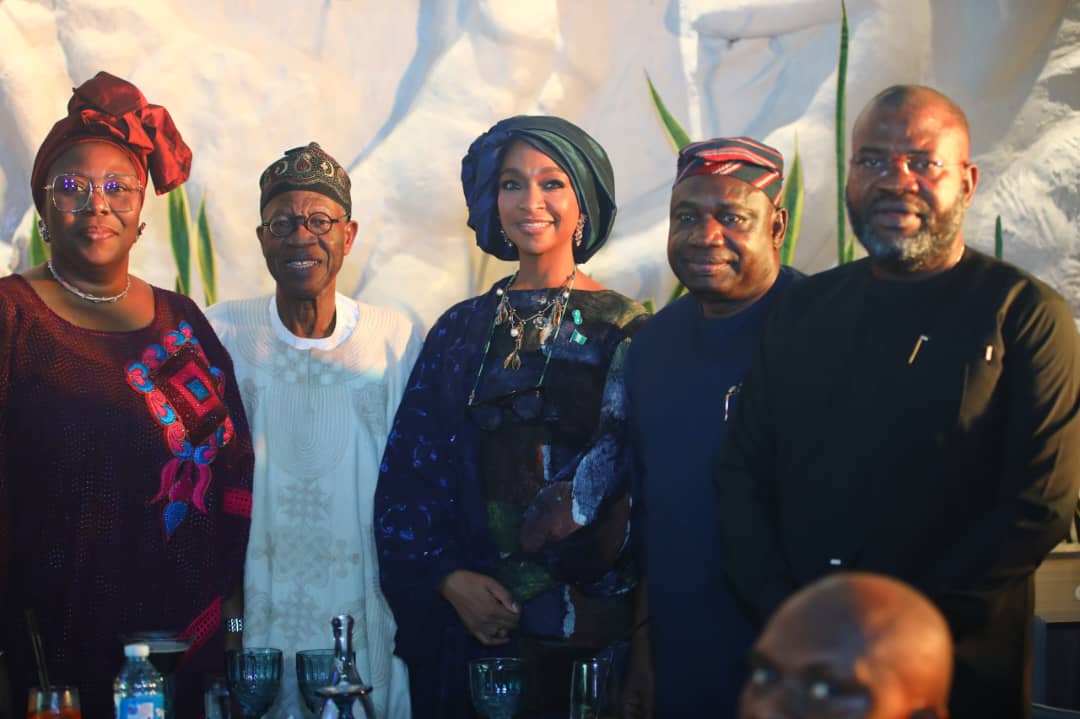
L-R: Lagos State Commissioner for Information and Strategy, Mr. Gbenga Omotoso, founder, Africa International Film Festival, AFRIFF, Chioma Ude, Minister of Arts, Culture & Creative Economy, Hannatu Musawa, President/Executive Producer, All Africa Music Awards, AFRIMA, Mike Dada, Lagos State Commissioner for Tourism, Arts and Culture, Mrs. Toke Benson-Awoyinka, AFRIMA’s Patron, Dr. Bisi Onasanya and former minister of Information and Culture, during the AFRIMA 2025 Patron’s Dinner with the Jury held on Thursday, August 14 at Victoria Island, Lagos, Nigeria
Guests were also treated to a soulful performance by fast-rising star Qing Madi. Adding to the sparkle of the night were appearances from music stars Ice Prince Zamani, Orezi, Praiz, and DJ Nana, among others.
The roll call of high-profile dignitaries included Lai Mohammed, former Minister of Information and Culture; media moguls Kenny Ogungbe, Dayo Adeneye and Id Ogungbe; respected journalists Mayor Akinpelu, Ayo Aminu, Mojeed Jamiu, Azu Arinze; Founder of AFFRIF, Chioma Ude, media and Entertainment personalities Olisa Adibua, Ali Baba, Sunday Are, Ehiz and Uti Nwachukwu, among others; alongside other notable figures from the arts, culture, and media space.
The AFRIMA 2025 celebration is set to take place from November 25 to 30 in Lagos. The week-long show will include a variety of events, such as the Welcome Soiree, the AFRIMA Music Village, the African Music Business Summit, a Host City Tour, the Nominees Party, and the main awards ceremony. This ceremony will be broadcast live to over 84 countries.
Lagos State Commissioner for Tourism, Arts and Culture, Mrs. Toke Benson-Awoyinka, former minister of Information and Culture, Lai Mohammed, Minister of Arts, Culture & Creative Economy, Hannatu Musawa, Lagos State Commissioner for Information and Strategy, Mr. Gbenga Omotoso, and President/Executive Producer, All Africa Music Awards, AFRIMA, Mike Dada during the AFRIMA 2025 Patron’s Dinner with the Jury held on Thursday, August 14 at Victoria Island, Lagos, Nigeria
Lawmakers and population experts on Tuesday called for the urgent conduct of a credible population and housing census, warning that the continued delay undermines national development and the future of millions of young Nigerians.
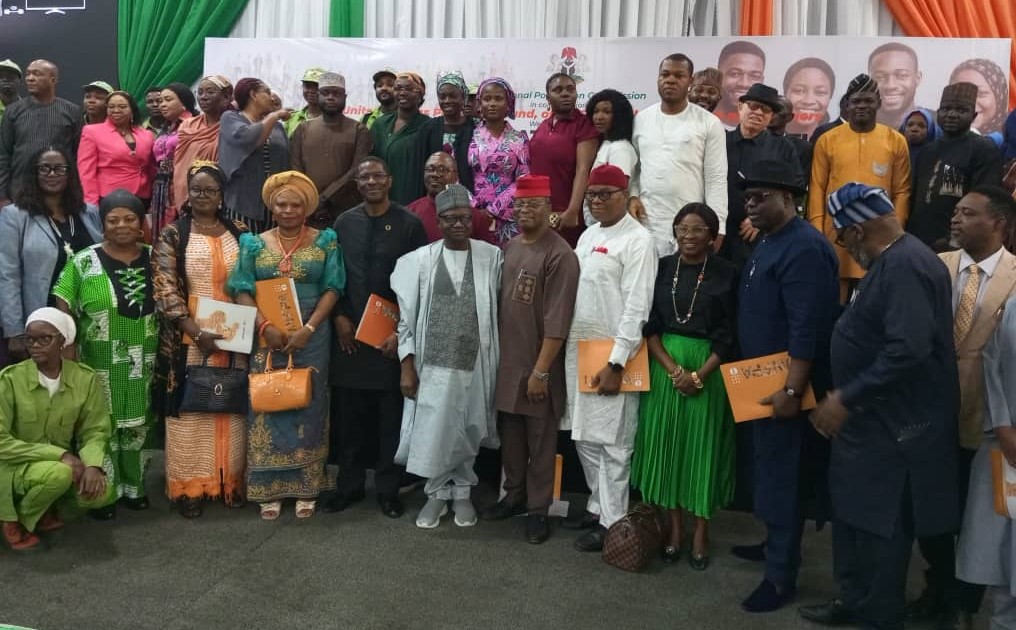
Speaking at the 2025 World Population Day event held in Abuja, the Chairman of the Senate Committee on National Population and Identity, Senator Victor Umeh, emphasised the significance of this year’s theme: ‘Empowering young people to create the families they want in a fair and hopeful world.’
Umeh described it as a timely call to invest in youth by ensuring access to rights and informed decision-making.
The senator expressed concern over the lack of a credible national census since 2006, which has led to uncertainty about Nigeria’s actual population.
“Every day we hear that Nigeria has about 230 million people. But how can we address their needs if we don’t know who they are or how many they are?
“Just yesterday, someone claimed our population exceeds 300 million. I couldn’t dispute it—our last census was 19 years ago,” he noted.
The senator stressed that with more than half of Nigeria’s population under 30, the country’s future depends on its youth.
“To truly empower them, we need accurate, disaggregated data. This is why I strongly advocate for the timely conduct of a credible population and housing census in Nigeria, which is essential for inclusive development, equitable resource distribution, and youth-responsive policy,” he said.
Umeh cautioned that policies built on assumptions lead to misallocation of resources and a growing crisis in sectors like education, employment, and housing.
He pointed to the youth unemployment crisis as a direct result of poor planning.
The senator pledged that the Senate would provide the necessary legislative support and funding to the National Population Commission to ensure the next census is credible and timely.
“The senate is committed to providing the necessary legislative framework to ensure that Nigeria’s population data is accurate, timely, and inclusive, and that youth empowerment remains central to our national development agenda,” the senator added.
Umeh also stressed the need for data on housing, linking population figures to housing deficits and planning.
Similarly, the Chairman of the House Committee on National Population and Identity, Okunjimi Odimayo, stressed that accurate data is not a luxury but a necessity.
“We must be guided by one fundamental requirement: accurate data.
“This is actually what differentiates us from any advanced country in the world. Accurate data — this is what differentiates the private sector from the public sector,” Odimayo noted.
Odimayo urged President Bola Tinubu to make an immediate decision on the census, describing the data gap as “the problem of Nigeria now.”
“Without reliable data, we risk building policy on assumptions. Everything you see, any policy you see, is based on assumptions — and assumptions are not realistic. I can say it,” he added.
Also at the event, NPC Chairman Nasir Kwarra said the country’s youthful demographic offers a unique opportunity that must be strategically harnessed.
“More than 60 percent of Nigeria’s population is under the age of 30. That’s over 130 million young people whose dreams, potentials, and aspirations must be placed at the very centre of our national development priorities,” he said.
Kwarra underscored the need for investment in education, health, jobs, and governance, supported by up-to-date data.
“It also means investing in data management including ensuring compliance with the conduct of a population and housing census every ten years,” he said.
He concluded by encouraging all sectors of society to involve young people not just as beneficiaries but as active partners in national growth.
“Young Nigerians are full of ideas, creativity, and resilience. They want to contribute, they want to lead, and yes — they want to form families on their own terms, in an environment of dignity, fairness, and opportunity,” Kwarra said.
The United Nations Population Fund Deputy Representative Koessan Kuawu echoed the call for inclusion and data-driven policy, urging leaders to listen to the voices of youth.
“Starting on this World Population Day, let’s listen to what young people want and need, and create conditions that enable them to exercise their rights, make their own choices and enjoy a hopeful future,” he said.
Nigeria has been overdue for a national population and housing census since 2016.
The last enumeration exercise, held in 2006, recorded a population of over 140 million. That data remains the foundation for national planning despite significant demographic shifts.
Efforts to conduct a new census have repeatedly stalled due to security concerns, funding challenges, and political considerations.
A recent attempt under the administration of former President Muhammadu Buhari scheduled a digital census for May 2023, but the exercise was postponed just days before commencement to allow the incoming Tinubu administration to assume responsibility.
The lack of current demographic data has hampered policy planning, the delivery of social services, and the equitable distribution of resources. Global standards recommend a national census every 10 years.
TikTok has removed more than 3.6 million videos from its platform in Nigeria between January and March 2025 for breaching its Community Guidelines, representing a 50 per cent increase from the previous quarter.
This was disclosed in the platform’s Q1 2025 Community Guidelines Enforcement Report, which highlights TikTok’s commitment to keeping its online community safe, respectful, and trustworthy.
According to the report on Tuesday, TikTok achieved a proactive detection rate of 98.4 per cent, meaning most of the videos were removed before users reported them. About 92.1 per cent of the videos were taken down within 24 hours of being uploaded.
The platform said the removals represented a small fraction of the overall content posted by the Nigerian community during the period, stressing that the majority of content shared remained positive, educational, and entertaining.
As part of its regional enforcement actions, TikTok also removed 129 accounts in West Africa linked to covert operations in March 2025.
TikTok said it had intensified efforts to monitor LIVE broadcasts to ensure compliance with its rules. In the first quarter of 2025, the platform banned 42,196 LIVE rooms and interrupted 48,156 streams in Nigeria found to have violated its guidelines.
“LIVE content enforcement remains a priority as we continue to protect the integrity of real-time interactions on the platform,” the report stated.
Globally, TikTok removed over 211 million videos in Q1 2025, up from 153 million in the previous quarter. Of these, 184 million were removed through automation, with a global proactive detection rate of 99 per cent.
Despite the large-scale removals, TikTok said that harmful content accounted for less than one per cent of total uploads, underscoring its ongoing efforts to prioritise safety and well-being.
In June, TikTok Africa held the ‘My Kind of TikTok Digital Well-being Summit,’ bringing together experts, NGOs, creators, media, and industry leaders from across Sub-Saharan Africa to discuss ways of improving digital well-being on and beyond the platform.
As part of new initiatives, TikTok announced the expansion of its in-app helpline to Nigeria, in partnership with Cece Yara, a child-focused non-profit organisation that supports youth safety. The helpline will provide expert assistance to young users dealing with issues like suicide, self-harm, hate, and harassment.
TikTok also named Dr. Olawale Ogunlana, popularly known as Doctor Wales, as its Digital Well-being Ambassador for Nigeria, joining a group of healthcare professionals in the WHO Fides Network.
Alongside these efforts, TikTok continues to encourage users to report harmful content and participate in its ongoing #SaferTogether campaign, aimed at fostering a respectful and secure online environment.
Super Eagles captain William Troost-Ekong was greeted by an enthusiastic crowd of fans in Lagos on Friday evening, as he hosted a meet and greet ahead of the second edition of his foundation’s charity match, scheduled for Sunday at the Mobolaji Johnson Arena, Onikan, PUNCH Sports Extra reports.
The event, held at the Puma store in Palms Mall, Lekki, offered fans a rare opportunity to interact with the Nigeria international in an informal setting, just days before the highly anticipated #PlayForPurpose fixture.
Supporters of all ages gathered in large numbers, many arriving hours early to get a chance to take photographs, receive autographs and share personal moments with the player.
The meet and greet also served as a show of appreciation to Puma, one of the lead sponsors of the charity initiative
Speaking exclusively to PUNCH Sports Extra shortly after the event, Troost-Ekong said the occasion held deep personal and professional significance.
“This meet and greet was great,” he said.
“It was a way to pay homage to fans and also one of our biggest partners, Puma, who’ve been supporting us for two events now. It’s not been easy. They believed in us even before we had the proof of concept done.hey asked me to come down and I did that with all pleasure. I feel part of the Puma family now. I brought my children, brought my family, and I’m looking forward to seeing them there in the stadium with us this Sunday as well.”
Reflecting on the broader sponsorship landscape and the logistical effort behind the initiative, the former Watford and Udinese defender praised his team for their dedication and the sponsors for their early belief in the project.
“Sponsorship has been good. It’s been a lot of work. I have to say thank you also to the BFA staff and everyone who’s been working on this since January. It’s been six months for us to get here.
“I know people only found out about this event maybe two months ago, maybe six weeks ago, but we’ve been working on this for a long time. It’s not been easy. The most difficult thing is to get people to believe in what we’re doing even before all the names come out.
“This part is easy because now you see what we’re doing and everyone wants to be involved, I’m getting messages from all kinds of people saying, ‘I want to play’, messages from brands saying they want to be involved.
“But a few months ago, when you said you were bringing this to Lagos at this moment in time, you had to get people to believe in it. Now everyone sees what we can do, and we can continue to do that in the years to come,” he said.
Sunday’s charity match will feature an all-star cast of sports and entertainment personalities, including boxing world champion Anthony Joshua, Super Eagles forwards Victor Osimhen and Odion Ighalo, former internationals Obafemi Martins and Vincent Enyeama, as well as popular musicians Flavour, Falz and ODUMODUBLVCK.
The first edition, held last year in Uyo, was widely praised for its community outreach and carnival-like atmosphere.
The Lagos edition is expected to draw an even larger audience, with proceeds supporting the foundation’s efforts to empower underprivileged children through football.
Nigeria’s Armed Forces are chasing their first gold medal at the 6th African Military Boxing Championship in Rabat, Morocco, after securing four bronze medals with two fighters still in contention for the ultimate prize.
The Nigerian contingent, led by coach Aweda Kehinde, a former Olympian who represented the country at the Atlanta, Georgia, 1996 Games and currently serves as the Nigeria Army boxing coach, has delivered impressive performances at the championship that began on June 14th and will end on Sunday, the 22nd.
Team Nigeria’s medal haul currently stands at four bronze medals, with the potential for more precious metal as two boxers remain in the competition’s latter stages.
Rilwan Lawal of the Nigeria Army has reached the final and stands on the brink of delivering the country’s first gold medal at the tournament. The army boxer’s journey to the final represents the pinnacle of Nigeria’s campaign in Morocco.
Gbadamosi Quadri, also from the Nigerian Army, is currently competing in the semi-final stage, offering another route to a potential gold medal for the Nigerian team.
The bronze medal winners have already guaranteed Nigeria a respectable showing at the continental championship. Balogun Emmanuel Adeola of the Air Force settled for bronze after what would have been a hard-fought campaign in his weight category.Samson Kazeem of the Nigerian Army also claimed bronze, adding to the Army’s impressive medal tally at the championship. Ambrose Godwin, another Nigerian Army representative, secured bronze in his division.
Akeem Adebamiji of the Nigerian Navy claimed bronze, ensuring all three branches of Nigeria’s Armed Forces contributed to the medal haul and demonstrating the breadth of boxing talent across the military services.
The championship has seen mixed fortunes for some Nigerian fighters. Qoyum Qozeem of the Nigerian Army was eliminated in the quarter-final stage, whilst Balogun Al-Ameen Olamide of the Air Force also exited the competition at the same stage.
The tournament in Rabat represents a significant opportunity for Nigeria’s military boxers to showcase their talents on the continental stage. Coach Kehinde’s experience as a former Olympian has proven invaluable in preparing the team for the rigours of international competition.
The championship in Morocco continues to provide thrilling boxing action, with Nigeria’s representatives proving they can compete with the best military boxers across the African continent.
As the tournament reaches its climax, all eyes will be on Lawal’s final bout and Quadri’s semi-final encounter, with the potential to transform Nigeria’s good showing into an excellent one with the addition of gold medal success.
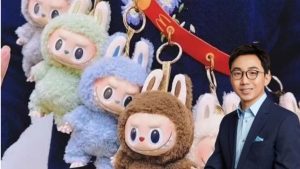
Small, fuzzy and baring sharp teeth, Chinese toymaker Pop Mart’s Labubu monster dolls have taken over the world, drawing excited crowds at international stores and adorning the handbags of celebrities such as Rihanna and Cher.
Beijing-based Pop Mart is part of a rising tide of Chinese cultural exports gaining traction abroad, furry ambassadors of a “cool” China even in places associated more with negative public opinion of Beijing such as Europe and North America.
Labubus, which typically sell for around $40, are released in limited quantities and sold in “blind boxes”, meaning buyers don’t know the exact model they will receive.
The dolls are “a bit quirky and ugly and very inclusive, so people can relate”, interior designer Lucy Shitova told AFP at a Pop Mart store in London, where in-person sales of Labubus have been suspended over fears that fans could turn violent in their quest for the toys.
“Now everything goes viral… because of social media. And yes, it’s cool. It’s different.”
While neighbouring East Asian countries South Korea and Japan are globally recognised for their high-end fashion, cinema and pop songs, China’s heavily censored film and music industry have struggled to attract international audiences, and the country’s best-known clothing exporter is fast-fashion website Shein.
There have been few success stories of Chinese companies selling upmarket goods under their own brands, faced with stereotypes of cheap and low-quality products.
“It has been hard for the world’s consumers to perceive China as a brand-creating nation,” the University of Maryland’s Fan Yang told AFP.
Pop Mart has bucked the trend, spawning copycats dubbed by social media users as “lafufus” and detailed YouTube videos on how to verify a doll’s authenticity.
Brands such as designer womenswear label Shushu/Tong, Shanghai-based Marchen and Beijing-based handbag maker Songmont have also gained recognition abroad over the past few years.
“It might just be a matter of time before even more Chinese brands become globally recognisable,” Yang said.
– TikTok effect –
Through viral exports like Labubu, China is “undergoing a soft-power shift where its products and image are increasingly cool among young Westerners,” said Allison Malmsten, an analyst at China-based Daxue Consulting.
Malmsten said she believed social media could boost China’s global image “similar to that of Japan in the 80s to 2010s with Pokemon and Nintendo”.
Video app TikTok — designed by China’s ByteDance — paved the way for Labubu’s ascent when it became the first Chinese-branded product to be indispensable for young people internationally.
Joshua Kurlantzick from the Council on Foreign Relations (CFR) told AFP that “TikTok probably played a role in changing consumers’ minds about China”.
TikTok, which is officially blocked within China but still accessible with VPN software, has over one billion users, including what the company says is nearly half of the US population.
The app has become a focus of national security fears in the United States, with a proposed ban seeing American TikTok users flock to another Chinese app, Rednote, where they were welcomed as digital “refugees”.
A conduit for Chinese social media memes and fashion trends, TikTok hosts over 1.7 million videos about Labubu.
Labubumania –
Cultural exports can “improve the image of China as a place that has companies that can produce globally attractive goods or services”, CFR’s Kurlantzick told AFP.
Small, fuzzy and baring sharp teeth, Chinese toymaker Pop Mart’s Labubu monster dolls have taken over the world, drawing excited crowds at international stores and adorning the handbags of celebrities such as Rihanna and Cher.
Beijing-based Pop Mart is part of a rising tide of Chinese cultural exports gaining traction abroad, furry ambassadors of a “cool” China even in places associated more with negative public opinion of Beijing such as Europe and North America.
Labubus, which typically sell for around $40, are released in limited quantities and sold in “blind boxes”, meaning buyers don’t know the exact model they will receive.
The dolls are “a bit quirky and ugly and very inclusive, so people can relate”, interior designer Lucy Shitova told AFP at a Pop Mart store in London, where in-person sales of Labubus have been suspended over fears that fans could turn violent in their quest for the toys.
“Now everything goes viral… because of social media. And yes, it’s cool. It’s different.”
While neighbouring East Asian countries South Korea and Japan are globally recognised for their high-end fashion, cinema and pop songs, China’s heavily censored film and music industry have struggled to attract international audiences, and the country’s best-known clothing exporter is fast-fashion website Shein.
There have been few success stories of Chinese companies selling upmarket goods under their own brands, faced with stereotypes of cheap and low-quality products.
“It has been hard for the world’s consumers to perceive China as a brand-creating nation,” the University of Maryland’s Fan Yang told AFP.
Pop Mart has bucked the trend, spawning copycats dubbed by social media users as “lafufus” and detailed YouTube videos on how to verify a doll’s authenticity.
Brands such as designer womenswear label Shushu/Tong, Shanghai-based Marchen and Beijing-based handbag maker Songmont have also gained recognition abroad over the past few years.
“It might just be a matter of time before even more Chinese brands become globally recognisable,” Yang said.
– TikTok effect –
Through viral exports like Labubu, China is “undergoing a soft-power shift where its products and image are increasingly cool among young Westerners,” said Allison Malmsten, an analyst at China-based Daxue Consulting.
Malmsten said she believed social media could boost China’s global image “similar to that of Japan in the 80s to 2010s with Pokemon and Nintendo”.
Video app TikTok — designed by China’s ByteDance — paved the way for Labubu’s ascent when it became the first Chinese-branded product to be indispensable for young people internationally.
Joshua Kurlantzick from the Council on Foreign Relations (CFR) told AFP that “TikTok probably played a role in changing consumers’ minds about China”.
TikTok, which is officially blocked within China but still accessible with VPN software, has over one billion users, including what the company says is nearly half of the US population.
The app has become a focus of national security fears in the United States, with a proposed ban seeing American TikTok users flock to another Chinese app, Rednote, where they were welcomed as digital “refugees”.
A conduit for Chinese social media memes and fashion trends, TikTok hosts over 1.7 million videos about Labubu.
Labubumania –
Cultural exports can “improve the image of China as a place that has companies that can produce globally attractive goods or services”, CFR’s Kurlantzick told AFP.
“I don’t know how much, if at all, this impacts images of China’s state or government,” he said, pointing to how South Korea’s undeniable soft power has not translated into similar levels of political might.
While plush toys alone might not translate into actual power, the United States’ chaotic global image under the Trump presidency could benefit perceptions of China, the University of Maryland’s Yang said.
“The connection many make between the seeming decline of US soft power and the potential rise in China’s global image may reflect how deeply intertwined the two countries are in the minds of people whose lives are impacted by both simultaneously,” she told AFP.
At the very least, Labubu’s charms appear to be promoting interest in China among the younger generation.
“It’s like a virus. Everyone just wants it,” Kazakhstani mother-of-three Anelya Batalova told AFP at Pop Mart’s theme park in Beijing.
Qatari Maryam Hammadi, 11, posed for photos in front of a giant Labubu statue.
“In our country, they love Labubu,” she said.
“So, when they realise that the origin of Labubu is in China, they’d like to come to see the different types of Labubu in China.”
The Deputy Speaker of the House of Representatives, Benjamin Kalu has donated rams, bags of rice and other food items to the Muslim community in Abia State ahead of the Sallah festivities billed for Friday.
Presenting the items to the Muslim faithful led by Sarki Shehu Bello in Bende, Bende Local Government Area of the State, Kalu urged them to use the occasion to spread love to the indigent people and put a smile on their faces.
A statement issued on Thursday by the Special Assistant to the Deputy Speaker on Print Affairs, Udora Orizu, quoted Kalu as saying that he would not relent in championing the cause and welfare of his people by spreading the dividends of democracy.
Wishing them a joyous celebration, the Deputy Speaker who also represents Bende Federal Constituency of Abia State appealed to the Muslim faithful and indeed, all Nigerians to continue to pray for and support the President Bola Tinubu-led administration.
In his response, the leader of Abia Muslim Community, thanked the Deputy Speaker for his benevolence, and ensuring that the Muslim community residing in Abia state celebrate Sallah in harmony in happiness and joy.
He said, “On behalf of the Muslim community, we want to appreciate His Excellency, the Deputy Speaker for remembering us, for making sure that the Muslim community residing in Abia State celebrate this Sallah in harmony, happiness and joy. May God bless him more and more. He will have long life and things will go well for him.”
Tanzanian music star, Juma Jux, surprised his bride, Priscilla Ojo, with a brand-new Range Rover during the reception of their grand, multi-country wedding finale, themed ‘African Royal Wedding’, held in Dar es Salaam, Tanzania, on Wednesday.
During the final leg of the ceremony, Juma made a heartwarming announcement, asking guests to follow him outside for what he called a “small gift” for his wife.
“Please, I want everybody to follow me outside, I have a very small gift for my baby. Can you guys follow me outside?
“Baby, it is not big, it is small…” the East African artist said.
As the crowd exited the beautifully decorated hall, they gathered around in anticipation.
Priscilla screamed excitedly upon seeing the surprise, a luxurious Range Rover adorned with red ribbons and filled with red balloons.
She was ushered into the front seat, where Juma joined her, both of them visibly overwhelmed by the moment, surrounded by guests and well-wishers.
As one of Juma’s hit songs, “Shaylaa,” played in the background, Priscilla’s mother, Nigerian actress Iyabo Ojo, was seen glowing with pride and joy.
She cheered on the couple, calling out affectionate names like, “Juma Odogwu”, “My Presido,” “Priscilla,” and “Odogwu.”
Priscilla hugged and kissed her husband in appreciation of the lavish gesture, eventually breaking into tears. “Thank you,” she said emotionally.
Watch video below
In another clip, Iyabo Ojo was spotted with reality TV star, Chioma Ikokwu, popularly known as Chioma GoodHair, proudly declaring, “we brag differently,” as they celebrated the memorable moment.
The wedding, dubbed JP2025, had numerous Nigerian celebrities in attendance, including Funke Akindele, Enioluwa, Jaiye Kuti, Chioma Ikokwu, Lola Alao, Michelle Gentry, among other notable personalities.
Earlier, PUNCH Online reported that Juma Jux had announced May 28 as the date for the final wedding celebration with Priscilla Ojo.
He made the announcement via a video on his Instagram story, revealing that the grand finale would be held in his home country.
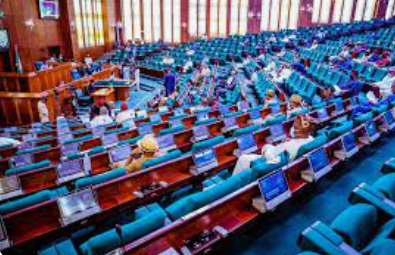
The House of Representatives on Wednesday called on relevant agencies of the Federal Government to carry out a reintegration plan for Internally Displaced Persons across the country.
The decision of the House was sequel to the adoption of a motion on notice during Wednesday’s plenary, sponsored by the member representing Eleme/Oyigbo/Tai Federal Constituency, Rivers State, Mr Felix Nwaeke.
Speaking on the substance of the motion, the Rivers lawmaker noted that as of April 2024, the internally displaced persons in Nigeria were estimated at 3.3m persons living in over 300 camps across Benue, Kaduna, Kano, Katsina, Kogi, Nasarawa, Niger, Plateau, Sokoto, and Zamfara States.
He said, “The visitations by humanitarian organisations and government agencies to these camps are immersed with calls for improved welfare, feeding, and security of the displaced persons in these over 300 camps.
“There has to be a plan on how to prepare these persons who had been forced out of their homes and subjected to living conditions lower than they are used to psychologically, emotionally, and physically to reintegrate them back to a normal standard of living.
“If the displaced persons, most of whom are women and children, are returned home after relative peace is restored in their communities without a structured reintegration plan that would be providing cash assistance, food and clothing, and psychological and emotional counseling and support; it would amount to insensitivity to their plight and, at most, abandonment.”
Following the adoption of the motion, the House urged the Federal Ministry of Humanitarian Affairs and Poverty Reduction and the National Emergency Management Agency to conduct an assessment of the situation in the IDP camps across the country and draw up a reintegration plan for IDPs.
It also mandated its Committee on Emergency and Disaster Management to ensure compliance.