



₦2.7trn Pipeline Row: Dokubo-Asari Challenges Olu of Warri, Agho to Answer Questions, Stop Selective Criticism
…Says, Niger Delta Development Is The Responsibility of State Governors And Relevant Development Agencies, Not Private Citizens
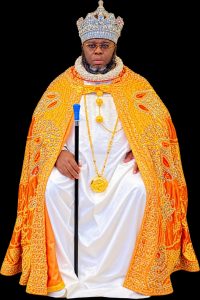

Rather than address the substance of the issues raised, the response from the Warri Palace appears more concerned with name-calling and personal invectives. This is unfortunate and does nothing to answer the fundamental questions raised in the Amanyanabo’s live broadcast in response to the mischief of one Mr. Joel Omosere Agho.
For the avoidance of doubt, the Amanyanabo of the Source was not defending High Chief Government Oweizide Ekpemupolo, popularly known as Tompolo. His reference to Tompolo was made in the context of the selective criticism directed at Niger Delta leaders, particularly when other individuals involved in the same pipeline security business, some of whom are alleged to earn even more, have been conspicuously excluded from the same scrutiny.
The central issue is simple: why should Niger Delta leaders who participated in the struggle over the exploitation and neglect of the region be singled out for criticism while other alleged beneficiaries of pipeline security contracts escape similar questions?
Joel Omosere Agho, popularly known as Mr. Common Sense, had recently challenged Niger Delta leaders, including Tompolo and Dokubo-Asari, over the region’s persistent underdevelopment despite the billions of naira reportedly accruing from pipeline security contracts. He argued that leaders who once fought against the Federal Government in the 2000s have since gained access to government and lucrative contracts, yet the Niger Delta remains environmentally degraded, economically disadvantaged and infrastructurally underdeveloped.
These are legitimate issues that deserve serious public discussion. However, accountability must not become a selective exercise in which some individuals are targeted while others connected to the same business are spared.
If Mr. Agho is genuinely interested in transparency and accountability, the Amanyanabo of the Source challenges him to explain the basis for concentrating his criticism on Tompolo and Dokubo-Asari while overlooking the Olu of Warri and Osahon Idahosa, who are beneficiaries of pipeline security contracts and reportedly receive sums exceeding Tompolo’s earnings. Is it because they are his kinsmen from Itsekiri and Benin, while Tompolo is Ijaw?
The same questions should be directed at every other reported beneficiary. If the objective is accountability, no individual should be exempt from scrutiny because of ethnicity, political connections, traditional status or personal relationships.
Why single out Tompolo, who is said to receive less, and Dokubo-Asari, who is not even connected to the pipeline security contracts in question, while remaining silent about others alleged to be earning more?
That is the inconsistency the Amanyanabo of the Source has challenged. It is not a defence of Tompolo; it is a demand for fairness, consistency and intellectual honesty.
The Amanyanabo further maintains that the history of pipeline security contracts in the Niger Delta must be examined honestly. For years, individuals and businesses from outside the region, including Nigerians from other ethnic groups, reportedly participated in and benefited from this line of business. The involvement of Niger Delta indigenes in such contracts expanded under the administration of former Petroleum Minister Diezani Alison-Madueke.
If the business was considered legitimate when outsiders participated and accumulated wealth from it, on what moral grounds should Niger Delta indigenes, especially the Ijaws, be condemned simply for participating in the same business?
This does not remove the need for accountability, nor does it excuse any individual from answering legitimate questions about the region’s development. It does, however, raise questions about the fairness of condemning certain targeted individuals while ignoring other beneficiaries.
Dokubo-Asari has consistently maintained that his involvement in the Niger Delta struggle came at a significant personal cost. He has stated that he was detained 73 times and charged with treason under the administration of former President Olusegun Obasanjo.
His struggle was driven by longstanding grievances over the exploitation of the region’s resources, environmental degradation, poverty, marginalisation and the failure to deliver development to the communities from which Nigeria’s wealth is extracted.
The Amanyanabo therefore questions the rationale behind holding Dokubo-Asari responsible for the Niger Delta’s development challenges without establishing what public office he occupies, what development funds he controls or what statutory responsibility he bears for delivering infrastructure and public services.
Is Dokubo-Asari one of the governors of the Niger Delta states who receive monthly statutory allocations from the Federation Account to govern and develop their respective states?
Has he ever been appointed to head the Niger Delta Development Commission (NDDC), the former Ministry of Niger Delta Affairs, the South South Development Commission, the Presidential Amnesty Programme (PAP), the Niger Delta Basin Development Authority or any other interventionist agency entrusted with specific responsibilities for regional development?
These questions are central to the Amanyanabo’s position that public accountability must be tied to actual responsibility.
Pipeline security contracts are commercial arrangements for the protection of oil and gas infrastructure. Whatever the earnings of private contractors, such contracts do not automatically confer on their beneficiaries the constitutional responsibilities of elected governments or the statutory mandates of public development institutions. Though they are expected to carry out Corporate Social Responsibilities (CSR) in their areas of operations.
If the Niger Delta remains underdeveloped after decades of oil exploration, the inquiry must extend to the governments, agencies and institutions entrusted with the region’s development, as well as the oil companies whose activities have affected its environment and communities.
The Niger Delta Development Commission was established to promote the sustainable development of the region. The responsibilities of the relevant state governments and interventionist institutions must therefore be part of any serious assessment of why the region continues to face development challenges.
The same scrutiny should extend to the management of public funds, the implementation of development projects, the condition of public infrastructure and the delivery of essential services to oil-producing communities.
The Amanyanabo of the Source is not suggesting that private contractors should be exempt from legitimate questions about their earnings, contractual arrangements or contributions to host communities. Rather, he insists that accountability must follow responsibility.
If Mr. Agho wants answers about the failure of governance and the persistence of poverty in the Niger Delta, he must look beyond private contractors and examine the performance of those who receive public allocations, administer development funds and exercise statutory authority over regional development.
It is intellectually inconsistent to demand that private citizens answer for the failures of governments and interventionist agencies while leaving those institutions largely outside the conversation.
If the objective is genuinely to secure development for the Niger Delta, then the questions must be directed at every relevant actor according to their actual responsibilities, not selectively at individuals whose past struggles have made them convenient targets for public criticism.
The Amanyanabo of the Source will not accept a narrative in which Niger Delta leaders are made convenient scapegoats while other beneficiaries and the institutions responsible for regional development are shielded from meaningful scrutiny.
On the recent evasive and puerile statement that emanated from the so-called Palace of the Olu of Warri, the Warri Palace must understand that its response has not settled the issues raised. Referring to the Amanyanabo of the Source in a manner that invites personal exchanges cannot substitute for a substantive response to the questions surrounding the alleged ₦2.7 trillion pipeline security payments.
Since the Warri Palace chose to respond publicly, it should address the substance of the controversy publicly.
What is the basis of the figures attributed to the alleged beneficiaries? What are the actual contractual arrangements? Who are the beneficiaries, and what are their respective interests? What mechanisms ensure that host communities receive tangible benefits from the enormous economic activity taking place on their ancestral lands and waters?
If the figures attributed to the Olu of Warri and Osahon Idahosa are inaccurate, the appropriate response is to present verifiable facts that correct the record. If there are other relevant details, they should be made clear to the public.
These questions are neither insults nor attacks on any individual. They are questions of public interest concerning the management of the resources and infrastructure that sustain Nigeria’s oil economy.
The Amanyanabo of the Source maintains that the public deserves facts, not distractions. The controversy cannot be resolved through provocative language, personal attacks or attempts to divert attention from the financial and contractual issues at stake.
For the records, the Amanyanabo of the Source, Da Amakiri Tubo, Alhaji Mujahid Abubakr Dokubo-Asari, Dabaye Amakiri I, rejects any attempt to diminish his royal standing, ancestral pedigree or the historical significance of the Kalabari traditional institution.
Da Amakiri Tubo is the son of a former Rivers State High Court judge, late Justice Melford Goodhead Dokubo and a descendant of the revered Amakiri royal dynasty, a lineage whose history is inseparable from the traditional identity and political heritage of the Kalabari Nation.
The Kalabari traditional institution is an ancient and revered institution rooted in ancestry, customary law, historical continuity and the heritage of its people. It is not a title manufactured in a government office, nor is its legitimacy a political favour awarded by any administration.
Governments may recognise traditional institutions for administrative purposes, but they do not create the ancestral heritage, customary legitimacy or historical authority from which such institutions derive their identity.
The Amanyanabo of the Source therefore does not need the approval of the Palace of the Olu of Warri, or the validation of any government, to establish the pedigree of the Amakiri dynasty and the institution he occupies.
The history of the Kalabari people predates contemporary political arrangements, and no palace can rewrite that history through provocative language or calculated disrespect.
Let it be clearly understood: the Amanyanabo of the Source will not accept a contrived equivalence between his revered royal institution and any other traditional establishment simply because another palace wishes to assert parity.
Royal pedigree is not established by self-proclamation, publicity or political patronage. It is examined through historical records, customary law, ancestral succession and the traditions of the people concerned.
The Amanyanabo of the Source is secure in his ancestry, his royal lineage and the traditional institution he represents. He has no need to compete for historical validation with the Olu of Warri, and he will not permit the dignity of the Kalabari throne to be dragged into a contest of egos.
If the Palace of the Olu of Warri has substantive answers to the questions raised over the ₦2.7 trillion pipeline security payments, it should provide them. If it disputes the historical or financial claims made in the controversy, it should present verifiable evidence.
Resorting to provocative nomenclature and personal attacks will neither erase the history of the Amakiri dynasty nor answer the questions before the public.
The Kalabari throne derives its dignity from its people, its ancestry and its history, not from the permission of another palace. The Amanyanabo of the Source will not surrender that dignity to satisfy anyone’s sense of royal importance.
The Amanyanabo of the Source therefore reiterates his challenge: let those who have questions ask them openly, and let those whose names or interests arise in the controversy respond with verifiable facts.
If Mr. Agho seeks answers, he should pursue every relevant lead, including the named beneficiaries who are said to receive more than Tompolo. He should also direct appropriate questions to the governments and public institutions constitutionally or statutorily responsible for the development of the Niger Delta.
If the Warri Palace has facts that contradict the figures or allegations raised, it should present them clearly rather than resort to personal attacks.
No one should be above scrutiny, and no one should be condemned selectively.
The people of the Niger Delta deserve the truth about pipeline security contracts, their beneficiaries and the development outcomes. They deserve an honest assessment of why a region that contributes enormously to Nigeria’s national wealth continues to struggle with environmental degradation, inadequate infrastructure and poverty.
They deserve more than accusations, evasions and name-calling.
The issue is not who can trade the harshest words. The issue is who is prepared to account for the facts, accept responsibility where it properly belongs and answer the questions that matter to the people of the Niger Delta.
Let the records speak.
Signed:
Alabo Daerefa-a Christopher Braide
Spokesman and Chief Press Secretary to the Amanyanabo of the Source (Elem Kalabari, Torusaramapiri).