JIM OVIA NAMED DOYEN OF THE NIGERIAN BANKING INDUSTRY AT THE NGX CLOSING GONG CEREMONY

JIM OVIA NAMED DOYEN OF THE NIGERIAN BANKING INDUSTRY AT THE NGX CLOSING GONG CEREMONY

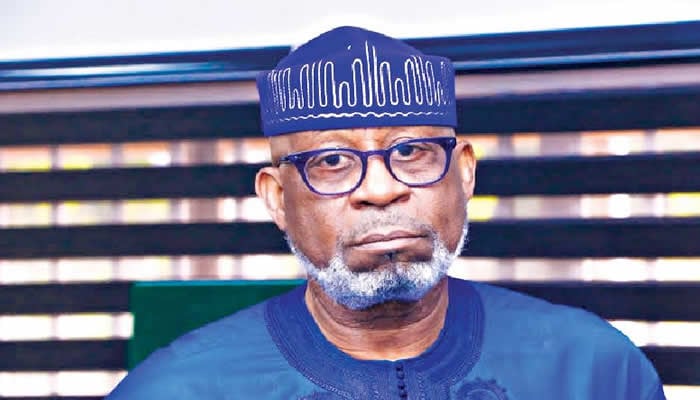
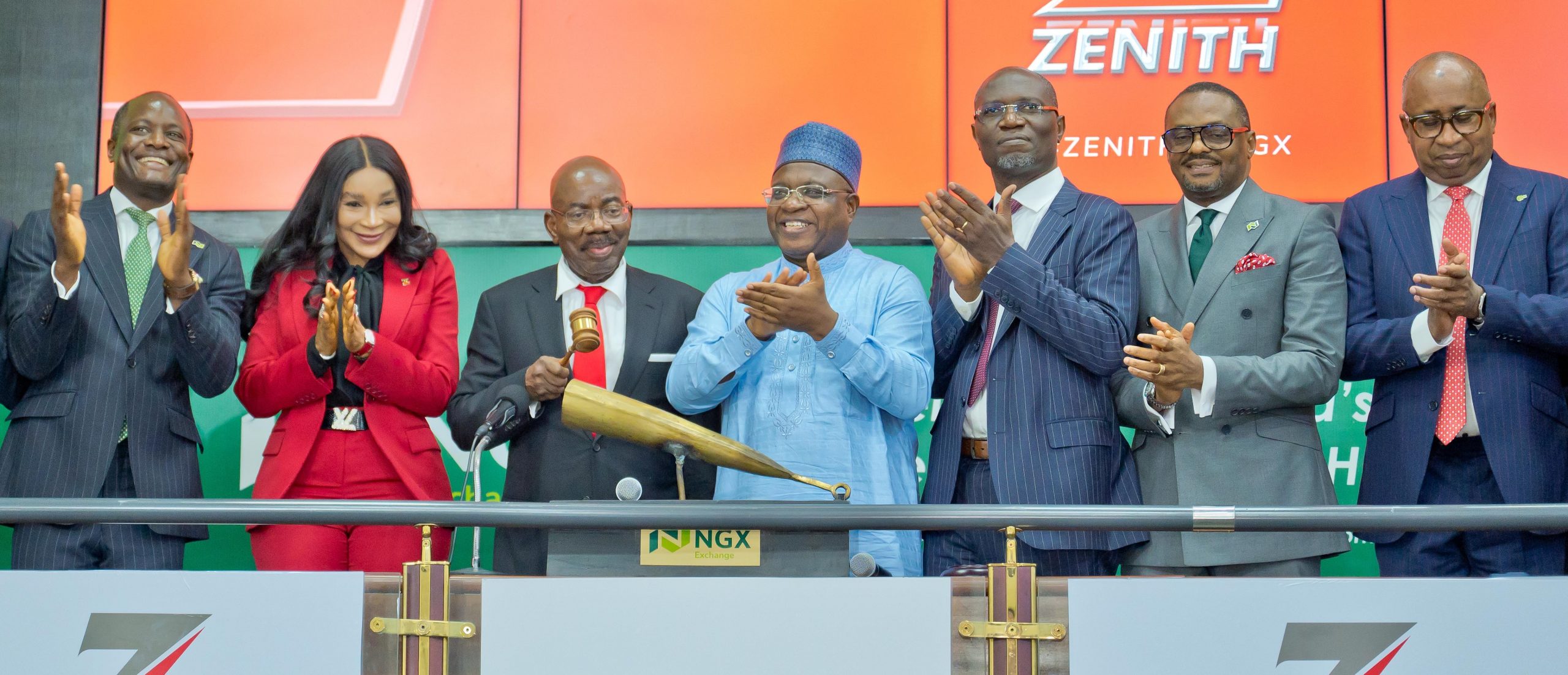
Zenith Bank Plc‘s Founder and Chairman, Dr. Jim Ovia, CFR, accompanied by the bank’s Group Managing Director/CEO, Dame Dr. Adaora Umeoji, OON, on Tuesday, October 14, 2025, carried out the prestigious closing gong ceremony at the Nigerian Exchange (NGX), marking a significant milestone in the bank’s continued partnership with the capital market and the official closing of the trading day. The ceremony highlights Zenith Bank’s strong relationship with the NGX and its commitment to transparency, accountability, and bolstering investor confidence.

While speaking at the Nigerian Exchange, Dr. Umeoji expressed her delight in participating in the closing gong ceremony, acknowledging the NGX’s visionary leadership and innovative initiatives. “We are delighted to be here today to perform the closing gong ceremony – a symbol of shared progress and enduring partnership,” Dr. Umeoji said. “The NGX’s leadership has been very creative and innovative, and their electronic trading platform – X-stream played a pivotal role in the success of our recapitalization exercise, which achieved a 160% subscription. The bank’s stock price has doubled since the recapitalization exercise, from N36.50 per share to N68. Zenith Bank has also reported impressive financial results for the Half Year (H1) of 2025, becoming the most profitable bank in Nigeria and paying the highest dividend in the industry for the half year.”

“We are committed to creating value for our stakeholders and will continue to partner with the NGX to boost the Nigerian economy,” Dr. Umeoji added. “Our expansion strategy is focused on following our customers’ businesses and ensuring that we go to countries and economies where we can scale and provide more returns for our shareholders.”

She stressed that the bank plans to make good on its promise of being investors’ delight by paying quantum dividends to its shareholders by year end. According to her “For us in Zenith, we are looking forward to paying more based on the confidence the market reposed on us. We are working assiduously to ensure that we do not disappoint the Market.  We are going to continue to be the investors’ delight, and we assure the market that we would continue to pay enhanced dividends come end of the year.”

Also commenting, the Director General of the Securities and Exchange Commission (SEC), Dr. Emomotimi Agama emphasised the role of the NGX in creating value in the Nigerian economic space. He said, “I want to thank you all for making the market what it is. Without you, the market wouldn’t have seen the leap that it has achieved in the last one-and-half year. I spoke earlier that at my assumption of office, market capitalization stood at N55 trillion, today it is hovering around 89 trillion and 93 trillion. That was not done by a spirit, it was done by you. Your ability, tenacity, courage, vision and transparency have moved the market where it is. Our vision is that by next year, we will have the market at 200trn.”

The Doyen of the NGX, Alhaji Rasheed Yusuf while giving his remarks, lauded the Founder & Chairman, Zenith Bank Plc, Jim Ovia, CFR for his vision and leadership. He ended by referring to him as the “Doyen of the Commercial banking sector”.

Zenith Bank remains committed to creating long-term value for its stakeholders while driving economic development in Nigeria. As the bank continues on its growth trajectory, it has its sights set on global expansion. The bank intends to strategically leverage the capital raised from the Market to enhance its scalability and deliver enhanced services to its valued customers.

The Bank’s track record of excellent performance has continued to earn the brand numerous awards, including being recognised as the Number One Bank in Nigeria by Tier-1 Capital for the sixteenth consecutive year in the 2025 Top 1000 World Banks Ranking, published by The Banker and “Nigeria’s Best Bank” at the Euromoney Awards for Excellence 2025. The Bank was also awarded Bank of the Year (Nigeria) in The Banker’s Bank of the Year Awards for 2020, 2022 and 2024; Best Bank in Nigeria from 2020 to 2022, 2024 and 2025, in the Global Finance World’s Best Banks Awards; Best Bank for Digital Solutions in Nigeria in the Euromoney Awards 2023; and was listed in the World Finance Top 100 Global Companies in 2023.

Further recognitions include Best Commercial Bank, Nigeria for five consecutive years from 2021 to 2025 in the World Finance Banking Awards and Most Sustainable Bank, Nigeria in the International Banker 2023 and 2024 Banking Awards. Additionally, Zenith Bank has been acknowledged as the Best Corporate Governance Bank, Nigeria, in the World Finance Corporate Governance Awards for four consecutive years from 2022 to 2025 and ‘Best in Corporate Governance’ Financial Services’ Africa for four consecutive years from 2020 to 2023 by the Ethical Boardroom.

The Bank’s commitment to excellence saw it being named the Most Valuable Banking Brand in Nigeria in The Banker’s Top 500 Banking Brands for 2020 and 2021, Bank of the Year 2023 to 2025 at the BusinessDay Banks and Other Financial Institutions (BAFI) Awards, and Retail Bank of the Year for three consecutive years from 2020 to 2022 and 2024 to 2025 at the BAFI Awards. The Bank also received the accolades of Best Commercial Bank, Nigeria and Best Innovation in Retail Banking, Nigeria, in the International Banker 2022 Banking Awards.

Zenith Bank was also named Most Responsible Organisation in Africa, Best Company in Transparency and Reporting and Best Company in Gender Equality and Women Empowerment at the SERAS CSR Awards Africa 2024; Bank of the Year 2024 by ThisDay Newspaper; Bank of the Year 2024 by New Telegraph Newspaper; and Best in MSME Trade Finance, 2023 by Nairametrics. The Bank’s Hybrid Offer was also adjudged ‘Rights Issue/ Public Offer of the Year at the Nairametrics Capital Market Choice Awards 2025.


Cristiano Ronaldo closes in on 1,000 career goals


Portugal and Al Nassr striker, Cristiano Ronaldo, is on the verge of achieving a milestone no male footballer has ever reached: 1,000 career goals.


According to Sky Sports on Wednesday, following his recent brace against Hungary in the World Cup qualifiers, the Portuguese legend has now scored a staggering 948 goals across club and international competitions, 805 at club level and 143 for Portugal.


He also became the all-time leading scorer in World Cup qualifying history, surpassing Carlos Ruiz on 39, with Lionel Messi third in the list on 36.


Ronaldo turned 40 in February, but he continues to rack up impressive numbers at club level as well as internationally, albeit against weaker opposition in Saudi Arabia, where he has scored 104 goals in 117 appearances across four seasons with Al-Nassr.


With 32 goals already for club and country in 2025, he is maintaining a remarkably consistent level of productivity in front of goal. Ronaldo has averaged more than 50 goals per calendar year since 2010.


His highest scoring year came in 2013, when he smashed 69 goals and won the Ballon d’Or.


Amazingly, his total has only dipped below 39 goals once in a calendar year in the last decade and a half.


With Portugal set to qualify for next summer’s World Cup, and with two years to go on his Al-Nassr contract, Ronaldo is projected to become the first player in recorded history to reach the 1,000-goal mark in October 2026 based on his current scoring rate.


Schools charging fees in foreign currencies should be shut — Minister


The Minister of Solid Minerals Development, Dr Dele Alake, says Schools in Nigeria charging tuition fees in foreign currencies should be closed.


Alake made the call at the Nigeria Gold Day Celebration on the sidelines of the 10th edition of Nigeria’s Mining Week, themed Nigeria Mining: From Progress to Global Relevance, on Wednesday in Abuja.


He criticised the practice and described it as a part of the leakages and loopholes in Nigeria’s economy, threatening its growth.


“I am still going to make a proposal to the Federal Executive Council that all those schools in Nigeria that are charging in foreign currencies should be closed.

“These are some of these leakages and loopholes that we say exist in our economy that people do not really take these things very seriously,” he said.


“If you look at the foreign currency that goes into some of this, it is humongous


“If your child is attending a school in Abuja or Lagos or somewhere in the country and is paying 10,000 pounds or 10,000 dollars as their fees, that means you will be looking for naira to go and buy dollars.


“Driving the value of dollar up, whereas this school is in Abuja in Nigeria, you can’t go to UK, establish a school, and then be charging naira, it’s not done.


“It’s only in this country that I see so many contradictory things that really demolish the economy,” he said.


The minister said the Federal Government was introducing various measures, including digital mechanisms, to ensure that all leakages in Nigeria’s gold value chain were blocked and every loophole sealed.

He said the move would reduce room for interpersonal transactions, thereby reducing the propensity of corruption, which would further position Nigeria’s gold as one of the global pillars of means of exchange of value.


He said the Federal Government’s National Gold Purchase Programme (NGPP), implemented through the Solid Minerals Development Fund (SMDF), was designed to shore up Nigeria’s foreign reserves and strengthen the naira.


Alake explained that the NGPP, a component of the Presidential Artisanal Gold Mining Initiative, allows the government to buy gold directly from artisanal miners in naira, rather than spending foreign exchange to purchase gold internationally.


In her remarks, the Executive Director of SMDF, Fatima Shinkafi, said that, unlike global trends, gold exploration funding in Nigeria was on an upward trajectory.

Shinkafi explained that, within the broader macroeconomic context, gold serves as a safe-haven asset and encouraged conference participants to explore Nigeria’s gold opportunities.


“We implore everyone here to examine Nigeria’s gold resources and support the minister’s efforts to make Nigeria a premier destination for junior miners.


“In another year or so, let’s look at Nigeria’s Gold Day 2025 as a pivotal turning point, “ she said.


NAN reports that the Nigeria Mining Week, holding from October 13 to 15, is organised by the Miners Association of Nigeria in partnership with PricewaterhouseCoopers and the VUKA Group.


(NAN)

Madagascar protests fan anti-France sentiment amid political crisis


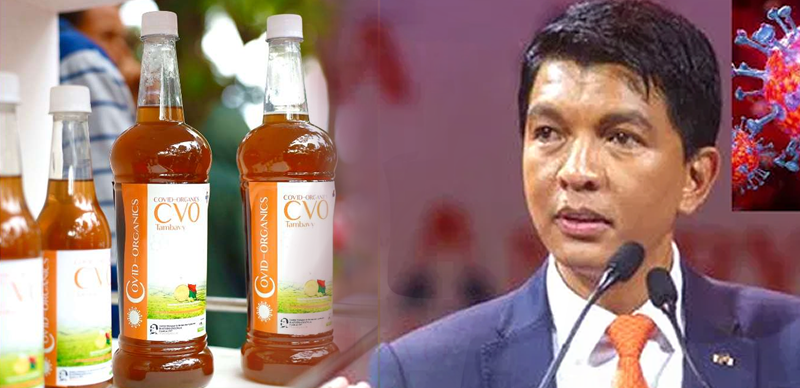
Placards and slogans against France that surfaced in demonstrations against impeached President Andry Rajoelina this week exposed deep resentment against the former colonial power.


“France out,” “Rajoelina and Macron out,” said banners after French media reported that the president had fled on a French military plane as an army unit threw its weight behind protesters calling for his resignation.


“They are still colonising us even though we are supposed to be independent,” said Koloina Andrianina Rakotomavonirina, a 26-year-old engineer.


“It’s unfair that they intervene in such a matter,” she told AFP at a demonstration in central Antananarivo.

With the whereabouts of the 51-year-old president unknown, the national assembly impeached him on Tuesday for desertion of duty, paving the way for a military unit called CAPSAT to seize power.


Negative perception about France was not surprising considering its history, Paris-based political scientist Christiane Rafidinarivo told AFP.


Its colonisation of the Indian Ocean island until independence in 1960 was marked by several atrocities, including the bloody repression by French forces of a 1947 uprising which claimed tens of thousands of lives.


“France represents colonialism,” Rafidinarivo said. “This perception runs through public opinion and is triggered depending on current events.”


While President Emmanuel Macron refused to confirm French involvement in Rajoelina’s evacuation, a presidential pardon for two French nationals jailed in Madagascar on coup charges—announced as the reports of his departure broke—raised suspicions of a deal.


Citizenship revelation


Rajoelina’s apparently chummy ties with Paris have long been criticised at home, but media reports in 2023 that he had obtained French nationality nine years before deepened the mistrust.


The revelation came just before the 2023 presidential race and led to calls for him to be disqualified, as the opposition claimed he should have lost his Madagascan nationality as a result, according to local law.


Rajoelina went on to win reelection, but the polls were boycotted by most opposition parties and marked by a low turnout.

That sparked new criticism against France “because the opposition accused him of being a French agent,” said Adrien Ratsimbaharison, author of a book on the 2009 coup that brought Rajoelina to power but denied him international recognition.

French president at the time, Nicolas Sarkozy, was the first foreign head of state to recognise Rajoelina as president during a state visit to France in 2011.


“People did not forgive in France for that, because that gave Rajoelina some kind of legitimacy,” Ratsimbaharison said.


There were also suspicions that Sarkozy sent financial aid to Rajoelina to engineer the 2009 protests and secure the support of military personnel to overthrow then-president Marc Ravalomanana, he said.


Rumours, resentment


In Madagascar’s social media mix of disinformation and rumour, a widely shared but out-of-context image that claimed to show the deployment of French gendarmes to support the embattled Rajoelina outraged those who believed it.


The photo showed a Malagasy gendarme wearing French colours, but this was only because he had undergone training in France, the gendarmerie told AFP.


Resentment towards the former colonial power is also fuelled by the awarding of major contracts to French companies and open French sex tourism on the impoverished island.


Some French businesses, such as call centres, meanwhile, use French-speaking Malagasy workers at a fraction of the wages they would earn in Europe.


At one demonstration, 27-year-old Mampionona Razafinjoelina said he quit his call-centre job because: “I was tired of being insulted by the French.”


Amid the long-running animosity, Macron said on a visit to the island in April he wanted to create the conditions for “forgiveness” for France’s colonisation, which has also left a bitter taste in its other former colonies such as Mali, Burkina Faso, Niger and Gabon.


This included returning the remains of a Malagasy king killed by the French army in an 1897 massacre that were taken to France as trophies, which happened in September, as well as the establishment of a Franco-Malagasy commission to look into atrocities of the time.


AFP

Why I isolated for four years – Singer Seyi Shay


Singer, Seyi Shay, has revealed the reasons for her isolation for over four years, citing the need to reflect on her life and personal growth.


In an interview with Chude Jideonwo seen by PUNCH Online on Thursday, the singer said the isolation helped her operate on a different level and has also helped her change the perception she had of men.


The interview marks one of the first in-depth public reflections from Seyi Shay in years, offering her fans and the public a clearer understanding of why she stepped back and what she gained in the process.


“I have done so much work over these past four years. The transformation of my mind started before I had my child. I started a journey of isolation. There is something really good about isolation, but I know some people say it is not good, but one thing for me is that I was blessed with hindsight and I could just reflect and I was also blessed with insight which in turn, gave me foresight and I think that is the biggest gift beside my daughter that God has given me these few years that I have been away.

“My spirituality has also transformed, and I am vibrating on such a different level now that I actually feel very comfortable with men. I love all the men. It is a man’s world,” she said.


She, however, revealed why she is not married to the father of her daughter, despite maintaining a close and respectful relationship with him.


She said, “It’s a technical issue, you understand? But he’s great, he’s cool, he’s around. He’s Nigerian, he’s in the UK at the moment, and he’s also in the music industry on the corporate side of things. We just work together, raising our child, and we are great friends.”


PUNCH Online had reported earlier that Nigerian singer Tiwa Savage revisited her long-standing rift with fellow artiste Seyi Shay, clarifying her side of the story regarding the infamous salon confrontation that went viral years ago.

Inflation drops to 18.02% in six-month streak

Inflation drops to 18.02% in six-month streak

Nigeria’s headline inflation rate eased to 18.02 per cent in September compared to 20.12 per cent in August 2025, indicating the sixth consecutive month of deceleration in inflation.

This was disclosed by the National Bureau of Statistics in the latest Consumer Price Index published on Wednesday. This also marked the first time in three years that inflation had fallen below the 20 per cent threshold.

The rebasing of the CPI has been a driver of the decline in inflation this year, which has resulted in the first rate cut by the Monetary Policy Committee of the Central Bank of Nigeria in years. The sustained dip in inflation supports the projection by economists that the MPC may still cut the benchmark rate.

According to NBS, the September 2025 headline inflation rate decreased by 2.1 per cent compared to the previous month. On a year-on-year basis, the headline inflation rate was 14.68 per cent lower than the rate recorded in September 2024 (32.70 per cent), marking a decrease compared to the same month in the preceding year.

However, on a month-on-month basis, the food inflation rate in September 2025 was -1.57 per cent, down by 3.22 per cent compared to August 2025 (1.65 per cent). The decrease can be attributed to the rate of decrease in the average prices of maize (corn) grains, garri, beans, millet, potatoes, onions, eggs, tomatoes, fresh pepper, etc.”

Core inflation, which is all items less farm produce and energy, stood at 19.53 per cent in September 2025. On a year-on-year basis, it declined by 7.9 per cent when compared to the 27.43 per cent recorded in September 2024.

On a month-on-month basis, the core inflation rate was 1.42 per cent in September 2025, down by 0.01 per cent compared to August 2025 (1.43 per cent). The average 12-month annual inflation rate was 22.39 per cent for the 12 months ending September 2025, which was 3.25 percentage points lower than the 25.64 per cent recorded in September 2024.

Urban inflation inched up month-on-month by 0.25 per cent to 0.74 per cent from 0.49 per cent in August. However, on a year-on-year basis, it stood at 17.50 per cent, which is about 17.63 percentage points lower compared to September 2024.

The rural inflation rate in September 2025 dipped on a yearly and monthly basis. It stood at 18.26 per cent (yearly) and 0.67 per cent (monthly).

At the state level, the headline inflation rate on a year-on-year basis was highest in Adamawa (23.69 per cent), Katsina (23.53 per cent), and Nasarawa (22.29 per cent), while Anambra (9.28 per cent), Niger (11.79 per cent), and Bauchi (12.36 per cent) recorded the lowest rise in headline inflation on a year-on-year basis. On a month-on-month basis, however, NBS said the highest increases were recorded in Zamfara (9.36 per cent), Adamawa (8.15 per cent) and Nasarawa (7.49 per cent), while Niger (-8.14 per cent), Oyo (-5.56 per cent) and Bayelsa (-4.61 per cent) recorded a decline.

Year-on-year, food inflation was highest in Ekiti (28.68 per cent), Rivers (24.18 per cent), and Nasarawa (22.74 per cent), while Bauchi (2.81 per cent), Niger (8.38 per cent), and Anambra (8.41 per cent) recorded the slowest rise. On a month-on-month basis, food inflation was highest in Zamfara (15.62 per cent), Ekiti (12.77 per cent), and Sokoto (12.55 per cent) and lowest in Akwa Ibom (-12.97 per cent), Borno (-12.95 per cent), and Cross River (-10.36 per cent).

Ahead of the release of the inflation data, the Senior Research Analyst at FXTM, Lukman Otunuga, had projected an easing in the inflation to 18.8 per cent.

He had pegged his projection on “A combination of softer food prices and a strengthening naira may have tamed price pressures. Further signs of cooling price pressures may pave the way for further rate cuts by the CBN in November to stimulate economic growth.”

The experts at Arthur Steven Asset Management also affirmed the sentiments that the MPC may cut rates at its last meeting of the year, saying, “Nigeria’s inflation eased to 18.02 per cent in September, marking the sixth consecutive month of decline following the 50 bps MPR rate cut in September. The sustained disinflation trend strengthens expectations of a possible further rate reduction at the next MPC meeting in November.”

AIICO Capital, in their Inflation Watch, said that the decline in inflation reflects the positive impact of recent government policy reforms.

“Notably, the Consumer Price Index was rebased earlier in the year to a new 2024 base year with an updated basket of goods, contributing to the sustained moderation in inflation. In addition, energy prices and the FX rate have remained stable, with the naira appreciating by 2.9 per cent in September 2025, its strongest level in 15 months. Encouragingly, both annual and monthly inflation have trended downward, easing immediate price pressures.

“Furthermore, following the Monetary Policy Committee’s decision to cut the benchmark interest rate by 50 basis points to 27 per cent in September, the sharp decline in inflation, now approaching the 15 per cent budget benchmark, signals the possibility of further rate cuts in the Monetary Policy Rate before year-end. However, sustaining lasting price stability will require consistent policy discipline, strengthened food security measures, and continued stability in energy prices to guard against renewed volatility.”

– Punch

Senate Set to Screen new INEC Chairman, Amupitan Today

Senate Set to Screen new INEC Chairman, Amupitan Today

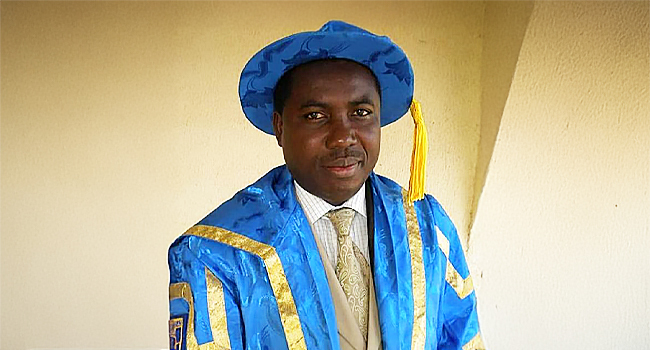
The Senate will today (Thursday) screen  Prof. Joash Ojo Amupitan for the position of Chairman of the Independent National Electoral Commission (INEC).

The announcement was contained in a circular issued on Wednesday by the Director of Information for the Senate, Bullah Audu Bi-Allah, and made available to journalists in Abuja.

The development comes barely 24 hours after President Bola Tinubu’s letter seeking the speedy confirmation of Amupitan was read on the Senate floor by the President of the Senate, Godswill Akpabio.

The circular read in part: “The Office of the Secretary, Research and Information wishes to notify members of the press and the general public that the Senate will on Thursday, 16th October, 2025, conduct the screening of the nominee of President Bola Tinubu, Prof. Joash Ojo Amupitan, as INEC Chairman.

“The exercise is scheduled to hold at the Senate Chamber, National Assembly Complex. Members of the Senate Press Corps are kindly requested to provide their usual media coverage and support to ensure adequate dissemination of information to the public. Similarly, television stations are expected to extend the usual courtesies of providing live coverage of the event.”

Amupitan’s nomination, which followed last week’s endorsement by the National Council of State, marks a significant transition for the electoral body following the exit of Prof. Mahmood Yakubu after a decade at the helm of INEC.

In his letter to the Senate, Tinubu stated that the appointment was made “in line with Section 154 (1) of the 1999 Constitution (as amended)” and urged lawmakers to grant it their “usual expeditious consideration.”

“I am pleased to present for confirmation by the Senate the appointment of Professor Joash Amupitan, Senior Advocate of Nigeria, as Chairman of the Independent National Electoral Commission,” the President wrote.

Amupitan’s nomination comes at a politically sensitive time, with renewed debates over INEC’s independence and credibility following contentious post-election reviews.

While the Presidency described him as “an apolitical figure of impeccable integrity,” opposition parties and civil society groups have urged the Senate to ensure a transparent and rigorous confirmation process.

Today’s screening is expected to be closely watched nationwide, as it will set the tone for electoral reforms and test the administration’s commitment to credible polls ahead of the 2027 general elections.

Meanwhile, the Northern Nigeria Minorities Group  has warned against attempts by individuals and interest groups to ethnicise Amupitan’s appointment.

In a strongly worded statement issued in Kaduna on Tuesday and signed by its Convener, Chief Jacob Edi, the group expressed concern over what it described as “divisive commentaries and social media tirades” questioning President Tinubu’s choice of the Kogi-born scholar.

Edi noted that Amupitan, an indigene of the Okun ethnic group in Kogi State, represents one of the minority nationalities in northern Nigeria and that his appointment should be celebrated rather than politicised.

“We view with consternation the ongoing attempts by certain individuals and interest groups to ethnicise the nomination of Professor Joash Ojo Amupitan, SAN, as Chairman of the INEC,” Edi said.

“For the avoidance of doubt, Professor Amupitan is an Okun man from Kogi State, one of the minority ethnic nationalities in Northern Nigeria. There are 19 states in the North, each richly diverse and unique, none superior to another by tribe, tongue, or faith.”

He expressed concern that “some self-styled northern voices” were portraying the President’s decision as an act of ethnic preference, describing such a narrative as “false, dangerous, and inimical to national unity.”

Edi, who also holds the title of Kakaki Basanghe, noted that this is the first time in 65 years—since the establishment of a statutory electoral commission in 1959—that someone from a northern minority group has been appointed to lead the nation’s electoral body.

“In all these decades, no northern minority group has ever questioned the decisions of successive Heads of State or Presidents to appoint individuals they felt comfortable working with, even when the North-West and North-East held the position consecutively for 15 years,” the statement added.

The NNMG urged Nigerians to recognise northern minorities as equal stakeholders in the Nigerian project and to desist from questioning their appointments to national offices.

Edi lamented that the “unfortunate trend” of delegitimising northern minority appointments began during the administration of former President Olusegun Obasanjo, when such appointments were derisively dismissed as “not northern enough.”

“The current ethnicisation of Professor Amupitan’s appointment is a direct continuation of that ugly and retrogressive trend, and it must stop,” he declared.

The group stressed that the North should not be defined by ethnicity but by inclusiveness and diversity, warning that those peddling divisive narratives were “the real enemies of national unity and progress.”

It further outlined four key points, asserting that the backlash over Amupitan’s appointment exposes a long-standing prejudice against northern minorities.

“This jejune narrative underscores our growing concern that some of our northern colleagues continue to perceive northern minorities merely as fillers of demography, unworthy of the privileges and recognition that come with our place in the federation,” it stated.

“Such thinking is antiquated, divisive, and inimical to the spirit of modern governance.”

According to the NNMG, 65 years after independence, Nigeria should be guided by competence, integrity, and capacity rather than ethnic considerations.

“The appointment of Professor Amupitan should be celebrated as a bold step toward inclusivity, equity, and meritocracy. These are values that must be internalised if we are to strengthen our democracy,” the statement added.

While commending President Tinubu for “recognising the diversity of the North,” the group said the President deserves credit for giving all constituent groups in the region a sense of belonging through his recent appointments.

Edi cautioned that further attempts to polarise the country along ethnic or sectional lines would only undermine democratic development.

“We urge political actors, commentators, and citizens alike to rise above petty identity politics and focus on building institutions that work, irrespective of who heads them. The time for ethnic arithmetic is over. The era of competence, fairness, and national responsibility must begin in earnest,” he said.

The group also maintained that northern minorities play a crucial role in stabilising the Nigerian federation, noting that collectively they represent “the real majority” that continues to believe in the unity and progress of the nation.

“We must reiterate, without ambiguity, that northern minorities collectively constitute the true stabilising force of this federation — and when placed together, we are not just minorities; we are the real majority that believes in the unity and progress of Nigeria,” Edi said.

He concluded by calling for an end to the politicisation of national appointments and urged Nigerians to rally behind Professor Amupitan as he prepares to lead the electoral commission.

“Let competence and fairness, not ethnicity, define our national discourse. The success of Nigeria’s democracy depends on it,” Edi added.

– Punch

NAMDA denies strike claim, reaffirms autonomy of medical lecturers’ union


The Nigerian Association of Medical and Dental Academics has debunked rumours that its members are on strike.


The association clarified its position in a statement jointly signed by its President, Dr Nosa Lancy-Orhue; Secretary-General, Dr Abdulrahman Shehu; and National Liaison Officer/Organising Secretary, Dr Muhammad Askira, on Wednesday in Abuja.


NAMDA is the trade union for medical lecturers in universities, tertiary health, and research institutions.


It is responsible for undergraduate and postgraduate medical education, including the training of medical doctors and dentists in Nigeria.

The association reaffirmed that it remains an independent union with the capacity to negotiate its interests and uphold mutual respect.


“NAMDA is not on strike, and we will not be blackmailed, coaxed, or lured away from the interest of our members,” the statement read.


It said the clarification became necessary following persistent enquiries from members, the press and the public regarding its stance on the ongoing withdrawal of services by another academic union in the university system.


NAMDA said its members had been neglected for long but would continue to support legitimate demands that do not adversely affect their interests.


The association acknowledged ongoing engagements with the Federal Government through the Ministries of Labour and Education, which it described as “very encouraging”


It said the Minister of Education, through a meeting facilitated by the Minister of Labour and Employment, had promised to address key issues affecting medical lecturers.


“These demands include the implementation of the Consolidated Medical Workers Salary Structure (CONMESS) and the withdrawal of the compulsory PhD requirement for medical lecturers with postgraduate fellowship for academic promotion and eligibility to vie for the position of Vice-Chancellor,” the statement said.


NAMDA also called for the approval by the Federal Executive Council of the scheme of service contained in memorandum CM(90)92 of its 11th meeting in 1990, based on the recommendations of the committee chaired by the late Chief Justice Atanda Fatai Williams.

It said the issue of Earned Academic Allowances was also discussed.


The association noted that the minister apologised for the error in a letter from the Office of the Accountant-General of the Federation, which appeared to limit the benefit to members of the Academic Staff Union of Universities.

NAMDA alleged that some university managements, supported by a sister union, attempted to exclude its members from the EAA payment.


It cited the Abubakar Tafawa Balewa University, Bauchi, where the Governing Council had responded that medical lecturers were not entitled to the allowance.


The association said it had requested the Department of State Services to investigate how two conflicting letters on the same matter emanated from the AGF’s office.


NAMDA said it would continue to engage the Federal Government through the committee set up to negotiate with university unions to emphasise its long-standing demands.


“The conditions of service for medical and dental lecturers cannot be satisfactorily negotiated by anyone but medical academics under NAMDA,” it said.


The association urged the Federal Government to fast-track the circularisation of CONMESS and direct the National Universities Commission to reaffirm the withdrawal of the circular making a PhD compulsory for medical academics with postgraduate fellowships.


NAMDA said it reserved the right to adopt legitimate means, including legal actions, in pursuing its demands, adding that any withdrawal of service by the union would be guided by its constitution.


It warned that such an action, if ever taken, would have serious implications for the education and health sectors.


(NAN)

NGO, NCoS unveil farming project to train inmates, tackle food insecurity


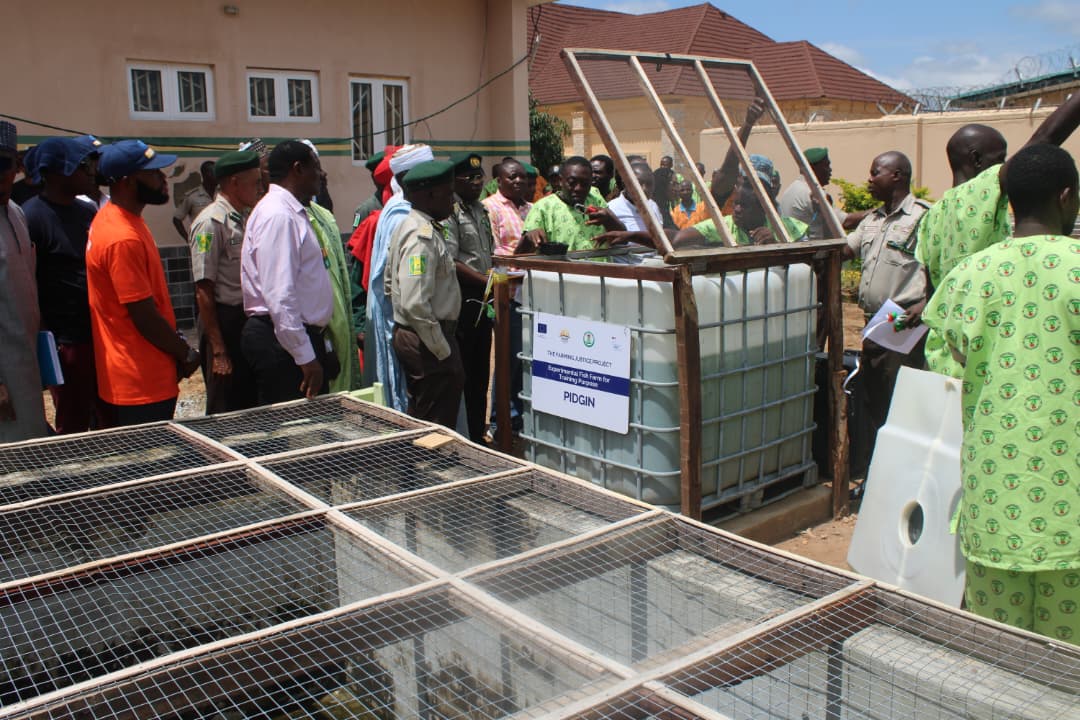
A Non-Governmental Organisation, Hope Behind Bars Africa, has inaugurated the Farming Justice Project at the Kuje Custodial Centre in Abuja to promote inmate rehabilitation and tackle food insecurity within correctional facilities.


The initiative, implemented in partnership with the Nigerian Correctional Service, is funded by the European Union through International IDEA under the Rule of Law and Anti-Corruption Programme.


At the official launch on Tuesday, the Executive Director of HBBA, Funke Adeoye, described the project as a practical response to Nigeria’s evolving correctional mandate.


“With the change in nomenclature from ‘prison’ to ‘correctional service,’ there is a need to ensure that our custodial centres reflect that change through genuine rehabilitation and empowerment,” she said.

Adeoye explained that the Farming Justice Project integrates agriculture with restorative justice principles, giving inmates the opportunity to gain life skills and contribute meaningfully to society both during and after incarceration.


She noted that the initiative seeks to empower inmates through agricultural training and practical food production, adding that over 80 inmates are currently being trained in modern techniques for okra, watermelon, and tomato cultivation.


“Some of our harvested okra has already been consumed by inmates, showing real progress in tackling food shortages in custodial centres,” she said.


The project currently operates at the Kuje Custodial Centre and the Dukpa Farm Centre in Abuja, with plans to replicate the model in other facilities across the country, including Lagos, where HBBA has previously worked with female inmates on similar agricultural initiatives.


“Our goal is to reduce recidivism by equipping inmates with viable means of livelihood after serving their sentences.


“We are calling on partners and well-meaning Nigerians to support the NCoS in ensuring effective rehabilitation and reintegration of inmates,” Adeoye added.


She commended the Comptroller General of the Nigerian Correctional Service, Sylvester Nwakuche, for his support and openness to public-private partnerships aimed at reforming correctional practices.

On the broader issue of incarceration, Adeoye emphasised the importance of preparing inmates for reintegration into society.


“Out of over 80,000 inmates nationwide, only about 3,600 are on death row. This means a large number will eventually return to our communities. Therefore, it is our responsibility to ensure they come out better prepared for productive living,” she said.


In his welcome remarks, the Controller of Corrections for the FCT Command, Christopher Jen, praised the initiative as a significant step towards building a more peaceful and secure Nigeria.

“My desire is to see a better Nigeria tomorrow where everyone will live without fear or anxiety.


“The enthusiasm and willingness of inmates to learn skills today give me confidence that such a future is possible,” Jen said.


He described the Kuje Custodial Centre as a “centre of excellence” in vocational training, listing ongoing programmes such as barbing, embroidery, carpentry, plumbing, electrical work, shoemaking, soap making, and fishery.


In a goodwill message, Joseph Odeh, a representative of International IDEA, stressed the importance of collective effort in justice reform.


“Justice reform is not the responsibility of one institution alone. It is a shared mission that requires the active participation of all sectors of society.


“Let this day mark the beginning of a new chapter in our justice system—one that prioritises human development, community reintegration, and sustainable transformation,” he said.


The event featured a guided tour of the Kuje facility, the unveiling of the Farming Justice Project, and visits to various skill acquisition centres where inmates are receiving hands-on vocational training.

Strike: N’Assembly wades into ASUU, FG dispute


The House of Representatives on Tuesday urged the Federal Government and the Academic Staff Union of Universities to urgently return to the negotiating table to resolve the ongoing dispute that led to the declaration of a two-week warning strike by the union.


The House’s resolution followed the adoption of a motion of urgent public importance moved by the member representing Badagry Federal Constituency of Lagos State, Oluwaseun Whinghan, during plenary.


ASUU had on Monday began a two-week warning strike over the Federal Government’s alleged failure to address long-standing issues, including the implementation of the 2009 ASUU-FGN Agreement, revitalisation funding, earned academic allowances, salary structure, and university autonomy.


Before the commencement of the strike, the Minister of Education, Dr. Yusuf Sununu, had assured that the President Bola Tinubu administration was in the final stage of talks with ASUU to resolve all outstanding matters.

Moving the motion, Whinghan expressed deep concern over the renewed strike, warning that such industrial actions have historically escalated into prolonged shutdowns that disrupt academic calendars, derail research, and deepen the frustration of students, parents, and lecturers alike.


“The House notes that although ASUU has described the strike as a warning, previous experiences show that these actions often degenerate into extended work stoppages,” he said.


“We are aware that the Nigerian university system remains central to national development, innovation, and human-capital growth, and that any disruption weakens the country’s competitiveness, scientific advancement, and youth productivity.”


He added that education is constitutionally recognised under Section 18 of the 1999 Constitution (as amended) as a key driver of social and technological progress, stressing that both the Federal Government and university unions share a collective duty to protect its continuity and quality.

Whinghan lamented that repeated strikes in the tertiary education sector have resulted in student dropouts, brain drain, and the loss of public confidence in the nation’s university system, thereby undermining national stability and Nigeria’s long-term development goals.


He called for “renewed dialogue anchored on mutual respect, transparency, and good faith, with the legislature serving as a neutral facilitator in the interest of students and the nation.”


Following the unanimous adoption of the motion, the House mandated its Committees on University Education and Labour, Employment, and Productivity to immediately intervene between the Federal Government and ASUU to facilitate a mutually acceptable and lasting resolution.


The House also resolved to constitute an Ad-hoc Committee to be chaired by the Speaker, Tajudeen Abbas, to mediate in the crisis and ensure that striking lecturers return to the classrooms without further delay.


It urged both parties to exercise restraint, embrace dialogue, and prioritise the interests of students and national development above all other considerations.


Additionally, the House called on the Federal Government to establish a permanent joint consultative platform with recognised university unions for continuous engagement to prevent future industrial actions.

The Committee on Legislative Compliance was further directed to monitor and report the progress of the mediation efforts to the House within one week.

Exit mobile version