Spread of drug-resistant bacterial infections rising, WHO warns


The World Health Organisation sounded the alarm on Monday over soaring numbers of drug-resistant bacterial infections, compromising the effectiveness of life-saving treatments and rendering minor injuries and common infections potentially deadly.


The United Nations’ health agency warned that one in six laboratory-confirmed bacterial infections worldwide in 2023 showed resistance to antibiotic treatments.


“These findings are deeply concerning,” Yvan J-F. Hutin, head of the WHO’s antimicrobial resistance department, told reporters.


“As antibiotic resistance continues to rise, we’re running out of treatment options and we’re putting lives at risk.”

Bacteria have long developed resistance against medicines designed to fight them, rendering many drugs useless.


This has been accelerated by the massive use of antibiotics to treat humans, animals and food.


Antimicrobial-resistant (AMR) superbugs directly cause over a million deaths and contribute to nearly five million deaths every year, according to the WHO.


In a report on AMR surveillance, the WHO examined resistance prevalence estimates across 22 antibiotics used to treat infections of the urinary and gastrointestinal tracts, the bloodstream, and those used to treat gonorrhoea.

‘Flying blind’ –


In the five years leading up to 2023, antibiotic resistance increased in over 40 per cent of the monitored antibiotics, with an average annual rise of between five and 15 per cent, the report found.


For urinary tract infections, resistance to commonly used antibiotics was typically higher than 30 per cent globally, it showed.


The report looked at eight common bacterial pathogens, including E. coli and K. pneumoniae, which can lead to severe bloodstream infections that frequently result in sepsis, organ failure and death.

The WHO warned that more than 40 per cent of E. coli infections and 55 per cent of K. pneumoniae infections globally are now resistant to third-generation cephalosporins — the first-choice treatment for these infections.


“Antimicrobial resistance is outpacing advances in modern medicine, threatening the health of families worldwide,” WHO chief Tedros Adhanom Ghebreyesus warned in a statement.


The WHO hailed improvements in surveillance but warned that 48 per cent of countries were still not reporting any AMR data.

“We are definitely flying blind in a number of countries and regions that have insufficient surveillance systems for antimicrobial resistance,” Hutin acknowledged.

‘Future threat’ –


Judging from the available data, most resistance was found in places with weaker health systems and less surveillance, the WHO said.


The highest resistance was found in the Southeast Asian and Eastern Mediterranean regions, where one in three reported infections were resistant.


In the African region, one in five infections was meanwhile resistant.

Silvia Bertagnolio, who heads the WHO unit for antimicrobial resistance surveillance, told reporters it was unsurprising that resistance would be higher in places with weaker health systems, since they may lack the capacity to diagnose or treat pathogens effectively.


The differences could also be linked to the fact that countries with less surveillance may test and provide data on fewer patients and only those with the most serious infections, she said.


The WHO has warned that there are not enough new tests and treatments in the pipeline to tackle the growing spread of drug-resistant bacteria.


This is creating a significant “future threat”, Hutin cautioned.


“The increasing antibiotic use, the increasing resistance and the reduction of the pipeline is a very dangerous combination.”

Hamas begins handing over Israeli hostages


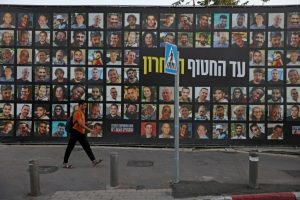
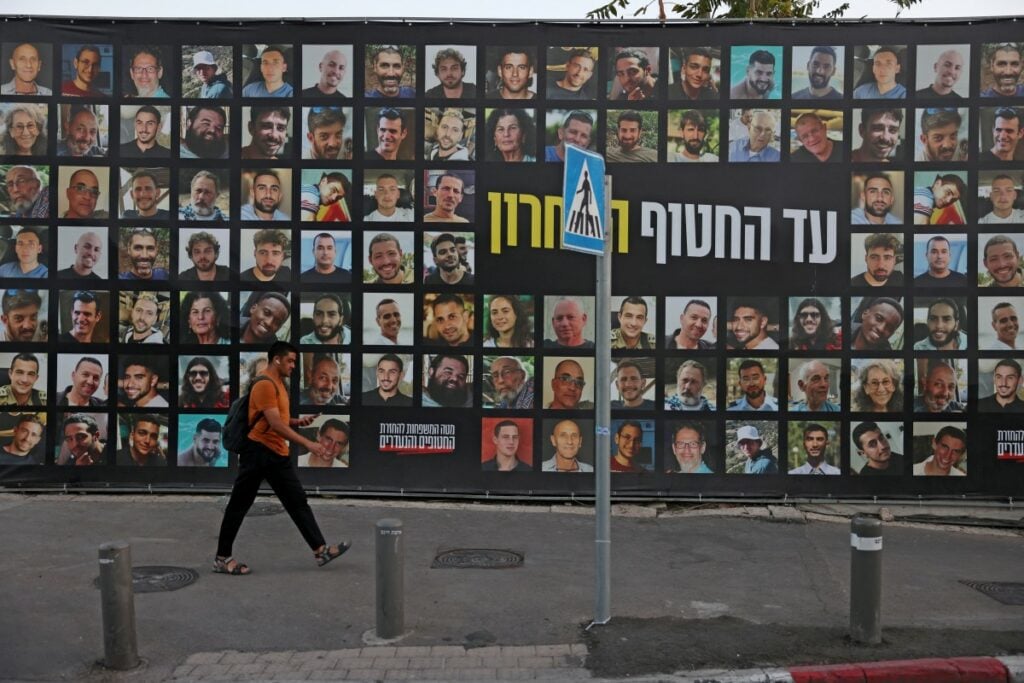
Hamas handed over the first seven of 20 surviving Israeli hostages to Red Cross representatives in Gaza on Monday, sparking cheers of joy in Tel Aviv, where a huge crowd was gathered to support hostage families.


Under a ceasefire agreement brokered by US President Donald Trump after two years of war, Hamas is due to release all surviving hostages on Monday in exchange for Palestinian prisoners held by Israel.


The releases came as Trump headed to the region for a peace summit, having declared the war “over”.


“According to information provided by the Red Cross, seven hostages have been transferred into their custody, and are on their way to IDF and ISA forces in the Gaza Strip,” the Israeli military and security service said.


“The IDF is prepared to receive additional hostages who are expected to be transferred to the Red Cross later on.”


In Tel Aviv, hundreds of people gathered on Hostages Square and erupted in joy as news broke of the first releases.


Among them, Noga shared her pain and joy with AFP.


“I’m torn between emotion and sadness for those who won’t be coming back,” she said.


On October 7, 2023, militants seized 251 hostages during Hamas’s unprecedented attack on Israel, which led to the deaths of 1,219 people, most of them civilians.


All but 47 of the hostages were freed in earlier truces, with the families of those that have remained in captivity leading lives of constant pain and worry for their loved ones.


In Gaza, too, the ceasefire has brought relief, but with much of the territory flattened by war, the road to recovery remains long.


“I returned to Sheikh Radwan with my heart trembling,” 38-year-old Fatima Salem told AFP after she returned to her neighbourhood in Gaza City.


“My eyes kept searching for landmarks I had lost — nothing looked the same, even the neighbours’ houses were gone.


“Despite the exhaustion and fear, I felt like I was coming back to my safe place. I missed the smell of my home, even if it’s now just rubble. We will pitch a tent next to it and wait for reconstruction.”

– ‘War is over. Okay?’ –


Trump’s lightning visit to Israel and Egypt aims to celebrate his role in brokering last week’s ceasefire and hostage release deal — but comes at a precarious time as Israel and Hamas negotiate what comes next.


Under the US president’s proposed roadmap, once the Palestinian militants have handed over the surviving hostages, Israel will begin releasing around 2,000 detainees in exchange.


Israel expects all 20 living hostages to be released to the Red Cross “early Monday morning”, according to a spokesperson for Prime Minister Benjamin Netanyahu’s office.


Speaking to reporters on Air Force One at the start of the “very special” visit, Trump brushed off concerns about whether the ceasefire would endure.


“I think it’s going to hold. I think people are tired of it. It’s been centuries,” he said of the fighting.


“The war is over. Okay? You understand that?” the US president added.

In Israel, Trump is due to meet the families of hostages before addressing the Israeli parliament in Jerusalem.


– Final details –


His trip is partly a victory lap over the Gaza deal he helped broker with a 20-point peace plan announced in late September.


“Everybody’s very excited about this moment in time,” Trump said earlier as he prepared to board the plane at Joint Base Andrews near Washington.


Negotiators were still wrangling late Sunday over the final arrangements for the exchanges, with two Hamas sources telling AFP the group was insisting that Israel include seven senior Palestinian leaders on the list of those to be released.


Israel has previously rejected at least one of those names.


The sources said the group and its allies had nevertheless “completed all preparations” for handing over to Israel all the living hostages.

Israel does not expect all of the dead hostages to be returned on Monday.


Under the plan, Hamas is to hand over the remaining 47 hostages, as well as the remains of a soldier killed in 2014 during a previous Gaza war.


Among the prisoners to be released, 250 are security detainees, including many convicted of killing Israelis, while about 1,700 were detained by the Israeli army in Gaza during the war.


– Peace summit –


After visiting Israel, Trump will head to Egypt where he and President Abdel Fattah al-Sisi will co-host a summit of more than 20 world leaders to back his plan to end the Gaza war and promote Middle East peace.


Trump will be looking to resolve some of the huge uncertainty around the next phases of the peace plan — including Hamas’s refusal to disarm and Israel’s failure to pledge a full withdrawal from the devastated territory.


Trump insisted he had “guarantees” from both sides and other key regional players about the initial phase of the deal, and the future stages.


Trump also said he would be “proud” to visit Gaza itself, but did not say when such a difficult security challenge would be possible.


A new governing body for devastated Gaza — which Trump himself would head under his own plan — would be established “very quickly,” he added.


Under the plan, as Israel conducts a partial withdrawal from Gaza, it will be replaced by a multi-national force coordinated by a US-led command centre in Israel.


Israel’s campaign in Gaza has killed at least 67,806 people, according to figures from the health ministry in the Hamas-run territory that the United Nations considers credible.


The data does not distinguish between civilians and combatants but indicates that more than half of the dead are women and children.


AFP


Atiku slams Tinubu over pardon for ‘grave offenders’


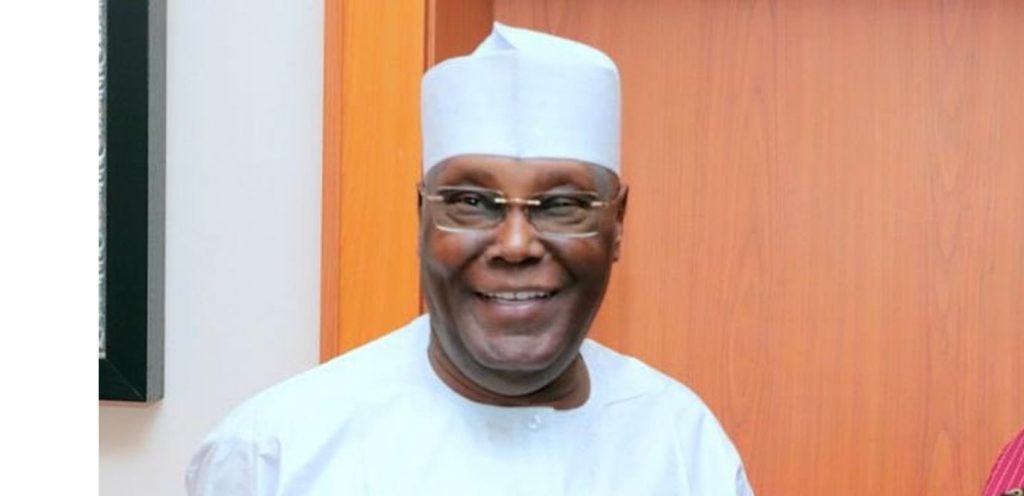
Ex-Vice-President Atiku Abubakar has accused President Bola Tinubu of abusing the presidential power of mercy by granting pardons and clemency to 175 people, saying the move “undermines the sanctity of justice” and risks encouraging lawlessness.


In a statement via his X handle on Sunday, Atiku said the prerogative of mercy is meant to temper justice with compassion but had been “trivialised” by the latest round of pardons.


Tinubu on Thursday granted presidential pardons to 175 persons, including the late nationalist, Herbert Macaulay, the late Major General Mamman Vatsa, and Maryam Sanda, who was sentenced to death for murdering her husband.


Presenting the full list of beneficiaries in a statement by the Special Adviser to the President on Information and Strategy, Bayo Onanuga, on Saturday, said the decision followed recommendations by the Presidential Advisory Committee on the Prerogative of Mercy, chaired by the Attorney-General of the Federation and Minister of Justice, Lateef Fagbemi (SAN).

The pardon also includes presidential clemency, which frees people convicted of offences ranging from homicide, illegal mining to fraud.


Atiku criticised the inclusion of people convicted of serious offences, saying the clemency list weakens public faith in the criminal-justice system and “emboldens criminality.”


He argued that clemency must not be allowed to become complicit with crime and diminish justice.


The statement read, “Ordinarily, the power of presidential pardon is a solemn prerogative, a moral and constitutional instrument designed to temper justice with mercy and to underscore the humanity of the state. When properly exercised, it elevates justice and strengthens public faith in governance.


“Regrettably, the latest pardon issued by the Tinubu administration has done the very opposite. The decision to extend clemency to individuals convicted of grave crimes such as drug trafficking, kidnapping, murder, and corruption not only diminishes the sanctity of justice but also sends a dangerous signal to the public and the international community about the values this government upholds.

“At a time when Nigeria continues to reel under the weight of insecurity, moral decay, and a surge in drug-related offences, it is both shocking and indefensible that the presidency would prioritise clemency for those whose actions have directly undermined national stability and social order.”


Atiku singled out the number of drug-related convictions among those pardoned, saying the decision was particularly troubling given the country’s ongoing fight against narcotics and youth vulnerability.


“Particularly worrisome is the revelation that 29.2% percent of those pardoned were convicted for drug-related crimes at a time when our youth are being destroyed by narcotics, and our nation is still struggling to cleanse its image from the global stain of drug offences,” he stated.


Atiku also referenced “unresolved” questions about President Tinubu’s own past financial and legal entanglements in foreign jurisdictions, saying the timing and composition of the pardons raise “moral and political” concerns.


“Even more disturbing is the moral irony that this act of clemency is coming from a President whose own past remains clouded by unresolved and unexplained issues relating to the forfeiture of thousands of dollars to the United States government over drug-related investigations.

“It is, therefore, no surprise that this administration continues to demonstrate a worrying tolerance for individuals associated with criminal enterprise.”


He added, “A presidential pardon is meant to symbolise restitution and moral reform. Instead, what we have witnessed is a mockery of the criminal justice system, an affront to victims, a demoralisation of law enforcement, and a grave injury to the conscience of the nation.


“Clemency must never be confused with complicity. When a government begins to absolve offenders of the very crimes it claims to be fighting, it erodes the moral authority of leadership and emboldens lawlessness.


“Nigeria deserves a leadership that upholds justice, not one that trivialises it.”


Atiku slams Tinubu over pardon for ‘grave offenders’


Ex-Vice-President Atiku Abubakar has accused President Bola Tinubu of abusing the presidential power of mercy by granting pardons and clemency to 175 people, saying the move “undermines the sanctity of justice” and risks encouraging lawlessness.


In a statement via his X handle on Sunday, Atiku said the prerogative of mercy is meant to temper justice with compassion but had been “trivialised” by the latest round of pardons.


Tinubu on Thursday granted presidential pardons to 175 persons, including the late nationalist, Herbert Macaulay, the late Major General Mamman Vatsa, and Maryam Sanda, who was sentenced to death for murdering her husband.


Presenting the full list of beneficiaries in a statement by the Special Adviser to the President on Information and Strategy, Bayo Onanuga, on Saturday, said the decision followed recommendations by the Presidential Advisory Committee on the Prerogative of Mercy, chaired by the Attorney-General of the Federation and Minister of Justice, Lateef Fagbemi (SAN).

The pardon also includes presidential clemency, which frees people convicted of offences ranging from homicide, illegal mining to fraud.


Atiku criticised the inclusion of people convicted of serious offences, saying the clemency list weakens public faith in the criminal-justice system and “emboldens criminality.”


He argued that clemency must not be allowed to become complicit with crime and diminish justice.


The statement read, “Ordinarily, the power of presidential pardon is a solemn prerogative, a moral and constitutional instrument designed to temper justice with mercy and to underscore the humanity of the state. When properly exercised, it elevates justice and strengthens public faith in governance.


“Regrettably, the latest pardon issued by the Tinubu administration has done the very opposite. The decision to extend clemency to individuals convicted of grave crimes such as drug trafficking, kidnapping, murder, and corruption not only diminishes the sanctity of justice but also sends a dangerous signal to the public and the international community about the values this government upholds.

“At a time when Nigeria continues to reel under the weight of insecurity, moral decay, and a surge in drug-related offences, it is both shocking and indefensible that the presidency would prioritise clemency for those whose actions have directly undermined national stability and social order.”


Atiku singled out the number of drug-related convictions among those pardoned, saying the decision was particularly troubling given the country’s ongoing fight against narcotics and youth vulnerability.


“Particularly worrisome is the revelation that 29.2% percent of those pardoned were convicted for drug-related crimes at a time when our youth are being destroyed by narcotics, and our nation is still struggling to cleanse its image from the global stain of drug offences,” he stated.


Atiku also referenced “unresolved” questions about President Tinubu’s own past financial and legal entanglements in foreign jurisdictions, saying the timing and composition of the pardons raise “moral and political” concerns.


“Even more disturbing is the moral irony that this act of clemency is coming from a President whose own past remains clouded by unresolved and unexplained issues relating to the forfeiture of thousands of dollars to the United States government over drug-related investigations.

“It is, therefore, no surprise that this administration continues to demonstrate a worrying tolerance for individuals associated with criminal enterprise.”


He added, “A presidential pardon is meant to symbolise restitution and moral reform. Instead, what we have witnessed is a mockery of the criminal justice system, an affront to victims, a demoralisation of law enforcement, and a grave injury to the conscience of the nation.


“Clemency must never be confused with complicity. When a government begins to absolve offenders of the very crimes it claims to be fighting, it erodes the moral authority of leadership and emboldens lawlessness.


“Nigeria deserves a leadership that upholds justice, not one that trivialises it.”

Strive for innovations, Eno charges A’Ibom youths


The Governor of Akwa Ibom State, Umo Eno, has charged youths in the state to always strive for innovations, adding that such is the spirit behind the ARISE agenda’s push for empowerment.


Eno gave the charge while speaking at the Visual Conference and Award Night organised by his Chief Photographer, Idara Idiakpan, in Uyo at the weekend.


Represented by the Deputy Governor, Senator Akon Ayakenyin, Eno charged the youths to stop nourishing entitlement culture and look inward to fix themselves where services are needed for better rewards.


Eno stated, ” I implore our youths to stop nourishing and internalising the entitlement culture. Look into yourselves; see where certain services are needed, and plug yourselves in, and the rewards will be unquantifiable.

”I urge our youths to strike for innovations; like Idara is going, look for things that bring value to the people, and you will be rewarded immeasurably.


”That’s what our Arise push for empowerment is all about: equipping our youths with skills that will translate into financial success.”


Earlier, the Special Assistant and Chief Photographer to the governor, Idara Idiakpan, described the award night as a celebration of creativity, purpose, and the power of a frame to tell a story, evoke emotion, and capture the beauty of the world.

She disclosed that a total of 587 nominations across 15 categories from photography across the country were received, adding that each entry is a testament to the passion and dedication of artists who saw the extraordinary in the ordinary.


Idiakpan said ” Welcome to this celebration of creativity, purpose, and the power of a frame to tell a story, evoke emotion, and capture the beauty of our world.


”Photography is more than just a craft; it’s a universal language that transcends borders, cultures, and time. Tonight, we gather to celebrate the extraordinary talent of photographers who have dared to tell their stories with timeless images.


”This year, we received 587 nomination submissions across the 15 nomination categories from photography communities across Nigeria; each entry is a testament to the passion and dedication of artists who see the extraordinary in the ordinary.


” To every nominee, whether you’re walking away with an award or not, know that your work has inspired us, challenged us, and reminded us of the power of art to connect and transform.”


The event was graced by celebrated photographers, including Kelechi Amadi-Obi, Emmanuel Oyeleke, Bayo Omoboriowo and a host of others.

Stop de-marketing your country, Umahi tells Nigerians


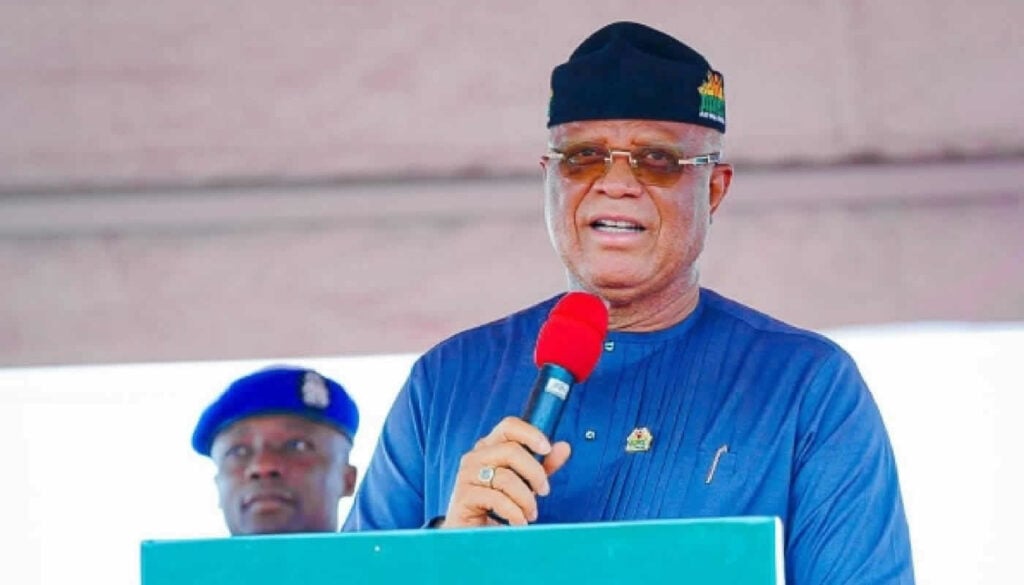
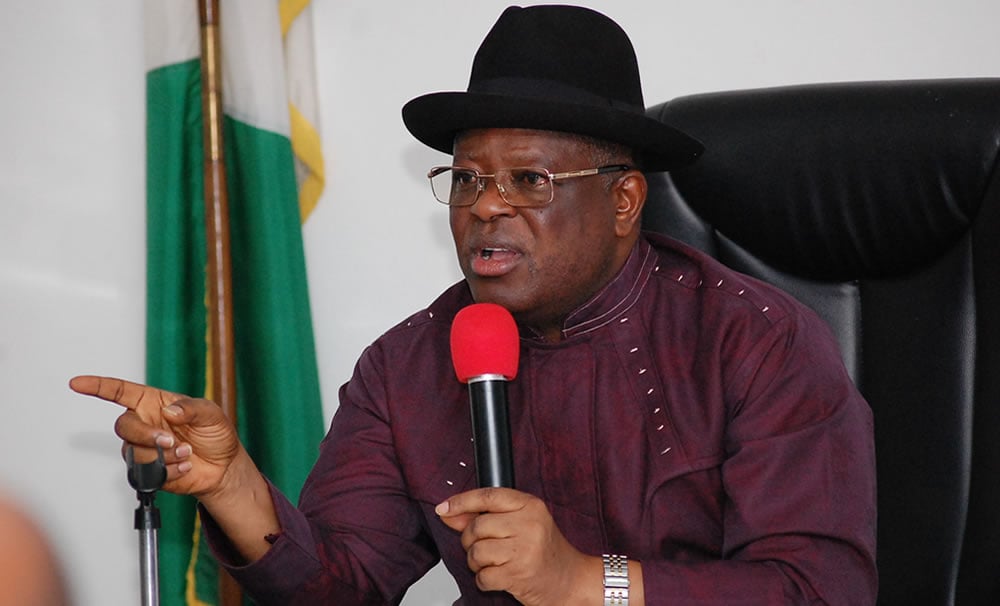
Minister of Works, David Umahi, has called on Nigerians at home and abroad to stop de-marketing the country, urging them to promote national unity, optimism, and patriotism.


Umahi, who stated this in an interview with the News Agency of Nigeria in Abuja on Sunday, decried what he described as a growing culture of negativity and public condemnation of Nigeria.


“I feel so sad when people demarket the country both outside and inside Nigeria, cursing without knowledge.


“This is because a job is very easy when you are not the one doing it. Let there be a rethink.

“We are all journeying through this life, and there is a need to have lasting treasures beyond this life by putting Nigeria first, by being your brother’s keeper, by doing things with the fear of God.


“I wonder that when our people go outside the country, they suffer more; they pass through all kinds of humiliations and oppressions; they work sometimes for 19 hours, and they obey all the rules.


“But when they come here, they break all the rules. That is not good; let us have hope here. This is the only country you can make 100 per cent doing a job, whereas you can’t make more than 10 per cent outside the country,” he said.


According to him, there are lots of opportunities in Nigeria, stressing, however, that people would not see the light if they decided to close their eyes.


He urged Nigerians to be optimistic, forward-looking and have love for themselves because approaching issues with bitterness and being unappreciative would not do anybody any good.


“There is a saying that ‘forgiveness sets the captive free’, and when you are forgiven, you will find out that you were the captive.


“So let us work with the fear of God and support our government, and of course, engage in constructive criticism. Nigeria is great again.”


Umahi praised President Bola Tinubu’s resilience and commitment in the face of what he described as a terrible economic situation inherited from the previous administration.

He said that the president’s refusal to complain publicly was a mark of leadership courage.


Umahi said as a governor, he knew what the Tinubu administration inherited, explaining that everything became a priority for him, and the burden of debt became so terrible.

“In fact, when I saw the capital projects, I never knew that the debt servicing is drawn from the capital projects, and that is where the problem is.


“So there have been a lot of debts that are kept, and these debts were not used for infrastructure development; otherwise, it would have been a catalyst for development. So it is very important to know that what we inherited was so terrible.


“Everything became a priority, but we shall overcome this. Even our fuel was sold in advance, but it is a matter of courage, and that is why the president is not complaining, but we shall overcome it,” the minister said.


According to him, all the indices show that the reforms are ‘breathing very well,’ noting that inflation has dropped and that the Gross Domestic Product (GDP) growth is over 4.23 per cent, while the foreign reserve has climbed over 42 per cent.


“So all the indices are breathing well, and the worst is over, by the words of the president, and the darkest part of the morning is the dawn. The macroeconomy is doing very well.


“Also, the commitment and infrastructure development are going to cure the seeming hunger because it is going to trickle down to macroeconomy, and that will be a win-win for this nation.


“For me, the president has taken back the nation for us. So forget about the noisemakers. They will always be people making noise, and I will suggest that our generation should also try to work even harder than our forefathers.


“Hard work pays; it is very, very important. Even the Bible professes that he that doesn’t work should not eat,” the minister stated.


(NAN)

Super Eagles arrive Uyo after aircraft scare


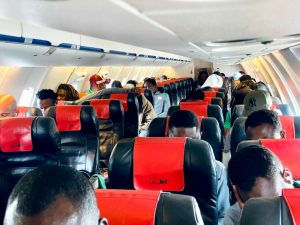
Nigeria’s Super Eagles have arrived safely in Uyo, Akwa Ibom State, following an unexpected delay to their flight from South Africa caused by a technical fault, PUNCH Online reports.


The team, who are preparing for their decisive 2026 FIFA World Cup qualifier against Benin Republic on Tuesday, touched down at the Victor Attah International Airport, Uyo, at 8:05 am on Sunday, according to team media officer Promise Efoghe.


“Finally, Super Eagles arrive in Uyo, Akwa Ibom. The team touched down at 8.05 a.m. Sunday morning,” Efoghe confirmed in a statement issued to the media.


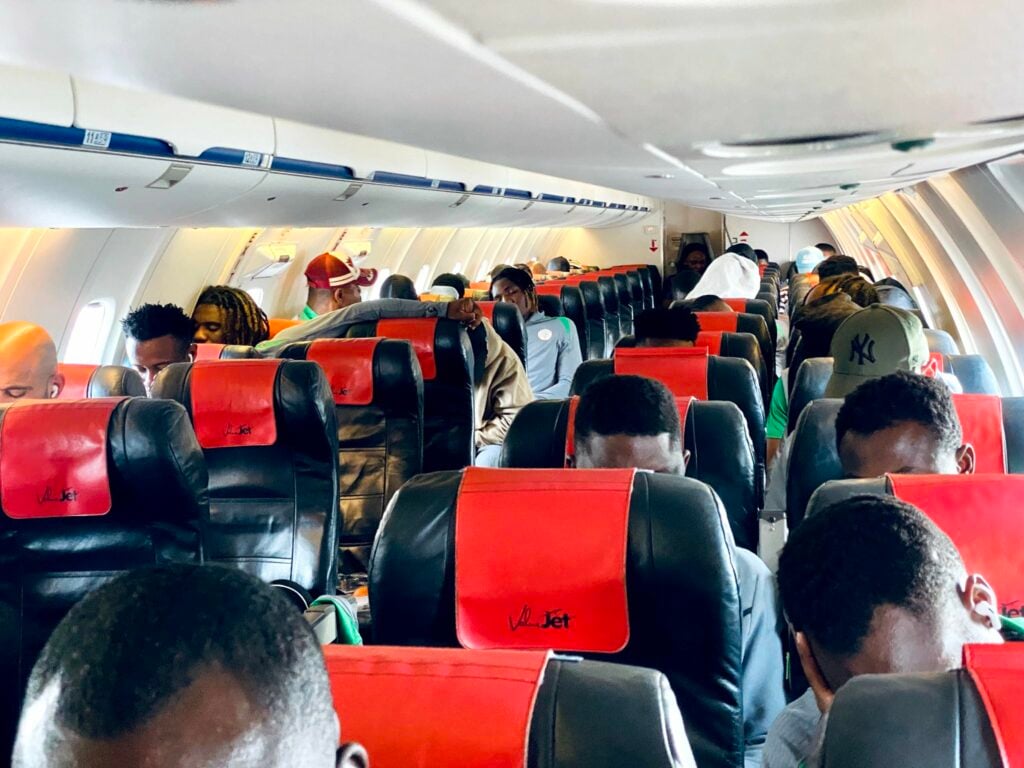
A video later released by the team’s media department showed players and officials disembarking from the ValueJet aircraft, signalling the end of a tense and delayed journey that had begun in Polokwane, South Africa.

The Super Eagles had departed Polokwane late on Saturday, shortly after their match preparations in South Africa. However, what was meant to be a routine journey turned anxious when the ValueJet aircraft, which had earlier stopped in Luanda, Angola, for refuelling, developed a technical fault mid-air.


About 25 minutes after take-off, the pilot made an emergency U-turn back to Luanda after a loud crack appeared on the aircraft’s windscreen.


The Nigeria Football Federation confirmed in an official statement that the cracked windscreen forced the flight to return to Luanda, where all players, officials, and accompanying government delegates safely disembarked.

The federation noted that the incident occurred after a routine refuelling stop, with the pilot “guiding the airplane safely back to the airport in Luanda”.


Following the incident, the NFF disclosed that ValueJet Airline worked closely with relevant Nigerian government authorities, including the Ministers of Aviation and Foreign Affairs, and the Chief of Staff to the President, to secure flight permits for a replacement aircraft to continue the journey to Nigeria.


“The ValueJet Airline and the relevant Federal Government of Nigeria authorities are working assiduously to get the necessary overflying and landing permits for another aircraft to fly from Lagos, pick the delegation in Luanda, and fly them to Uyo,” the statement read.


The replacement aircraft eventually completed the journey on Sunday morning, ending nearly 12 hours of travel disruption for the team.


Eric Chelle’s men will now turn their attention to the all-important World Cup qualifier against the Benin Republic.


The match, scheduled for Tuesday at the Godswill Akpabio International Stadium, is a crucial one for Nigeria, who are aiming to seal qualification for the 2026 FIFA World Cup after a challenging qualifying campaign.

Trump, Al-Sisi to chair Gaza peace summit in Egypt


US President Donald Trump and his Egyptian counterpart Abdel Fattah al-Sisi will on Monday chair a Gaza peace summit in Sharm el-Sheikh, also attended by world leaders, including the UN chief.


The gathering in the Red Sea resort town will bring together “leaders from more than 20 countries”, Sisi’s office said.


It will aim “to end the war in the Gaza Strip, enhance efforts to achieve peace and stability in the Middle East, and usher in a new era of regional security and stability”.


UN Secretary-General Antonio Guterres said he will attend, as will Britain’s Prime Minister Keir Starmer, his Italian counterpart Giorgia Meloni and Pedro Sanchez of Spain.

French President Emmanuel Macron and Turkish President Recep Tayyip Erdogan will also travel to Sharm el-Sheikh, according to their offices.


The European Council will be represented by its president, Antonio Costa, a spokesperson said.

“The plan offers a real chance to build a just and sustainable peace, and the EU is fully committed to supporting these efforts and contributing to its implementation,” the spokesperson added.


Jordan’s King Abdullah II is also expected to attend, according to state media.


There was no immediate word on whether Israeli Prime Minister Benjamin Netanyahu would participate, while Hamas has said it will not take part.


Hossam Badran, a Hamas political bureau member, told AFP in an interview that the Palestinian militant group “will not be involved”.


Hamas “acted principally through… Qatari and Egyptian mediators” during previous talks on Gaza, he said.


AFP

Cameroon holds presidential poll with Biya poised for 8th term


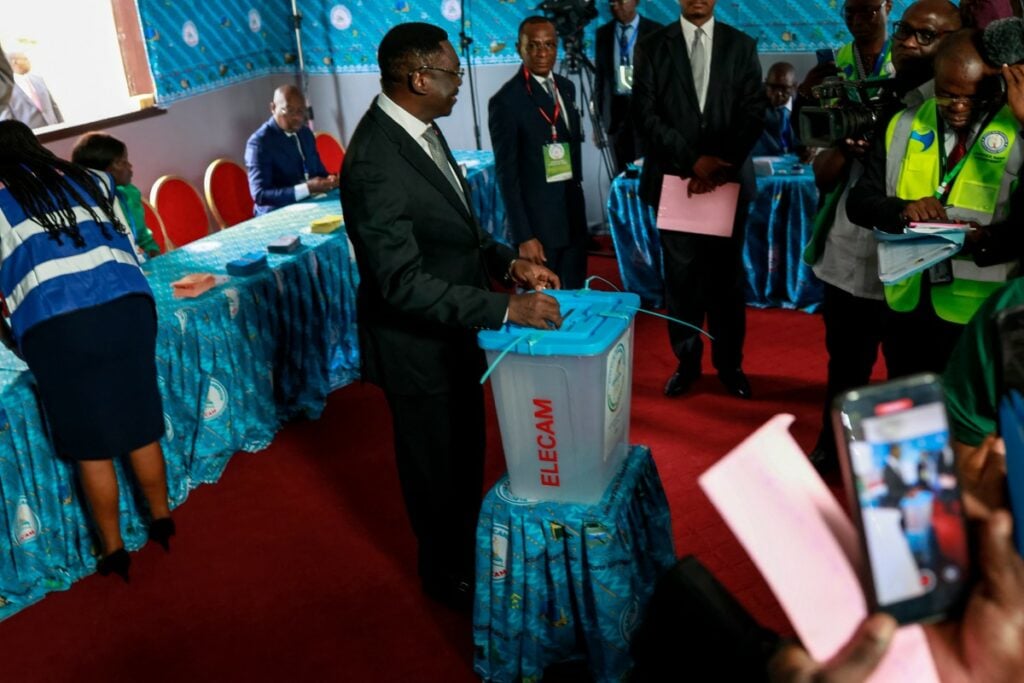
Voting began Sunday as Cameroon holds presidential elections, which 92-year-old Paul Biya, the world’s oldest serving head of state, is expected to win, extending his already 43-year grip on power.


Biya faces 11 opponents, including former employment minister Issa Tchiroma Bakary, 79, who has generated unexpected enthusiasm among voters in the central African nation, where half the population is under 20.


Polling stations opened at 8:00 am and will close at 6:00 pm (0700 to 1700 GMT).


The eight million Cameroonians who are eligible to vote in the one-round election have, for the most part, only known one ruler in their lifetime.

Biya has been in power since 1982 and has won every election in the past 20 years by more than 70 percent of the ballot.


“We shouldn’t be naive. We know full well the ruling system has ample means at its disposal to get results in its favour,” Cameroonian political scientist Stephane Akoa told AFP.


But he said that the campaign in recent days had been “much livelier” than was usually the case at that stage.


“This poll is therefore more likely to throw up surprises,” he said.


Biya has kept his customary low profile during the campaign, appearing in public on Tuesday for the first time since May, looking visibly fit.


He held a rally in Maroua in the strategic Far North region, which has 1.2 million eligible voters and makes up the second largest voting bloc in the country.


For years, it was considered a Biya stronghold, but several former allies from the area are now running against him.


Youth vote


The 11 rival candidates have made numerous public appearances in recent weeks, each promising a new dawn for Cameroon in place of Biya’s entrenched hold on public life.


The president’s main rival, Bakary, also campaigned in the regional capital, Maroua, this week.

In stark contrast to Biya, whose appearance attracted a sparse crowd of just a few hundred people, Bakary was welcomed in the streets of his home region by thousands of supporters waving placards that hailed “Tchiroma the Saviour”.


Bakary—who resigned from the government in June to join the opposition after 20 years at Biya’s side—is the leading challenger after top opponent Maurice Kamto was barred from the race.

Kamto came second in the 2018 presidential election but was banned from standing this year by the Constitutional Council, a move that rights groups, including Human Rights Watch, said undermined the credibility of the electoral process.


Biya is only the second president Cameroon has had since its independence from France in 1960.


It is Central Africa’s most diversified economy, with an abundance of natural and agricultural resources.


However, around 40 per cent of the population lives below the poverty line, according to World Bank figures for 2024, and unemployment stands at 35 per cent in the major cities.


Young people hunger for change, Akoa said, but not yet to the point where they will take the risk of protesting en masse as in other countries in Africa and Asia.


‘Sign of change’


Cameroonians complain about the high cost of living, a lack of clean drinking water, healthcare and quality education.


But their frustrations remain confined to social media for the time being.


“Many young people intend to vote,” Akoa said.


“There is a positive sign of change, but perhaps not strong enough to bring young people out onto the streets, as we saw in Madagascar, Tunisia, and elsewhere.”


The government has authorised 55,000 local and international observers to monitor the vote, including representatives of the African Union.


The Constitutional Council has until October 26 to announce the final results.

But several internet platforms say they will compile the results independently, drawing criticism from the government, which says they are attempting to manipulate public opinion.


The vote takes place in the shadow of a conflict between separatist forces and the government that has plagued the English-speaking regions since 2016.


Turnout was particularly low in these areas in 2018.


AFP

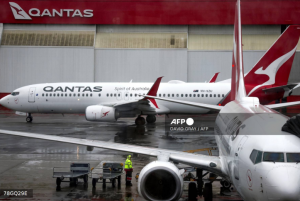
Australian airline Qantas confirms data breach, 5.7 million customers affected


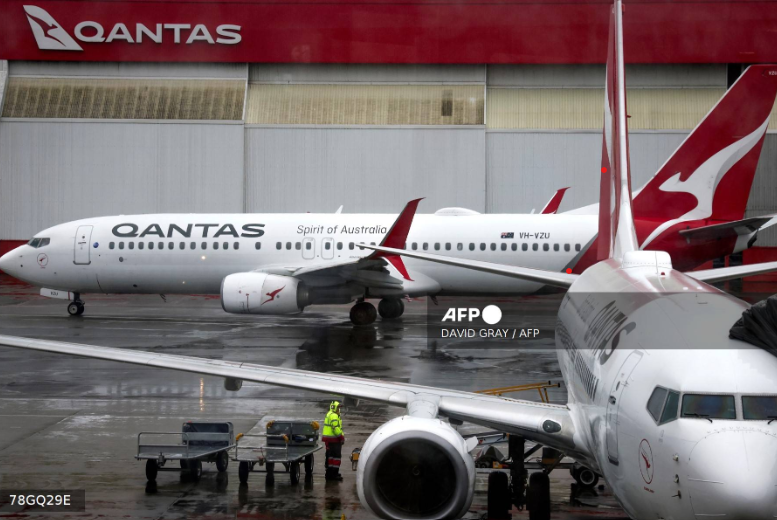
Australian airline Qantas said Sunday that data from 5.7 million customers stolen in a major cyberattack this year had been shared online, part of a leak affecting dozens of firms.


Disney, Google, IKEA, Toyota, McDonald’s, and fellow airlines Air France and KLM are also reported to have had data stolen in a cyberattack targeting software firm Salesforce, with the information now being held to ransom.


Salesforce said this month it was “aware of recent extortion attempts by threat actors”.


Qantas confirmed in July that hackers had targeted one of its customer contact centres, breaching a computer system used by a third party now known to have been Salesforce.

They secured access to sensitive information such as customer names, email addresses, phone numbers and birthdays, the blue-chip Australian company said.


No further breaches have taken place since, and the company is cooperating with Australian security services.


“Qantas is one of a number of companies globally that have had data released by cyber criminals following the airline’s cyber incident in early July, where customer data was stolen via a third-party platform,” the company said in a statement.


Most of the data leaked was names, email addresses and frequent flyer details, the firm said.


But some of the data included customers’ “business or home address, date of birth, phone number, gender and meal preferences”.


“No credit card details, personal financial information or passport details were impacted,” Qantas said.


It also said it had obtained a legal injunction with the Supreme Court of New South Wales, where the firm is headquartered, to prevent the stolen data from being “accessed, viewed, released, used, transmitted or published”.


Cybersecurity expert Troy Hunt told AFP that it would do little to prevent the spread of the data.


“It’s frankly ridiculous,” he said.


“It obviously doesn’t stop criminals at all anywhere, and it also really doesn’t have any effect on people outside of Australia.”

In response to questions about the leak, tech giant Google pointed AFP to an August statement in which it said one of its corporate Salesforce servers had been targeted. It did not confirm if the data had been leaked.


“Google responded to the activity, performed an impact analysis and has completed email notifications to the potentially affected businesses,” Melanie Lombardi, head of Google Cloud Security Communications, said.


Cybersecurity analysts have linked the hack to individuals with ties to an alliance of cybercriminals called Scattered Lapsus$ Hunters.


Research group Unit 42 said in a note that the group had “asserted responsibility for laying siege to customer Salesforce tenants as part of a coordinated effort to steal data and hold it for ransom”.


The hackers had reportedly set an October 10 deadline for ransom payment.


The hackers stole the sensitive data using a social engineering technique, referring to a tactic of manipulating victims by pretending to be a company representative or other trusted person, experts said.


The FBI last month issued a warning about such attacks targeting Salesforce.


The agency said hackers posing as IT workers had tricked customer support employees into granting them access to sensitive data.


“They have been very effective,” expert Hunt said.


“And it hasn’t been using any sophisticated technical exploits… they have exploited really the oldest tricks in the books.”


The hack of data from Australia’s biggest airline comes as a string of major cyberattacks in the country has raised concerns about the protection of personal data.


Qantas apologised last year after a glitch with its mobile app exposed some passengers’ names and travel details.


And major ports handling 40 per cent of Australia’s freight trade ground to a halt in 2023 after hackers infiltrated computers belonging to operator DP World.


AFP

Exit mobile version