Portugal and Al Nassr striker, Cristiano Ronaldo, is on the verge of achieving a milestone no male footballer has ever reached: 1,000 career goals.
According to Sky Sports on Wednesday, following his recent brace against Hungary in the World Cup qualifiers, the Portuguese legend has now scored a staggering 948 goals across club and international competitions, 805 at club level and 143 for Portugal.
He also became the all-time leading scorer in World Cup qualifying history, surpassing Carlos Ruiz on 39, with Lionel Messi third in the list on 36.
Ronaldo turned 40 in February, but he continues to rack up impressive numbers at club level as well as internationally, albeit against weaker opposition in Saudi Arabia, where he has scored 104 goals in 117 appearances across four seasons with Al-Nassr.
With 32 goals already for club and country in 2025, he is maintaining a remarkably consistent level of productivity in front of goal. Ronaldo has averaged more than 50 goals per calendar year since 2010.
His highest scoring year came in 2013, when he smashed 69 goals and won the Ballon d’Or.
Amazingly, his total has only dipped below 39 goals once in a calendar year in the last decade and a half.
With Portugal set to qualify for next summer’s World Cup, and with two years to go on his Al-Nassr contract, Ronaldo is projected to become the first player in recorded history to reach the 1,000-goal mark in October 2026 based on his current scoring rate.
The Minister of Solid Minerals Development, Dr Dele Alake, says Schools in Nigeria charging tuition fees in foreign currencies should be closed.
Alake made the call at the Nigeria Gold Day Celebration on the sidelines of the 10th edition of Nigeria’s Mining Week, themed Nigeria Mining: From Progress to Global Relevance, on Wednesday in Abuja.
He criticised the practice and described it as a part of the leakages and loopholes in Nigeria’s economy, threatening its growth.
“I am still going to make a proposal to the Federal Executive Council that all those schools in Nigeria that are charging in foreign currencies should be closed.
“These are some of these leakages and loopholes that we say exist in our economy that people do not really take these things very seriously,” he said.
“If you look at the foreign currency that goes into some of this, it is humongous
“If your child is attending a school in Abuja or Lagos or somewhere in the country and is paying 10,000 pounds or 10,000 dollars as their fees, that means you will be looking for naira to go and buy dollars.
“Driving the value of dollar up, whereas this school is in Abuja in Nigeria, you can’t go to UK, establish a school, and then be charging naira, it’s not done.
“It’s only in this country that I see so many contradictory things that really demolish the economy,” he said.
The minister said the Federal Government was introducing various measures, including digital mechanisms, to ensure that all leakages in Nigeria’s gold value chain were blocked and every loophole sealed.
He said the move would reduce room for interpersonal transactions, thereby reducing the propensity of corruption, which would further position Nigeria’s gold as one of the global pillars of means of exchange of value.
He said the Federal Government’s National Gold Purchase Programme (NGPP), implemented through the Solid Minerals Development Fund (SMDF), was designed to shore up Nigeria’s foreign reserves and strengthen the naira.
Alake explained that the NGPP, a component of the Presidential Artisanal Gold Mining Initiative, allows the government to buy gold directly from artisanal miners in naira, rather than spending foreign exchange to purchase gold internationally.
In her remarks, the Executive Director of SMDF, Fatima Shinkafi, said that, unlike global trends, gold exploration funding in Nigeria was on an upward trajectory.
Shinkafi explained that, within the broader macroeconomic context, gold serves as a safe-haven asset and encouraged conference participants to explore Nigeria’s gold opportunities.
“We implore everyone here to examine Nigeria’s gold resources and support the minister’s efforts to make Nigeria a premier destination for junior miners.
“In another year or so, let’s look at Nigeria’s Gold Day 2025 as a pivotal turning point, “ she said.
NAN reports that the Nigeria Mining Week, holding from October 13 to 15, is organised by the Miners Association of Nigeria in partnership with PricewaterhouseCoopers and the VUKA Group.
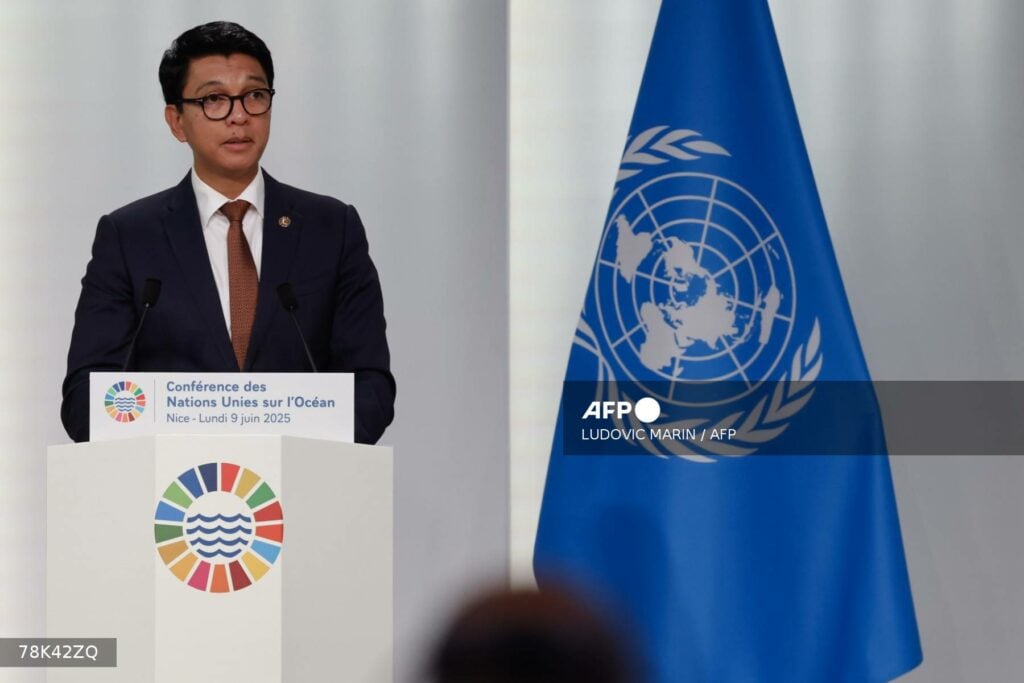
Placards and slogans against France that surfaced in demonstrations against impeached President Andry Rajoelina this week exposed deep resentment against the former colonial power.
“France out,” “Rajoelina and Macron out,” said banners after French media reported that the president had fled on a French military plane as an army unit threw its weight behind protesters calling for his resignation.
“They are still colonising us even though we are supposed to be independent,” said Koloina Andrianina Rakotomavonirina, a 26-year-old engineer.
“It’s unfair that they intervene in such a matter,” she told AFP at a demonstration in central Antananarivo.
With the whereabouts of the 51-year-old president unknown, the national assembly impeached him on Tuesday for desertion of duty, paving the way for a military unit called CAPSAT to seize power.
Negative perception about France was not surprising considering its history, Paris-based political scientist Christiane Rafidinarivo told AFP.
Its colonisation of the Indian Ocean island until independence in 1960 was marked by several atrocities, including the bloody repression by French forces of a 1947 uprising which claimed tens of thousands of lives.
“France represents colonialism,” Rafidinarivo said. “This perception runs through public opinion and is triggered depending on current events.”
While President Emmanuel Macron refused to confirm French involvement in Rajoelina’s evacuation, a presidential pardon for two French nationals jailed in Madagascar on coup charges—announced as the reports of his departure broke—raised suspicions of a deal.
Citizenship revelation
Rajoelina’s apparently chummy ties with Paris have long been criticised at home, but media reports in 2023 that he had obtained French nationality nine years before deepened the mistrust.
The revelation came just before the 2023 presidential race and led to calls for him to be disqualified, as the opposition claimed he should have lost his Madagascan nationality as a result, according to local law.
Rajoelina went on to win reelection, but the polls were boycotted by most opposition parties and marked by a low turnout.
That sparked new criticism against France “because the opposition accused him of being a French agent,” said Adrien Ratsimbaharison, author of a book on the 2009 coup that brought Rajoelina to power but denied him international recognition.
French president at the time, Nicolas Sarkozy, was the first foreign head of state to recognise Rajoelina as president during a state visit to France in 2011.
“People did not forgive in France for that, because that gave Rajoelina some kind of legitimacy,” Ratsimbaharison said.
There were also suspicions that Sarkozy sent financial aid to Rajoelina to engineer the 2009 protests and secure the support of military personnel to overthrow then-president Marc Ravalomanana, he said.
Rumours, resentment
In Madagascar’s social media mix of disinformation and rumour, a widely shared but out-of-context image that claimed to show the deployment of French gendarmes to support the embattled Rajoelina outraged those who believed it.
The photo showed a Malagasy gendarme wearing French colours, but this was only because he had undergone training in France, the gendarmerie told AFP.
Resentment towards the former colonial power is also fuelled by the awarding of major contracts to French companies and open French sex tourism on the impoverished island.
Some French businesses, such as call centres, meanwhile, use French-speaking Malagasy workers at a fraction of the wages they would earn in Europe.
At one demonstration, 27-year-old Mampionona Razafinjoelina said he quit his call-centre job because: “I was tired of being insulted by the French.”
Amid the long-running animosity, Macron said on a visit to the island in April he wanted to create the conditions for “forgiveness” for France’s colonisation, which has also left a bitter taste in its other former colonies such as Mali, Burkina Faso, Niger and Gabon.
This included returning the remains of a Malagasy king killed by the French army in an 1897 massacre that were taken to France as trophies, which happened in September, as well as the establishment of a Franco-Malagasy commission to look into atrocities of the time.
Singer, Seyi Shay, has revealed the reasons for her isolation for over four years, citing the need to reflect on her life and personal growth.
In an interview with Chude Jideonwo seen by PUNCH Online on Thursday, the singer said the isolation helped her operate on a different level and has also helped her change the perception she had of men.
The interview marks one of the first in-depth public reflections from Seyi Shay in years, offering her fans and the public a clearer understanding of why she stepped back and what she gained in the process.
“I have done so much work over these past four years. The transformation of my mind started before I had my child. I started a journey of isolation. There is something really good about isolation, but I know some people say it is not good, but one thing for me is that I was blessed with hindsight and I could just reflect and I was also blessed with insight which in turn, gave me foresight and I think that is the biggest gift beside my daughter that God has given me these few years that I have been away.
“My spirituality has also transformed, and I am vibrating on such a different level now that I actually feel very comfortable with men. I love all the men. It is a man’s world,” she said.
She, however, revealed why she is not married to the father of her daughter, despite maintaining a close and respectful relationship with him.
She said, “It’s a technical issue, you understand? But he’s great, he’s cool, he’s around. He’s Nigerian, he’s in the UK at the moment, and he’s also in the music industry on the corporate side of things. We just work together, raising our child, and we are great friends.”
PUNCH Online had reported earlier that Nigerian singer Tiwa Savage revisited her long-standing rift with fellow artiste Seyi Shay, clarifying her side of the story regarding the infamous salon confrontation that went viral years ago.
The Nigerian Association of Medical and Dental Academics has debunked rumours that its members are on strike.
The association clarified its position in a statement jointly signed by its President, Dr Nosa Lancy-Orhue; Secretary-General, Dr Abdulrahman Shehu; and National Liaison Officer/Organising Secretary, Dr Muhammad Askira, on Wednesday in Abuja.
NAMDA is the trade union for medical lecturers in universities, tertiary health, and research institutions.
It is responsible for undergraduate and postgraduate medical education, including the training of medical doctors and dentists in Nigeria.
The association reaffirmed that it remains an independent union with the capacity to negotiate its interests and uphold mutual respect.
“NAMDA is not on strike, and we will not be blackmailed, coaxed, or lured away from the interest of our members,” the statement read.
It said the clarification became necessary following persistent enquiries from members, the press and the public regarding its stance on the ongoing withdrawal of services by another academic union in the university system.
NAMDA said its members had been neglected for long but would continue to support legitimate demands that do not adversely affect their interests.
The association acknowledged ongoing engagements with the Federal Government through the Ministries of Labour and Education, which it described as “very encouraging”
It said the Minister of Education, through a meeting facilitated by the Minister of Labour and Employment, had promised to address key issues affecting medical lecturers.
“These demands include the implementation of the Consolidated Medical Workers Salary Structure (CONMESS) and the withdrawal of the compulsory PhD requirement for medical lecturers with postgraduate fellowship for academic promotion and eligibility to vie for the position of Vice-Chancellor,” the statement said.
NAMDA also called for the approval by the Federal Executive Council of the scheme of service contained in memorandum CM(90)92 of its 11th meeting in 1990, based on the recommendations of the committee chaired by the late Chief Justice Atanda Fatai Williams.
It said the issue of Earned Academic Allowances was also discussed.
The association noted that the minister apologised for the error in a letter from the Office of the Accountant-General of the Federation, which appeared to limit the benefit to members of the Academic Staff Union of Universities.
NAMDA alleged that some university managements, supported by a sister union, attempted to exclude its members from the EAA payment.
It cited the Abubakar Tafawa Balewa University, Bauchi, where the Governing Council had responded that medical lecturers were not entitled to the allowance.
The association said it had requested the Department of State Services to investigate how two conflicting letters on the same matter emanated from the AGF’s office.
NAMDA said it would continue to engage the Federal Government through the committee set up to negotiate with university unions to emphasise its long-standing demands.
“The conditions of service for medical and dental lecturers cannot be satisfactorily negotiated by anyone but medical academics under NAMDA,” it said.
The association urged the Federal Government to fast-track the circularisation of CONMESS and direct the National Universities Commission to reaffirm the withdrawal of the circular making a PhD compulsory for medical academics with postgraduate fellowships.
NAMDA said it reserved the right to adopt legitimate means, including legal actions, in pursuing its demands, adding that any withdrawal of service by the union would be guided by its constitution.
It warned that such an action, if ever taken, would have serious implications for the education and health sectors.
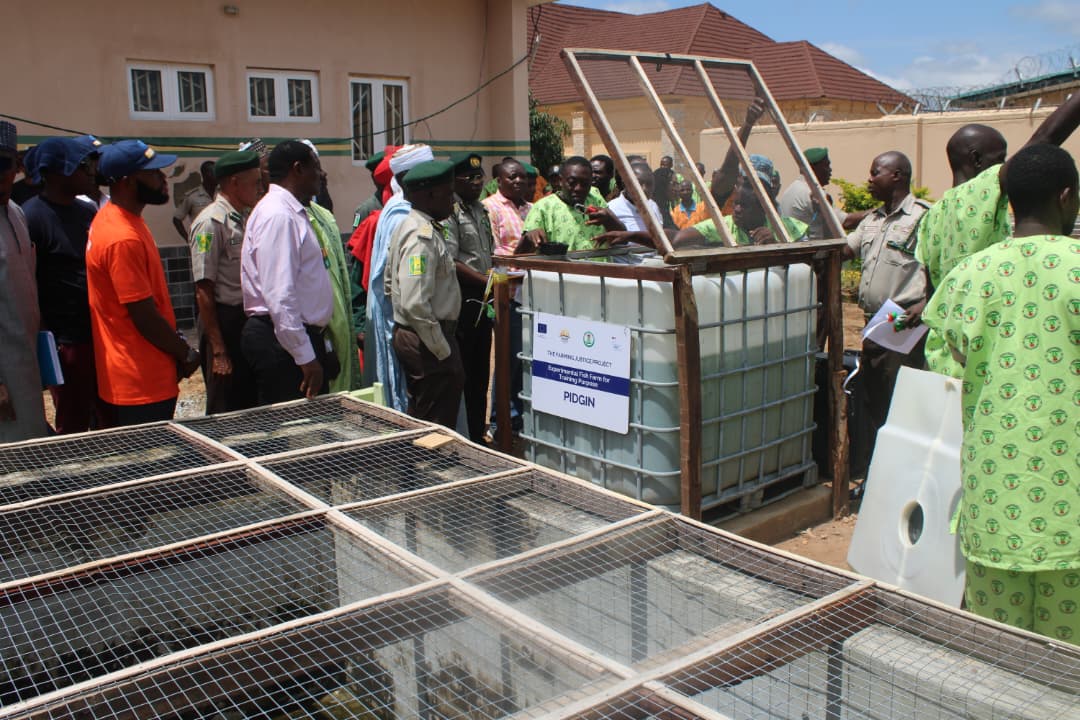
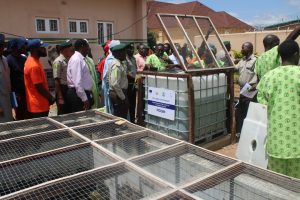
A Non-Governmental Organisation, Hope Behind Bars Africa, has inaugurated the Farming Justice Project at the Kuje Custodial Centre in Abuja to promote inmate rehabilitation and tackle food insecurity within correctional facilities.
The initiative, implemented in partnership with the Nigerian Correctional Service, is funded by the European Union through International IDEA under the Rule of Law and Anti-Corruption Programme.
At the official launch on Tuesday, the Executive Director of HBBA, Funke Adeoye, described the project as a practical response to Nigeria’s evolving correctional mandate.
“With the change in nomenclature from ‘prison’ to ‘correctional service,’ there is a need to ensure that our custodial centres reflect that change through genuine rehabilitation and empowerment,” she said.
Adeoye explained that the Farming Justice Project integrates agriculture with restorative justice principles, giving inmates the opportunity to gain life skills and contribute meaningfully to society both during and after incarceration.
She noted that the initiative seeks to empower inmates through agricultural training and practical food production, adding that over 80 inmates are currently being trained in modern techniques for okra, watermelon, and tomato cultivation.
“Some of our harvested okra has already been consumed by inmates, showing real progress in tackling food shortages in custodial centres,” she said.
The project currently operates at the Kuje Custodial Centre and the Dukpa Farm Centre in Abuja, with plans to replicate the model in other facilities across the country, including Lagos, where HBBA has previously worked with female inmates on similar agricultural initiatives.
“Our goal is to reduce recidivism by equipping inmates with viable means of livelihood after serving their sentences.
“We are calling on partners and well-meaning Nigerians to support the NCoS in ensuring effective rehabilitation and reintegration of inmates,” Adeoye added.
She commended the Comptroller General of the Nigerian Correctional Service, Sylvester Nwakuche, for his support and openness to public-private partnerships aimed at reforming correctional practices.
On the broader issue of incarceration, Adeoye emphasised the importance of preparing inmates for reintegration into society.
“Out of over 80,000 inmates nationwide, only about 3,600 are on death row. This means a large number will eventually return to our communities. Therefore, it is our responsibility to ensure they come out better prepared for productive living,” she said.
In his welcome remarks, the Controller of Corrections for the FCT Command, Christopher Jen, praised the initiative as a significant step towards building a more peaceful and secure Nigeria.
“My desire is to see a better Nigeria tomorrow where everyone will live without fear or anxiety.
“The enthusiasm and willingness of inmates to learn skills today give me confidence that such a future is possible,” Jen said.
He described the Kuje Custodial Centre as a “centre of excellence” in vocational training, listing ongoing programmes such as barbing, embroidery, carpentry, plumbing, electrical work, shoemaking, soap making, and fishery.
In a goodwill message, Joseph Odeh, a representative of International IDEA, stressed the importance of collective effort in justice reform.
“Justice reform is not the responsibility of one institution alone. It is a shared mission that requires the active participation of all sectors of society.
“Let this day mark the beginning of a new chapter in our justice system—one that prioritises human development, community reintegration, and sustainable transformation,” he said.
The event featured a guided tour of the Kuje facility, the unveiling of the Farming Justice Project, and visits to various skill acquisition centres where inmates are receiving hands-on vocational training.
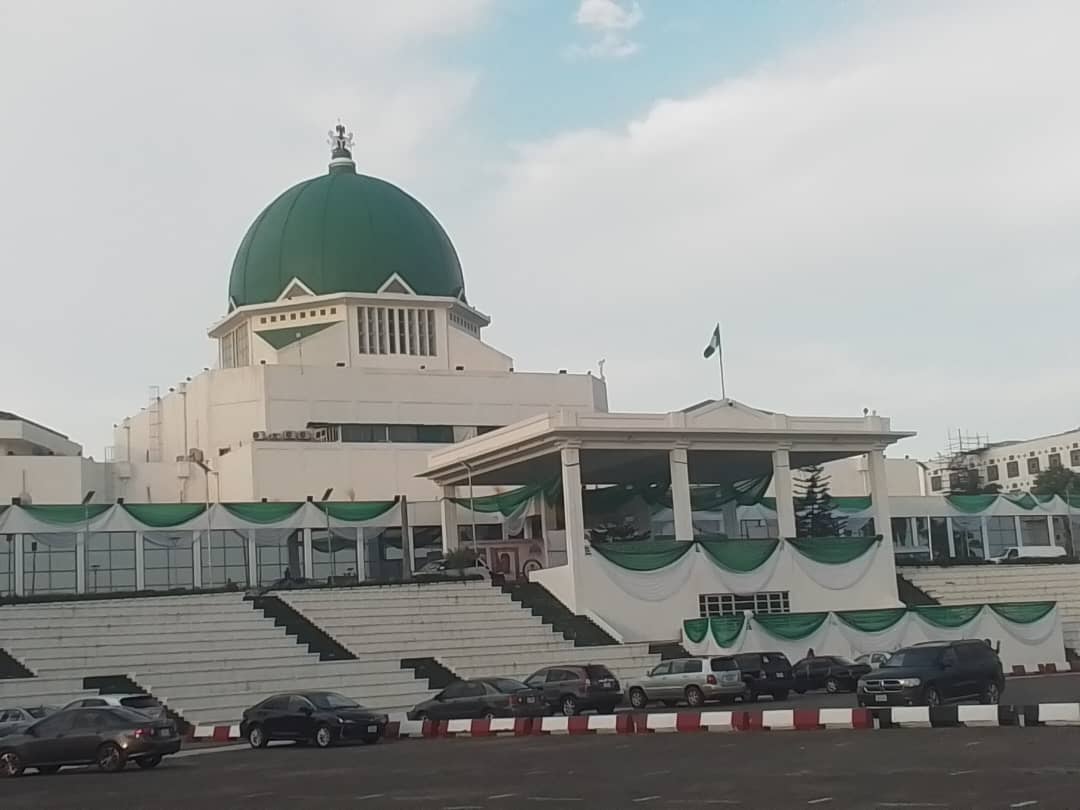
The House of Representatives on Tuesday urged the Federal Government and the Academic Staff Union of Universities to urgently return to the negotiating table to resolve the ongoing dispute that led to the declaration of a two-week warning strike by the union.
The House’s resolution followed the adoption of a motion of urgent public importance moved by the member representing Badagry Federal Constituency of Lagos State, Oluwaseun Whinghan, during plenary.
ASUU had on Monday began a two-week warning strike over the Federal Government’s alleged failure to address long-standing issues, including the implementation of the 2009 ASUU-FGN Agreement, revitalisation funding, earned academic allowances, salary structure, and university autonomy.
Before the commencement of the strike, the Minister of Education, Dr. Yusuf Sununu, had assured that the President Bola Tinubu administration was in the final stage of talks with ASUU to resolve all outstanding matters.
Moving the motion, Whinghan expressed deep concern over the renewed strike, warning that such industrial actions have historically escalated into prolonged shutdowns that disrupt academic calendars, derail research, and deepen the frustration of students, parents, and lecturers alike.
“The House notes that although ASUU has described the strike as a warning, previous experiences show that these actions often degenerate into extended work stoppages,” he said.
“We are aware that the Nigerian university system remains central to national development, innovation, and human-capital growth, and that any disruption weakens the country’s competitiveness, scientific advancement, and youth productivity.”
He added that education is constitutionally recognised under Section 18 of the 1999 Constitution (as amended) as a key driver of social and technological progress, stressing that both the Federal Government and university unions share a collective duty to protect its continuity and quality.
Whinghan lamented that repeated strikes in the tertiary education sector have resulted in student dropouts, brain drain, and the loss of public confidence in the nation’s university system, thereby undermining national stability and Nigeria’s long-term development goals.
He called for “renewed dialogue anchored on mutual respect, transparency, and good faith, with the legislature serving as a neutral facilitator in the interest of students and the nation.”
Following the unanimous adoption of the motion, the House mandated its Committees on University Education and Labour, Employment, and Productivity to immediately intervene between the Federal Government and ASUU to facilitate a mutually acceptable and lasting resolution.
The House also resolved to constitute an Ad-hoc Committee to be chaired by the Speaker, Tajudeen Abbas, to mediate in the crisis and ensure that striking lecturers return to the classrooms without further delay.
It urged both parties to exercise restraint, embrace dialogue, and prioritise the interests of students and national development above all other considerations.
Additionally, the House called on the Federal Government to establish a permanent joint consultative platform with recognised university unions for continuous engagement to prevent future industrial actions.
The Committee on Legislative Compliance was further directed to monitor and report the progress of the mediation efforts to the House within one week.
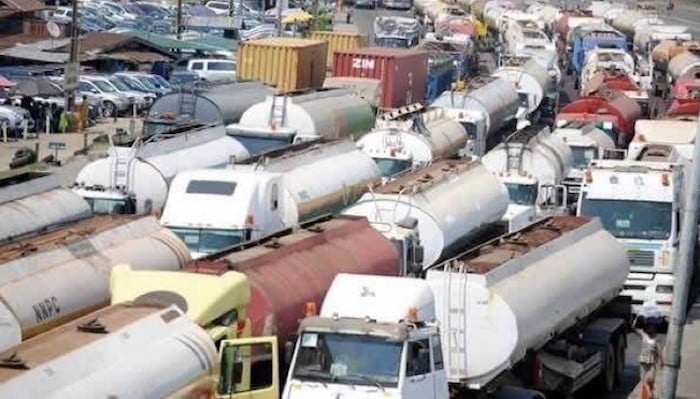
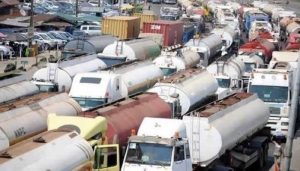
Amid worsening supply challenges and rising pump prices, petroleum marketers have begun moves to import petrol independently as the commodity moved close to the N1,000 per litre mark across major cities in the country.
Marketers said supply constraints and production glitches at the Dangote Petroleum Refinery sparked fresh pressure in the downstream oil market.
The National Publicity Secretary of the Independent Petroleum Marketers Association of Nigeria, Chinedu Ukadike, confirmed the development in a telephone interview with The PUNCH on Tuesday.
According to him, members of the Depot and Petroleum Products Marketers Association of Nigeria are concluding arrangements to begin petrol importation as part of efforts to stabilise retail prices.
He stated that petrol prices would soon drop as competition returns to the market, if additional competition is brought into the sector.
“Yes, petrol price is still going to come down because I also know that some marketers, especially DAPPMAN members, have applied and they are going to import petrol products.
“Peradventure, their prices are cheaper than Dangote’s, we would have no choice but to patronise them. The essence of this market is that where it is cheaper, we will buy. But prices will come down once there is a struggle for the market,” Ukadike said.
The PUNCH reports that petrol prices rose from about N865 to around N950 per litre on Monday.
Checks by The PUNCH on Tuesday showed that the pump price of Premium Motor Spirit, popularly called petrol, now sells between N920 and N955 per litre in many retail outlets, while some stations in Abuja, Sokoto and Lagos charge as high as N1,000 per litre, depending on location and brand.
This comes at a time when Nigerians were expecting petrol prices to drop to N841/litre as recommended by the Dangote refinery.
Our correspondent recalls that when the Dangote refinery launched its logistics-free fuel distribution scheme on September 15, it stated that its partners and filling stations benefitting from the scheme would drop petrol prices to N841 in the South West and N851 in Abuja, Edo, Kwara, Rivers and Delta.
But when this had yet to take effect in filling stations, prices surged above N900 in Lagos, Ogun Abuja and others.
In the Federal Capital Territory, a market survey by one of our correspondents revealed that petrol sold for N955 per litre at NNPC outlets in Gwarinpa and Lugbe, while prices climbed to N928 per litre at NNPC stations in Lagos.
In parts of Edo, Rivers, Oyo and Gombe states, motorists purchased the product at prices ranging from N900 to N1,000 per litre, amid reports of long queues and panic buying.
The latest spike has raised concerns among motorists and consumers already grappling with high transportation and food costs, threatening to further fuel inflationary pressures across the country.
Reacting, the Independent Petroleum Marketers Association of Nigeria has blamed depot owners for the sudden surge in petrol prices.
IPMAN President, Abubakar Shettima, told The PUNCH that depot owners increased their prices when they discovered that the Dangote refinery had stopped fuel loading for some days.
Our correspondent reports that depots hiked their prices on Monday from an average of N830 to about N890.
According to Petroleumprice.com, depots like Matrix, Fynefield and Liquid Bulk sold petrol at N900 as of Tuesday. Northwest offered N895; Pinnacle, N885; RainOil, N890; NIPCO, N850; Aiteo, N878; and Sigmund, N890.
Following this, filling stations adjusted their pump prices to reflect the new pricing regime.
The Nigerian National Petroleum Company Limited retail outlets sold premium motor spirit at N928 in Ogun and Lagos, an increase of about N50 from the previous N870.
The adjustment also marks a reversal of the price reduction introduced in August, when NNPC lowered petrol prices to N865 per litre in Lagos and N890 per litre in Abuja.
Speaking with our correspondent, the NNPC spokesperson, Andy Odeh, said the NNPC adjusted its pump prices like every other retail outlet because the depots increased their gantry rates.
“The ex-depot prices have gone up. You know all the filling stations are retailers. So, when the price goes up ex-depot, there will be an adjustment by the retailers. That’s what has happened and it’s across all the retailers,” the NNPC spokesperson said.
In Ogun and Lagos, filling stations sold petrol at prices ranging from N900 and N950 on Tuesday. Dangote’s partner, MRS, also sold the product at N925 in Ogun.
Our correspondent gathered that the Dangote refinery stopped selling petrol to marketers recently, causing a tightness in supply.
The Dangote refinery has yet to respond to questions seeking further clarification about the development.
However, sources said this might be due to ongoing maintenance or the challenges posed by the mass sacking of engineers at the facility.
In an interview with our correspondent, the President of IPMAN, Shettima said members of the Depot and Petroleum Products Marketers Association of Nigeria hiked fuel prices following the no-loading situation at the 650,000-capacity refinery.
“These DAPPMAN people are the only ones who are selling the product now. But, probably, Dangote will start tomorrow (today). So, if Dangote starts selling tomorrow, the price will come down. Dangote has not been selling to marketers since all these days.
“You may see their trucks on the road, but the trucks are not enough; marketers still have to support by going there to load. And immediately these DAPPMAN people saw that Dangote was not loading, they increased their ex-depot prices. That’s just what is happening. But I know these things are temporary, very soon they will wipe away,” Shettima said.
Speaking on the development, the IPMAN National Publicity Secretary, Chinedu Ukadike, attributed the price increase to temporary supply glitches at the Dangote Refinery and sharp practices by some private depot owners.
Ukadike explained that the refinery had recently slowed loading operations due to internal reorganisation and labour-related disruptions, causing limited distribution to private marketers.
“There is a reorganisation going on, and the issue of the NUPENG strike caused a little glitch in terms of supply and refining of petroleum products, because of the workers’ strike.
“And what we are trying to do now is to manage the situation. Now Dangote has also increased its pump price, while NNPCL has increased its price. This just shows that it is a reflective market whereby when the suppliers increase prices, the retailers have no choice but to increase them, just to make a little profit. So that is the current situation. It is only when we tie our importation of crude products or refined products to the price of the dollar that we can have issues, but that is no longer the case. The issue of exchange doesn’t arise. The factors of production are the issues now,” Ukadike said.
He added that depot owners were taking advantage of the limited supply situation to hike ex-depot prices, further worsening the pump price burden on consumers.
Major Energies Marketers Association of Nigeria further confirmed in its daily bulletin, posted on its official X handle, that the refinery had suspended gantry loading for most private marketers since last Thursday, restricting sales to its own and MRS trucks, thereby creating a shortage at independent outlets.
The Chief Executive Officer of PetroleumPrice.ng, Jeremiah Olatide, has blamed the fresh wave of petrol scarcity and price hikes on operational disruptions at the Dangote Refinery, which he said has suspended gantry sales to private depot owners since last week.
Olatide said the refinery is currently prioritising loading for its own last-mile delivery trucks and those of its affiliate, MRS, while marketers who obtained Product Finance Instruments have been unable to lift fuel for several days.
“No, things haven’t improved. The current situation, as I speak to you, is that the refinery is only loading their own trucks, last-mile delivery trucks, and they have suspended gantry sales since last Thursday,” he said. Those who have PFI are yet to load. I think they have low stock, so they are trying to manage it.”
According to him, the production hiccup was compounded by crude supply shortages and the recent layoff of about 800 refinery workers, which has further strained the facility’s operations.
“Basically, they are having issues with crude, and the 800 staff that were laid off is also a challenge to them. All these have contributed to the supply glitch we’ve experienced in the last week,” Olatide explained.
He likened the unfolding situation to the earlier gas supply crisis, warning that the refinery’s reduced output was already distorting the downstream market. “Clearly, there is a supply problem with PMS distribution, just like the gas problem started,” he added.
Olatide revealed that petrol prices at private depots had surged in response to the supply shortfall, as marketers scramble for limited volumes. “Depot marketers were not allowed to load products today at the refinery. It was only for MRS trucks and their personal trucks. Anyone applying through its trucks will get products now, but not private marketers’ trucks,” he said.
He further disclosed that private depots, previously buying at N820 per litre from the refinery, have halted sales and are considering fresh price increases.
“No doubt, there is a supply glitch. It’s not affecting MRS, but private depot operators have stopped sales and want to raise prices again,” Olatide said.
Meanwhile, residents living in Sokoto State have lamented the recent increase in pump price by petroleum marketers in the state, which has increased the cost of fuel to between 960 naira and arefinery0 naira within the metropolis.
Our correspondent, who monitored the development in the state, gathered that the increase in price covered both independent and major marketers in the state.
Findings by our correspondent in the state gathered that all the NNPC filling stations in the state metropolis have not been open for business for the last week.
A visit to AA Rano on Tuesday discovered that a litre of fuel had been adjusted from the previous 930 naira to 960 naira.
Also, at some of the independent marketers in the state, the fuel, which was sold for between 950 and 960 naira, is now being sold for between 1,000 and 1,050 naira.
A motorist who spoke with our correspondent at AA Rano said he decided to join the queue due to the recent scarcity and increase in the price.
“I have to be here to queue for the fuel, I learnt a litre is now 992 from NNPC in Lagos, only God knows how much NNPC will sell in Sokoto.
“Even though I don’t have money, I have to borrow money from my wife, I have been here for about 40 minutes trying to get this product, anyway it’s unfortunate”
With the cost of fuel nearing N1,000 per litre, analysts warn of another round of price shocks across transportation, food, and manufacturing sectors, even as Nigerians continue to await the promise of stable supply from the country’s 650,000 barrels-per-day Dangote Refinery.
Multiple efforts to reach the Dangote refinery spokesperson, Anthony Cheijina, were not successful as the official didn’t pick up his calls and didn’t reply to messages sent to his phone line.
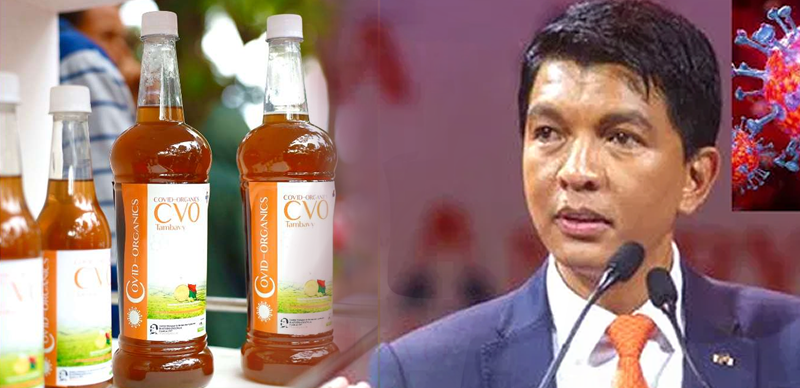
Madagascar’s President Andry Rajoelina on Tuesday dissolved the national assembly, pre-empting an opposition-led vote to force him out of office over the island nation’s spiralling political crisis.
Rajoelina has faced over two weeks of deadly street clashes, led largely by young demonstrators furious with the ruling elite, forcing the 51-year-old leader into hiding.
The decree to dissolve the assembly “shall enter into force immediately upon its publication by radio and/or television broadcast”, the presidency said in a statement published on Facebook.
Rajoelina, who has defied mounting calls to resign, defended the move in a separate social media post as necessary to “restore order within our nation and strengthen democracy.”
“The People must be heard again. Make way for the youth,” he said in a post on social media.
Opposition leader Siteny Randrianasoloniaiko said Monday they would vote to impeach Rajoelina for desertion of duty following reports he had fled the country.
Rajoelina, a former mayor of the capital Antananarivo, said late Monday he was sheltering in a “safe space” after attempts on his life, without revealing his location.
The protests began on September 25 and reached a pivotal point at the weekend when mutinous soldiers and security forces joined the demonstrators and called for the president and other government ministers to step down.
Among them was the elite CAPSAT unit, which played a major role in the 2009 coup that first brought Rajoelina to power.
To try to defuse the protests, the president last month sacked his entire government.
Radio France Internationale reported that Rajoelina departed Madagascar aboard a French military plane at the weekend but French officials have yet to respond to AFP’s request for confirmation.
The Jigawa State Police Command, in a major crackdown on drug trafficking, arrested no fewer than 105 suspects during simultaneous raids across the state.
The arrests were confirmed on Tuesday by the Police Public Relations Officer, SP Shi’isu Adam, at the Command’s headquarters in Dutse, the state capital.
SP Adam revealed that in recent raids, officers of the Command searched every nook and cranny of Jigawa to root out illegal drug activities. “Our men left no stone unturned,” he said, emphasising the determination to rid the state of the drug menace.
According to him, the raids led to the recovery of over 5,000 illicit drugs and intoxicating substances, including cannabis and various hard drugs.
Moreso, SP Adam provided a detailed list of the substances seized, highlighting the scale of the operation.
Among the recovered items were 2,541 units of Exol and 1,146 units of D-5, both commonly abused drugs in the region.
Also confiscated were 270 packets of Tramadol and over a thousand wraps of cannabis, including one block.
Other seized substances included 269 units of Diaxer, 153 Pregabalin capsules, and 82 units of Farin Malam.
The police also nabbed various other illicit drugs such as Diazepam, Vegakris, and Calidon’s.
However, SP Adam disclosed that cash amounting to N92,460 was recovered from the suspects, alongside other substances like rubber solution, suck and die, and dry gin. “This bust sends a strong message to those involved in drug dealing,” he said.
The police spokesman urged the public to cooperate with law enforcement by reporting suspicious activities. “Our fight against narcotics is ongoing, and we need everyone on board,” SP Adam added.