WEARING OF MILITARY UNIFORM BY UNAUTHORISED PERSONS AND POLITICIANS FOR ELECTIONEERING CAMPAIGN POSTERS IS ILLEGAL
The Defence Headquarters (DHQ) has noticed with dismay that some politicians have formed the habit of wearing military uniforms and accoutrements for electioneering campaign posters.
The campaign posters of some Governors, dressed in military camouflage uniforms, are displayed in noticeable areas in their respective states. This is manifestly illegal and an abuse of the privilege of allowing civilians wear military uniforms during military training exercises.
It is necessary to restate that the Armed Forces of Nigeria, as a professional institution, remains apolitical and, as such, would not want to be dragged into any form of political bias. Accordingly, it is important to advise politicians and others to desist from the use of military uniforms and accoutrements for political events and other engagements henceforth. Please note, anyone found culpable in this regard would be liable to prosecution
This was contained in a statement signed by his SA Media and Publicity, Honourable Ibrahim Dahiru Danfulani, dated January 5, 2022.
“I heartily felicitate with the Chief of Army Staff (COAS), Lieutenant General Faruk Yahaya as he marks another milestone on the occasion of his 56th birthday,” it said
Zailani said just like wine, the older the better, he is optimistic that the new age comes with more wisdom and experience to help Nigerian Army succumb the various security challenges bedeviling the country.
“I am optimistic that he will consolidate on the successes achieved since he was appointed by the Commander-in-Chief of the Armed Forces,” he said.
It would be recalled that the COAS, General Yahaya was born on January 5, 1966 in Bodinga Local Government Area, Sokoto State.
He is a Lieutenant General of the Nigerian Army and the 22nd Chief of Army Staff of Nigeria, appointed by President Muhammadu Buhari on May 27, 2021.
The late Adediran served as a member of the House representing Surulere Constituency 1 between 1999 and 2003.
In a tribute by his media office, Dr. Obasa expressed sadness at the former lawmaker’s demise saying the late Adediran died at a time her legislative and political experiences were still very important to Lagos and Nigeria.
Obasa described Adediran as a passionate woman who wanted the best for her society adding that to achieve this, she played major roles in the Fourth Assembly of Lagos State.
“Hon. Adetoun Adediran is leaving behind fond memories of her roles as a lawmaker in the emergence of a more modern Lagos.
“As a principal officer at the House, she was passionate and active making sure her voice was heard among her colleagues who were mostly men.
“It was this same passion for service that got her the position of Women Leader of the All Progressives Congress (APC) in Lagos. She also later became the Chairman of the Lagos State Building and Investment Company.
“We mourn her demise as it came at a time her experience and wisdom were still desired for the progress of our state. We mourn because death has snatched one of our finest politicians.
“While I pray that God grant her a peaceful rest, I also pray that He strengthen those she left behind and give them the fortitude to bear this huge loss,” Obasa said.
ADEDUNTAN: FIRSTBANK IS RESILIENT, STABLE AND BUILT FOR THE LONG HAUL
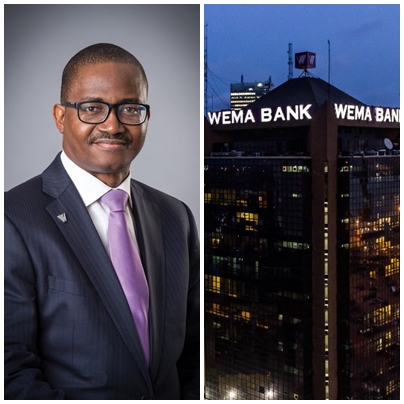
The Managing Director/Chief Executive Officer of First Bank Nigeria Limited, Dr. Adesola Adeduntan, last year saw his tenure extended as part of efforts to ensure the stability of the financial institution. In this interview with THISDAY, he speaks about the intervention of the Central Bank of Nigeria, the future of the bank, trends that shaped the economy in 2021, his expectations for 2022 and other pertinent banking sector issues. Excerpts… What is the level of the Central Bank of Nigeria’s involvement in First Bank?
The central bank’s involvement in FirstBank is essentially about playing the role of the regulator. CBN’s intervention has been in the best interest of the bank’s stakeholders and its performance; aimed at restoring confidence in the bank as well as to reassure the depositors, creditors and other stakeholders of the bank of its commitment to ensuring the stability of the financial system.
Your third quarter results saw a decline in some of the key indicators such as gross earnings, profit before tax and profit after tax, what was responsible for this?
The Commercial Banking reported a resilient performance resulting in a Profit before Tax of N44.3billion for the nine months period ended September 30, 2021. This result was delivered in a sustained low yield environment, which continues to compress margins as the macro-economic environment remained challenging amidst the negative impacts of the COVID-19 pandemic.
FirstBank’s focus on putting the customers first continues to be a driving force as we keep supporting our customers in meeting their business needs. The evidence of this support is reflected in the 24.1% y-t-d growth in the loan book, underpinned by solid risk management practices and from which sustainable good quality earnings are being delivered as asset quality remains firmly under control. Furthermore, in our concerted efforts at sustaining our dominance in financial inclusion and digital banking, we continue to record growths in our agent banking business, supporting the 17.5 per cent growth in non-interest income.
We remain determined to continue strengthening our capabilities across our footprints, as we are confident that our investment in technology and the strong balance sheet, which the Group has built over the last six years, will provide the solid platform for more impressive results into the future.
The CBN recently introduced the eNaira, what has been the acceptance rate by FirstBank’s customers, and do you think this will positively impact your bank?
The Central Bank of Nigeria (CBN) as the regulator of the banking industry continues to lead and drive development in the industry. In the banking industry, digital currency is the future and the CBN is staying ahead of the curve in Africa with the introduction of the eNaira given the several benefits associated with the digital currency, such as safety, speed, and convenience. A review of the events over the course of the past few years has shown that digitalisation in its different forms has been net positive for the financial services industry.
The eNaira is no different; the digitalisation of the naira expands upon Nigeria’s already advanced payment ecosystem; the roadmap for the eNaira over the next couple of months will reveal some exciting use cases that will further grow the ecosystem and encourage even more interaction with this new form of currency. Currently we have a whole segment of digitally curious customers who have started interacting with the eNaira, and as the eNaira ecosystem grows and acceptance increases as a store and exchange of value, so will those numbers.
FirstBank’s channels currently account for about 17 per cent of the total reported eNaira transaction volume. The bank is dependably dynamic and continues to be at the vanguard of innovation in the banking industry. Overall, I am confident that the eNaira will positively impact the bank as our customers continue to transact through the bank’s channels, supporting the digital economy drive. The number of customers will increase as the eNaira will enable the sign-on of excluded people in the financial system, thereby supporting the financial inclusion drive of the CBN. The eNaira will reduce the cost of processing cash for the bank, thereby making it a cheaper, reliable and faster way of exchange and the bank will have access to customers across the continents, simplifying and facilitating cross border payments and trade.
What’s opinion about the CBN’s FX and what long-term impacts will it have on the exchange rate and has your bank been able to meet the demands of customer?
The main objectives of exchange rate policy in Nigeria are to preserve the value of the domestic currency, maintain a favorable external reserves position and ensure external balance without compromising the need for internal balance and the overall goal of macroeconomic stability. The new CBN’s foreign exchange (FX) policy is geared towards harmonising the FX rates across the various markets and increasing the availability of FX to those who genuinely need it and not for those who are speculators or those who deliberately try to distort the market. The current FX policy of the CBN has recorded some successes in improving the availability of FX for transactions and curbing the incessant decline of the naira exchange rate in the parallel markets.
The current policy is expected to strengthen the naira exchange rate, however, there are several other factors that are critical to the movement of the exchange rate, predominantly oil prices and capital inflows. If these factors continue to trend positively, then we can expect a relative stability of naira relative to other international currencies. I believe the long-term impact will be the relative stability of the naira, as the CBN continues to meet all legitimate needs, increasing the confidence of the people and sending the right signaling effect to foreign investors. Typically, FirstBank engages the regulators, providing all the necessary foreign exchange bid documentations and following defined processes to ensure that our customers’ bids are successful, and we get as much allocation as possible for all our needy customers.
How prepared do you think banks are for Basel III?
The Basel III accord was developed by the Basel Committee on Banking Supervision (BCBS) and is built upon the frameworks of the existing Basel II accord, with the aim of strengthening regulation, supervision, and risk management within the banking industry, globally. Due to the impact of the 2008 global financial crisis on banks, it became imperative for the current frameworks under Basel II to be revised to improve the ability of banks to handle shocks from financial stress and to strengthen their transparency and disclosure. The Central Bank of Nigeria (CBN) on September 2, 2021, issued a circular to all banks in Nigeria titled Basel III Implementation by all Deposit Money Banks.
The circular aims to inform all banks of the issuance of guidelines for the implementation of the Basel III standard which is a voluntary global regulatory framework that addresses banks’ capital adequacy, stress testing, and market liquidity risk.
Basel III standard will prevent banks from taking excessive risks that can negatively impact the players and the economy. Implementation of Basel III will have significant implications for capital requirement – there will be a higher minimum CAR requirement for players in the industry. However, the apex bank has engaged and defined a road map to ensure that operators in the banking industry meet and surpass the higher capital requirements. The Basel III will be implemented in phases and banks have developed their capital plan to ensure they meet and surpass the higher capital and liquidity requirements for the Basel III implementation. Many banks have revamped their operational and credit risk infrastructure to mitigate operational and credit risk losses. The effect is already being seen in the general decline in the industry’s non-performing loan portfolio. The successful implementation of the Basel III frameworks would be beneficial to the banking industry and the economy at large.
Do you think it would spur more mergers and acquisitions in year 2022?
The Basel III standard implementation by the Central Bank of Nigeria is aimed at decreasing the risk of the financial services sector. The main aim of Basel III is to improve financial stability – the standard is set to increase the soundness of Nigeria’s financial services sector and the confidence of the people in the financial system. The implementation is expected to impact banks’ capital adequacy by raising liquidity and lowering bank leverage. Analysts believe that the implementation of Basel III would increase the capital requirement of Systemic Important Banks (SIB) in Nigeria to 17 per cent from 15 per cent but, most banks in Nigeria are well-capitalised and are expected to increase capital buffer that can be drawn upon in periods of stress.
However, despite being well-capitalised, the implementation of Basel III would reduce the capital headroom of operators and banks would have to resort to various strategies to strengthen their capital positions to drive credit and business growth. These strategies may include mergers and acquisitions (M&A) as Basel III policy implementation takes effect to strengthen their capital positions as the policy requires higher capital requirements/enhanced capital cushions. Nonetheless, I believe Nigerian banks are well-positioned to withstand regulatory headwinds whilst driving growth.
How would you assess your bank’s performance through the pandemic?
The Covid-19 pandemic disrupted several sectors of the economy, the banking industry was one of the most impacted given the critical role that banks play in the economy and across all sectors. However, FirstBank navigated the pandemic crisis successfully and recorded the best financial performance since 2015 in the 2020 financial year. FirstBank delivered a strong performance both on the financial and non-financial front underpinned by resiliency, digital innovation and customer centricity. On financial performance, despite the pandemic, the bank recorded significant growth in its revenue base, profitability and asset. Revenue and Profitability Performance: In the context of the pandemic, FirstBank Group delivered strong financial results, generating gross revenue of N539 billion for the year ended 31 December 2020. The Group’s non-interest income grew impressively by 24 per cent between 2019 and 2020, closing at N154.5 billion for the year ending 31 December 2020.
The non-interest income growth was propelled by transactional and eBusiness income and credit related fees. In 2020, FirstBank Group delivered its most profitable year since 2015. The Group’s profit before tax increased from N70.8 billion for the year ended 31 December 2019 to N73.6 billion for the year ended 31 December 2020, resulting in a year-on-year profitability growth of 4 percent between 2019 and 2020. Strong Asset Growth and Stable Funding Base: FirstBank Group experienced solid total asset growth of 25.5 per cent to N7.4 trillion as at December 31st, 2020 (2019: N5.9 trillion). The Group continues to maintain a strong liquidity and capital position driven by its high volume of customer deposits held in low-cost current and savings accounts, which amounted to over 75 percent of the Bank’s customer deposit base as at 31 December 2020.
Renewed emphasis by the Group in improving the service performance level in the retail segment, expanding digital touchpoints and repurposing of its branch network have resulted in 20.5 per cent increase in deposits to N4.7 trillion as at December 31st, 2020 (2019: N3.9 trillion); a reflection of our strong franchise value which has come to be associated with safety, stability and innovation. Through the bank’s extensive physical footprint and expanding agent banking network and digital banking capabilities, the Group continues to reach an increasing number of customers, which drives customer deposits in low-cost current and savings accounts that serve as an important funding base. On non-financial performance, the bank’s non-financial performance across disruptive innovation and customer focus lens has been impressive. Some of the milestones achieved during the pandemic was us launching the pioneer FastTrack ATM in Africa offering customers a touchless solution for ATM transactions and enabling customers to pre-order cash on ATMs via the bank’s USSD or mobile banking platforms.
We unveiled FirstBank’s Virtual Payment Card, a digital representation of the naira-denominated plastic debit card, launched the Firstmonie Agent Credit, a digital lending solution designed to provide bridge finance to help our Agents solve liquidity challenges, leveraged technology to promote digital account opening process through the Digital Sales Executive App, ATMs, Firstmonie Agents, *894# USSD banking, FirstMobile and Company website. Also, we upgraded the Bank’s mobile banking application, FirstMobile, with new and improved features to promote a convenient and secured mobile banking experience for customers, rolled out FirstBank Digital Innovation Lab’s proprietary developed Mobile Banking App for our wholly owned subsidiary FBNBank Senegal, Increased customer account base (including wallets) to over 30 million.
Maintained the dominant digital bank rating in Nigeria with over 20 per cent market share of electronic banking transaction volumes, about 16 million users on our digital banking platforms (USSD *894#, FirstMobile and FirstOnline) and over 11 million card users. Expanded the Agent Banking network to over 86,500[1] agents across 772 out of 774 local governments in Nigeria and paid out over N18 billion as commissions to Firstmonie
Agents.Reinforced the Bank’s financial inclusion drive with the disbursement of over N22 billion and N35 billion in loans through FirstAdvance and Agent Credit digital platforms, respectively. Provided free e-learning solutions in partnership with Roducate, IBM and the Lagos State Government, thereby helping to reduce the negative impact of school closure following the COVID-19 pandemic on students in Lagos State. Additionally, the bank, in partnership with Junior Achievement, positively impacted over one million students through its financial literacy, entrepreneurship and career counselling programs and Improved customer ranking in the Wholesale Banking segment by four places in 2020.
What are your expectations and forecast for the economy in 2022?
Globally and in Nigeria, economic recovery was strong in 2021 following improved vaccination exercise, and support from monetary and fiscal authorities for demand. However, I believe 2022 will witness slower pace in economic growth over lingering health crisis (the fourth wave of the covid-19 pandemic with the omicron variant) and rising price levels globally. Also, the boost from base effects and reopening of the economy will decline in 2022. Locally I expect economic growth to improve slightly; however, the following trends are expected in 2022 are disinflationary trend to continue in 2022 but inflation would still bite harder although potential PMS subsidy removal is the most consequential known factor that could push inflation to its worst-case estimates in 2022. Higher taxes may take the center stage as the federal government explores all options to cover for burgeoning budget deficit. Potential improvement in fiscal metrics given the bullish sentiment in the international oil market and savings potential from the PMS subsidy removal.
Capital importation may improve as foreign portfolio investments, diaspora remittances and other sources of inflow witness gradual growth following global economic recovery and increased employment for Nigerians in diaspora. Monetary policy measures may normalise in 2022 with the Central Bank of Nigeria maintaining an accommodative stand. Economic growth in 2022 is projected to be with the range of 2.7 per cent and three per cent. However, the key activities to look out for in 2022 include electioneering, the penultimate year before the next general elections, increase in taxes, buoyant oil market, PMS subsidy removal, and exchange rate policy of the CBN.
With the recent push to increase lending by CBN, don’t you think this would impact or drive up your bank’s NPLs?
The Central Bank of Nigeria had in recent times taken some tough decisions to address the challenges affecting the growth of the real sector and the Nigerian economy. This includes ensuring that banks comply with the minimum 65 per cent loan to deposit ratio (LDR). This increased lending by CBN has proved potent in filling the financing gap as credit to private sector has indeed risen to an appreciable level.
Although there is a concern that this push to increase lending by CBN would drive up bank’s non-performing loans (NPLs), a report by the National Bureau of Statistics (NBS) noted that despite the increase in LDR there is an inverse proportionate reduction in non-performing loans. FirstBank has achieved great strides in reducing its NPL from double-digit in 2016 to single digit in 2021 which attest to the fact that the bank is strong and resilient.
I am happy to note that the recent drive to increase lending will not affect the bank’s NPLs negatively as the bank has instituted a robust and automated operational and credit risk management processes and infrastructure. FirstBank has in the recent years built an enduring risk culture and governance system, strengthened the risk infrastructure through specialised training, digitalisation credit processes and imbibe disciplined and active portfolio management approach thereby ensuring strict regulatory compliance. FirstBank will continue to support CBN’s lending initiative to achieving strong economic growth and diversification as the bank is well positioned to maintain good asset quality and profitable credit portfolio.
With the emergence of PSBs and telcos granted licences, how much would that deepen financial inclusion and do you see this competing with banks’ agency banking?
The introduction of Payment Service Banks (PSBs) is another step taken by the CBN in line with its goal of promoting financial inclusion and enhancing access to financial services for the unbanked, underbanked, and underserved segments of the population across all parts of the country.
The entrance of the PSBs will certainly deepen financial inclusion. It will impact the financial services landscape to the extent that the Telcos will be able to leverage their extensive infrastructure to offer last mile delivery of financial solutions to those currently unbanked. Today, we have 70 million Nigerians that have been issued the National Identity Number.
About 20 per cent of this number are currently unbanked, and they can more easily be reached. The expected impact will ride on the back of synergy and collaborations across the industry. And this is what we are already seeing. For us at FirstBank, the development is not a threat, we see it more as an opportunity. You will agree that for an institution like ours that has been around and flourishing for over 127 years, our ability to read and effectively respond to market trends has been well proven. What we have done with our agent banking is to build a platform that could be leveraged to enrich customer offerings in diverse ways. We do not just possess spread, we possess depth. So, leveraging technology and open API, we are poised to work with the PSBs to deliver value to the banking public and citizenry.
Still on agency banking, can you give us an update on the expansion of your bank’s agency banking and the impact it had especially during the lockdown?
FirstBank’s agent banking, Firstmonie, has witnessed continuous growth since its launch. The Firstmonie agent network operates in 772 of the 774 local government areas in Nigeria and is the largest bank-led network in Nigeria, and indeed Sub-Saharan Africa, with over 150,000 agents including over 22,000 women agents, enabling the Bank to drive gender inclusive growth within rural communities. The Firstmonie network has processed over N17 trillion ($39.3 billion) in over 817 million transactions between 2018 and December 2021. The Firstmonie initiative has been a very formidable vehicle for job creation and economic development in several communities across the country, as over 150,000 direct jobs and 450,000 indirect jobs have been created, with an agent earning an average monthly commission/income of N85,000. Over 1.5 million individuals have been economically impacted through the jobs created via the FirstBank’s Firstmonie agent banking proposition. Significant percentage of Firstmonie’s agents are in the rural areas, contributing significantly to the development of the rural economy in Nigeria.
Overall, FirstBank is supporting the social-economic development of Nigeria in a profitable way. During the peak of the lockdown, the Firstmonie network provided an alternative channel for the Bank’s customers to conduct transactions and meet their basic financial service needs, serving as quasi-physical touchpoint for the bank’s customers. This resulted in the Firstmonie network processing over N6.6 trillion worth of transactions during the period We are not resting on our oars and the growth in 2021 is equally impressive; as at Q3 2021, we had processed more value of transactions than we did in the whole of 2020. The outlook for 2022 and beyond is also quite exciting. We will continue to focus on impacting the lives of the communities we serve and deepening the services we offer through collaborations with partners, the regulatory authorities, other industry players, and our customers.
Your tenure as CEO was last year renewed, can you speak on your achievements and milestones thus far?
I was appointed Chief Executive Officer/Managing Director of this iconic institution – FirstBank of Nigeria Limited in January 2016. The board and management team embarked on a transformation journey with deliberate and focused extraordinary actions to rescue and gradually rebuild the bank. Fast forward, the rebuild effort of the last five-plus years has translated to significant outcomes across key indicators of business momentum and growth. Some of the achievements and milestones include: Grew the bank’s average assets to N8.2 trillion as at Q3, 2021 from N3.9 trillion as at December 2015, increased Group deposits base to N5.1 trillion in Q3, 2021 from N2.9 trillion as at December 2015.
FirstBank grew the Bank’s profit before tax to N52.7 billion in Q3, 2021 from N10.2 billion as at December 2015, reduced the Bank’s NPL ratio from double-digit in 2016 to single digit in 2021 (vintage NPL is <1%). Reduced cost of risk to <2% as at Q3 2021 from double digit in 2016, transformed and repositioned international subsidiaries businesses for improved performance – all are returning positive profitability, upgraded the core banking platform (Finacle Future Ready – FFR) with improved processing capacity and availability + better integration agility. Built an industry leading digital banking (electronic banking) business. Made significant progress in transaction banking – controlling 26 per cent of industry corporate e-bills payment market share.
Also, during my tenure, the FastTrack ATM was Launched in Africa offering customers a touchless solution for ATM transactions and enabling customers to pre-order cash on ATMs via the Bank’s USSD or mobile banking platforms.Unveiled the FirstBank Virtual Payment Card, a digital representation of the naira-denominated plastic debit card. Launched the Firstmonie Agent Credit, a digital lending solution designed to provide bridge finance to help our Agents solve liquidity challenges.
Leveraged technology to promote digital account opening process through the ATMs, Firstmonie Agents, *894# USSD banking, FirstMobile and Company website.
Upgraded the Bank’s mobile banking application, FirstMobile, with new and improved features to promote a convenient and secured mobile banking experience for customers. Rolled out FirstBank Digital Innovation Lab’s proprietary developed Mobile Banking App LitApp. Others are increased customer account base (including wallets) to over 34 million. Maintained the dominant digital bank rating in Nigeria with over 20% market share of electronic banking transaction volumes, about 16 million users on our digital banking platforms (USSD *894#, FirstMobile and FirstOnline) and over 11 million card users.
Build a ubiquitous and robust Agent Banking network across 772 out of 774 local governments in Nigeria with over 150,000 agents. During my tenure, the Bank’s outstanding services have attracted numerous recognitions and awards. In 2021, FirstBank was named “Best Private Bank in Nigeria” and “Best Consumer Digital Bank in Nigeria” by Global Finance; “Most Innovative Banking Application – Nigeria, 2021” and “Best CSR Bank – Nigeria, 2021” by Global Banking and Finance Awards; “Most Innovative Banking Product 2021” by International Finance Awards; as well as “Treasury and Global Markets Brand of the Year 2021” and “Alternative Delivery Channel of the Year” by BusinessDay Banks and Other Financial Institutions (BAFI) Awards 2021.
For six consecutive years, FirstBank was named, “Most Valuable Bank Brand in Nigeria,” by the globally renowned The Banker Magazine of the Financial Times Group and “Best Retail Bank in Nigeria” eight times in a row by The Asian Banker Awards. We are grateful for accolades and achievements which attest to our exceptional commitment to promoting national, regional and global economic growth and development through constructive engagements with the public and private sectors of various economies, and our host communities across the globe.
What should your customers and shareholders expect from your bank in the near future?
The industry has changed and will continue to evolve at a faster pace with new innovative technologies, and the customers will continue to gravitate towards institutions that provide the best digital payments services that address their changing needs for convenience, speed and security.
FirstBank will remain at the cutting edge of innovation and technology in the industry. FirstBank has the right capabilities and competencies to lead and take advantage of the new developments in the digital payment space, and indeed, the banking industry. At FirstBank, we will continue focus on customer-led innovation as we put our customers first in everything we do.
We understand that although the needs of customers may remain the same, the channel of delivery remains dynamic, and we must stay ahead of the curve; Our stakeholders should expect to see a bank that is future-proof and ready to provide best-in-class products and services that will meet and surpass their needs.
FirstBank remains dependably dynamic and will ensure that the needs of all stakeholders are met to the customers, we will provide the best products and deliver exceptional customer experience, to the shareholders, capital appreciation and good dividend payout,to employees, competitive emolument and good career path, to regulators, voluntary compliance to all rules and regulations and to communities, we will be good corporate citizens and give back to the society where we operate.
Tell us about some of the impact of FirstBank on the communities where it operates?
At FirstBank, we are committed to nation-building and have been driving sustainable social, economic and environmental growth for over 127 years of our existence. Our community development initiatives are anchored on our strategic Education, Health and Welfare pillars. Our engagement in sustainable business practices is based on our promise of enhancing economic development and ensuring economic stability for the present and future generation. Our key programmes include Infrastructure Development programme; Endowment programme; Future First (Financial Literacy, Entrepreneurship and Career Counseling); E-Learning Initiative; SPARK (Start Performing Acts of Random Kindness) and CRS Week. I will highlight achievements for a few. First Bank Infrastructural Development programme is aimed at promoting infrastructure development under its identified areas of support.
This includes providing infrastructure facilities in schools, hospitals and environmental infrastructure projects. This is in recognition of the importance of these facilities in improving the quality of life. We have built over 16 infrastructure projects which include universities and secondary and primary schools and recently commissioned a Primary Health Centre in Ijedodo Community in partnership with Lagos State Government. The FutureFirst programme in partnership with Junior Achievement Nigeria has impacted Over 1,000,000 people across the regions of the country including Lagos, Port Harcourt and Abuja with knowledge of financial literacy and entrepreneurship.
Over 170,000 students have benefitted from the E-learning initiative thus far. This include 20,000 indigent students that have received free low-end devices preloaded with accredited content.
The Corporate Responsibility & Sustainability Week (CR&S) Week which started in 2017 is a dedicated week designed to offer opportunities for employees to give their time and resources to defined causes in line with the Bank’s CR&S strategic approach. The Week’s activities are an aspect of the Bank’s Employee Giving & Volunteering Programme, which was instituted with the aim of encouraging employees to give back to the community as well as inculcate in them the integral corporate culture of giving.
The main initiative implemented during this week is SPARK.
SPARK is a values-based initiative designed to raise consciousness that we can choose to be kind. SPARK which was introduced in the maiden edition of the Corporate Responsibility & Sustainability (CR&S) week in 2017 espouses reigniting our values which appear to be eroding fast. The initiative focuses on creating and reinforcing an attitude of going beyond just meeting the material needs of people who are unable to help themselves to showing compassion, empathy, affection.
In 2021, the lives impacted include 60 Beneficiary schools; over 18,000 secondary students’ participants in SPARK launch; 20,000 underprivileged including widows lives touched in 8 countries including United Kingdom, Ghana, DRC, Guinea, Sierra Lone, Senegal & Nigeria. We had partnerships with over 100 Charities / NGOs including LEAP Africa; International Women Society; UNGC; UN Women; Junior Achievement Nigeria.
In addition, SPARK Amplification has expanded and deepened staff involvement within our various host communities by integrating and institutionalizing acts of random kindness, which has seen 7 Directorates & Departments in the Bank implement various initiatives including empowering small businesses; infrastructure and books for schools, and providing household items for orphanages.
In 2021, staff contributions spent to implement SPARK amplification stands at N13,570,743.10 and a total of 9,706.5 volunteering hours.
When will the Elephant (FirstBank) stand ‘Gidigba’ again?
As I said earlier, the bank is consistently delivering a resilient performance within a challenging macro-economic environment amidst the negative impacts of the COVID-19 pandemic. I highlighted some key points as evidence in our commitment to and journey towards reclaiming our top position in the industry. These include firstly, our determined efforts at sustaining our dominance in financial inclusion and digital banking, reflecting growth in our agent banking business, supporting the 17.5 per cent growth in non-interest income. The second thing is our deliberate, planned and consistent efforts in putting the customer first as shown in the 24.1% y-t-d growth in the loan book, fortified by solid risk management practices and from which sustainable good quality earnings are being delivered as asset quality remains firmly under control.
And the confidence that our stakeholders including our customers repose in us is reflective in 10.3% y-t-d growth customers’ deposits. This is in addition to our constant investment in technology. We have always maintained that FirstBank is built to be resilient, stable and for the long-haul. And we remain committed to reinforcing our performance by the continued implementation of the Bank’s strategy, which is designed to deliver accelerated growth in profitability and overcome the possible challenges of the environment.
NAF APPOINTS NEW BRANCH CHIEFS, AIR OFFICERS COMMANDING, OTHER SENIOR OFFICERS
Postings and redeployments in the military are routine exercises intended to reinvigorate the Services for greater performance, enhanced productivity, operational efficiency, and effective service delivery. It is in view of the foregoing that the Chief of Air Staff, Air Marshal Oladayo Amao, has approved the appointment of new Branch Chiefs, Air Officers Commanding (AOCs), Commandants of tri-Service and NAF institutions as well as Unit Commanders. Among the newly appointed Branch Chiefs are Air Vice Marshal (AVM) Ayoola Jolasinmi, erstwhile Air Officer Commanding (AOC), Air Training Command (ATC), Kaduna who is now the Chief of Defence Policy and Plans (CDPP) at Defence Headquarters (DHQ), former Chief of Aircraft Engineering at Headquarters NAF (HQ NAF), AVM Musa Muktar moves to DHQ as Chief of Defence Transformation and Innovation, (CDTI), former AOC Logistics Command (LC), Ikeja, AVM Charles Ohwo is now the Chief of Policy and Plans (COPP), HQ NAF, Abuja, AVM Jackson Yusuf, former AOC Special Operations Command (SOC), Bauchi is now appointed Chief of Training and Operations (CTOP), HQ NAF, while AVM Abubakar Liman heads the Air Intelligence Branch as the Chief of Air Intelligence, HQ NAF.
Also appointed are AVM Emmanuel Wonah, former Managing Director NAF Investments Limited (NAFIL) as Chief of Aircraft Engineering (CAcE), HQ NAF, AVM Raimi Salami is now redeployed as the Chief of Communications Information Systems (CCIS) HQ NAF, while AVM Olatokunbo Adesanya has been appointed as Chief of Logistics (CLOG), HQ NAF. Furthermore, AVM Aliyu Bello, erstwhile AOC Mobility Command (MC), Yenagoa is now the Chief of Standards and Evaluation (COSE), HQ NAF, AVM Nelson Calmday is to take over as the Chief of Administration (COA), HQ NAF and AVM Paul Jemitola is now the Air Secretary, HQ NAF.
In the same vein, former Commander 081 Pay and Accounting Group, Ikeja, AVM John Ochomma is now the Chief of Accounts and Budget (CAB), HQ NAF, AVM Idi Lubo, erstwhile AOC Tactical Air Command (TAC) proceeds to Lagos as Commandant Armed Forces Resettlement Centre (AFRC), AVM Anthony Tuwase takes over as the Commandant, Armed Forces Command and Staff College (AFCSC), Jaji while former AOC Ground Training Command (GTC), Enugu, AVM Mohammed Yakubu is the new Commandant of Air Force Institute of Technology (AFIT), Kaduna just as AVM Sayo Olatunde is now the Commandant Air Force War College (AFWC), Makurdi. The newly appointed AOCs are AVM Abraham Adole, AOC TAC, Makurdi, AVM Tajudeen Yusuf, AOC SOC, Bauchi, AVM Iboro Etukudo, AOC MC, Yenagoa, AVM Nanjul Kumzhi, AOC ATC, Kaduna, while the former Director of Public Relations and Information, NAF, AVM Ibikunle Daramola is now the AOC, GTC, Enugu and AVM Hassan Abubakar who is now the AOC LC, Ikeja.
Also appointed are AVM Emmanuel Eze as the Group Managing Director NAF Holding Company, Air Commodore Esen Efanga now the Commander Air Task Force Operation HADIN KAI while Group Captain Dogari Apyeyak is now the Air Component Commander, Operation Thunder Strike.
While congratulating the new appointees, the Chief of Air Staff, Air Marshal Oladayo Amao, charged them to continually task and explore their critical thinking mindsets towards proffering workable solutions and strategies to be deployed against the various security challenges in the Country.
This, the CAS noted, is imperative particularly at this period that the NAF, in tandem with sister Services and other security agencies, are consolidating on the gains being recorded against all forms of criminality in the Country. The newly appointed and redeployed senior officers are expected to assume their new offices on or before Friday, 7 January 2022.
New Year: Let’s Unite To Make 2022 A Better Year For Nigeria, Obasa Urges Citizens
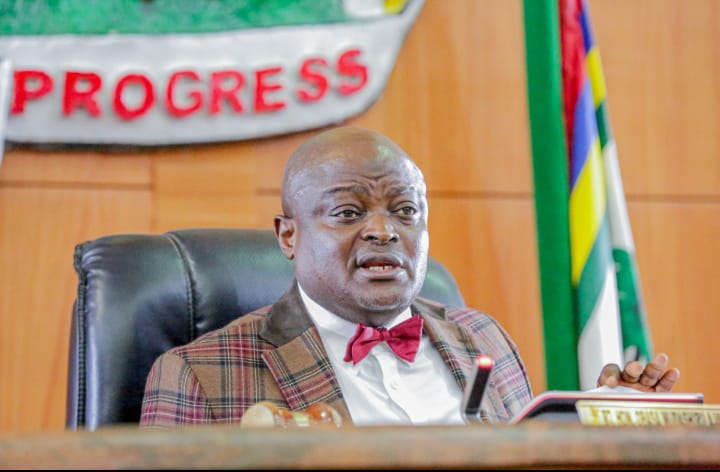
The Speaker of the Lagos State House of Assembly, Rt. Hon. Mudashiru Obasa, has urged residents of the state and the citizens of Nigeria to enter the New Year with renewed vigour and hope for a better 2022.
Dr. Obasa gave the advice in his New Year message to Nigerians while praising the resilience of the citizens of the country in the face of the various challenges that came with 2021, especially in the aftermath of the COVID-19 pandemic that has continued to ravage the world.
The New Year, Obasa noted, holds a lot of promises for the citizens, “but all that we need is the collective decision to unite, fight against our common enemies and work towards making our nation a greater place to live in.”
The Speaker, who noted that Nigeria is a great country peopled by hardworking and passionate men and women determined for success, urged the citizens to continue to play roles that would put the country in positive light.
“While I congratulate Nigerians, I dare say that together, we can make a better country happen just like we are making good things happen in Lagos, the economic centre of Nigeria. Today, no doubt, Lagos is one of the most peaceful states of the federation despite its population and factors that make it a mega-city.
“The successes recorded by Lagos State in 2021 happened because of the cordial relationship between the arms of government, the determination of the government to scale whatever hurdles it had before it as well as the support and cooperation from residents.
“At the Lagos Assembly, we ensured that our activities, bills, motions and resolutions had to do with the happiness of the residents, their safety, and the protection of lives and property as enshrined in the constitution.
“Just days ago, we passed the 2022 budget to enable the government hit the New Year running. We also passed the bill establishing the Lagos State University of Education to encourage more prospective teachers and make it easy for them to get employed upon graduation so that they can make positive impacts on the society.
“In the course of 2021, we passed other important bills that have helped to keep Lagos at its enviable position.
“The Lagos State House of Assembly with very brilliant and zealous representatives, would continue to be at its best in 2022,” Obasa promised as he congratulated residents of the state and Nigerians.
Minister of Defence Charges Newly Promoted Generals on Loyalty and Professionalism
…Urges them to restore peace and security in the country
The Honourable Minister of Defence (HMOD) Major General Bashir Magashi(rtd) has charged newly promoted senior officers of the Nigerian Army (NA) to discharge their duties professionally and remain loyal to the constitution of the Federal Republic of Nigeria. The HMOD made the remarks today 30 December 2021during the decoration of newly promoted Brig Gens to substantive rank of Major General and Colonels to the rank of Brigadier General at the Army Headquarters Command Officers’ Mess 1, Asokoro, Abuja.
The HMOD, who was the Special Guest of Honour at the event, felicitated with the newly promoted senior officers, describing their elevation as a recognition for their diligence and selfless sacrifices individually and collectively to the Armed Forces of Nigeria and the nation in general.
He reminded the promoted senior officers of the enormous responsibilities that come with their promotion, adding that the country relied on their wealth of knowledge, character and professionalism to develop an enduring panacea that will completely defeat insurgency, banditry and other forms of criminality in the country.
The HMOD assured that the Federal Government will continue to support the NA, especially in the acquisition of military hardware to facilitate the conduct of its operations across the country.
Speaking at the investiture, the Chief of Army Staff (COAS), Lt Gen Faruk Yahaya charged the newly decorated senior officers to remain loyal to the President and constitution of the Federal Republic of Nigeria. He reminded them of the current security challenges and urged them to remain focused in their effort to ensure peace and security across the country.
He expressed appreciation to President Muhammadu Buhari and for his strategic guidance and the confidence reposed in the NA and other security agencies.
One of the newly decorated senior officers, Major General Chijioke Onwunle, who spoke on behalf of all the decorated officers reaffirmed their unalloyed loyalty to the President, Commander in Chief of the Armed Forces and the constitution of the Federal republic of Nigeria.
Dignitaries that graced the occasion are the Honourable Minister of Defence, Maj Gen Bashir Magashi (rtd), Executive Governor of Edo State, His Excellency, Godwin Obaseki, Chairman Senate Committee on Army, Senator Ali Ndume, Chairman House Committee on Army Honourable Abdulrazak Namdas, the Speaker Kaduna State House of Assembly Rt Hon Ysuf Zailani, Nigerian Ambassador to the Republic of Benin, His Excellency Lt Gen Tukur Buratai (Rtd), Representatives of the Chiefs of Naval and Air Staff, President Nigerian Army Officers’ Wives Association Mrs Salamatu Faruk Yahaya, serving and retired senior officers, Principal Staff Officers from Defence and Services Headquarters, amongst others.
BURNA BOY ELECTRIFIES FIRSTBANK DECEMBERISSAVYBE CAMPAIGN WITH STERLING PERFORMANCE
Written by Gbenga Bada and Sampson Unamka
Grammy award winner Burna Boy electrified fans at the FirstBank Decemberissavybe campaign with a sterling performance at the ‘Burna Boy The Live Experience’. The 30-year-old singer expressed how delighted he was to have relocated back to Nigeria at the concert.
The self-claimed ‘African Giant‘ performed a catalog of his songs from 2012 to 2021 at the Eko Convention Center Lagos which was filled to the brim with fans.
FirstBank – through its yearly DecemberIssaVybe campaign – unveiled the 2021 calendar of events earlier in December as it reiterates its impact on the arts and entertainment industry. The campaign which started in 2018 has been making waves across the cities in the country and Nigerians.
Speaking on Burna Boy’s concert as one of the events lined up for campaign, the Group Head of Marketing and Corporate Communications, FirstBank, Ms Folake Ani-Mumuney said: “We are delighted to be back with DecemberIssaVybe”.
“Burna Boy’s concert further shows that the 2021 edition is enriched with loads of impactful and celebratory activities as we witness the year-end.
“As a bank woven into the fabric of society, we have ensured that the events are spread across the country and there is an event for everyone, irrespective of age. “We remain committed through resourceful partnerships to nation building; empowering all including the youth to achieve their dreams as these events promote the continued growth of the entertainment industry, unarguably an economic game-changer in the global business landscape, especially a country like ours that is blessed with talents and amazing creative minds,” she concluded.
Here are some of the highlights from his performance:
Returning to Nigeria was my best decision
Amid his performance, the Burna Boy proudly told fans that the best decision he has ever made was returning to Nigeria. “Coming back home is the best decision I’ve made.” He took the opportunity to thank his fans for the love shown towards him since his career berthed.
Practise what you preach
The African Giant was reborn when Burna Boy decided to practise what he preaches. For his first outfit of the night, Burna was dressed like a full African royalty. He was decked in a tuxedo adorned with a Gorilla fur design on both arms. And he swayed from left to right as he elegantly showed off the richness of African tradition.
The African Giant
The Nation observed the high point of Burna Boy’s 3-hour long concert was when he showed that truly his aim is to unite Africans in Africa through entertainment. During the show, Burna Boy invited his African collaborators ‘Black Sherif’ and the ‘Yaba Buluku’ singers on stage to perform alongside him. The moment was one of the memorable moments of the night.
And fans got a thank you message
Burna Boy performed so many songs from his classics which saw the fans singing along. After the show, he appreciated his fans for coming through and the love they’ve shown him thus far. Burna Boy returned to Nigeria after leaving the United Kingdom to continue his quest for fame and stardom. His decision paid off after the hit single, ‘Like to party’ kicked off his career in full swing in 2012.
Breaking: Lagos Assembly Passes N1.758trn Budget For 2022
The Lagos State House of Assembly on Wednesday evening passed the Y2022 budget estimate with a slight increase of the grand total from the initial N1.38 trillion to N1.758 trillion.
The budget was passed at a sitting presided over by the Speaker of the House, Rt. Hon. (Dr) Mudashiru Obasa, after a presentation of the report by Hon. Gbolahan Yishawu, chairman of the Committee on Economic Planning and Budget.
Yishawu, after the plenary, explained that the total budget size passed has addition of left overs from the previous allocations in the 2021 budget.
He said the leftover was rolled into ‘contingency fund’ in the Y2022 budget.
He also put the Capital and Recurrent Expenditure ratio at 66:34.
While the recurrent expenditure is N591,280,803,486bn, the Capital expenditure is N1.166,915,843,358trn, which brings the budget total size to N1,758,196,44,844trn.
According to him the loans, bonds and ISPO funds are captured in the budget that was passed.
Speaking after the passage of the budget, Obasa thanked his colleagues for working assiduously to ensure that the appropriation bill was passed.
While wishing them a happy New Year celebration, Obasa prayed that God would continue to keep Lagos safe.
He urged them to also remain conscious of their safety as well as the safety of their neighbours.
Obasa To Police: You Must Treat Every Lagosian With Respect, Dignity
– As Outgoing Commissioner Odumosu, Others Visit
– Speaker Kicks Against Harassment Of Residents
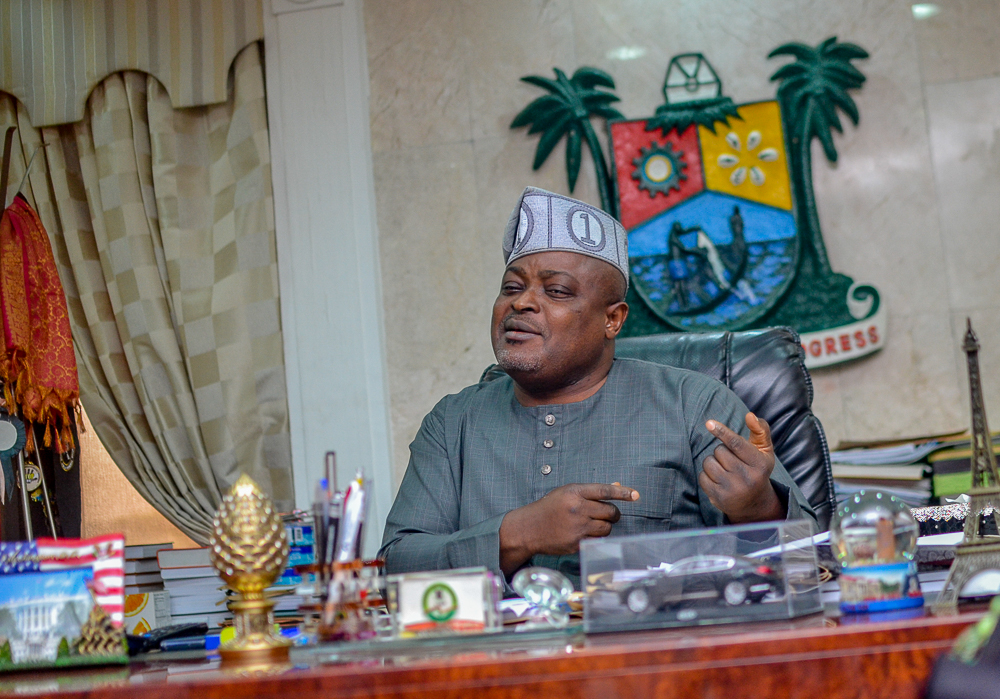
Speaker Mudashiru Obasa of the Lagos State House of Assembly on Wednesday cautioned the police in the state against harassment, intimidation and extortion of residents if they wanted to be respected.
Dr. Obasa said this on the floor of the House when the lawmakers honoured the outgoing Commissioner of Police, Mr. Hakeem Odumosu, who has been promoted to the rank of Assistant Inspector-General of Police and due to retire in January 2022.
Obasa said Odumosu was honoured as the first commissioner of police in the state to stand before the lawmakers in the hallowed chamber and address Lagosians on his experience and issues with policing Lagos because he is considered to have effectively managed the security of the state.
The Speaker thanked Odumosu for his openness and responsiveness each time there were issues affecting the peace of the state.
“It is important to call on those behind you to know that the relationship between the police and the people need to be constantly improved upon,” Obasa said adding that men of the Nigeria Police Force needed to build more trust among the people and make the latter know they are truly being served.
“Everybody must be treated with respect, dignity and honour and that is how we can earn our respect. Policing should not be about harassment and extortion but building trust among the people and making them comfortable,” Obasa advised.
The Commissioner of Police, who led a team of officers to the House, thanked the lawmakers for their support. According to him, nothing could have been achieved in terms of security and peace in the State without the assistance of the House led by Speaker Obasa.
He said he would remain grateful to Lagos and Lagosians for making it possible for him and his team to effectively manage the security of the state and making it the most peaceful in the country.
Odumosu, who described Lagos as a mini-Nigeria, noted that the proactiveness of the Lagos Assembly resulted in the laws that have helped the police remain successful in the state.
He said the Cultism Prohibition Law, has helped to reduce illegal associations in tertiary institutions in the state and also helped with adequate enlightenment of property owners and residents.
He listed other laws that have helped the police to include the Land Use Charge amendment law which has reduced the activities of land grabbers, the Anti-Open Grazing law, the Neighborhood Safety Corps law, which has ensured synergy among security agencies, the Coronavirus Pandemic Law, which enforcement helped reduce the spread of COVID-19, the Transport Sector Amendment law, which has helped with traffic management and the law stopping parade of suspects to protect their fundamental rights.
“We promise to continue to excel in providing water-tight security for the people of the state,” he told the lawmakers.
He also promised that he would encourage his successor to sustain the relationship between the police and the House while urging the lawmakers to extend their support to whoever will take over from him.
“Policing Lagos is not a tea party. Without the laws in Lagos, it would have been difficult to police the state. Don’t get tired, don’t relent in making the laws that would make Lagos state maintain its place as the most peaceful state in Nigeria,” he urged.
In their contributions, the lawmakers commended Odumosu for his success adding that his experience would always be needed in the state even after his retirement.