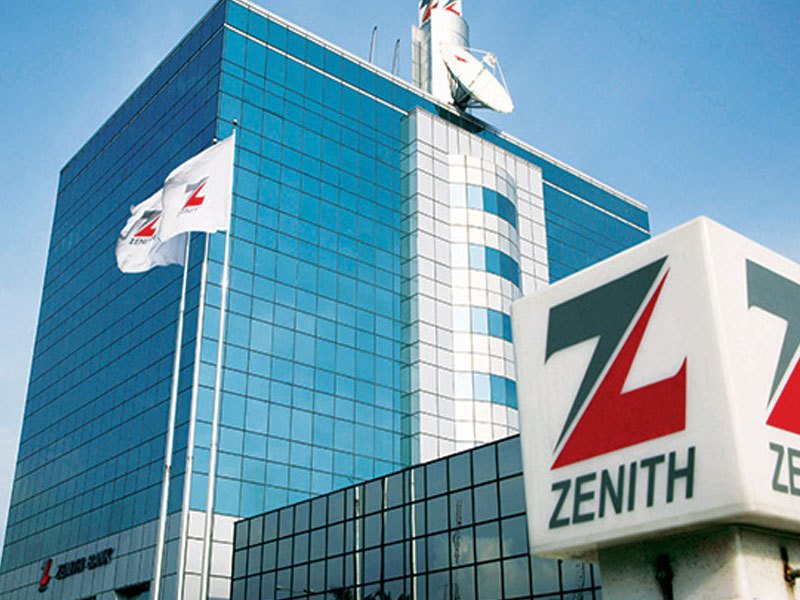
Zenith Bank Plc, Nigeria’s leading financial institution, has emerged as the Best Bank in Nigeria in the recently released Global Finance Magazine World’s Best Banks Awards 2020.
The awards, which was published in the May 2020 edition of the Global Finance Magazine, was based on the performances of the banks in their respective regions and countries over the period from January 1 to December 31, 2019.
Global Finance’s “World’s Best Banks Awards” are recognized amongst the world’s most influential banking/finance and corporate professionals as the most coveted and credible awards in the banking industry, with winners chosen in more than 150 countries across Africa, Asia-Pacific, Central & Eastern Europe, Latin America, the Middle East, North America and Western Europe.
Founded in 1987, Global Finance regularly selects the top performers among banks and other providers of financial services and the awards have become a trusted standard of excellence for the global financial community.
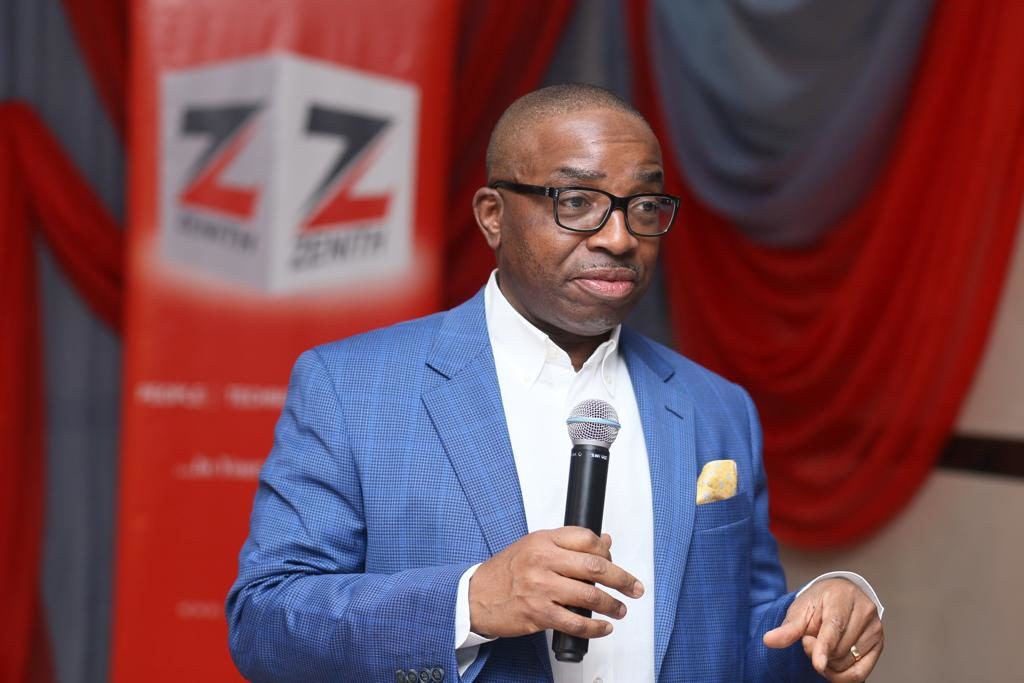
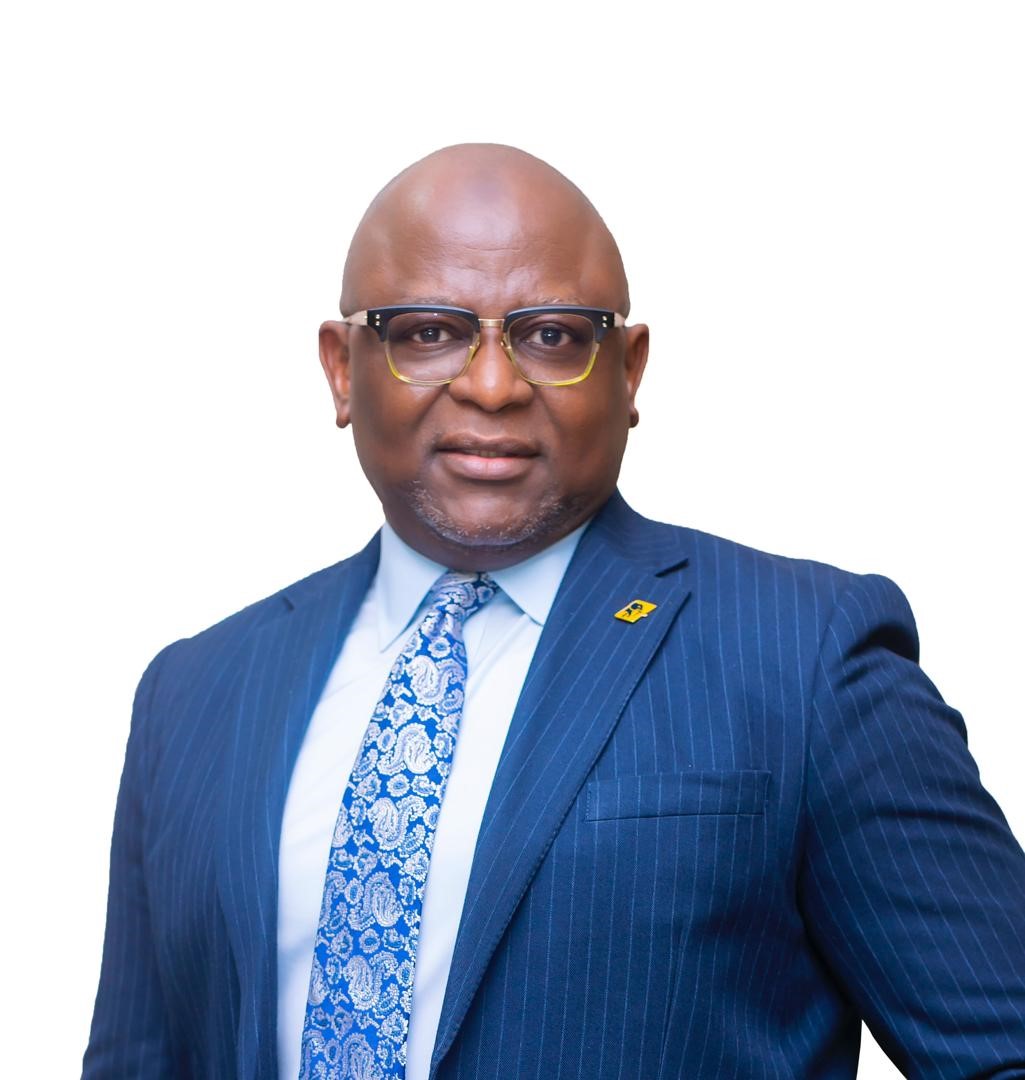
Commenting on the recognition, the Group Managing Director/Chief Executive of Zenith Bank, Mr, Ebenezer Onyeagwu said that “this award is a clear demonstration of the bank’s market leadership, occasioned by our superior product offerings, best-in-class service and top-of-the-range technology which create value for our teeming customers.”
Zenith Bank has clearly distinguished itself in the Nigerian financial services industry through superior service quality, unique customer experience and sound financial indices. The bank, with a knack for setting the pace and raising benchmarks, is a clear leader in the digital space with several firsts in the deployment of innovative products, solutions and an assortment of alternative channels that ensure convenience, speed and safety of transactions.
As a testament to its resilience and market leadership, Zenith Bank announced an impressive result for the year ended December 31, 2019, with profit after tax (PAT) of N208.8 billion, achieving the feat as the first Nigerian Bank to cross the N200 billion mark. In the recently released Q1 2020 unaudited financial results, the bank also recorded an improved result over the corresponding period in 2019, with gross earnings rising by 6% to N166.8 billion and profit before tax (PAT) growing 3% to N58.8 billion.
Consistent with this superlative performance and in recognition of its track record of exceptional performance, Zenith Bank was ranked as the Best Commercial Bank in Nigeria 2019 by the World Finance and the Best Digital Bank in Nigeria 2019 by Agusto & Co. The bank was also voted as Bank of the Year and Best Bank in Retail Banking at the 2019 BusinessDay Banks and other Financial Institutions (BAFI) Awards. Most recently, the bank was recognized as the Most Valuable Banking Brand in Nigeria, for the third consecutive year, in the Banker Magazine “Top 500 Banking Brands 2020” and the Bank of the Decade (People’s Choice) at the ThisDay Awards 2020.
Advocate Partnerships between Private Sector and Government
African thought leaders and great minds have noted that the development of homegrown solutions and adequate investment in human capacity building and agricultural expansion are key steps that will help to rebuild Africa and put the continent on a stronger footing post Covid-19.
Analysing the theme ‘Domestic Policies, Regional Development and a Global Agenda: SDGs and African Development at Crossroads; the speakers collectively gave this submission during the second panel session of the 2020 edition of United Bank for Africa (UBA) African Day Conversations.
The virtual session, which was moderated by Veteran Journalist and Media Consultant, Eugenia Abu, was made up of thought leaders from across Africa, including the Regional CEO, UBA West Africa, Abiola Bawuah (Ghana); Senior Program Coordinator, Regional Network of Agricultural Policy Research Institutes, Dr Nalishebo Meebelo (Zambia); Leadership Coach and Chairman, Go Ahead Africa Ltd, Roland Kwemain (Cameroon); Founder and Executive Director, Social Change Factory, Sobel Aziz Ngom (Senegal); Special Assistant to the President Muhammadu Buhari on Digital and New Media, Tolu Ogunlesi (Nigeria); and Social Entrepreneur and Founder, LEAP Africa, Ndidi Nwuneli (Nigeria).
Abiola Bauwah who emphasised how Africa should rely less on foreign donors, said, “There are five areas we should work on more for us to reach the SDG goals; the private sector; rapid industrialization; institutions and the rule of law; develop our human capital; remove the barriers across Africa. We should institute Africapitalism which is an economic philosophy that says that the human and capital resources of Africa are the only ways in which we can develop Africa.”
Nalishebo Meebelo noted that there’s a lot that young people can do along the value chain of manufacturing, transporting, technology and marketing, adding that, “Government cannot do it alone, they need to work with other stakeholders. Cut and paste solutions do not work for us here in Africa, we need to have our own homegrown solutions to fight this pandemic.”
Eugenia Abu, who focused on the huge role that women and youth must play in rebuilding the continent, said that Africa had to work together to provide solutions to its numerous challenges. “Women, entrepreneurial champions, young people and collaborations between African countries are very key to developing Africa,” she stated.
Ndidi Nwuneli who was saddened that the agricultural sector remained hugely untapped, emphasised the need for a change of mindset where people usually equated agriculture to poverty. “This is a $1 trillion industry and we are neglecting it; therefore my charge to you is that we invest in the agricultural sector, prioritize it, leverage it, transform our educational system to prepare our young people for this sector, change the mindset and trade with each other,” she explained.
Sobel Aziz Ngom pointed out the need for the youth to take charge in Africa. “It is time to not just serve young people, but to trust them to lead. The challenge that we have at the domestic and continental level is making the change in our structure and in the political system that give the place to young people to be 100% engaged,” Ngom stated.
In his own submission, Tolu Ogunlesi, said, “All over the countries young people are seizing opportunities, and we need to start thinking about how to make sure that this is not just for the age of COVID but for now and beyond COVID-19. Even if the pandemic was to disappear today, I hope that the lessons we’re learning, we’re not going to forget them and go back to where we used to be.”
For Roland Kwemain, more institutions need to tow the line of UBA in events such as UBA Africa Conversations. “If 100 multinationals in Africa were doing that UBA is doing, we would go far because CSR is an amazing leverage not just for the brand but also for supporting people & women in terms of activities. The truth is that we need partnership between the government, corporates and the civil society,” he said.
The United Bank for Africa is a leading pan-African financial institution offering banking services to more than twenty million customers globally. With footprint in 20 African countries and presence globally in the United Kingdom, the USA and France, UBA is connecting people and businesses across Africa through retail, commercial and corporate banking, innovative cross border payments and remittances, trade finance and ancillary banking services.
The Police Special Fraud unit (PSFU), has dragged Guaranty Trust Bank (GTB) Plc and two others before a Federal High Court, Lagos, over alleged $667, 000 USD, fraudulently lodged with the bank.
Others joined with GTB Plc in a suit marked FHC/L/CS/586/2020, are: Albert Austine Ugochukwu and a limited liability company, Tasmara Integrated Services Limited.
GTB Plc and others were brought before the court presided over by Justice Ayokunle Faji, by PSFU in a motion exparte, pursuant to section 6(6)(b), (2)(k) of the Constitution of the Federal republic of Nigeria 1999 (as amended); Executive Order 6, 2018, Section 4 of Police Act, 2004, section 13(1) Federal High Court Act, 2004.
And Section 13(1) of money laundry and prohibition Act 2011(as amended in 2012), Order 26(6-10), 28(1)(1-3),(2)(1-6) 30(A) of the Federal High Court (Civil Procedure Rule) 2019: Section 16(1)(A)(B) of the Advance Fee Fraud and Other fraud related offences Act, 2006 and under the inherent jurisdiction of the court.
In moving the motion exparte, affidavit in support and written address, today, PSFU’s Head Legal, Mr. Emmanuel Jackson, a Chief Superintendent of Police (CSP) leading J. I. Enang, asked the court for an order restraining GTB Plc from posting any debt or allow any drawings or permitting any drawing on 35 accounts which were used to perpetrate the alleged fraud by some customers, pending conclusion of investigation on the accounts by the police.
PSFU also asked the court to direct GTB Plc to it the account officers of the said 35 accounts being investigated for an interview with the Commissioner of Police in-charge of PSFU. And to also furnish the Unit with the Certified True Copy (CTC) of some documents on the said 35 accounts.
These documents include: Statement of Account from January 1, 2018 till date; names and addresses of signatories to the accounts; photocopies on the Mandate Cards; Bank Verification Number linked to the accounts and Certificate of Computer printout in compliance with Section 84 of the Evidence Act.
CSP Jackson said the orders sought for is necessary, as it will allowed the police to carry on with investigation of certain money totaling $667, 000 USD, fraudulently obtained by false pretence from the bank’s customers.
He also told the court that the order sought for will also prevent the bank from lifting any restrictions placed or will be placed on the said 35 accounts.
The account numbers which SPFU sought the order against GTB Plc are: 205/153068; 228/678179; 402/649701; 220/876518; 224/980764; 220/877573; 220/877598; 220/885941: 209/822101; 209/823832; 246/296004; 246/297322; 265/231545: 265/231511.
PSFU in an affidavit attached with the motion exparte and deposed by one of its investigators Shaibu Friday, who stated that he was directed by the Commissioner of Police to investigate a case of Obtaining the sum of $667,000 USD and money laundry based a petition dated March 26, 2020.
Adding that the petition was by one Segun Fadahunsi General Manager and Lanre Kasim Senior Manager both of Guaranty Trust Bank Headquarters, Lagos, against one Albert Austin Ugochukwu former staff of GTB Plc, of obtaining the sum of $667, 000 USD, using a company known as Tasmara Integrated ServicesLtd to open about 35 different accounts number which were use by him to launder money.
It stated that the funds the is investigating being proceeds of fraud, stand the risk of being dissipated by the suspect unless the Court restrains GTB Plc from posting debit or allowing withdrawals from the said accounts under investigation pending the Conclusion of Police investigation. Adding that it will be in the interest of justice to grant this application
Justice Faji, after listened to the submissions made by CSP Jackson ruled that: “I’m satisfied with the submissions of the applicant’s counsel. The order sought for is to preserve the ‘res’…..
Call for Increased Investment in Digital Connectivity
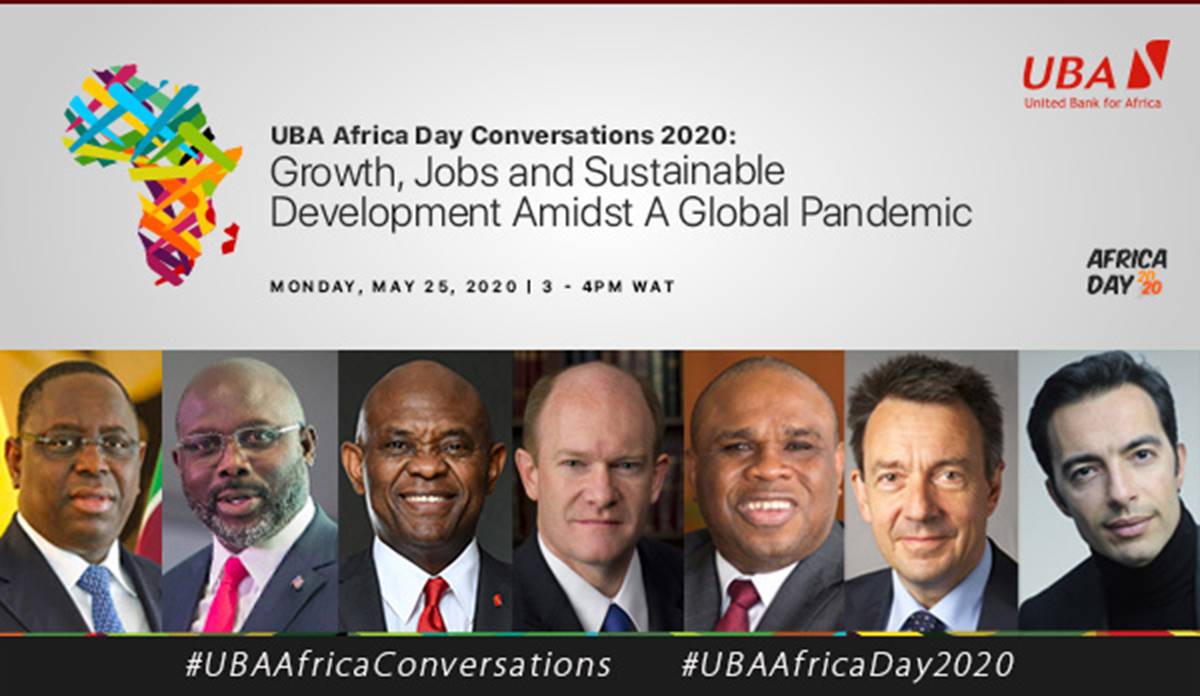
United Bank for Africa (UBA) celebrated Africa Day 2020, by bringing together global leaders at the 2nd UBA Africa Day Conversations, screened live across the continent. UBA helps set the debate around African economic development through its series of “Africa Conversations”. This year, the focus was on the Sustainable Development Goals (SDGs) and the Covid-19 pandemic. Leaders emphasised the need for meaningful collaboration between governments and the private sector, as a requirement for the quick recovery of the economy of the African continent post Covid-19.
The panel included the President of Liberia, H.E George Weah; United States Senator Chris Coons; the President & Chairman of the Board of Directors of the African Export–Import Bank (AFREXIMBANK), Professor Benedict Okey Oramah; President, International Committee of the Red Cross (ICRC), Peter Maurer; and was moderated by the Group Chairman, UBA Plc, Tony O. Elumelu.
Other leading voices contributing were the Founder, Africa CEO Forum, Amir Ben Yahmed; the Secretary-General of the African Caribbean and Pacific Group of States (ACP), H.E George Chikoti; Administrator, United Nations Development Program (UNDP), Achim Steiner and Donald Kaberuka, the former President of the African Union.
Elumelu spoke on the need to mobilise quickly and explained the necessity to identify a more fundamental solution to Africa’s challenges. “This is the time for us to deal with the situation, this is not the time for finger pointing, but for collaborative efforts by governments and organisations, to fight the pandemic globally. There is need to flatten the curve, we need global co-operation to stem global depression. Africa requires a large stimulus package, and we need long-term solutions to prevent a cycle of debt.”
Liberian President, George Weah, demonstrated how collaboration has assisted his country to stem the sufferings brought about by the coronavirus pandemic. “In Liberia we have taken measures to ease the financial burden on vulnerable business in the informal sector by providing small loan assistance to SMEs and traders. In addition, we are working with commercial banks to manage the repayment of loans as well as to create stimulus packages for citizens,” President Weah said.
US, Senator Chris Coons made valuable contributions to the discussions, saying “We must develop a vaccine that is free and affordable and freely distributed so that full economic activities can return. This is no time to be looking backwards. We recognise the power of collective collaboration on the continent.”
Prof. Benedict Okey Oramah called for the swift implementation of the African Continental Free Trade Area (AfCFTA) agreement and disclosed that Afrexim has made available $200million to supply fertilisers and grains amongst across Africa. The Afrexim boss asserted “If Africa allows hunger takeover the people, it will see an increase in insecurity, which will take a long time to overcome.”
George Chikoti of ACP, said that the huge task of economic recovery on the continent, rests on both the government and the private sector. “African governments need to accept the support of the Private Sector in alleviating the impact of the COVID-19 pandemic in Africa. We have so far been able to release $25m to all member states”, Chikoti added.
Achim Steiner of the UNDP focused on digital connectivity as an enabler of development. “What we need to look at is to find a way for government as a regulator and also as an investor, to leverage private sector investment into these areas” Steiner said.
Peter Maurer, President, ICRC, said there is the need to look at pandemics as part of a broader health system which needs stabilisation. “We must do more than life-saving. This pandemic has illustrated the weakness of health, water, sanitation and social systems, and we have to heavily invest into the stabilisation of these systems,” he said.
Amir Ben Yahmed said the crisis is going to be a super accelerator of already existing trends. “We have to get away from the commodity driven model which has failed in creating prosperity. “We need to use this crisis to take Africa to the next level. We also need to attain self-reliance. Self-reliance is an important goal,” Yamed said.
The UBA Africa Conversations concluded with the need to act quickly and effectively, highlighting that Africa has lessons to teach the world in containment, but was economically vulnerable.
The United Bank for Africa is a leading pan-African financial institution offering banking services to more than twenty million customers globally. With footprint in 20 African countries and presence globally in the United Kingdom, the USA and France, UBA is connecting people and businesses across Africa through retail, commercial and corporate banking, innovative cross border payments and remittances, trade finance and ancillary banking services.
…Global co-operation needed to stem global depression
Global leaders at the second edition of United Bank for Africa (UBA) African Day Conversations, have emphasised the need for meaningful collaborations between governments and the private sector as a panacea for the quick recovery of the economy of the African continent post Covid-19.
The leaders which included the President of Liberia, H.E George Weah; United States Senator Chris Coons; the President & Chairman of the Board of Directors of the African Export–Import Bank (AFREXIMBANK), Professor Benedict Okey Oramah; President, International Committee of the Red Cross (ICRC), Peter Maurer; President spoke on Monday at the virtual Leadership Panel which was moderated by the Chairman, UBA Plc, Tony Elumelu.
Other leading voices who made up the panel were the Founder, Africa CEO Forum, Amir Ben Yahmed; the Secretary-General of the African Caribbean and Pacific Group of States (ACP), H.E George Chikoti; Administrator, United Nations Development Program (UNDP), Achim Steiner and Donald Kaberuka.
While moderating, Elumelu, who is also the Founder of the Tony Elumelu Foundation, spoke on the need to mobilise everyone and explained the necessity to discover a more fundamental solution to Africa’s challenges through collaborative efforts.
“This is the time for us to deal with the situation we have and also forge a better situation for everyone, acting again collectively,” he said. “This is not the time for finger pointing but for collaborative effort by governments and organizations to fight the pandemic globally.”
Continuing, Elumelu pointed out that all hands must be on deck if the African continent is to have a quick recovery from the pandemic, adding “There is need to flatten the curve, we need global co-operation to stem global depression. Africa requires a large stimulus package, and we need long-term solutions to prevent a cycle of debt.”
In his submission, the Liberian President, George Weah, established how collaborations worked in his government in an attempt to stem the sufferings brought about the coronavirus pandemic.
“In Liberia we have taken measures to ease the financial burden on vulnerable business in the informal sector by providing small loan assistance to SMEs and traders. In addition, we are working with commercial banks to manage the repayment of loans as well as to create stimulus packages for citizens.”
On his part, US, Senator Chris Coons, said, “It is important to take a moment to look at how African leaders have reacted to the pandemic. In order for us to recover from this pandemic, we must develop a vaccine that is free and affordable and freely distributed so that full economic activities can return. There are ways we can invest in debt relief, invest in infrastructure and human development. This is no time to be looking backwards. We recognise the power of collective collaboration on the continent.
While pointing out that the pandemic poses an opportunity for Africa to be independent and promote its growth and development as a people without external help; Prof. Benedict Okey Oramah, on his part, said COVID 19 has taught Africa that there comes a time when every group of people will fend for themselves.
He called for the swift implementation of the African Continental Free Trade Area (AfCFTA) agreement, adding, “The priority of government should be to make sure that the AfCFTA gets implemented without delay. If there was any doubt about the importance of that agreement, this pandemic has told us that this is the way to go.
Continuing, Oramah said, “The pandemic has shown so many weaknesses we have across our continent. We know that hunger is looming if we do not do anything. If we allow hunger to take over from the COVID 19 pandemic, we will begin to see political problems filling in. For Africa the problems go beyond health challenges to other areas such as food supply. Hunger is looming and if action is not taken, Africa will see political problem. Africa has become the epicenter of the economic devastation that this pandemic has unleashed upon us.”
While disclosing that Afrexim has made available $200million to supply fertilizers and grains amongst others across Africa, the Afrexim boss added that “If Africa allows hunger takeover the people, it will see an increase in insecurity, which will take a long time to overcome.”
George Chikoti of ACP, said that the huge task of economic recovery on the continent, rests on both the government and the private sector. “The responsibility of COVID-19 does not rest on the government alone, the private sector needs to play a big role in lifting the burden of the pandemic. African governments need to accept the support of the Private Sector in alleviating the impact of the COVID-19 pandemic in Africa,” he said.
“We have been able to release $25m to all member states. One of the major challenges is to make sure that in all countries, we have agricultural activity and high productivity. What we should learn from the impact of this pandemic is that the international community can look at how well they can fund all these initiatives that come from our countries, Chikoti added.
Achim Steiner of the UNDP noted that Digital connectivity is very essential as it is a crucial opportunity to connect all schools across the continent, adding that emphasis on Healthcare is also very important. “Digital connectivity is very crucial to connect schools to the internet. We need to address inequality; also, the virus has put a spotlight on Africa’s healthcare system. Africa needs to look at intermediate strategies like micro-insurance to ramp up this sector. Healthcare has the ability to make a large percentage of the occupation fall into extreme poverty.
“What we need to look at is to find a way for government as a regulator and also as an investor, to leverage private sector investment into these areas” Steiner said.
Peter Maurer, President, ICRC, said there is the need to look at pandemics as part of a broader health system which needs stabilisation; A lot of vulnerable populations in Africa have been heavily infected by the pandemic. “We must do more than life-saving. This pandemic has illustrated the weakness of health, water, sanitation and social systems, and we have to heavily invest into the stabilization of these systems.
Throwing more light on this, Maurer said, “Two things need to follow after live saving during the pandemic. First, the pandemic has illustrated the weak situation of health, water and food systems and we need to heavily invest both by the public and private sectors to stabilize the health sector. Secondly, investment has always gone into the more developed parts of Africa and not the fragile parts. We need Private Public Partnerships and investments by multi-corporate institutions to develop these areas’ he noted.
Amir Yahmed said the crisis is going to be a super accelerator of already existing trends. “We have to get away from the commodity driven model which has failed in creating prosperity. Secondly, self-reliance should be one of the major objectives. The pandemic is wake up call for Africa – Creating new streams of revenue and self-reliance by the African continent”
“We need to use this crisis to take Africa to the next level. This crisis is going to be a super accelerator of already existing trends. I think it has to be a wake-up call for us to attain goals we haven’t reached. Create new revenues for the economy. We also need to attain self-reliance. Self reliance is an important goal. Africa manufactures [only] 2% of what it produces. We need to use this crisis to take Africa to the next level. Invest in digital infrastructure, digital education, agriculture is another opportunity we need to grab. We need to get the AFCTA working,” Yamed said.
Donald Kaberuka on his part opined that “What we need (for this crisis) is something unusual, it is not business as usual. It is not marginal action, it is radical action.”
The President of Senegal, H.E. Macky Sall, President of Liberia, H.E George Weah and United States Senator Chris Coons will form part of a high-level leadership panel to be moderated by the Chairman, United Bank for Africa (UBA) and Founder of the Tony Elumelu Foundation, to discuss Africa’s economic recovery in the 2020 edition of UBA’s Africa Conversations.
The African Presidents and global leaders will be joined on the panel by other global leaders including the President & Chairman of the Board of Directors of the African Export–Import Bank (AFREXIMBANK), Professor Benedict Okey Oramah; President, International Committee of the Red Cross (ICRC), Peter Maurer and President and Founder, Africa CEO Forum, Amir Ben Yahmed.With over 60% of Africans living below the poverty line, the pandemic poses an existential threat to Africa’s economic growth and this session will define the lessons learned and the roadmap to economic growth and sustainability.
Together, the leading voices will speak on Monday, May 25th, 2020, on the theme ‘UBA Africa Day Conversations 2020: Growth, Jobs, and Sustainable Development Amidst a Global Pandemic,’ This will be the second edition of the symposium organised annually by UBA, in celebration of Africa Day.
The open event will be held virtually starting at 3pm WAT and interested participants can register on the UBA website here.
Africa Day is celebrated worldwide on May 25th, to showcase the diversity and beauty of Africa and its people. The United Bank for Africa, with its pan-African footprint spanning 20 African countries, New York, Paris, and London, continues to lead the conversation and focus on the the development, growth, and unity of the continent.
Nigeria’s leading financial inclusion services provider, First Bank of Nigeria Limited, has announced that thousands of students have been signing up to access the e-learning solutions for free which is provided in partnership with Roducate and Lagos State Government.
This is in furtherance to the Bank’s resolve to close the gap of the disruption in children education’s due to schools’ closure, following the COVID-19 pandemic.
The Roducate e-learning platform is structured in line with the government’s accredited curriculum for primary, secondary and tertiary schools across various fields of academic endeavours, such as science, commercial and arts.
Also, it includes tutorial videos to reinforce the learning engagement as well as assignments and mock exam to test the students’ knowledge and progress in the course of studying. In addition, learning on the platform enables one to take notes for quick reference.
In view of the need to foster extra-curricular activities – beyond academic pursuit – the Roducate e-learning platform is configured with exciting features to make learning exciting and fun. These features include podcasts and various games such as brain pulse, monster munch etc. which allows one to play with other students online thereby building relationships and promoting interactive learning.
Speaking on the implementation of the initiative, Dr. Adesola Adeduntan, CEO, FirstBank said “The partnership with Lagos State has seen us provide low-end devices for students preloaded with Roducate offline; content which include Government accredited curriculum for primary through secondary education and several university courses. This solution will see Lagos state offer children in the lower bracket, who may not have access to devices or data from home affordable smart phones preloaded with the curriculum. The phones have SIMs and limited data tied, only, to the Roducate learning product, which means the recipients cannot browse, encouraging safe learning but can still submit tests, mock exams etc.”
Adeduntan further noted that ” currently our partnership offers students free online access to the education solutions. We encourage parents and guardians to have their children and wards registered in this initiative so their educational development is not held back” he concluded.
As part of proactive measures to cushion the effect of the COVID-19 and revamp the nation’s dwindling economy, Heritage Bank is set to disburse the N100billion set aside by the Central Bank of Nigeria (CBN).
This is in line with the apex bank’s policy to introduce another intervention scheme directed to the health sector, which is known as the NGN100 Billion Credit Support for the Healthcare sector (the Scheme). Specifically, the scheme is to provide credit to indigenous pharmaceutical companies and other healthcare value chain players intending to build or expand capacity.
Also, the CBN resumed provision of foreign exchange to all commercial banks for onward sales to parents wishing to pay schools fees and small medium enterprises (SMEs) with plans to make essential imports needed to revamp economic activities across the country. In particular, the CBN is resuming the provision of over US$100 million per week for both categories.
Meanwhile, Heritage Bank serves as a conduit which will assess and channel the profiles of interested applicants to the CBN while using its platforms to create awareness for the scheme.
The CBN has also made complete arrangements to resume foreign exchange sales to the BDC segment of the market for business travels, personal travels, and other designated retail uses, as soon as international flights resume.
To access the N100bn loans provided by the CBN for firms in the healthcare sector, a corporate entity must submit its application to a participating financial institution (PFI) which could be either a Deposit Money Bank or a Development Finance Institution of its choice with a bankable business plan.
It stated in its latest guidelines that the PFI must appraise and conduct due diligence on the application; and upon approval by the PFI’s credit committee, the application would be submitted to the apex bank with relevant documents attached.
The CBN would process and disburse funds to the PFI for onward release to the project, it added.
The CBN stated that the PFI must receive and review applications submitted by its customers; undertake due diligence based on normal business considerations, and bear the credit risk.
They must also issue offer letters and forward qualified applications to the CBN; disburse the released funds to successful applicants; monitor the project and recover the loans from the beneficiaries, and maintain adequate records of all beneficiaries and facilities.
It requires the PFIs to register all movable assets with the National Collateral Registry; forward periodic returns in the prescribed format on the scheme to the CBN; comply with the guidelines, and carry out any other duties as the CBN may prescribe from time to time.
According to the CBN, eligible participants under the scheme comprise healthcare product manufacturers – pharmaceutical drugs and medical equipment; and healthcare service providers/medical facilities – hospitals/clinics, diagnostic centres/laboratories, fitness and wellness centres, rehabilitation centres, dialysis centres and blood banks, among others.
Others include pharmaceutical/medical products distribution and logistics services; and other human healthcare service providers as may be determined by the CBN from time to time.
Eligible activities under the scheme would include manufacturing of pharmaceutical drugs and medical equipment; establishment/expansion/upgrade of basic and specialised healthcare facilities; and medical/pharmaceutical supplies.
Others are medical/pharmaceutical research and development; distribution of medical/pharmaceutical drugs and supplies; Manufacturing of medical/pharmaceutical drugs distribution technology; and any other healthcare value chain activity as may be prescribed by the CBN.
The CBN said the term loan had a maximum of N2billion per obligor; and the interest rate under the intervention would not be more than five per cent per annum up until February 28, 2021; and that interest on the facility would revert to nine percent as from March 2021.
To access further details on the modalities, interested persons and institutions can logon Heritage Bank’s website (www.hbng.com).
Since its establishment in 1894, FirstBank has consistently built relationships with her customers, focusing on the fundamentals of good corporate governance, strong liquidity, optimised risk management and effective leadership. These, amongst others, are the reasons the Bank has dominated the financial market for over 126 years.
The Bank has led the financing of private investment in infrastructural development in the Nigerian economy by playing key roles in the Federal Government’s privatisation and commercialization schemes, and entrenchment of the cashless policy which gave rise to electronic cards being a veritable entity in the day to day transactions among the bank’s customers. Consequently, the use of its wide range of cards, developed with the ‘man on the move’ in mind, come with far reaching benefits and rewards, connecting the remotest of places even as the world is plagued by the novel Corona virus disease today.
The world as we know it today, is a global village, and its connectivity is at the tip of an individual’s finger. That aside, it also revolves around the use of ‘ordinary’ but highly customised cards and FirstBank is a confirmed Leader in this space. There’s no gainsaying the fact that for 126 years and counting, FirstBank, Nigeria’s premier bank, with accolades and awards trailing its existence, has continued to blaze the trail in certainly every financial innovation. And as the name signifies, has continued to be the first in virtually everything banking and finance. Little wonder that in December 2015 and May 2016, FirstBank was named the first financial institution in the country to achieve sustained alternative channels transaction volumes of 100 million transactions. Subsequently in 2017, the Bank also attained the Milestone of 10million card base, a feat that is first of its kind in West Africa and Second in Africa.
There is hardly any banking innovation, which is not traced to the company that has overtime woven itself into the very fabric of the society. Commenting on FirstBank’s strides, the Chief Executive Officer, Dr. Adesola Adeduntan, disclosed that the bank’s 53, 000 agents across the country processed about N512 billion worth of transactions with differing values while the lockdown lasted. He noted that the bank was “able to actively support her customers, their families and businesses through these challenging times.” This is nothing short of the FirstBank advantage.
Adeduntan reiterated the faith Nigerians have in the use of FirstBank cards, saying that during the period of the lockdown, Nigerians with FirstBank cards used them 105 million times to make payments or withdrawals worth about N1.18 Trillion as they relied on the Bank to settle their banking needs. In addition, the Bank’s CEO noted that approximately 12.6 million withdrawals to the tune of N156 billion were carried out across FirstBank’s ATMs nationwide.
“Our customers made transfers over 106 million times with a total value of about N8.18 Trillion across our digital channels. We have also recorded over 275,000 new sign-ups to alternative channels covering our Firstmobile, USSD and First-Online platforms,” the CEO informed.
While calling on lovers of stress-free banking to get on board, the FirstBank CEO further assured existing customers of the bank’s relentless efforts to ensure that banking transactions continue seamlessly, adding that COVID-19 will not slow down her activities and efforts at staying true to her brand promise to her customers.
FirstBank cards come in a wide range of categories, each fulfilling tasks that are better imagined, but nevertheless are flexible and offer comfort, stress-free banking and wholesome peace of mind. It is therefore not a coincidence, that FirstBank is and remains Nigeria’s highest card transacting bank; a product of carefully thought out process, hard work and the quest to keep its customers first in all things. This is especially important at a time when movement and business activities were largely hampered by the lockdown, with the maintenance of social distance and the potential increase in the use of the Bank’s alternative channels – which is facilitated by its cards – for various transactions and business activities, thus staying safe to win the fight against the COVID-19 pandemic.
The range of cards available to customers of FirstBank are categorised into three broad groups, viz; DEBIT, CREDIT and PREPAID Cards. The grouping covers outstanding cards offerings such as Naira MasterCard, Verve Card and the pioneering Visa Multi-Currency Card. Others are Expressions MasterCard, Platinum MasterCard, Visa Infinite Credit Card, Visa Gold Credit Card, Naira Credit Cards (Visa Classic and Platinum), Visa Prepaid Card and Verve Prepaid Card.
FirstBank’s Naira MasterCard & Verve Card are Secured by Chip & PIN technology with local POS/Web limit increase available upon request. The Naira denominated MasterCard comes with various benefits such as online purchases, bills payments and cash withdrawals at ATMs world-wide. The various transaction limit(s) on Naira MasterCard issued by the Bank are N150,000 for ATM transactions, N2,500,000 for POS and N1,000,000 for Web transactions.
The FirstBank Verve Debit Card works with Chip and PIN technology to secure transactions. It allows the cardholder to conveniently pay for goods and services and is accepted by all ATMs, POS, Web, Mobile, Kiosk, and Bank Branch connected to the Interswitch network in Nigeria. It is available to all account holders and enables daily transaction limits of N150,000, and N500,000 on ATM and POS channels respectively. Customers can transact up to N1 million on the Web in a single transaction.
FirstBank cards also offer the Card Protection Transactions feature, which allows the cardholder to activate or deactivate it for all types of transactions, channels and locations, through the Card-in-Control Service on the Firstmobile app. The steps are few and simple: On the Firstmobile app, go to Self Service > Card Services and choose card type (Debit, Credit, or Prepaid) to be activated or deactivated.
Another card innovation service by FirstBank is the Visa Gold Card, which offers higher daily spending capacity and limit on ATM, POS and Web. With the Visa Gold Card, the customer is assured of $1,000 daily ATM withdrawal, $10,000 POS transaction and $5,000 on the Web at any location around the world. It is a dollar denominated international Premium Credit Card issued in partnership with Visa International.
Moreso, it guarantees access to international emergency services such as Emergency Card Replacement & Emergency Cash Advance in situations where the card gets lost or damaged. The Visa Gold card comes handy when making airline bookings with its smooth seamless purchase options.
Yet another, among the FirstBank’s super cards, is VISA Debit Multi-Currency Card. It is by all intent and purpose, the first of its kind to be offered by any financial institution in Nigeria. It is an enhancement to the existing Visa Debit Dual Currency card and can be linked to any or all NAIRA, USD, EURO and GBP accounts. It is an international card with Chip and PIN technology which can be used to make payment anywhere in the world and across all channels – ATMs, POS & Web. With the Visa Debit Multi-Currency card, cardholders can make daily withdrawals to the tune of N150,000 (local) and $1,000 (international) from the ATM. However, on the Web, a total of N1,000,000 is permitted locally while $6,250 is allowed on the international corridor daily. POS transaction limit is N2,500,000 (local) and $2,500 (international).
The Platinum Debit MasterCard is a premium Debit Card denominated in Naira. It is linked directly to a customer’s Naira denominated Current and/or Savings account. It offers a convenient alternative to the use of cash, and cheques by giving direct access to funds in cardholders’ accounts across all channels like ATM, POS, and WEB etc.
Like other card types, its transactions are easily monitored via the FirstBank FirstMobile App or FirstBank Internet Banking service and offers 24-hour access support for all card-related complaints through First Contact. It is a card linked to a Naira denominated account, and it is valid for three years.
It is designed to suit the lifestyle of senior and management executives of multinational companies and leaders across various industries and sector of the global economy. Its daily limits include; ATM: N300,000; POS: N3million; Web: N2,000,000 as well as Cross-border TXN limit: $500 monthly.
For a brand that has consistently remained on top of its game, FirstBank Cards have received global recognition, as well as multiple honour for its reliable and trusted services.
Speaking further, Adeduntan highlighted that the contactless capability of the bank’s Visa and MasterCards support less human-to-human contact in executing transactions, in the same way that the Debit Cards have remained the base channel for self-onboarding to any digital channel such as USSD, Firstmobile, FirstOnline etc. It is therefore, imperative that customers get a Debit Card because of its peculiar nature to get enrolled on FirstBank’s digital channel for the best of services.
FirstBank’s benevolence did not end with making cards available to customers, but has initiated value added services attached to the cards including ‘discount at Merchants location such as Jumia Friday, Health Plus, among others. These are, without an iota of doubt, exclusive to FirstBank cardholders. This is why you must get your card(s) if you are yet to. Email us at firstcontact@firstbanknigeria.com, or call your Relationship Manager/Private Banker for whatever card options you require.