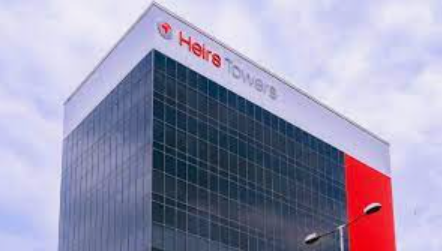
The Heirs Insurance Group has announced the opening of applications for the fourth edition of its annual Heirs Insurance Essay Championship, targeted at junior secondary school students nationwide.
In a statement on Wednesday, it was indicated that N10.5m worth of prizes will be up for grabs in this year’s edition features N10.5m worth of prizes.
The winning student will receive an N5 m scholarship along with an N1m education grant for their school. The first and second runners-up will receive N2m and N1m scholarships, respectively. In addition, insurance-focused themes and quizzes have been embedded into the application process for students, ensuring early engagement with the concept of insurance.
To participate, students must submit original essays of not more than 500 words on the topic ‘The Role of Insurance in Keeping Families Safe and Secure’ via its website. Submissions are open from May 27 to July 8, 2025.
In a significant expansion of the initiative, the 2025 edition introduces the Teachers’ Insurance Awareness Prize, a new category designed to recognise and reward teachers who actively promote insurance education within schools and communities.
For the Teachers’ Insurance Awareness Prize, the top teacher will receive a N1m cash prize, with an additional N500,000 grant awarded to their school. To qualify, teachers must implement an insurance awareness project and provide evidence of their initiative and its impact.
Commenting on this year’s competition, Chief Marketing Officer, Heirs Insurance Group, Ifesinachi Okpagu, said, “We are excited to return with an even bigger edition of the Heirs Insurance Essay Championship. This year, we are not only empowering students and their schools but also shining a light on the critical role teachers play in shaping financially aware communities. Across our businesses, we see education as a powerful tool to build a more secure future, and we are proud to drive that vision forward.”
The Heirs Insurance Essay Championship remains a flagship Corporate Social Responsibility initiative of Heirs Insurance Group, aimed at improving education outcomes and deepening insurance awareness among the younger generation. Winners of the programme will be announced at a Grand Finale event in August 2025.
Heirs Insurance Group is the insurance arm of Heirs Holdings, the leading pan-African investment company, with investments across 24 countries and four continents.
Startups and businesses across Africa have been invited to showcase their innovations at the upcoming Lagos Startup Expo, scheduled for June 18–19, 2025, at the Landmark Centre, Victoria Island, organisers disclosed in a statement on Tuesday.
With the theme ‘Connect, Invest and Innovate’, the Lagos Startup Expo 2025 promises to bring together the brightest minds, boldest startups, and most influential investors for two days of discovery, networking, and opportunity.
The organisers described the event as the premier platform for businesses, startups, entrepreneurs, investors, and tech enthusiasts to connect, collaborate, and showcase the very best of African innovation.
The previous edition of the expo drew over 3,000 attendees and nearly 100 startups, with stories of new partnerships, product launches, and business growth echoing long after the event.
This year, the momentum is even greater, with about 200 startups and businesses from different regions expected to take centre stage. Attendees will have a front-row seat to the latest breakthroughs in fintech, healthtech, agritech, logistics, artificial intelligence, and more.
Registered participants can expect a vibrant expo floor packed with live demos, product showcases, and real-time conversations with founders and industry professionals. The event’s open, interactive format is designed to encourage genuine exchanges and build relationships that matter.
For those seeking an elevated experience, VIP passes will unlock exclusive access to masterclasses led by seasoned experts, as well as intimate networking sessions with top founders and investors.
The statement also confirmed that registration is ongoing, with both regular and VIP passes available. Regular passes grant full access to the expo floor, networking opportunities, and all product showcases, while VIP passes offer an enhanced experience, including access to masterclasses and the investors’ lounge.
The organisers added that the Lagos Startup Expo is Africa’s biggest startup showcase, designed to spotlight innovation, foster connections, and accelerate growth across the continent’s growing startup ecosystem.
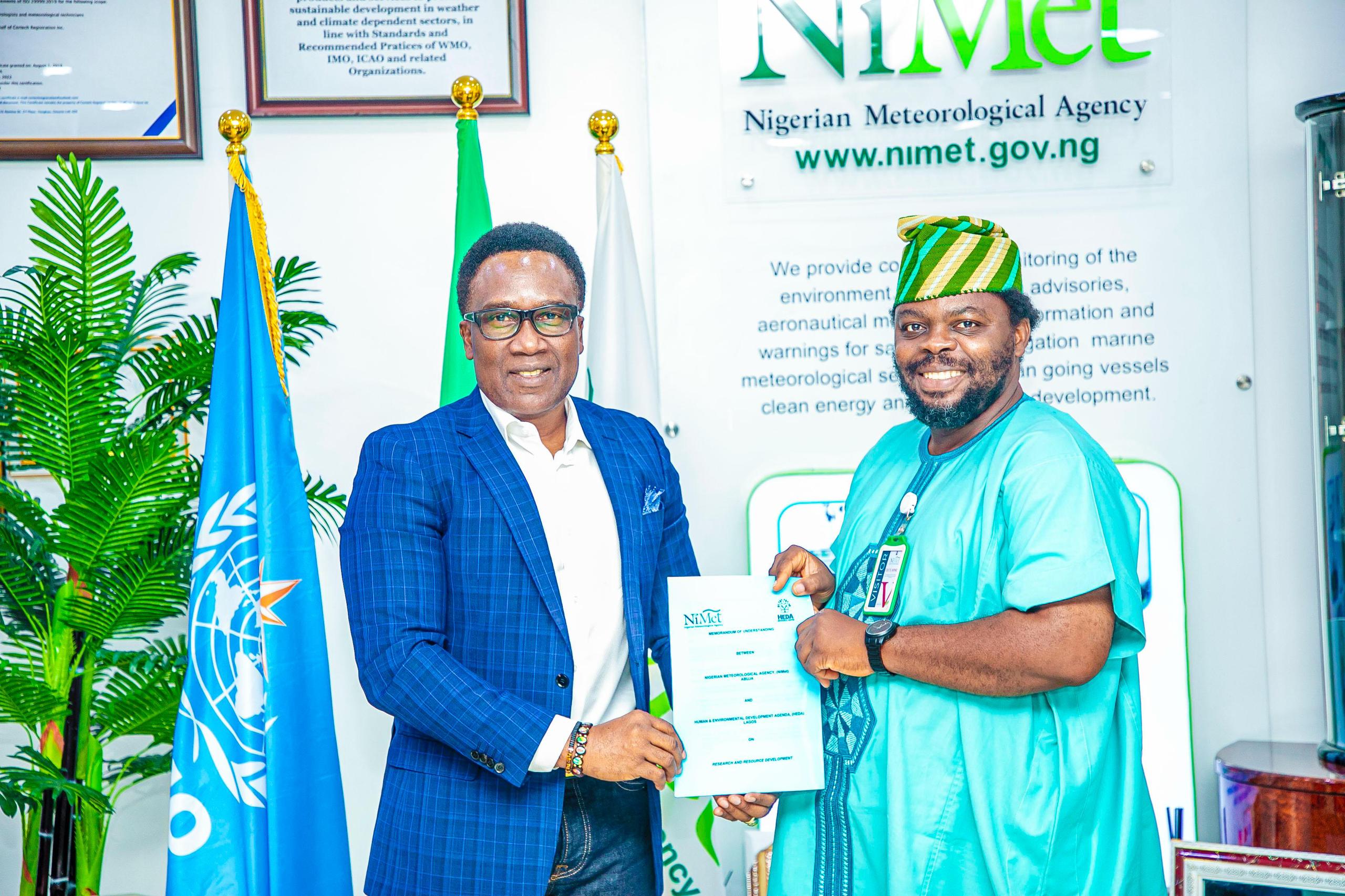
The Nigerian Meteorological Agency and Human and Environmental Development Agenda have signed a Memorandum of Understanding to improve access to weather and climate information for smallholder farmers across Nigeria.
This development was announced in a statement released by NiMet’s media team on Wednesday following the signing of a MoU at the agency’s headquarters.
“The Nigerian Meteorological Agency has formalised its partnership with the Human and Environmental Development Agenda by signing a Memorandum of Understanding aimed at expanding agro-meteorological information delivery to smallholder farmers across Nigeria,” the statement partly reads.
The new agreement builds on a collaborative relationship that began in 2010 and signals a renewed joint commitment to delivering timely, accessible climate data to rural communities.
Present at the signing ceremony were Sulaimon Arigbabu, Executive Secretary of HEDA Resource Centre, and Miss Tonye Dappa, Legal and Liaison Officer, who both expressed appreciation to NiMet’s Director-General and CEO, Professor Charles Anosike, for his ongoing support and leadership.
NiMet Boss, Anosike highlighted the role of partnerships in connecting climate science with grassroots action.
He also offered NiMet’s studio facilities for the co-creation of climate education content tailored to farmers.
According to the statement, the collaboration aims to expand access to climate information, enhance disaster preparedness, promote sustainable agriculture, and strengthen national resilience to climate impacts.
“The partnership is expected to improve early warning systems, support climate-smart agriculture, and strengthen national resilience to climate change.
“Both institutions reaffirmed their commitment to inclusive access to vital weather and climate information,” the statement concluded.
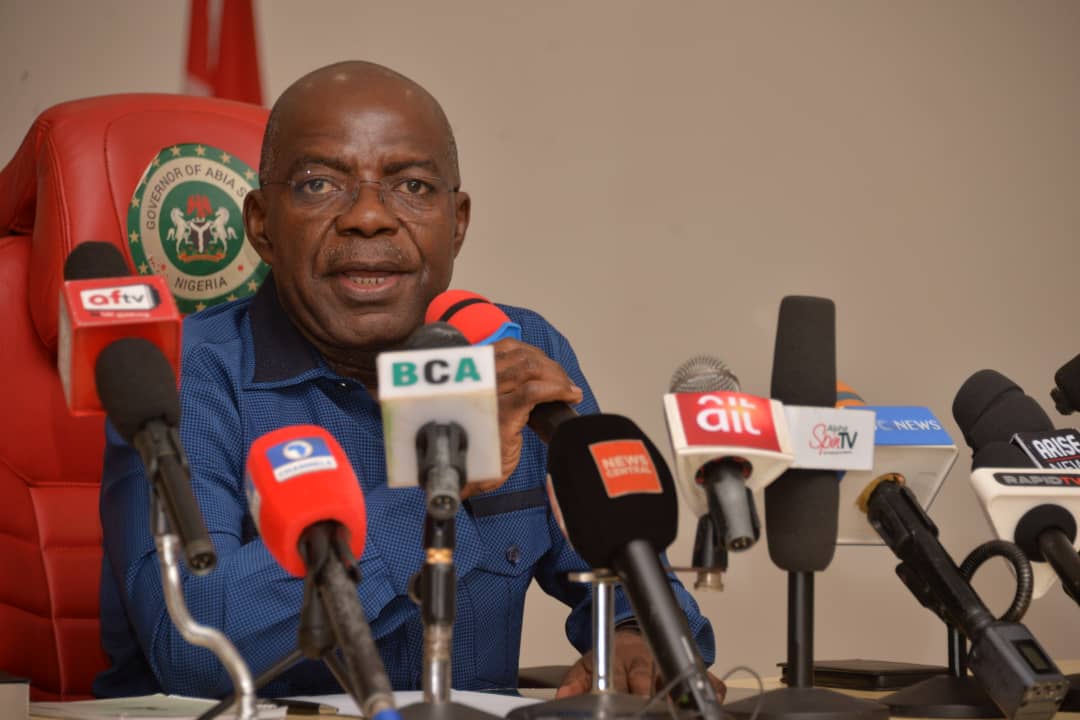
Abia State Governor, Alex Otti, has said that his administration will only borrow money to run the state when it is absolutely necessary.
The governor made the vow in Umuahia on Wednesday during a lecture series to mark his two years in office.
Otti, while responding to some of the issues raised by the lecturer, Dr Idika Kalu, a one-time Finance Minister, said borrowing was not to be done recklessly, adding that he would only borrow when necessary.
The governor said he had to inculcate financial discipline and responsibility in the system to get the state to a greater level.
He said he had been paying workers and pensioners, having found that it made more economic sense to pay than to keep the money at the bank.
“We shall commit the remaining two years of this term to institutionalising the reforms that have been initiated.
“Collectively, we shall make Abia the hub of transformational ideas; we shall not be tired of listening to new ideas, for that is the path to continuous growth and progress,” Otti stated.
The governor thanked Kalu for accepting the invitation to deliver his administration’s second anniversary lecture.
Otti said the state put the lecture together to “talk to ourselves honestly and evaluate how far we have come, what we have done right, and what we can do better.”
In his lecture, the former Minister of Finance urged the governor to borrow to expand projects that would create value for the state.
The octogenarian maintained that such borrowing was not bad once it was done in the interest of the state.
The lecture was titled, “Two years of transformation; Sustaining the momentum.”
Kalu also urged Otti to use the media in major roles in his development efforts because of its power to cause change.
“The media can help this nation get back to life so don’t give them minor roles but give them key roles,” Kalu said.
Kalu commended Otti for his numerous projects some of which he said he had seen delivered while some are still ongoing.
He urged the government to always abide by the rule of law and to show examples of how things should be done rightly and uprightly.
Kalu harped on the need to punish errant persons who instilled impunity in the society, noting that a society where impunity reigned was not modernised.
The founder and Chief Executive Officer of music streaming giant, Spotify, Daniel Ek, has said that Artificial intelligence will drive more people to create music and should not be seen as a threat to the industry.
Speaking at an Open House event at Spotify’s headquarters in Stockholm, Ek addressed growing concerns surrounding the use of AI in music production.
Some worry that machine-generated tracks — even those attributed to entirely fabricated artists — could eventually sideline human musicians.
“I’m mostly optimistic and mostly very excited because we’re just at the beginning of understanding this future of creativity that we’re entering,” Ek told reporters
Adron Homes Launches Grand Ileya Promo with Massive Discounts, Star Appearances & Festive Gift
As the Ileya (Sallah) season approaches, Adron Homes, Nigeria’s leading real estate company, is again giving Nigerians a reason to celebrate beyond the festivities with the launch of its highly anticipated ILEYA/SALLAH PROMO!
This year’s celebration blends culture, community, and homeownership into a once-in-a-lifetime opportunity for families and individuals looking to secure their future through real estate.
With over 40 estate locations nationwide, spanning Lagos, Ogun, Oyo, Osun, Abuja, Nasarawa, Niger, Jos, and Ekiti, Adron Homes is offering a generous 30% discount on all land purchases. Even better, customers can enjoy convenient payment plans spread over 24 months, making land ownership more affordable than ever.
To mark the season of giving, Adron Homes is rolling out exciting gift rewards for customers based on their commitment levels:
• ₦100,000 Payment – 10kg Bag of Rice or Aso Oke or Ankara
• ₦200,000 Payment – 10kg Rice with Aso Oke or 2 Ankara
• ₦500,000 Payment – Goat or 50kg Rice with Aso Oke or 2 Ankara
• ₦1,000,000 Payment – Ram with Aso Oke or 2 Ankara or 50kg Rice + Goat
(Valid for lands worth ₦3M and above)
• ₦3,000,000 Payment – 3 Rams with Aso Oke or 2 Ankara
(Valid for lands worth ₦8M and above)
This campaign is also being celebrated with the support of star brand ambassadors; Lateef Adedimeji, Ibrahim Chatta, and Femi Branch, who embody the spirit of culture, excellence, and family that Adron Homes stands for.
With a proven track record of delivering value and properties in strategic locations, Adron Homes is committed to making the dream of property ownership a reality for every Nigerian regardless of income level.
This Ileya season, the company is inviting all Nigerians to invest not just in land, but in a lifetime of security, prosperity, and generational wealth.
Visit any Adron Homes office nationwide or connect with us through our online platforms:
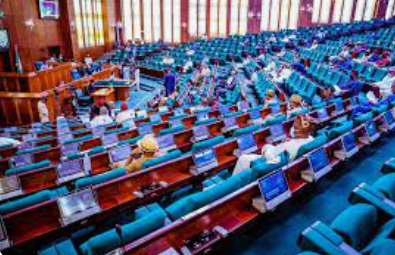
The House of Representatives on Wednesday called on relevant agencies of the Federal Government to carry out a reintegration plan for Internally Displaced Persons across the country.
The decision of the House was sequel to the adoption of a motion on notice during Wednesday’s plenary, sponsored by the member representing Eleme/Oyigbo/Tai Federal Constituency, Rivers State, Mr Felix Nwaeke.
Speaking on the substance of the motion, the Rivers lawmaker noted that as of April 2024, the internally displaced persons in Nigeria were estimated at 3.3m persons living in over 300 camps across Benue, Kaduna, Kano, Katsina, Kogi, Nasarawa, Niger, Plateau, Sokoto, and Zamfara States.
He said, “The visitations by humanitarian organisations and government agencies to these camps are immersed with calls for improved welfare, feeding, and security of the displaced persons in these over 300 camps.
“There has to be a plan on how to prepare these persons who had been forced out of their homes and subjected to living conditions lower than they are used to psychologically, emotionally, and physically to reintegrate them back to a normal standard of living.
“If the displaced persons, most of whom are women and children, are returned home after relative peace is restored in their communities without a structured reintegration plan that would be providing cash assistance, food and clothing, and psychological and emotional counseling and support; it would amount to insensitivity to their plight and, at most, abandonment.”
Following the adoption of the motion, the House urged the Federal Ministry of Humanitarian Affairs and Poverty Reduction and the National Emergency Management Agency to conduct an assessment of the situation in the IDP camps across the country and draw up a reintegration plan for IDPs.
It also mandated its Committee on Emergency and Disaster Management to ensure compliance.
Chiderije Mbah Wins One Day MD/CEO Of Wema Bank PL
… Set To Run The Bank’s Affairs For 24 Hours In An Unforgettable Children’s Day Experience
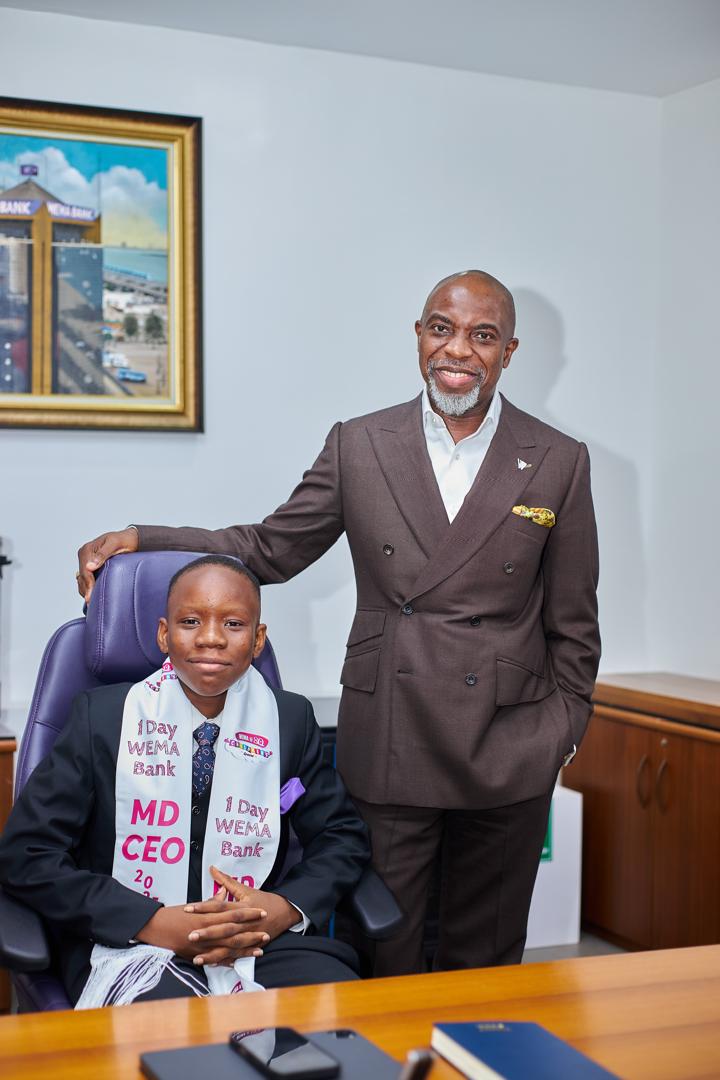
In a heartfelt celebration of 2025 Children’s Day, Wema Bank, Nigeria’s most innovative bank and pioneer of Africa’s first fully digital bank, ALAT, has unveiled 12-year-old Chiderije Mbah as its One-Day Managing Director/CEO for May 27, 2025, as part of a special initiative aimed at nurturing the next generation of Nigerian leaders. The memorable experience, which took place today, at the bank’s headquarters in Lagos, Marina, spotlighted Wema Bank’s ongoing commitment to investing in the future even as it marks 80 remarkable years of legacy and impact.
Chiderije Mbah became the winner of the One-Day Wema Bank MD/CEO initiative launched in May 2025, to mark this year’s Children’s Day celebration. He was chosen after sharing a spirited video explaining his dream of leading a bank and his vision for making finance more fun and accessible for children. His entry, submitted through a social media challenge, stood out among dozens who applied to be in the position.
The One-Day Wema Bank MD/CEO was the high point of a broader Children’s Day initiative by Wema Bank, which invited children across the country to participate in an online challenge. To qualify, children were asked to post a short video dressed in Wema colours and share the banking role they aspired to, while either holding or opening a Royal Kiddies Account (for ages 0–12) or an ALAT Xplore Wallet (for teenagers 13–17). The campaign blended fun with purpose, introducing thousands of young Nigerians to early financial education and the power of dreaming big.
On Tuesday, May 27, 2025, Chiderije stepped into the spotlight at Wema Bank’s Lagos Headquarters, receiving a purple-carpet welcome and taking his seat at the helm of the bank for a day packed with leadership, learning, and excitement. Enjoying a full day of activities; from a guided tour of the head office to holding his own executive briefing session in the boardroom, he will also be addressing senior executives of the bank.
“This is the best day of my life,” said Chiderije Mbah. “Wema Bank made me feel important. I am learning so much about being a leader and how banking works. I’ll tell all my friends to open a Wema Bank Royal Kiddies Account so they can also start learning how to save and maybe one day, they can be MD too!”
Speaking on the initiative, Wema Bank’s Managing Director/CEO, Moruf Oseni, said,
“Our 80th anniversary is a time to reflect on where we’ve been and where we’re going, knowing fully well that the future belongs to the young stars like Chiderije. Today’s activity is one of our ways of showing that we believe in the children, that we’re listening, and that we’re committed to helping them succeed financially, personally, and professionally all the way.”
This unforgettable experience reinforces Wema Bank’s vision of a future-ready Nigeria; one where financial inclusion starts early, and every child has access to tools, inspiration, and opportunities to thrive. As Wema bank celebrates eight decades of resilience and innovation, its gaze remains firmly fixed on the horizon, championing the dreams of tomorrow’s leaders, one child at a time.
The European Union and the World Bank are backing the Federal Government of Nigeria as the country scales up its Three Million Technical Talent programme with support in a renewed push to equip young people with digital skills and connect them to global job opportunities.
The 3MTT programme is a flagship initiative of Nigeria’s Federal Ministry of Communications, Innovation and Digital Economy. Its primary goal is to train three million Nigerians in key technical skills by 2027, thereby building a robust digital workforce to power Nigeria’s economy and position the country as a global exporter of tech talent.
The Minister of Communications, Innovation and Digital Economy, Bosun Tijjani, said the 3MTT initiative, billed as the world’s largest talent accelerator, is central to President Bola Tinubu’s vision for human capital development.
“When we came in, he said we must create one million technical jobs,” Tijjani told TVC recently. “That’s why we started the 3MTT programme… Every state I travel to, I meet young participants who are now gaining new skills and access to real opportunities.”
The programme, which began in 2023 with a pilot phase involving one per cent of its target, is now expanding rapidly. “We shifted to 10 per cent last year to learn what’s working,” Tijjani said. “Now we’re going full scale.”
According to the minister, the European Union has committed over €11m to support the programme. The World Bank is also analysing the initiative’s impact as part of a broader effort to scale up youth employment solutions.
Unlike past government-led training schemes, 3MTT has emphasised job placement alongside skills acquisition. Tijjani said partnerships with private companies and international organisations such as the United Nations Development Programme, which pays internship salaries for participants, have helped thousands of beneficiaries gain practical work experience.
He added that the government will soon launch Talent City, a new initiative that will convert public buildings into business process outsourcing hubs capable of hosting global service firms. The move is aimed at tapping into the growing demand for English-speaking talent in the BPO industry, a sector long dominated by countries such as India and the Philippines.
“We’re starting with the Digital Bridge Institute in Lagos and working with state governments to renovate iconic buildings like the Standard Building to house more outsourcing operations,” he said.
Tijjani stressed that the government is taking a data-driven approach. “We’re not just throwing numbers around. This is about people’s lives,” he said.
SHAREHOLDERS COMMEND WEMA BANK AT 2024 ANNUAL GENERAL MEETIN
…Express confidence in stable future following FY 2024 Financial Performance
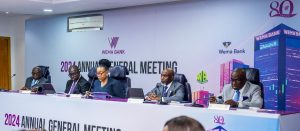
Reinforcing its position as one of Nigeria’s most profitable financial institutions, Wema Bank, Nigeria’s oldest indigenous bank, most innovative bank and pioneer of Africa’s first fully digital bank, ALAT, has received a unanimous vote of confidence from its shareholders across Nigeria as it disclosed a record-breaking financial performance at its 2024 Annual General Meeting (AGM). The Wema Bank 2024 AGM held virtually in Lagos on Thursday, May 22, 2025.
According to the Bank’s 2024 Annual Report, Wema Bank, in 2024, recorded an all-time-high performance, with Gross Earnings growing by 91.51% from N225.75 billion in FY 2023 to N432.34 billion in FY 2024; Profit before Tax (PBT) increasing by 135.16% to N102.51 billion in FY 2024 from N43.59 billion in FY 2023, and Profit After Tax (PAT) increasing by 140.13% to N86.29 billion from N35.93 billion reported in FY 2023; Total Deposits rose by 35.65% to N2,523.82 billion in FY 2024 from N 1,860.57 billion in FY 2023 and Total Assets stood at N3,585.05billion in FY 2024, representing a 60.04% increase over the N2,240.06billion recorded in the corresponding year of 2023 and placing the Bank squarely above the One trillion Naira mark, a milestone the Bank surpassed in Q3 2021.
The Bank also grew its loans to customers by 49.94% to close FY 2024 at N1,201.21 billion from the N801.10 billion recorded in 2023. Impressively, the Wema and ALAT brands continue to win public acceptance and market relevance as the Bank continues to record growth in its retail deposit drive. 2024 has proven beyond doubt to be an exceptional for the Bank with earnings growing by 91.51% year on year with earnings per share at 483.2 kobo. Additionally, the Bank’s Non-Performing Loan rate closed at 3.86%, a reduction from FY 2023 position. It is no surprise that the Bank received unanimous commendation from shareholders, with both internal and external stakeholders expressing full confidence in the Bank’s stable outlook and successful financial future.
Among the shareholders who expressed a vote of confidence in Wema Bank were Mr. Matthew Akinlade, who commended the Management for a performance he regarded as “very outstanding”, and Ambassador Doctor Olatunde Okelana, who described the 2024 financial performance of Wema Bank as “historical”, commending Wema Bank’s proactive approach to employee well-being.
Mrs. Bisi Bakare, National Coordinator of the Pragmatic Shareholders Association of Nigeria, also added, “I want to start by commending Wema Bank’s outstanding performance despite the challenging macroeconomic performance. On gender inclusion, I would also like to commend Wema Bank for an impressive gender diversity on the board with 5 out of 11 directors being female, representing a remarkable 38% ratio. Furthermore, I want to seriously commend the succession plan of Wema Bank, and the board for achieving 100% attendance in meetings, which shows a full commitment on their part”.
Anchoring the Wema Bank 2024 AGM, Dr. Oluwayemisi Olorunshola, the Chairman of Wema Bank, expressed the Bank’s gratitude and appreciation to its shareholders, customers, employees, regulators, partners and other stakeholders, for their continued support and contributions to the Bank’s outstanding performance for the year in view, reiterating the Bank’s commitment to sustain the upward surge in its performance in the decades to come.
Alluding to the Bank’s plan for sustaining the gargantuan growth recorded in 2024, Moruf Oseni, the Bank’s MD/CEO, added, “We will continue to deliver best-in-class financial solutions, invest in second-to-none technology, reinforce our internal framework for maximum efficiency and remain fully committed to innovation and service excellence, as we continue to provide optimum returns for every stakeholder of Wema Bank. The N150 billion Rights Issue window ended yesterday May 21st, 2025. However, we have raised a motion to raise another N50 billion through private placement, and with your permission, we will proceed with that, come June 2025”.
“At the end of it all, what we expect is that Wema Bank will have qualifying capital slightly north of N267 billion, which allows us to sustain the resilient and robust franchise that we have built together, to keep Wema Bank thriving as a force to be reckoned with in the industry. Wema Bank stands strong at 80 and in the decades to come, I can assure you that the growth we are experiencing today, is just a tip of the iceberg”, Oseni concluded.
Wema Bank 2024 AGM saw the Bank’s shareholders authorise a number of decisions including the re-election of board members, remuneration of Audit and Board members, and payment of dividends of N1 per share.
From marking the incredible milestone of its 80th anniversary to making significant strides towards meeting the CBN recapitalisation benchmark for 2026 and achieving a record-breaking 2024 financial performance that has sustained an unparalleled growth streak over the past decade, Wema Bank has proven its capacity to remain at the forefront of the African financial industry without compromising on delivering unmatched value to stakeholders.