L-R- Victor Amakwe, Group Head, Private Wealth Management; Christiana Chukwu; Idowu Ilesanmi, both winners in the social media challenge of recitation of National Pledge in Pidgin English; and Cynthia Ndukuba, Head, Head Office Compliance Assurance, Compliance and Transaction Assurance during N1million cheque presentations to four winners of the videos recitation of “National Pledge” in Pidgin English, in celebration of Nigeria @ 60th at the bank’s head office.
Heritage Bank Plc, Nigeria’s Most Innovative Banking Service provider has rewarded the winners of the rendition of the October 1st National Pledge in Pidgin English in celebration of Nigeria’s 60th Independence Anniversary.
The four patriotic Nigerians, who emerged as the winners are Idowu Ilesanmi (Lagos); Christiana Chukwu (Lagos); Onovo Chukwuebuka (Edo) and Paul Eze (Abuja) received cash prize of N250, 000 each.
The bank slated an online competition for customers to make videos recitation of them presenting the “National Pledge” in Pidgin English and the four best videos were rewarded with total cash prize of N1million.
This was to commemorate the independence and inculcate patriotic spirit in the citizens on the importance to reflect on the past, what led them here and the bright future that awaits Nigerians.
Speaking on the reasons why they participated in the online pidgin language competition, Ilesanmi, one of the winners said having being brought up in Benin City where Pidgin English is natural to them and adopted by all and sundry hence, it was golden opportunity to participate as a patriotic Nigerian.
He commended Heritage Bank for the initiative, as Ilesanmi disclosed that the information of the competition was sourced from a colleague’s page owing to the fact that he was never a customer to the bank.
He advised that, young people should grab opportunities such as this which speaks to something they would do and get rewarded for. “Anyone who is interested in things that will encourage them to do what they have interest in, then Heritage Bank is where they should be,” Ilesanmi stated.
Another winner, Christiana Chukwu also appreciated Heritage Bank for picking her as a winner and she mentioned being fascinated with the Bank’s online applications in the likes of HB Padie and *745#, which has made transactions easier and seamless to her and other customers.
In a statement by the Divisional Head, Corporate Communications/Product Management, Fela Ibidapo said that the bank considered use of Pidgin English as a marker of identity and solidarity, also as means to promote local content use of language.
He affirmed that the importance of reciting the National Pledge in Pidgin English would help invoke in every individual their national pride of love, devotion and sense of attachment to out fathers’ land and alliance with every citizen who share same sentiment. This attachment could be a combination of different feelings relating to the country in terms of socio-cultural, ethnic, political and historical interests.
He reiterated, “We are not just excited, but we are also reflecting on what our commitment as individuals has been to our great country Nigeria. Looking inwards at our journey over the last 60years, we believe as an institution that this is the best time to reflect on the National Pledge and what it means to us as a Nation.”
To this end, Heritage Bank championed the movement to keep our commitment as a nation by rewarding those who recited the “National Pledge” in various creative ways.
L-R- Victor Amakwe, Group Head, Private Wealth Management; Christiana Chukwu, winner in the social media challenge of recitation of National Pledge in Pidgin English; and Cynthia Ndukuba, Head, Head Office Compliance Assurance, Compliance and Transaction Assurance during N1million cheque presentations to four winners of the videos recitation of “National Pledge” in Pidgin English, in celebration of Nigeria @ 60th at the bank’s head office.L-R- Victor Amakwe, Group Head, Private Wealth Management; Idowu Peace Ilesanmi, winner in the social media challenge of recitation of National Pledge in Pidgin English; and Cynthia Ndukuba, Head, Head Office Compliance Assurance, Compliance and Transaction Assurance during N1million cheque presentations to four winners of the videos recitation of “National Pledge” in Pidgin English, in celebration of Nigeria @ 60th at the bank’s head office.
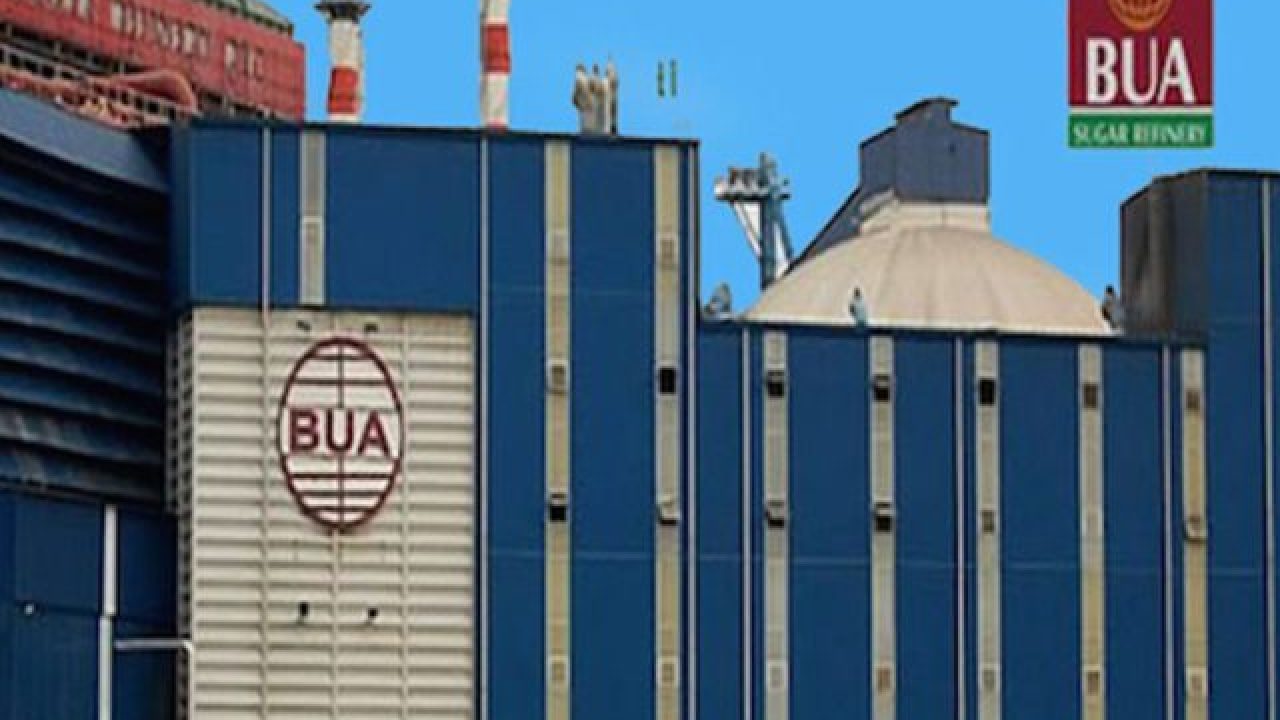
BUA Cement, on Tuesday, said it never received any blanket approval to export cement through the Nigerian land borders at a time the borders were closed. The company said it was only granted a limited approval to export some cement to Niger Republic, which is 100kms from its plant, and this was disclosed in the company’s half-year results.
The clarification comes amid revelations that rival Dangote Cement got approval from the Nigerian government to export cement through some of Nigeria’s land borders at a time the borders were closed.
Earlier on Tuesday, PREMIUM TIMES reported how details emerged that despite the border closure policy put in place, the Nigerian government had allowed Dangote Cement to resume cement export across its land borders.
According to Bloomberg, President Muhammadu Buhari‘s administration gave its authorisation for Africa’s biggest producer to export cement to Niger and Togo in the third quarter for the first time in ten months.
The revelations were made by Michel Puchercos, chief executive officer of Dangote Cement, on an investor call in Lagos.
The revelation sparked outrage on social media Tuesday, as many Nigerians questioned the rationale for granting such approval to selected businesses while other businesses suffer the effect of the year-long blockade.
Stanbic IBTC founder, Atedo Peterside, questioned the rationale for granting such waivers to only a few businesses.
On Tuesday, the management of Dangote Group in its reaction described reports of the development as “misleading and mischievous”.
In a statement, Tuesday, the company said it was not the only company enjoying such privilege to move goods through the land borders.
Meanwhile, details emerged Tuesday that rival BUA Cement also received a similar waiver earlier in the year.
In an internal memo dated June 18th and signed by Dimka V.D, Custom Comptroller (Enforcement, Hqtrs) on behalf of Deputy Comptroller-General (E,I&I), the government approved the movement of BUA Cement trucks to Niger Republic.
“I am directed to forward herewith a letter from the Office of The National Security Adviser referenced NSA/227/C dates 17th June, 2020 on the above subject matter,” the memo reads.
“The trucks will exit and return through Illela Border station in Sokoto State. “Attached herewith is a list with names of drivers and truck license numbers and other relevant details for ease of reference.
“This is forwarded for information and strict compliance, please,” the memo addressed to Custom Zonal Coordinator in charge of Sokoto/Zamfara commands stated.
Reacting to reports about the memo Tuesday night, BUA Cement said the company did not enjoy express approval to export cement as reported in a section of the media.
In a telephone conversation with PREMIUM TIMES, the Group Head of Corporate Communications at BUA Group, O’tega Ogra, said the company only received “limited approval” to export.
“BUA Cement does not have any blanket approval to export and the Nigerian borders remain closed,” he said.
“BUA Cement was granted a limited approval to export some cement to Niger Republic (which is 100kms from our plant), and this was disclosed in our half-year results and presentations to the investing and general public.”
Similarly, a transcript of the company’s half-year results call made available to PREMIUM TIMES detailed how Yusuf Binji, the company’s MD/CEO, explained the export approval to investors and analysts earlier in the year.
When asked questions about the export, Mr Binji explained that during the month of June, the company received an approval for limited export to the Niger Republic from “our so-called Plant” through the Illela border which it carried out successfully.
“The Nigeria land borders still remain shut,” he said. “So this was a one-off thing we received but we hope to get more subsequently during this quarter.”
When asked if the company would get additional waivers, Mr Binji said the company was optimistic.
“For the exports, yes, we are very hopeful we are going to get more permits to carry our spares to the Niger Republic. Like I mentioned earlier, we were given a one-off thing for a limited quantity which we exhausted in June.
“But we are optimistic it’s going to continue during Q3 through the land border of Illela from Sokoto State into the Niger Republic.”
Speaking about the demand from Niger, Mr Binji said the company tried to make the Nigerian market its priority.
He said: “We have to satisfy the demand in Nigeria. What we are sending is the excess production that we have. So as long as we are not so clear about the actual demand in Nigeria, we would not be able to put a number or figure to how much we are going to export. So we will see and also we have to see when the restrictions are lifted and the borders are fully opened, because like I said, also it was a one-off thing we got and we hope to get more and with that, we cannot really say this is how much you are going to export.
“We are being given the approval in batches. Regarding the Benin Republic, no we don’t have any plans to export the Republic of Benin.” Asked to give full details of the export and approval, he said: “We exported 200 trucks. It came towards the last week of June. 200 trucks of 40 tonnes each, that is 8000 tonnes. That was the approval we got and we exported it fully.”
First Bank of Nigeria Limited, Nigeria’s premier and leading financial inclusion services provider, will host an SME webinar themed “Rebuilding your Business” by 10am on Tuesday, 10 November 2020 via Zoom meetings.
The event is organised in collaboration with FBN Insurance Brokers and FBN Quest with its discussants including: Tunde Owolabi, Group Executive, Retail Banking (Lagos & West), FirstBank; Olumide Ibidapo, MD/CEO FBNInsurance Brokers and Ijeoma Agboti, Managing Director, FBNQuest Funds.
As a brand committed to putting its stakeholders first, the SME Webinar is designed to empower the participants and promises to provide ways to access opportunities such as business financing, advisory, wealth preservation and appropriate business coverage. These opportunities are essential elements in the rebuilding and rebounding efforts, as well as safety of businesses, towards their continued contribution to national development.
Speaking on the event, Mr. Gbenga Shobo, Deputy Managing Director, FirstBank said “at FirstBank we identify with the indelible roles played by SMEs towards the continued growth of the Nigerian economy as without a doubt, they remain the engine of not just our economy but the global economy.”
“I enjoin every business owner to participate in this event in order to be enlightened with essential information to promote the safety and economic security of their business, especially at this time’’
Only recently, FirstBank partnered with the Lagos State Employment Trust Fund (LSETF) in a matching fund scheme to cushion the impact of COVID-19 pandemic on low-cost private schools by ensuring lending at an attractive interest rate.
Since the start of the year, the Bank has held several SME events including; an SME Business Clinic train that moved from Lagos to Abuja and Port-Harcourt in February.
The Bank later embarked on virtual SME-based events, in order to adhere to the social distancing guideline essential to promoting the safety of every participant in view of the COVID-19 pandemic. These SME based webinars include SME Business Clinic in May as well as the SME Connect webinar to promote the growth of education sector held in July amongst others.
Interested participants are required to click here to register.
The Managing Director, Ecobank Nigeria, Patrick Akinwuntan has said the bank is prepared to partner with other organizations to explore the opportunities available in the African Continental Free Trade Area (AfCFTA). Akinwuntan in his remark at an event in Lagos pointed out that the pan African bank was set up primarily for the economic integration and development of Africa, stressing that the bank was ready to deploy its capacity, platform and network to achieve the AfCFTA objectives.
According to him, “Naturally for us as a pan African bank, we are set up to support the economic integration and development of Africa. We have a commitment, capacity, network to support the realization of AfCFTA objectives. We understand the regulatory environments, cultures and have the technology and innovation platforms. We will support Fintech to push Africa to benefit from the global market.”
Also speaking, AfCFTA, Mene Wamkele expressed satisfaction that Nigeria is ready to deposit the instrument of ratification of the AfCFTA, noting that he is looking forward to Nigeria’s leadership in AfCFTA.
He observed that for a long time the African continent has focused on security and political issues, noting that focus is now being shifted towards trade and investment-related matters.
“Whatever decision we take at the secretariat would be informed by what Africa wants. We will not put up any design that will not support what Africa wants. We would employ digitization, and fintech will drive financial inclusion. We would drive trade inclusion through fintech that would be affordable, accessible, and available,” adding that “Border closure and xenophobic issues have to be addressed according to the rules of the trade agreement, foreigners have to be protected by the agreement. All foreign entities must be treated like domestic players. Discrimination of any kind that will be tolerated. AfCFTA has improved on the WTO requirements on trade facilitation, and we would ensure that countries meet up with their obligation to ensure smooth trade,” Wamkele pointed out.
Last week will go down as one of the most challenging weeks, if not the most challenging, Nigeria has faced in 2020. What started out weeks before as very well-organised peaceful protests by young Nigerians campaigning to #EndSARS, was supplanted by hoodlums engaging in wanton looting, arson and destruction of public and private properties across many states at an unprecedented scale. By the end of the week, many lives had been lost, many properties and businesses completely destroyed and Nigeria has been left reeling from a shock that dwarfs any the country felt even at the peak of the COVID-19 outbreak.
In keeping with the Nigerian spirit of being one’s brother’s keeper, equally unprecedented efforts by individuals, groups and corporate organisations to try to provide assistance for people and businesses affected by the crises of the past week, have followed. Individuals and groups have announced donations of cash and materials, set up helplines to offer psychological counselling and support, and started online crowd-funding efforts in support of victims. Among corporate organisations, we have seen banks take a leading role. Some banks, such as Access Bank and Stanbic IBTC, have announced funds or desks they have set up to receive requests from, and process assistance for, affected individuals and businesses. One of these banks’ efforts include pledged interest-free loans and grants that affected businesses and individuals can access.
Another bank has seen thousands of requests for assistance pour in through the online channel it set up for the purpose. The requests have flowed in, not only because of the victims’ desperation for help, but also because of the humane approach to banking that this institution adopts. Always putting the customer at the heart of its business, FirstBank has been showing empathy with all those who have experienced one loss or the other as a result of the crises. Since last week, the bank has been seeking every opportunity to identify with people who are currently grieving and hurting.
Although the largest and most prominent member of Nigeria’s leading financial powerhouse, the FBNHoldings Group that is a one-stop shop for financial services ranging from commercial and investment banking to financial advisory, insurance brokerage and pensions custodianship, FirstBank is neither immune nor removed from the challenges people face. It is a human institution with thousands of humans working as employees to provide bespoke banking products and services to millions of other humans whose pulse the bank feels through its employees. Being part of a group with expertise across the broad spectrum of financial services, makes FirstBank the banking partner with the broadest shoulders to assist SMEs buffeted by the wave of violence witnessed across the nation last week.
Given the interconnectivity between Nigeria and FirstBank’s history, it is no surprise that a tumultuous week in Nigeria is giving way to one with stories of hope and optimism by Nigerians badly affected by the crises of the past week, who are looking to FirstBank for assistance. These Nigerians have been encouraged by the strides FirstBank has made over the years in the SME space as the bank of first choice for small businesses. Built around seven strategic pillars – of connect to infrastructure, connect to talent, capacity building, policy and regulation, connect to resources, connect to market as well as connect to finance – considered essential for the sustainability and growth of SMEs and intended to promote a healthy business interaction and adaptability of the SMEs with their immediate environment, FirstBank’s involvement with SMEs, through SMEConnect (the bank’s branded bouquet of empowerment initiatives, products and services tailor-made for SMEs), has been one that has sought to facilitate their growth into future economic powerhouses playing ever-increasing roles in Nigeria’s economic development.
Since its maiden SME National Conference in 2014, FirstBank has annually engaged small businesses and SME owners in series of empowerment seminars and workshops designed to improve their business capacity. Only this year, FirstBank held its inaugural SME Business Clinic in Lagos, Port Harcourt and Abuja with many SMEs in attendance. The SME Business Clinic featured Abayomi Adewumi, CEO of the Global Leadership Institute and an industry expert and business growth consultant with vast experience working with SMEs. He engaged participants on the FirstBank SME diagnostic tool designed for SMEs to check the health of their business, better understand it and drive profitability.
In 2019, FirstBank organised a weeklong SME event which had owners of SMEs in different sectors mentored across multiple states in the country. It was the first of its kind in the industry. Organised in partnership with SME Traction, a leading business coaching platform, it was aimed at empowering SMEs to make informed choices about their businesses, thereby facilitating growth and bolstering their contribution to the development of the economy. At the event, FirstBank’s Deputy Managing Director, Gbenga Shobo, underlined the importance the bank attaches to SMEs. He said: “At FirstBank, we recognise the impact SMEs have in promoting growth of the economy and are excited at the opportunity to continue to enable them prosper by strategically contributing to the sustainability of their business. We remain the trusted financial partner of SMEs and reiterate our resolve to be known as the brand that enables their success; much the same way that we have for over 125 years enabled Nigerians and the economy at large.”
This same point was elaborated at another FirstBank SME event, “Food Souk”, convened in 2019 in partnership with Eventful Limited, an events management firm, where the bank restated its commitment to the Federal Government’s diversification drive, promising to continue to support the agricultural value chain from production to consumption to create opportunities for SMEs in the food sector so they could in turn create job opportunities. The bank also extended its hand of partnership to all small businesses involved in organising different trade fairs and exhibitions. A food vendor at the event, Ms Ijeoma Ebeneme, the Chief Executive Officer, JEM N Iris, commended FirstBank for putting the event together. Ebeneme said she was at the food fair to make profit, meet new clients as well as create the needed publicity for her brand. It is for people like Ebeneme that FirstBank maintains an SME website (https://smeconnect.firstbanknigeria.com) with rich resources to help SMEs build capacity and improve how they run their business. On the website is a blog featuring business articles and tips, SME business toolkit, SME products, Microsoft 365 Business Basic and a whole lot more.
In support of owners of SMEs operating in the education sector, FirstBank, in partnership with the Lagos State Employment Trust Fund (LSETF), set up a matching fund scheme of ₦5 billion LSETF-FirstEdu Loan. Officially launched in September by Governor Babajide Sanwo-Olu of Lagos State and Dr Adesola Adeduntan, Managing Director/CEO of FirstBank, the scheme aims to cushion the impact of Covid-19 pandemic on low-cost private schools by ensuring lending at an attractive interest rate. Speaking at the launch, Dr Adeduntan said: “At FirstBank we recognise the indelible role played by the education sector in the growth of any economy and this underscores our partnership with Lagos State Government for continuous development of the education services in Lagos State and the nation as a whole. The commitment by the Lagos State Government – including this partnership – to enable schools is quite commendable as this will mitigate the challenges caused by the lockdown on the education sector following the COVID-19 pandemic.”
It is for efforts like all those highlighted above and many more that the 2019 edition of KPMG’s Annual Banking Industry customer Satisfaction Survey named FirstBank as the biggest mover in the SME space. The 2014 edition of the Survey had named the bank as the most popular bank among MSMEs for both deposit transactions and credit/loan facilities with 26 per cent of the SMEs surveyed identifying the bank as one where they had an ongoing loan facility or had obtained one in the recent past. It is also for the same reason that the unfortunate events of the last week have reignited the bond between Nigerians and FirstBank, a partner that they can bank on in times of need. The bank’s track record leaves no one in any doubt of its unwavering commitment to continue to weather all storms with Nigeria and Nigerian SMEs with whom it shares a common destiny.
The rabbit hole of uncertainty, confusion and fear that pupils and their parents fell into in the dying days of March when the country was in lockdown was best captured in a Saturday Sun feature of May 16, titled, “COVID-19: Troubles of e-Learning.”
The story catalogues the challenges that erupted out of the disruption caused by the coronavirus pandemic, the fears and frustrations brewed by the new abnormality foisted on the world, the pessimism that pervaded the globe from developed to underdeveloped countries and the possibilities that blew up in the aftermath in the education stratosphere.
With the new order of social distancing, self-isolation, government-enforced quarantine and the ubiquitous lockdown, the prospect of indefinite stay at home until at least an elusive vaccine is found, loomed. This precipitated a distress as never seen before in the education space.
Yet, a panacea was at hand: Digital learning, though hitherto given scant attention. But crossing into that nirvana was an uphill task, especially, in this part of the world. Why: The existence of a huge digital deficit both in infrastructure and the requisite skill. The dilemma confronting parents, pupils and tutors are multi-dimensional as illustrated by these three vignettes from the story:.
Leadership Newspaper
The rabbit hole of uncertainty, confusion and fear that pupils and their parents fell into in the dying days of March when the country was in lockdown was best captured in a Saturday Sun feature of May 16, titled, “COVID-19: Troubles of e-Learning.”
The story catalogues the challenges that erupted out of the disruption caused by the coronavirus pandemic, the fears and frustrations brewed by the new abnormality foisted on the world, the pessimism that pervaded the globe from developed to underdeveloped countries and the possibilities that blew up in the aftermath in the education stratosphere.
With the new order of social distancing, self-isolation, government-enforced quarantine and the ubiquitous lockdown, the prospect of indefinite stay at home until at least an elusive vaccine is found, loomed. This precipitated a distress as never seen before in the education space.
Yet, a panacea was at hand: Digital learning, though hitherto given scant attention. But crossing into that nirvana was an uphill task, especially, in this part of the world. Why: The existence of a huge digital deficit both in infrastructure and the requisite skill.
The dilemma confronting parents, pupils and tutors are multi-dimensional as illustrated by these three vignettes from the story:
Oko Odinakachi, a student of Abia State University, faced frustration on two fronts: her institutions dillydallying about adopting the e-learning strategy on the one hand; her little faith in digital learning, on the other hand. “I was on the verge of writing my first-semester examination. How possible can we do that digitally when there are issues with even JAMB CBT here in our country?”
A father whose daughter, a student of Federal Government College Shagamu preparing for her Senior School Certificate Exam, was compelled to seek a suitable e-learning portal because WAEC advised students to be studious during the lockdown as they’d be going straight into the exam hall at short notice as soon as the pandemic is over. The search led him to an online WAEC Preparatory Class that demanded payment for requisite online resources. “One subject is N1, 500, four subjects N4, 500 and six subjects cost at N6, 500. I didn’t go further because of the fee, which I think is exorbitant, given the current state of the country,” he complained. He joined the rank of other parents who raised concerns over exploitation by mercenaries masquerading as e-learning groups.
Abolade Kunle, a JSS3 student was aware of the government-sponsored tutorial on the radio but he was unable to enjoy the benefits: “We don’t have a radio set in the house. I use my dad’s phone once in a while but he doesn’t allow me to use it all the time,” he railed. A related drawback was cited by one of his teachers at the public school in Mushin: “In the past five weeks, we have had barely three days of electricity supply. It is not every parent that can afford a generator. Is it not when you have electricity supply that the children can watch [government educational programme on] the television?”
The absence of curative or prophylactic breakthrough against the virus meant that academic activities would remain in limbo, while pupils and their parents are faced with the undaunted possibility of a long spell at home. The prospect of a long lull of academic inactivity struck a palpable fear that fueled the scramble unto digital learning platforms as educationists and institutions across the country experimented with remote learning, albeit on a trial-and-error basis. The efforts were at best tangled; the process muddled; the result ineffective. Even, for students of tertiary institutions, the online class was to many a Lala-land.
With the option inevitably narrowed down to digital learning, a Catch-22 situation evolved. Who’s going to make it happen? How? When?
Best foot forward
Eventually, the first foot forward––and indeed the best one––came and it was from First Bank Nigeria Limited.
The bank, a leading financial inclusion services provider, announced its intention to roll out an innovative e-learning initiative on the heels of its philanthropic contribution of the sum of one billion naira to the Coalition Against COVID-19 (CACOVID), a private-sector task force that partners the Federal Government, the Nigeria Centre for Disease Control (NCDC) and the World Health Organisation (WHO) to combat the coronavirus in Nigeria.
In the months to come, the bank’s effort would resonate forcefully in the education space. The reason for this was not farfetched. Since responsiveness remains a cornerstone of Corporate Social Responsibility, when it is timely, it becomes a major coup. The severity of the pandemic required “uncomfortable, transformative responsiveness,” not the usual CSR response where organisations choose and design responsiveness on their own terms, described by Wayne Visser in Evolution and Revolution of Corporate Social Responsibility, as “when giving is easy and cheque-writing does nothing to upset their commercial applecart.”
Taking on the e-learning challenge head-on was an self-assigned project for which the bank was not under any compulsion to undertake. That it volunteered to tackle the challenge is an indication of the largeness of its CSR aorta.
Suffice to say that a handful of digital learning initiatives exist before the advent of the Covid-19 lockdown; the First Bank effort, however, resonates louder because it has a measurable stated goal: Moving one million pupils into e-learning platform.
A response apt and adequate Lagos State’s prompt response to the pandemic included the immediate shutdown of schools. By March 25 (four days before Lagos State went into total lockdown on the order of the President), the First Bank initiative was rolled out, and it inalienably took the optics of “the” response to the glitch caused to the education system by the coronavirus pandemic.
First Bank went into collaboration with Lagos State Government and an indigenous mobile learning platform, Robert and John Limited, whose trademark Roducate e-solution, a comprehensive curriculum-based education, is a cornucopia for a broad spectrum of students.
Having powered similar projects in the past, Robert and John was an obvious best in the e-learning business, a fact reinforced by First Bank CEO, Adesola Adeduntan: “In searching for the best fit solution, several options were considered by educators and teachers from the state and First Bank over the last couple of weeks before adjudging Roducate the offering from Robert and John, an innovative technology firm, to be the best of all reviewed.”
Is Roducate the Rosette stone of online learning? The facts were in its favour. Its claim of being the “most comprehensive e-learning platform in Nigeria and indeed Africa” is justified on its curriculum-based education for primary, secondary, and tertiary students. Moreover, ;it has been active in the e-learning space as far back as 2014 and has perfected the mechanics of effective digital learning, winning endorsements along the way from NUC, NERDC, JAMB and Lagos State Ministry of Education.
And by tweaking its blueprint, it came up with an e-learning mother lode––lecture notes, assignments, mock exams, videos, podcasts, and educational games––a rich vein of contents for primary, secondary and tertiary institutions, structured in consonance with the government-accredited curriculum. From the interactive tutorial videos to the innovative feature that enables the learner to take notes for quick reference, it was a whole new experience and an enjoyable learning process.
Suffice to reiterate that the First Bank/LASG Roducate is not the first of its kind; before it, there was Glo Mobile Tutor (since 2014) and UBA LEARN (unveiled in 2018) amongst others. However, certain factors gave it an edge.
The comparative advantage
The CSR takeaways from the initiative are writ large in what makes it different from others––in other words, its comparative advantages.
On the first count, the effort surfaced at a time of need, a time when there was an urgent need to close the gap caused by the disruption in children education due to schools closure following the Covid-19 lockdown. In one fell swoop, a solution materialised that provided succour for all, from kindergartens kids to grad-year students of tertiary institutions.
Secondly, while it is indeed a rolling scheme, it nevertheless came with specific number goal of one million pupils to be empowered with digital learning; this calibrated objective makes the intervention easy to evaluate, compared to other similar initiatives.
Thirdly, the biggest boon: subscription-free.
Consider what this means to parents such as the one cited in Sun story who had to shell out approximately N6, 000 for his daughter to access the needed resources. With the First Bank initiative, students simply get on the platform by registering free at https://www.firstbanknigeria.com/e-learning/.
And then the masterstroke: the enhanced offline feature of the initiative. It means students can study offline without having to bear the burden of buying data. What’s more, First Bank gave further impetus by providing 20, 000 devices that came preloaded with the curriculum.
Elaborating on the low-end devices preloaded with Roducate offline content, Adeduntan disclosed that “the phones have SIMs and limited data tied, only, to the Roducate learning product.”
Kayode Abayomi, the spokesperson for Lagos State Ministry of Education, further hit the nail on the head.
“The devices are efficient and fit for purposes for all students especially indigent students given the fact that data consumption of most e-learning solutions has been a major stumbling block for the majority of students and teachers alike,” he said.
Its fourth edge is from its collaborative nature. One of First Bank’s collaborators on the project is a partner with leverage in the education space: the Lagos State Government. That made a big difference, as it gave the initiative authority and legitimacy that immediately gained traction.
In return, the initiative was well-appreciated by Lagos State Governor Sanwo-Olu: “It is not out of place that we are witnessing more infusion of technology in learning and this intervention by First Bank could not have come at a better time.”
Lastly, the First Bank e-learning project took care of both the short-term and the long-term interest of Nigeria in the digital race. Beyond the exigency of the moment, which was to get the children into learning mode, the intervention took on the imperative of helping young Nigerians develop relevant skills in emerging technologies, thereby enhancing their competitiveness in the interconnected world of today.
How? Via two other initiatives, both partnerships with IBM (that schooled youths in coding Artificial Intelligence, cloud, internet of things, blockchain, data science, analytics and cybersecurity) and Curious Learning (which offers academic contents for pre-learning and early-stage children aged 3-8 through self-guided learning apps). These two threw open the door of digital technology and made available for free the opportunities to transform them into tech geeks.
Taking responsibilities
For organisations with a sense of CSR, Covid-19 was an opportunity that was too good to miss. Where and how they responded depend on their preexisting corporate responsibility culture, their focus, the heft of their commitment.
Adeduntan said of the First Bank initiative: “We are warmed by the fact that different organisations have risen to the various challenges and are supporting in areas such as health and welfare, and we feel the peculiar needs of our children and youth must not be left out and have therefore elected to focus on contributing to solving the current education challenge.”
He said further: “It is a responsible approach to empower them, given that they are our future and the foundation to build our country to greatness. By partnering on this, we are solving a problem for families and our future.”
In September, schools re-opened, and education activity, deflated for months, gradually regains shape and gathers momentum. The number of students enrolled on the platform has increased significantly. The big question: is it going to be one of those projects that got abandoned after the ovation died down? Or is it likely to be sustained?
The cue is in the stated goal of the initiative. FirstBank has placed on itself the onus to continue to build on the effort and to give the needed impetus that will accelerate the achievement of the set goal of 1,000, 000 registered children in record time. It is expected that First Bank will sustain the race to the finishing line.
Heritage Bank Plc, Nigeria’s Most Innovative Banking Service providers is set to commence the account opening with Bank Verification Numbers (BVN) for the earmarked 774,000 participants of the SPW Programme in their branches, throughout the 774 Local Government Areas.
The participants are to be paid an allowance of N20, 000 (Twenty thousand Naira) only, monthly and the programme is to kick off from 1st November 2020, and a total of 129 LGAs have been assigned to Heritage Bank Plc.
The SPW is a post-COVID-19 poverty alleviation initiative, approved by President Muhammadu Buhari and the Federal Ministry of State for Labour and Employment to implement 774,000 Jobs in all the 774 LGAs in Nigeria, for a period of three (3) months.
As part of the modalities of the programme, the 6 participating banks, Heritage Bank inclusive have been mandated to open accounts for all the beneficiaries and capture BVN. Also, a special feature form has been provided by the Federal Government to capture participant’s Bio-data for this exercise.
In a bid to align with the rudimentary arrangements, the Divisional Head, Corporate Communications, Fela Ibidapo disclosed that Heritage bank has prepared seamless process flow for the commencement of the BVN enrolment/ account opening documentation of the assigned shortlisted beneficiaries.
Meanwhile, he noted, “For locations that the Bank does not have physical presence, the Agency Banking Team has engaged Super Agents to cover these areas and ensure smooth on boarding in such locations.”
He stated that Heritage Bank would definitely adhere strictly to the beneficiary list forwarded to the Bank from the Federal Government for account opening/BVN enrolment to avoid any infractions and work according to the rules set by the government and its agency, National Directorate of Employment (NDE).
Ibidapo reiterated the bank’s success stories and legacies in similar exercises sustained through various entrepreneur schemes in the support for economic growth, which had always focused on dependable job-creating sectors, such as agricultural value chain (fish farming, poultry, snail farming), cottage industry, mining and solid minerals, creative industry (tourism, arts and crafts), and Information and Communications Technology (ICT).
Recall that 1,000 participants were drawn each from the 774 local government areas in Nigeria for the Special Public Works Programme. In response to the nature of diversity and remoteness of some participants, the Minister of State for Labour and Productivity, Festus Kenyamo allayed the fears of missing out from the registration by the beneficiaries, stating that it has gotten assurance from the banks that even in places where they have no physical presence or branch, registration centers would be provided; hence participants don’t need to travel far.
The minister said, ‘‘The banks assured us that even in LGAs where they don’t have branches, temporary registration centers would be opened in such LGAs so that the participants would not have to travel far to open their accounts”.
Explaining the core areas of the SPW programme, Kenyamo said, “Special Public works department is one of the four (4) core focus of the NDE. It seeks to identify and optimize employment opportunities that abound in the public works sector by organizing the skilled, un-skilled and semi-skilled persons that are unemployed to carry out utility, environmental, infrastructural development and sanitation works.”
Modestus Bernard, Richlife Africa Project Chairman
Number one on the United Nations’ (UN) Millennium Development Goals (MDGs) is to end extreme hunger and poverty. This is also the one thing Bernard Modestus of Richlife Africa Project is determined to end in Nigeria through its project “Save the Hungry”.
According to the Italy trained chef there are many people who cannot afford one quality meal a day, the project is to feed them with well nourished and hygienically prepared meals, while at the same time raising new set of millionaires across the country.
In a recent chat with the media Richlife Africa Project Chairman, Bernard Modestus reiterate commitment to conquering hunger and eliminating poverty from Nigeria as a private citizen, laying emphasis on the Human Development Index (HDI), Bernard pointed out how hard it is for many Nigerians to go to bed without food or water.
He explained that hunger and poverty form critical elements that breed criminality in the system. According to him, “I am inspired to dare the odds and conquer hunger”. He explained further that he will in a matter of weeks, launch a programme called “Eat and Grow Rich” which will stand as the first step to making hundreds of Nigerian students millionaires by the time they are out of school.
The programme, he said, would be targeting 100,000 students across tertiary institutions in Nigeria, and it promises to be fun and rewarding.
“RichLife Africa project was incorporated in 2017, and the decision to run the “Save the Hungry” became important with the hardship the people faced during pandemic period. We intend to make free food available to hungry Nigerians just the way God made air free for human kind”
“Richlife will not only conquer hunger but will arrest youth idleness through this robust engagement. There are consultants that will help winners to invest and become successful entrepreneurs.” He said.
To feed hungry Nigerians free, Bernard stressed that the project will be raising N10 billion through a unique business model and that 50 per cent of the raised money will be utilized for free feeding using the project strategic agents called ‘Evangelists’ as distributors.
He added that 30 per cent would be expended on the channels deployed in raising the funds while 20 percent goes to Richlife Africa Project.
Bernard who is the owner and chef of ‘Uncle Bernard Food’ which was started in 2014 further explained that “The well prepared food for the hungry will be 100 percent made in Nigeria, with no foreign content.
The birth of such laudable idea especially at a time like this that Nigerians are reviewing food sufficiency ideas and concepts as the country clocks 60, Richlife Africa Project, described as a ‘social enterprise’ with mission to fight against poverty by creating employment, developing and empowering Nigerians and Africans, may just be the solution.
EFCC has finally got conviction and jail sentence against Keystone Bank over N855milion share fraud. More details emerged at the weekend on how BankPHB (Now Keystone Bank) in cohort with two of its top staff, Mr. Anayo Nwosu and Mr. Olajide Oshodi defrauded the Chairman of Dozzy Oil and Gas, Sir Daniel Chukwudozie N855 million.
Nwosu leveraging on the relationship between his wife and the wife of the Dozzy Group chairman brought in Nulec Industries Limited owned by Indian Businessman, Asok Israni that is indebted to the bank and several other banks and sold a phantom share purchase scheme to him.
Even without the initial consent of Chukwudozie, Nwosu got his wife to transfer N855 million to Istani’s account for the share purchase. The transfers were, however, later ratified by Chukwudozie.
After several appeals for his money to be refunded to him failed, Chukwudozie wrote a petition to the Economic and Financial Crimes Commission. The commission found the petition meritorious and consequently mandated it’s operatives to investigate the scam.
After investigation was concluded, charges were filed against Anayo Nwosu, Ashok Israni, Olajide Oshodi, Sunny Obazee, Bank PHB Plc/Keystone Bank Ltd and NULEC Industries Limited.
One of the counts reads: “That you, Anayo Nwosu, Ashok Israni, Olajide Oshodi, Sunny Obazee, Bank PHB Plc/Keystone Bank Ltd and NULEC Industries Limited, Anayo Nwosu, Ashok Israni, Olajide Oshodi, Sunny Obazee, Bank PHB Plc/Keystone Bank Ltd and NULEC Industries Limited, between July 14 and July 31, 2008, in Lagos within the jurisdiction of this Honourable Court, did fraudulently convert to your use the sum of N285, 000, 000 being the property of Dozzy Oil and Gas Ltd, when you credited the account of NULEC with the said sum to defray its debt owed to Bank PHB Plc as against paying the sum into the Private Placement Account of NULEC, which sum was to be used as payment for the purchase of shares of NULEC Industries Limited under a Private Placement.”
Another count reads: “That you, Anayo Nwosu, Ashok Israni, Olajide Oshodi, Sunny Obazee, Bank PHB Plc/Keystone Bank Ltd and NULEC Industries Limited, sometime in 2008 within the jurisdiction of this Honourable Court, with intent to defraud, obtained the sum of N855, 000, 000 from Dozzy Oil and Gas Ltd, on the false pretence that NULEC Industries Limited was inactive profit-making manufacturing and trading activities, thereby purporting same to be payment for the purchase of shares of the said NULEC Industries Limited under a Private Placement.”
The defendants, however, pleaded not guilty to the charges, thereby leading to their full trial.
During the course of the trial, the prosecution counsel, Rotimi Jacobs, SAN, presented witnesses and tendered several documents that were admitted in evidence by the court. The complainant also testified for the prosecution during the trial.
Delivering her judgment, Justice Kudirat Jose discharged and acquitted the fourth defendant, Obazee.
The Judge, however, convicted and sentenced the first, second and third defendants to five years imprisonment each on counts 1, 3, 4, 7, 9, 10 and 13 of stealing.
The companies were also ordered to pay a fine of N20m to the Federal Government on counts 1, 10 and 13. The judge also ordered the convicts to restitute the sum of N395 million to the victim of the fraud.
The judge found the defendants except the 4th defendant guilty of stealing.
She held: “Based on the analysis above it is my view that the three ingredients of stealing have been proved against the 1st, 2nd. 3rd ,5th and 6th defendants. They are therefore found guilty as charged. The charge not having been proved against the 4th defendant he is discharged and acquitted of count 1.”
The judge found that the money paid by Chukwudozie for the shares was spent and no allotment of shares was made.
Twitter suffered a glitch that put so many of its users in the US and Great Britain into frenzy, the incident that happens yesterday evening caused the homepage of the leading interacting app to go blank for about four hours before it was restored.
In the first of a series of tweets by the twitter support handle, they claimed the down was due to trouble with internal system and that there are no evidence of security breach of hack.
This seems to become necessary as the tech giant has been in a running battle with some people loyal to President Trump over the admin’s decision to pull-down a cache of emails and other selected data purportedly from a laptop owned by Hunter Biden son of the leading opposition Democratic Party presidential candidate, Joe Biden which were published earlier by the New York Post.
Twitter had blocked links or images of the material which they said is in line with the organisation’s hacked materials policy. The fact that the app suffered the down time just when they were having such battle cause many to be looking the President Trump side with suspicious glance.
Others were also of the opinion that the glitch may not be unconnected to the announced app update barely a day before the down time.
Many twitter users had expressed their frustration about the glitch with a trending #TwitterDown which is currently topping the trending stories on the app, though the glitch has been announced solved people are still talking about the downtime while hackers and President Trump has been absolved of any wrong doing.