Sanwo-Olu, Okonkwo Parley ASPAMDA, Trade Fair Market Leaders on Infrastructure Development

Lagos State Governor, Mr. Babajide Sanwo-Olu on Thursday, met with market leaders from Alaba, Trade Fair axis in Lagos West senatorial district. The consultative meeting, which was at the instance of the Governor and coordinated by the Managing Director Fidelity Bank, Mr. Nnamdi Okonkwo, lasted for about 90 minutes and it was centered around the State Government’s plans to improve security and upgrade infrastructure around the markets.

Speaking to newsmen after the meeting, Gov. Sanwo-Olu said the discussion was aimed at fostering collaboration with the traders and to carry them along in the plans of the Government. The Governor said he was pu satisfied with the conditions under which businesses were conducted in the markets, expressing disappointment over the state of roads and absence of relevant public facilities around markets. In fulfilling his campaign promises to the traders, Sanwo-Olu said his administration was prepared to change the condition by investing in infrastructure that would improve the quality of lives and commercial activities in the area.

He said: “We have just finished an interactive meeting with the leaders of various markets around Alaba, ASPAMDA, Trade Fair areas in Lagos West Senatorial District and the discussion was coordinated by our friend in the banking sector, Fidelity Bank. We all agreed that we all have roles to play to address infrastructure and other challenges around the markets. As a government, we are taking up the responsibility to design an all-inclusive model that will improve the economic wellbeing of people around the markets. Once we put infrastructure in place, not only would businesses flourish, employment will also be created.” Aside constructing network of roads surrounding the markets, the Governor said part of the Government’s long-term plans was also to complement the efforts with provision of amenities, including fire stations, clinics, general hospitals and security protections that would aid commercial activities in the markets.

Sanwo-Olu said the market leaders agreed to work with the Government on documenting all businesses in their respective jurisdictions, which would facilitate easy payment and collection of tax for developmental purposes.

The Governor said: “we had conversations around being socially responsible. So, we will see the traders living up to the expectations in terms of doing what they are meant to be doing to support government in the areas of their taxes, wages and levies. We also want to eliminate multiple taxations; any agency that is not meant to be around the market will be stopped.

“We also discussed security issues, and I assured that government would help to improve on the security of lives and properties in the area and the state in general. We will address the menace of Okada riders all around those markets. We will also ensure that the work that is going on around Lagos-Badagry Expressway is well coordinated, so that they can have some relief at various periods of the day, even when construction is going on.”

The Governor said the meeting would not be the last in his engagement with the market leaders, pointing out that Chairmen of local councils in which the traders operate would be invited to subsequent discussions before the start of regeneration work across the markets within the senatorial district.

Fidelity Bank’s Managing Director, Mr. Nnamdi Okonkwo, hailed Sanwo-Olu for partnering with the market leaders to drive the regeneration programme, saying the Governor understood the importance of engagement in leadership. According to him “Fidelity Bank was one of the first banks to open in the area and we understand their challenges from the extensive engagements we do have with them. We bank most of them and when there are issues we come together to interact and find solutions. This is exactly the approach that Gov. Sanwo-Olu is using today. The Governor has outlined a course of action and we also use our knowledge of their needs and working in collaboration with the government, to come up with a model that will work for all stakeholders. The traders are ready to take this collaboration to the end and make sure they have better market conditions so when they want to pay their taxes, they will pay them happily.”

President General of Alaba Amalgamated, Chief Fabian Ezeojika, said the discussion with the Governor and his Deputy was fruitful, promising to mobilise traders to respect the agreement made with the State Government.

Markets and dealers represented at the meeting included Alaba International Market, Auto Spare Parts and Machinery Dealers Association (ASPAMDA), BBA Trade Fair, Alaba Fancy and Furniture Dealers, and Electrical Dealers Association of Nigeria (EDAN), among others

JAMES HOPE COLLEGE ACQUIRES AMERICAN INTERNATIONAL SCHOOL LAGOS PROPERTY, OFFERS FULL SCHOLARSHIP TO 40% OF STUDENTS

The James Hope College (JHC) has announced the acquisition of the American International School Lagos (AISL) Lekki Campus facility to establish James Hope College in Lagos.  This was disclosed at the signing ceremony held yesterday at the Civic Centre, Victoria Island, Lagos.

The event had the Governor of Lagos, His Excellency Babajide Sanwo-Olu, the United States Ambassador ably represented by Carol Cox, the Chairman of AISL Board, Ali Safieddine and other prominent persons in attendance.

While giving his speech at the event, the Founder/Chairman of James Hope College, Mr. Jim Ovia stated that the College would continue to offer full scholarship based on merit, to 40% of all the students that would be admitted into the school.

James Hope College, a co-educational initiative of the Jim Ovia Foundation, offers a combination of British and Nigerian curricula. James Hope College is a Cambridge Associate School, a member of Council of British International Schools (COBIS) and Association of British Schools Overseas (AoBSO). JHC is in partnership with Microsoft Imagine Academy and GL Education.  JHC is accredited by Cambridge Assessment International Education (CAIE), Pearson Edexcel Examinations, and British Schools Overseas (BSO.

With the acquisition of this property, James Hope College is set to replicate in Lagos the outstanding academic performance it is known for. More importantly, the offer of full scholarship to 40% of the students on merit ensures that the school’s equal opportunity model of academic excellence is extended to all students regardless of their state of origin.

James Hope College Lagos will open its doors to students in September 2020.

Chairman, Jim Ovia Foundation, Mr. Jim Ovia,CON ( 3rd Left), flanked by His Excellency, the Executive Governor of Lagos, Mr Babajide Sanwo-Olu ( 3rd right); Representative of the American Ambassador to Nigeria, Ms. Carol Cox (1st Left); Chairman, Board of Directors, American International School Lagos (AISL), Mr. Ali Safieddine; Managing Partner, Olaniwun Ajayi, Prof Konyinsola Ajayi, SAN; and Member, Board of Trustees, James Hope College, Prof. Oyewusi Ibidapo Obe, OFR at the signing ceremony of the acquisition of American International School Lagos Property to establish James Hope College Lagos held at the Civic Centre, Victoria Island, Lagos on Wednesday.

FIRSTBANK HOSTS FINTECH SUMMIT 3.0

Nigeria’s premier and leading financial services provider, First Bank of Nigeria Limited hosted the third edition of its annual Fintech summit themed “Banking + Tech = Solving Real Problems”. The event held on Wednesday, 16 October 2019 in Lagos with a conference and panel sessions comprising tech experts, start- ups, regulators and other stakeholders to deliberate pressing issues, trends and upgrades in the application of technology in the financial services industry. Victor Asemota, Founder, Swifta Systems & Services was the Keynote Speaker at the event.

With the evolution that has taken place in the financial services industry in recent times, especially through the advent of technological inclusion in business operations across all industries, this year’s event focused on how technology can aid the solving of large scale societal problems within the context of financial services in Nigeria. The event cuts across multiple panel sessions to deliberate issues and prospects in the business management across the financial technology ecosystem with a view to having participants exposed to the trajectory of current and future opportunities in the Fintech ecosystem.

According to Gbenga Shobo, Deputy Managing Director, First Bank of Nigeria Limited, “Our Fintech Summit 3.0 was convened to set the tone for discussions that promote disruptions in the digital space, especially in the financial industry, as we recognise the opportunities for inclusive growth and influence of FINTECH not just in banking but also business operations across all industries. The 2019 edition of our FINTECH summit would build-up from the successes achieved in the last two editions.”

He added, “FirstBank, in the last few years, has used technology to deliver solutions to promote financial inclusion. With over 33,000 Firstmonie Agents in 36 states doing over N2 trillion worth of transactions, we are reducing poverty with our Agency Banking footprint. Our Firstmobile application has become the foremost mobile banking application in the country with over 3 million users doing over 14 million transactions monthly. It is one of the major gateways for Financial Inclusion where everyone can download the app and open an account at their own convenience! This was not the case a few years ago. Our USSD channel, *894#, is also solving Financial Exclusion problems for those who do not have easy access to internet data. With over 8 million users today, transactions worth over N4 trillion have been consummated using this channel.’’

The panel sessions comprised experts with over two hundred combined years of experience in the Financial and Technological Industry space to deliberate on topical issues in today’s technologically driven business world. Topical issues to be discussed are: Solving Business Problems; Solving Regulatory, Security & Legal Problems and Solving Lifestyle Problems.

Amongst the FirstBank team of speakers and moderators are Folake Ani-Mumuney, Group Head, Marketing & Corporate Communications; Olayinka Shittu, Chief Transformation Officer,

Oluwatoyin Aina, Group Head, Energy Downstream & Int. Oil Trading; and Taiwo Shonekan, Head, Customer Experience & Value Management.

Debo Odunlana, CEO, Doctoora Health; Damilola Emuze, COO/Co-Founder, Scholarx; Edward Popoola, CTO/Co-Founder, Cowrywise and Chinedu Azodoh, Chief Technology Officer, Max.Ng are the panelists in the Solving Lifestyle Problems session.

The Solving Business Problems panel session include Victor Asemota, Founder, Swifta Systems & Services; Lola Ekugo, Head, Digital Innovation Lab, FirstBank; Akindele Phillips, CFO/Co-Founder, Farmcrowdy; Deepankar Rustagi, CEO/Founder, Vconnect & Omnibiz and Dayo Ademola, Head of Innovation, EFInA.

The panelists in the Solving Regulatory, Security & Legal Problems are the Sam Okojere, Director, Payment System Management Dept, CBN; Tosin Faniro-Dada, Head, Startups (Lagos Innovates), LSETF; Odunoluwa Longe, Co-Founder, DIY-Law & The Longe Practice; Bunmi Akinyemiju, CEO, Venture Garden Group and Harrison Nnaji, Chief Information Security Officer, FirstBank.

Callistus Obetta, Group Executive, Technology & Services, FirstBank; Gbenga Shobo, Deputy Managing Director, FirstBank; Victor Asemota, Founder, Swifta Systems & Services and Keynote Speaker at the event (FirstBank FinTech Summit 3.0); Adesola Adeduntan, Chief Executive Officer, FirstBank and Abdullahi Ibrahim, Executive Director, Public Sector FirstBank at the FirstBank FinTech Summit 3.0 held in Lagos today.
Folake Ani-Mumuney, Group Head, Marketing & Corporate Communications, FirstBank; Edward Popoola, CTO/Co-Founder, Cowrywise; Chinedu Azodoh, Chief Technology Officer, Max.Ng; Taiwo Shonekan, Head, Customer Experience & Value Management, FirstBank; Damilola Emuze, COO/Co-Founder, Scholarx; Debo Odunlana, CEO, Doctoora Health are the panelist in the Solving Lifestyle Problems session at the FirstBank FinTech Summit 3.0 held in Lagos today.

Nigeria’s Debt Now N25.7trn, Rises By N753bn In 3 Months

NIGERIA’S total public debt rose to N25.7trillion ($83.882billion) by the end of June 2019, according to the Debt Management Office (DMO).

This is an increase of about N753billion over the N24.947trillion reported by the government agency as the total debt as of the end of March.

According to the figures released by the DMO on its website on Tuesday, the total debt stock is made up of both foreign and domestic debts of the federal and state governments. While the Federal Government’s debt stood at N20.5 trillion ($66.75 billion), that of the 36 states and the FCT was N5.3 trillion ($17.2 billion) by the end of June.

A breakdown of the debts provided by the DMO shows that the country’s total external debt stock stood at N8.3 trillion ($27.162billion) with the Federal Government owing N7 trillion ($22.9billion), while the 36 states and the Federal Capital Territory (FCT) owe N1.3trillion, ($4.274 billion)

As of the end of June, domestic debt stood at N17.4 trillion ($56.7 billion). While the Federal Government’s owes N13.4 trillion ($43.8 billion), states and the FCT owe N4trillion ($12.9billion).

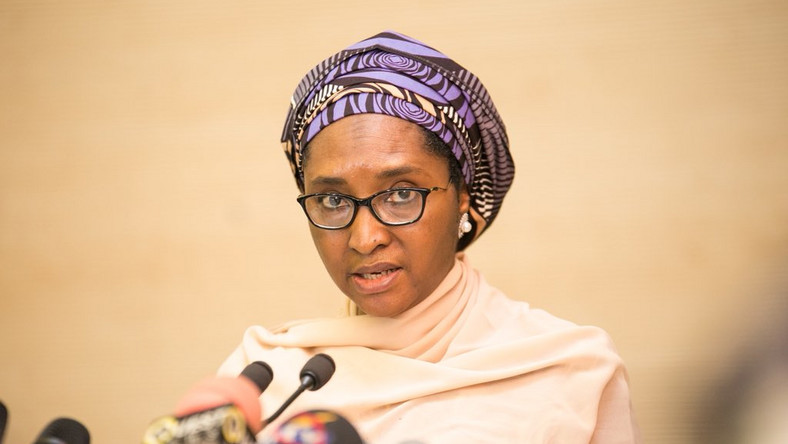
Although many Nigerians have expressed concern over the nation’s rising debt profile, the Minister of Finance, Budget and National Planning, Zainab Ahmed, said the country’s problem was not debt but revenue.

Access Bank Records Over N1bn In Daily Digital Lending

Access Bank’s expanded digital lending portfolio, which gives Nigerians quick and 24/7 access to funds for emergencies without any collateral, has hit a record N1billion daily in loan value.

According to Victor Etuokwu, Executive Director, Retail Banking, Access Bank Plc, in the past two years, the bank has disbursed over 3.5 million loans to individuals, adding that this year alone it had disbursed over N45 billion in over 2 million disbursements to individuals and have recently witnessed a spike in volumes hitting one billion naira daily.

“This achievement and our focus on retail lending reiterate our commitment to democratize access to financial services leveraging digital technology,” he said.

Chinedu Onuoha, Head Digital Banking Business Development, Access Bank, commented recently on this laudable achievement: “Our objective is to ensure that there is a digital loan product for every adult Nigerian who has proven means of livelihood because we know that every individual at one point or another requires some form of financial support. Our flagship digital loan product, PayDay Loan, is tailored to help individuals meet their urgent cash needs. Though the tenor for this loan is 30 days, we also have loans with tenors of 3 months and 6 months.”

FirstBank sponsors Kaduna polo ‘Georgian Cup’ for 100th year

First Bank of Nigeria Limited has announced its sponsorship of the Georgian Cup of the Kaduna polo tournament for the 100th year.

In a statement issued on Tuesday, the bank said the decision to continue its support of the tournament is due to its commitment to the growth and development of sports, nation building and the economy at large.

The bank said it is “possibly the longest running sports sponsorship in the world and a Guinness Book of Records potential”.

It said the 2019 edition of the sports championship runs from October 12 to 20 at the Kaduna polo club, Murtala Mohammed Square.

“The Kaduna Georgian Cup centenary Polo Tournament commenced in 1919, with FirstBank sponsoring the sports tournament for a 100 years. The Cup, which was donated by the Bank to the Kaduna Polo Club, is the oldest and most respected Polo trophy in West Africa,” the bank said.

“The 2018 edition of the tournament was won by team El-Amin, also billed to participate in the 2019 edition to defend its trophy, contested by other teams; Rubicon, Imani, Malcomines, Lintex Agad. A total of 45 teams are billed for the 2019 tournament.”

Speaking on the sponsorship, Folake Ani-Mumuney, FirstBank’s group head of marketing and corporate communications, said it is a feat the brand is proud to achieve.

“2019 is indeed an eventful year for us and one of the many high points since we were founded 125 years ago. Part of our excitement stems from the pride we feel at having supported the Georgian Cup Polo Tournament for 100 years consistently,” she said.

“We are indeed proud to achieve this feat as it reinforces our leadership role as an institution committed to the continued growth and development of sports and the economy at large. The Georgian Cup Polo Tournament is one of the many heritage sporting sponsorships supported by FirstBank over the years.

“Another example is the FirstBank 58th Lagos Amateur Golf Open tournament, in partnership with Ikoyi Club 1938 holding in November this year which we have also supported for 57 years. We dare say perhaps another record in sports sponsorship.”

Border closure pushed inflation to 11.24% – NBS

The Consumer Price Index released by the National Bureau of Statistics on Tuesday showed inflation index rose to 11.24 per cent in September, barely a month after the border closure.

The 11.24 per cent represents an increase of 0.22 per cent when compared to the 11.02 per cent recorded in August.

The prices of food items have been on a steady increase since August when the Federal Government closed Nigeria’s borders to the neighbouring countries.

The NBS report stated that increases were recorded in all the divisions that determined the index. It said the food  index  rose  by  13.51  per cent  in  September   compared to  13.17  per cent  in  August. It said the rise  in  the  food  index  was  caused  by  increases  in  prices  of  bread  and  cereals,  oils  and  fats,  meat, potatoes, yam and other tubers, fish and vegetables.

The NBS report read in part, “The  consumer  price  index,  which  measures  inflation  increased  by  11.24  per cent  year-on-year  in September 2019.

“This is 0.22 per cent points higher than the rate recorded in August 2019 (11.02) per cent.On  month-on-month  basis,  the  headline  index  increased  by  1.04  per cent  in  September  2019;  this  is  0.05 per cent rate higher than the rate recorded in August 2019 (0.99) per cent.”

In the same vein, the Lagos Chamber of Commerce and Industry noted that the border closure could have recorded a drastic reduction in smuggling of rice, and petroleum products among others. It, however, lamented that genuine businessmen who transacted legal business in the sub-region were victims of the border closure.
The LCCI who spoke through its Director-General, Muda Yusuf, in a statement noted that the government might mean well, but there were many businesses in the informal sector that had been adversely affected.

It read in part, “The closure of Nigerian land borders for close to two months now has come with benefits and costs.  There are upsides and downsides.  Reports indicate a drastic reduction in smuggling of rice, poultry products and sugar.  The smuggling of petroleum products outside the country to neighboring countries has also declined considerably.  We note and appreciate these outcomes.

“But it is important to reckon with the costs, supply chain disruptions and losses that businesses and individuals have suffered as a result of the closure.  “Corporates, large number of informal sector players and individuals doing legitimate businesses across the borders have become victims of the border closure.

“This poses a dilemma. The government means well, but there are many innocent casualties.

“As we celebrate the benefits, we should also count the costs.  Jobs have been lost; prices have skyrocketed; legitimate exports to the sub-region have been halted; intermediate products for some manufacturers have been cut off and some multinationals companies have been de-linked from their sister companies in the sub-region.”

It added that the economies of border communities had been paralysed with consequences for unemployment and poverty, stating that over 90 per cent of Nigeria’s trade with the  West African sub- region was by road.

“We export manufactured products as well as agricultural products – detergents, toothpastes, plastic products, steel products, kitchen utensils, grains, ginger, onions, among others.
“We also undertake many exports to the sub-region.  These are sources of livelihood of Nigerians doing legitimate business.  There are also thousands of transporters who make a living from these legitimate trading activities.   These are costs that would run into hundreds of billions of naira.  We must weigh the costs and benefits.”

Most often, the LCCI noted, the government failed to count the cost of government policy on the citizens and businesses.

However, President Muhammadu Buhari on Tuesday in Abuja reiterated that the border closure was an effort to support farming, fisheries and livestock sectors.

The President, represented by the Vice- Chairman of National Food Security Council and governor of Kebbi State, Abubakar Atiku Bagudu, said this during the 2nd National Unity Food Fair 2019 organised by the National Council of Women Societies in collaboration with Travel Marketing Partners (Nigeria) Limited.

The President said he was not aware of protests against the closure of the nation’s borders, adding that the decision had been embraced by farmers who were already happy over it, as demand for locally produced foods had increased.


Nigeria insists Shell, Mobil, Chevron, others should pay $62 billion ‘arrears’

The Nigerian government has vowed to recover over $62 billion it claims as arrears of profits due it from 1998 under the production sharing contracts (PSCs) between the Nigerian National Petroleum Corporation (NNPC) and its joint venture partners.

The international oil companies have taken the matter before the Federal High Court in Lagos and are denying any liability.

The six international oil companies with joint operating agreements with the NNPC include Shell Petroleum Development Company, Mobil Producing Nigeria Unlimited and Chevron Nigeria Limited.

The others are Nigeria Agip Oil Company, TotalElf Nigeria and Pan Ocean Oil Company.

Under the terms of the 1993 PSC, the NNPC and the joint venture partners would review their profits sharing formula once crude oil prices rise above $20 per barrel.

But the Attorney-General of the Federation and Minister of Justice, Abubakar Malami, said this review has not taken place since October 1998 when oil prices rose above the stated threshold.

Recently, the government decided to trigger the review and demanded huge arrears of profits. But the joint venture partners have been reluctant to pay or adjust the profit-sharing formula in their various operating agreements.

Mr Malami was unable to say exactly how much Nigeria is claiming from the oil majors but he estimated the amount in excess of $62 billion.

Claims and counter-claims

Since the claim by the Nigerian government, the six JV partners with the NNPC have filed a suit at the Federal High Court in Lagos to contest the allegations of violation of their PSCs and indebtedness.

However, Mr Malami told PREMIUM TIMES in Abuja on Saturday that the government has since filed a counter application.


“Regardless of the jurisdiction you look at, the case is about the rule of law and compliance with the prevailing laws; about rights and entitlements as they relate to the contract between the parties,” the minister said.

The six joint operating agreements

Apart from Shell, which holds 55 per cent equity in Shell/NNPC joint venture, the other five control at least 60 per cent of the interests in the shares.

In 2014, crude oil prices at the international market averaged $100 per barrel.

The minister said the IOCs told the court they were not liable to the payment because Nigeria made no formal attempt to activate the PSCs review clause after crude oil prices rose above $20 per barrel.

But Mr Malami said government filed a counterclaim that the activation was automatic.
“The concern of the IOCs is about the establishment of their respective rights. A case has been established about the right of the government to enforce its laws. If indeed there exists such a right, then the remedy must naturally follow.

“What matters is the reconciliation of the figures. The government went to court for the purpose of ascertaining the liability and the validity of the calculations of the claims,” he said.

Claim a matter of right

On the argument that government may have slept on its right by not enforcing the review of the PSCs immediately crude oil price rose above $20 per barrel, Mr Malami said it does not matter when the government decided to seek the enforcement of its laws.

He said as far as the PSC was concerned, it remained a function of law to activate the review at any time, so long as the law remained “valid, subsisting, applicable and enforceable.”

“The fact that government did not take immediate steps to demand the review and payment does not invalidate its action now to make a claim of right, provided the claim of right is rooted in law.

“As far as the Nigerian government is concerned, it is a function of law as to whether the review is automatic or not. The liability and responsibility of right are mutual and operative.

“The parties are in court to interpret if the review of the PSC was automatic, or whether the Nigerian government slept on its right by not activating the right to review the sharing formula when it became due.

“That is a function of judicial interpretation. That is why the parties are in court. The existence or otherwise of liability as far as PSC agreement is concerned is a function of law and the parties are in court to determine as a function of law,” he said.

Government not targetting foreign investors

On the timing of the claims, Mr Malami said insinuations that the government was targeting and squeezing foreign companies for funds to pull the country out of poor fiscal condition was lacking in substance.

He said apart from the IOCs, the government was still pursuing its agenda to recover looted asset from individuals and groups at home.

On the impact of the claims on investment in the country, he said the government was conscious of its obligations to promote good investment climate with regards to the prevailing laws and their enforcement.

He said despite the ongoing court action, the parties have continued to meet, engage and discuss, saying he was optimistic the engagements would eventually translate to settlement or full-blown negotiation process.

On alleged threats by the IOCs to withhold decisions on further investments in Nigeria until the matter is resolved, the Minister said the government was not worried about any backlash by way of negative business sentiment.

He said the action will instead create a win-win situation for all parties.

FIRSTBANK’S ADESOLA ADEDUNTAN JOINS OTHER GLOBAL FINANCE PRACTITIONERS AT ETHICAL FINANCE CONFERENCE, EDINBURGH

As part of the Bank’s financial inclusion and global thought leadership drive, the Chief Executive Officer, First Bank of Nigeria Limited, Dr. Adesola Adeduntan participated in the 2019 Global Leaders Interactive panel session of the 2019 Ethical Finance Conference held on 8 – 9 October 2019 at RBS Conference Centre, 175 Glasgow Road, Gogarburn, Edinburgh. The event had in attendance over 500 leading finance practitioners from all over the world.

The Bank’s CEO, Dr. Adesola Adeduntan, with other thought leaders, policy influencers and leading finance practitioners across the world deliberated on various topical issues that would help define and shape the transition of the global financial climate to a sustainable financial system where finance delivers positive change.

Dr. Adesola Adeduntan, along with Sarah Breeden, Bank of England; Dame Susan Rice, Banking Standards Board; Gary Gillespie, Chief Economist, Scottish Government spoke on the topic “Financing Sustainability: Designing for A Future on Earth” in the first panel session held on 8 October 2019.

Speaking on his participation at the event, Dr. Adeduntan said; “FirstBank is committed to exploring innovative opportunities that drive financial inclusion in Nigeria whilst harnessing widespread mobile-phone coverage to create low-price banking offerings across groundbreaking distribution channels, especially for the unbanked.”

“Our participation in the 2019 Ethical Finance Conference is a platform we are honoured to be in as shared knowledge with other global thought leaders and policy influencers is pivotal to promote inclusive growth in the global financial ecosystem, whilst contributing to economic growth, development and importantly, reducing poverty,” he concluded.

UBA Promises to Put Customers’ Needs First as it Holds 2019 Forum in Lagos

The pan African Financial Services Institution, United Bank for Africa(UBA) has again reiterated its commitment to surpass the expectations of its customers through the provision of products and services that meet their needs. The Bank made this promise at a special Customer Forum to mark the 2019 edition of the Customer’s Service Week.

The forum which was held at the bank’s Head Office, in Lagos, was very interactive and presented an opportunity for the management, staff and customers to share ideas on how to improve customer-satisfaction, in line with the bank’s Customer First Philosophy.

UBA’s Group Executive, Customer Fulfilment Centre, Mr Anant Rao, who welcomed customers to the forum, explained that the bank has deliberately re-focused and re-engineered its activities to put the customers first, adding that it has been leveraging on a three-prong lever of People, Process and Technology, in a bid to ensure maximum satisfaction to the customers, without whom the bank will not exist.

He said, “The singular mission of our consistent and superior customer experience has been imbibed into the DNA of each and every staff of the bank. In this way, there is no gainsaying that Service has been institutionalized at UBA. The mantra of our Customers being our employers has been ingrained into the psyche of each and every staff.”

l-r:  Group Head, Online Banking, United Bank for Africa(UBA) Plc, Mr. Austin Abolusoro; Regional Head, Lagos Bank, UBA Plc, Mrs Pamela Shodipo; Customer, High Chief  Goddy Ulasi; Technical Adviser, Consumer & Retail Banking, Mr Babatunde Ajayi; Group Executive, Transformation and Resources, UBA Plc, Mr Chiugo Ndubuisi; Group Executive, Customer Fulfilment Centre, UBA Plc, and Group Head, Marketing, Mrs Dupe Olusola, at the special UBA Customer Forum held to commemorate The CUSTOMER Service Week in Lagos on Wednesday

 Also speaking, the Group Head, Marketing, Mrs Dupe Olusola, said the bank has tailored a lot of products to assist customers to thrive in their various fields, adding that there was a lot of focus on small and medium scale enterprises which are growth drivers of any growing economy.

She said, “At UBA, we are constantly thinking about you, creating personalized products you need to achieve your goals. Right from the kids, children, young adults, students to the mass retail market; SMEs; creative industry; agricultural; UBA has something for everyone, and we are here at your service all the time.”

Some of the customers who were at the event, commended the bank for the services it rendered to them, and also pointed out areas of improvement and expectation, adding that this will lead to beneficial interests to both parties.

l-r: UBA Customers, Mr Adegbola Abiodun and Mrs Adebanke Adegbola; Regional Head, Lagos Bank, UBA Plc, Mrs Pamela Shodipo; UBA Customer, Mrs Adepele Amure; Group Executive, Transformation and Resources, UBA Plc, Mr Chiugo Ndubuisi; UBA Customer, High Chief  Goddy Ulasi; Group Head, Marketing, Mrs Dupe Olusola; Regional Head, Lagos Bank, Ms Emem Usoro;  at the special UBA Customer Forum held to commemorate 2019 Customer Service Week in Lagos on Wednesday

A customer of the bank, High Chief Goddy Ulasi, who has banked with UBA for over 15 years, commended the bank for helping him and his business grow over the years and called on the bank to make rates more competitive to ensure that customers and businesses also benefit even more from the bank.

In response, the Group Head, Transaction and Electronic Banking, Mr. Sampson Aneke, said the customers remain the key focus of the bank, adding that the bank is in discussions with the key agents to ensure ease of transactions.

Earlier, UBA’s Group Managing Director/Chief Executive Officer, Mr. Kennedy Uzoka, who wrote a statement on the significance of continuous excellent service delivery to customers, appreciated the staff who have worked tirelessly to satisfy customers, and urged them not to rest on their oars.
“Let’s strive to put the magical touch in everything we do to create a symbolic service experience for our ‘Employer’ – the Customer!”, Uzoka said.

The theme for this year’s celebrations, “Magic Happens Here”, embodies all that the bank represents as encompassed in its Core Values – the 3EEEs: Excellence, Enterprise and Execution.

The United Bank for Africa, Africa’s global bank, was founded 70 years ago in Nigeria and today, operates in 20 African countries and in the United Kingdom, the USA and with presence in France. UBA serves over 17 million customers across the globe with more than 1000 branches and touch points. In 2018, the bank received the award of Africa’s Best Digital Bank by the Banker’s magazine
l-r: Group Head, Online Banking, United Bank for Africa(UBA) Plc, Mr. Austin Abolusoro; Regional Head, Lagos Bank, UBA Plc, Mrs Pamela Shodipo; Technical Adviser, Consumer & Retail Banking, Mr Babatunde Ajayi; Group Executive, Transformation and Resources, UBA Plc, Mr Chiugo Ndubuisi;  Customer, High Chief  Goddy Ulasi; Group Executive, Customer Fulfilment Centre, UBA Plc, Mr Anant Rao;  Group Head, Marketing, Mrs Dupe Olusola; Customer, Mr Adegbola Abiodun; and  Group Head, Transaction & Electronic Banking, UBA Plc, Aneke Sampson, during  the UBA Customer Forum held to commemorate 2019 Customer Service Week in Lagos on Wednesday
Exit mobile version