Tukur Buratai Research Centre Expands To Nasawara State
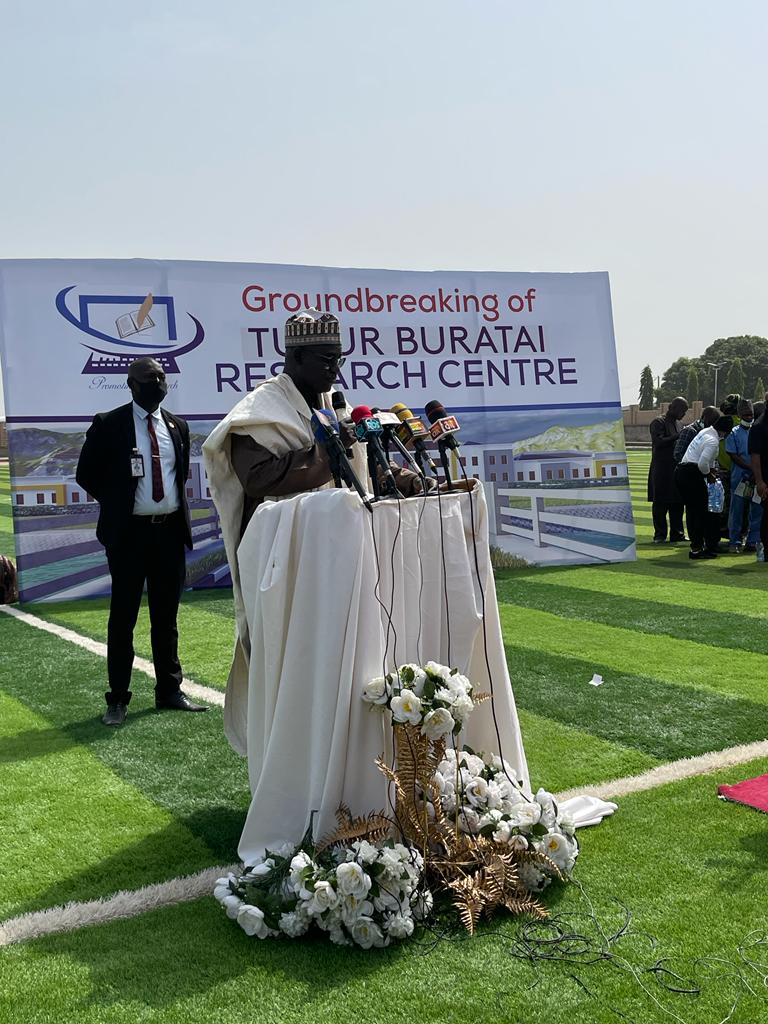
Governor Abdullahi Sule of Nasarawa State, the Chief of Defence Staff, General Lucky Irabor, Alhaji Abdul Samad Isyaku Rabiu, Chairman, Bua group and other dignitaries, on Saturday, December 18, witnessed the laying of the foundation for Tukur Buratai Research Centre, Gora, Nasarawa State.
The foundation laying ceremony and fundraising for the Tukur Buratai Institute of Security and Strategic Studies & Peace and Conflict Resolution happened at the Tukur and Tukur Snakes Farm at Uke, Nasarawa State.
This is contained in a statement signed by Brigadier General Sani Kukasheka Usman, Ret’d and made available to newsmen.
According to the statement, governor Sule laid the foundation for the multi-million Naira Tukur Yusuf Buratai Research Centre, TBRC, and this has partly addressed the quest for modern and sustainable security research centres in the country.
In his speech, the Comrade Vice Chancellor of Nasarawa State University, Keffi, Professor Suleiman Bala Mohammed, noted that NSUK is accredited as one of the fastest-growing state universities in the country.
He added that the event marked a new stride in the trajectory of NSUK, apart from the introduction of the Faculty of Engineering and College of Medical Sciences.
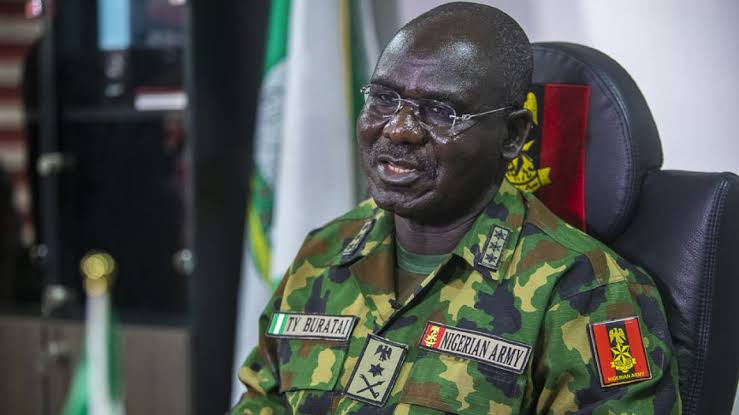
The former Chief of Army Staff and Ambassador, Lt. General Tukur Buratai who was the host of the occasion remarked that the institute will further chart a new course for resolving security issues that confront the country at large.
The event had in attendance the Executive Governor of Nasarawa state, Abdullahi A Sule, the Chief of Defence Staff, Chief of Air Staff, Distinguished Senators Ali Ndume and Abdullahi Adamu, chairman of BUA Group, Emir of Keffi, HRH Dr. Shehu Chindo Yamusa III who was the royal father of the day, other royal and titleholders within and outside the state and other well-wishers.
The event also witnessed the presentation of award plaques to the guests and pledges and transfers, which amounted to N220,950,000 from well-wishers, guests and highly respected dignitaries who assembled at the venue.
It would be understating the fact that Nigerian troops never recorded greater successes against Boko Haram than they did under the leadership of the immediate past Chief of Army Staff, Lt. Gen. Tukur Yusuf Buratai (rtd). Buratai, it is on record, did put in all efforts to ensure his troops were motivated with different welfare packages initiated by him for their comfort.
Prior to his appointment as the Chief of Army Staff by President Muhammadu Buhari, the military was losing its officers and men in large numbers. Thus, Buratai’s focus was to improve on the military’s operational achievements. He made a success of it and the result was the unprecedented successes in the counterinsurgency operation he is being credited for even after he exited office.
Within three months of his appointment, Buratai demonstrated his leadership capability by showing that he indeed understood the terrain of the North East, the epicenter of the insurgency. He took the war to Boko Haram and his soldiers recaptured and hoisted the Nigerian flag in Gamboru Ngala, which served as Boko Haram’s main operational base. The insurgents were chased to their Sambisa Forest hideout where troops of the Operation Lafia Dole proudly displayed vital insignias of the sect including a Holy Quran and flags of the sect’s leader, Abubakar Shekau, on national television to the admiration of Nigerians.
Improving the welfare of the army was vital in his agenda. His major policy therefore was directly for the benefit of the troops. He ensured that they were in right frame of mind in their duty. Buratai would go to any length to see and meet the troops’ needs at every point in time. Under his leadership, priority was given to the equipment used by the military to combat the insurgents, among other steps taking by him. The allowances and bonuses of the military were paid as at when due.
His concentration was centered on identifying the most pressing problems that troops and their families were facing, the needs associated with those challenges, and he utilized the resources available to meet those needs. It was also to his credit that the fighting troops were provided with constant water supply to meet their daily needs and to stabilize them emotionally and psychologically. As part of efforts to encourage his men, General Buratai on Tuesday July 25, 2017 approved the promotion of 6,199 soldiers involved in the fight against Boko Haram under his watch.
In the basic responsibilities of a leader which include accomplishment of the mission and the welfare of the soldiers, Buratai was not found wanting. He established Nigerian Army Farms and Ranches, built and commissioned block of flats at Jaji, Khobe Cantonment, Jos in Plateau State and the Danjuma Chalets at 2 Division Headquarters. The former Army chief also renovated a lot of projects he met on ground and initiated water projects including the Supply and Transport Foods and new Command Guest Houses.
Buratai’s contributions to national, regional and international peace have not gone unnoticed here at home and abroad, which, obviously, led to his being appointed a non-career ambassador after a successful military career.
In terms of projects, capacity building, training and welfare, throughout Buratai’s tenure as COAS, there was never a dull moment.
It is on record that Buratai’s leadership style did inspire the fighting soldiers, a record-breaking template his successors would also find suitable to utilize. When he became the Nigerian army chief, he made it a duty to identify with his officers and men as they launched a full-scale war against the Boko Haram fighters.
He initiated a range of activities in support of developing the force, via intensive training, mentoring, partnering, monitoring and empowering. His enabling efforts in that regards include setting up the Nigerian Army Institute of Technology and Environmental Studies in Biu, Borno State; Command Secondary School (Boys & Girls) in Kebbi State; Nigerian Army Aviation hangar at Jaji Airstrip, Kaduna; Mine Resistance Amour Protected (MRAP); Activation of Divisions Training Schools; establishing Tinapa Post Housing Development Limited Estate, Calabar; Army Warrant Officers Board; the Nigerian Army Special Forces School; First Nigerian Army indigenous infantry patrol vehicle; Nigerian Army Cyber Warfare Command and the Nigerian Army Vehicle Manufacturing Company.
Other capacity building projects Buratai initiated are; the Supply and Transport Driving School; Nigerian Army Women’s Corps; Nigerian Army Officers’ Wives Association Hospital; Unmanned Aerial Vehicle Command; 20 Regimentation Battalion; 133 Special Forces Battalion; 123 Special Forces Battalion; Counter Terrorist and Counter Insurgency Museum; 109 Special Forces Battalion; 4 Special Forces Battalion, Counter Explosive Devices; 707 Special Forces Brigade; Motorcycle Battalion; Nigerian Army Agricultural Business Enterprise Limited; Army War College, Nigeria; Nigerian Army Bureau De Change; Nigerian Army Investments Account; Operation Lafia Dole Sectors 1,2 and 3; Homes Fit for Heroes; Otukpo Post Housing Development Limited Estate; Buffalo Engineering and Technical Services Limited, evolution of new operational concepts, establishment of 6 and 8 Divisions, Nigerian Languages Training Initiative, and many more.
Inspiring and effectively leading subordinates, especially through a military mission with life or death implications, is no small feat. It requires leadership, one that extends well beyond the battlefield.
Evidently, for years to come, history will remember General Yusuf Buratai, particularly, in areas critically important to Nigerian Army.