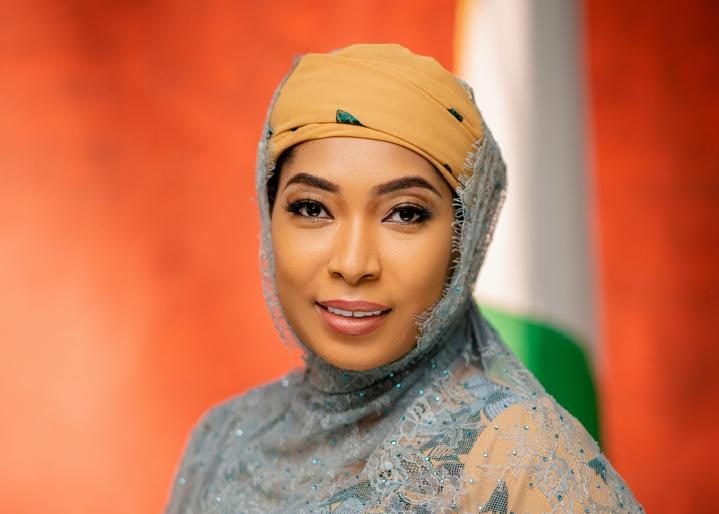
The Nigerian Education Loan Fund has approved a final reopening for a period of hours to enable tertiary institutions yet to complete their student verification exercise to do so.
This is contained in a statement made available to newsmen in Abuja on Friday by Director, Strategic Communications of the Fund, Oseyemi Oluwatuyi.
Oluwatuyi said the portal would be accessible from 12:00 a.m. on Sunday, Oct. 12, to 12:00 a.m. on Tuesday, Oct. 14.
The extension, she said was intended to ensure that all eligible students were duly captured and verified by their respective institutions as part of the ongoing 2024/2025 NELFUND loan application process.
“Institutions are strongly advised to make full use of this final opportunity.
“Failure to complete the verification process within the stipulated period will result in the affected institutions forfeiting participation in the current loan cycle.
“A situation that will regrettably disadvantage their students who are the ultimate beneficiaries of the loan scheme,” she said.
She added that in the interest of transparency and accountability, the list of defaulting institutions would be published.
Oluwatuyi reiterated the Fund’s commitment to fostering equitable access to higher education through the efficient, transparent, and inclusive management of the scheme.
A paediatrician, Ayobola Adebowale, known as Your Baby Doctor, has explained that some newborn girls may experience light bleeding shortly after birth, a condition medically known as pseudo menstruation or neonatal menstruation.
Adebowale in a video obtained by our correspondent on Saturday said the condition occurs due to hormonal changes after delivery and is usually harmless.
She said,”Your newborn baby can actually menstruate and this is what we call pseudo menstruation or neonatal menstruation, and it occurs because your baby inside your womb was exposed to a lot of your hormones.
“When you bring them out suddenly at time of delivery, they have what we call withdrawal bleeding, which is basically menstruation, and this happens in newborn babies and it’s essentially normal.”
Adebowale advised parents not to panic when they observe such discharge in their baby girls.
“You have no reason to be scared. You have nothing to be worried about. Just observe the discharge and after a few days it will resolve by itself.
“You really don’t have to do anything and you have no reason to be worried and that child is not a witch,” she said.
She, however, added that if the bleeding persists, parents should consult a doctor for a proper check-up.
According to medical research, some newborn girls experience what’s called “neonatal menstruation” or “pseudomenstruation.”
It usually occurs within the first week after birth and is caused by a sudden drop in the mother’s oestrogen levels after delivery.
While the baby is still in the womb, she is exposed to high levels of maternal hormones.
After birth, those hormones quickly fall, and the baby’s uterus may respond by shedding a small amount of blood or mucus, just like a mini period.
Doctors advise parents to seek medical attention if the bleeding is heavy, lasts more than a few days, or occurs after the first week of life, as it could signal an infection or another medical issue.
Nigeria’s hopes of reaching the 2026 FIFA World Cup remain alive after a narrow 2-1 victory over Lesotho on Friday, but the Super Eagles face a challenging path to qualification.
Nigeria sit third in Group C with 14 points despite their win. South Africa are second with 15 points after drawing with Zimbabwe, while Benin Republic lead the group with 17 points.
The race for automatic qualification now goes down to the last group matches.
To keep their 2026 World Cup dream alive, Nigeria must beat Benin Republic by at least two goals when they meet in their final group game on 14 October. This is because Benin Republic leads on goal difference with five goals, while Nigeria and South Africa are both on three goals.
A strong win is essential, as goal difference could decide the group winner.
The Super Eagles will also need some help. South Africa must either lose or draw against Rwanda in their last match. If South Africa wins, Nigeria’s chances of qualifying automatically would be very slim.
Only the group winners secure direct qualification to the World Cup, while the four best runners-up go to the play-offs. This means every goal and point is now crucial.
The Super Eagles moved a step closer to 2026 FIFA World Cup qualification after edging Lesotho 2-1 on Friday in a match that could prove decisive for Nigeria’s campaign.
Troost Ekong gave Nigeria the perfect start in the 55th minute by converting a penalty following a handball in the Lesotho box, sending the home fans into jubilation.
Akor Adams later doubled the advantage with a clinical finish in the 80th minute, seemingly putting Nigeria in control. Lesotho responded in the 83rd minute with a goal from Kalake, but the Eagles held firm to secure the crucial three points.
However, Benin Republic scored in their own match, meaning Nigeria remain behind on points and goal difference in Group C. With only one game remaining in the group, the Eagles’ fate is not entirely in their hands.
With Nigeria on 14 points and Benin now leading the group with 17 points, the Eagles still have several pathways to automatic qualification:
The first pathway is to win the final match against Benin Republic. A victory is essential for the team to stay in contention.
The second pathway is for the Super Eagles to hope for a slip-up. Benin Republic and South Africa must drop points in their last fixtures.
The third pathway is to improve the goal difference. Nigeria trail Benin and South Africa, so scoring more goals and keeping a clean sheet could be decisive if teams finish level on points.
A final-day showdown could also be crucial. A strong performance in the last round could see Nigeria overtake the leaders, Benin Republic and secure the top spot.
For Lesotho, the defeat is a harsh blow, effectively ending their hopes of qualifying from the group. With nine points from five matches, they now need an almost impossible combination of results to stay in contention.
An Oyo State High Court 5 sitting in Ibadan, again, on Friday, extended ruling on applications filed by the United Bank for Africa Plc and other defendants in the suit instituted by the Attorney General of Osun State and one other person as claimants, till next Tuesday.
The applications before the court include one filed by UBA seeking an adjournment sine die (indefinitely) and another challenging the court’s jurisdiction, filed by counsel to the sacked All Progressive Congress Local Government Chairmen by the Senior Advocate of Nigeria, Kazeem Gbadamosi.
Some other parties, including the sacked APC Chairmen and the PDP, also filed applications seeking to be joined in the suit.
PUNCH Online reports that Court 5, presided over by Justice Ladiran Akintola, had, on Thursday, fixed Friday for the hearing of the case.
The UBA, while seeking the case to be adjourned indefinitely, said the local government funds in contention were still in its safe custody and untouched by any party.
Presiding Judge, Akintola, said the ruling date was set after due consultations with all parties to allow sufficient time for a well-considered ruling on the various applications.
He, therefore, extended order of Interim Injunction against UBA Plc till Tuesday, October 14, maintaining a no-debit restriction on 30 bank accounts into which withheld Osun State Local Government allocations were paid by the Central Bank of Nigeria.
During Friday’s proceedings, counsel to UBA, Mutalib Ojo, SAN, reminded the court of his earlier application that the matter be adjourned sine die pending the judgment of the Supreme Court on a related case.
Ojo explained that the substantive dispute had already been heard by the Supreme Court, which has reserved judgment, saying any ruling by the lower court might conflict with the apex court’s eventual decision.
“If this High Court proceeds to hear the suit, there is a 50-50 chance that whatever decision it makes may conflict with the outcome of the Supreme Court. The issue here concerns the hierarchy of courts. Proceeding further may amount to a waste of judicial time since the Supreme Court’s decision will ultimately prevail.”
He, therefore, advised the court to adjourn the matter indefinitely, assuring that the funds in question were still in the safe custody of UBA and untouched by any party.
However, counsel to the sacked APC chairmen, Gbadamosi, SAN, opposed the application, urging the court not to grant it until the issue of jurisdiction had been addressed. He described the bank’s application as “an anomaly” that should not be entertained.
“From the defendants’ originating summons, it is clear that there is a pending suit before the Supreme Court upon which this current case and its reliefs are predicated. This present suit was filed subsequently after the Supreme Court case was instituted. That in itself constitutes an abuse of court process which this court must not condone.”
In his response, counsel to the plaintiffs, Musibau Adetunmbi, SAN, countered the submission, explaining that his clients approached the court only after discovering that Federal agencies, including the CBN and the Accountant General of the Federation, had transferred the disputed funds to UBA despite the pending case at the Supreme Court.
“If the money had not been moved from the CBN, we would not have come before this court. The Supreme Court does not have original jurisdiction over UBA, but this High Court does, hence our action.”
Akintola, who retired briefly to his chambers after hearing extensive arguments and counterarguments from all counsels, then adjourned the case for ruling till Tuesday, October 14, 2025.
On October 7, a seven-member panel of the Supreme Court of Nigeria had reserved judgment in a suit seeking to urge the Attorney General of the Federation to release Osun State’s withheld local government funds, which he had already allegedly directed to be paid to the disputed local government chairmen elected on the platform of the All Progressives Congress.
The panel, which was presided over by Justice Uwani Aba’aji, reserved judgment after hearing arguments from Osun State’s Attorney General, represented by Musbau Adetumbi (SAN), and the Attorney General of the Federation’s counsel, Chief Akin Olujimi (SAN), in the suit numbered SC/CV/773/2025.
Justice Uwani Aba’aji said, “Date for judgment in the suit will be communicated to parties.”
The Nigerian Supreme Council for Islamic Affairs has called on the Federal Government to take a firmer stance against what it described as false and misleading claims of religious persecution in Nigeria, urging authorities to identify and address the sources of such narratives.
In a statement signed by its Deputy National Legal Adviser, Imam Haroun Muhammad Eze on Friday, the Council said it had observed “the avalanche of refutations by many agencies of the Federal Government of Nigeria, well-meaning Nigerians across religious divides and the National Assembly of the recent false allegation circulating on some international platforms and the social media that there is a systematic genocidal campaign against Christians in Nigeria.”
The NSCIA commended the Federal Government and other stakeholders who had publicly rejected the claims but expressed concern that their responses did not go far enough.
It said, “Council wondered why the government could not, at least for once, go the whole hog by calling a spade a spade, by speaking the whole truth.”
The Council maintained that insecurity in Nigeria affects citizens of all faiths and should not be portrayed as targeted at any single group.
It cited the US State Department’s 2023 Report on International Religious Freedom, noting that “terrorists, bandits and armed criminal groups target mosques and churches indiscriminately in Nigeria.”
The statement added, “In the first half of 2025 alone, terrorists and bandits are reported to have killed at least 2,266 civilians across Northern Nigeria, where Muslims are predominant, leaving over 2 million people displaced and over 7.8 million others in need of urgent aid.”
It also referenced findings by the US Commission on International Religious Freedom 2025 Annual Report, which acknowledged that both Muslims and Christians had been victims of attacks, stressing that the situation “does not take any pattern.”
The council said its decision to remain restrained in the face of allegations and misrepresentations was motivated by its commitment to national unity.
“Council wishes to place on record that its decision to be quiet in the face of all the attacks, innuendos and insults being hurled at Muslims in this country is as a result of the necessity of protecting the corporate existence of this nation,” it stated.
The NSCIA also referred to a comment by the Director of National Issues and Social Welfare of the Christian Association of Nigeria, who observed that insecurity affects all Nigerians, saying: “If they open fire in a marketplace, the bullets don’t look for a Christian or spare a Muslim or even spare a baby.”
Expressing concern about policies it believes could deepen divisions, the Council drew attention to a recent circular by the National Insurance Commission restricting co-insurance between conventional insurers and Takaful operators.
It stated, “This circular of exclusivity, which clearly violates the Nigerian Insurance Industry Reform Act (NIIRA 2025), is intended to further create a divide between the Muslims and the non-Muslims in the country.”
Reaffirming its commitment to peace and coexistence, the council said, “Council strongly believes in one and indivisible Nigeria, and it shall continue to work to preserve this ideal even in the face of the greatest provocation.”
It urged the Federal Government to strengthen public communication and ensure that misinformation capable of fuelling religious tension is swiftly addressed through accurate, evidence-based engagement.
The NSCIA’s statement comes amid growing international attention on religious freedom in Nigeria. Western advocacy groups and international media outlets have accused Nigerian authorities of failing to protect Christians from attacks, allegations which the Federal Government and local religious leaders have repeatedly dismissed as exaggerated and politically motivated.
In September, US Senator Ted Cruz introduced S.2747 — the Nigeria Religious Freedom Accountability Act of 2025, a proposed law seeking to compel the US Secretary of State to list Nigeria as a Country of Particular Concern for alleged breaches of religious freedom and to impose sanctions on certain Nigerian officials.
The bill builds on long-standing recommendations from the US Commission on International Religious Freedom, which has consistently urged Washington to apply the CPC designation to Nigeria, citing what it describes as federal and state-level shortcomings in safeguarding religious minorities.
In a plenary debate on Thursday, Senate President Godswill Akpabio warned against the framing of Nigeria’s security challenges in strictly religious terms, cautioning that doing so could distort the reality on the ground and deepen sectarian tension. https://punchng.com/akpabio-warns-against-framing-insecurity-along-religious-lines/
He urged that foreign narratives—particularly from Western media and legislators—should not be allowed to define Nigeria’s security discourse.
Akpabio insisted that terrorists and bandits do not discriminate by faith when launching attacks.
He emphasized that attacks in states like Borno, Kaduna, Benue, and elsewhere have victimized both Christians and Muslims alike, and thus must be approached as national security issues, not religious conflicts.
Dangote Petroleum Refinery has dismissed reports claiming it imported finished petrol with high sulphur content into Nigeria, describing the allegations as false and misleading.
An online publication, Sahara Reporters, had alleged that the refinery was bringing in high-sulphur petrol from the United Kingdom aboard the vessel MT Clearocean Mary, which it said was scheduled to arrive at the refinery’s offshore facility on October 9, carrying about 37,000 metric tonnes of petrol with a sulphur content of 690 parts per million.
But in a statement on Friday, the refinery clarified that the shipment in question was not finished petrol but an intermediate feedstock, a material used in refining processes to produce high-quality fuels.
“The cargo in question is an intermediate feedstock, not finished petrol.
“The feedstock will be fully refined in our processing units to meet both Nigerian and international quality standards,” the statement read.
The refinery, located within a Free Trade Zone, added that it produces and sells only fuels that comply with all regulatory standards, noting that its exports go to the United States and Europe.
The refinery further noted that all imported feedstocks are accompanied by quality certificates, which are transparently shared with regulators.
“We are also willing to make these documents available to the public in the interest of full transparency and accountability,” the statement added.
The company reaffirmed its commitment to advancing Nigeria’s energy independence, maintaining global best practices, and delivering cleaner, high-quality fuels for both domestic and international markets.
The All Progressives Congress has announced that Enugu State Governor, Peter Mbah, will officially defect from the Peoples Democratic Party to the ruling party on Tuesday, October 14, 2025, in Enugu.
Speaking to journalists after his swearing-in at the APC National Secretariat on Friday, the Enugu APC Caretaker Chairman, Dr Ben Nwoye, said Mbah would join the ruling party with several lawmakers and key leaders across the state.
The APC National Chairman, Prof. Nentawe Yilwatda, and the Deputy National Chairman (South), Emma Eneukwu, while inaugurating a seven-member caretaker committee for the party in Enugu, revealed that efforts were underway to strengthen the APC’s presence and influence in the South-East.
PUNCH Online recalls that the APC, on Wednesday, dissolved the Enugu State Executive Committee to pave the way for Governor Mbah’s defection to the ruling party.
Nwoye stated: “For the past 10 years, Enugu State has remained in opposition. But all that will change on Tuesday, the 14th of October, 2025, when the governor will be declaring for the APC.
“And the governor is not coming alone. The governor is coming in with 260 ward councillors. They will be declaring with the governor. He will be coming in with the 24 members of the House of Assembly. He will be coming in with members of the National Assembly. He will also be coming with the entire Exco.”
Earlier, Yilwatda informed members of the caretaker committee that he was aware they would need to rebuild the party in the state.
The APC National Chairman stated: “We know the challenges that we’re in, the need to rebuild the party, to keep the party, to refocus the party, to ensure that the party expands — expansion in terms of membership.
“We want to see the number of people that we have in the APC increase under your leadership, without forgetting the members that we already have in the APC. You can’t throw away what you have because you want to go and get what you don’t have. We must maintain our members — those who have laboured, who have suffered, who have built the party, who have sustained it. We are the building blocks of the party. We must be sustained, we must be kept, we must be nurtured, we must be honoured. That’s what keeps this party together.
“Secondly, the APC is a home to all. The person who came yesterday, the person that came today, the person that will come tomorrow, and the person that will come next tomorrow will all have equal rights and equal access, based on our Constitution.”
The chairman stated that as the 2027 elections approach, the ruling party is determined to achieve an overwhelming victory.
“The NWC has to follow due process in dissolving the state working committee. Ensure that all legal processes are followed.
“I don’t expect that you will go and form yourself into a group that will work based on personal interests or personal dislike for anyone. The fact that you are in an office means even your enemies must become your friends. You must treat your friends and your enemies equally. You must hold that office because you took an oath, and that oath specifies what you are supposed to do as a leader in the party. That is important for us. That is important for the party.”
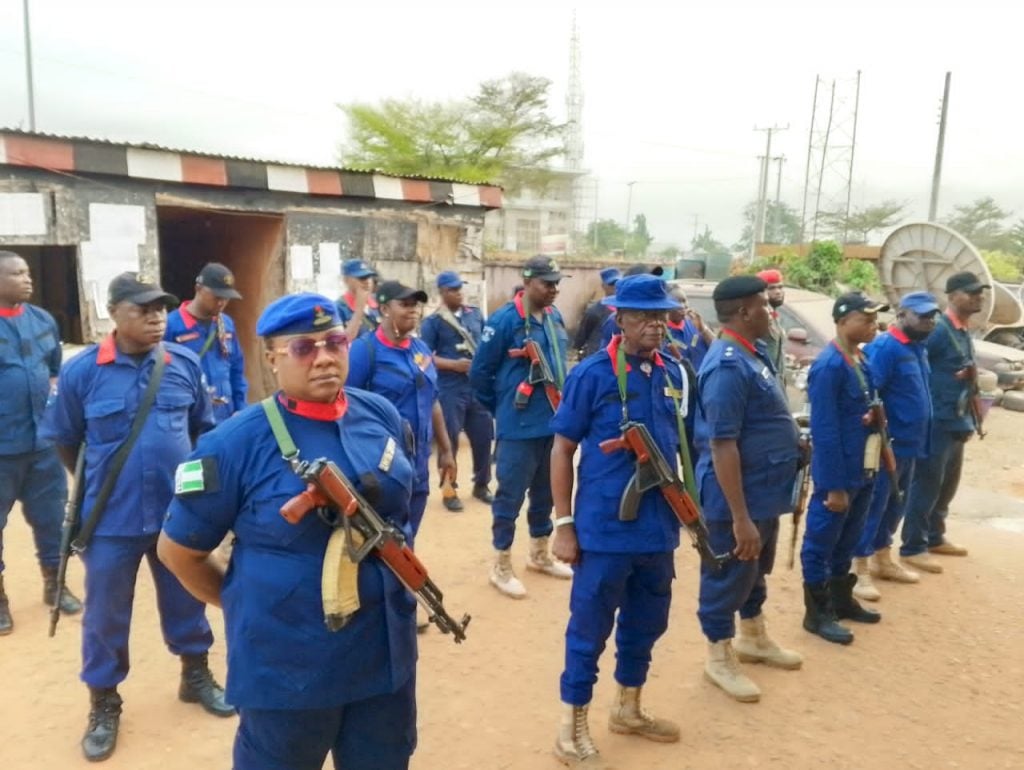
The Nigeria Security and Civil Defence Corps, Kano State Command, on Friday, handed over an Indian Hemp dealer with two other suspects to the officials of the National Drug Law Enforcement Agency in Kano.
The suspects were arrested in Doguwa Local Government Area of the State.
The NSCDC State Commandant, Bala Bodinga, stated this while addressing newsmen at the headquarters of the command shortly after handing over the suspects.
He said the suspects were apprehended on Tuesday, October 7, 2025, at Riruwai gate by the operatives of the corps in Doguwa division following a tip-off.
“You are invited here today to brief you on the recent milestone achieved by the Corps in its persistent efforts to rid Kano of criminally minded elements.
“On Tuesday, October 7, 2025, at about 02030hrs, operatives of the NSCDC, Doguwa division acting on credible intelligence, intercepted on a motorbike and apprehended a notorious Indian Hemp (Wiwi) dealer, Yusuf Alasan, 25 years.
“The suspect, a resident of Doguwa town, was arrested along with two other adults, Muktar Musa and Musa Sani, carrying three sacks (sugar size sacks) filled with marijuana, transporting it from Doguwa town to Kafau, Doguwa local government area of Kano State,” he said.
Bodinga said preliminary investigations have been concluded by the corps, and in the spirit of synergy and collaboration, “we are handing over the suspected drug dealer, as well as the other two suspects, along with the exhibits to the NDLEA, Kano State command for further investigations and necessary legal action.
He reiterated the commitment of the command to continue to collaborate with all the sister security agencies in the state to decimate the evil intentions of criminals wherever they might be in Kano state.
On August 6, 2025, operatives of the Nigeria Security and Civil Defence Corps, Kano State Command, arrested two suspected criminals found to be involved in drug dealing and burglary in Kano.
The arrest was confirmed in a statement by the command’s Public Relations Officer, Ibrahim Abdullahi.
“The NSCDC operatives have recorded another breakthrough in the fight against crime, following the arrest of two suspected criminals in separate operations,” he said.
The Special Assistant to the Kaduna State Governor on School Feeding Programme, Dr Fauziya Buhari-Ado, says the scheme has continued to empower women employed as cooks and supports local farmers.
She also called for stronger humanitarian leadership and strategic partnerships to combat hunger and promote sustainable economic transformation across Africa.
Dr. Fauziya, who made the call while receiving the 2025 4th Humanitarian Bootcamp Award in Nairobi, Kenya, according to a statement she personally signed and released on Friday morning.
In her presentation, titled “Feeding the Future: Leveraging Humanitarian Leadership to Achieve Food Security and Economic Transformation in Africa,” Dr. Buhari-Ado expressed profound appreciation to Governor Uba Sani of Kaduna State, for his vision, trust, and leadership in championing the Kaduna State School Feeding Programme, a flagship social intervention that provides daily meals to thousands of schoolchildren across the state.
“Governor Uba Sani’s confidence in my capacity to serve has made it possible to impact the lives of children across Kaduna State,” she stated. “Under his leadership, the School Feeding Programme has become a model of inclusive development — improving nutrition, boosting school attendance, empowering women, and supporting local farmers.”
She described the initiative as a holistic approach that strengthens multiple sectors of the economy, noting that every meal served goes beyond nourishment to symbolise hope, care, and opportunity for the next generation.
“Each meal we provide is not just food; it is a bridge to learning, a shield against poverty, and a promise that we see these children, we care for them, and we will not abandon them,” Dr. Buhari-Ado said. “Feeding our children is not charity — it is nation-building.”
She further stressed that food security must be viewed as a strategic pillar of Africa’s social and economic development, adding that eradicating hunger is essential to ensuring stability, productivity, and peace across the continent.
Dr. Buhari-Ado also paid tribute to outstanding women leaders who have played pivotal roles in advancing humanitarian and leadership development across Africa. She commended Dr. Martina Nentawe Yilwatda, Patron of the Women’s Leadership Network, for her foresight and mentorship, and Mrs. Deborah Hornecker, the Network’s founder, for her resilience and commitment to women’s empowerment.
“The Women’s Leadership Network represents a powerful platform for collaboration and transformation,” she noted. “It brings together professional women from diverse sectors to drive inclusion, social impact, and leadership development across communities.”
In her closing remarks, Dr. Buhari-Ado urged governments, development partners, civil society organizations, and the private sector to work collectively to end hunger in Africa.
“When the day comes that no African child — and no African adult — goes to bed hungry, we will know that we have truly fed the future — not through power, but through humanity, compassion, and love,” she concluded.
The school feeding programme in Kaduna state is funded annually with over N4bn, according to data by the state government.
The state also noted that it feeds over 730,000 pupils and has over 7,000 cooks employed to prepare meals in a total of 3,400 schools.
The scheme aims to increase enrollment, support the local economy, and improve the nutrition of pupils.
Similarly, on October 3, 2025, President Bola Tinubu reaffirmed his administration’s commitment to reducing child malnutrition and improving school enrolment through the Renewed Hope Mo’Feed Project, a school feeding and empowerment initiative designed to reach over 600,000 vulnerable Nigerians across the six geopolitical zones.
The Senior Special Assistant to the President on School Feeding, Dr. Yetunde Adeniji, who represented the President, said this at the official launch of the project in Lagos.
She said the initiative aligns with the Renewed Hope Agenda by tackling food insecurity, poverty, and gaps in education.









![[ICYMI] WCQ: Super Eagles revive World Cup hopes with 2-1 win over Lesotho](https://www.societygazetteng.com/wp-content/uploads/2025/10/SUPER-EAGLES-1024x585-1.jpg)