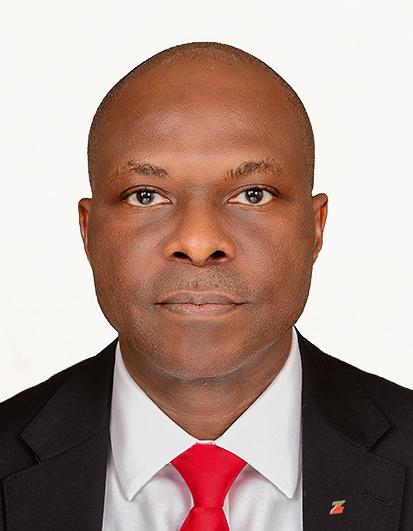
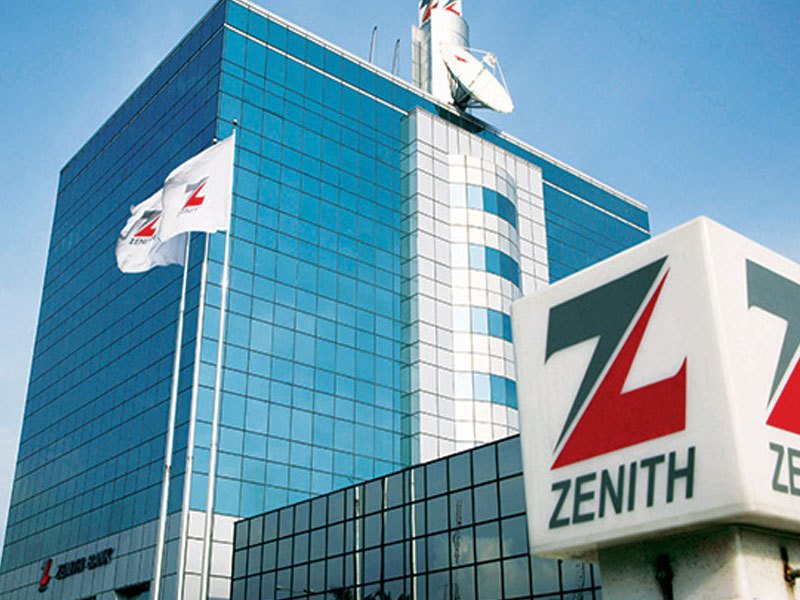
ZENITH BANK ANNOUNCES THE APPOINTMENT OF KENNEDY OKWUDILI AS EXECUTIVE DIRECTOR
Zenith Bank Plc has announced the appointment of Mr. Kennedy Onuwa Okwudili as an Executive Director of the bank effective May 1, 2026. The appointment, which is consistent with the bank’s tradition and succession strategy of grooming leaders from within, will further strengthen the bank’s Executive Management.
Mr. Okwudili graduated with a Bachelor of Science (Honours) in Accounting in 1998 from the University of Maiduguri, Nigeria, with a Second Class Upper division. He obtained a Masters of Business Administration (MBA) from the Ahmadu Bello University, Zaria, Nigeria in 2008 and a Masters of Science in Accounting from Veritas University, Abuja, Nigeria in 2021.
Mr. Okwudili has over twenty-five years of cognate banking experience spanning credit and marketing, treasury, compliance as well as operations and had at different times worked in various zones and departments of the bank.
He is a Fellow of the Institute of Chartered Accountants of Nigeria (ICAN), 2013, a Fellow of the Chartered Institute of Bankers of Nigeria (CIBN), 2024 and an Associate of the Chartered Institute of Taxation of Nigeria (CITN), 2016.
He has attended several Executive Education Programmes both within and outside the country, including: Senior Leadership Development Programme at the Lagos Business School, Corporate Directorship Programme at the Harvard Business School and Oxford Advanced Management and Leadership Programme at the University of Oxford, SAID Business School.
He is currently the President of Catholic Bankers Association of Nigeria (CBAN) and a member of the Noble Order of the Knights of St. John International (KSJI).
ZENITH BANK OPENS MANCHESTER BRANCH TO SUPPORT CROSS-BORDER TRADE AND INVESTMENT
Zenith Bank Plc has announced the opening of a new branch in Manchester, United Kingdom, marking another significant milestone in the bank’s international growth and its commitment to strengthening financial connections between Africa and global markets.
The official opening ceremony, scheduled to hold on Tuesday, March 17, 2026, is expected to attract government officials from Nigeria and the United Kingdom, regulators, investors, customers, and business leaders from both countries, underscoring the growing economic ties and investment opportunities between the two markets.
The new Manchester branch will complement Zenith Bank’s existing operations in the United Kingdom and serve as a strategic hub for supporting businesses engaged in international trade and investment. Through the branch, the bank will provide corporate banking, trade finance, treasury and related financial services to clients operating across the United Kingdom, Europe and Africa.
Speaking ahead of the launch, the Group Managing Director/Chief Executive Officer of Zenith Bank Plc, Dame Dr. Adaora Umeoji, OON, said: “The opening of our Manchester branch represents another important step in Zenith Bank’s growth as a leading African financial institution connecting businesses and markets across continents. Manchester is one of the United Kingdom’s most dynamic commercial centres, and our presence here will further strengthen financial connections between businesses in the UK and opportunities across Africa’s rapidly expanding markets.”
Founded in 1990 by its Founder and Chairman, Jim Ovia, CFR, Zenith Bank has grown into one of Africa’s most respected banking institutions, boasting a robust capital base and a remarkable history of year-on-year profitability. Built on a strong foundation of people, technology and service, the Bank has consistently delivered innovative financial solutions while maintaining a disciplined approach to growth and risk management. The impressive performance of the Bank has consistently earned it excellent ratings, recognition and endorsement from local and international agencies and institutions.
Headquartered in Lagos, Nigeria, Zenith Bank operates over 500 branches and business offices across the 36 States of the Federation and the Federal Capital Territory (FCT). The Bank currently operates subsidiaries in several African countries including Ghana, Sierra Leone, Gambia, and Cote d’Ivoire, while maintaining a presence in major international financial centres including the United Kingdom, France, UAE and China. In recent years, Zenith Bank has continued to expand its international network as part of its strategy to support global trade and investment flows involving Africa.
Manchester, widely regarded as one of the United Kingdom’s most vibrant economic centres, hosts a diverse base of businesses across sectors such as manufacturing, engineering, logistics, technology and consumer goods. The city’s strong commercial ecosystem and international outlook align closely with Zenith Bank’s expertise in corporate banking, structured finance and trade finance.
The Manchester branch will work closely with the Bank’s London operations and its broader international network to support clients seeking to expand across markets and unlock new opportunities in both the United Kingdom and Africa.
With the opening of the Manchester branch, Zenith Bank continues to advance its vision of building a truly global African banking institution that connects businesses, facilitates trade and investment, and creates stronger economic bridges between Africa and the world.
Jide Sipe, Abiodun Coker of UBA, Others Emerge as ACAMB Executives
…Chinwe Bode-Akinwande Elected First Vice President
…New EXCO Pledges Unified Advocacy, Professional Growth
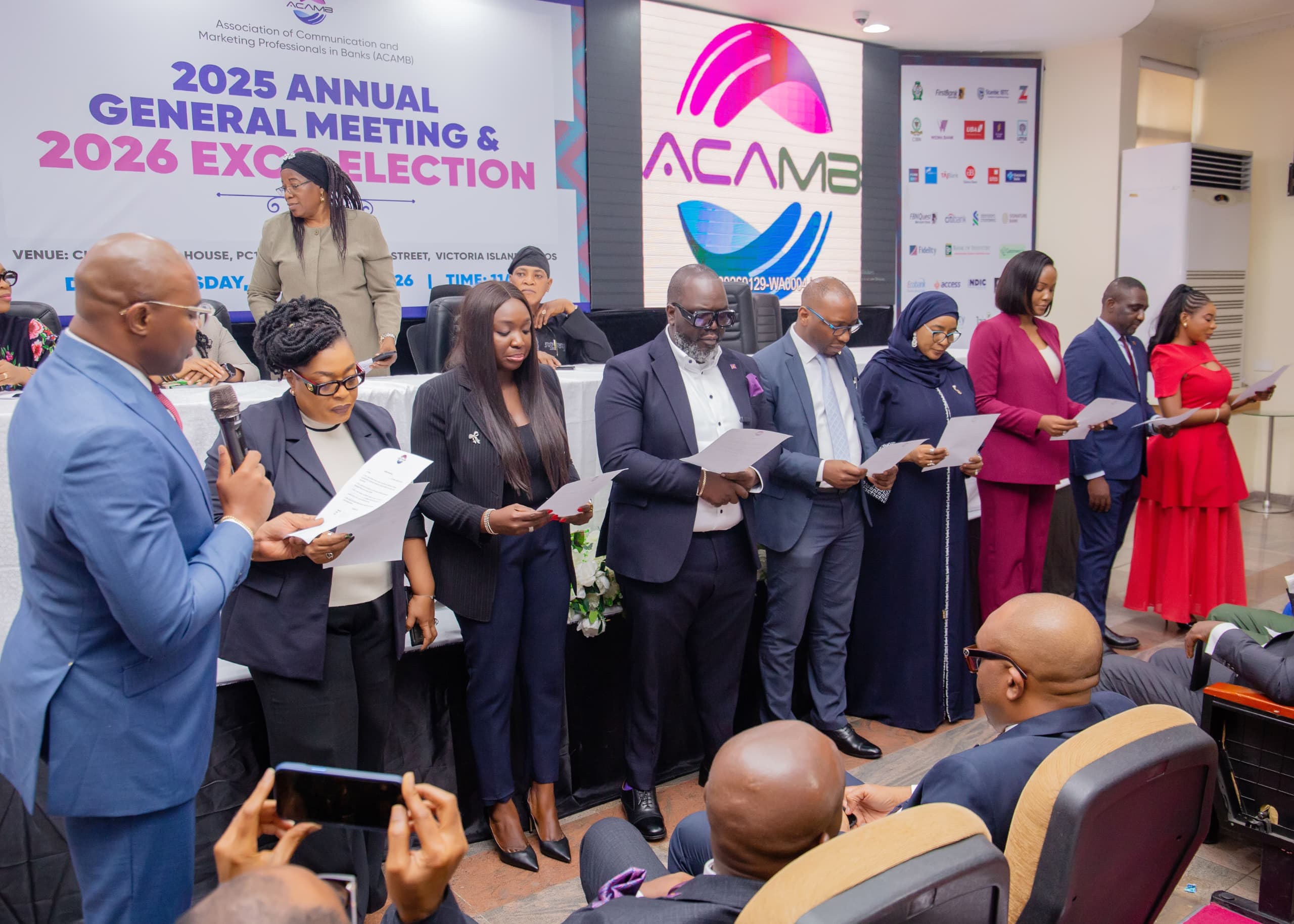
The Association of Communication and Marketing Professionals in Banks (ACAMB) has ushered in a new executive council, with a strong representation from leading financial institutions, to steer its affairs for the 2026-2028 term.
The election, held during the association’s Annual General Meeting in Lagos on Thursday, saw seasoned professionals from across the banking landscape elected to key positions.
The newly constituted executive includes Babajide Sipe of the Bank of Industry as President; Chinwe Bode-Akinwande of FirstBank as First Vice President; Morolake Philip-Ladipo of Wema Bank as Second Vice President; Abiodun Coker of the United Bank for Africa (UBA) as the Publicity Secretary; Olugbenga Owootomo from Polaris Bank as General Secretary; Halima Ishak from Jaiz Bank as Financial Secretary; Ademola Adesola from Parallex Bank as Assistant General Secretary; Unoaku Temitope Anyadike from Guaranty Trust Bank as Treasurer and MacQueen Afolabi from Zenith Bank as Social Secretary
In his inaugural address, President Babajide Sipe expressed profound gratitude for the confidence reposed in him, outlining a purposeful agenda for his tenure.
“I promise to lead with courage, intention, and purpose. My leadership will be anchored on four pillars: mentorship and career development; strengthening outcomes relevant within the banking industry; active member engagement; and strong representation and advocacy,” he stated.
He further emphasized, “I will be an unrelenting advocate for our members and for the strategic value of our profession. My key focus is growth—growth for members, growth for the association, and ensuring that the values of ACAMB are protected.”
The newly elected First Vice President, Chinwe Bode-Akinwande, who gave the vote of thanks, rallied members for collective effort. “The job of amplification is for each and every one of us. We have heard the feedback and are ready to hit the ground running,” she said. She reassured members of the new Executive Council’s dedication, stating, “We have no doubt in our minds that this EXCO will do great.”
The immediate past President, Rasheed Bolarinwa, highlighted the achievements of his tenure, notably in professionalising the membership. “We facilitated structured arrangements with regulatory bodies, enabling our seasoned professionals to formalise their certifications. Today, there’s hardly anyone in banking communication who does not belong to key professional groups,” he recounted.
Commenting on the ongoing bank recapitalisation exercise, the former president allayed fears, expressing optimism. “There are no issues. If mergers and acquisitions happen, it will be for the good of the industry and its workforce. There is no cause for alarm,” he concluded.
As the new EXCO assumes office, all eyes are on its pledge to drive growth, unity, and vigorous advocacy for the banking communications community.
WEMA BANK LAUNCHES “EVOLUTION OF LOVE” CAMPAIGN FOR VALENTINE’S DAY
…Offers celebrity performance for newly-weds and other gifts for singles, friends and couples*
Following the launch of “ALAT: The Evolution”, Wema Bank, Nigeria’s oldest indigenous bank, most innovative and pioneer of Africa’s first fully digital bank, ALAT, has launched its 2026 Valentine’s campaign tagged “Evolution of Love, powered by Wema Bank”.
Inspired by the “evolution” theme of its upgraded ALAT app, Wema Bank launched the “Evolution of Love” campaign with the goal of celebrating different forms of love experienced by customers, and how they have evolved over time. From self-love to friendship, romantic love to family, this campaign introduces a fresh twist to Valentine’s, decentralising romantic love and creating a space for every Wema Bank customer this season of love.
“Evolution of Love, powered by Wema Bank” calls on new and existing Wema Bank customers across 4 categories: Singles [self-love], friends [friendship], married couples and those getting married this February [romantic love]. While the gifts vary across each category, the requirement is the same—create a Love Goal on the ALAT App and submit a 1-minute video on any social media platform sharing how your love journey has evolved over the years, for access to gifts ranging from cash to spa vouchers, vacations and expense-paid getaways, and for one couple getting married in February, a special performance at the wedding from a celebrity artiste, courtesy of Wema Bank.
Announcing the campaign, Wema Bank’s MD/CEO, Moruf Oseni, gave further insights into the Bank’s approach to celebrating Valentine’s this year. According to him, “Love is central to the delivery of true customer-centric service, and as a Bank that prides itself on being customer-centric, this is reflected in the thought, intentionality and commitment we put into all we do at Wema Bank. It has always been clear how much we care about our customers and this year, we decided to celebrate the journey of love across different categories that reflect the different experiences and realities of our customers, from friends and couples who have grown together over the years to lovers taking the bold step of marriage and even singles because self-love is crucial”.
“This Valentine’s, we chose to acknowledge the beauty of every love journey, and we are inviting all new and existing customers who have a story to share. For the friends and singles, our goal is to promote true friendship and self-love. For families and married couples, our goal is to strengthen bonds by reminding them of how far they have come. For those intending to get married, we are adding one more memorable touch to their wedding with a special artiste performance. Our ultimate goal is for every Wema Bank customer to feel loved this season and beyond,” Oseni concluded.
Anyone interested in submitting their entry is encouraged to make a 1-minute video sharing their love journey and where applicable, feature the person with whom their love has evolved. All submissions are to be posted on any social media platforms using #ALATEvolutionofLove and tagging @alat_ng and @wemabank.
To be eligible, customers are expected to activate SAW, the Voice Banking virtual assistant on the upgraded ALAT App, create a personal or group goal on the app with the name “Love Goal”, fund the goal and transact with their ALAT/Wema card between February 1st – February 10th.
More details on qualification criteria are available at wemabank.com/love
Five Years On, GTBank MD’s Silence Raises Questions as Bank’s Customer Complaints Mount
Nearly five years after her appointment as Managing Director of Guaranty Trust Bank (GTBank), Mariam Olusanya has yet to make a public appearance, a prolonged silence that is becoming increasingly difficult to ignore as customer dissatisfaction with the bank continues to grow.
Appointed in January 2021, Olusanya made history as GTBank’s first female managing director, a milestone widely celebrated as a significant step for gender inclusion in Nigeria’s banking sector. Expectations were high that her leadership would usher in a new era of engagement and transparency at one of the country’s most prominent financial institutions.
Those expectations, however, have largely gone unmet in the public sphere. Since assuming office, Olusanya has avoided media interviews, industry conferences, shareholder engagements, and other public forums where chief executives of tier-one banks are typically expected to articulate strategy, explain performance, and address customer concerns. Her absence stands in sharp contrast to her predecessors, who were highly visible and often served as the public face of the institution during both stable and challenging periods.
In practice, the public leadership role appears to have been assumed by her immediate predecessor, now the Chief Executive Officer of Guaranty Trust Holding Company (GTCO). At major events and official functions, it is the holding company CEO, not the bank’s managing director—who represents GTBank, raising questions about where executive responsibility and accountability truly lie.
While GTCO continues to report strong financial performance, critics argue that profitability alone does not absolve leadership of public responsibility. In Nigeria’s banking sector, managing directors are not merely internal administrators; they are expected to engage regulators, reassure customers, and respond visibly during moments of reputational stress. Olusanya’s near-total absence from public view is therefore widely regarded as abnormal rather than strategic.
This perceived leadership gap has become more pronounced as GTBank faces a surge in customer complaints. Social media platforms are awash with reports of poor customer-service responses, unresolved disputes, alleged illegal deductions, and what many customers describe as dismissive or ineffective engagement from bank representatives. Even more troubling are growing concerns over security, with customers alleging unauthorized access to their accounts while receiving little explanation or accountability from the bank.
In an era where corporate transparency and customer trust are paramount, the lack of a visible and accountable leadership figure has fueled speculation that the bank’s communication failures reflect challenges at the top. Observers argue that a managing director who remains silent and unseen during such periods risks reinforcing the perception of an institution disconnected from its customers.
As the fifth anniversary of Olusanya’s appointment approaches, the questions continue to mount. Is her low-profile leadership style a deliberate strategy, or has it contributed to weak communication and poor customer engagement? More importantly, can a systemically important bank afford a managing director who remains largely invisible as public confidence erodes?
For now, Mariam Olusanya remains one of the most powerful yet least visible figures in Nigeria’s banking industry, a paradox increasingly at odds with the demands of modern corporate leadership.
Africa’s First Fully Digital Bank, ALAT By Wema Is Getting An Upgrade
Wema Bank is once again redefining the future of banking with the upgraded version of ALAT scheduled to go live in January, 2026. Tagged ALAT: The Evolution, the upgraded version of ALAT will once again set the standard on the next chapter in the banking industry.
With ALAT: The Evolution, Wema Bank is pushing the envelope even further. It represents a thoughtful evolution of everything users already love about ALAT; redesigned to feel more intuitive, more responsive, and more personal. From faster interactions, to a smarter understanding of user behavior, to the introduction of SAW (Smart ALAT by Wema, an AI assistant on the ALAT App), the upgraded ALAT will show how far digital banking has come, and how much further it can go when innovation is intentional.
When ALAT by Wema first launched in 2017, it made history as Africa’s first fully digital bank, changing how millions of people viewed and experienced banking. With the upgraded version of ALAT, Wema Bank is again reaffirming its position as the most innovative Bank in the banking industry.
Wema Bank Unveils ₦120M Grand Prize Pool as 35 Teams Advance to Hackaholics 6.0 Finale
Wema Bank, Nigeria’s most innovative bank and pioneer of Africa’s first fully digital bank, ALAT, has announced a ₦120 million prize pool for the Hackaholics 6.0 Grand Finale. This announcement follows the emergence of 35 teams from regional pitch sessions that recorded 1,460 participants across seven cities in Nigeria.
Announcing the prize structure, MD/CEO Wema Bank, Moruf Oseni, disclosed that the ₦120 million will be awarded across several winning categories at the finale. The Ideathon prizes include ₦25 million for first place, ₦20 million for the first runner-up and ₦15 million for the second runner-up. In the Hackathon category, the first to fourth-place teams will receive ₦20 million, ₦15 million, ₦10 million and ₦5 million respectively. In addition, two women-led innovations, one from each vertical, will receive ₦5 million each in recognition of Wema Bank’s commitment to advancing female participation in technology and innovation.
According to Moruf Oseni, “Hackaholics continues to demonstrate the power of young people to shape the future of technology and nation-building. We believe strongly in the ideas, resilience, and ingenuity of the Nigerian youth, and our investment in this initiative is a clear testament of our commitment to giving them the resources, mentorship, and platform they need to transform their ideas into real-world solutions. As these finalists head to Lagos, we are confident that their innovations will create meaningful impact across industries and communities, and we are proud to be a champion for that transformation.”
The 35 finalist teams emerged from a regional pitch cycle that received over a thousand applications across eight pitch centres: Ahmadu Bello University (ABU Zaria), Federal University of Technology Akure (FUTA), Lagos State University (LASU), University of Uyo (UNIUYO), Babcock University, University of Ibadan (UI), Veritas University Abuja and Purple Academy Lagos. Each centre provided students with access to industry-led masterclasses, hands-on mentorship and structured pitch development sessions, culminating in highly competitive presentations before expert judges.
The finalists include 17 Ideathon teams, 12 Hackathon teams and six women-led teams, each tackling challenges across fraud detection, customer experience, onboarding, acquisition, credit management and other social impact areas. All teams will participate in a three-day pre-finale mentorship and shortlisting programme ahead of the Grand Finale in Lagos.
Finalists expressed excitement about advancing to the Lagos finale and the opportunities ahead. The team leader of Veritas’ Hackathon winner, Tensor, Medugu Wali, shared the reason they are participating in the competition. “We built ‘Wallet Padi’ because we believe it can genuinely improve how Nigerians manage their money. Advancing to the pre finale leg of Wema Bank Hackaholics is a big step toward bringing that vision to life, and we appreciate Wema Bank for creating this platform.”
Babcock’s Ideathon winner, Akobundu Gift, a participant who had earlier attempted the Hackaholics challenge in 2023 but didn’t win, expressed great enthusiasm at the prospect of moving on to the next stage. Extending his gratitude to Wema Bank, he reminisced on the journey of his Startup, ‘Chao’. According to him, “Chao started as a small campus food-delivery idea in 2023, and it has grown far beyond what we imagined. Reaching the Hackaholics finals again reflects how much we’ve evolved. We’re grateful to Wema Bank for the opportunity and excited to compete at the next stage.”
Ogunlana Tosin, founder of Eutopia.ai, the women-led project winner at Veritas University, also shared her joy after being announced winner at her Pitch Centre, adding “Not making it at Babcock was honestly painful, but we were determined to win so we took the feedback, refined our solution and returned to try again. Advancing beyond the preliminaries this time showed me what’s possible when we don’t give up. I’m truly grateful to Wema Bank for this opportunity and for continuing to champion women empowerment, helping women-led innovation to thrive, and supporting women through initiatives like SARA,” she said.
Since its inception in 2019, Hackaholics has grown into one of Nigeria’s most influential youth innovation platforms, attracting more than 12,000 applicants across 15 schools and disbursing over $300,000 in funding and support. Between 2023 and 2024 alone, ₦75 million was awarded to women-led teams. With the launch of the Hackaholics Accelerator and Collective Program earlier this year, Wema Bank now provides ongoing support to early-stage founders beyond the competition cycle.
The Hackaholics 6.0 Grand Finale will bring together industry leaders, policymakers, investors and technology experts in Lagos for live pitches, product showcases and the unveiling of Nigeria’s next generation of transformative founders. For more information, visit hackaholics.wemabank.com or follow Wema Bank’s digital platforms.
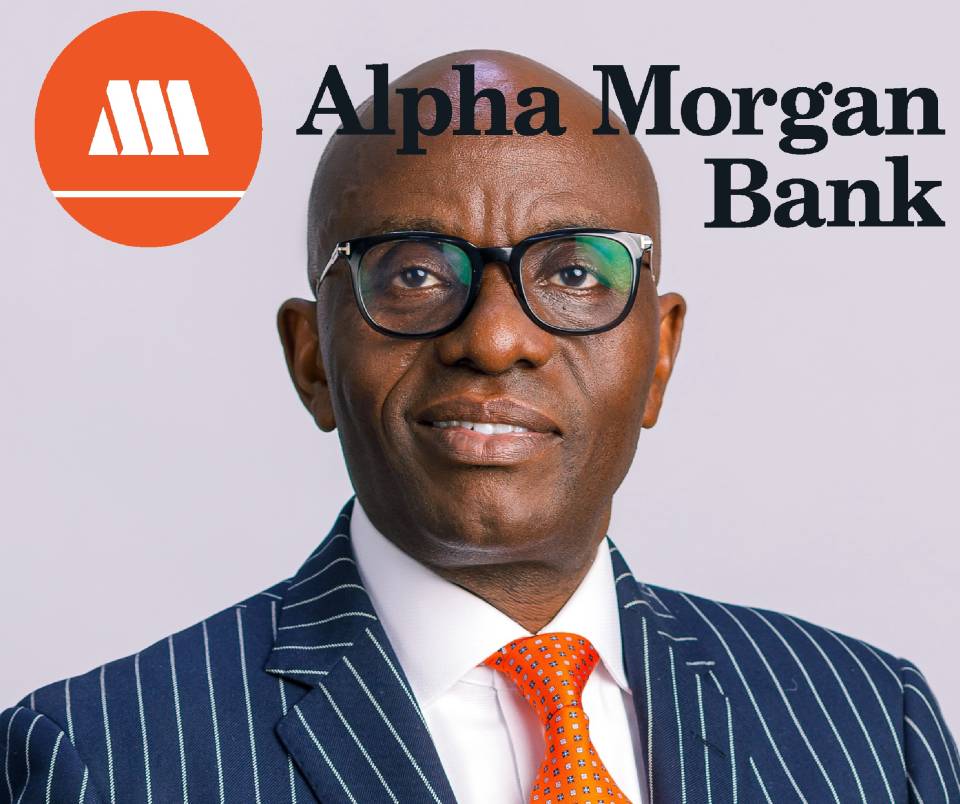
Allegation of System Glitch Induced Multi-million Naira Fraud Rocks ADE BURAIMO’s Alpha Morgan Bank
Leadership at Alpha Morgan Capital (often referred to informally as “Alpha Morgan Bank”), led by Group Managing Director Ade Buraimo, has come under public scrutiny following a wave of online complaints alleging that a system glitch resulted in the loss or unauthorized movement of approximately N230 million from customer accounts.
The bank and the affected customers have taken the matter to court, jointly suing 19 financial institutions in an attempt to recover the allegedly stolen funds.
A total of N230,978,536 was allegedly stolen from the accounts of NEM Insurance Plc and Extension Publications Limited at Alpha Morgan Bank through unauthorized transfers to multiple accounts across 19 financial institutions during what the bank described as a system glitch.
According to multiple customers who shared their experiences on social platforms and consumer-complaint channels, the alleged incident involved unexpected debits and a prolonged lack of official communication from the institution. Some account holders reported that their attempts to seek clarification or restitution were met with silence or delayed responses, increasing frustration and fuelling speculation about internal lapses.
The suit, filed at the Federal High Court in Lagos, seeks urgent orders to block multiple bank accounts across the financial sector and recover the allegedly diverted funds.
According to an affidavit sworn to by Dayo Abe, a litigation officer at the law firm of Babafemi Akinsete & Co., the technical malfunction in Alpha Morgan Bank’s system was exploited by certain service-merchant agents operating as digital financial-services providers.
These agents, the affidavit states, “took advantage of the glitch and unlawfully initiated multiple transfers” from the customers’ accounts into accounts domiciled in the 19 financial institutions now listed as defendants.
Further investigation by Alpha Morgan Bank reportedly revealed that the total amount illegally moved from the accounts of NEM Insurance Plc and Extension Publications Limited was N230,978,536, spread across multiple bank accounts linked to several BVNs.
Following the bank’s complaint, the 19 financial institutions were said to have placed temporary post-no-debit restrictions on the suspicious accounts.
However, the plaintiffs warn that unless all accounts connected to the perpetrators’ BVNs—including accounts not yet identified—are frozen, the funds may be irretrievably lost.
The affidavit explains that the suspects had already begun transferring the money from the first-level beneficiary accounts into other banks to “continue to unlawfully dissipate the said funds.”
The plaintiffs argue that the bank and its affected customers have suffered “humongous fraud” resulting from the system glitch, and that failure to immediately block the linked accounts will cause “untoward hardship and dire financial loss” to both the bank and its shareholders.
They are therefore asking the Federal High Court to issue an order compelling the 19 banks to reverse and refund all “wrongfully, illegally, and illicitly debited” sums back into Alpha Morgan Bank’s settlement and collection account.
The court has not yet fixed a date for the hearing.
Several individuals affected by the incident claim they have been left without clear explanations regarding when the alleged “massive glitch” occurred, how the reported N230 million outflows happened, and what remediation steps the institution is taking.
A few customers described the experience as “distressing,” stating that they had received no direct updates other than automated acknowledgements.
While the complaints do not provide evidence of intentional wrongdoing, the situation has raised questions about internal controls, technical safeguards, and executive oversight under Ade Buraimo’s leadership. Industry analysts note that even unintentional system failures can severely impact customer confidence if not communicated promptly and transparently.
Financial-sector observers emphasize that regulatory guidelines require firms to promptly notify clients of significant service disruptions and to maintain strong protections against erroneous or unauthorized transactions.
Wema Bank Empowers Tech Innovators at Akure, Zaria, Ibadan, and Lagos with Hackaholics 6.0
Wema Bank, Nigeria’s most innovative bank and pioneer of Africa’s first fully digital bank, ALAT, has continued to deepen its commitment to youth innovation and entrepreneurship with Hackaholics 6.0, its flagship campus ideathon. This year, the Hackaholics train has toured four Nigeria cities from the Federal University of Technology, Akure (FUTA) and Ahmadu Bello University (ABU), Zaria, to the University of Ibadan (UI) and Purple Academy, Lagos, bringing together some of the brightest young minds in Sub-Saharan Africa to create transformative solutions to real-world problems.
With over 3,000 entries submitted so far, at each location, hundreds of students and young entrepreneurs gathered to receive industry-led masterclasses, and develop ideas aimed at solving challenges in the ecosystem. For four days in each location, participants were immersed in the full Hackaholics experience, from ideation to mentorship to pitch readiness, culminating in high-energy final pitches where the best ideas emerged. In every location, three Ideathon winning teams; including one women-led group and two Hackathon teams walked away with invitations to compete at the Hackaholics 6.0 Grand Finale. These teams now stand a chance to scale their solutions with the backing of Wema Bank’s innovation ecosystem.
Speaking on the initiative, MD/CEO Wema Bank, Plc, Moruf Oseni, said, “Hackaholics has always been about more than technology. It is about empowering young people to think differently, create boldly, and contribute solutions that can move our industry and nation forward. The level of talent and creativity we have witnessed so far further reinforces why we continue to invest in this programme. The innovative ideas and solutions coming out of the participants have the power to shape the future of financial services and beyond, and we are excited to see them come to life.”
Since its launch in 2019, Hackaholics has grown into a cornerstone of youth engagement and innovation in Nigeria. With over 12,000 applicants from 15 schools, and a total of over $300,000 disbursed in funding, including ₦75 million awarded to women-led teams between 2023 and 2024, the program has consistently delivered on its mission to create a vibrant ecosystem where students, innovators, and early-stage founders can collaborate, learn, and grow while building long-term relationships with Wema Bank.
As the Hackaholics 6.0 train continues its journey to more cities before the Grand Finale, Wema Bank remains committed to empowering the next generation of Nigerian innovators. Students and young entrepreneurs are encouraged to visit https://hackaholics.wemabank.com/ for more information on how to participate and submit their entries.
Access Bank and Mastercard: Enabling Seamless Africa-Global Payments
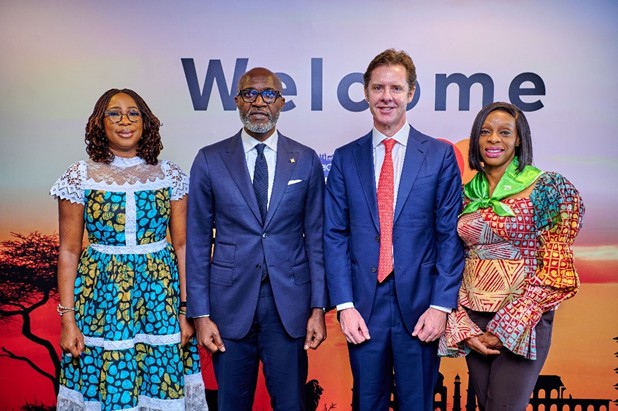
L-R: Folashade Femi-Lawal, Country Manager, West Africa, Mastercard; Roosevelt Ogbonna, Group MD, Access Bank; Mark Elliot, Division President, Africa, Mastercard; and Chizoma Okoli, Deputy MD, Access Bank at the Access – Mastercard Event.
In today’s interconnected world, seamless cross-border payments are vital for economic growth, business expansion, and personal empowerment. For decades, millions of Africans faced steep barriers in sending or receiving money internationally: high fees, opaque exchange rates, and long delays that made transactions uncertain and costly. Whether they are students paying tuition abroad or traders settling import bills and families depending on remittances, these challenges have touched every layer of society.
Africa’s fragmented payments landscape, marked by multiple currencies, varying regulations, and limited banking infrastructure, has long slowed financial inclusion. In this system, a trader in Lagos might wait weeks for funds from Nairobi, while a Ghanaian student in the United States could lose a significant portion of tuition to
intermediary charges. For many, especially in rural or informal sectors, formal banking channels were out of reach, forcing reliance on informal and risky alternatives.
Recognising the need for change, Access Bank, one of Africa’s largest and most innovative financial institutions, has partnered MasterCard, a global payments leader, to reimagine how money moves across borders. The collaboration aims to make cross-border payments faster, cheaper, and more transparent, empowering individuals and businesses to participate more fully in the global economy.
“By combining our strengths, we can unlock new opportunities, bridge the financial divide, and create a more inclusive and prosperous future for all Africans,” says Robert Giles, Senior Advisory, Retail Banking at Access Bank.
The partnership leverages Access Bank’s extensive African footprint and its Access Africa platform alongside MasterCard’s global network, treasury infrastructure, and advanced technology, particularly through the Mastercard Move system. Together, they have built an ecosystem that finally delivers on the promise of speed, convenience, and reliability.
The solution is designed to be inclusive and versatile, allowing users to send and receive money via multiple channels: bank accounts, cards, mobile wallets, and even cash. Whether a student in Ghana paying tuition in Europe, a trader in Lagos importing goods from China, or a family in Kenya receiving remittances, cross-border transactions are now simpler and safer.
For MasterCard, the goal extends beyond expanding services; it is about deepening financial inclusion. “This partnership transforms payment experiences, extending MasterCard’s digital ecosystem to ensure millions from underserved communities can participate in the evolving digital economy,” says Mark Elliott, Mastercard’s Division President for Africa.
The alliance builds on mutual strengths, Access Bank’s deep local knowledge and MasterCard’s global reach, to create a seamless payments corridor connecting Africa to the world.
A critical element of this innovation is the technical integration led by Fable Fintech, a MasterCard Express Partner under the Move Programme. Integrating Access Bank’s operations across multiple African markets was a massive undertaking, given diverse currencies and regulatory frameworks. The result is a unified cross-border payment experience, reducing complexity and delays.
“We were fortunate to be the fulcrum of the seamless multi-country integration of one of Africa’s largest banks using MasterCard’s cross-border assets,” a Fable Fintech representative noted. The platform now supports real-time or near-real-time transactions, offering resilience, scalability, and strong fraud protection.
Apart from technology, this partnership signals a paradigm shift, from dependency to empowerment, from financial fragmentation to unity. By democratising access to affordable and transparent payments, Access Bank and MasterCard are enabling millions of Africans to engage in international trade, education, and family support. The impact is tangible: faster transactions, lower costs, and increased financial inclusion.
Already, the ripple effects are visible. Informal traders in Kigali now use formal financial channels instead of risky agents. SMEs in Nairobi can settle invoices with international clients more predictably. Families in Accra receive remittances with less worry about lost payments, while students overseas manage tuition with ease. Each transaction strengthens Africa’s participation in global commerce.
The partnership also prioritises financial literacy and empowerment. Recognising that technology alone is not enough, Access Bank and MasterCard are educating users on digital payments, security, and the benefits of financial inclusion, particularly in underserved communities where awareness gaps remain.
The collaboration aligns with broader socio-economic goals such as job creation, poverty reduction, and gender inclusion. By expanding access to finance, it empowers women entrepreneurs, youth, and small businesses to thrive. A woman running a rural enterprise can now receive payments from clients abroad and reinvest in her community; a young professional can more easily fund studies or start a venture. The result is a more inclusive and resilient African economy.
This initiative also complements Access Bank’s wider sustainability agenda, seen in projects like the Access Clean Water Initiative, which integrates financial inclusion with social impact. The Bank’s approach underscores that responsible banking and profitability can go hand in hand.
Access Bank and MasterCard are looking at scaling their innovation, embrace emerging technologies, and deepen collaborations with governments and development partners to expand access even further. As Africa’s economies evolve, agile and secure payment systems will be essential to sustaining growth.
The partnership stands as example of what is possible when business, technology, and purpose converge. By harnessing shared vision and innovation, Access Bank and MasterCard are redefining Africa’s role in the global payments ecosystem, breaking down financial barriers and enabling millions to connect, trade, and thrive across borders.