
China said Thursday that its purchases of Russian oil were “legitimate” and decried recent “unilateral bullying” measures by the United States as the trade row between the two countries continues to intensify.
Trump said Wednesday that Indian Prime Minister Narendra Modi had promised him New Delhi would stop buying Russian oil, and that he would get China to follow suit.
Trump has accused both China and India of funding the three-year Ukraine war through the purchases, and has also demanded that European allies immediately stop buying oil from Russia.
India neither confirmed or denied it was shifting its policy.
Asked on Thursday about Trump’s intention to pressure China further, Beijing’s foreign ministry defended its “normal, legitimate economic, trade, and energy cooperation with countries around the world, including Russia”.
“The actions of the United States are a typical example of unilateral bullying and economic coercion,” ministry spokesman Lin Jian said at a press briefing.
If China’s interests are harmed, it will “take firm countermeasures and resolutely safeguard its sovereignty”, he warned.
Beijing and Moscow are key trading partners, and China has never denounced Russia’s war, nor called for it to withdraw its troops.
Kyiv and Western governments have long accused Beijing of providing political and economic support for Moscow.
– ‘Profoundly detrimental’ –
Beijing on Thursday also criticised recent US moves to expand export controls and impose new port fees on Chinese ships, saying the measures had a “profoundly detrimental” impact on trade talks between the two superpowers.
While tensions between Washington and Beijing have de-escalated from their peak, the truce remains shaky.
After Beijing imposed fresh controls on the export of rare earth technologies and items, Trump said he would roll out an additional 100 per cent tariff on the country’s goods from November 1.
The United States announced in April it would begin applying fees to all arriving Chinese-built and operated ships after a “Section 301” investigation found Beijing’s dominance in the industry was unreasonable.
Section 301 of the US Trade Act of 1974 enables Washington to impose trade penalties on countries whose practices are deemed unfair or harmful to American commerce.
Beijing responded last week by announcing “special port fees” on American ships arriving at Chinese ports. Both sets of fees took effect Tuesday.
Commerce ministry spokeswoman He Yongqian said Thursday the US moved ahead with the measures while “disregarding China’s sincerity in consultations”, causing “severe damage to China’s interests… (and) a profoundly detrimental impact”.
“The Chinese side expresses strong dissatisfaction with and resolutely opposes the series of actions taken by the US side,” He Yongqian said.
She urged Washington to “immediately rectify its erroneous practices” and respect the outcomes of recent trade talks.
As Nigeria moves to strengthen renewable energy manufacturing and champion local content, the European Union on Thursday said that creative partnerships between the public and private sectors, including research and innovation ecosystems, are key to achieving the country’s clean energy goals.
Describing how innovative breakthroughs are reshaping the global energy landscape, the EU praised Nigeria’s abundant and exceptional human talent and natural resources, describing them as critical ingredients for building innovation ecosystems.
The EU Ambassador to Nigeria and ECOWAS, Gautier Mignot, who was represented by the Deputy Ambassador, EU Delegation to Nigeria and ECOWAS, Zissimos Vergos, disclosed this during the Nigeria Renewable Energy Innovation Forum in Abuja, according to a statement by the EU.
He highlighted how over €200 million in grants from the EU has continued to strengthen the country’s power sector since 2008.
He said, “Our most recent energy sector programme, launched in 2021 with a €100 million (₦175 billion) budget, is aimed at adding 400 megawatts of new renewable capacity by 2027, directly benefitting more than five million Nigerians.”
Mignot noted that innovation that accelerates inclusive energy and digital transformation processes has become an essential intergenerational process and an integral part of political legacies that will be duly recognised by future generations.
Explaining how proper synergy between the public and private sectors and research and innovation ecosystems works, he said, “The public sector brings the policy frameworks; the private sector brings agility and technical expertise; research institutions bring insight and innovation.”
Further stating that effective policies and regulations, together with strengthened capacity building, are essential to scale energy solutions sustainably, he added, “Across rural Nigeria, off-grid renewable solutions are transforming lives. Mini-grids and solar home systems, powered by creative public–private partnerships, are lighting homes, energising small businesses, and expanding opportunity.
“Research institutions must continue providing evidence-based insights on energy demand, consumer behaviour, and resilient business models to ensure that innovation truly serves local communities.”
Reiterating the EU’s commitment to Nigeria’s energy security and economic resilience, especially through programmes like GET.invest Nigeria and the EU’s Global Gateway, he said, “The EU remains deeply committed to supporting these efforts through direct research grants, local capacity development, and mobilising private investment, demonstrating a shared vision for sustainable energy access, clean industry, and inclusive growth.
“Whether for large grid-connected solar farms or small decentralised systems, our shared path depends on harnessing Nigerian ingenuity, industrial potential, and entrepreneurial spirit.”
Hailing Nigeria’s advancement in the era of the green and circular economy, Amb. Mignot added, “The pace of this journey toward sustainable, accessible energy will depend on how successfully the public sector, private sector, and innovation ecosystem work together.”
PUNCH Online reports that Nigeria is currently working towards making significant strides in renewable energy, driven by government initiatives and international investments. The country aims to become Africa’s renewable energy hub, with a projected investment of over $410 billion by 2060.
Nigeria’s energy transition plan includes developing nearly 4 GW of local solar factory capacity, reducing reliance on imports, and creating jobs. The government has signed agreements worth over $400 million for renewable energy manufacturing and infrastructure deals, including solar panels, smart meters, and battery storage.
Additionally, Nigeria is promoting distributed renewable energy, with projects like mini-grids expected to reach 1.5-2 million rural customers.
The country has significant potential for solar and wind energy, with notable projects like the 140 MW Qua Iboe Power Plant and the 10 MW Katsina Wind Farm. Despite challenges like inadequate infrastructure and high costs, Nigeria’s renewable energy capacity is expected to grow, with projections indicating a compound annual growth of 9.88% from 2024 to 2034.
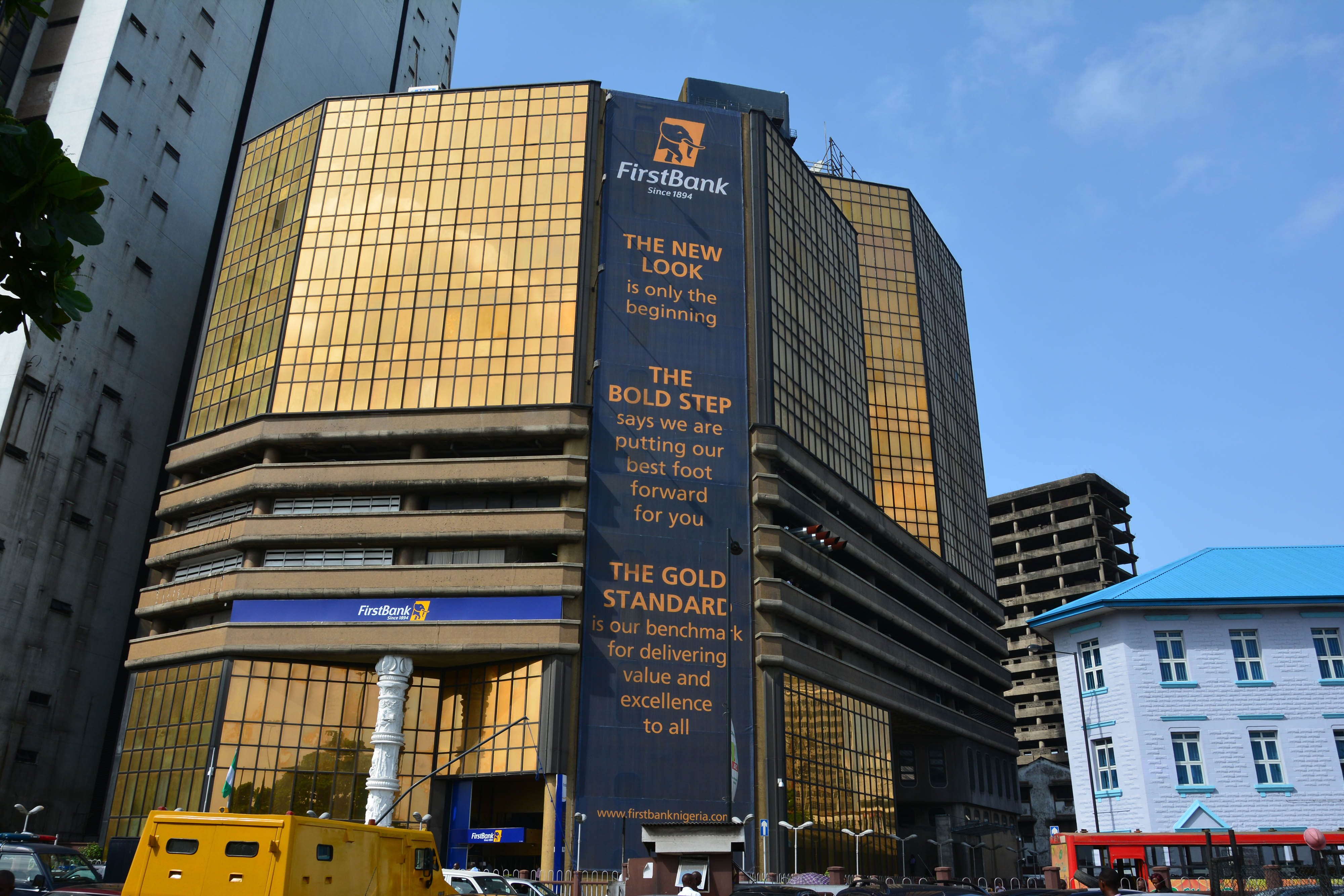
Olusegun Alebiosu’s Leadership Questioned as Fraud Scandals Rock First Bank
…Cases of Customers’ Funds Illegally Accessed Become Worryingly Frequent in First Bank
Banking thrives on trust — depositors rely on their banks to safeguard their money, while banks are expected to put robust measures in place to uphold that trust. However, in the case of First Bank under the leadership of Managing Director Olusegun Alebiosu, that trust appears to be eroding fast.
Once regarded as a financial fortress, First Bank is now facing allegations of rampant fraud, with both internal and external perpetrators reportedly having unfettered access to customer accounts. The situation has raised alarm across the industry, as fraud incidents within the bank have become increasingly frequent since 2024 — the very year Mr. Alebiosu took over.
First Bank, Nigeria’s oldest bank, has historically enjoyed a reputation built on customer loyalty and decades of reliability. But that image has been badly tarnished in recent months. According to industry watchers, the level of fraudulent activity is unprecedented, with some linking the escalation directly to lapses in the bank’s current management structure while some were of the notion that it is due to the incompetence of those at the helms of the bank affairs.
There has been so many issues with unauthorised transfer of deposit and withdrawal associated with the bank in recent times. This write up will be mentioning two of such incidents; one of such is the case of a customer whose video was posted on social media sometimes in July when she stormed a branch of First bank in Ibadan, Oyo State after her savings of N949,000 vanished from her account. In the video the distraught depositor was heard saying that her account was emptied without any form of notification like sms alert or email and while they were told to exercise patience the branch manager invited policemen to come and arrest them.
Similar incident is that of Charles Mary, a struggling entrepreneur, who is a customer of the bank. According to her a client paid a certain amount into her account on Friday 18th July, meant to execute the supply of certain materials, she decided to withdraw some money to pay for some of the materials needed through the First Bank ATM machine in Opebi around 5pm of the same day.
She explained that the ATM machine of First Bank at that branch did not dispense and she removed her card after few seconds and to her surprise she started receiving alerts while still in the vicinity of the bank.
To her surprise her account was not debited the amount she hope to withdraw from the ATM, instead debit alerts of five hundred thousand (500,000), two hundred thousand (200,000), ninety nine thousand (99,000) and fifty thousand (50,000) naira were received, without her compromising her account details in any form.
Findings revealed, it has become a pattern in First Bank, as customers details are exposed to activities of fraudsters, going by recent occurrence, many staffs of the bank are found to be working with these set of people.
Investigation shows two patterns that the fraudsters have been employing, the first style is that where alerts are not sent during and after the act, while the second is the illegal transfers and deduction being effected after closing of work on Friday so any action will wait till Monday since financial institutions don’t work on weekends.
While some customers are abandoning their account after transferring to other banks, some believed the bank will soon get it right. For many customers that are still holding on, the question on their minds remains: Can First Bank under Olusegun Alebiosu still guarantee the safety of their money?
JIM OVIA NAMED DOYEN OF THE NIGERIAN BANKING INDUSTRY AT THE NGX CLOSING GONG CEREMONY
Zenith Bank Plc‘s Founder and Chairman, Dr. Jim Ovia, CFR, accompanied by the bank’s Group Managing Director/CEO, Dame Dr. Adaora Umeoji, OON, on Tuesday, October 14, 2025, carried out the prestigious closing gong ceremony at the Nigerian Exchange (NGX), marking a significant milestone in the bank’s continued partnership with the capital market and the official closing of the trading day. The ceremony highlights Zenith Bank’s strong relationship with the NGX and its commitment to transparency, accountability, and bolstering investor confidence.
While speaking at the Nigerian Exchange, Dr. Umeoji expressed her delight in participating in the closing gong ceremony, acknowledging the NGX’s visionary leadership and innovative initiatives. “We are delighted to be here today to perform the closing gong ceremony – a symbol of shared progress and enduring partnership,” Dr. Umeoji said. “The NGX’s leadership has been very creative and innovative, and their electronic trading platform – X-stream played a pivotal role in the success of our recapitalization exercise, which achieved a 160% subscription. The bank’s stock price has doubled since the recapitalization exercise, from N36.50 per share to N68. Zenith Bank has also reported impressive financial results for the Half Year (H1) of 2025, becoming the most profitable bank in Nigeria and paying the highest dividend in the industry for the half year.”
“We are committed to creating value for our stakeholders and will continue to partner with the NGX to boost the Nigerian economy,” Dr. Umeoji added. “Our expansion strategy is focused on following our customers’ businesses and ensuring that we go to countries and economies where we can scale and provide more returns for our shareholders.”
She stressed that the bank plans to make good on its promise of being investors’ delight by paying quantum dividends to its shareholders by year end. According to her “For us in Zenith, we are looking forward to paying more based on the confidence the market reposed on us. We are working assiduously to ensure that we do not disappoint the Market. We are going to continue to be the investors’ delight, and we assure the market that we would continue to pay enhanced dividends come end of the year.”
Also commenting, the Director General of the Securities and Exchange Commission (SEC), Dr. Emomotimi Agama emphasised the role of the NGX in creating value in the Nigerian economic space. He said, “I want to thank you all for making the market what it is. Without you, the market wouldn’t have seen the leap that it has achieved in the last one-and-half year. I spoke earlier that at my assumption of office, market capitalization stood at N55 trillion, today it is hovering around 89 trillion and 93 trillion. That was not done by a spirit, it was done by you. Your ability, tenacity, courage, vision and transparency have moved the market where it is. Our vision is that by next year, we will have the market at 200trn.”
The Doyen of the NGX, Alhaji Rasheed Yusuf while giving his remarks, lauded the Founder & Chairman, Zenith Bank Plc, Jim Ovia, CFR for his vision and leadership. He ended by referring to him as the “Doyen of the Commercial banking sector”.
Zenith Bank remains committed to creating long-term value for its stakeholders while driving economic development in Nigeria. As the bank continues on its growth trajectory, it has its sights set on global expansion. The bank intends to strategically leverage the capital raised from the Market to enhance its scalability and deliver enhanced services to its valued customers.
The Bank’s track record of excellent performance has continued to earn the brand numerous awards, including being recognised as the Number One Bank in Nigeria by Tier-1 Capital for the sixteenth consecutive year in the 2025 Top 1000 World Banks Ranking, published by The Banker and “Nigeria’s Best Bank” at the Euromoney Awards for Excellence 2025. The Bank was also awarded Bank of the Year (Nigeria) in The Banker’s Bank of the Year Awards for 2020, 2022 and 2024; Best Bank in Nigeria from 2020 to 2022, 2024 and 2025, in the Global Finance World’s Best Banks Awards; Best Bank for Digital Solutions in Nigeria in the Euromoney Awards 2023; and was listed in the World Finance Top 100 Global Companies in 2023.
Further recognitions include Best Commercial Bank, Nigeria for five consecutive years from 2021 to 2025 in the World Finance Banking Awards and Most Sustainable Bank, Nigeria in the International Banker 2023 and 2024 Banking Awards. Additionally, Zenith Bank has been acknowledged as the Best Corporate Governance Bank, Nigeria, in the World Finance Corporate Governance Awards for four consecutive years from 2022 to 2025 and ‘Best in Corporate Governance’ Financial Services’ Africa for four consecutive years from 2020 to 2023 by the Ethical Boardroom.
The Bank’s commitment to excellence saw it being named the Most Valuable Banking Brand in Nigeria in The Banker’s Top 500 Banking Brands for 2020 and 2021, Bank of the Year 2023 to 2025 at the BusinessDay Banks and Other Financial Institutions (BAFI) Awards, and Retail Bank of the Year for three consecutive years from 2020 to 2022 and 2024 to 2025 at the BAFI Awards. The Bank also received the accolades of Best Commercial Bank, Nigeria and Best Innovation in Retail Banking, Nigeria, in the International Banker 2022 Banking Awards.
Zenith Bank was also named Most Responsible Organisation in Africa, Best Company in Transparency and Reporting and Best Company in Gender Equality and Women Empowerment at the SERAS CSR Awards Africa 2024; Bank of the Year 2024 by ThisDay Newspaper; Bank of the Year 2024 by New Telegraph Newspaper; and Best in MSME Trade Finance, 2023 by Nairametrics. The Bank’s Hybrid Offer was also adjudged ‘Rights Issue/ Public Offer of the Year at the Nairametrics Capital Market Choice Awards 2025.
The Minister of Solid Minerals Development, Dr Dele Alake, says Schools in Nigeria charging tuition fees in foreign currencies should be closed.
Alake made the call at the Nigeria Gold Day Celebration on the sidelines of the 10th edition of Nigeria’s Mining Week, themed Nigeria Mining: From Progress to Global Relevance, on Wednesday in Abuja.
He criticised the practice and described it as a part of the leakages and loopholes in Nigeria’s economy, threatening its growth.
“I am still going to make a proposal to the Federal Executive Council that all those schools in Nigeria that are charging in foreign currencies should be closed.
“These are some of these leakages and loopholes that we say exist in our economy that people do not really take these things very seriously,” he said.
“If you look at the foreign currency that goes into some of this, it is humongous
“If your child is attending a school in Abuja or Lagos or somewhere in the country and is paying 10,000 pounds or 10,000 dollars as their fees, that means you will be looking for naira to go and buy dollars.
“Driving the value of dollar up, whereas this school is in Abuja in Nigeria, you can’t go to UK, establish a school, and then be charging naira, it’s not done.
“It’s only in this country that I see so many contradictory things that really demolish the economy,” he said.
The minister said the Federal Government was introducing various measures, including digital mechanisms, to ensure that all leakages in Nigeria’s gold value chain were blocked and every loophole sealed.
He said the move would reduce room for interpersonal transactions, thereby reducing the propensity of corruption, which would further position Nigeria’s gold as one of the global pillars of means of exchange of value.
He said the Federal Government’s National Gold Purchase Programme (NGPP), implemented through the Solid Minerals Development Fund (SMDF), was designed to shore up Nigeria’s foreign reserves and strengthen the naira.
Alake explained that the NGPP, a component of the Presidential Artisanal Gold Mining Initiative, allows the government to buy gold directly from artisanal miners in naira, rather than spending foreign exchange to purchase gold internationally.
In her remarks, the Executive Director of SMDF, Fatima Shinkafi, said that, unlike global trends, gold exploration funding in Nigeria was on an upward trajectory.
Shinkafi explained that, within the broader macroeconomic context, gold serves as a safe-haven asset and encouraged conference participants to explore Nigeria’s gold opportunities.
“We implore everyone here to examine Nigeria’s gold resources and support the minister’s efforts to make Nigeria a premier destination for junior miners.
“In another year or so, let’s look at Nigeria’s Gold Day 2025 as a pivotal turning point, “ she said.
NAN reports that the Nigeria Mining Week, holding from October 13 to 15, is organised by the Miners Association of Nigeria in partnership with PricewaterhouseCoopers and the VUKA Group.
Amid worsening supply challenges and rising pump prices, petroleum marketers have begun moves to import petrol independently as the commodity moved close to the N1,000 per litre mark across major cities in the country.
Marketers said supply constraints and production glitches at the Dangote Petroleum Refinery sparked fresh pressure in the downstream oil market.
The National Publicity Secretary of the Independent Petroleum Marketers Association of Nigeria, Chinedu Ukadike, confirmed the development in a telephone interview with The PUNCH on Tuesday.
According to him, members of the Depot and Petroleum Products Marketers Association of Nigeria are concluding arrangements to begin petrol importation as part of efforts to stabilise retail prices.
He stated that petrol prices would soon drop as competition returns to the market, if additional competition is brought into the sector.
“Yes, petrol price is still going to come down because I also know that some marketers, especially DAPPMAN members, have applied and they are going to import petrol products.
“Peradventure, their prices are cheaper than Dangote’s, we would have no choice but to patronise them. The essence of this market is that where it is cheaper, we will buy. But prices will come down once there is a struggle for the market,” Ukadike said.
The PUNCH reports that petrol prices rose from about N865 to around N950 per litre on Monday.
Checks by The PUNCH on Tuesday showed that the pump price of Premium Motor Spirit, popularly called petrol, now sells between N920 and N955 per litre in many retail outlets, while some stations in Abuja, Sokoto and Lagos charge as high as N1,000 per litre, depending on location and brand.
This comes at a time when Nigerians were expecting petrol prices to drop to N841/litre as recommended by the Dangote refinery.
Our correspondent recalls that when the Dangote refinery launched its logistics-free fuel distribution scheme on September 15, it stated that its partners and filling stations benefitting from the scheme would drop petrol prices to N841 in the South West and N851 in Abuja, Edo, Kwara, Rivers and Delta.
But when this had yet to take effect in filling stations, prices surged above N900 in Lagos, Ogun Abuja and others.
In the Federal Capital Territory, a market survey by one of our correspondents revealed that petrol sold for N955 per litre at NNPC outlets in Gwarinpa and Lugbe, while prices climbed to N928 per litre at NNPC stations in Lagos.
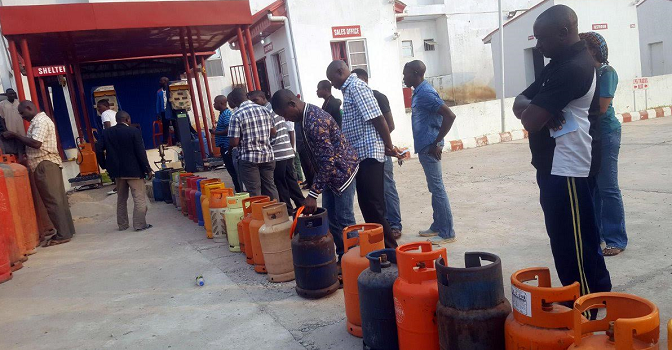
In parts of Edo, Rivers, Oyo and Gombe states, motorists purchased the product at prices ranging from N900 to N1,000 per litre, amid reports of long queues and panic buying.
The latest spike has raised concerns among motorists and consumers already grappling with high transportation and food costs, threatening to further fuel inflationary pressures across the country.
Reacting, the Independent Petroleum Marketers Association of Nigeria has blamed depot owners for the sudden surge in petrol prices.
IPMAN President, Abubakar Shettima, told The PUNCH that depot owners increased their prices when they discovered that the Dangote refinery had stopped fuel loading for some days.
Our correspondent reports that depots hiked their prices on Monday from an average of N830 to about N890.
According to Petroleumprice.com, depots like Matrix, Fynefield and Liquid Bulk sold petrol at N900 as of Tuesday. Northwest offered N895; Pinnacle, N885; RainOil, N890; NIPCO, N850; Aiteo, N878; and Sigmund, N890.
Following this, filling stations adjusted their pump prices to reflect the new pricing regime.
The Nigerian National Petroleum Company Limited retail outlets sold premium motor spirit at N928 in Ogun and Lagos, an increase of about N50 from the previous N870.
The adjustment also marks a reversal of the price reduction introduced in August, when NNPC lowered petrol prices to N865 per litre in Lagos and N890 per litre in Abuja.
Speaking with our correspondent, the NNPC spokesperson, Andy Odeh, said the NNPC adjusted its pump prices like every other retail outlet because the depots increased their gantry rates.
“The ex-depot prices have gone up. You know all the filling stations are retailers. So, when the price goes up ex-depot, there will be an adjustment by the retailers. That’s what has happened and it’s across all the retailers,” the NNPC spokesperson said.
In Ogun and Lagos, filling stations sold petrol at prices ranging from N900 and N950 on Tuesday. Dangote’s partner, MRS, also sold the product at N925 in Ogun.
Our correspondent gathered that the Dangote refinery stopped selling petrol to marketers recently, causing a tightness in supply.
The Dangote refinery has yet to respond to questions seeking further clarification about the development.
However, sources said this might be due to ongoing maintenance or the challenges posed by the mass sacking of engineers at the facility.
In an interview with our correspondent, the President of IPMAN, Shettima said members of the Depot and Petroleum Products Marketers Association of Nigeria hiked fuel prices following the no-loading situation at the 650,000-capacity refinery.
“These DAPPMAN people are the only ones who are selling the product now. But, probably, Dangote will start tomorrow (today). So, if Dangote starts selling tomorrow, the price will come down. Dangote has not been selling to marketers since all these days.
“You may see their trucks on the road, but the trucks are not enough; marketers still have to support by going there to load. And immediately these DAPPMAN people saw that Dangote was not loading, they increased their ex-depot prices. That’s just what is happening. But I know these things are temporary, very soon they will wipe away,” Shettima said.
Speaking on the development, the IPMAN National Publicity Secretary, Chinedu Ukadike, attributed the price increase to temporary supply glitches at the Dangote Refinery and sharp practices by some private depot owners.
Ukadike explained that the refinery had recently slowed loading operations due to internal reorganisation and labour-related disruptions, causing limited distribution to private marketers.
“There is a reorganisation going on, and the issue of the NUPENG strike caused a little glitch in terms of supply and refining of petroleum products, because of the workers’ strike.
“And what we are trying to do now is to manage the situation. Now Dangote has also increased its pump price, while NNPCL has increased its price. This just shows that it is a reflective market whereby when the suppliers increase prices, the retailers have no choice but to increase them, just to make a little profit. So that is the current situation. It is only when we tie our importation of crude products or refined products to the price of the dollar that we can have issues, but that is no longer the case. The issue of exchange doesn’t arise. The factors of production are the issues now,” Ukadike said.
He added that depot owners were taking advantage of the limited supply situation to hike ex-depot prices, further worsening the pump price burden on consumers.
Major Energies Marketers Association of Nigeria further confirmed in its daily bulletin, posted on its official X handle, that the refinery had suspended gantry loading for most private marketers since last Thursday, restricting sales to its own and MRS trucks, thereby creating a shortage at independent outlets.
The Chief Executive Officer of PetroleumPrice.ng, Jeremiah Olatide, has blamed the fresh wave of petrol scarcity and price hikes on operational disruptions at the Dangote Refinery, which he said has suspended gantry sales to private depot owners since last week.
Olatide said the refinery is currently prioritising loading for its own last-mile delivery trucks and those of its affiliate, MRS, while marketers who obtained Product Finance Instruments have been unable to lift fuel for several days.
“No, things haven’t improved. The current situation, as I speak to you, is that the refinery is only loading their own trucks, last-mile delivery trucks, and they have suspended gantry sales since last Thursday,” he said. Those who have PFI are yet to load. I think they have low stock, so they are trying to manage it.”
According to him, the production hiccup was compounded by crude supply shortages and the recent layoff of about 800 refinery workers, which has further strained the facility’s operations.
“Basically, they are having issues with crude, and the 800 staff that were laid off is also a challenge to them. All these have contributed to the supply glitch we’ve experienced in the last week,” Olatide explained.
He likened the unfolding situation to the earlier gas supply crisis, warning that the refinery’s reduced output was already distorting the downstream market. “Clearly, there is a supply problem with PMS distribution, just like the gas problem started,” he added.
Olatide revealed that petrol prices at private depots had surged in response to the supply shortfall, as marketers scramble for limited volumes. “Depot marketers were not allowed to load products today at the refinery. It was only for MRS trucks and their personal trucks. Anyone applying through its trucks will get products now, but not private marketers’ trucks,” he said.
He further disclosed that private depots, previously buying at N820 per litre from the refinery, have halted sales and are considering fresh price increases.
“No doubt, there is a supply glitch. It’s not affecting MRS, but private depot operators have stopped sales and want to raise prices again,” Olatide said.
Meanwhile, residents living in Sokoto State have lamented the recent increase in pump price by petroleum marketers in the state, which has increased the cost of fuel to between 960 naira and arefinery0 naira within the metropolis.
Our correspondent, who monitored the development in the state, gathered that the increase in price covered both independent and major marketers in the state.
Findings by our correspondent in the state gathered that all the NNPC filling stations in the state metropolis have not been open for business for the last week.
A visit to AA Rano on Tuesday discovered that a litre of fuel had been adjusted from the previous 930 naira to 960 naira.
Also, at some of the independent marketers in the state, the fuel, which was sold for between 950 and 960 naira, is now being sold for between 1,000 and 1,050 naira.
A motorist who spoke with our correspondent at AA Rano said he decided to join the queue due to the recent scarcity and increase in the price.
“I have to be here to queue for the fuel, I learnt a litre is now 992 from NNPC in Lagos, only God knows how much NNPC will sell in Sokoto.
“Even though I don’t have money, I have to borrow money from my wife, I have been here for about 40 minutes trying to get this product, anyway it’s unfortunate”
With the cost of fuel nearing N1,000 per litre, analysts warn of another round of price shocks across transportation, food, and manufacturing sectors, even as Nigerians continue to await the promise of stable supply from the country’s 650,000 barrels-per-day Dangote Refinery.
Multiple efforts to reach the Dangote refinery spokesperson, Anthony Cheijina, were not successful as the official didn’t pick up his calls and didn’t reply to messages sent to his phone line.
The Director-General of the National Orientation Agency, Malam Lanre Issa-Onilu, says the Nigeria Customs Service recorded over six billion Naira in September.
Issa-Onilu made this known at the Monthly National Joint Security Press Briefing on Monday in Abuja.
The briefing organised by NOA is supported by the security agencies, paramilitary, and regulatory organisations in the country.
He noted that September was marked by strategic engagements, operational milestones, and collaborative initiatives that reaffirmed the Service’s central role in advancing Nigeria’s economic transformation agenda.
”The Service continued its steady march toward reform, innovation, and stakeholder trust, as each activity during the period reflected its enduring commitment to transparency, efficiency, and institutional renewal under the visionary leadership of the Comptroller-General of Customs, Mr Bashir Adeniyi.
“In the month of September, the NCS recorded a total revenue collection of ₦658,605,400,392. This figure demonstrates the Service’s sustained fiscal performance amid ongoing reforms and heightened enforcement efforts.
“It reflects the cumulative contributions of various commands and operations aligning with the broader strategy to strengthen revenue mobilisation and minimise leakages across the system,” Issa-Onilu said.
The NOA boss also noted that, within the period under review, a high-level strategic engagement between the NCS and the Manufacturers Association of Nigeria was held.
He explained that the engagement provided a platform to strengthen trade relations, promote policy harmony, and chart a sustainable course for industrial growth.
Issa-Onilu added that it reinforced the service reform agenda, anchored on collaboration, inclusiveness, and shared responsibility for economic development.
“The engagement also reflected the service recognition of the manufacturing sector as a key partner in national productivity and a driver of Nigeria’s non-oil revenue diversification efforts.
“On the operational front, the Service took another major step toward enhancing trade efficiency through the introduction of a One-Stop-Shop platform, an innovation designed to minimise cargo clearance time, reduce procedural bottlenecks, and ensure seamless coordination among stakeholders within the trade ecosystem.
“In enforcement and border security, officers of the Federal Operations Unit (FOU) Zone ‘A’ recorded a major success through the interception of firearms, industrial drones, and other prohibited items within the Southwest Region.
“This operation exemplifies the service’s vigilance, operational intelligence, and unwavering resolve to safeguard national borders against illicit trade and transnational threats.
“The interception further reinforces the service’s dual mandate of trade facilitation and security enforcement, ensuring that legitimate trade thrives while threats to national safety are neutralised,” Issa-Onilu said.
He stressed that the Service demonstrated its continued commitment to corporate social responsibility (CSR) by supporting sister agencies and contributing to community development initiatives across various formations.
According to him, these efforts reflect the service’s understanding that security and trade are strengthened when institutions collaborate and communities are empowered.
He added that commendation on the service by the Board of Trustees of the Airline Operators of Nigeria (AON) served as an external validation of ongoing efforts to build an institution anchored on professionalism, accountability, and mutual trust.
“The feat recorded in September stands as evidence that the Service is not merely evolving; it is setting new standards in institutional excellence, reform communication, and national service delivery,” he further said.
Last month, the service announced that between January and June 2025, it collected a total of N3.6 trillion as revenue. https://punchng.com/customs-revenue-hits-n3-6tn-in-six-months/#google_vignette
The National Public Relations Officer of the service, Abdullahi Maiwada, explained that the figure represents a remarkable performance above expectations.
In June, PUNCH Online reported that the Senate Committee on Customs raised the Nigeria Customs Service’s 2025 revenue target from N6.584tn to N10tn, following a commendable performance in surpassing its 2024 revenue expectations.
Waves of Innovation: How First Bank turned Lagos into Africa’s Electric Playground By Kazeem Ugbodaga
The Lagos Lagoon glistened in shades of blue and gold as electric powerboats sliced through the water, cheered on by an ecstatic crowd that lined Victoria Island’s waterfront from Saturday, 3 October to Sunday, 5 October. For two unforgettable days, Lagos became Africa’s capital of clean energy, glamour, and innovation, all powered by First Bank of Nigeria, the sponsor of the continent’s first-ever E1 Lagos Grand Prix.
From the rhythmic sounds of Afrobeats echoing across the Marina to the sight of sleek, futuristic boats gliding silently on water, the E1 Lagos GP was more than a race, it was a celebration of Lagos’ vibrant spirit and Nigeria’s march towards sustainability.
President Bola Ahmed Tinubu, in a goodwill message, hailed the event as a bold statement of intent by Nigeria and Lagos, praising Governor Babajide Sanwo-Olu, First Bank, and other partners for delivering a world-class spectacle.
“The E1 Powerboat series combines world-class entertainment with clean energy innovation. This championship is not just a thrilling spectacle on water but a commitment to a greener and more sustainable future,” the president had said at the opening ceremony of the great event on Friday, 3 October.
He described Lagos as “a gateway to innovation, technology, and global sporting excellence,” affirming the nation’s readiness to lead Africa’s transition to clean energy.
Governor Babajide Sanwo-Olu, who led the regatta that opened the event, described the championship as a proud moment for Lagos and a reflection of its global potential.
“E1 Lagos GP is more than a race; it is a celebration of Lagos’ dynamism, the Spirit of Lagos,” the governor said, adding that “It shows our capacity to host world-class events and underscores our commitment to sustainability.”
Crowds thronged the Lagos Lagoon and fan zones, having fun, snapping selfies, and soaking in the festive atmosphere. International sports icons, investors, and fans came from across the world, including former Chelsea and Ivory Coast football legend Didier Drogba, co-owner of Team Drogba Global Africa, who added a touch of celebrity magic to the weekend.
For First Bank of Nigeria, the event was not just about sports, it was about making history. Acting Group Head of Marketing and Corporate Communications, Olayinka Ijabiyi, said sponsoring the E1 Lagos GP reflected the bank’s heritage of innovation and renewal.
“Innovation, sustainability, excitement, speed, we are a heritage bank that has been around for 131 years, and for every one of those years, we have constantly renewed ourselves,” Ijabiyi said, saying that “When this opportunity came, who else could bring the first E1 GP to Nigeria but First Bank? We are proud to have presented Lagos and Nigeria to the world.”
At the First Bank Pavilion, visitors enjoyed interactive experiences, lifestyle engagements, and product showcases, while music, fashion, and food added a distinctly Lagos flavour. Families and young professionals mingled with entrepreneurs, all celebrating a fusion of technology, culture, and sustainability, hallmarks of the bank’s brand identity.
“This race is a net-zero emitter,” Ijabiyi added. “We are strong on sustaining the environment and supporting a cleaner, greener future. It’s innovation meeting responsibility.”
The E1 partnership also connects with the bank’s #FirstBankDecemberIssaVybe series, an annual celebration of entertainment and lifestyle that lights up Nigeria’s festive season. “December is the Vybe,” Ijabiyi teased. “This is just a taste of what’s to come-fun, fashion, food, and amazing experiences.”
The finale on Sunday was nothing short of electrifying as Team Brazil claimed victory, with pilots Timmy Hansen and Leva Millere-Hagin steering their electric boat to glory, beating Team Blue Rising and Team Drogba to the podium.
As the sun set over the Lagoon, the waterfront transformed into a sea of lights and cheers, a moment that captured the heart of Lagos: energetic, ambitious, and always ready to lead.
With its sponsorship of the E1 Lagos Grand Prix, First Bank once again proved that it is more than a financial institution, it is a lifestyle brand championing innovation, sustainability, and national pride.
In the words of Latoya Johnson, a Lagosian who attended the event: “I grew up knowing First Bank as the reliable one. Seeing them behind something this big makes me proud. They’re not just banking our money, they’re banking our future.”
From clean energy to cultural celebration, from racing boats to smiling faces, the E1 Lagos GP was a powerful reminder that when innovation meets tradition, the result is pure magic.
Australian airline Qantas said Sunday that data from 5.7 million customers stolen in a major cyberattack this year had been shared online, part of a leak affecting dozens of firms.
Disney, Google, IKEA, Toyota, McDonald’s, and fellow airlines Air France and KLM are also reported to have had data stolen in a cyberattack targeting software firm Salesforce, with the information now being held to ransom.
Salesforce said this month it was “aware of recent extortion attempts by threat actors”.
Qantas confirmed in July that hackers had targeted one of its customer contact centres, breaching a computer system used by a third party now known to have been Salesforce.
They secured access to sensitive information such as customer names, email addresses, phone numbers and birthdays, the blue-chip Australian company said.
No further breaches have taken place since, and the company is cooperating with Australian security services.
“Qantas is one of a number of companies globally that have had data released by cyber criminals following the airline’s cyber incident in early July, where customer data was stolen via a third-party platform,” the company said in a statement.
Most of the data leaked was names, email addresses and frequent flyer details, the firm said.
But some of the data included customers’ “business or home address, date of birth, phone number, gender and meal preferences”.
“No credit card details, personal financial information or passport details were impacted,” Qantas said.
It also said it had obtained a legal injunction with the Supreme Court of New South Wales, where the firm is headquartered, to prevent the stolen data from being “accessed, viewed, released, used, transmitted or published”.
Cybersecurity expert Troy Hunt told AFP that it would do little to prevent the spread of the data.
“It’s frankly ridiculous,” he said.
“It obviously doesn’t stop criminals at all anywhere, and it also really doesn’t have any effect on people outside of Australia.”
In response to questions about the leak, tech giant Google pointed AFP to an August statement in which it said one of its corporate Salesforce servers had been targeted. It did not confirm if the data had been leaked.
“Google responded to the activity, performed an impact analysis and has completed email notifications to the potentially affected businesses,” Melanie Lombardi, head of Google Cloud Security Communications, said.
Cybersecurity analysts have linked the hack to individuals with ties to an alliance of cybercriminals called Scattered Lapsus$ Hunters.
Research group Unit 42 said in a note that the group had “asserted responsibility for laying siege to customer Salesforce tenants as part of a coordinated effort to steal data and hold it for ransom”.
The hackers had reportedly set an October 10 deadline for ransom payment.
The hackers stole the sensitive data using a social engineering technique, referring to a tactic of manipulating victims by pretending to be a company representative or other trusted person, experts said.
The FBI last month issued a warning about such attacks targeting Salesforce.
The agency said hackers posing as IT workers had tricked customer support employees into granting them access to sensitive data.
“They have been very effective,” expert Hunt said.
“And it hasn’t been using any sophisticated technical exploits… they have exploited really the oldest tricks in the books.”
The hack of data from Australia’s biggest airline comes as a string of major cyberattacks in the country has raised concerns about the protection of personal data.
Qantas apologised last year after a glitch with its mobile app exposed some passengers’ names and travel details.
And major ports handling 40 per cent of Australia’s freight trade ground to a halt in 2023 after hackers infiltrated computers belonging to operator DP World.
Chartered engineer and founder of Tite Knox Pty Limited, Olaoluwa Dawodu, has said that the commencement of commercial operations at the Ekiti Agro-Allied International Cargo Airport will enhance commerce, tourism, and job creation across the state.
Dawodu, reacting to the Nigerian Civil Aviation Authority’s approval for the start of commercial flights, said the development had “set the state’s economic landscape for transformation.”
The Australia-based engineer, in a statement made available in Ado Ekiti on Saturday, described the approval as “a laudable development that will open up the state to various economic growth elements.”
He said, “Inter-state and eventual international access to the numerous economic potentials of a state can only be optimally explored via safe air access. The approval will not only boost commerce and tourism but also stimulate job creation, enhance connectivity, and position Ekiti among Nigerian states with viable air transport infrastructure.”
Dawodu noted that, like other airports in developed nations, the Ekiti facility would contribute significantly to the state’s gross domestic product, create employment opportunities, and attract trade and tourism.
“The Ekiti Agro-Allied International Cargo Airport has the potential to become a critical economic gateway for the state, serving as a catalyst for agricultural exports, investment inflows, and industrial development,” he added.
He commended Governor Biodun Oyebanji and his administration for their vision and commitment to sustainable infrastructure development and urged Ekiti indigenes both at home and abroad “to heed the call, return home, add value, and support the governor on everything that will help Ekiti to progress as the state ushers in a new era of air connectivity and economic expansion.”
The NCAA, in a letter to Governor Oyebanji dated October 3, 2025, approved the airport to commence commercial operations from October 4, 2025, for an initial period of six months.
The letter stated that a validation inspection conducted between June 16 and 19, 2025, revealed that the airport had “significantly complied with the basic operational requirements for scheduled flight operations,” while the Nigeria Airspace Management Agency’s flight check validation report showed “satisfactory compliance with regulatory requirements.”