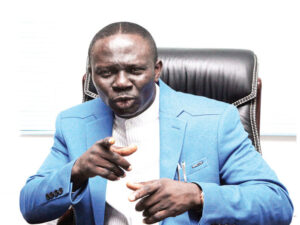
FBNHOLDINGS: SETTING THE TONE FOR GENDER INCLUSIVENESS, BALANCE IN BOARDROOM

In many parts of the world, including Nigeria, women often face the barriers of discrimination and persistent gender inequalities which deny them access to key positions in the corporate world as well as access to finance or the formal economy.

Women make up almost half of the world’s working-age population of nearly 5 billion people. But only about 50 percent of those women participate in the labor force, compared with 80 percent of men, according to a report by the International Monetary Fund (IMF).

The IMF’s research highlights how the uneven playing field between women and men imposes large costs on the global economy. Early IMF studies on the economic impact of gender gaps assumed that men and women were likely to be born with the same potential, but that disparities in access to education, health care, and finance and technology; legal rights; and social and cultural factors prevented women from realizing that potential.

Nearly 70 UK companies have been told to employ more women in senior roles. Domino’s Pizza, JD Sports and Greene King are among those that have called out by financial trade sector body The Investment Association and the Hampton-Alexander review, a diversity study backed by the government.

The number of women holding the most senior jobs in the boardrooms of Britain’s biggest companies has fallen, according to a report that criticises the lack of progress made by businesses in getting more women to the top.

Analysis from Cranfield University, as part of its 20th FTSE Women on Boards Report, shows a sharp drop in the number of women occupying chief executive (CEO), chief financial officer (CFO) or other executive roles on FTSE 250 boards, and static numbers at FTSE 100 companies.

Women constitute almost half of the Nigerian’s population and its workforce. Yet the kind of work they do, the condition under which they work, and their access to opportunities for advancement at work place differ from that of men. Women are often disadvantaged in access to employment opportunities and in conditions of work as compared to men. In addition, many women forgo or curtail employment because of family responsibilities. The removal of obstacles and inequalities faced by women is advantageous to an economy’s development. For example, the Beijing Declaration affirms a national commitment to the inalienable rights of women and girls and their empowerment and equal participation in all spheres of life including the economic domain.

Also, Goal 8, target 8.5 of the Sustainable Development Goals (SDG) is to achieve full and productive employment and decent work for all women and men (including for young people and persons with disabilities), as well as equal pay for work of equal value by 2030.

According to a report by the National Bureau of Statistics (NBS) the percentage of men employed in the State Civil Service from 2014 to 2015 was higher than the percentage of women for both senior and junior positions.

The average percentage of women employed in the State Civil Service from 2010 to 2015 in each category (junior and senior) was 38.16 per cent, while it was 68.84 per cent for men.

Also, men dominated employment in federal MDAs while women on grade level 01 –17 plus Special grade level was 34.67, 35.08 and 32.79 per cent for 2015, 2016 and 2017 respectively.

In the financial services sector, the Central Bank of Nigeria (CBN) had in 2014 directed that 40 per cent of banks’ top management and 30 per cent of board directors should be women.

Reports revealed that that women constitute only 22.3 per cent of the total board appointments in Nigerian banks, while their counterparts make up 77.7 per cent since 2014.

However, FBNHoldings, Nigeria’s leading financial holding company and parent company to FirstBank is no doubt exemplary at representing the change, thus demonstratively redefined the Women in Business trajectory with women occupying various leadership positions, positioning the financial group powerhouse as a leading institution at driving Gender Balance in the Boardroom.

Leading the pack of women in the board across the group structure which comprises FirstBank and its subsidiaries , FBNQuest is Ibukun Awosika whom has been Chairman of FirstBank since 2016. Prior to being the Chairman, she was a Non-Executive Director. since 2016 . The representation further cuts across the group entity of its parent company, FBNHoldings. Other companies across the group, FBNQuest and FBNInsurance are also not left out.

Otunba Debola Osibogun, Non-Executive Director, FBNHoldings; Cecilia Akintomide (OON), Independent Non-Executive Director, FBNHoldings; Oluwande Muoyo, Independent Non-Executive Director, FBNHoldings; Dr. Omobola Johnson, Non-Executive Director, FBNQuest Merchant Bank; Oyinkansade Adewale, Non-Executive/Independent Director, FBNQuest Merchant Bank.

Others are Kehinde Adenrele, Chairman, FBNInsurance, Folake Ani-Mumuney,Chairman, FBNInsurance Brokers; Ijeoma Agboti, Non-Executive Director, FBNQuest Capital; Funke Feyisitan Ladimeji, Non-Executive Director, FBNQuest Asset Management; Titi Adebiyi, Independent Director, FBN General Insurance and Margaret Dawes, Non-Executive Director, FBNInsurance.

Bashirat Odunewu, Group Executive, Energy and Infrastructure, FirstBank; Cecilia Akintomide (OON), Independent Non-Executive Director, FBNHoldings; Folake Ani-Mumuney, Chairman, FBNInsurance Brokers/Group Head, Marketing & Corporate Communications, FirstBank; Ibukun Awosika, Chairman, First Bank of Nigeria Limited; Fiona Ahimie, Managing Director, FBNQuest Securities Ltd; Oluwande Muoyo, Independent Non-Executive Director, FBNHoldings; Ijeoma Nwogwugwu, Managing Director, ARISE News Channel Africa; Otunba Debola Osibogun, Non-Executive Director, FBNHoldings and Oyinkan Adewale, Independent Non-executive Director, FBNQuest Merchant Bank in a group picture at the Women Corporate Directors (WCD) Foundation, Nigeria Chapter, meeting hosted by FirstBank, to promote female leadership in management.

With such an admirably notable representation, it is no surprise that only recently, Women Corporate Directors (WCD) – Nigerian Chapter – had FirstBank host its meeting, held on Thursday, 3 October 2019 with 60 female directors and leaders of various organisations across various industries in attendance. These women discussed pertinent corporate issues with a view to promote the continued influence of women in Business and the economy, also ensuring that the needed balance on the home front is bolstered. The keynote speaker is Osagie Okunbor, managing director SPDC & Country Chair, Shell Companies in Nigeria.”

FBNHoldings recognition of female impact in its business operations at management level no doubt sets the tone for other institutions across other industries to promote women inclusiveness in management, thereby instrumentally shaping gender balance in the business atmosphere, thus influencing ethical practices in a cultured way worthy of consistently reiterating the recognition of female at impacting the economy and National Income as a whole. This in no small measure transcends to the political space, the cornerstone of legislative impact in the economy and business activities as a whole.

Godwin Emefiele, governor of the CBN, said recently that the Apex bank had made remarkable progress in closing the gender gap in the Bank.

“It is heartening that today, women represent 29.0 per cent of CBN staff and 29.0 percent of directors are women. Eight departmental directors and one Director General of WAMZ as against 26.0 per cent of staff and 25.0 percent of directors in 2014. Similarly, three out of 11 board members are women (27 percent)”, Emefiele said at the 2019 CBN Commemoration of the International Women’s Day (IWD) in March, 2019.

Corruption Allegation Trails Nigerian Civil Service Commission Employment and Compulsory Confirmation Exams

Just like the proverbial cat of many lives, corruption in Nigeria seems to possess several lives as it will not just die despite the current administration’s claim that it has reduced the despicable act to the barest minimum. It was reliably gathered that the Civil Servants saddle with the responsibility of employing and confirming workers has turned their position to money making venture, to the chagrin of many Nigerians that truly deserve the job.

Sources revealed to www.societygazetteng.com that employment into the Federal Civil Service Commission in Nigeria is no longer based best suited in terms of qualification, but on who you know and how much you can cough out, insiders squeak that you must know somebody well placed or ready to pay between N500,000 (Five Hundred Thousand Naira) to N800,000 (Eight Hundred Thousand Naira) depending on who your link to the recruitment office is to get employment into the federal civil service in Nigeria.

This sad occurrence is not restricted to a particular ministry as it cut across ministries and parastatals of the Federal Government, since all employments are done in the Abuja head office of various ministries, the act usually take place under the nose of different organisations saddled with the responsibilities of stamping out corrupt practices in the country.

Our sources also revealed that for years now the civil service commission compulsory confirmation examinations, which is supposed to be the last step of completely absolving the new recruits into the civil service has also been bedeviled with allegations of large scale corrupt practices which will see the new recruits being asked to pay a certain compulsory amount of money which is meant to be use in settling those who will be marking their exams, has unconfirmed story claimed those who decided not to pay the previous times end-up failing the confirmation exams.

This has allegedly been the way of doing things in all ministries and parastatals, with none of the agencies saddled with the responsibility of tackling such looking the other way.

It would be recalled that earlier in the year, the Head of Service, Mrs. Winifred Ekanem Oyo-Ita, had resigned her position after the Economic and Financial Crimes Commission (EFCC) had grilled her over an alleged contract scam to the tune of N3billion with about N600million traced to the account of one of her key aides.

It was reported that she came into the picture when the EFCC were investigating a former minister whose ministry she had worked as a Permanent Secretary. This has forced her to call it quit and since her decision to resign no charges has been brought against her. A decision many said is feeding the fuel into the fire of unending corruption consuming the Nigerian Civil Service.

Hon. Ned Nwoko Honored by Africa Advancement Forum UK

It is the general belief that no good work is lost, this can well be used to describe what happened recently when Honourable Prince Ned Nwoko was being given an award of honour as the Africa Community Developer of the Year by some Africans in diaspora under the name Africa Advancement Forum UK.

The award which is coming barely a month after the philanthropic billionaire had empower 50 Nigerians with a support cash of one hundred thousand Naira each through his Instagram account, an act that shows the Delta State born Businessman cum Politician as a natural giver and not one that gives only for publicity sake.

Presenting the award to Mr Nwoko during a brief ceremony in Abuja, the director, International Cooperational Africa Advancement Forum, David James Egwu said the award was in recognition of the frantic efforts and sacrifices being made by the recipient in the area of human and community development.
He urged the recipient to continue with the good works he has been doing and ensure that the image of the black man is restored through his philanthropic works.

Receiving the award, Mr Nwoko who expressed delight over the award said he felt inspired by the award to do more in sports and youths’ development.

Mr Ned Nwoko who is currently on the process of establishing a sports University in Idumuje Ugboko, Delta State said any young man or woman interested in sports and education combined would find a place at the University when recognized by the National Universities Commission, NUC.
According to him, the university will cover all Olympic sports when eventually commissioned.

Mr Nwoko noted that five of the seven structures recommended by NUC for a start are already in place, adding that efforts were on to ensure close collaboration with the Delta State government.

Segun Agbaje Led GTBank where Cars are said to hold more Value than Human

It is the general declaration that human life is priceless and it is expected to be treated as such in every condition. This believe was also at the fore-front of governments’ order to both private and public hospitals that every effort must be put into use should anybody needs urgent treatment to preserve their lives. It is however sad that some supposedly big brands in the country are acting as if the life of some members of their staffs count for nothing.

This discussion was raise in Mushin axis of Lagos State recently and some traders and residents of the town pointed fingers of guilt at one of the leading banks in the country the Guaranty Trust Bank (GTB).

In their argument they claimed that years back, a vehicle belonging to the GTBank allegedly suffer break failure while in motion and in an effort to steer the car away from running into the pedestrians and the roadside traders along the ever busy Mushin/Oshodi road, the car ran into the median demarcating the road and in the process knocked down a pedestrian who was standing to cross to the other side killing the young man in the process.

They continued in their narrations that even while the driver who suffered broken leg and some other degree of injury that sees to him not being able to fend for himself and his family was still struggling to get out the money approved for him to pay for his medical expenses, the bank had made sure their car involved in the accident has been cleared and fixed for use.

Though going after such is not the main issue the speed at which they go about it according to the people was so fast and it seems they put so much value on the car even more than the driver whose condition they said cannot be ascertained as at that period. That incident has been years back now and the bank presently are not employing drivers on their own as such has been outsourced.

If one thinks that the story will be different now that the bank is not directly involved with their drivers now one may have to have a rethink.

The story now is like the Yoruba proverbial witch who had an all girl children, the condition of service of their drivers is suicidal. We were reliably informed that drivers attached to the bank are treated like they are expendable wares some drivers in the pool of the bank narrates how the nonchalant attitude of those in their transport department toward fixing the cars wherever it is faulty is generally responsible for nearly all incident of accidents involving GTBank drivers.

One of the two companies handling recruitment of drivers was given as Ademakinwa Ademiluyi & Co, though information available said FedEx Express has been added but that cannot be confirmed as at the moment we are writing this story. Insider revealed that Ninety-five percent (95%) of the drivers in the bank’s driver’s pool were employed through outsourcing and were prohibited from Union activities as this will contravene the contract signed by their respective employers with the bank.

We further gathered that there is also no provision for health insurance while all the cars they are driving are given premium insurance even though their fixed take home is Forty-Five Thousand naira (N45,000) with no pension plan or any form of gratuity not minding the years spent working for the bank.

It is even worse as the source also stated how faulty vehicles are after it has been reported are forced on the drivers without it being fixed, in a situation our source explained that a vehicle with bad break after it was reported was left unrectified for 4 months with the driver being forced to run errand with it all these while till it got involved in a crash.

With the condition of service which runs through 7 days a week, no pension plan, no health insurance scheme, no chance of becoming a permanent staff, abolishing of trade union activities among the drivers and many other deliberate shortcomings in the treatment of the drivers while all the cars they are driving are given premium insurance is invariably saying the cars to the bank holds more value than the human driving it and this may be the reason faults like that of the car breaking system are scarcely attended whenever such was reported to those in charge of that department in the bank.

Lagos SCID train Officers on Community Engagement, Security Services

In addition to efforts of the Nigeria Police Force and Lagos state Police command to further strengthen Community Policing and ensure maximum safety of lives and properties in the state, the State Criminal Investigation Department, SCID, Lagos, has on Monday trained police officers on community engagement and security services.

The one-day workshop which was approved by the Lagos state commissioner of Police, CP Zubairu Muazu, and facilitated by United Kingdom-based security company, Target Search Global (TSG) was held at the department’s lecture hall at the SCID, Panti, Yaba, Lagos.

According to the Officer-in Charge of the SCID, Deputy Commissioner of Police, DCP Yetunde Longe, she said that the training has become necessary in order to reaffirm the vision and dedication of the Inspector-General of Police towards reforming the Police and members of the Nigerian Police Force.

The Inspector-General of Police and the Lagos state Commissioner of Police are working tirelessly in reforming the Police force and ensuring maximum safety of lives and properties. This is why the CP has approved this training in order to further help us improve on our relationship with members of the public as one of the steps in achieving this goal.” She added.

Speaking to one of the facilitators of the workshop and Lead Consultant of Target Search Global, Mr. Olufemi Aratokun-Ale he also added that the training will also focus on unveiling new trends and techniques of combating security issues and eliminating security threats in Nigeria.

Other area of focus during the training include: Mental health awareness, intelligence profiling, criminal data collection, modern interview technique, forensic evidence analysis, and so on.

L-R Business Executive Director TSG Nig. Ltd- Blessing Nwakanma, Officer-In-Charge of the SCID- DCP Yetunde Longe, Lead Consultant Target Search Global Nigeria- Olufemi Olatunji Arotokun-Ale

“The Entrepreneurship Journey Entails Hard work, Discipline and Sacrifice”, Elumelu Says to Cape Verdean Entrepreneurs

Speaking at the Youth Konnekt Forum in Cape Verde yesterday, African investor and philanthropist, Tony O. Elumelu, Founder of the Tony Elumelu Foundation (TEF) and Chairman, United Bank for Africa (UBA), charged entrepreneurs to embrace hard work, discipline and sacrifice on their entrepreneurial journey to success.

He addressed over young Cape Verdean entrepreneurs in a Forum themed “African Youth: Foresight and Opportunities”, where he shared nuggets from his wealth of experience as an entrepreneur with success stories investing in Africa.

He said: “Entrepreneurship is a long-term journey. There is no quick fix. You will make mistakes. You will have challenges. For you to succeed along this journey, you must be disciplined, make sacrifices and save today to achieve your goals.”

The audience included public sector leaders – the President of Cape Verde, H.E. Jorge Carlos de Almeida Fonseca OICVV and Prime Minister, H.E. José Ulisses de Pina Ceorreia e Silva, as well as development partners, United Nations Development Programme (UNDP). Mr. Elumelu addressed these stakeholders, emphasising the important role of the government in creating an enabling environment for small and medium scale enterprises to thrive while commending the Government of Cape Verde for the strong, deliberate reforms to boost entrepreneurship in Lusophone Africa. He stated that the future of the African continent is in the hands of the African youths and they must be empowered to achieve the ambition of a well-developed continent.

He said: “The Prime Minister spoke to me about the tax incentive they are putting in place. He spoke about out opening up the country for tourism, and air transportation, and the commitment to entrepreneurs, making sure that those interested in agriculture, ICT and other areas are supported to succeed. He spoke to me about creating the opportunity to meet with some of you and see how the Tony Elumelu Foundation can support some of you. This is what we expect from our African leaders: For them to know that the future of Africa is indeed in your hands,” Mr. Elumelu said.

In his keynote speech, the President of Cape Verde, H.E. Jorge Carlos de Almeida Fonseca OICVV, expressed gratitude to Tony Elumelu for pioneering the entrepreneurship movement across the African continent. He said: “Thank you to Tony Elumelu for what you are doing for young people in Africa especially young people in Cabo Verde”. The Prime Minister, H.E. José Ulisses de Pina Ceorreia e Silva, also commended Tony Elumelu and his Foundation’s commitment to empowering African entrepreneurs across the continent.

The entrepreneurship movement led by the Tony Elumelu Foundation has caught the attention of the African public sector and has rapidly become a defining blueprint for the accelerated development of the African economy. Its goal is to leverage the youth population to create jobs, revenue and eradicate poverty on the continent. Thus far, TEF has empowered 7,531 entrepreneurs across all 54 African countries (19 of whom are from Cape Verde), with plans to again open its application portal for the 6th cohort of its Entrepreneurship Programme on January 1, 2020.

Organised by the National Youth Ministry and the Government of Cape Verde, Youth Konnekt is one of the many plans the country has rolled out to further cement its plans to boost entrepreneurship across the region.

Tony O. Elumelu, Founder, The Tony Elumelu Foundation and Chairman, United Bank for Africa (UBA) addresses entrepreneurs and public sector leaders at the Youth Konnect Forum in Cabo Verde on October 17, 2019.

Tony O. Elumelu, Founder, The Tony Elumelu Foundation and Chairman, United Bank for Africa (UBA) with H.E. José Ulisses de Pina Correia e Silva, Prime Minister of Cape Verde and Carlos do Canto Monteiro, Deputy Minister for Youth of Cabo Verde at the Youth Konnect Forum in Cabo Verde on October 17, 2019

Mindshift Advocacy Unveils Powerful Initiative to Create a New Nigeria

In its determination and resolve to foster a new mindset among Nigerians, the Mindshift Advocacy for Development Initiative has unveiled a new blue print to get Nigerians to think differently, believe differently and to act differently, so as to generate a mindset geared towards development. The event which was attended by dignitaries and the media held Thursday, October 17, 2019, at the prestigious Benue Hall of the International Conference Centre, Abuja.

In his address Mr. Joko Okupe, the Founder and Board of Trustee member of the Mindshift Advocacy for Development Initiative said that “the bane of Nigeria and by extension Africa’s problems is the mindset of Africans as individuals, communities and nations, about themselves and the mindset of the rest of the world about Africa. The wrong mindset of Nigerians and Africans in general which influences the way we do things, has created problems such as lack of visionary and purposeful leadership, bad governance standards, erosion and loss of good value systems, corruption, poor understanding of global issues and how it impacts their lives; unprecedented never-ending poverty, heavy debt burdens, over dependence on international aids, endless conflicts, inadequate education etc.” According to him, the Initiative was incorporated on November 28, 2016 as a non-partisan, non-governmental organization aimed at re-directing citizens’ mindsets from negative mindsets in private lives, societies and nations to positive mindsets that foster meaningful holistic personal, social and national development. The initiative also seeks to activate a radical and positive change in the mindset of the Nigerian youth – and by extension, African youth.

According to Mr. Okupe, the Mindshift Advocacy is actually focused on shifting mindsets from negative to positive. The movement is focused on redirecting the mindset of Nigerians from negative, unproductive and unprogressive mindsets to positive, productive and progressive mindsets. A destructive person has a destructive mindset and a destructive thinking pattern. There is so much capacity in the power of the mind that the way and manner that the mind is directed, determines the outcome of a man’s action. When you look at the great nations of the world, you will discover that their people have mindsets of greatness. The average Nigerian’s mindset is anti-progress and anti-development. How can we have progress and development when majority of our citizens have the wrong mindset? We cannot achieve any meaningful transformation without a re-orientation of the citizens’ mindsets.  Even when Government decides to run a campaign on changing attitudes, the success will depend on whether the mindsets of the citizens have changed or not. We cannot but pay attention to how people think. We must have that clear understanding. That essentially is the crux of the Mindshift Advocacy.

He stressed that every effort geared at re-orientating the citizens with a view to making them develop positive and progressive mindsets as individuals, society and at national levels, would put us on the road to meaningful and effective transformation of the continent for sustainable growth and development. This is why: “The changes we wish to make have more to do with how we think than what we actually do, because thinking patterns ultimately influence actions. We need to get our citizens to embrace positive mindsets that can impact thought and action for our progress and development. We must also lead by example by thinking and acting differently.”

He cited Mr. Paul Kagame, the President of Rwanda, who once said that Africa’s transformational change will first happen at the level of mindsets before it is translated into concrete actions. Okupe firmly believes that Africa’s journey of transformation starts with changing how people think. “It is vital for citizens of all ages and social classes to have the right mindset because they are the ones who would be actively involved in the day-to-day actions that bring about sustainable transformation.”

In order to achieve these, the initiative has in place well-articulated key focus areas toward its agenda. These areas are: family and society, government and politics, education, business and economy, media, arts and entertainment, innovation and technology, religion, culture, and health and wellness. Additionally, it will approach this systematically through social research, targeted issues campaigns, action-oriented initiatives, knowledge sharing, events, and public discourse platforms.

Fielding questions to reporters at the launch event on what methods Mindshift Advocacy will deploy to achieve its goal, Joko responded, “It is all a matter of approach and method. Our initiatives would be determined by research and insight. There is a reason or rationale behind every mindset. How much have we researched into why we behave the way we do?  Why do we think the way we do? We will make efforts to dig into the foundation to understand the issues and gain necessary insights before we develop initiatives.  A man whose mind is conditioned to darkness tends to acclimatise to the situation and live in it. People’s eyes can only be opened through enlightenment which will serve as an illumination to the thick, engulfing darkness and ignorance around us. Adequate exposure to realities will compel them to see and think differently. If we continue at the current pace, we are definitely on a suicide mission as a nation, though we may be fully aware of this”.

Earlier in her welcome address Mrs. Debo Onabowale, a core member of the Mindshift Advocacy for development Initiative said that “Mindshift Advocacy for Development Initiative is set to do a new thing in Nigeria by approaching the Nigerian problem from a different perspective. We believe that Nigerians, both leaders and followers, rich and poor, young and old need a different orientation to be able to chart a new direction and behaviour to propel peace and development.”

Bayelsa Governorship Poll: INEC Chairman abruptly ends stakeholders meeting as tempers flare in Yenagoa

The Chairman of the Independent National Electoral Commission (INEC), Mahmood Yakubu, abruptly called an end to a stakeholders’ meeting in Yenagoa on Wednesday as an argument between political leaders threatened to boil over into physical violence.

INEC had organised the meeting as part of its preparations for the governorship election coming up on November 16 in Bayelsa State.

In attendance were INEC officials led by Mr Yakubu, security officials including the Deputy Inspector-General of the Police (Operations), Abdulmajid Ali; community and political leaders, including many governorship candidates.

The argument was ignited by the Chairman of the Bayelsa State Elders Forum, Francis Doukpolagh, who said many people were displaced from some communities in Nembe Local Government Area by violence during the 2019 general elections.

He said since the elections, the people were yet to return home, calling for the assistance of the authorities to get them back to their communities.

Mr Doukpolagh said some residents in Peremabiri and BasabirI communities affected at the time were still living in neighbouring communities.

But he was interrupted by other community leaders who told him to speak on behalf of Bayelsa and not for his own political gains.

The confrontation led to a violent exchange of words as many of the stakeholders approached each other, shouting “Sit down and keep quiet.”

In the face of the tumult, Mr Yakubu abruptly brought the meeting to an end.

PREMIUM TIMES could not authoritatively confirm the reasons behind the confrontation.

The candidate of the United Patriot Party, Kenny Sotonye, told PREMIUM TIMES that the antagonists were members of the two major parties, the Peoples Democratic Party (PDP) and the All Progressives Congress (APC). He said the confrontation has roots in the previous elections in the state.

“The national ruling party (APC) chased the persons (agents of other parties) in their communities in order to take charge for their party.
“We the opposition parties do not want such, we want people to come to vote with their conscience and vote with there interest,” Mr Sotonye said.

The governorship candidate for the All People’s Party (APP), Samuel Izibeyamadu, described the incident as a shame to democracy.

He said such incidents had become a tradition in the politics of Bayelsa State.

“What we saw here is a show of shame and this has been the tradition in the state,” he said.

“Even the military has found it difficult to curtail the scourge here when it comes to elections

“In the last elections, a deputy commissioner of Police was beaten up by a particular party for allegation known to them.

“If the military and other security personnel cannot bring calm to the state elections, there is no need for fielding candidates to be part of the elections,” he said.

Nigeria’s Debt Now N25.7trn, Rises By N753bn In 3 Months

NIGERIA’S total public debt rose to N25.7trillion ($83.882billion) by the end of June 2019, according to the Debt Management Office (DMO).

This is an increase of about N753billion over the N24.947trillion reported by the government agency as the total debt as of the end of March.

According to the figures released by the DMO on its website on Tuesday, the total debt stock is made up of both foreign and domestic debts of the federal and state governments. While the Federal Government’s debt stood at N20.5 trillion ($66.75 billion), that of the 36 states and the FCT was N5.3 trillion ($17.2 billion) by the end of June.

A breakdown of the debts provided by the DMO shows that the country’s total external debt stock stood at N8.3 trillion ($27.162billion) with the Federal Government owing N7 trillion ($22.9billion), while the 36 states and the Federal Capital Territory (FCT) owe N1.3trillion, ($4.274 billion)

As of the end of June, domestic debt stood at N17.4 trillion ($56.7 billion). While the Federal Government’s owes N13.4 trillion ($43.8 billion), states and the FCT owe N4trillion ($12.9billion).

Although many Nigerians have expressed concern over the nation’s rising debt profile, the Minister of Finance, Budget and National Planning, Zainab Ahmed, said the country’s problem was not debt but revenue.

Osinbajo: Govt can’t provide adequate health care for Nigerians

Vice-President Yemi Osinbajo says the federal government cannot adequately provide health care services for the entire Nigerian population.

Osinbajo said this on Tuesday at the national health dialogue organised by Premium Times in Abuja on Monday.

Represented by Nicolas Audiferren, his chief physician, Osinbajo said an effective national health insurance scheme may be the best option for the development of the nation’s health sector.

“It has become obvious that the government, both at the state and federal levels, cannot adequately provide health care services. That’s the simple truth,” he said.

“Our view is that an effective national health insurance scheme remains the best option for the development of our sector and for efficient health care services in this country.”

He said the government is dedicated to attaining universal health coverage (UHC) for all Nigerians.

Reeling out some achievements of the government, he said: “We were able to allocate 1% of the consolidated revenue fund towards the funding of key health initiative in compliance with National Health act.

“Last year we also launched the patients’ bill of right, initiated renovations and improve funding for primary health care institutions. We have been able to eradicate polio.” He said

Dapo Olorunyomi, publisher of Premium Times newspaper and organizer of the event, said the conference was put together “to bring to the table experts, policymakers, stakeholders and the ordinary citizens to discuss thorny issues that matter to advance better healthcare delivery.”

Chiedo Nwankwo, a medical doctor who spoke at the event said: “Nigeria is one of the worst places for maternal, newborn childcare in the world”

Advocating for the poor, Nwankwo said: “they should not spend the little they have and get impoverished in their quest for quality health care”

She urged state and non-state actors to do more in order to improve healthcare

Muhammad Dogo, former NHIS chairman, said “Nigeria is already offtrack” in terms of achieving universal health care (UHC) by 2030.

He lamented the issue of health not having a strong constitutional backing in the country.

However, Dogo said that proper deployment of resources would help the country achieve UHC by 2030

Exit mobile version