


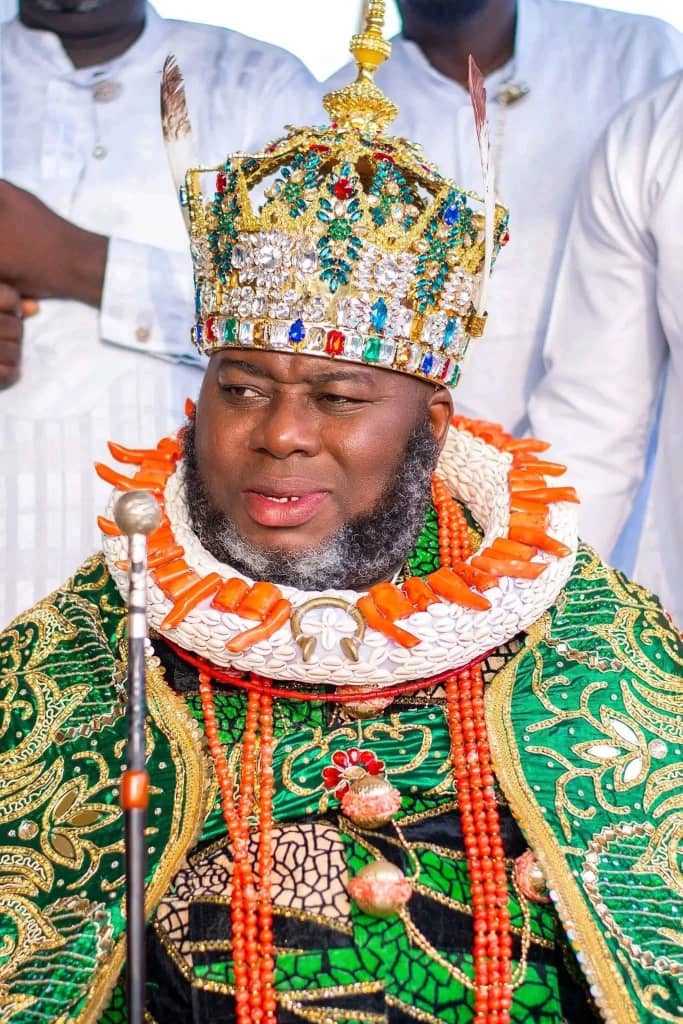
BEYOND THE CONTROVERSY; DA-AMAKIRI TUBO: THE JOURNEY OF AMANYANABO MUJAHID ABUBAKR DOKUBO-ASARI
From the Niger Delta struggle to the throne of Elem Kalabari: a life shaped by conviction, sacrifice and service By Al Humphrey Onyanabo

Da Amakiri Tubo, Alhaji Mujahid Abubakr Dokubo-Asari, Amanyanabo of The Source, Elem Kalabari, Torusarama Piri, is one such figure. His journey has taken him through religion, political agitation, imprisonment, entrepreneurship, community security and natural leadership. His name has featured prominently in the Niger Delta struggle, particularly in conversations about the rights of the Ijaw people, resource control and the relationship between Nigeria’s oil wealth and the communities from which it is extracted.
Today, he occupies a natural leadership deeply rooted in Kalabari history. Yet his public life continues to attract attention, debate and controversy. To understand the man, one must look beyond the headlines and examine the experiences, convictions and responsibilities that have shaped his journey.
THE BOY CALLED KALA AMAKIRI
Born Melford Dokubo Goodhead Jr. to Hon. Justice Melford Dokubo Goodhead Snr. and Mrs. Bekinwari Melford Dokubo Goodhead, he came from the royal Amakiri dynasty of the Kalabari Kingdom in present-day Rivers State.
He lost his mother at an early age and was raised by his paternal grandmother, Princess Nene Okukuba Wilkinson Goodhead, whose influence remained central to his upbringing. She gave him the name Kala Amakiri, meaning Little Amakiri, in reverence to the historical legacy of King Amakiri I, a figure remembered in Kalabari history for his place in the formation of the kingdom.
His grandmother instilled in him a strong consciousness of his cultural heritage and royal ancestry. Growing up in a Christian family and the riverine environment of the Niger Delta, he experienced the traditions, values and social realities of his people.
His early years coincided with growing awareness of the contradictions between the enormous wealth extracted from the Niger Delta and the difficult conditions confronting many oil-producing communities.
Those contradictions would later become central to his political convictions.
EDUCATION, FAITH AND THE SEARCH FOR IDENTITY
His education began at Baptist Day School, Buguma and Township Primary School, Port Harcourt before he proceeded to Baptist High School, Port Harcourt. He later attended the University of Calabar and the University of Science & Technology, Port Harcourt, now Rivers State University.
His formative years were marked by independence of thought, an outspoken disposition and a willingness to question established assumptions. His search for identity and meaning eventually extended to religion. After a period of personal and intellectual exploration, he embraced Islam and adopted the name Mujahid Abubakr Dokubo-Asari.
He has described Islam as an important source of peace, discipline and spiritual direction in his life.
This journey reflected a defining feature of his character: a willingness to make personal choices according to his convictions, even when those choices differed from the expectations of his early environment.
THE NIGER DELTA STRUGGLE:
Amanyanabo Dokubo-Asari’s national prominence grew during a period of heightened political agitation in the Niger Delta.
Communities across the oil-producing region had long raised concerns about environmental degradation, inadequate infrastructure, economic marginalisation and their share of the benefits derived from petroleum resources.
He became associated with the struggle for resource control and greater political and economic autonomy for the region. He was involved in the Ijaw National Congeess ( INC) and became one of the founding figures associated with the Ijaw Youth Council (IYC) later serving as its president.
He subsequently emerged as the leader of the Niger Delta People’s Salvation Front( the Political wing) NDPSF, and the Niger Delta People’s Volunteer Force, NDPVF, becoming one of the most prominent and controversial figures of the Niger Delta region.
His activities brought him into direct confrontation with the Nigerian state. For his supporters, he represented a forceful voice for a region whose grievances had too often been neglected. His critics questioned his methods and political positions.
His was arrested and put on trial for treason. His imprisonment became a defining episode in his public life. He was released in July 2007 after spending twenty two months and ten days in detention. The experience did not end his engagement with the Niger Delta question. It became another chapter in a journey that would eventually take him from political agitation into natural leadership, enterprise and community development.
A RETURN TO ANCESTRY
Amanyanabo Dokubo-Asari’s journey to the throne of Elem Kalabari unfolded through a series of natural and community milestones.
He had his personal chieftaincy stool in Edi Abali war canoe houses in 2004 from his maternal, maternal lineage.
He presented himself to Bugama Council of chiefs in 2007 and Se Diye on his personal stool in 2013. He went through all the stages of Kalabari chieftaincy creating his personal Chieftaincy to be the head of a major Kalabari war canoe house.
On 1st November 2023, he became Head of the Edi Abali Group of war canoe Houses of Kalabari. The Edi Abali stool is one of the most prominent war canoe houses, founded by the first Prime Minister of the kalabari State, Inabioboari Harry Braide ( Edi Abali)
On 9th November 2023, he performed Se Diye as Alabo Edi Abali of the Kingdom of Kalabari.
On 23 May 2024, the King Amachree Royal House in accordance with kalabari royal convention through the King Abbi House chose him as Amanyanabo of Elem Kalabari. On the same day, the Kalabari Se Kobiri chose him as Amakiri Ekpeke ( meaning the shield and protector of the Kalabari Kingdom) Adding to his earlier title of Sebromabo of The Kingdom of Kalabari conferred on him by King T.J.T. Princewill , Amachree X1, Amanyanabo of The Kingdom of Kalabari.
The Rivers State Government subsequently recognized and gazetted him as Amanyanabo of Elem Kalabari on the 8th October 2024. On 31 December 2024, the Governor of Rivers State, His Excellency, Sir Siminalayi Fubara presented him with the staff of office as Amanyanabo of The Source, Elem Kalabari, Torusarama Piri.
He adopted the revered name of the founder of modern kalabari, Dabaye Amakiri I, connecting his reign to the historical personalities of Daba and of his son, King Amakiri 1. His emergence as a natural ruler marked a significant transition. The man who had spent years challenging established authority was now entrusted with the responsibilities of a natural institution that demands stewardship, preservation of heritage, community cohesion and development.
The throne is not simply a title. It is a responsibility to history and to future generations.
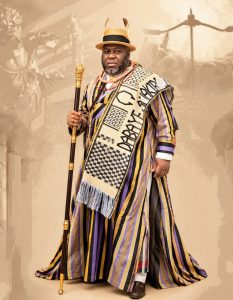

ELEM KALABARI: STRATEGIC OIL AND GAS ASSETS, NEGLECTED COMMUNITIES
Da Amakiri Tubo Alhaji Mujahid Abubakr Dokubo-Asari, The Amanyanabo of The Source, Elem Kalabari, Torusarama Piri, presides over a chiefdom in the Kalabari Kingdom of considerable strategic importance to Nigeria’s energy economy.
The wider area is associated with OML 18, an oil and gas block containing fields including Cawthorne Channel 1,2,3, Buguma Creek, Orubiri, Akakiri, part of Krakrama fields and Akaso oil and gas fields.
The region also hosts oil and gas infrastructure, including pipelines, flow stations and crude oil evacuation facilities.
The Cawthorne Channel’s importance to oil production and evacuation further underscores the strategic position of this part of the Niger Delta. Yet, despite these valuable assets, communities in Elem Kalabari and Torusarama piri chiefdom continue to contend with poverty, environmental degradation, inadequate infrastructure and limited economic opportunities.
In February 2026, women from the community protested at Cawthorne Channel 2 Jetty, demanding environmental justice and greater participation in the oil economy.
For Amanyanabo Dokubo-Asari, this contradiction is deeply personal. His people inhabit a landscape that contributes to Nigeria’s energy economy, yet many continue to struggle with the consequences of neglect and environmental damage. He feels their pain and carries the responsibility of advocating for their welfare. His position places him at the intersection of Nigeria’s national economic interests and the aspirations of the Niger Delta. Protecting energy infrastructure must go hand in hand with environmental responsibility, community security and meaningful economic opportunities for the people who host these assets.
The economic importance of Elem Kalabari and Torusarama Piri must be reflected in the wellbeing of its people, not measured only by the resources extracted from their homeland.
ENTREPRENEURSHIP AND COMMUNITY SECURITY
Beyond his political and natural roles, Amanyanabo Dokubo-Asari is an entrepreneur whose interests through the King Amachree Group of Companies include educational institutions, oil and gas, construction, dredging and reclamation, trading, logistics and consultancy.
His involvement in private security through Royal Fouche Services Ltd. represents another significant dimension of his public life. His company is in the forefront front of the battle against insurgency, working side by side with security agencies, they have left footprints in Abuja, Niger, Plateau, Zamfara, Anambra, Imo and Abia states.
In the Niger Delta, insecurity affects more than the movement of people. It disrupts fishing, commerce, education, investment and the relationships that sustain riverine communities.
For about five years, Amanyanabo Dokubo-Asari has personally sponsored security operations along the Kalabari–Emohua road. His private military contractor company, Royal Fouche Services Ltd, also know as Amama and Apapa Soldiers have secured the length of the road , night and day.
The reported monthly expenditure on salaries and logistics is approximately about ₦250 million. He foots this bill personally without any sort of support from the State Government or the six local governments of Emohua, Asari Toru, Akuku Toru, Degema, Bonny and Okrika who enjoy the service.
I have personally travelled this road during the day and at night and spoken with drivers and passengers about their experiences. I have also visited Elem Kalabari several times and witnessed security personnel conducting patrols on the waterways.
These experiences have given me firsthand insight into the security activities taking place in the area.
The significance of the initiative lies in the practical needs it addresses. Roads and waterways must be safe enough for people to travel, conduct business and sustain their livelihoods. Security is a necessary foundation for development.
In May 2025, Royal Fouche Services Ltd. rescued 19 passengers which included students who were on their Way to write WAEC Examination, military personal and others after they had been held captive for 21 days which resulted from a pirate attack along the Rivers State waterways. In late September, 2025, personnel of Royal Fouche Services Limited destrupted a grand Plot to stop oil production by blowing up pipelines and mass kidnapping of oil workers to press for the release of Mr Henry Okah who is in a South African prison for his part in the October 1st 2010 bombing of the Eagle Square, Abuja, with the seizure of large cache of arms and ammunition’s which were subsequently handed over to security agencies
These activities represent an evolution in Amanyanabo Dokubo-Asari’s public engagement: from confronting the state over the conditions of the Niger Delta to participating in private-sector and community efforts to address insecurity.
THE CONTROVERSY SURROUNDING PIPELINE SURVEILLANCE CONTRACTS
It is against this background that Da Amakiri Tubo, Alhaji Mujahid Abubakr Dokubo-Asari. Amanyanabo of the Source, Elem Kalabari, Torusarama Piri ‘s recent comments to Joel Omoshere Agho aka Mr Common Sense on pipeline surveillance contracts should be understood.
Da-Amakiri Tubo, Alhaji Mujahid Abubakr Dokubo-Asari was on his own planning Se Diye, The final coronation billed for December 19th, 2026 when video by Mr Common, Sense Joel Omoshere Agho painting him in bad light went viral on social media. The video had the hand of Esau and the voice of Jacob behind it. In a widely circulated live video, Amanyanabo Dokubo-Asari averred that he is not Linked to any of the companies awarded the pipeline surveillance and protection contract.
He went to argue that Tantita and its Chairman Tom Polo, his fellow ijaw brother
should not be singled out while other figures associated with the surveillance business escaped comparable public questioning.
He stated categorically that Piprline Infrastructure Company ltd, associated with the Olu of warri and Osahon Osunbor earns far more than Tantita owned by Tom Polo
In a subsequent articles, writers have criticised Amanyanabo Dokubo-Asari’s remarks, questioning the evidence for the figures cited and arguing that public contracts should not be treated as the entitlement of any ethnic group.
The articles raises questions about transparency and accountability that deserve consideration. Public contracts should be open to scrutiny, and specific allegations must be assessed against documentary evidence.
But there is another dimension to Amanyanabo Dokubo-Asari’s intervention: his concern about what he sees as unequal treatment of Ijaw interests and the tendency to single out Tompolo’s Tantita without applying comparable scrutiny to others involved in pipeline surveillance.
His position, as conveyed in the account underlying this profile, is that defending an Ijaw brother against what he perceives as selective criticism does not amount to declaring anyone above scrutiny.
It is a distinction worth understanding.
Tompolo is entitled to scrutiny like any other contractor. So are other companies and individuals involved in public contracts. The central questions are who received the contracts, under what terms, for what value, what payments were made and what services were delivered. For this, there is no need for name calling. The Freedom of Information Act clearly requires that individuals involved should made public amounts that they have received so far from our Common wealth.
But accountability should also be consistent. It should not become a selective exercise in which one individual is persistently questioned while comparable arrangements receive less attention.
The Niger Delta’s history of economic exclusion makes questions about access to opportunities particularly sensitive. That history does not establish that any specific contract belongs to an ethnic group. It does, however, explain why the participation of Ijaw businesses and the equitable distribution of economic opportunities remain important public concerns.
Amanyanabo Dokubo-Asari’s intervention must be understood within that wider context.
THE 2023 ASO ROCK MEETING: A QUESTION OF PERSONAL INTEREST
There is another part of this story that deserves attention.
Following President Bola Ahmed Tinubu’s inauguration in 2023, Amanyanabo Dokubo-Asari visited him at the Presidential Villa in Aso Rock. Amanyanabo Dokubo-Asari and President Bola Ahmed Tinubu share a friendship and bond dating over 25 years.
During their conversation at Aso Rock Villa, the President reportedly asked whether he wished to have a share of the pipeline surveillance contract.
Dokubo-Asari’s reported response was no.
The account is significant because it introduces a personal dimension to the present controversy. It suggests that, at the time of the meeting, he was not seeking a share of the contracts for himself.
The exchange also provides context for his subsequent public position on the treatment of Tompolo and the distribution of opportunities associated with pipeline surveillance. Its relevance lies in the distinction Amanyanabo Dokubo-Asari has drawn between seeking a personal commercial benefit and speaking out over what he perceives as unequal treatment of his fellow Ijaw people.
From the very beginning, he was among those who applied for the contract but was not given. He fought against it, requesting it be distributed but he backed down when the Ijaw National Congress, INC and the Bayelsa State Government led by H.E Duoye Diri intervened.
His reason being that it is the ijaw platform that gave him all that he has become today and he cannot go against them. He gave his word that henceforth he would no pursue the matter . That neccesitated his response of no to the President because he could not go Back on his word to the ijaw nation. And since then, he has maintained that position.
BEYOND THE HEADLINES
Da Amakiri Tubo’s life cannot be reduced to one video, one allegation or one newspaper article. He has been a religious seeker, political activist, Niger Delta agitator, prisoner, entrepreneur, security-sector participant and a natural ruler. His critics are entitled to question his statements, just as he is entitled to express his views and defend the positions he considers important. Neither criticism nor public advocacy should exempt anyone from the discipline of evidence.
His emergence as Amanyanabo of The Source, Elem Kalabari, Torusarama Piri, places him within a natural institution whose significance extends beyond his individual life.
What ultimately defines this phase of his life will be the institutions he strengthens, the culture he preserves, the opportunities created for the next generation and the tangible improvements his people experience.
His political history will remain part of his biography. So will the controversies surrounding him. But neither should prevent a serious examination of his activities and responsibilities.
Da Amakiri Tubo’s journey belongs within that fuller understanding.
Beyond the controversy lies a life that deserves to be examined in its entirety.
Beyond the crown lies the responsibility of service. And beyond the struggles of yesterday lies the enduring question of what can be achieved for the people of tomorrow.